Paphiopedilum Care Guide: Slipper Orchid Light, Water
Paphiopedilum spp.
Grow Paphiopedilum slipper orchids in filtered light and an airy, moisture-retentive medium. Match temperature to leaf type and keep the roots lightly moist without leaving them waterlogged.
Paphiopedilum Slipper Orchid Care Guide
Start with wateringThe most common care mistake for PaphiopedilumWatering guide →Paphiopedilum care essentials
Light
Water
Keep the orchid medium evenly moist but airy. Water thoroughly when the surface begins to lose its dampness, then let excess drain; allow only a little drying between waterings and never let the mix become bone-dry. Avoid leaving the pot in standing water or letting water collect in the leaf crown.
Soil
Use a specialist terrestrial-orchid medium that holds some moisture while leaving plenty of air around the roots. Paphiopedilum should not be grown in dense garden soil or ordinary houseplant potting mix.
Humidity
Temperature
Fertilizer
About Paphiopedilum
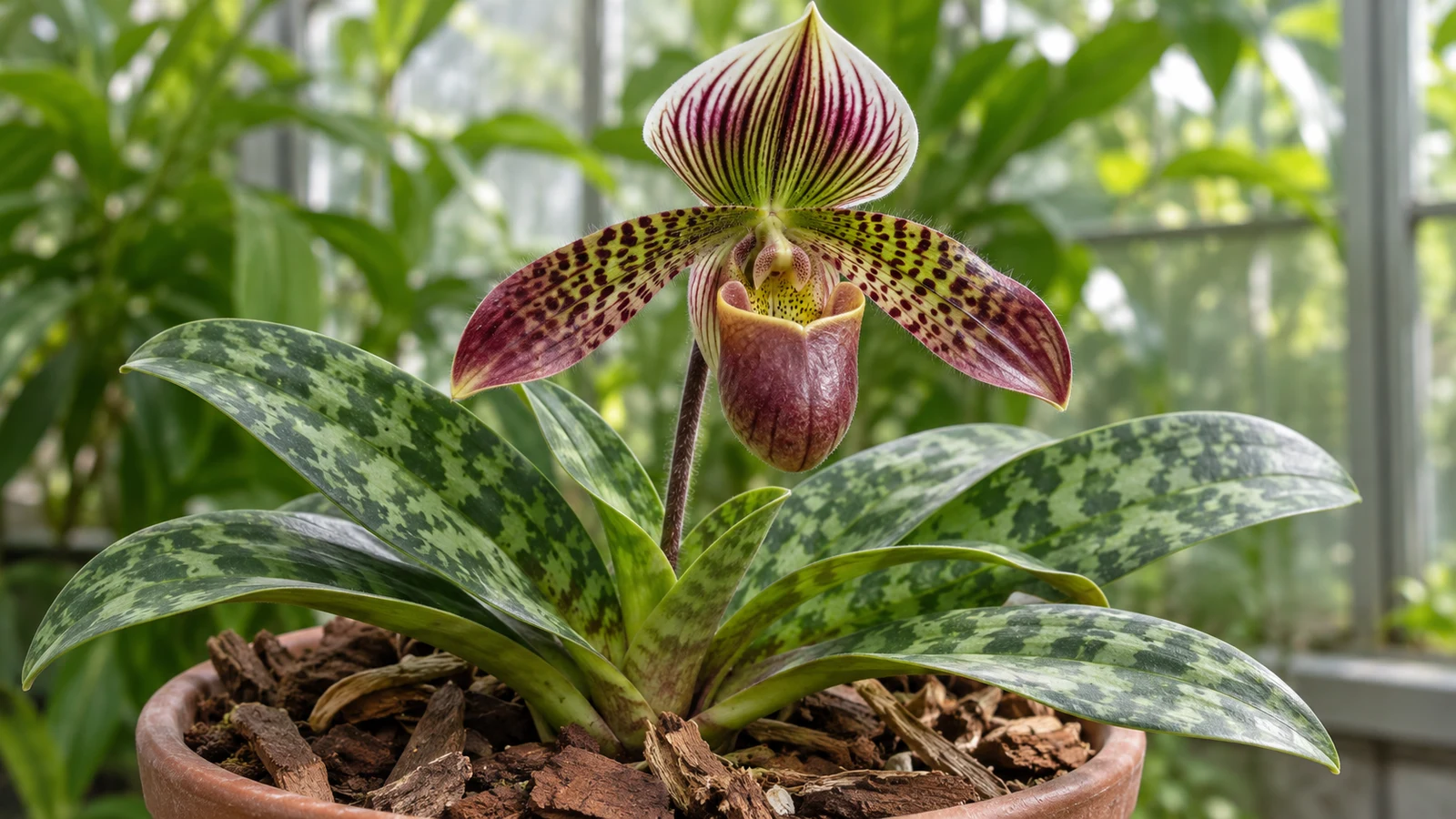
Paphiopedilum is native to Tropical and subtropical Asia, from the Indian subcontinent and southern China through Southeast Asia to New Guinea, typically reaches Many compact cultivated plants are about 15–30 cm (6–12 in) tall and across; species and hybrids vary, and some multi-flowered types grow larger. indoors, with slow to moderate; new leaf fans develop gradually and flowering varies by species and maturity growth. Paphiopedilum has a mostly terrestrial or semi terrestrial orchids that grow as fans of leaves and lack pseudobulbs; a few species are epiphytic or lithophytic. growth habit and part of the Orchidaceae family. It is also known as Slipper Orchid, Lady Slipper Orchid, and Paph.
| Detail | Information |
|---|---|
| Also known as | Slipper Orchid, Lady Slipper Orchid, Paph |
| Native region | Tropical and subtropical Asia, from the Indian subcontinent and southern China through Southeast Asia to New Guinea |
| Mature size | Many compact cultivated plants are about 15–30 cm (6–12 in) tall and across; species and hybrids vary, and some multi-flowered types grow larger. |
| Growth rate | Slow to moderate; new leaf fans develop gradually and flowering varies by species and maturity |
| Growth habit | Mostly Terrestrial Or Semi Terrestrial Orchids That Grow As Fans Of Leaves And Lack Pseudobulbs; A Few Species Are Epiphytic Or Lithophytic. |
| Scientific name | Paphiopedilum spp. |
| Family | Orchidaceae |
How to care for Paphiopedilum?
When should you water Paphiopedilum?
Keep the orchid medium evenly moist but airy. Water thoroughly when the surface begins to lose its dampness, then let excess drain; allow only a little drying between waterings and never let the mix become bone-dry. Avoid leaving the pot in standing water or letting water collect in the leaf crown.
- Feel the top of the mix and lift the pot to learn its watered and nearly-dry weights. Water when the surface is only slightly dry while the mix deeper in the pot is still faintly moist. Do not wait until the roots and whole pot are completely dry. - Water thoroughly when the surface begins to lose its dampness, then let excess drain; allow only a little drying between waterings and never let the mix become bone-dry.
- Drain excess water - Water thoroughly when the surface begins to lose its dampness, then let excess drain; allow only a little drying between waterings and never let the mix become bone-dry.
What soil works best for Paphiopedilum?
Use a specialist terrestrial-orchid medium that holds some moisture while leaving plenty of air around the roots. Paphiopedilum should not be grown in dense garden soil or ordinary houseplant potting mix.
- Use a specialist Paphiopedilum or terrestrial-orchid mix - Use a specialist terrestrial-orchid medium that holds some moisture while leaving plenty of air around the roots.
- or a moisture-retentive orchid mix with fine bark and an aerating component such as perlite or pumice - Use a specialist terrestrial-orchid medium that holds some moisture while leaving plenty of air around the roots.
- Adjust the mix to the species - Use a specialist terrestrial-orchid medium that holds some moisture while leaving plenty of air around the roots.
- pot size - Paphiopedilum should not be grown in dense garden soil or ordinary houseplant potting mix.
- room humidity
- and how quickly the medium dries - Use a specialist terrestrial-orchid medium that holds some moisture while leaving plenty of air around the roots.
- avoid compacted media and pots without drainage
Grower notes for Paphiopedilum
Identify the leaf group before choosing a temperature
Plain green-leaved Paphiopedilum are generally cooler growers, while many mottled-leaved forms prefer warmer conditions. These are useful group guides, not rules for every species or hybrid; check the plant label and supplier notes before moving it into a cool room or outdoors. NC State Extension and the RHS both describe this broad distinction.
Give the leaves filtered light
Set the plant in bright shade or filtered light rather than harsh direct sun. An east-facing window or a brighter winter position can work well; protect leaves from hot midday rays, especially in spring and summer. The RHS recommends summer shade and brighter, unshaded light in winter.
Keep the root zone lightly moist
Paphiopedilum do not have water-storing pseudobulbs, so they are less forgiving of a fully dry pot than many familiar orchids. Water the whole medium when the surface starts to dry, then drain the pot completely. Do not use a fixed weekly schedule without checking how quickly the mix dries in your room.
Choose an airy medium that holds some water
These are mostly terrestrial or semi-terrestrial orchids, not the exposed-root Phalaenopsis style. Use a specialist orchid mix that stays lightly moist while allowing airflow; standard potting soil can compact around the roots. OrchidWeb's grower guide also emphasizes a porous mix that retains moisture and drains freely.
Repot after bloom when the mix starts to break down
Check the medium each year. Repot after flowering or as a new fan begins if the mix is decomposing, roots are crowded, or drainage has slowed. Choose a pot only large enough for the roots and next growth rather than jumping to an oversized container.
Expect flowering to follow the plant's type and maturity
Flowering time varies across the genus, and the RHS notes that blooms may appear at different times of year. Some flowers last for weeks or months; a plant that is building roots and leaf fans is still making progress even when it does not flower immediately.
Is Paphiopedilum safe for pets?
No species-specific Paphiopedilum safety classification was verified. The ASPCA plant list is not all-inclusive and did not show Paphiopedilum in the accessible list, so its absence does not prove safety. Keep the plant out of reach; contact a veterinarian or animal poison-control service if a pet eats it.
Do not transfer a safety label from Phalaenopsis or another orchid genus to Paphiopedilum. The ASPCA list says it is not all-inclusive; no exact Paphiopedilum entry was found in the page checked. Treat pet status as unverified, not as a confirmed toxic or non-toxic classification.
Watering Paphiopedilum
For Paphiopedilum, feel the top of the mix and lift the pot to learn its watered and nearly-dry weights. Water when the surface is only slightly dry while the mix deeper in the pot is still faintly moist. Do not wait until the roots and whole pot are completely dry. and water check the pot every few days and water when the upper medium is just beginning to dry. Warm rooms, dry air, smaller pots, and coarse mixes shorten the interval; cooler winter conditions usually lengthen it. Use the medium and pot weight to set a routine rather than following a fixed calendar. Water regularly during active spring and summer growth. Reduce frequency in winter if growth and evaporation slow, but keep the root zone from drying out completely. Adjust for the leaf-type group: mottled-leaf forms generally need warmer conditions than plain-green forms.
| Detail | Information |
|---|---|
| How often | Check the pot every few days and water when the upper medium is just beginning to dry. Warm rooms, dry air, smaller pots, and coarse mixes shorten the interval; cooler winter conditions usually lengthen it. Use the medium and pot weight to set a routine rather than following a fixed calendar. |
| How to check | Feel the top of the mix and lift the pot to learn its watered and nearly-dry weights. Water when the surface is only slightly dry while the mix deeper in the pot is still faintly moist. Do not wait until the roots and whole pot are completely dry. |
| Seasonal changes | Water regularly during active spring and summer growth. Reduce frequency in winter if growth and evaporation slow, but keep the root zone from drying out completely. Adjust for the leaf-type group: mottled-leaf forms generally need warmer conditions than plain-green forms. |
Signs of overwatering
- The mix stays saturated or the pot remains heavy for many days.
- Roots become soft or dark and the plant declines despite wet media.
- Water repeatedly sits in the leaf crown or foliage remains wet overnight.
Signs of underwatering
- The mix becomes completely dry and leaves begin to wilt or lose firmness.
- Leaf tips yellow or the oldest basal leaves yellow unusually quickly; inspect roots too, because root loss can mimic thirst.
Soil & potting for Paphiopedilum
Use a mix of Use a specialist Paphiopedilum or terrestrial-orchid mix, or a moisture-retentive orchid mix with fine bark and an aerating component such as perlite or pumice., Adjust the mix to the species, pot size, room humidity, and how quickly the medium dries; avoid compacted media and pots without drainage. for Paphiopedilum. Choose a pot with open drainage holes and a porous mix that drains after watering but does not dry to dust between checks. The target is consistently lightly moist roots without stagnant, waterlogged conditions. Repot check the medium yearly and usually repot every one to two years, or sooner if it has broken down, become sour, or stopped draining freely., ideally in repot after flowering or as new growth begins. In the Northern Hemisphere, the RHS gives February to June as a suitable window; adapt timing to the local growing season and the plant's condition.
| Detail | Information |
|---|---|
| Recommended mix | Use a specialist Paphiopedilum or terrestrial-orchid mix, or a moisture-retentive orchid mix with fine bark and an aerating component such as perlite or pumice., Adjust the mix to the species, pot size, room humidity, and how quickly the medium dries; avoid compacted media and pots without drainage. |
| Drainage | Choose a pot with open drainage holes and a porous mix that drains after watering but does not dry to dust between checks. The target is consistently lightly moist roots without stagnant, waterlogged conditions. |
| Repotting frequency | Check the medium yearly and usually repot every one to two years, or sooner if it has broken down, become sour, or stopped draining freely. |
| Best season to repot | Repot after flowering or as new growth begins. In the Northern Hemisphere, the RHS gives February to June as a suitable window; adapt timing to the local growing season and the plant's condition. |
Signs it needs repotting
- The medium is compact, decomposing, sour-smelling, or staying wet much longer than before.
- New growths are crowded at the pot edge or the plant is becoming unstable.
- The plant needs division and has an established offshoot with its own roots.