Philodendron Pastazanum Care Guide: Velvet Leaves Indoors
Philodendron pastazanum
Philodendron pastazanum needs bright indirect light, 60–70 % humidity, watering every 10–14 days when top 3–5 cm is dry, wide shallow pots for creeping rhizomes, and chunky aroid mix. Toxic to pets.
Philodendron Pastazanum Care Guide: Velvet Leaves Indoors
Start with wateringThe most common care mistake for Philodendron PastazanumWatering guide →Philodendron Pastazanum care essentials
Light
Water
Every 10–14 days in summer - allow top 3–5 cm to dry. Reduce in winter. Rhizome stores some moisture.
Soil
Well-draining chunky aroid mix: potting mix + perlite + orchid bark. Wide shallow pot preferred. pH 5.5–7.0.
Humidity
Temperature
18°C to 30°C (65–86°F)
Fertilizer
Feed lightly during active growth. Use monthly balanced liquid fertilizer at half strength in spring and summer.
About Philodendron Pastazanum
Philodendron Pastazanum has a upright growth habit. It is also known as Pastaza philodendron.
| Detail | Information |
|---|---|
| Also known as | Pastaza philodendron |
| Growth habit | Upright |
| Scientific name | Philodendron pastazanum |
Philodendron Pastazanum Care Guide: Velvet Leaves Indoors
Philodendron pastazanum is the velvet crawler that looks like Philodendron gloriosum’s larger cousin — until you treat it like Heartleaf on a moss pole and watch the rhizome disappear into wet mix. Philodendron pastazanum is a repent terrestrial species from Ecuador to Peru with broad sagittate leaves and a thick green rhizome that advances horizontally across the soil surface. Indoors, success comes from three habits most generic philodendron guides skip: bright filtered light, 60–70% humidity, and a wide shallow pot that keeps the active growth tip on or above the mix line.
This guide covers the full indoor routine — species identity, how Pastazanum differs from Gloriosum and climbers, light and Philodendron Pastazanum watering rhythm, humidity, soil and pot geometry, feeding, repotting, propagation, pet toxicity, and the failures that actually show up in real homes.
What Philodendron pastazanum Actually Is
Philodendron pastazanum is an evergreen perennial in the Araceae family, first published by botanist Kurt Krause in 1940. Kew’s Plants of the World Online accepts it as native from Ecuador to Peru, growing primarily in wet tropical forest. The trade name echoes Ecuador’s Pastaza region, where collectors have long associated the species — but the botanical record is Krause’s 1940 description from Ecuadorian material, not a 1970s discovery.
Species Identity and Native Range
In habitat, Kew’s CATE Araceae treatment describes Pastazanum as terrestrial; creeping over ground with repent stems advancing along stream valleys, cliff edges, and wet disturbed rainforest — not scrambling up tree trunks for canopy light. That ground-creeping habit is the single most important fact for indoor care. The plant invests in one large leaf at a time from a firm advancing tip, not in vertical vine length.
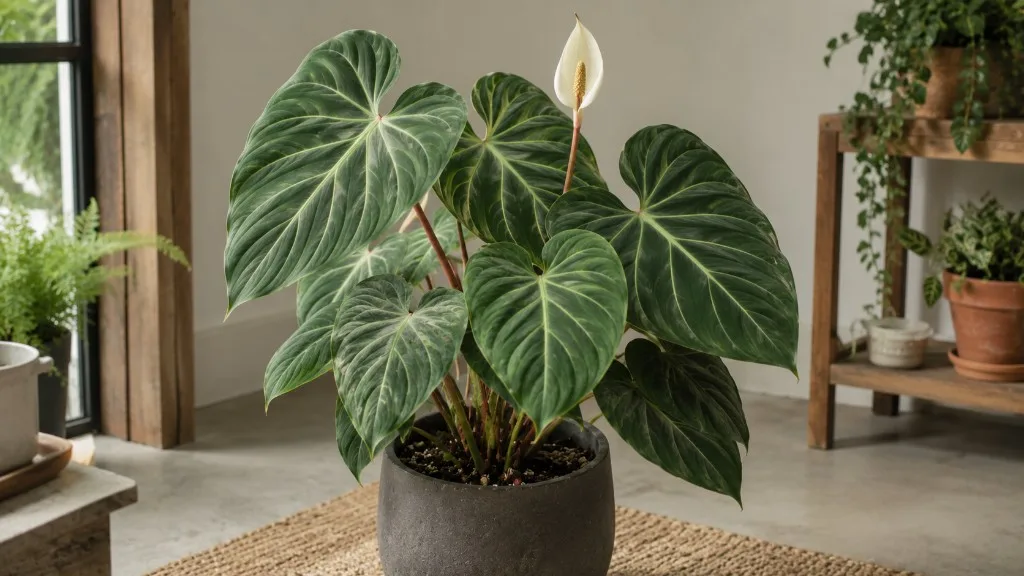
Mature blades are broadly ovate to sagittate, 28–65 cm long in the botanical description, with surfaces ranging from glossy to matte-subvelvety above and paler below. In cultivation, collectors prize the deep green velvet and silvery primary venation — often broader and more dramatically heart-shaped than Gloriosum on a well-rooted rhizome. Petioles can exceed blade length on strong plants, holding each leaf like a platter above the crawling stem.
Pastazanum vs Philodendron Gloriosum
These two species are the most confused velvet crawlers in the hobby. Both need horizontal rhizome space, high humidity, and wide pots — but they are different species with different native ranges and leaf habits.
| Trait | Philodendron pastazanum | Philodendron gloriosum |
|---|---|---|
| Described | K. Krause, 1940 | É. André, 1876 |
| Native range | Ecuador to Peru | Colombia |
| Leaf shape | Broad sagittate, silvery veins | Cordate-ovate, white/pink veins |
| Typical indoor leaf | Often larger, broader heart | Large velvet heart, slower unfurl |
| Growth pace | Moderate crawler | Slow crawler |
If your plant is labeled “Pastazanum” but the seller cites Colombian provenance only, or the leaves stay small with pink venation on thin petioles, verify the name against the rhizome and newest leaf — mislabeled aroids are common. For a deep dive on placement and lux, see the Pastazanum light guide.
Crawling Rhizome vs Climbing Philodendrons
Most shelf philodendrons — Heartleaf, Brasil, Micans, many hybrids — are climbers that produce long internodes and reward moss poles with larger leaves toward brighter light. Pastazanum does the opposite. Its rhizome creeps horizontally, emitting leaves sequentially from the active tip. Aerial roots may anchor along the runner, but the architecture is lateral expansion, not vertical ascent.
The practical differences matter every week:
- Climbers tolerate deeper pots because stems travel upward and roots descend.
- Crawlers need the growth point on or just above the mix, with open space ahead of the tip.
- Climbers often recover from buried nodes via adventitious roots.
- Crawlers rot quickly when the rhizome sits against wet, poorly aerated substrate.
If you have grown velvet hemiepiphytes on poles, remember that many start terrestrial then climb. Pastazanum’s wild habit is overwhelmingly ground-creeping per Kew’s habitat notes — copying a melanochrysum pole setup without lateral space is the most common category error.
Why a Moss Pole Will Not Fix a Crawler
Moss poles do not give a rhizome anywhere to go. Without horizontal space, the growth tip circles back into old mix, leaves stack awkwardly, and the stem contacts wet substrate — the exact condition that causes rhizome rot. If you want larger Pastazanum leaves, invest in better light, humidity, and rhizome positioning on the soil guide path, not a pole. If you want a climbing velvet philodendron, choose a species that actually wants to climb.
Velvet Heart Leaves and Growth Pace
Pastazanum’s appeal is foliar. Leaves are large, heart-shaped, and velvety, with bold silvery venation against deep green tissue. New leaves emerge from a cataphyll at the rhizome tip; unfurling can take several weeks — normal for a large-blade crawler, not automatic failure, as long as the tip stays firm and above grade.
Velvet aroid leaves trap dust, show water spots easily, and mark if handled roughly. Handle emerging leaves as little as possible; misting foliage is a poor humidity strategy for textured blades.
Healthy Foliage vs Warning Signs
Good signs: sequential new leaves of similar or increasing size; crisp silvery veins; firm active growth tip; older leaves aging at the trailing end of the rhizome.
Warning signs: progressively smaller new leaves (often low light or exhausted substrate); stuck unfurling (low humidity or wet tip); sudden yellowing on new foliage while mix stays wet (overwatering); translucent patches (cold damage or pest feeding). Escalate persistent symptoms on the Pastazanum problems hub.
Light for Indoor Pastazanum
Pastazanum wants bright, indirect light for most of the day — filtered east or west windows, or a bright room setback from south glass behind sheer curtains. RHS philodendron guidance applies genus-wide: keep plants out of direct summer sun, which scorches leaves.
Light quality drives leaf size more than any moss pole. In too little light, new blades emerge smaller, petioles weaken, and the plant becomes more susceptible to overwatering because evaporation drops. In too much direct sun, velvet surfaces bleach or scorch. A practical test: within 1–2 meters of a bright window with filtered light, or under quality grow lights 10–12 hours daily per the light guide. Pick bright room plus humidifier over a dim humid bathroom every time.
Watering Without Rotting the Rhizome
Pastazanum is sensitive to overwatering. Root rot and rhizome rot are the serious failures; underwatering is easier to correct. The LeafyPixels baseline — every 10–14 days in summer, allowing the top 3–5 cm of mix to dry — aligns with Iowa State Extension guidance to wait until the upper layer dries and with Clemson HGIC aroid care to water thoroughly then empty the saucer.
Check the pot, not the calendar. Wide shallow pots dry differently from deep vine pots. Water until runoff, then discard standing water. Avoid routinely wetting velvet leaves during irrigation.
In winter, stretch the interval. Growth slows, and cold dim rooms keep mix wet longer. Resume shorter summer rhythm only when new growth is clearly active.
Moisture Checks at the Growth Tip
Insert your finger to 3–5 cm at the leading edge of the rhizome; if dry or approaching dry, water. If cool and damp, wait. Pay special attention to moisture at the growth point — the tip and emerging cataphyll should not sit against permanently wet, compacted mix. If the tip sinks below grade as the runner advances, top-dress with coarse bark or repot wider so the leading edge stays on or just above the surface.
Humidity and Temperature
Pastazanum is a wet-forest understory plant. Target 60–70% relative humidity for the best velvet texture and clean unfurling. The plant tolerates 40–50% in many homes but often produces smaller leaves, slower emergence, and more brown edge crisping when air stays dry for months.
Below roughly 40%, spider mite risk rises. Above 70% with stagnant air, fungal leaf issues become more likely. A small humidifier beats misting, which briefly raises humidity, marks velvet leaves, and can encourage disease in still air.
Comfort aligns with typical indoor living: 18–30°C (65–86°F). Avoid cold window ledges in winter, AC vents, and hot dry glass in summer. NC State Extension notes philodendrons prefer 65–85°F and high humidity — Pastazanum sits at the humid end of that range for best foliage.
Soil Mix and Wide Shallow Pots
Soil and pot shape are where Pastazanum diverges from generic philodendron advice. The mix should be chunky, airy, and fast-draining while holding moderate moisture — potting mix plus perlite plus orchid bark, target pH 5.5–7.0. RHS guidance recommends loose, free-draining compost; dense peat that compacts into a wet brick is the enemy of surface rhizomes.
The pot must be wider than deep — troughs, bulb pans, and low wide containers outperform tall cylinders because they give the rhizome forward travel space without burying the tip under unnecessary wet volume. Drainage holes are non-negotiable.
When potting: lay the rhizome on or just above the surface, orient the active tip toward open space, and never pack mix over the leading edge. Repot every one to two years, or when the runner reaches the pot lip. Jump to the next wide size, not the next deep size.
Fertilizer in Active Growth
Pastazanum is not a heavy feeder. It pushes one large leaf at a time from a restrained root system relative to leaf mass. Feed lightly during active growth — typically monthly in spring and summer with a balanced liquid fertilizer at half strength, matching extension guidance for houseplants in active growth.
Always apply to already-moist soil. Pause feeding in winter, after repotting, and while recovering from rot or pests. Excess fertilizer shows as salt crust, brown margins, and yellowing new foliage while roots still look wet. See the fertilizer guide for crawler-specific dilution notes.
Repotting Crawlers Safely
Repot when roots emerge from drainage holes, water runs straight through compacted mix, new leaves shrink repeatedly, or the rhizome outgrows the container lip. Best timing: early active season when light and temperatures rise.
Steps that protect crawlers: water lightly the day before; slide the plant out and remove old compacted mix without breaking active roots; choose a pot one size wider, not dramatically deeper; lay the rhizome horizontally with the growth tip facing open space; keep the tip above grade; water lightly once, then resume normal checks after a week. The classic mistake is burying the rhizome “for stability” — that invites rot. Full steps live on the repotting guide.
Propagation by Rhizome Cuttings
Unlike vining philodendrons rooted in water, Pastazanum propagates by rhizome sections with at least one node and preferably one or two leaves. Select a firm section with healthy roots, cut with sterile tools, callous the wound a few hours, then root horizontally in moist sphagnum moss or chunky mix under high humidity and bright indirect light. Roots often form in two to four weeks; transition when the cutting resists a gentle tug and shows new growth.
Single-leaf cuttings can work but are slower and less forgiving than sections with established roots. Do not propagate from soft, mushy rhizomes — cuttings inherit rot. Details on the propagation guide.
Toxicity to Pets and People
Philodendron pastazanum is toxic if ingested. Like all philodendrons, it contains insoluble calcium oxalate crystals — raphides that irritate mouth and GI tissues. NC State Extension lists oral irritation, pain and swelling, excessive drooling, vomiting, and difficulty swallowing.
Keep plants out of reach of chewing pets and curious children. Wash hands after handling cut rhizomes; sap can irritate sensitive skin.
The ASPCA lists Philodendron as toxic to cats and dogs with similar clinical signs. If ingestion is suspected, contact ASPCA Animal Poison Control at 888-426-4435 (US) and your veterinarian promptly.
Common Problems and First Fixes
Most issues trace to water, light, humidity, or rhizome placement — diagnose in that order.
Yellow leaves. Older basal leaves yellow naturally as the rhizome advances. New leaves yellowing on wet mix points to overwatering, compacted substrate, or buried rhizome. Uniform pale yellow in low light means improve placement on the light guide, not more water.
Stuck unfurling. Usually low humidity, wet growth point, or mechanical damage. Raise humidity with a humidifier; confirm the tip sits above wet mix.
Brown tips and edges. Often dry air below 40%, salt buildup, or watering swings. Increase humidity and flush the pot quarterly.
Soft rhizome. Emergency — unpot, trim mushy tissue, repot firm sections in fresh airy mix. Prevention beats rescue: shallow pot, surface rhizome, dry-down checks.
Pests. Spider mites in dry winter air; mealybugs in axils; thrips on velvet. Treat with rinse, manual removal, and horticultural soap or oil; correct humidity.
Buying and the First Month Home
Pastazanum is still priced above common philodendrons because propagation is slow and rhizome shipping is sensitive. Buy for structure, not one photo leaf.
Look for: firm active growth tip above mix; stiff green rhizome; clean leaf undersides; mix that drains — not sour or waterlogged.
Red flags: single leaf with no runner; blackened growth point; severe pest signs; tall narrow pot with buried tip.
After purchase: quarantine two weeks; do not repot day one unless mix is failing; learn dry-down speed in your light before changing anything; watch for yellowing, stuck unfurling, and soft stem — fix environment before stacking fertilizer and repotting.
Conclusion
Philodendron pastazanum rewards growers who respect its Ecuador–Peru forest-floor identity: a crawling rhizome, velvet sagittate leaves, and humidity-aware routine in a wide shallow pot. Give it bright indirect light, water when the top 3–5 cm of mix dries, target 60–70% humidity with a humidifier when air is dry, use chunky aroid mix, keep the growth tip on or above the surface, and feed lightly in spring and summer. Skip the moss pole. Protect it from pets — calcium oxalate crystals are real — and measure success in new leaves unfurling cleanly, not weekly vine length.
Get the crawler mechanics right and Pastazanum becomes one of the most photogenic terrestrial aroids indoors. Get them wrong — buried rhizome, deep wet pot, dim corner — and it becomes slow-motion frustration. The plant is not difficult for beginners willing to learn one rule: it crawls horizontally through humid air and airy mix, and every care choice should serve that habit.
When to use this page vs other Philodendron Pastazanum guides
- Philodendron Pastazanum overview — Canonical hub; start here before topic-specific guides.
- Philodendron Pastazanum problems — Symptom-first path when something is already wrong.
Related Philodendron Pastazanum guides
- Philodendron Pastazanum watering
- Philodendron Pastazanum light
- Philodendron Pastazanum soil
- Philodendron Pastazanum propagation
- Philodendron Pastazanum fertilizer
- Philodendron Pastazanum repotting
- Philodendron Pastazanum pruning
- Root Rot on Philodendron Pastazanum
- Brown Tips on Philodendron Pastazanum
How to care for Philodendron Pastazanum?
When should you water Philodendron Pastazanum?
Every 10–14 days in summer - allow top 3–5 cm to dry. Reduce in winter. Rhizome stores some moisture.
- Check top 2 inches - Every 10–14 days in summer - allow top 3–5 cm to dry.
- Drain excess water - Empty the saucer after watering so the roots are not sitting in standing water.
What soil works best for Philodendron Pastazanum?
Well-draining chunky aroid mix: potting mix + perlite + orchid bark. Wide shallow pot preferred. pH 5.5–7.0.
- Well-draining mix - Well-draining chunky aroid mix: potting mix + perlite + orchid bark.
Grower notes for Philodendron Pastazanum
What makes Pastazanum different
Philodendron Pastazanum is a repent terrestrial crawler from eastern Ecuador and Peru — not a moss-pole climber. The thick green rhizome advances horizontally across the mix surface, producing one large cordate-ovate velvet leaf at a time with pale midribs and silvery veining. Treating it like Heartleaf Philodendron or a hybrid vine is the classic mistake: a pole will not fix a plant that needs room for its rhizome to travel. The payoff is dramatic heart-shaped foliage, but only if the newest growth point stays above the mix and out of stagnant moisture.
Pastazanum potting note
Use an airy aroid mix, then think about pot shape before pot size. A rectangular or broad low pot often works better than a deeper decorative planter because the growth front can travel without being buried. Do not pack mix around the creeping rhizome like a normal upright plant. If the growth point sits too wet, new leaves may stall for weeks before unfurling.
Pastazanum buying note
Look for a visible crawling rhizome with a healthy active tip, not just one impressive old leaf. Velvet leaves mark easily, so small cosmetic scars are acceptable, but a damaged or buried growth point is a larger problem. Check the underside of the newest leaf and stem nodes for spider mites before bringing it near other aroids. A single-leaf rhizome cutting can succeed, but it is slower and less forgiving than a plant with an established runner.
What matters most with Philodendron Pastazanum
Philodendron Pastazanum is easiest to understand by its growth habit. Climbers need support for larger leaves, self-heading types need stable root moisture, and velvet crawlers punish stale air and buried crowns faster than basic green philodendrons. In practice, the care checkpoint is simple: bright indirect light, 60–70% humidity, airy mix in a wide shallow pot, and a watering rhythm that matches how the pot dries in your home. Avoid changing water, pot size, and placement all at once.
Best placement in a real home
Philodendron Pastazanum belongs where bright indirect light and steady humidity are realistic for most of the day — a humid bright room, cabinet, or shelf away from heating vents. Every 10–14 days in summer when the top 3–5 cm dries; less often in winter. If the pot stays wet longer than expected, move the plant into better light or reassess the mix before watering again. Temperature comfort zone: 18°C to 30°C (65–86°F).
Before you buy this plant
Choose Philodendron Pastazanum with firm rhizome tissue, clean velvet leaf undersides, and soil that does not smell sour or feel compacted. Be cautious if you see yellow leaves, sticky residue, a buried crown, or a pot that is wet in poor light. Cosmetic old-leaf damage is less worrying than soft rhizome tissue or active pests.
First month after bringing it home
Do not repot Philodendron Pastazanum on day one unless the mix is failing or pests are obvious. Quarantine it, learn how fast the pot dries, and keep care boring while it adjusts. Watch especially for crown rot, spider mites, and brown edge crisping. New velvet leaves can take four to six weeks to unfurl — that pace is normal. If problems appear, correct the condition first rather than stacking fertilizer, repotting, and pruning together.
Is it pet safe?
Philodendron Pastazanum is toxic to cats and dogs.
Toxic - calcium oxalate crystals.
Watering Philodendron Pastazanum
Every 10–14 days in summer - allow top 3–5 cm to dry. Reduce in winter. Rhizome stores some moisture.
Soil & potting for Philodendron Pastazanum
Well-draining chunky aroid mix: potting mix + perlite + orchid bark. Wide shallow pot preferred. pH 5.5–7.0.
Humidity & temperature for Philodendron Pastazanum
Keep temperatures around 18°C to 30°C (65–86°F).
| Detail | Information |
|---|---|
| Ideal temperature | 18°C to 30°C (65–86°F) |
Fertilizer & pruning for Philodendron Pastazanum
Use feed lightly during active growth. Use monthly balanced liquid fertilizer at half strength in spring and summer. for Philodendron Pastazanum.
| Detail | Information |
|---|---|
| Fertilizer type | Feed lightly during active growth. Use monthly balanced liquid fertilizer at half strength in spring and summer. |
Common problems on Philodendron Pastazanum
Yellow Leaves
MediumLikely cause: Common on this plant type; confirm with recent watering, light, and root checks.
Quick fix: Inspect the plant and correct the most likely care stressor before stacking treatments.
Full fix guide →Brown Tips
MediumLikely cause: Common on this plant type; confirm with recent watering, light, and root checks.
Quick fix: Inspect the plant and correct the most likely care stressor before stacking treatments.
Full fix guide →Root Rot
MediumLikely cause: Common on this plant type; confirm with recent watering, light, and root checks.
Quick fix: Inspect the plant and correct the most likely care stressor before stacking treatments.
Full fix guide →Overwatering
MediumLikely cause: Common on this plant type; confirm with recent watering, light, and root checks.
Quick fix: Inspect the plant and correct the most likely care stressor before stacking treatments.
Full fix guide →Underwatering
MediumLikely cause: Common on this plant type; confirm with recent watering, light, and root checks.
Quick fix: Inspect the plant and correct the most likely care stressor before stacking treatments.
Full fix guide →Spider Mites
MediumLikely cause: Common on this plant type; confirm with recent watering, light, and root checks.
Quick fix: Inspect the plant and correct the most likely care stressor before stacking treatments.
Full fix guide →Mealybugs
MediumLikely cause: Common on this plant type; confirm with recent watering, light, and root checks.
Quick fix: Inspect the plant and correct the most likely care stressor before stacking treatments.
Full fix guide →Aphids
MediumLikely cause: Common on this plant type; confirm with recent watering, light, and root checks.
Quick fix: Inspect the plant and correct the most likely care stressor before stacking treatments.
Full fix guide →Leggy Growth
MediumLikely cause: Common on this plant type; confirm with recent watering, light, and root checks.
Quick fix: Inspect the plant and correct the most likely care stressor before stacking treatments.
Full fix guide →Slow Growth
MediumLikely cause: Common on this plant type; confirm with recent watering, light, and root checks.
Quick fix: Inspect the plant and correct the most likely care stressor before stacking treatments.
Full fix guide →Wilting
MediumLikely cause: Common on this plant type; confirm with recent watering, light, and root checks.
Quick fix: Inspect the plant and correct the most likely care stressor before stacking treatments.
Full fix guide →Drooping Leaves
MediumLikely cause: Common on this plant type; confirm with recent watering, light, and root checks.
Quick fix: Inspect the plant and correct the most likely care stressor before stacking treatments.
Full fix guide →Low Humidity
MediumLikely cause: Common on this plant type; confirm with recent watering, light, and root checks.
Quick fix: Inspect the plant and correct the most likely care stressor before stacking treatments.
Full fix guide →Not Enough Light
MediumLikely cause: Common on this plant type; confirm with recent watering, light, and root checks.
Quick fix: Inspect the plant and correct the most likely care stressor before stacking treatments.
Full fix guide →Fungus Gnats
MediumLikely cause: Common on this plant type; confirm with recent watering, light, and root checks.
Quick fix: Inspect the plant and correct the most likely care stressor before stacking treatments.
Full fix guide →Mold on Soil
MediumLikely cause: Common on this plant type; confirm with recent watering, light, and root checks.
Quick fix: Inspect the plant and correct the most likely care stressor before stacking treatments.
Full fix guide →