Dry Hydrophobic Soil on Heartleaf Philodendron: Causes
Quick answer
Hydrophobic soil on heartleaf philodendron means peat mix repels water while the root ball stays dry inside—common after a missed dry-down in a hanging basket or warm window. First step: bottom-soak the pot until the top 2 inches of mix feel moist, then drain fully before resuming your normal dry-down rhythm.
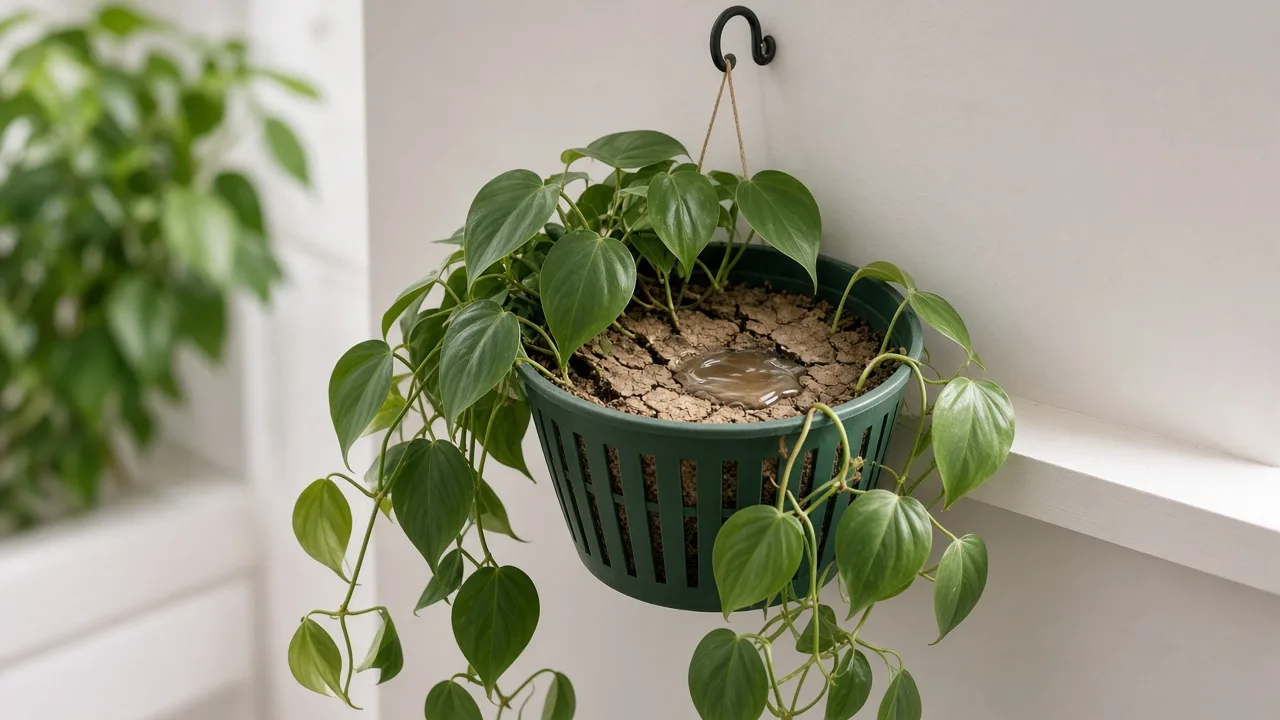
Dry Hydrophobic Soil on Heartleaf Philodendron: Causes, Checks & Fixes
This guide covers dry hydrophobic soil on Heartleaf Philodendron. See also the general Dry Hydrophobic Soil guide, watering, and light pages for this plant.
Dry Hydrophobic Soil on Heartleaf Philodendron: Causes, Checks & Fixes
Quick answer
Dry hydrophobic soil on heartleaf philodendron (Philodendron hederaceum) means the potting mix has dried so far that it repels water instead of absorbing it. You pour from the top, water races out the drainage holes, and you assume the trailing vine drank—while the center of the root ball stays dead dry. That mismatch is especially common on heartleaf philodendron because this fast-growing aroid is often grown in hanging baskets where warm window air dries the outer mix quickly, yet owners still water on a weekly habit without checking whether the core rewetted. For general mechanics of water-repellent peat, see our dry hydrophobic soil guide. On heartleaf philodendron, limp vine tips with a light pot after “watering” usually mean runoff channeling—not thirst alone.
First step: set the pot in a basin of lukewarm water so the mix wicks up through the drainage holes until the top 2 inches feel moist. This bottom watering method slowly re-wets hydrophobic peat. Lift the pot out, let it drain completely for 15 to 30 minutes, and empty the saucer. Do not keep adding top water to crusted mix; it will keep running down the gap between root ball and pot wall.
Full species context: Heartleaf philodendron overview. For the complete dry-down rhythm once mix accepts water again, see the watering guide—including its note on bottom watering when mix repels top pours.
When to use this page vs other Heartleaf Philodendron guides
| Your question | Best page |
|---|---|
| Water runs through but mix stays dry inside | This page |
| Light pot, dry mix that still absorbs water | Underwatering |
| Heavy wet pot, sour smell, mushy stems | Overwatering or root rot |
| Limp vines—need wet vs dry wilt triage first | Wilting |
| White crust on surface shedding water | Salt build-up |
| Dense peat that never dries or always soggy | Poor drainage |
| Mix refresh ratios and perlite | Soil guide |
What dry hydrophobic soil looks like on Heartleaf Philodendron
Hydrophobic soil shows up in the pot before every leaf tells the story. On this trailing aroid, vine stress often follows a missed dry-down cycle because heartleaf wilts slightly to signal thirst—but hydrophobic drought means you watered and the root ball still did not hydrate.
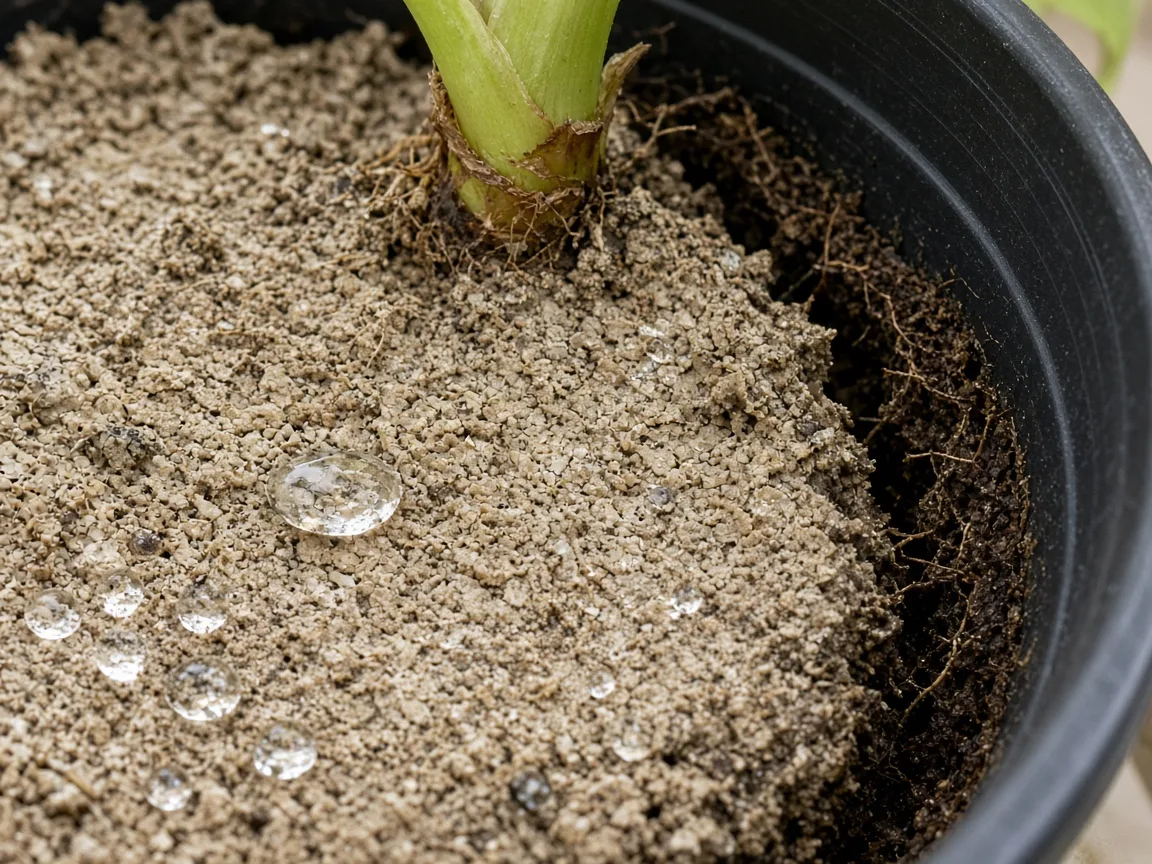
Dry hydrophobic soil on heartleaf philodendron—dry peat pulled away from the pot wall while water beads on the crusted surface instead of soaking in.
Pot and mix signs
- Water pools on the surface or races through in under a minute with little absorption
- Dry mix has shrunk and pulled away from the plastic pot wall, leaving a gap where water runs down instead of through the root ball
- Surface looks dusty, pale, or cracked while you have been “watering” on schedule
- Hanging basket feels light when lifted despite a recent top-water session
- A skewer or finger at 2 inches depth stays dry right after you watered from the top
- White mineral crust on the surface that sheds water droplets
The soil guide describes compacted peat as a hidden stress source—hydrophobic cycles add the visible gap between root ball and pot wall.
Vine and leaf signs
- Slight droop or loss of turgor in glossy heart-shaped leaves at vine tips
- Curling leaf edges on the longest trailing strands farthest from the pot
- Oldest lower leaves may yellow or crisp at margins after repeated dry-core cycles
- Stems stay firm and green at nodes when hydrophobic drought is the primary issue
- Aerial roots along the vine may look shriveled or brown if the root ball has been dry for weeks
The key distinction: with simple underwatering, dry mix still accepts water when you pour slowly. With hydrophobic soil, water does not penetrate the root ball even when you try.
Why hanging-basket heartleaf mix turns hydrophobic
Heartleaf philodendron is usually sold in peat-based shop mix with perlite in a plastic hanging basket. Peat holds moisture well when evenly damp—but when it dries completely, peat moss is very difficult to re-wet. Heartleaf tolerates brief drought better than chronic wet feet, but a hard-dry root ball still cuts off water uptake to fine aroid roots.
Warm windows and fast outer dry-down
In bright indirect light beside a south or west window, heartleaf philodendron grows quickly and transpires through long trailing stems. The top inch of mix can look merely cool-damp on a quick finger touch while the lower half of the basket has gone bone dry—especially where the curved plastic bottom holds less mix than a shelf pot. Iowa State Extension recommends watering philodendrons when the top of the soil is dry, not on a fixed calendar; in warm rooms, owners who skip checks for ten days can cross into water-repellent territory before obvious wilt reaches every vine tip.
Vacation dry-down and panic top pours
A two-week trip, a busy month, or backing off water after an overwatering scare can leave peat hard and hydrophobic. The classic mistake on return: one fast pour that channels between the root ball and pot wall. You see drainage and think the job is done. Fine roots in the center never get water.
Old peat breakdown in root-bound baskets
Peat compacts and turns hydrophobic within 12 to 24 months in many indoor mixes. Heartleaf philodendron is often kept slightly pot-bound because Iowa State notes philodendrons do well when soil dries faster between waterings—but a dense root mat plus degraded peat repels water faster than fresh airy mix. Salt and mineral crust from tap water and fertilizer leaves a surface film that sheds water, which can overlap with brown tips that distract from the soil issue.
Trailing vines vs the dry core: a philodendron-specific trap
This is the pattern generic hydrophobic articles miss. Heartleaf philodendron supports many feet of vine from a relatively small root ball in a 6-inch basket. Water must travel from roots up long stems to the farthest leaves. When the core is hydrophobic:
- Vine tips wilt first while lower leaves near the pot still look acceptable
- Owners assume the plant needs more top water and repeat the same fast pour
- Runoff increases; the basket stays light; tips stay limp for days
- Epic Gardening notes heartleaf philodendron prefers evenly moist—not soggy—soil; hydrophobic drought breaks that balance without showing obvious dry surface cues
Probe at 2 inches in the center of the basket, not only at the rim where warm air dries mix fastest. That single check separates hydrophobic core drought from simple thirst on mix that still absorbs.
Moss-pole climbers: a different hydrophobic pattern
Not every heartleaf philodendron trails from a hook. Climbing setups with moss poles or coir boards introduce a second failure mode: surface moisture at the pole while the pot core dries out.
Owners mist or pour onto the pole to keep aerial roots happy, see damp moss, and skip checking the pot. Peat in the nursery container below can still cross into hydrophobic territory—especially in dim corners where growth slows. Aerial roots shrivel on dry mix while moss looks fine.
Fix the pot first with bottom soaking per this page. Resume pole misting only after the root ball accepts water again and the top 2 inches dry on schedule.
How to confirm the cause
Work through these checks before repotting or changing your whole routine:
- Runoff test — Add one cup of water slowly. If it channels to the sides or exits in under a minute, suspect hydrophobic mix.
- Gap check — Look for daylight between dry mix and the plastic pot wall on hanging baskets.
- Two-inch probe — After your normal watering, press a skewer 5 cm (2 inches) deep in the center of the pot, not only at the rim. Still dry? The root ball did not hydrate.
- Weight check — A well-watered heartleaf basket should feel noticeably heavier than a dried-out one. Light weight after “watering” confirms runoff channeling.
- Smell and roots — Sour, swampy odor or black mushy roots mean overwatering or root rot, not drought alone. Firm pale roots support a dry-core diagnosis.
- Stem firmness at soil line — Pinch the stem where it enters mix. Firm base with limp vine tips fits hydrophobic drought. Soft, mushy base with wet mix—do not soak again.
If top watering failed the two-inch probe, hydrophobic soil is confirmed—move to bottom soaking.
Hydrophobic vs underwatering vs root rot
| Signal | Hydrophobic soil | Simple underwatering | Root rot / overwatering |
|---|---|---|---|
| Water on pour | Beads, channels, races out fast | Absorbs when poured slowly | Surface may stay wet days |
| Pot weight after “watering” | Light | Light | Heavy for weeks |
| Two-inch probe after top water | Dry | Dry before soak; moist after | Wet |
| Mix vs pot wall | Gap visible | May shrink when dry | No gap; soggy |
| Smell | Neutral or dusty | Neutral | Sour, musty |
| Stem at soil line | Firm | Firm | Soft, darkened |
| Leaf pattern | Limp tips; curl on long vines | Limp; perks after one soak | Yellow lower leaves; vine stall |
| Urgency | Rehydrate same day, then recheck | Deep soak within 24 hours | Unpot and inspect roots same day; do not bottom-soak |
First fix for Heartleaf Philodendron
Bottom-soak the pot until the top 2 inches of mix feel moist, then drain fully.
This matches the watering guide recommendation: bottom watering works when mix has become hydrophobic and repels top watering—but it is not the default method for healthy mix. One targeted soak fixes repellency; do not switch to permanent tray watering, which risks root rot in low light.
Step-by-step bottom-soak recovery
- Choose a basin — Use a sink, tub, or bucket that holds the basket and enough lukewarm water to reach halfway up the pot sides. For heavy trailing vines, hook the hanger over the faucet or lay vines gently on a towel—avoid crushing nodes.
- Set the pot in water — Let mix wick up through drainage holes. The pot may float at first as air escapes—that is normal.
- Soak until 2 inches depth is moist — Press the top 2 inches and probe at center. Often 20 to 60 minutes for a 6-inch basket (University of Maryland Extension). Check every 15 minutes; do not leave submerged overnight.
- Drain completely — Lift the basket, let excess water run off for 15 to 30 minutes, and empty the saucer. Never return a heartleaf philodendron to a cachepot holding standing water.
- Verify six hours later — Two-inch probe should read cool and slightly moist. If still dry, repeat a shorter bottom soak.
- One slow top pass — After the ball is moist, a gentle top watering helps settle the surface without flooding the crown.
- Surface aeration if needed — Poke a few shallow channels with a chopstick through crusted surface peat so the next watering penetrates—do not stab deep into roots.
- Hold fertilizer — Rehydrate first. Feeding drought-stressed roots can worsen leaf burn on stressed foliage.
For severely repelling mix in a healthy plant with no sour smell, a full pot submerge until bubbling stops works faster. Acceptable for firm stems and neutral-smelling mix; skip if rot is suspected.
When bottom-soaking is not enough
If the same basket repels water again within two weeks, repot into fresh airy mix with perlite and bark rather than repeating emergency soaks indefinitely. NC State lists good drainage as a cultural requirement for philodendron—refreshing degraded peat is part of that, not optional maintenance on a fast grower.
Recovery timeline
Trailing vine tips often perk within 12 to 24 hours once the root ball is truly wet—heartleaf philodendron is drought-tolerant but not immune to repeated dry-core cycles. Crispy brown margins on existing leaves will not re-green; new heart-shaped leaves at vine tips emerge clean over one to three weeks once water rhythm stabilizes. Severe dry-down may drop older lower leaves over one to two weeks even after a successful soak, especially if fine roots were damaged.
Improvement signs: firmer glossy leaves, new growth at nodes, mix that accepts water from the top again, and a basket that stays heavier for several days after watering. Worsening signs: stem softening at soil line, sour smell after soaking, or continued wilt with wet surface but light pot—inspect roots for root rot.
Lookalike symptoms
Simple underwatering — Mix is dry and accepts water when poured slowly. Bottom soaking still helps, but runoff channeling is not the main problem. See underwatering on heartleaf philodendron.
Overwatering or root rot — Pot stays heavy for days, soil smells sour, lower leaves yellow while mix is wet at 2 inches depth. NC State notes root rot in overly wet soil on philodendron. Hydrophobic soil feels light and repels water—do not bottom-soak a wet heavy pot with sour smell.
Salt crust alone — White rim crust with evenly moist soil at 2 inches and no runoff channeling. Route to salt build-up and flush or refresh mix.
Heat or draft stress — Temporary afternoon droop with normal moisture at 2 inches and no gap at pot wall. See heat stress or draft stress if placement changed recently.
Mistakes to avoid
- Repeated fast top pours on crusted mix—each pour channels away from the root ball
- Misting vines instead of fixing the pot on climbing setups—moss can look wet while peat repels water below
- Fertilizing limp vines on day one—rehydrate roots before any feed
- Repotting into a much larger basket after drought—extra wet mix volume raises rot risk; refresh mix in the same size or one step up
- Leaving the basket in standing saucer water after bottom soaking—drain fully before rehanging
- Assuming wilt always means thirst—probe first; wet heavy pots need the opposite response
How to prevent hydrophobic soil next time
- Check the top 2 inches in the pot center, not only at the rim, before every soak per the watering guide
- Lift the basket for weight—light after watering means runoff failure, not success
- Refresh peat every 12 to 24 months with perlite and bark so structure survives dry cycles
- Bottom-soak at the first sign of water beading or gap at the pot wall—do not wait for every vine tip to collapse
- Adjust frequency by season—reduce checks in winter dim rooms, increase in warm bright windows without letting the core go bone-dry for weeks
- Flush salts periodically if you use tap water and fertilizer—crust sheds water and accelerates hydrophobic surfaces
Related Heartleaf Philodendron guides
- Watering — long-term dry-down rhythm after mix accepts water again
- Soil — perlite and bark ratios that resist compaction
- Underwatering — when dry mix still absorbs a slow pour
- Wilting — wet vs dry wilt triage before you soak
- Root rot — when sour smell or mushy stems mean do not bottom-soak
- Repotting — when refresh beats repeated emergency soaks
Use the Plant Problem Diagnosis Tool to narrow causes for dry hydrophobic soil on this plant before changing multiple variables at once.