Faded Flowers on Heartleaf Philodendron: Causes, Checks &
Quick answer
Faded flowers on heartleaf philodendron usually mean a rare greenish-white spathe is finishing its short bloom cycle—not a foliage crisis. First step: confirm the structure is a spent spadix-and-spathe inflorescence at a vine node, then snip it at the base with clean shears before the hood browns and traps moisture.
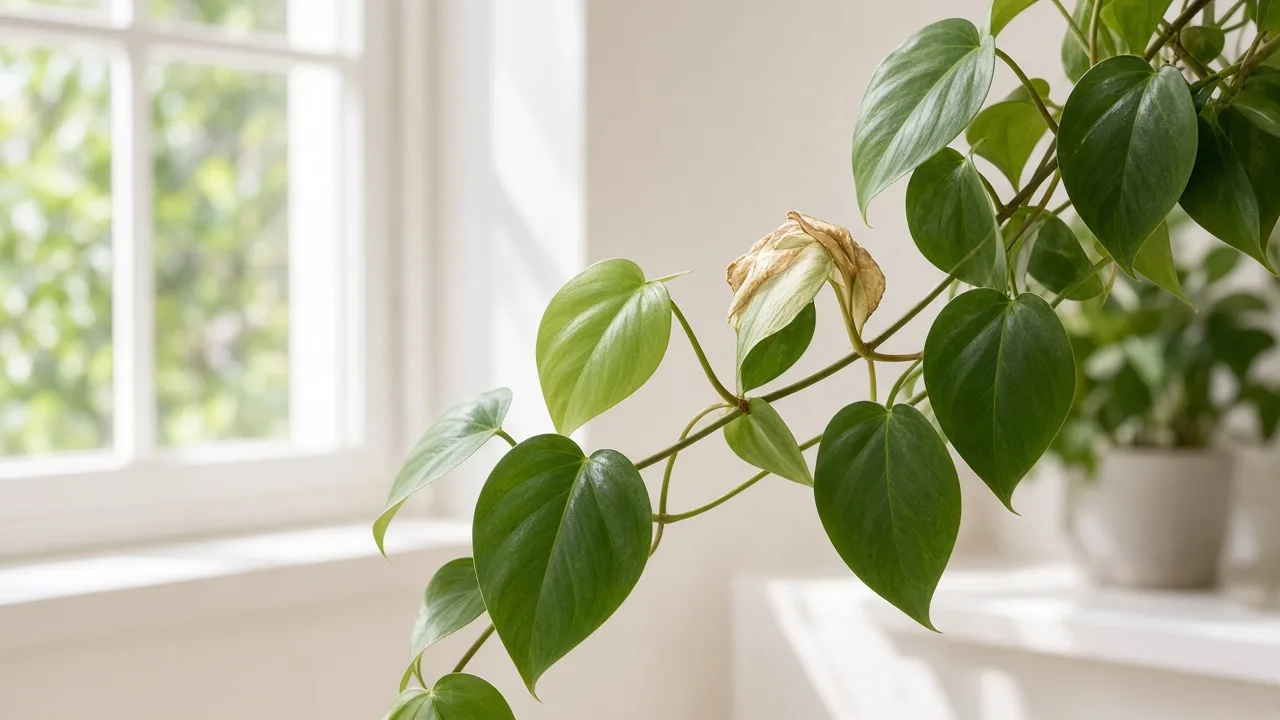
Faded Flowers on Heartleaf Philodendron: Causes, Checks & Fixes
This guide covers faded flowers on Heartleaf Philodendron. See also the general Faded Flowers guide, watering, and light pages for this plant.
Faded Flowers on Heartleaf Philodendron: Causes, Checks & Fixes
Quick answer
Faded flowers on heartleaf philodendron (Philodendron hederaceum) almost always involve a rare aroid inflorescence—not colorful petals. NC State describes small greenish-white flowers on a spadix and spathe where the spathe forms a tube around the spike and expands into a greenish-yellow hood. The inflorescence is rarely seen in cultivation, so any spathe you notice usually means a mature, well-lit vine—not a failing houseplant.
Two situations share the same symptom. Normal fade happens after the hood has displayed for one to two weeks—the bloom cycle is ending. Stress fade dulls or collapses the spathe within days of opening, often after dry soil, a cold draft, or a recent move while the inflorescence was active.
First step: confirm you are looking at a spathe-and-spadix inflorescence at a vine node, then snip fully spent hoods at the base with clean shears. Do not fertilize, repot, or relocate hoping to “revive” a finished bloom. Stabilize moisture if the fade was premature; deadhead and return to foliage care if the display simply ran its course.
For how blooms lose color on houseplants in general, see our faded flowers symptom guide. On heartleaf philodendron, the diagnostic clue is almost always a narrow hood at a node along a trailing vine—not a terminal bract cone or showy petal cluster.
What faded flowers look like on heartleaf philodendron
Heartleaf philodendron “flowers” are not roses or African violets. You will see a spadix (central spike) shorter than or equal to the spathe—a hooded structure that looks like a pale green or cream canoe standing upright from a node on the vine. Tiny true flowers line the spadix inside the tube; most growers notice the whole inflorescence, not individual florets.
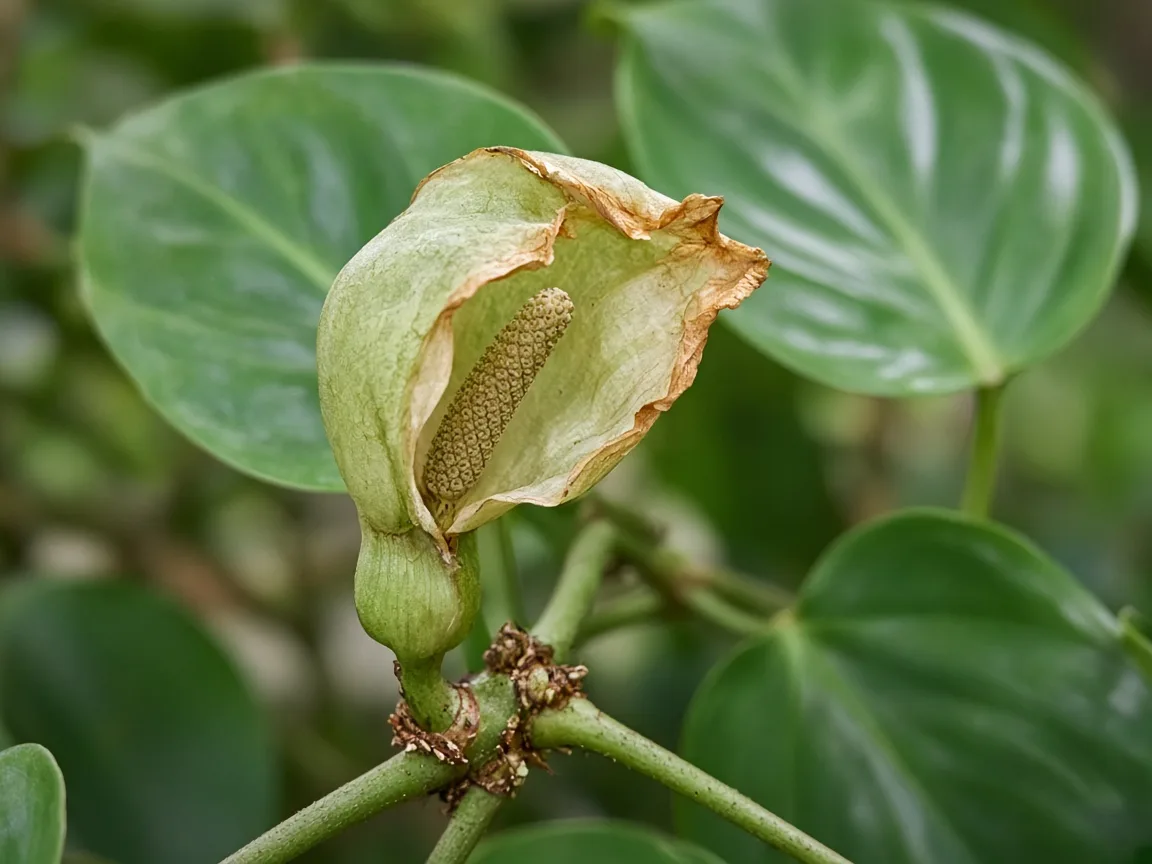
Faded spathe on heartleaf philodendron—compare the dull hood with glossy heart-shaped leaves on the same vine.
Normal fading (expected on the rare indoor bloom):
- Spathe color shifts from fresh green-white or pale yellow to tan, brown, or papery
- Hood edges dry first while heart-shaped leaves stay glossy and firm
- Spadix inside may already be spent; only the spathe remains visible
- Other nodes on the vine look healthy; no sudden mass yellowing tied to the fade
Stress fading (premature):
- Spathe dulls from bright cream to washed-out brown within a few days of opening
- Hood wilts or collapses while still green, often after a missed watering week or heating-season dry air
- Fade follows repotting, relocation, or a cold draft at the window
- Soft petioles at the same node suggest wet-root trouble, not cosmetic bloom aging
What faded flowers are not:
- Pale leaves — Whole blades lose gloss; no hood-and-spike structure at a node
- No flowers — Vegetative trailing growth only, with no spathe ever forming
- Small flowers — Inflorescence opens but stays undersized; that is a different bloom-quality issue
- New leaf unfurling — Heart-shaped blade emerging from a stipule at the vine tip; not a flower problem
Telling a philodendron spathe from a new heart leaf
This confusion is heartleaf-specific and worth resolving before you change care. New leaves emerge from conspicuous stipules at the growing tip—papery sheaths that peel away as a glossy heart blade unfurls. The petiole attaches at the leaf base, and the blade widens into the classic sweetheart shape.
A spathe inflorescence sits at an older node along the vine, not at the active tip. It stays narrow and upright, wrapped around a spadix—never developing the broad heart silhouette. If you see a pale tube at a mid-vine node with no blade expanding beside it, you are likely on a flower. If a pale structure at the tip is opening into a flat leaf, that is growth, not bloom fade.
Variegated ‘Brasil’ and bronze-tipped new growth on some cultivars add another layer: fresh leaves can look cream or pink before they green up. That color shift is leaf maturation, not a fading spathe.
Where inflorescences form on trailing heartleaf vines
Heartleaf philodendron is a trailing vine with glossy heart-shaped leaves. In habitat it climbs trees; indoors it cascades from hanging baskets or moss poles. When it does flower, the inflorescence appears at a node—the joint where a leaf petiole meets the stem—not as a terminal crown display.
That growth habit matters for diagnosis:
- Hanging baskets — Spathes may hide under overlapping leaves; lift vines gently to inspect nodes
- Long bare stems — A single spathe on an otherwise leafless section is still valid bloom tissue, not a dead vine
- Multiple vines in one pot — Fade on one node’s spathe does not mean the whole plant is declining
Mature, well-established vines in bright indirect light are the ones most likely to produce the greenish hood in the first place. Juvenile cuttings in dim corners rarely bloom at all—if you never see a spathe, use the no flowers guide instead of this page.
Why heartleaf philodendron gets faded flowers
Natural spathe senescence
Aroid spathes are brief displays built for pollination, not weeks of indoor color. Once the spadix has done its job—or indoors, when the structure simply ages out—the hood loses pigment and dries. Heartleaf philodendron is grown mainly for foliage and rarely flowers indoors; fading at the end of a one-to-two-week window is biology, not failure.
Housekeeping delay
The practical issue is leaving spent spathes attached. Decaying hood tissue holds moisture against nodes on a plant whose roots rot quickly in compacted or persistently wet mix. Prompt removal keeps energy directed toward the trailing foliage this species is valued for.
Environmental stress during bloom
Drafts, repotting, or a sudden room change while a spathe is open can abort or prematurely fade the inflorescence. Heartleaf prefers medium light, moist well-drained soil, and medium relative humidity—instability during a rare bloom accelerates wilt. See draft stress when fade followed a cold window or AC blast.
Dry soil or low humidity during bloom
Terminal spathe tissue transpires heavily. When the top of the mix goes bone dry during an active inflorescence, the hood can desiccate and brown faster than surrounding leaves. Winter heating that pulls humidity below 40% produces the same edge crisping on the spathe and sometimes on brown tips at leaf margins.
Low light or immaturity
Dim-corner specimens and young rooted cuttings rarely flower. When a weak spathe opens in marginal light and fades within days, the story is often insufficient energy—not disease. Leggy growth with long internodes and small pale leaves usually means the vine is surviving, not blooming reliably.
How to confirm the cause
Work through these checks in order:
- Structure ID — Narrow hood around a central spike at a node confirms inflorescence. Stipule tip opening to a heart leaf means foliage, not flowers.
- Timeline — Open spathe for one to two weeks then gradual browning suggests normal end of cycle. Collapse within days of a move or repot suggests stress.
- Stem firmness — Squeeze the petiole and stem at the node. Firm green tissue with a dry brown spathe is cosmetic. Soft collapsing tissue plus wet mix points to overwatering or root rot.
- Moisture pattern — Follow heartleaf philodendron watering—water when the top 2 inches dry. Soggy mix alongside rotting spathes needs watering correction, not bloom booster.
- Light history — Spathes that formed in bright indirect light and fade evenly are normal. Spathes that never fully open in a dim hallway fit low-light stress.
- Whole-plant context — Glossy flat leaves, steady new nodes, and no pest stippling suggest cultural fade or normal senescence—not blight or infestation.
First fix for heartleaf philodendron
Snip fully faded spathes at the base of the inflorescence with sterile shears. Cut cleanly where the flower stalk meets the stem; avoid tearing tissue or leaving a wet stub that traps moisture against the node. Philodendron contains calcium oxalate crystals—wear gloves if sap irritates your skin, and keep cuttings away from pets.
If the spathe is only starting to dull but still firm and green, you may wait until fully spent unless the hood blocks light to lower leaves. Once tan and papery, removal is overdue.
If you discover the “flower” was actually a pale new leaf unfurling, stop—no pruning needed. Shift to normal foliage care and revisit this page only when a true spathe appears.
Step-by-step recovery
After deadheading spent inflorescences:
- Sterilize shears between cuts if multiple spathes are spent.
- Keep the vine in bright indirect light without moving pots again for two weeks.
- Water only when the top 2 inches of mix dry—heartleaf uses water slowly in dim light but wilts when fully dry.
- Skip fertilizer until new firm heart leaves appear; stressed philodendrons do not need bloom booster.
- Raise humidity slightly if spathe edges crisped during heating season; see low humidity for setup detail.
- Watch for sour soil or fungus gnats if spathes were left to rot—dry the root zone before the next soak.
Recovery timeline
Normal post-bloom fade completes in one to two weeks as the spathe dries. Snipping spent hoods tidies the vine within days. A new inflorescence may appear next active season on a mature, well-lit plant—rebloom is never guaranteed indoors. Judge success by glossy trailing leaves and even node spacing, not by immediate repeat flowering.
Lookalike symptoms
| What you see | Likely cause | Not faded flowers |
|---|---|---|
| Pale cream structure at vine tip opening to a heart leaf | New foliage | Leaf maturation, not bloom |
| Narrow hood at node turning tan after weeks | Spent spathe | Normal—snip it |
| Whole vine pale and stretched | Low light | Pale leaves or leggy growth |
| Yellow lower leaves with wet soil | Root stress | Overwatering, not inflorescence |
| No hood ever formed on mature vine | Bloom failure | No flowers |
| Hood opens small and stunted | Weak bloom | Small flowers |
Mistakes to avoid
- Leaving spent spathes attached until they rot against the node
- Mistaking a stipule leaf bud for a flower and changing care unnecessarily
- Fertilizing heavily after bloom fade hoping to force another spathe
- Repotting when a rare inflorescence appears to “boost” flowering energy
- Expecting showy, long-lasting petals—heartleaf blooms are insignificant greenish hoods, not anthurium-style displays
- Handling cut inflorescences near pets—heartleaf philodendron is toxic to cats and dogs
How to prevent problems after flowers fade
Remove spent spathes promptly each cycle. Keep bright indirect light year-round, follow allowing soil to dry between waterings on a trailing vine schedule, and avoid relocating while new hoods form. Treat flowering as a bonus—stable soil and watering care keeps heartleaf philodendron looking best.
When to worry
Dry brown spathes on an otherwise firm trailing vine are not an emergency. Worry when fading coincides with soft nodes, sour-smelling mix, pest-coated new growth, or rapid yellowing of multiple lower leaves—those patterns need root, pest, or rot diagnosis, not bloom-focused fixes.
Conclusion
Faded flowers on heartleaf philodendron most often mean a rare greenish spathe is finishing its natural life—not that your trailing vine is failing. Confirm spathe structure at a node, distinguish leaf unfurling at the stipule tip, snip spent hoods before they rot, and measure health by glossy heart-shaped leaves. Rebloom may come seasons later, if at all—and that is normal for this foliage-first aroid.
When to use this page vs other heartleaf philodendron guides
- Heartleaf philodendron watering — Use for routine moisture checks before assuming faded flowers is the main issue.
- No flowers — Use when no spathe has ever formed on a mature vine.
- Small flowers — Use when inflorescences open but stay undersized.
- Pale leaves — Use when foliage loses color, not a hood at a node.
- Heartleaf philodendron problems hub — Browse all common issues on this species.
Related heartleaf philodendron guides
- Heartleaf philodendron overview
- Heartleaf philodendron watering
- Heartleaf philodendron light
- Heartleaf philodendron soil
- Heartleaf philodendron problems
- No flowers on heartleaf philodendron
- Small flowers on heartleaf philodendron
Related tool
Use the Plant Problem Diagnosis Tool to narrow causes for faded flowers on this plant before changing multiple variables at once.