Small Flowers on Heartleaf Philodendron: Causes, Checks &
Quick answer
Small flowers on heartleaf philodendron are usually normal aroid biology—a narrow greenish spathe around a short spadix, not a failed hibiscus. First step: confirm the structure is a true inflorescence at a vine node, not an aerial root or unfurling leaf sheath, before changing care.
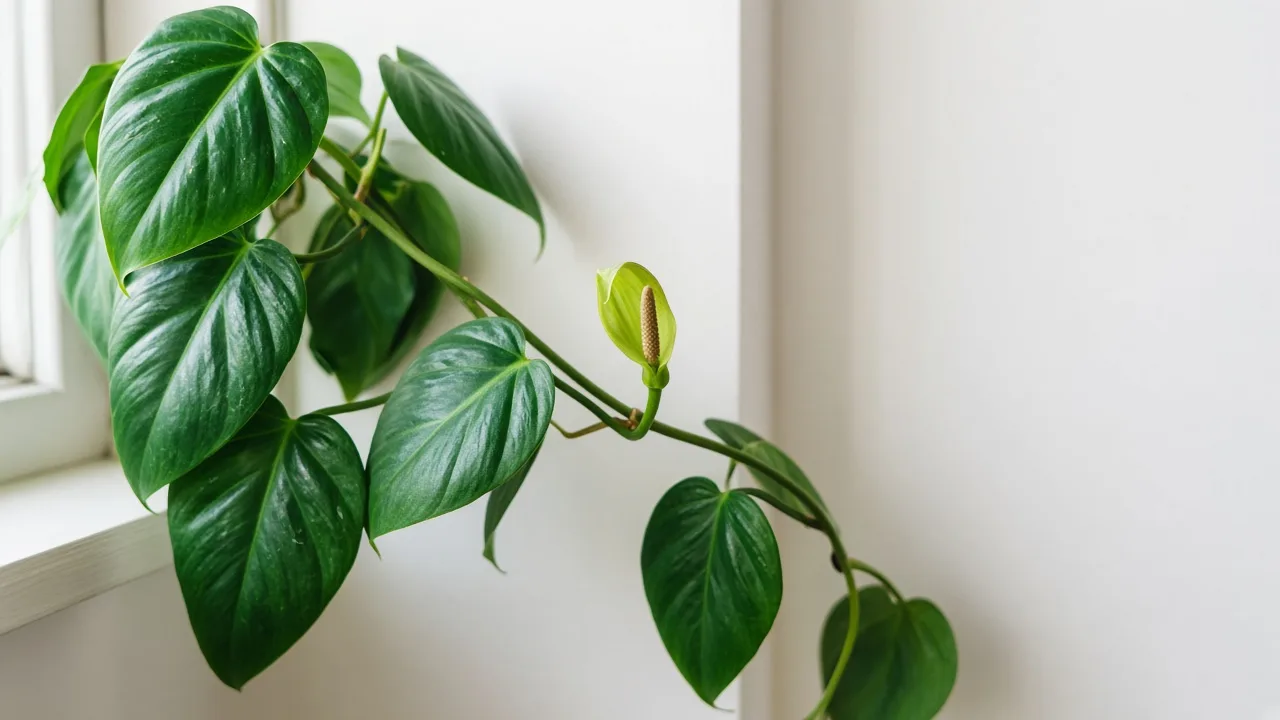
Small Flowers on Heartleaf Philodendron: Causes, Checks & Fixes
This guide covers small flowers on Heartleaf Philodendron. See also the general Small Flowers guide, watering, and light pages for this plant.
Small Flowers on Heartleaf Philodendron: Causes, Checks & Fixes
Quick answer
Small flowers on heartleaf philodendron (Philodendron hederaceum) almost always mean one of two things: a normal, modest aroid inflorescence—or something that is not a flower at all. NC State Extension notes that the flowers are small and greenish-white, forming a spadix shorter than or equal to the spathe with a greenish-yellow hood. That entire structure is compact by design, not an underdeveloped ornamental blossom.
Missouri Botanical Garden adds that greenish-white arum family flowers infrequently appear on mature indoor plants—and when they do, they stay visually quiet compared with anthuriums or peace lilies. For the general mechanics of why houseplant blooms stay modest, see our small flowers symptom hub. On heartleaf philodendron, the diagnostic question is whether you are seeing a true spathe-and-spadix at a vine node—or misreading aerial roots, scale bumps, or a new leaf sheath as a tiny bud.
First step: confirm the structure is a spathe-and-spadix inflorescence, not climbing tissue or foliage. If it matches the narrow hood-and-spike pattern and the rest of the vine looks healthy, accept the modest size as biology. If the hood opened stubby after stress, stabilize watering and light before trying anything else.
When to use this page vs other Heartleaf Philodendron guides
| Your question | Best page |
|---|---|
| Spathe opened but looks tiny or narrow | This page |
| Never bloomed, healthy trailing vines | No flowers |
| Spathe losing color after open bloom | Faded flowers |
| Pale tube at tip unfurling into a heart leaf | Normal growth—not this page |
| Yellow leaves on wet soil | Overwatering |
| Long bare gaps between leaves | Leggy growth or not enough light |
What small flowers look like on heartleaf philodendron
Heartleaf philodendron does not produce separate petals on stalks. You will see an inflorescence: a fleshy spadix bearing microscopic florets, wrapped by a modified bract called a spathe. On this species the display stays narrow—NC State describes a tube around the spadix that expands into a modest greenish-yellow hood, not a wide white sail like a peace lily.
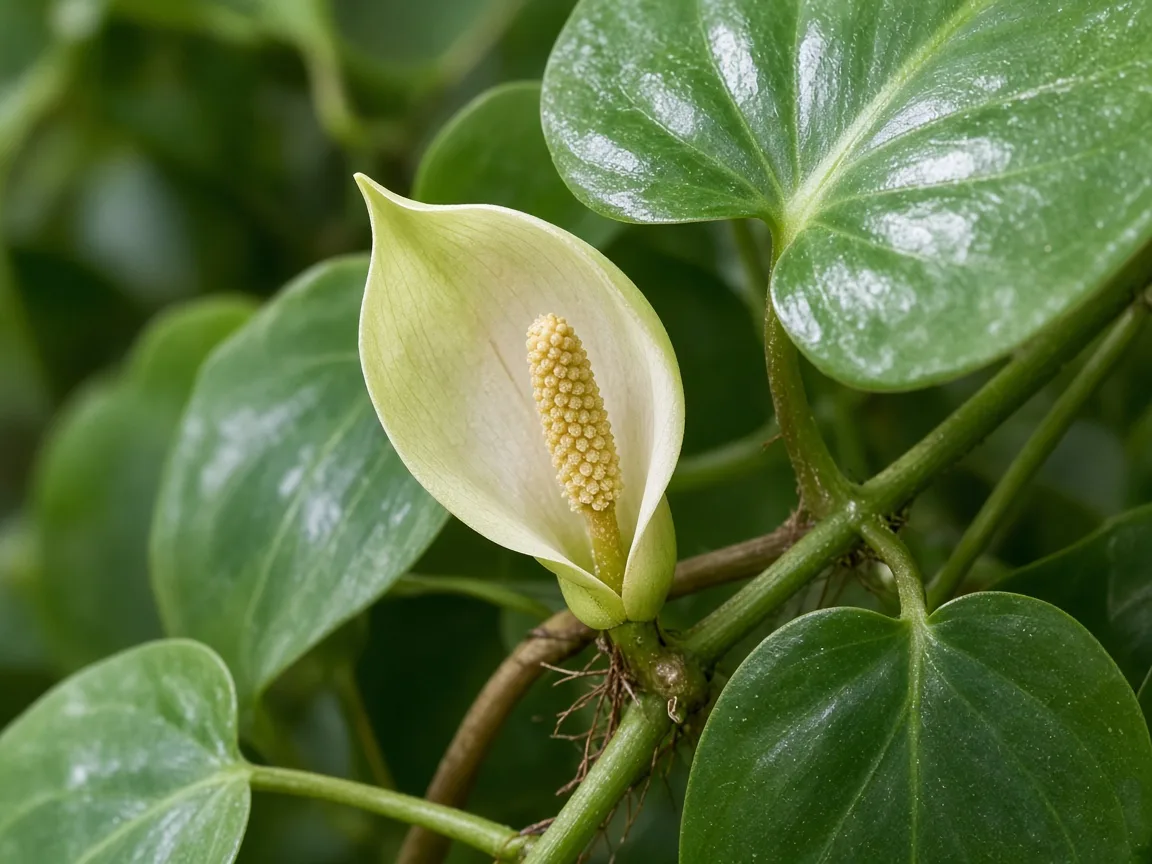
Small greenish spathe on heartleaf philodendron—compare the narrow hood-and-spadix with glossy heart-shaped leaves on the same vine.
Normal small flowers (expected when a rare indoor bloom appears):
- Spathe roughly finger-length or shorter—often green, cream, or pale yellow
- Spadix visible inside or just above the hood, shorter than or equal to the spathe length
- Structure sits at a mid-vine node, not the active growing tip
- Glossy heart-shaped leaves nearby stay firm; no sudden mass yellowing
True small-flowers problem (stunted bloom quality, not normal scale):
- Spathe opens but stays stubby or partially closed compared with an earlier inflorescence on the same mature vine
- Hood collapses within days of opening after repotting, relocation, or a missed watering stretch
- Bloom forms on a vine that also shows pale leaves, wide node spacing, or soft petioles on wet soil
What small flowers are not:
- Brown aerial root nubs at nodes—climbing tissue, not reproductive structures
- New leaf sheaths at the tip that unfurl into heart-shaped blades within days
- Scale insect shells—hard, immobile bumps, often with sticky honeydew
- Anthurium or spathiphyllum blooms on a different plant with different size expectations
Telling a modest spathe from a new heart leaf sheath
This confusion is heartleaf-specific and worth resolving before you change care. New leaves emerge from conspicuous stipules at nodes—papery sheaths that peel away as a glossy heart blade unfurls. Before the leaf opens, that sheath looks like a pointed green tube, similar enough to a spathe that owners photograph it as a “tiny flower.”
| Feature | New leaf sheath | Aroid inflorescence |
|---|---|---|
| Location | Active node where a leaf will emerge | Mid-vine node, distinct from normal leaf growth |
| Outcome | Unfurls into a glossy heart-shaped leaf | Persists as hood-and-spike floral tissue |
| Timing | Opens within days in active growth | Rare indoors; may persist weeks if genuine |
| Shape | Widens into classic heart silhouette | Stays narrow; spadix visible inside |
If the pale structure becomes a leaf, you were never dealing with small flowers—you were watching normal philodendron growth. If a narrow hood with a central spike sits on an older node and does not widen into foliage, you are likely on a genuine, naturally modest bloom.
Why heartleaf philodendron blooms stay small
Aroid architecture—not failed petal development
Philodendron belongs to the arum family. Individual “flowers” are tiny florets packed on the spadix; the spathe is a protective bract, not a petal. NC State lists the inflorescence as rarely seen in cultivation precisely because the whole structure is inconspicuous compared with showy relatives. Expecting hibiscus- or orchid-sized blossoms misunderstands the plant’s reproductive design.
Indoor plants still produce modest—not miniature—structures when they bloom
Unlike pothos, which almost never reaches a flowering phase indoors, heartleaf philodendron can bloom on mature, well-lit vines. Missouri Botanical Garden notes blooms on mature indoor specimens are infrequent but real. When they appear, they remain greenish-white and compact—that is the species performing normally, not underperforming.
Stress can stunt an inflorescence that was forming
A spathe that opens narrow and collapses quickly often follows environmental shock during bloom formation:
- Dry soil while a hood was developing—heartleaf prefers even moisture in the growing season but tolerates brief dry-down; prolonged drought during active bloom can abort or shrink the display
- Cold drafts or AC blasts at a window where a trailing vine hangs
- Recent repotting or relocation while a spathe was swelling—root disturbance redirects energy away from the inflorescence
- Low light on an otherwise mature vine—too-dark conditions make stems spindly and weaken bloom quality even when a hood forms
These cases are stunted bloom quality, distinct from the baseline modest size every philodendron inflorescence carries.
Aerial roots and pests masquerade as tiny buds
Heartleaf philodendron climbs with brown aerial roots at nodes. Small tan bumps along stems are normal climbing tissue—not floral buds waiting to enlarge. Scale insects form hard shells that also look like pre-flowers but never develop a spathe. Treat pests separately; do not feed or repot hoping to “grow out” insect bumps.
Wrong comparison species skew expectations
Anthuriums and peace lilies share the spathe-and-spadix plan but evolved large, colorful bracts for indoor display. Heartleaf philodendron spathes stay greenish and narrow by comparison. If you wanted showy blooms, those species—not a trailing foliage philodendron—match the goal.
How to confirm what you are seeing
Work through these checks before changing care:
- Node location — True inflorescences arise from mid-vine nodes. Structures at the active tip that widen into leaves are foliage, not flowers.
- Spathe versus spadix — Can you see a central spike inside or above a hood? A single round nub without bract wrapping is likely an aerial root or scale.
- Size relative to history — First bloom on a mature vine? Modest scale is expected. Second bloom on the same plant much stubbier after repotting? Stress stunting is plausible.
- Leaf health nearby — Firm glossy hearts and steady new growth suggest normal biology. Yellowing lower leaves on wet soil or soft nodes point to root problems masquerading as bloom failure.
- Sticky residue — Honeydew near bumps means pests, not floral tissue.
If the structure matches NC State’s spadix-and-spathe description and foliage is healthy, you have a rare, correctly sized philodendron bloom—not a crisis.
First fix for heartleaf philodendron
Identify the structure, then stop trying to enlarge it.
If you confirmed a genuine, modest spathe-and-spadix on an otherwise healthy vine, accept the size as normal and make no bloom fertilizer or repotting intervention. Photograph it—many growers never see one. Maintain stable bright indirect light and your usual dry-down watering rhythm.
If the spathe opened stubby or collapsed right after repotting, draft, or drought, stabilize the environment first: return the plant to its previous bright spot if moved, water when the top 2 inches of mix dry, and hold fertilizer until new heart leaves unfurl cleanly for two weeks.
If bumps are brown aerial roots on firm stems with active foliage, leave them alone—they support climbing and signal healthy nodes.
If bumps are hard scale shells with sticky leaves, treat pests with alcohol swabs on small clusters before assuming floral development.
Do not apply phosphorus-heavy bloom fertilizer on day one. Excess salts can burn leaf margins on philodendron without changing inflorescence architecture.
Step-by-step recovery based on what you find
Normal modest inflorescence (most confirmed blooms):
- Document the hood-and-spike for reference.
- Keep watering when the top 2 inches of mix dry—avoid swings while the spathe persists.
- Skip bloom feeds; use balanced houseplant fertilizer only if new leaves look pale after the inflorescence fades.
- When the hood browns, snip at the node base—same housekeeping as faded flowers.
Stress-stunted spathe:
- Move off drafty windows or AC vents; maintain above 60°F.
- Check drainage—philodendron roots rot in compacted, wet mix.
- Hold repotting until the vine pushes two clean new leaves.
- Expect the current inflorescence to finish small; future blooms may look similar even after recovery.
Aerial roots only:
- Confirm steady new leaf production every few weeks in warm months.
- Optionally offer a moss pole if you want larger leaves—not bigger “flowers.”
- Ignore the nubs; pruning them is optional cosmetic work, not required for bloom size.
Scale or pest bumps:
- Isolate from neighboring plants.
- Wipe visible scale with rubbing alcohol on a cotton swab; repeat weekly.
- Resume normal philodendron care once pests clear—still with modest bloom expectations indoors.
Recovery timeline and realistic expectations
Normal modest spathe: The hood may persist one to two weeks, then tan and dry like any aroid bloom. The plant returns to foliage growth. Do not expect a second, larger bloom soon—indoor flowering remains infrequent.
After stress stabilization: New heart-shaped leaves within two to four weeks confirm the vine recovered. The stunted spathe itself will not swell retroactively.
Aerial roots: Present continuously on climbing stems; they may lengthen when the vine reaches support. No recovery timeline applies.
Foliage success metric: Judge heartleaf philodendron by node spacing, leaf gloss, and trailing fullness—not spathe diameter. Epic Gardening notes this species is grown primarily for easy-care foliage, with blooms a rare bonus.
Lookalike symptoms to rule out
Aerial roots vs. flower buds — Roots are brown, node-based, and may extend. Inflorescences show a wrapping spathe with a visible spadix, not a single hard nub.
New leaf sheath vs. spathe — Sheaths at the tip open into heart blades within days. Spathes at mid-nodes stay narrow and floral.
Scale insects vs. buds — Scale forms immobile shells; honeydew and sooty mold often follow. Spathes do not produce sticky residue.
Faded vs. small — Faded flowers covers hoods losing color after a normal open display. This page covers modest size at opening or stubby development.
No flowers vs. small flowers — No flowers applies when no inflorescence ever forms. This page applies when a hood-and-spike is present but disappointingly tiny.
Mistakes to avoid
Do not apply bloom fertilizer hoping to swell an open spathe—individual florets stay microscopic regardless of phosphorus.
Do not repot during an active inflorescence unless roots are clearly failing; disturbance often aborts or shrinks the hood.
Do not prune aerial roots thinking they steal energy from hypothetical bigger blooms—they are normal climbing tissue.
Do not compare heartleaf philodendron to anthurium displays in the same room. Different species, different bract size.
Do not mistake sticky pest bumps for floral tissue—treat insects instead of adjusting light.
Do not keep heartleaf philodendron solely for showy flowers. It is sold and kept for glossy trailing foliage; modest blooms confirm maturity, not ornament failure.
How to prevent disappointment next time
Buy heartleaf philodendron for trailing leaves, tolerance of indoor light, and easy propagation—not bloom size. Provide bright indirect light, water when the top 2 inches of mix dry, and feed lightly during spring and summer only if leaves—not spathes—look pale.
A moss pole and brighter exposure can encourage larger leaves on mature vines but will not reliably produce showy inflorescences indoors. If dramatic spathes matter, add an anthurium or spathiphyllum and keep philodendron for foliage.
When a rare bloom appears, treat it as a photograph moment—not a performance to optimize.
When to worry
Small or modest flowers alone is never urgent. Escalate when:
- Spathe collapses within days alongside mushy nodes and sour-smelling soil
- Sticky leaves and ant trails suggest honeydew pests, not floral development
- Several yellow leaves in a week on persistently wet mix—separate from bloom size
- No new growth for months in warm weather despite good light—a health issue, not a floral one
A trailing philodendron with a narrow green hood, firm stems, and steady new heart leaves is succeeding—even if the bloom looks tiny beside an anthurium on the shelf.
Conclusion
Small flowers on heartleaf philodendron usually means you are seeing a correctly modest aroid inflorescence—or misreading roots, pests, or new leaves as buds. Real philodendron blooms are greenish, narrow, and infrequent indoors by documented biology, not because you skipped bloom booster. Confirm the spathe-and-spadix pattern, stabilize care only when stress stunted the hood, and redirect expectations toward the glossy trailing foliage this species is built to deliver. When leaves keep coming and nodes stay firm, your plant is performing exactly as Heartleaf Philodendron overview intends indoors.
Related Heartleaf Philodendron guides
- Faded flowers — Use when an open spathe is losing color or drying, not when size at opening is the question.
- No flowers — Use when no inflorescence has ever appeared on an otherwise healthy vine.
- Heartleaf Philodendron watering — Stabilize moisture before assuming bloom size reflects fertilizer gaps.
- Heartleaf Philodendron light — Bright indirect exposure supports mature vines that occasionally bloom.
- Heartleaf Philodendron problems hub — Browse all common issues on this species.
Related tool
Use the Plant Problem Diagnosis Tool to narrow causes for small flowers on this plant before changing multiple variables at once.