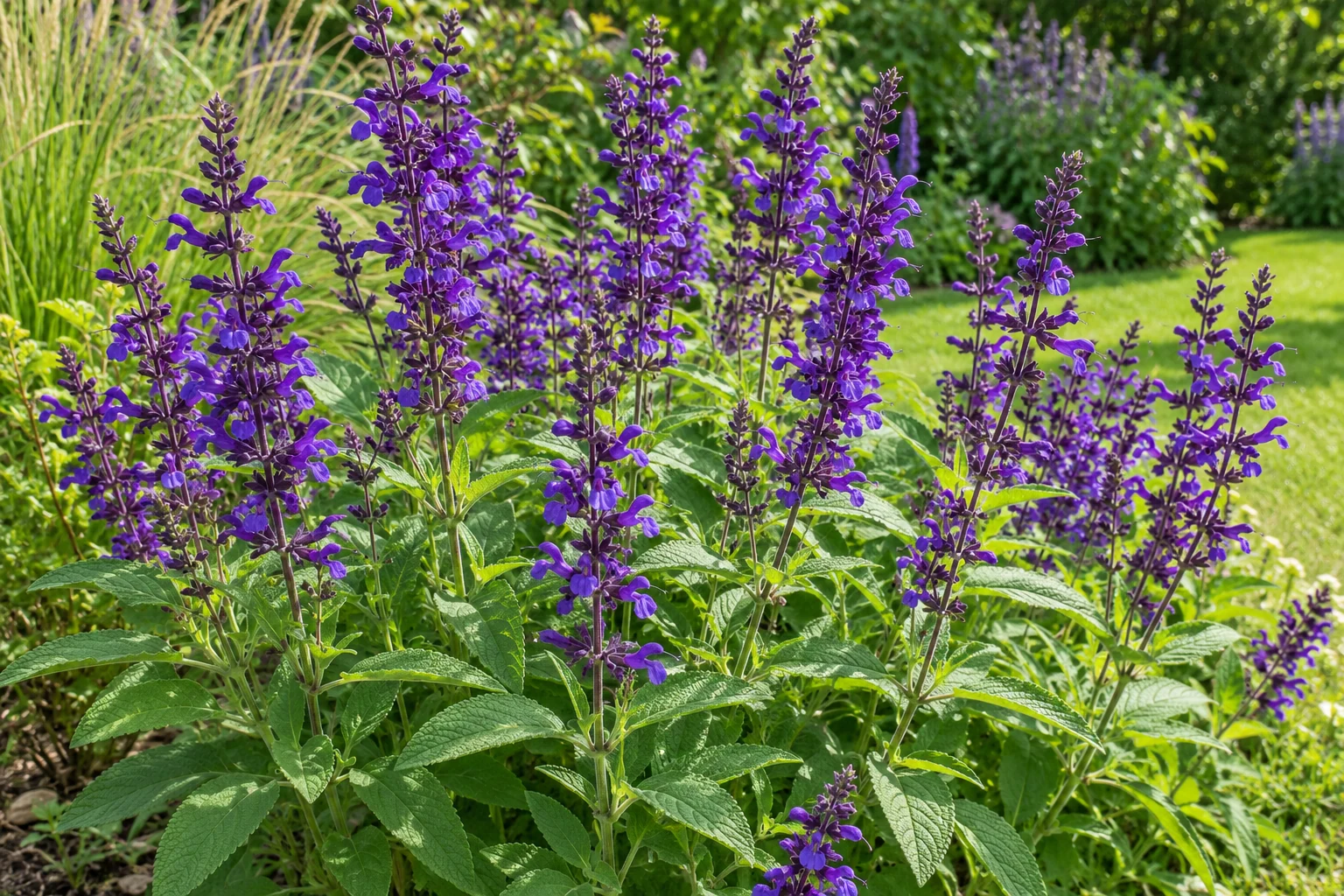
It covers ornamental flowering salvias such as scarlet sage (Salvia splendens) and woodland sage (Salvia nemorosa). The genus is large, so use the botanical name on your plant label before applying the exact size, watering, or winter-care advice.
Is Salvia the same as culinary sage?
Culinary common sage is Salvia officinalis, which is one member of the genus. Many plants sold as ornamental salvia are different species or hybrids with distinct growth habits and care needs.
Does Salvia need full sun?
Full sun encourages flowering in many garden salvias. Salvia splendens also tolerates partial shade, but deep shade can reduce flowering; check the requirements of the exact species or cultivar.
Is Salvia drought tolerant?
It depends on the species. Salvia splendens is not drought tolerant and needs more consistent moisture, while established Salvia nemorosa can tolerate dry soil. Both still need good drainage.
Is ornamental Salvia safe for pets?
Do not assume every salvia is safe because ASPCA lists culinary sage (Salvia officinalis) as non-toxic to cats, dogs, and horses. That listing does not classify ornamental species or hybrids; keep pets from chewing them until you confirm species-specific guidance.
How often should I water Salvia?
There is no single watering schedule for the genus. Scarlet sage (Salvia splendens) prefers moist, well-drained soil and is not drought tolerant; established woodland sage (Salvia nemorosa) tolerates drier soil. Check the plant label, water newly planted salvias while they establish, and keep container soil from staying saturated. In practice, water check the root zone instead of watering on a fixed calendar. In warm, dry weather, check bedding salvias and containers more often; established drought-tolerant perennial types may need less supplemental water. Adjust to the identified species, rainfall, and drainage. Feel the upper inch of soil before watering. If it is dry, water the root zone thoroughly and let excess drain from the pot or bed. Do not leave a container standing in water. Newly planted salvias need closer moisture checks until established. Increase checks during hot, dry spells for tender bedding types such as Salvia splendens; established woodland sage can tolerate drier conditions. Reduce supplemental water when growth slows or rain keeps the soil moist.
What light does Salvia need?
Salvia grows best in full sun for the strongest flowering in most garden salvias. It also tolerates Partial shade, Dappled sunlight. Avoid deep shade, which can reduce flowering.
Written by Sai AnanthLead content writer at LeafyPixels. B.Pharmacy graduate from Andhra University with a background in pharmacognosy, turned indoor gardening writer after a long-time plant hobby became a research-led resource for home growers.View Sai Ananth's profile · Reviewed by LeafyPixels Review Board
This Salvia problems problem guide was researched and written by Sai AnanthLead content writer at LeafyPixels. B.Pharmacy graduate from Andhra University with a background in pharmacognosy, turned indoor gardening writer after a long-time plant hobby became a research-led resource for home growers.View Sai Ananth's profile. Problems symptoms on Salvia, lookalike causes, and step-by-step fixes are cross-checked against extension pest, disease, and care references before publication.
We prioritize sources that hold up under scrutiny:
University cooperative extension bulletins and fact sheets (Penn State, Clemson, UMD, NC State, and similar programs)
Botanical garden and horticultural society publications
Peer-reviewed plant science and veterinary toxicology references where pet safety matters (including ASPCA Animal Poison Control)
Established reference works on indoor plant culture
The LeafyPixels editorial team then reviews the draft for clarity, step-by-step usefulness, and fit with real apartment and home conditions-not ideal greenhouse setups. When guidance changes materially, we update the page and note the revision date.