Best Soil for Sansevieria Laurentii: Drainage Mix Guide
Best Soil for Sansevieria Laurentii: Drainage Mix Guide
Best Soil for Sansevieria Laurentii: Drainage Mix Guide
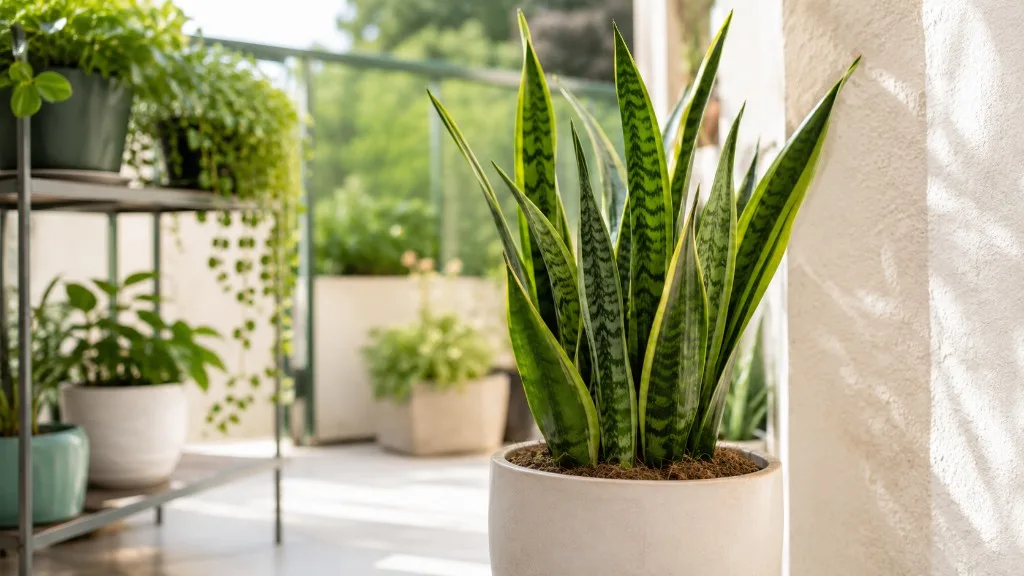
If your Sansevieria Laurentii has ever gone from stiff, gold-edged leaves to a soft base with no obvious pest in sight, the soil was probably involved. Dracaena trifasciata ‘Laurentii’ — the variegated snake plant with creamy-yellow margins and an RHS Award of Garden Merit — stores water in thick leaves and underground rhizomes, so it tolerates drought far better than it tolerates sitting in damp mix. The right substrate is not a minor detail for this cultivar. It is the difference between a plant that holds sharp variegation for years and one that slowly rots while the leaves still look firm.
This guide covers what Laurentii actually needs from potting mix, why standard indoor soil is the wrong tool, which components to combine, three reliable DIY recipes, store-bought options worth buying, how to pair soil with the right pot, and when to refresh the blend before drainage quietly fails.
What Sansevieria Laurentii actually needs from soil
The best soil for Sansevieria Laurentii is a fast-draining, airy mix that dries predictably between waterings. Water should move through the pot and exit the drainage hole within seconds, not pool on the surface or linger in the lower third of the container for days. The mix should feel light and slightly chunky, resist compaction after repeated watering, and leave enough air space around the rhizomes that roots can breathe even right after a thorough soak.
Laurentii is not a heavy feeder in the soil department. It does not need rich, moisture-holding tropical blend. What it needs, in order of importance, is drainage, then aeration, then a stable pH that keeps nutrients available. NC State Extension lists the species as requiring good drainage on loam-to-sand texture with neutral to alkaline pH. The RHS Laurentii profile confirms well-drained loam or sand and warns to protect from winter wet — the same logic applies indoors when peat-heavy mix stays saturated for weeks.
Rhizomes, leaf storage, and dry-down timing
Sansevieria Laurentii evolved in dry seasons of West Africa as a rhizomatous perennial with erect, strap-shaped leaves rising from a thick underground stem. That rhizome stores starch and moisture — insurance against drought — and it is also the first structure to fail when surrounding mix stays wet. The Missouri Botanical Garden recommends growing snake plants in a well-draining potting mix in warm, bright locations; indoors, that translates to gritty cactus-style substrate rather than moisture-retentive peat blends.
A useful home benchmark: after a full watering, the top inch of mix should feel dry within 3 to 7 days in a typical indoor room with decent light. In winter, dry-down may stretch toward 10 to 14 days in a medium pot. If the mix is still damp at finger depth after two weeks in normal indoor conditions, it is too water-retentive for Laurentii — regardless of how carefully you follow a watering guide. For pH, a practical indoor target is 5.5 to 7.5, slightly acidic to neutral; most quality cactus mixes already land near neutral because perlite, sand, and limestone-adjusted peat sit in that range.
Why gold-margined Laurentii punishes wet mix harder in dim rooms
Drainage rules match the plain-green snake plant at the rhizome level, but placement changes how fast your mix dries. Laurentii margins need brighter light than solid-green forms to stay crisp; growers who park the pot in a dim corner for “low-light tolerance” often slow both photosynthesis and evaporation. Soil that would dry in five days near an east window may stay wet for three weeks in a hallway — and that is when overwatering on Sansevieria Laurentii kills plants that received technically modest water volumes.
The takeaway: if your Laurentii lives in moderate or low light, push drainage harder than you would for the same plant in a bright window. Grittier mix buys time when metabolism and evaporation both slow. In a bright east or filtered south placement, a standard amended cactus blend is usually enough.
Why regular potting soil fails Laurentii
Standard indoor potting soil is the most common reason variegated snake plants fail indoors. All-purpose blends are engineered for tropical foliage — pothos, peace lilies, ferns — built around sphagnum peat and composted forest products that act like sponges. They keep roots damp for days. For a Laurentii rhizome, that is a liability. “Moisture control” variants are worse: water-retentive polymers stretch the time between waterings in exactly the wrong direction.
NC State Extension is direct: do not overwater, as the roots will rot. That warning assumes soil can dry between waterings. In dense peat mix — especially in plastic pots, humid bathrooms, or dim offices — it often cannot. The plant looks fine until it does not.
Slow rot beneath firm variegated leaves
When a Laurentii rhizome sits in saturated mix, water fills pore spaces and pushes air out. Healthy tissue needs oxygen; a waterlogged substrate delivers almost none. Weakened cells turn mushy, and soil-borne organisms that thrive in wet conditions — including Pythium and Phytophthora — finish the job. The visible symptoms are frustratingly delayed: lower leaves yellow, new growth stalls, and the base of a leaf pulls away with little resistance while the blade still feels full of stored water.
Prevention through soil texture and pot choice is the only reliable strategy. Once the base goes soft, recovery is often impossible even though the gold-edged foliage still looks presentable.
What fast-draining soil means for this cultivar
“Well-draining” is concrete and testable for Laurentii. Fast-draining soil is substrate where water flows through the entire profile and out the drainage hole within seconds of a thorough pour, then leaves the mix noticeably lighter at the surface within a few days. It is not soil that “eventually dries out.” It is soil that dries on a schedule your room and placement can sustain.
Fast-draining mix also resists compaction. After six months of watering, it should still feel loose, not brick-like. Organic matter breaks down over time — normal — but a good Laurentii blend starts with enough coarse mineral material that breakdown takes years, not weeks.
The squeeze test and one-minute drainage check
The single most important variable is particle size, not the brand on the bag. Coarse particles roughly ¼ inch (6 mm) create stable air gaps that fine peat cannot maintain. Moisten a handful of finished mix and squeeze firmly. When you open your hand, the mix should fall apart immediately. If it holds a tight ball, add perlite, pumice, or coarse sand before planting.
A second check: fill a pot with your mix, water until runoff, and watch the surface. Water should not pool for more than a few seconds. Lift the pot an hour later — it should already feel lighter than at saturation.
Core mix components for Sansevieria Laurentii
A reliable Laurentii blend combines mineral drainage material (perlite, pumice, coarse sand, bark chips), a modest organic base (cactus mix, coco coir, pine bark), and sometimes a trace nutrient source (worm castings) in small amounts. The ratio matters more than any single ingredient.
Perlite, pumice, and coarse sand
Perlite — expanded volcanic glass — creates air pockets, drains freely, and holds a little moisture in surface pores. It commonly makes up 30% to 50% of a DIY Laurentii blend by volume. Pumice is heavier, stays put when watered, and lasts longer without crushing — useful for tall Laurentii in plastic pots that need stability. Coarse horticultural sand adds grit; use visible ¼-inch particles only. Fine play sand or beach sand clogs pores and adds salt.
Pine bark fines or orchid bark add chunkiness and slow-decomposing structure. The RHS suggests a DIY alternative of two parts peat-free loam-based compost with one part horticultural grit — bark and perlite achieve a similar open texture in US mixes.
Cactus mix as a starting base
Yes — cactus soil is good for Sansevieria Laurentii, and for most growers it is the smartest starting point. Cactus and succulent bagged mixes already contain sand, perlite, and limited organic matter. Clemson Extension notes that soilless peat-perlite blends work for containers but may need amendment with bark, sand, or perlite for specific plants — snake plants fall in the “amend for drainage” camp.
The catch: not every bag labeled “cactus” is gritty enough. Run the squeeze test on a moist sample. If it forms a ball, plan 25% to 40% extra perlite or pumice by volume before potting. For humid homes, low-light offices, or plastic pots, treat even a good cactus mix as a base, not a finished product.
Perlite vs pumice for Laurentii pots
Both work. Perlite is inexpensive and everywhere — the practical choice for beginners and terra cotta pots. Pumice adds weight and stability for tall, top-heavy Laurentii specimens in smooth plastic containers, and it holds structure longer in humid rooms where perlite slowly crushes to fines. If you have already lost a variegated snake plant to rot in a bathroom or basement office, pumice is the better investment.
Three DIY recipes that work indoors
You need a bucket, a measuring cup, and components that pass the squeeze test. These three recipes cover the conditions most Laurentii growers actually face.
The balanced 2:1:1 mix
The most reliable all-purpose recipe:
- 2 parts quality cactus or succulent mix
- 1 part perlite or pumice
- 1 part coarse horticultural sand or pine bark fines
Blend until uniform. The finished mix should feel gritty, crumble when squeezed, and drain in seconds. For a single 6-inch terra cotta pot, measure roughly 2 cups cactus mix, 1 cup perlite, 1 cup coarse sand — about 1.5 quarts total. Plant at the same depth as before, rhizome at or just below the surface, and wait 5 to 7 days before the first watering after repotting.
Extra-drainage blend for low-light or humid rooms
If your Laurentii lives in a low-light office, humid bathroom, or plastic pot:
- 1 part cactus mix
- 1 part perlite or pumice
- 1 part orchid bark or pine bark fines
- ½ part coarse sand (optional, for weight)
This blend dries faster, compensating for reduced evaporation when the plant is not in bright light or when the pot traps moisture. Pair with the light guide — soil alone cannot fix chronic dim placement, but grittier mix reduces rot risk while you find a brighter spot.
Store-bought mixes worth buying
Pre-made mixes save time. Pick a bag with real drainage components up front and amend when your room demands it.
| Pre-made mix | Drainage rating | Best for Laurentii | Watch-outs |
|---|---|---|---|
| Hoffman Organic Cactus & Succulent | Very good | Beginners, standard indoor Laurentii | Add perlite in humid rooms |
| Espoma Organic Cactus Mix | Very good | Organic-focused growers | Slightly peat-heavy; amend in bathrooms |
| Miracle-Gro Cactus, Palm & Citrus | Good | Budget convenience | Add 30% perlite |
| Black Gold Cactus Mix | Very good | Larger pots, collections | Refresh every 2 years |
| Bonsai Jack Succulent & Cactus | Superior | Chronic overwaterers, humid homes | Dries fast; monitor summer watering |
Top pick for most indoor growers: Hoffman or Espoma cactus mix amended with 30% extra perlite or pumice. Top pick for rot-prone setups: Bonsai Jack or similar gritty inorganic mix used as-is.
When reading a bag, look for perlite, pumice, sand, bark, or calcined clay near the top of the ingredient list. If sphagnum peat or composted forest products dominate, assume amendment is required.
Pots, drainage holes, and the gravel myth
Soil is half the drainage system. The pot is the other half. No mix compensates for a container that traps water.
Use a drainage hole. Non-negotiable for long-term indoor culture. Decorative cachepots work only if the inner grow pot drains freely and you empty standing water after every watering.
Terra cotta for tall upright Laurentii
Laurentii commonly reaches 2 to 4 feet indoors with upright sword leaves — a top-heavy profile. The Missouri Botanical Garden recommends clay pots wider than they are high for stability with tall snake plants. Unglazed terra cotta wicks moisture through its walls, helping mix dry faster — a genuine advantage in humid rooms and a good match for the RHS advice to use free-draining cactus compost and avoid overwatering.
Size the pot to the rhizome, not the leaf height. A container 1 to 2 inches wider than the root mass is enough for most repots. Oversized pots hold wet mix in empty space around small rhizomes.
Why gravel layers backfire
Gravel, pot shards, or pebbles at the pot bottom do not improve drainage — they create a perched water table, a saturated band just above the coarse layer. Washington State University Extension summarizes the research: water does not move easily from fine potting mix into a coarse layer below until the fine soil saturates first. Fill the entire pot with uniform gritty mix. Cover large drainage holes with mesh or a coffee filter, not a deep stone layer.
When to refresh or repot Laurentii
Even excellent mix slowly breaks down. Peat and bark decompose; perlite crushes; air gaps fill with fines. Refresh when:
- Water pools on the surface for more than a few seconds
- The mix takes noticeably longer to dry than it used to
- Roots circle the pot edge or push through drainage holes
- The plant has been in the same soil for 2 to 3 years
Spring through early summer is the best window. The RHS Laurentii profile advises potting on only when pot bound — you do not need a larger container unless roots demand it. Often you can replace old peat sludge with fresh gritty blend in the same pot. See the repotting guide for step-by-step timing; skip repotting a stressed plant unless the soil itself is sour or staying wet.
Common soil mistakes on variegated snake plants
Most Laurentii soil failures trace to a short list of repeatable errors.
Using unamended all-purpose potting soil. Amend heavily or switch to cactus mix. Trusting “cactus” labels without the squeeze test. Some bags are peat with marketing. Adding a gravel drainage layer. It worsens bottom saturation. Using fine play sand or beach sand. Clogs pores; beach sand adds salt. Growing in a sealed pot with no drainage hole. Rot follows. Oversizing the pot. Extra volume stays wet around a small rhizome. Keeping Laurentii in dim corners with standard nursery peat. Slow dry-down plus modest watering still equals wet roots — move toward brighter light or grittier mix. Ignoring sour smell from the pot. Refresh immediately; inspect for root rot on Sansevieria Laurentii if bases soften.
Conclusion
The best soil for Sansevieria Laurentii care is a fast-draining, gritty cactus or succulent blend with enough perlite, pumice, coarse sand, or bark to keep rhizomes airy between waterings. Standard potting soil fails because it is built for moisture retention, not for a West African drought-adapted plant that stores its own water and dies quietly when mix stays wet.
Whether you buy amended cactus mix or blend your own 2:1:1 recipe at home, the principles are identical: water flows through in seconds, the surface dries within days, and the rhizome never sits in a perched water table at the pot bottom. Pair that mix with a drainage hole, skip the gravel layer, choose terra cotta when you can for tall upright specimens, and refresh every couple of years as organic components break down. Get the soil right, and your gold-margined snake plant becomes almost boringly reliable — which, for the Sansevieria Laurentii overview, is the highest compliment you can give.
When to use this page vs other Sansevieria Laurentii guides
- Sansevieria Laurentii overview — Start here for whole-plant context before deep-diving this topic.
- Sansevieria Laurentii watering — Use when the mix drains well but you still need help with when and how much to water.
- Sansevieria Laurentii light — Use when margins fade or dry-down is too slow because placement is dim.
- Overwatering on Sansevieria Laurentii — Escalate here when soil adjustments alone are not enough.
- Root rot on Sansevieria Laurentii — Escalate when bases are mushy and the mix smells sour despite drainage fixes.
Related Sansevieria Laurentii guides
- Sansevieria Laurentii overview
- Sansevieria Laurentii watering
- Sansevieria Laurentii light
- Sansevieria Laurentii propagation
- Sansevieria Laurentii fertilizer
- Sansevieria Laurentii repotting
- Overwatering on Sansevieria Laurentii
- Root rot on Sansevieria Laurentii
- Mold on soil on Sansevieria Laurentii
- Sansevieria Laurentii problems hub