Brown Leaves on Schefflera: Causes and Fixes
Quick answer
Brown leaves on Schefflera (dwarf umbrella tree, Heptapleurum arboricola, formerly Schefflera arboricola) can follow sun scorch, soil that stays wet or dries too far, salt buildup, drafts, or pests. First check the leaf pattern and feel the mix about 2 inches down before watering or treating.
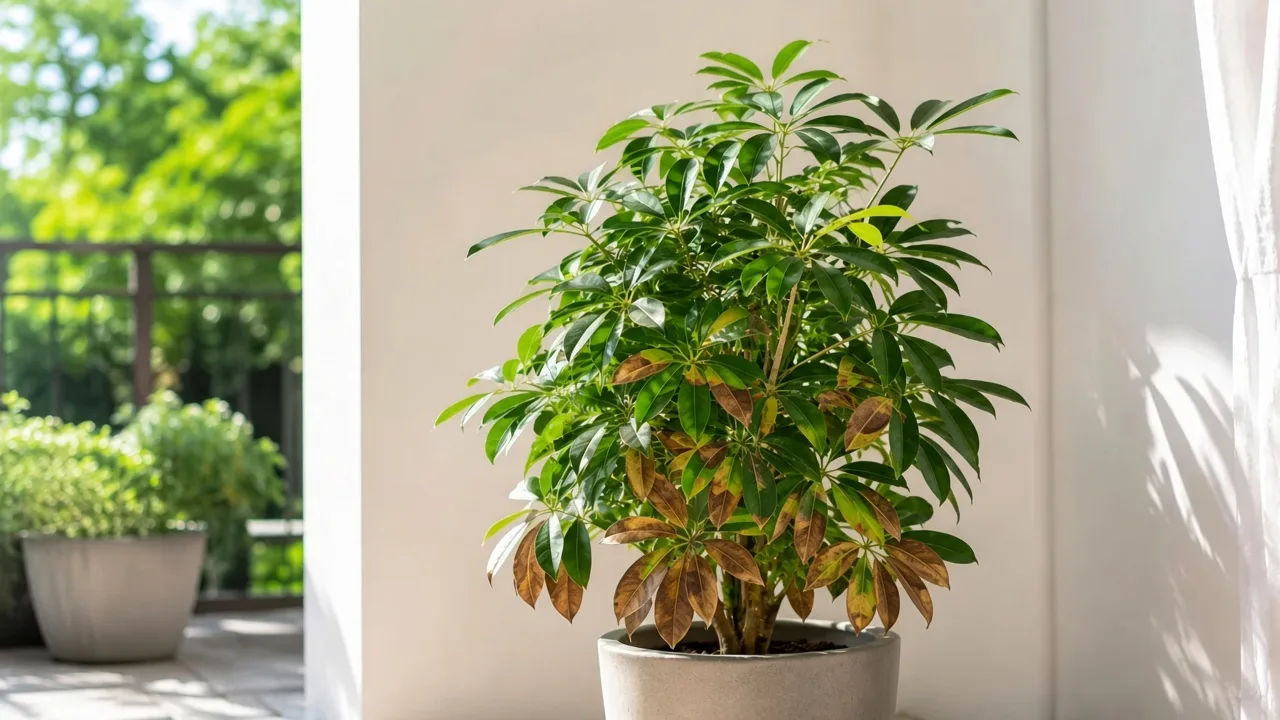
Brown Leaves on Schefflera: Causes, Checks & Fixes
This guide covers brown leaves on Schefflera. See also the general Brown Leaves guide, watering, and light pages for this plant.
Brown Leaves on Schefflera: Causes, Checks & Fixes
Quick answer
On a dwarf umbrella tree, “brown leaves” describes a symptom, not a diagnosis. The plant sold as Schefflera arboricola is also classified as Heptapleurum arboricola. Its glossy, hand-shaped leaves are made of several leaflets radiating from one leaf stalk, so note whether damage affects one leaflet, the margins of many leaflets, or entire older leaves. North Carolina State Extension describes the plant’s compound, palmate leaves and recommends filtered light, a well-drained mix, and letting the soil dry before a thorough watering. NC State Extension
First action: before watering, check the potting mix about 2 inches below the surface and note whether the brown area is dry and crisp or soft and wet. Do not use the color alone to decide that the plant is thirsty. If the mix is moist, wait and inspect drainage; if it is dry through much of the root ball, water it thoroughly and let it drain. This matches the Schefflera’s need for a dry-down between soakings without leaving it bone-dry for long periods. University of Maryland Extension
Brown patches already present will not turn green again. Judge the correction by whether new browning stops and the next leaves stay firm and normally colored. If the plant is also dropping leaves, use the more specific Schefflera leaf-drop guide to separate a whole-plant stress response from damage limited to a few leaflets.
Read the pattern on a Schefflera leaf
A Schefflera leaf is a cluster of leaflets, not one simple blade. That structure makes the distribution useful: a single damaged leaflet can reflect a localized injury, while similar damage across several leaves points toward a repeated environmental or root-zone stress. This is a practical diagnostic clue, not proof of a particular cause.
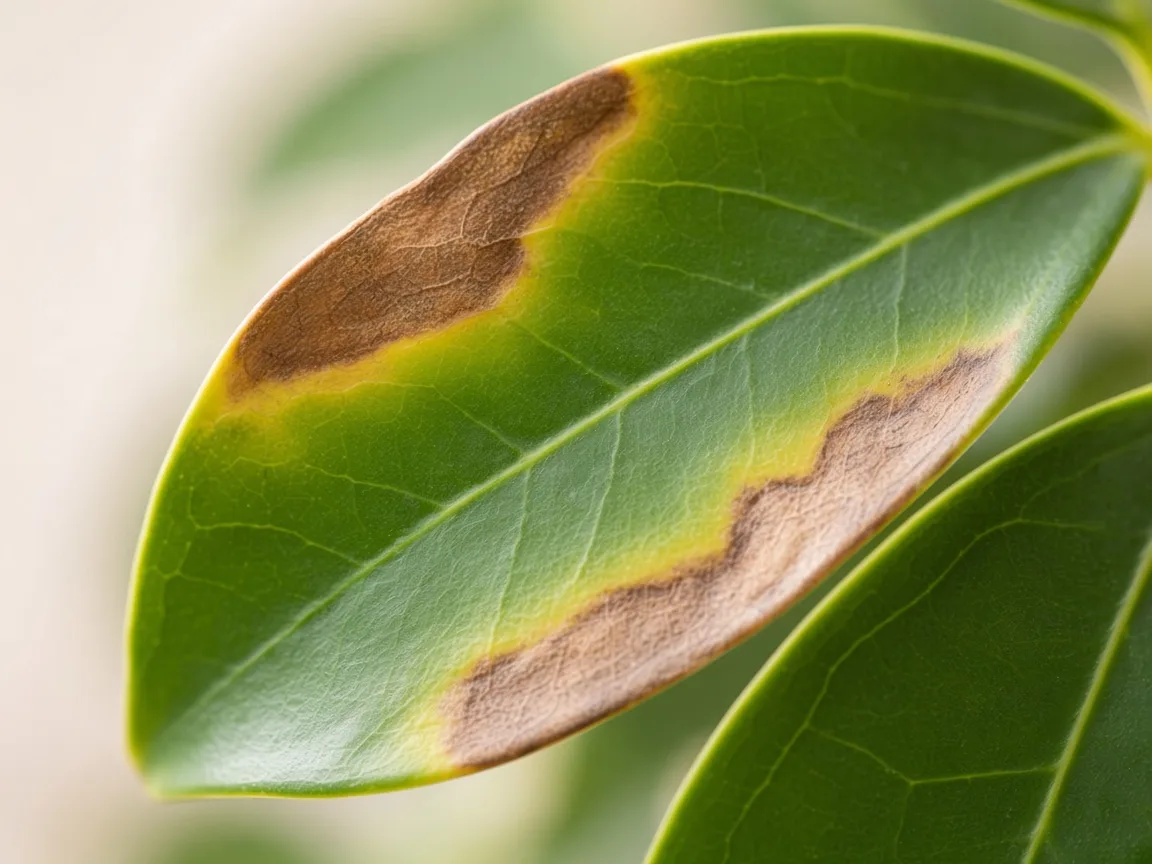
The close-up shows dead brown tissue at the edge of a Schefflera leaflet. Its appearance alone cannot identify whether the trigger was sun, moisture, salts, or another stress.
| What you see | What it can fit | What to check next |
|---|---|---|
| Dry, crisp leaflet tips or margins on several leaves | Repeated dry-down stress, soluble salts, low humidity, heat, or a draft | Mix moisture, fertilizer history, nearby vents, and whether the damage is spreading |
| A bleached or tan patch on the window-facing side | Excess direct sun or heat through glass, especially after a move | Recent changes in window exposure and whether only the exposed side is marked |
| Soft, dark brown areas with a mix that stays wet | Root stress or rot is possible; a wet-looking spot can also have other causes | Drainage holes, time the mix takes to dry, stem firmness, and root condition if decline continues |
| Older lower leaves browning or falling while tips remain healthy | Acclimation or gradual loss of older foliage may be involved | Recent move, light change, temperature swings, and the condition of new growth |
| Fine pale stippling, bronzing, webbing, sticky residue, or visible bumps | Mites or sap-feeding insects may be present | Inspect leaflet undersides, leaf stalk joints, and stems with a bright light |
These patterns overlap. UC IPM lists excessively dry or wet soil, fertilizer salts, excess sun or heat, low humidity, and drafts among causes of brown margins; spots may also follow light or chilling injury, chemical injury, excess moisture, or infection. Treat that list as a differential, then use the plant’s actual conditions to narrow it. UC IPM
Why Schefflera develops brown leaves
Water stress at the roots
Both extremes can injure a Schefflera. A potting mix that remains saturated deprives roots of air; damaged roots may fail to supply water even though the soil feels wet. A root ball that dries too far can also leave leaflets brittle and brown. NC State advises letting the dwarf umbrella tree’s soil dry and then soaking it thoroughly, while Maryland Extension cautions against soil staying constantly damp or becoming excessively dry. The reliable cue is the mix, not a fixed weekly schedule. NC State Extension University of Maryland Extension
Confirm the pot has open drainage holes and that it is not standing in collected runoff. A dense or old mix may retain water longer than expected, especially in a cooler, dim room or during slower winter growth. Virginia Cooperative Extension notes that watering frequency depends on soil moisture and conditions; watering too often is the issue, rather than the amount used during one thorough watering. Virginia Cooperative Extension
Too much direct light or heat
Dwarf Schefflera grows indoors in bright filtered light, but direct sun through a window can scorch its foliage. A pale, tan, or brown patch concentrated on the sun-facing side—especially after moving the plant closer to a window—makes exposure worth checking. Return it to bright indirect light and let it adjust; do not respond by moving it into a dark corner, because lower light slows water use and can make an already-wet mix stay wet longer. NC State Extension The Spruce
Fertilizer and mineral salts
Brown margins may follow excess fertilizer or soluble salts in the potting mix or water. A pale crust at the soil line or on the pot can support this possibility, but it is not conclusive by itself. Maryland Extension explains that minerals and fertilizer salts can build up in old mix and damage roots; UC IPM also lists salts among causes of brown or scorched tips. Pause feeding while the plant is stressed. If the pot drains freely and the mix is not already soggy, a careful flush with plain water may help carry soluble salts out; empty the saucer afterward. Do not flush a cachepot with no drainage or repeatedly feed to “fix” brown tissue. University of Maryland Extension UC IPM
Drafts, room changes, and pests
A Schefflera moved between rooms, placed beside a cold window, or exposed to heater or air-conditioner airflow may lose foliage as it adjusts. Maryland Extension describes Schefflera leaf shedding after light changes, temperature swings, drafts, and watering stress. If lower leaves drop after a move but new growth remains healthy and the mix drains normally, stabilize its position before pruning or repotting. University of Maryland Extension
Inspect for pests when the damage appears in scattered patches or comes with stippling, webbing, sticky residue, or small raised bumps. NC State lists spider mites, mealybugs, and scale among pests of dwarf umbrella tree; UC IPM describes stippling and bronzing with webbing as a spider-mite pattern and sticky foliage or visible insects as clues to sap-feeding pests. A brown leaflet without pest signs is not a reason to apply an insecticide. NC State Extension UC IPM
Check the species name before copying care advice
“Umbrella plant” and “Schefflera” can refer to more than one houseplant. The Spruce and Bob Vila distinguish dwarf S. arboricola from S. actinophylla, a larger umbrella tree. Check the plant label before transferring a species-specific watering or light routine from one to the other. The Spruce Bob Vila
Confirm the cause before changing care
- Mark the damage. Photograph one whole compound leaf and a close-up of affected leaflets. Note whether brown tissue is crisp or soft, whether edges or centers are affected, and whether the newest leaves are involved. Check again in several days; a stable old patch is different from a spot that is expanding.
- Check moisture below the surface. Feel the mix about 2 inches down and lift the pot if you know its usual wet and dry weight. A dry surface can sit above a damp lower root zone. If the root ball remains wet for many days, check for blocked holes and standing runoff before adding more water. See the Schefflera watering guide for its normal dry-down cue.
- Review recent exposure. Ask whether the plant was moved, turned, placed in direct afternoon sun, or left beside a heating or cooling vent. Check whether browned leaflets face one direction. The Schefflera light guide can help you restore bright, filtered exposure without making another abrupt change.
- Look at the mix and feeding history. Check for crust, compacted mix, a pot without drain holes, or frequent fertilizer use. If the mix stays wet or smells sour, explore Schefflera soil and drainage and the separate root-rot guide rather than assuming the issue is a nutrient deficiency.
- Inspect both sides of the leaflets. Use a hand lens or phone camera to look for mites, fine webbing, scale bumps, or cottony mealybugs near leaflet joints and stems. If you find webbing or stippling, follow spider-mite identification for Schefflera before choosing a treatment.
Make one targeted correction
- If the mix is dry through the root ball: water slowly and thoroughly until the mix is evenly moist and water drains from the holes. Empty the saucer. If water runs straight down the pot while the center stays dry, rehydrate in several slow passes rather than giving repeated small sips. Then resume checking the upper 2 inches before the next watering.
- If the mix is wet: do not water again yet. Make sure the pot drains and is not sitting in runoff. If the plant continues to decline, has a soft stem base, or loses leaves while the soil remains wet, inspect the roots and follow the Schefflera root-rot guide. Repot only when root or mix failure is evident; routine repotting adds another stressor.
- If damage is on the sun-facing side: move the plant back from direct sun to bright filtered light. Make that change once and keep the location stable while you watch new growth.
- If airflow or temperature is the likely trigger: move it away from a cold window, heater, or AC vent. Avoid placing it directly in a hot or cold stream of air, and allow time for it to acclimate.
- If pests are confirmed: isolate the plant and identify the pest before treatment. Wipe or rinse pests from a small infestation if practical, then use a product only when its label lists the plant and pest. Route sticky leaves or visible bumps to the Schefflera scale and mealybug guides and the mealybug guide.
Do not stack watering changes, repotting, fertilizer, pruning, and sprays on the same day. Correct the best-supported cause first so the plant’s response remains readable. If the damage is limited to one leaflet and the rest of the plant is firm, remove only fully dead tissue with clean snips when its appearance bothers you; pruning will not repair the cause.
Recovery and when to escalate
Brown tissue stays brown. Recovery means no new areas appear, the mix dries at a reasonable pace for the room, and new leaves emerge without matching damage. A few older lower leaves may be shed after an environmental change, while rapid browning across young growth or several branches calls for a closer root and pest check. Maryland Extension notes that lower-leaf loss after a move can be less concerning when healthy new growth continues, but that observation does not rule out root stress. University of Maryland Extension
If spots become water-soaked, enlarge quickly, develop dark margins, or appear with soft stems, isolate the plant from close contact and avoid wetting the foliage while you inspect it. UC IPM notes that many indoor leaf spots have noninfectious causes and that fungal or bacterial problems are less common indoors, but persistent spreading lesions and declining roots deserve diagnosis rather than a blanket fungicide. UC IPM
For a broader symptom comparison, use the brown-leaves troubleshooting hub once; for plant-specific next steps, the Schefflera overview and Schefflera problems hub connect the care and symptom guides. If several symptoms overlap, the Plant Problem Diagnosis Tool can help organize the observations before you change another variable.
When to use this page vs other Schefflera guides
Use this page when leaflets or whole leaves are brown and the trigger is unclear. Choose a narrower guide when the pattern points elsewhere: brown tips on Schefflera covers browning confined to leaflet tips or margins; crispy leaves focuses on broadly dry, brittle foliage; and leaf drop covers shedding when leaves fall before or while browning. Start with the separate pest guide when stippling and webbing dominate, and with root rot when wet mix and soft roots are confirmed.
Related Schefflera guides
- Schefflera watering — use to set a soil-based watering check after this diagnosis.
- Schefflera light — use when scorch or a recent move points to exposure.
- Schefflera soil — use when mix structure or drainage keeps the root zone wet.
- Brown tips on Schefflera — use when only leaflet edges or tips are affected.
- Schefflera leaf drop — use when shedding is more prominent than persistent brown patches.
- Schefflera problems — browse the full plant-specific cluster.
Related brown-leaves guides
For the same symptom across other plants, compare the brown-leaves guides. Schefflera-specific watering, light, and root advice above should take precedence over a fix written for a different plant.
Related tool
Use the Plant Problem Diagnosis Tool after you have checked the leaflet pattern, mix moisture, and recent location changes. Record those observations before trying a treatment.