Crispy Leaves on Schefflera: Causes, Checks & Fixes
Quick answer
Crispy Schefflera leaflets can follow soil that stays too wet or dries too far, direct indoor sun, heat, low humidity, or fertilizer salts. First check moisture and drainage, then review recent light and feeding changes; correct one likely cause and watch the next leaves.
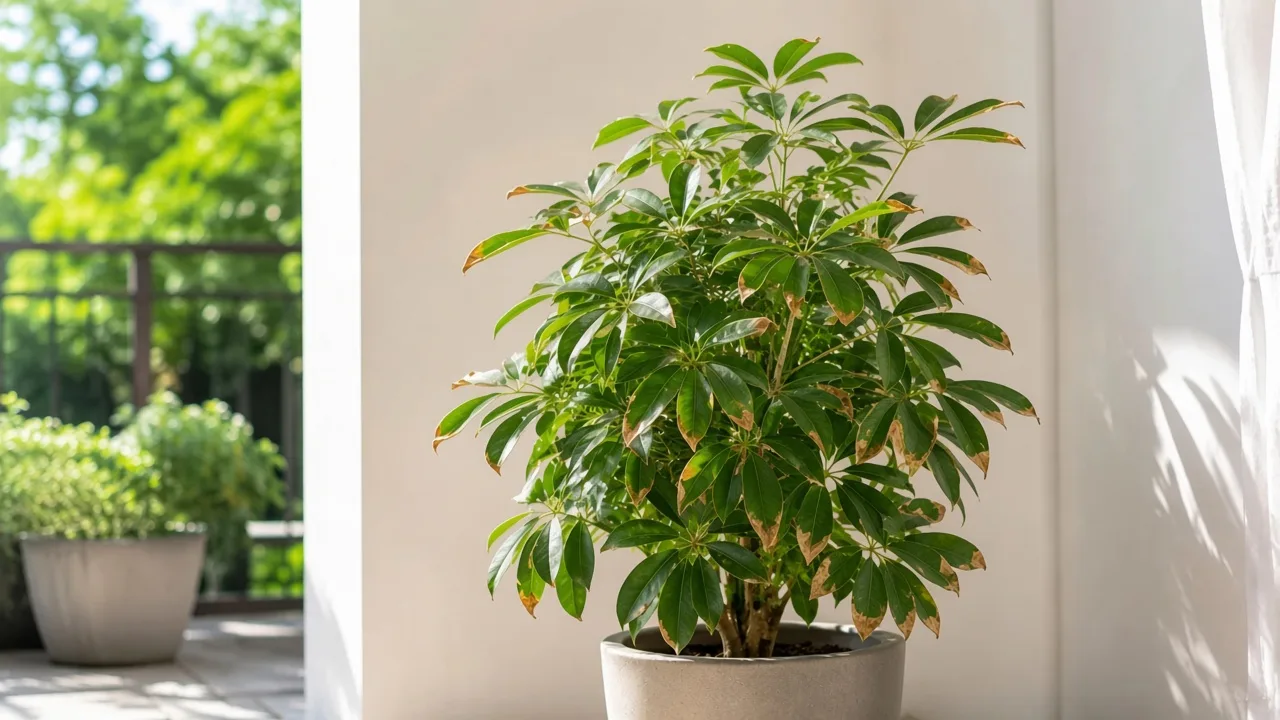
Crispy Leaves on Schefflera: Causes, Checks & Fixes
This guide covers crispy leaves on Schefflera. See also the general Crispy Leaves guide, watering, and light pages for this plant.
Crispy Leaves on Schefflera: Causes, Checks & Fixes
Quick answer
Crispy edges on Schefflera are a symptom, not a diagnosis. Start by checking how wet the potting mix is and whether water can drain freely. Then consider recent exposure to direct window sun or heat, fertilizer use, room dryness, or drafts. For the general symptom pattern, see the crispy leaves guide; this page focuses on how to check those causes on Schefflera.
What crispy leaves look like on Schefflera
The dwarf umbrella tree, Schefflera arboricola, has compound leaves with several oval leaflets arranged in a circle. NC State describes each leaf as having about seven to nine leaflets, so inspect individual leaflets as well as the whole canopy when tracking damage (NC State Extension’s plant description). Dry, brittle brown edges or tips can affect one or several leaflets while the rest of the compound leaf remains green. Note whether the damage is limited to the oldest outer edges, appears on the sun-facing side, or is showing up on newly opened leaves.
That pattern narrows the checks but cannot identify a cause by itself. Brown margins can follow several different care and room conditions, and more than one may be involved (UC IPM’s houseplant diagnosis guidance).
Check Schefflera’s pot before changing its watering
Both overly dry and overly wet soil can lead to leaf problems on dwarf umbrella tree, so do not respond to crispy edges by automatically watering more. NC State advises allowing the soil to dry before thoroughly soaking it and notes that leaves may drop if the soil is too wet or too dry (NC State’s Schefflera care notes). The Missouri Botanical Garden likewise recommends a deep watering followed by allowing the mix to become nearly dry before the next one (its Schefflera arboricola profile).
Feel the mix below the surface, lift the pot to compare its weight with its usual post-watering weight, and make sure the drainage opening is not blocked. A lightweight pot with dry mix supports a dry-root-zone explanation. If the pot is still heavy and the mix is damp, do not add water; check that the inner pot drains and let the mix move toward its usual dry-down before watering again. For the plant’s normal routine, use the Schefflera watering guide. If the mix is dry and the leaflets are also limp, compare with underwatering on Schefflera; if it remains wet and lower leaves are yellowing or dropping, see overwatering on Schefflera.
When the mix is dry, water it evenly until excess drains from the pot, then empty collected water. A practical Schefflera care guide also recommends waiting until the potting mix has dried before watering thoroughly (Gardening Know How’s Schefflera guide). If the mix repeatedly stays wet for a long time, review the Schefflera soil guide and container drainage instead of increasing watering frequency.
Filter indoor light for Schefflera
Bright direct light can burn Schefflera leaves indoors, although the plant still needs a bright position. If crispy or bleached patches developed after moving it beside an uncovered sunny window, draw a sheer curtain or move it a short distance back into bright filtered light (NC State Extension). Use the Schefflera light guide to choose a brighter protected spot, and compare the pattern with sunburned or scorched leaves on Schefflera. Avoid shifting it into deep shade; make one location change and observe the next growth.
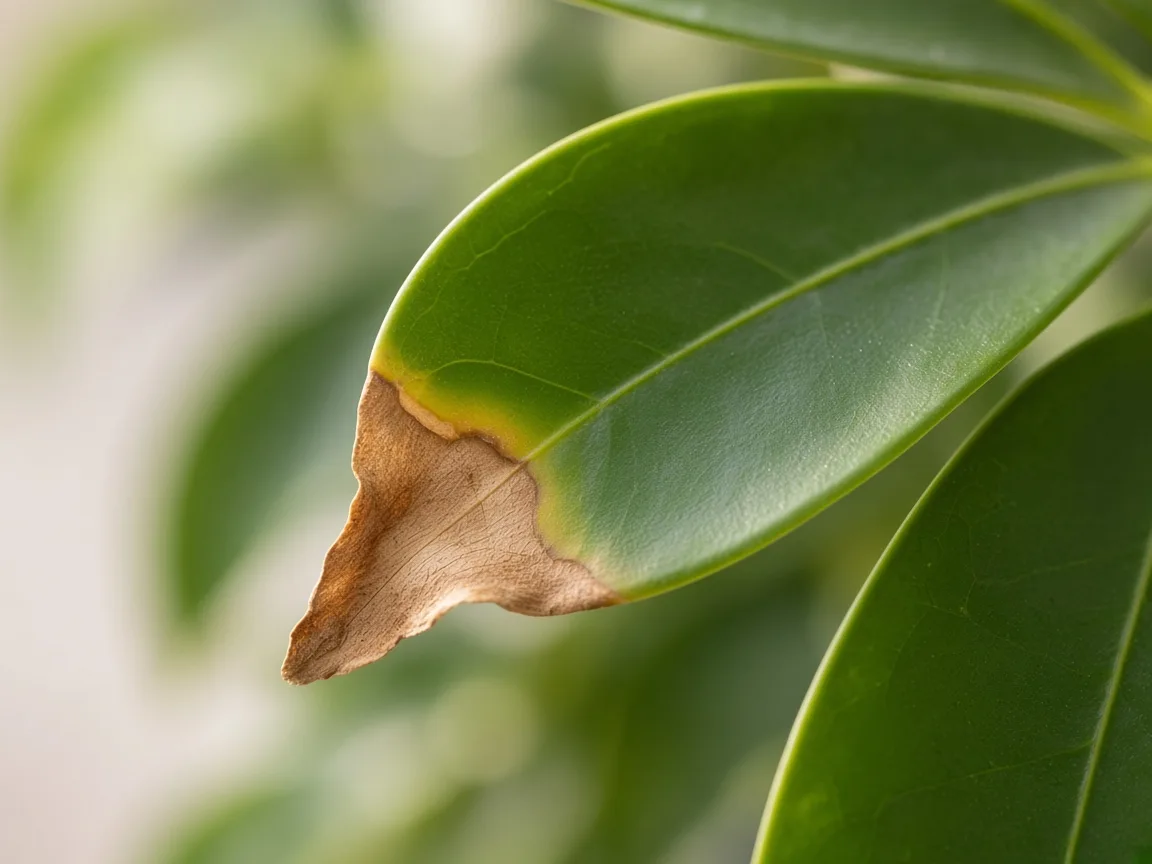
Dry, browned leaflet edges on Schefflera; compare the damaged margins with greener tissue on the same compound leaf.
Review fertilizer, humidity, and drafts
If moisture and window exposure look reasonable, look back at feeding and room conditions. Bob Vila’s Schefflera care guide cautions that feeding during autumn and winter can leave excess salts as growth slows (Bob Vila’s umbrella plant care notes). Check the Schefflera fertilizer guide against the actual fertilizer label and your recent schedule; do not add fertilizer to try to repair brown tissue.
Low humidity or a draft is more plausible when the plant is near a heating or cooling vent, a frequently opened door, or dry moving air. Treat humidity as one clue, not the first fix. Keep the plant away from direct vent airflow and correct a clearly dry or persistently wet root zone first. The Schefflera problems hub can help compare other symptoms if leaf damage is accompanied by yellowing, dropping, or pests.
First fix and recovery check
Choose the correction that matches the evidence: water a genuinely dry root ball thoroughly, allow a wet mix to dry toward its normal watering point, or filter harsh direct sun. If fertilizer has been applied often or during the low-growth season, pause and review the plant’s feeding routine before resuming. Avoid changing watering, light, fertilizer, and pot size all at once; a single change makes it easier to tell whether new damage is slowing.
Already crisp brown tissue is damaged, so judge recovery by the next leaflets and by whether the existing margin continues to expand. There is no dependable calendar date for every home: light, temperature, root condition, and active growth affect how quickly Schefflera produces another leaf. If damage continues to spread despite corrected care, or several compound leaves decline together, inspect the whole plant and compare with the Schefflera brown leaves guide and brown tips guide.
When to use this page vs other Schefflera guides
Use this guide when leaflet edges are dry and brittle. If the main change is full-leaf yellowing or drop, use the yellow leaves guide; if the leaves are limp without crispy edges, check the drooping leaves guide. For a broader plant-specific starting point, see the Schefflera overview. The Plant Problem Diagnosis Tool can help organize the symptoms and care clues before you adjust more than one condition.
Related Schefflera guides
- Schefflera overview — use for whole-plant care and identification.
- Schefflera problems hub — browse this plant’s other problem guides.
- Schefflera watering — use for routine moisture checks and watering technique.
- Schefflera light — use when window exposure or placement may be involved.
- Schefflera brown tips — use when browning is concentrated at leaflet tips.
- Schefflera brown leaves — use when larger areas or whole leaflets are browning.