Distorted Leaves on Schefflera: Causes, Checks & Fixes
Quick answer
Distorted Schefflera leaves are a symptom, not a diagnosis. Compare the newest leaf clusters with older growth and inspect undersides and stem tips before changing care. First, pause sprays and fertilizers while you check for pests, recent exposure changes, and root-zone stress.
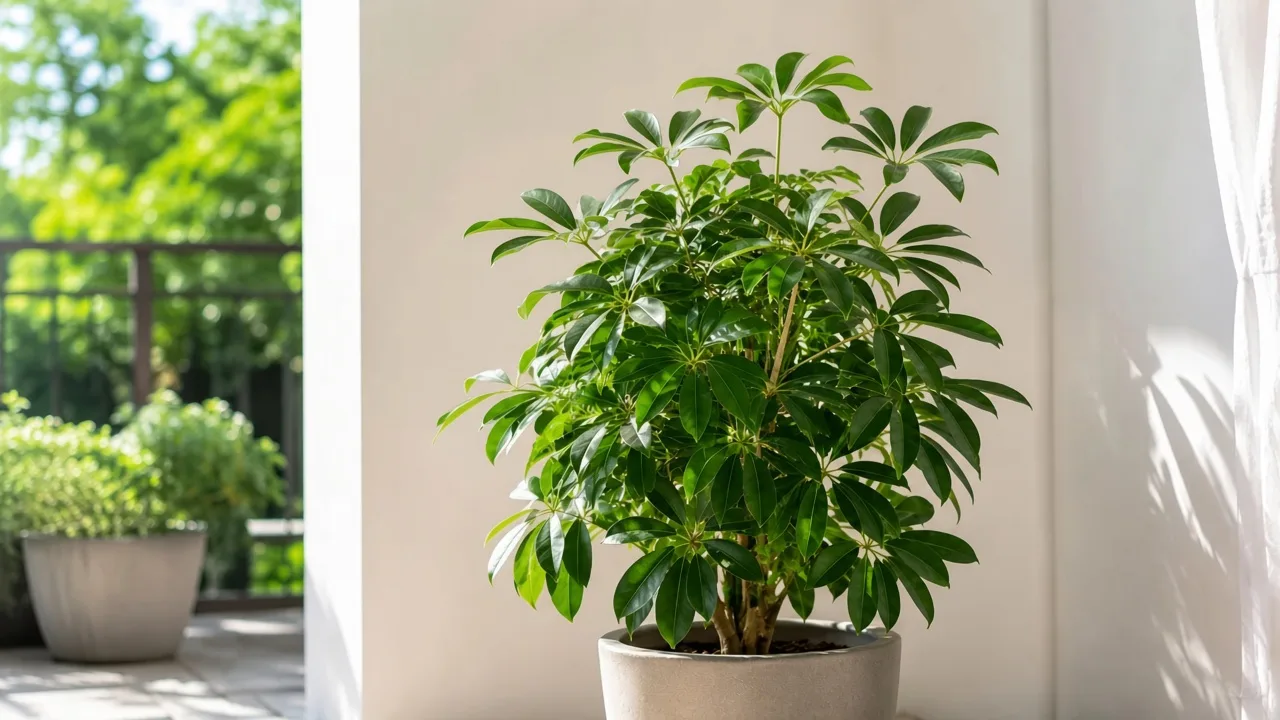
Distorted Leaves on Schefflera: Causes, Checks & Fixes
This guide covers distorted leaves on Schefflera. See also the general Distorted Leaves guide, watering, and light pages for this plant.
Distorted Leaves on Schefflera: Causes, Checks & Fixes
Quick answer
Distorted leaves on Schefflera are a symptom, not a diagnosis. On this plant, compare the newest leaf clusters with older, fully expanded leaflets and look for a pattern: insects or mites, fine stippling, sticky residue, a recent spray or move, or a root zone that stays wet. A single uneven leaflet cannot identify the cause. First, pause sprays and fertilizer while you inspect the newest growth and the undersides of the leaflets. If you find live pests, isolate the plant before choosing a treatment.
For the general symptom checklist, see distorted leaves on houseplants. The rest of this guide focuses on how the umbrella-like growth of Schefflera changes what to inspect and which lookalikes to rule out.
What normal Schefflera leaflets look like
Schefflera is grown for compound leaves: several glossy leaflets radiate from a shared point, creating the familiar umbrella or hand-like outline. The exact number and size of leaflets can vary with species and age, so a younger plant or a fresh leaf cluster may not match the largest older leaves; Bob Vila describes this variation between young and mature umbrella plants. North Carolina State Extension describes this compound foliage, while Gardening Know How’s Schefflera guide describes the circular leaflet arrangement.
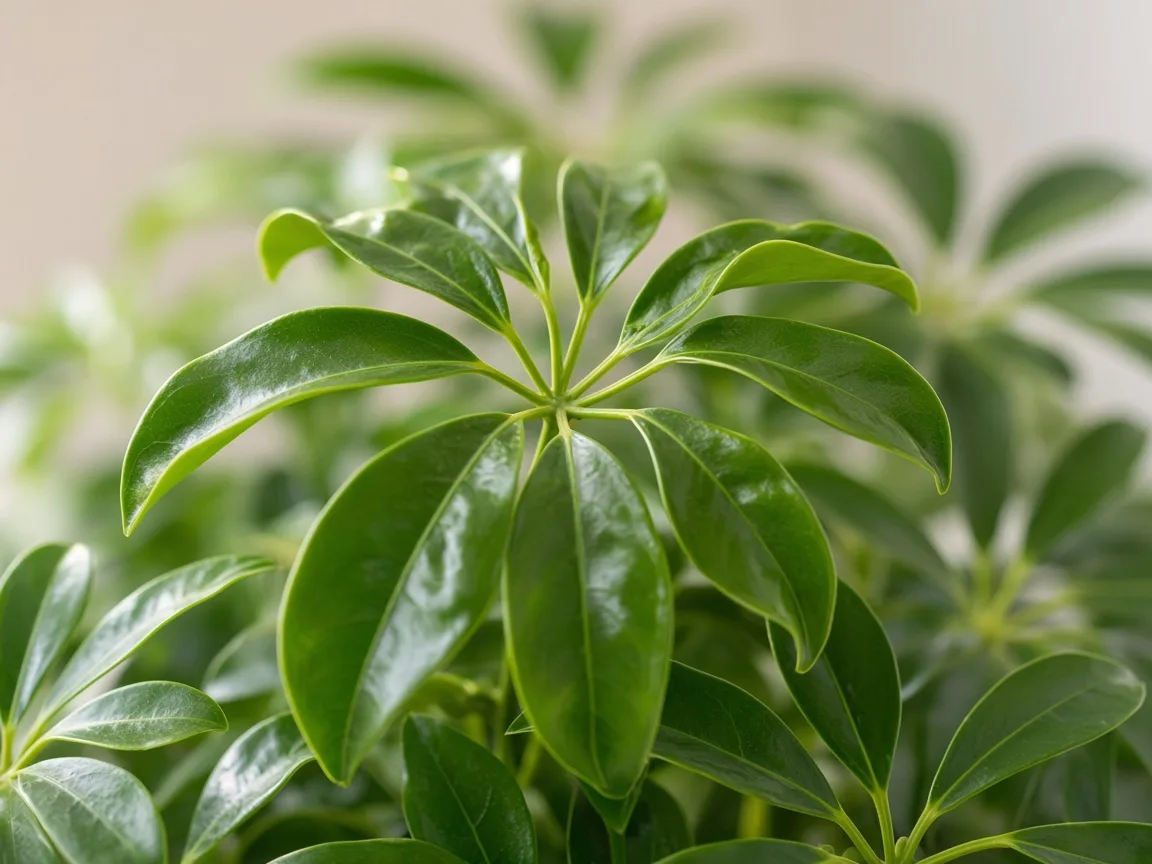
This close-up shows normal glossy leaflets, not a diagnosed distortion. Compare their arrangement with the newest growth on your plant.
Look at at least two or three new clusters, not just one old leaflet. A temporary difference in size or spacing as a cluster opens is less concerning if the leaflets finish expanding and later growth is evenly formed. Repeatedly twisted, puckered, thickened, brittle, or downward-cupped leaflets on successive new clusters deserve closer inspection.
Read the pattern before naming a cause
| What you see on Schefflera | What it can suggest | Best next check |
|---|---|---|
| New leaflets are thick, brittle, stunted, or cupped | Broad or cyclamen mites are possible; chemical injury can look similar | Review recent sprays and inspect the tender tips closely; these mites may be too small to see without magnification |
| Fine pale dots, bronzing, or delicate webbing | Spider mites are possible | Check leaflet undersides with a hand lens; tap a leaflet over white paper and watch for moving specks |
| Small insects on soft tips, sticky leaflets, or white cast skins | Aphids are possible | Inspect where the newest leaflets join the stem and trace sticky patches upward |
| One torn, folded, or creased leaflet, while later clusters look normal | Local handling or unfolding damage is plausible | Check for a nearby snag, rubbing point, or recent move; monitor the next cluster instead of spraying |
| Pale, stretched, yellowing, or generally weak growth without pest signs | Light, moisture, temperature, or root stress may be involved | Compare recent placement and watering with the plant’s normal care; inspect roots only if other root symptoms are present |
These are sorting clues, not a visual diagnosis. Several causes overlap, and more than one stress can occur at once.
Why new Schefflera growth can be distorted
Sap-feeding pests gather around tender tips
The newest Schefflera clusters are softer than mature leaflets and are easier to inspect than the whole canopy. Aphids may gather on tender growth or leaflet undersides, where feeding can curl or distort leaves; honeydew leaves a shiny sticky film and may attract ants. UC IPM documents aphid-related curling in houseplants. A Schefflera-specific guide from Gardening Know How connects sticky umbrella-tree foliage with sap-feeding pests, but sticky residue by itself still does not tell you which pest is present.
Spider mites usually leave a different trail: tiny pale stipples across the leaf surface, sometimes followed by bronzing and fine silk webbing. They are commonly found on leaflet undersides and may be hard to see without a lens. UC IPM recommends checking leaf undersides and confirming mites before treatment. Do not treat a Schefflera for spider mites based on distortion alone when stippling, webbing, or mites are absent.
Broad and cyclamen mites are a closer match for misshapen new growth. UC IPM notes that their feeding can produce thickened, brittle foliage and stunted, downward-cupped leaf margins; the injury can resemble chemical damage. Mite and spray injury can overlap, so leaf shape alone cannot confirm the cause. If the plant was recently treated, cleaned with a leaf product, or exposed to drift from another spray, note the date and affected side before considering a pest treatment.
Light and root-zone stress are broader clues, not a specific diagnosis
Schefflera is generally grown in bright indirect light. One editorial care reference recommends allowing about the top inch of mix to dry before watering again, but the actual interval changes with pot size, light, temperature, and season. Bob Vila’s care overview gives that bright-light and dry-down baseline. A move to a much brighter window, direct sun after a dim placement, a cold draft, or repeated wet soil can coincide with leaf injury or weak growth; none confirms a pest or disease on its own.
For a care check specific to this species, compare the location with the Schefflera light guide and check the pot’s dry-down against the Schefflera watering guide. If the mix remains dense or wet long after watering, review the Schefflera soil guide. Water and light stress more often come with broader signs such as yellowing, leaf drop, soft stems, or slow growth than with isolated, neatly repeated leaflet distortion.
A crease may be mechanical, but new growth decides whether it is ongoing
An older leaflet can be bent or torn while being moved, cleaned, pruned, or squeezed against a wall. A fold that remains on one leaflet but does not repeat on the next cluster is consistent with a local injury; it does not prove what caused the mark. Schefflera leaflets emerge in a compact cluster, so note whether the misshapen part is limited to one leaflet or repeated across the new tip. Do not expect a crease in mature tissue to disappear. Judge recovery by the next leaf clusters, not by whether the old mark vanishes.
How to check a Schefflera with distorted leaves
- Compare new and mature growth. Photograph the newest two or three clusters from the same angle. Note whether distortion repeats at several tips, affects only one side, or is limited to one older leaflet.
- Inspect the growing points and leaflet undersides. Use a hand lens if available. Look for aphid-like insects, cast skins, scale covers, fine webbing, pale stippling, sticky honeydew, or black specks. UC IPM’s aphid notes describe water sprays as one control option; first confirm a pest rather than treating a symptom.
- Check the exposure history. Write down any recent move, cold night near glass, heating or air-conditioning draft, leaf cleaner, pesticide, fertilizer change, or repotting. A sudden change that matches the affected growth can help prioritize the next check, but it is not conclusive by itself.
- Check moisture before disturbing roots. Feel the mix below the surface and lift the pot to compare its weight with a normally dry one. A sour smell, persistently wet mix, poor drainage, soft base, or broad yellowing is a reason to investigate the root zone; twisted leaflets alone are not.
- Choose one change and observe. If there is no pest evidence, correct the clearest care mismatch first and avoid changing light, water, fertilizer, and pot all at once. This makes the next new cluster more useful as evidence.
First response and recovery
The first response is to pause broad treatments and inspect the newest Schefflera growth. If you find live pests or clear pest signs, move the plant away from nearby plants while you identify what is present. For aphids or other pests that can be rinsed, a careful water rinse may dislodge some insects; dry the plant in a place with suitable light and airflow. UC IPM advises confirming mites before treatment. If a labeled soap, oil, or other pesticide is needed, check that the product is labeled for indoor use and for the pest and plant, follow every label direction, and test tolerance as directed. Do not apply a spray to water-stressed foliage or assume a home-made mixture is harmless.
If you find no pest evidence, do not spray “just in case.” Restore steady conditions: keep the Schefflera in appropriate bright indirect light, let the mix dry between waterings rather than following a fixed calendar, and keep it away from cold or hot air blasts. Avoid fertilizer while growth is stressed; extra nutrients do not repair a damaged leaflet or correct poor drainage. Repot only if the mix or root condition gives a separate reason to do so.
Existing leaflets may keep a curl, crease, or feeding mark after the cause is corrected. The useful recovery signs are that damage stops appearing on new clusters, the growing tips remain firm, and later leaflets expand closer to their normal shape. There is no reliable calendar deadline: Schefflera growth rate varies with season and indoor conditions. If each new cluster is more distorted despite correcting a confirmed cause, or if the plant declines broadly, ask a local extension diagnostic service to review clear photos and your care history.
When to use this page vs other Schefflera guides
Use this guide when the main issue is a repeated misshapen form in new leaflets and you need to sort pests, stress, and local injury. If you find sticky new growth with visible colonies, use the Schefflera aphids guide; if stippling and webbing dominate, compare the Schefflera spider mites guide. Use the curling leaves guide when the main pattern is a sustained curl without clear distortion, and the not enough light guide when stems are stretching or growth is sparse.
For a wet, sour-smelling pot or soft roots, use the Schefflera root rot guide and the watering guide. The Schefflera overview and Schefflera problems hub provide broader care context and routes to the rest of this plant’s problem guides.
Related Schefflera guides
- This page: repeated distortion in new Schefflera leaflets when the cause is not yet clear.
- Aphids: visible insects, honeydew, cast skins, or ants around tender tips.
- Spider mites: stippling, bronzing, or fine webbing on leaflet undersides.
- Curling leaves: a curling pattern without the broader puckering or misshapen growth described here.
- Schefflera problems hub: choose a different issue when the main symptom is yellowing, dropping, or drooping rather than distorted new growth.
Use the Plant Problem Diagnosis Tool to compare the observed pattern before making several care changes.