Schefflera Leaning: Causes and Safe Light Fixes
Quick answer
A Schefflera that gradually angles its newest growth toward a window while its pot and root ball remain level is likely responding to one-sided light. Move it to a brighter position with filtered light; do not force an older woody stem upright.
Schefflera Leaning: How to Tell If It Needs More Light
This guide covers plant leaning on Schefflera. See also the general Plant Leaning guide, watering, and light pages for this plant.
Schefflera Leaning: How to Tell If It Needs More Light
Quick answer
If a Schefflera slowly curves toward the window but the pot and soil surface stay level, the newest growth is likely following directional light. First move it to a brighter position with filtered light. Do not pull an established woody stem upright or water more to correct its angle.
A plant can also lean because its root ball or pot has shifted, or because a stem was bent. Check where the angle begins before changing care. For the broader signs shared across plants, see our plant-leaning guide.
What leaning looks like on Schefflera
A light-directed lean usually develops gradually: new leafstalks and the stem tip turn toward the brightest side, while the trunk remains firm at the soil line. In a growing shoot, cells on one side elongate differently from those on the other, bending growth toward light in a response called phototropism.

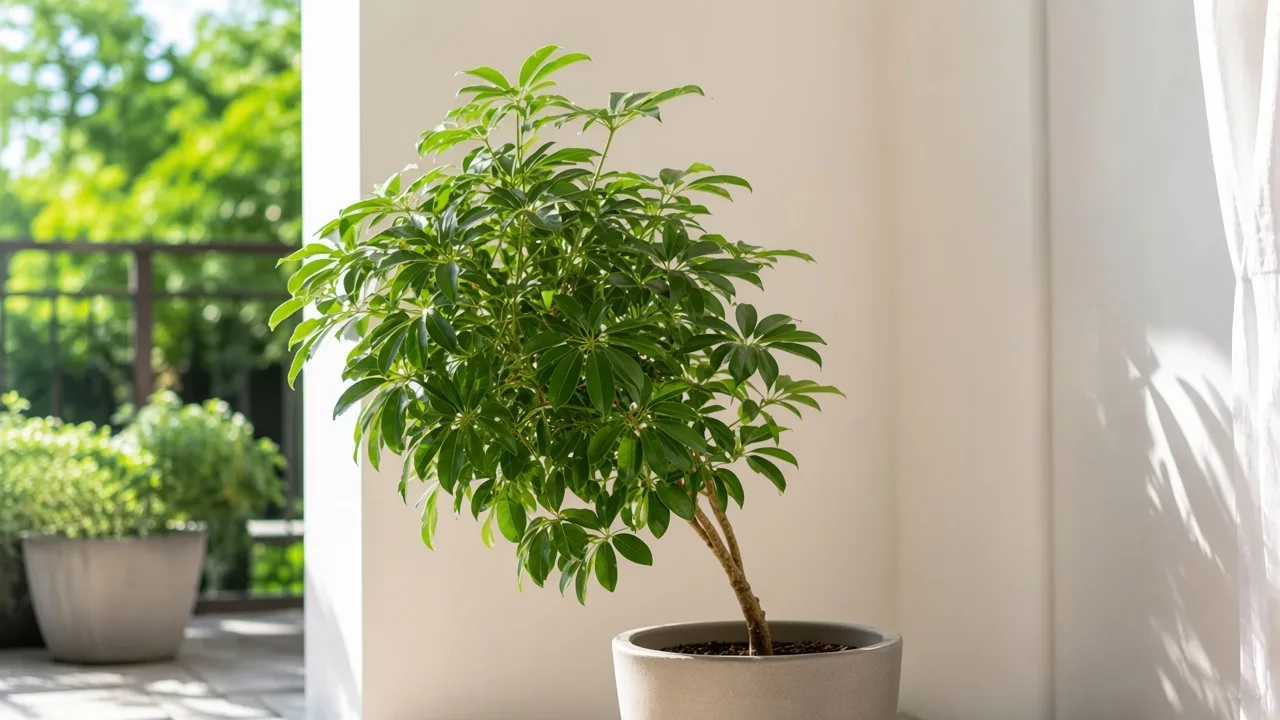
The stem angles toward the window above a level soil line, a pattern consistent with directional growth.
Read a Schefflera’s palmate leaf clusters
The dwarf umbrella tree, commonly sold as Schefflera arboricola, has glossy compound leaves with several leaflets arranged around each leafstalk. NC State describes the leaflets as palmate. Use that umbrella-like outline as a visual reference: compare the newest leafstalks and stem tip with older growth, and note whether the new growth consistently points toward one window.
If the whole root ball tilts with the stem, or the soil surface has lifted on one side, do not assume phototropism. Check whether the container is stable and whether the stem is cracked or sharply creased. A gradual turn in new growth is different from a sudden bend at one point.
Give Schefflera filtered light instead of shifting it into direct sun
Indoor dwarf Schefflera needs a bright position with filtered light. NC State Extension advises filtered light indoors near an east, west, or south exposure and warns that bright direct light can burn indoor leaves; Bob Vila’s umbrella-plant care guide also recommends bright, indirect light for indoor plants. Move a stable plant closer to suitable filtered light if its new growth is reaching toward the window. Use the Schefflera light guide to compare the current spot and choose a safer location.
Do not try to fix a directional lean by increasing water or fertilizer. Schefflera can drop leaves when its soil is too wet or too dry, so keep watering tied to the mix’s dry-down rather than the stem angle; use the Schefflera watering guide if that check is unclear.
Stabilize a container-grown dwarf umbrella tree before changing its light
NC State reports that a dwarf umbrella tree can reach 4 to 6 feet in a container. For a large specimen, inspect the entire pot before moving it: if the pot tips or the root ball rocks, steady the container and address that physical instability first. The plant’s well-drained mix needs matter when checking the root zone, but do not repot a firm, level root ball just because the upper stem points toward a window.
A sudden crease or split in one woody section suggests physical damage rather than slow light-directed growth. Keep the plant upright and support a damaged section loosely if needed; do not bend the stem back against its natural curve.
Recovery: judge the next Schefflera growth
A woody section that has already set at an angle may stay bent after the pot is turned. Rotating mainly changes which way later growth faces, and an established stem may not straighten when its light direction changes. Keep the plant in suitable filtered light and watch the next leaves and leafstalks. A gradual, stable lean with firm leaves is often a light-response pattern; pale, weak, elongated new growth is a separate clue for low usable light.
If the whole plant continues to shift, or its lean comes with leaf drop, compare drooping leaves on Schefflera and review the Schefflera problems hub before making several changes at once. The Schefflera overview can help confirm that the plant’s normal care setup matches its identity.
Prevent another one-sided Schefflera canopy
Check where the newest leafstalks point after the plant has settled into its new spot. If they repeatedly turn toward one side, rotate the pot in a small increment and recheck later rather than relying on a fixed schedule. The plant’s growing point records where light is strongest; a turned pot can guide future growth, but it cannot erase an older bent section. For pale, stretched stems or unusually long gaps between leaf clusters, compare leggy growth on Schefflera because that pattern points to a broader light problem.
When to use this page vs other Schefflera guides
Use this page when the stem or canopy leans gradually toward a light source and the pot remains stable. Use the leggy-growth guide for long, weak shoots, and the drooping-leaves guide when leaves hang or lose firmness. If the cause is still unclear, the Plant Problem Diagnosis Tool can help narrow the next check.