Soil Too Acidic on Stromanthe Triostar: Causes, Checks &
Quick answer
Soil too acidic on Stromanthe Triostar usually means aged peat-based mix has dropped below about pH 5.5 — not the healthy slightly acid range Triostar prefers. First step: test moist mix from the middle of the root ball with a pH meter or soil test kit; if readings sit low and new tricolor spears stall or yellow with dark green veins, repot into fresh moisture-retentive mix rather than dusting lime on the surface.
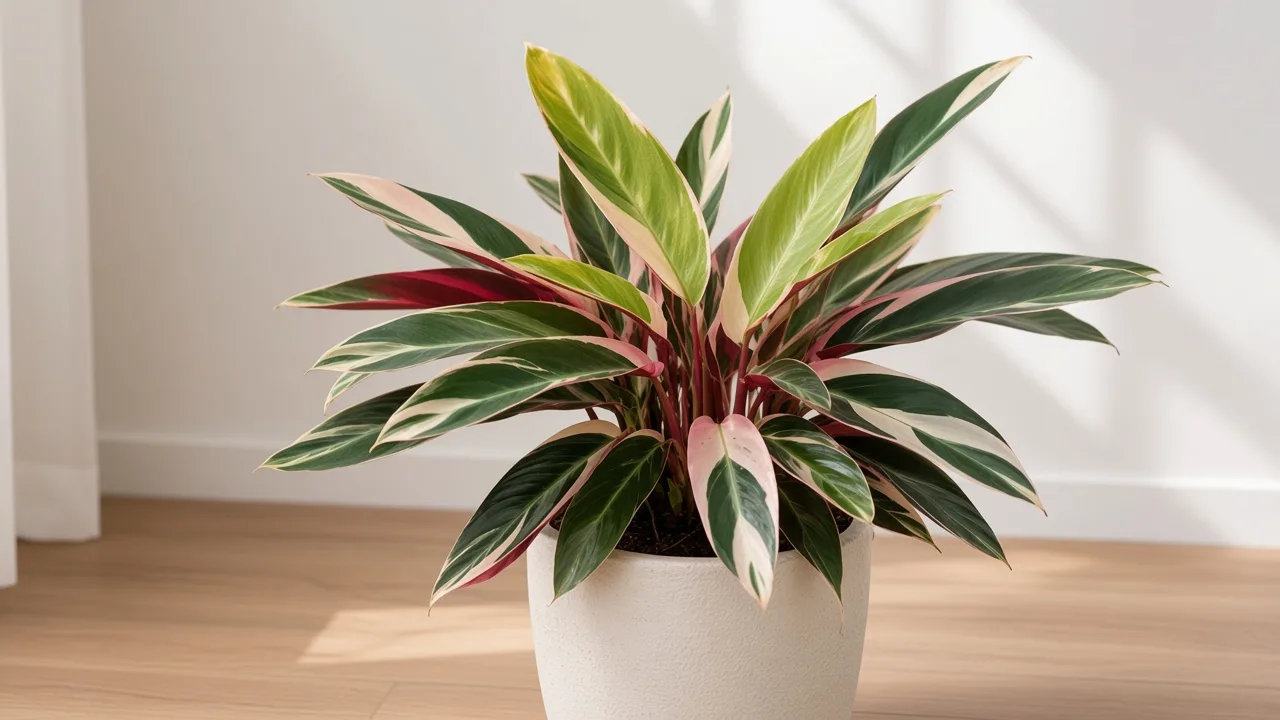
Soil Too Acidic on Stromanthe Triostar: Causes, Checks & Fixes
This guide covers soil too acidic on Stromanthe Triostar. See also the general Soil Too Acidic guide, watering, and light pages for this plant.
Soil Too Acidic on Stromanthe Triostar: Causes, Checks & Fixes
Quick answer
Related: soil-too-acidic guides
Stromanthe Triostar (Stromanthe thalia ‘Triostar’) grows best in humus-rich, moist, well-drained mix that sits slightly acidic to neutral — roughly pH 6.0–6.5 in home culture, as outlined in the Stromanthe Triostar soil guide. Soil becomes too acidic when old peat decomposes, pure ericaceous compost ages in a closed pot, or acidifying amendments push pH below about 5.5. Then nutrients stop moving normally even if you still feed on schedule.
First step: test moist potting mix from the root zone with a pH meter or home soil test kit. If readings are low and the plant shows stunted tricolor spears, washed-out cream and pink panels, or yellowing with dark green veins, repot into fresh balanced mix with perlite and bark — do not guess with surface lime. For how acidity limits uptake in general, see the soil too acidic hub. The sections below focus on what that chemistry looks like on a Triostar clump in your home.
What acidic soil looks like on Stromanthe Triostar
Acid stress on Triostar builds slowly. This Marantaceae prayer plant replaces leaves one spear at a time, and its cream-pink-green panels can mask early chlorosis until several new leaves fail to open with normal color.
Typical above-ground signs include:
- Stunted new spears that unfurl smaller than older leaves despite bright filtered light — compare with the Stromanthe Triostar light guide
- Washed-out variegation on fresh growth: cream and pink panels look dull or yellow-green while stems stay firm, not limp
- Yellow leaves with dark green veins on older tissue — a pattern that can follow manganese excess in highly acidic mix below roughly pH 5.5
- Slow unfurling for months even when you water on the usual top-inch dry-down from the watering guide
- Mix that smells sour and pulls away from the pot wall when dry — decomposed peat, not a single missed watering
- Lower leaves yellowing without the crispy edge pattern typical of dry winter air alone
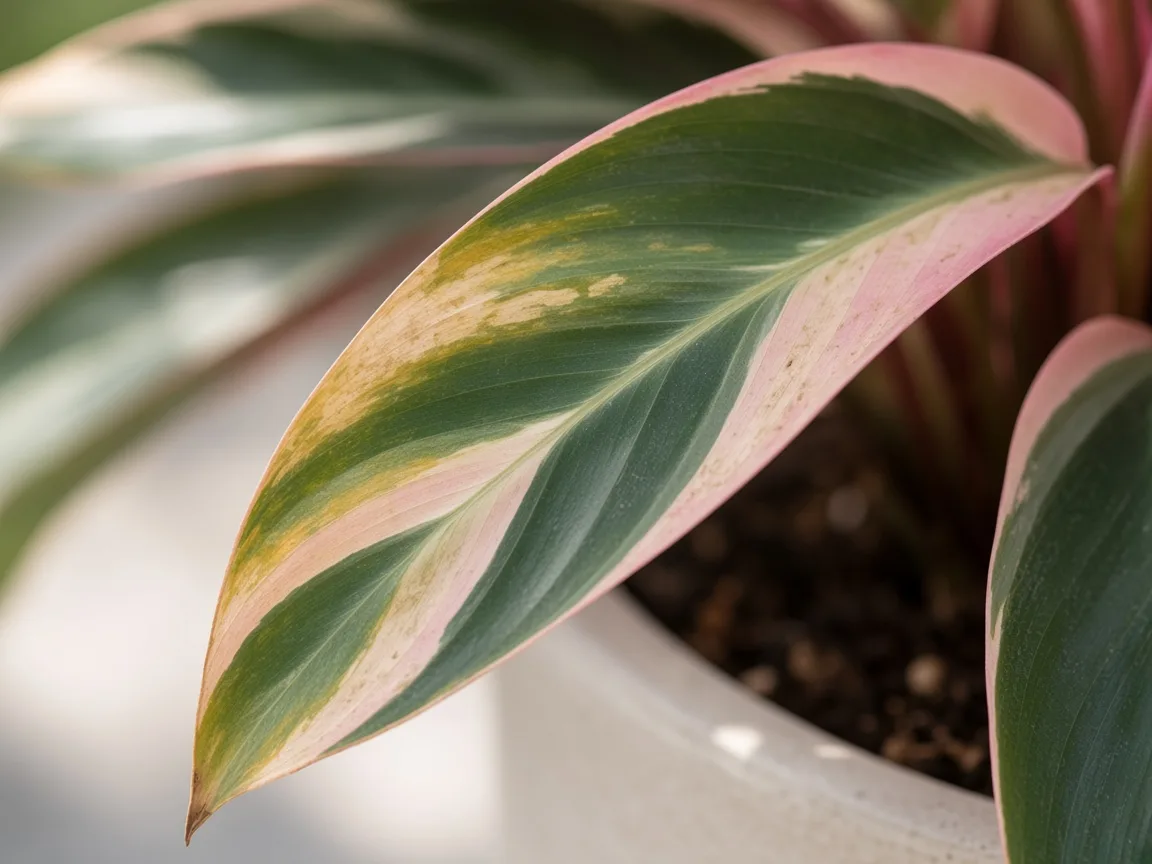
Washed-out chlorotic patches interrupting Triostar variegation — compare the same plant at the same time of day before diagnosing acidity.
What too-acid mix does not look like: limp spears with wet heavy soil (overwatering), sudden whole-plant collapse with black soft stems (root rot), or mostly green stretched growth with no sour smell (not enough light).
Triostar variegation loss is not always a pH problem
Triostar color responds strongly to light and humidity. In dim spots it may shift greener; harsh direct sun can bleach pale panels first. Smart Garden Guide on Triostar culture Acidic root zone stress is more plausible when several successive new spears lose cream and pink contrast while placement has stayed steady, the mix smells sour or tests low, and watering rhythm has not changed.
Before repotting, compare a questionable spear with the next youngest leaf on the same plant, judged at the same time of day. Stromanthe leaves fold upward at night — normal Marantaceae movement, not a nutrient symptom. North Carolina State Extension on Stromanthe leaf movement If only one old blade faded while new spears stay vivid, start with faded leaves or light checks, not pH correction.
Why Triostar pots drift too acidic
Indoor Triostar usually lives in peat- or coir-based, soilless mix kept evenly moist in a quality growing medium. Peat starts slightly acidic and holds moisture well — ideal at first — but organic matter decomposes inside the pot over one to two years, shrinking air pockets and pushing pH lower while manganese and some elements become more available than roots can handle. Penn State Extension on how pH limits nutrient availability
Common triggers in Triostar care:
- Same nursery peat blend for three or more years without a full repot
- Pure ericaceous or peat-heavy compost with little perlite or bark to slow breakdown
- Acidifying hacks — vinegar in water, piled coffee grounds, or garden sulfur meant for outdoor beds
- Ammonium-heavy feeding in old acid mix, nudging pH down over repeated doses — cross-check fertilizer history before adding more food
- Oversized pots holding wet, anaerobic peat that decomposes fastest at the center of the root ball
- Rainwater or soft water in a pot that already trends low, without refreshing mix
Triostar is not a heavy feeder and reacts dramatically to root-zone chemistry. When growth stalls in decent humidity and bright filtered light, the mix itself deserves scrutiny — especially if symptoms overlap with nutrient lockout from salts rather than acidity; testing separates the two.
How to confirm the cause
Work through these checks before adding lime or repotting:
- Pot age and mix type — Has peat-heavy soil stayed in the pot more than two years? Is the surface crusted but the center dark, spongy, and sour-smelling?
- pH test — Probe moist mix from the middle of the root ball, not only the dry top. Below 5.5 supports excess acidity; roughly 6.0–6.5 fits Triostar’s target band from the soil guide.
- Watering cross-check — Allow the top inch to dry. If soil stays wet for a week in bright light, compacted soil may overlap with acidity — note both.
- New spear comparison — Measure the newest leaf against one from six months ago. Progressive shrinkage with firm stems fits root-zone nutrient stress more than sudden wilt.
- Root peek — Slide the plant out gently. Firm pale roots in black, sour peat suggest mix failure. Mushy roots point to rot — handle that first per stem rot and root-rot guidance.
- Amendment history — List coffee, vinegar, sulfur, or ericaceous-only repots in the last year.
If pH reads in the 6.0–6.5 range and symptoms persist, rule out wrong soil mix, low humidity, and salt buildup before treating acidity that is not there.
First fix for Stromanthe Triostar
Test pH at the root zone, then repot into fresh balanced mix if readings sit below 5.5.
That single action removes decomposed acidic peat and resets the root zone near Triostar’s preferred range without guessing indoor lime rates — where over-correction can create new micronutrient problems. Choose a pot only one size larger with open drainage. Blend peat or coir with perlite and a little orchid bark, matching the structure in the soil guide.
After repotting, water once lightly so mix settles, then resume your normal top-inch dry-down. Hold fertilizer for four to six weeks until a new spear unfurls clean.
If pH is only slightly low (5.5–5.8) and roots are firm with no sour smell, a full refresh is still safer than surface lime indoors. Partial top-dressing rarely fixes a sour core in prayer-plant pots.
Step-by-step recovery
- Test moist mix from the root ball; note the reading and date.
- Unpot gently and discard sour or compacted peat — do not reuse it.
- Inspect roots; trim only mushy tissue with clean scissors.
- Repot at the same depth; keep the rhizome crown at or just above the line — burying deep invites stem rot in moist mix. North Carolina State Extension on moist well-drained culture
- Place in bright filtered light so the pot dries on a predictable rhythm.
- Water when the top inch is dry; empty saucers after every drink.
- Watch the next two or three spears over three to eight weeks. Larger blades with stronger cream-pink contrast mean the root zone is working again.
- Resume feeding at half-strength during active growth only after two clean new leaves unfurl — see the fertilizer guide.
Trim fully yellow older leaves after the plant pushes one healthy new spear — cosmetic cleanup reduces energy spent on failing tissue.
Recovery timeline
Mild acid stress often stabilizes within two to four weeks after repot if roots were firm. Moderate cases with several stunted spears may need six to eight weeks before new growth looks normal. Leaves that already washed out or yellowed usually keep that damage; judge success by new spears, not old panels regreening.
Worsening signs — sour smell returning quickly, soft stems, or several spears collapsing at once — mean wet rot or a failed repot, not slow pH recovery. Return to drainage and root inspection.
Lookalike symptoms on Triostar
| What you see | More likely cause | Where to read |
|---|---|---|
| Pale new spears, white crust on mix, recent heavy feeding | Salt lockout / alkaline drift | Nutrient lockout |
| Yellow lower leaves, wet pot, fungus gnats | Chronic overwatering | Overwatering |
| Mostly green, stretched clump, no sour smell | Low light | Not enough light |
| Yellowing with good pH and firm roots | General decline | Yellow leaves |
| Brick-hard mix, fast dry-down, curled leaves | Underwatering or wrong texture | Wrong soil mix |
Mistakes to avoid
- Dusting lime on the surface without a confirmed low reading — indoor overshoot is hard to reverse.
- Fertilizing a stressed Triostar to “green it up” when roots cannot absorb nutrients in sour peat.
- Stacking repot, prune, and feed on the same day — make one correction, then read the next spear.
- Testing only dry surface peat while the acidified core stays hidden.
- Assuming pink loss equals acidity when light or humidity changed recently.
How to prevent acidic soil next time
Refresh peat- or coir-based mix every one to two years before decomposition turns airy structure into sour muck — the same refresh window as the repotting guide recommends. Use moisture-retentive blend with perlite and bark, not straight ericaceous compost in a closed indoor pot.
Avoid vinegar rinses, coffee grounds, and garden sulfur unless you are measuring pH and targeting a specific outdoor crop. If you fertilize regularly, flush with plain filtered or soft water a few times per year to limit salt buildup that compounds stress — without confusing salt crust with acidity; the nutrient lockout guide covers the salt branch.
Keep baseline care stable: bright filtered light, high humidity, and filtered water where tap minerals mark leaves — details on the overview and watering pages make pH symptoms easier to separate from ordinary Triostar fussiness.
When to use this page vs other Stromanthe Triostar guides
Use this guide when pH tests low, mix smells sour, or new spears stall with washed-out variegation despite otherwise sensible watering and light. If white crust and heavy feeding point the other direction, start with nutrient lockout. If the pot stays wet and stems soften, prioritize root rot. For color loss without sour peat or a pH reading, use faded leaves first.
Browse the Stromanthe Triostar problems hub when the main symptom does not trace to mix chemistry.
Related tool
Use the Plant Problem Diagnosis Tool to organize pH, watering, light, and root-zone checks before you change more than one variable on your Triostar.
Related Stromanthe Triostar guides
- Soil guide — target mix, pH band, and drainage for normal culture.
- Repotting — when to refresh decomposed peat before acidity builds.
- Compacted soil — when dense mix overlaps with sour breakdown.
- Nutrient lockout — salt and pH branches when variegation fades.
- Yellow leaves — when yellowing is the main symptom, whatever the cause.