Stromanthe Triostar Nutrient Lockout: Checks Before You Feed
Quick answer
You cannot confirm nutrient lockout from a single pale leaf on Stromanthe Triostar. Pause fertilizer, note recent feeding and water quality, then check whether cream and pink panels are fading on successive new leaves while the mix drains freely and the root zone is not waterlogged.
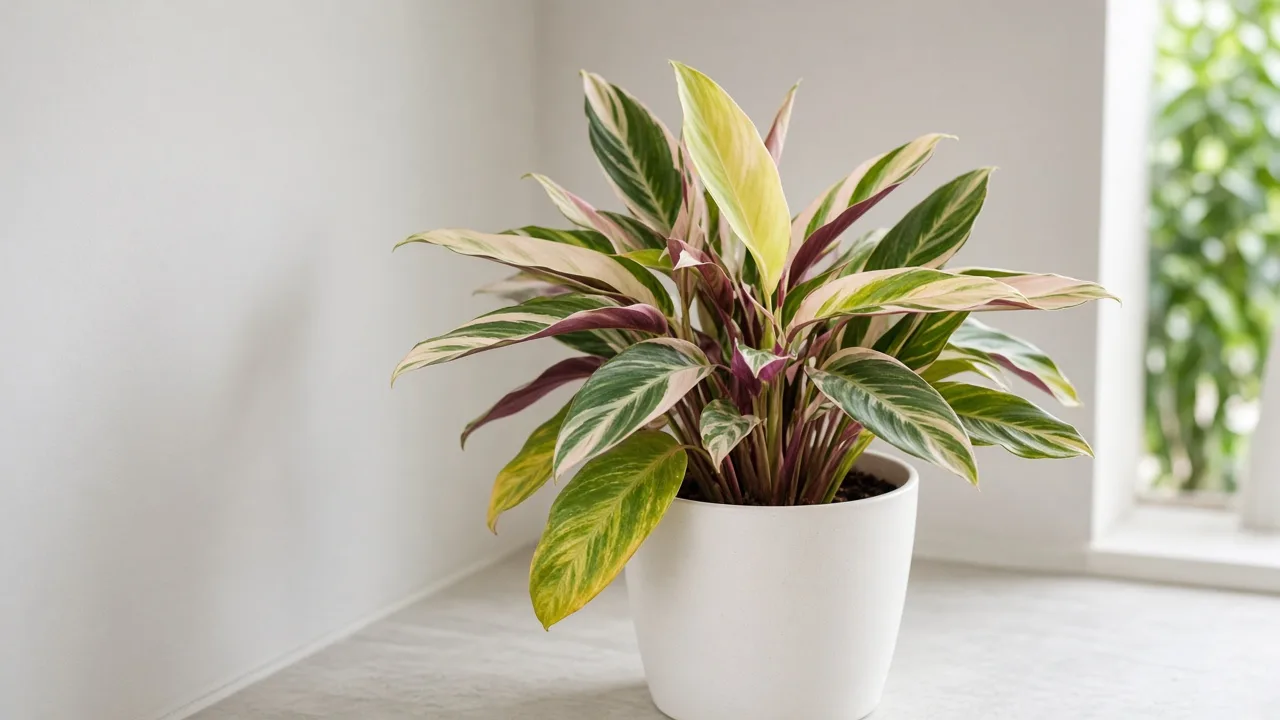
Nutrient Lockout on Stromanthe Triostar: Causes, Checks & Fixes
This guide covers nutrient lockout on Stromanthe Triostar. See also the general Nutrient Lockout guide, watering, and light pages for this plant.
Nutrient Lockout on Stromanthe Triostar: Causes, Checks & Fixes
Quick answer
On Stromanthe Triostar (Stromanthe thalia ‘Triostar’), nutrient lockout is something to investigate, not something you can call from one pale spear. Washed-out cream and pink panels, yellow-green new growth, or slow unfurling can also follow waterlogged roots, dim light, hard tap water, or a winter rest with fertilizer still going in. First pause fertilizer and trace feeding history, drainage, and water quality before adding more nutrients. For how lockout works in general, see the nutrient lockout guide. The checks below focus on whether the pattern fits a Triostar in your home.
What nutrient lockout can look like on Stromanthe Triostar
Triostar is grown for lance-shaped leaves with green, cream, and pink panels on top and burgundy undersides. When uptake stalls because of salts, impaired roots, or severe pH drift, new leaves may open dull, with weak contrast between panels or a yellow-green cast that spreads to the next spears. Older leaves may yellow while the plant still sits in wet mix. None of these signs names a specific locked-out nutrient.
Smart Garden Guide notes that odd discoloration on Triostar leaves is often related to the roots, and that excess chemicals and salts from fertilizers can contribute — recommending a flush with purified water rather than disturbing roots until color improves.Smart Garden Guide’s Triostar troubleshooting Treat that as a clue tied to feeding history, not a visual confirmation.
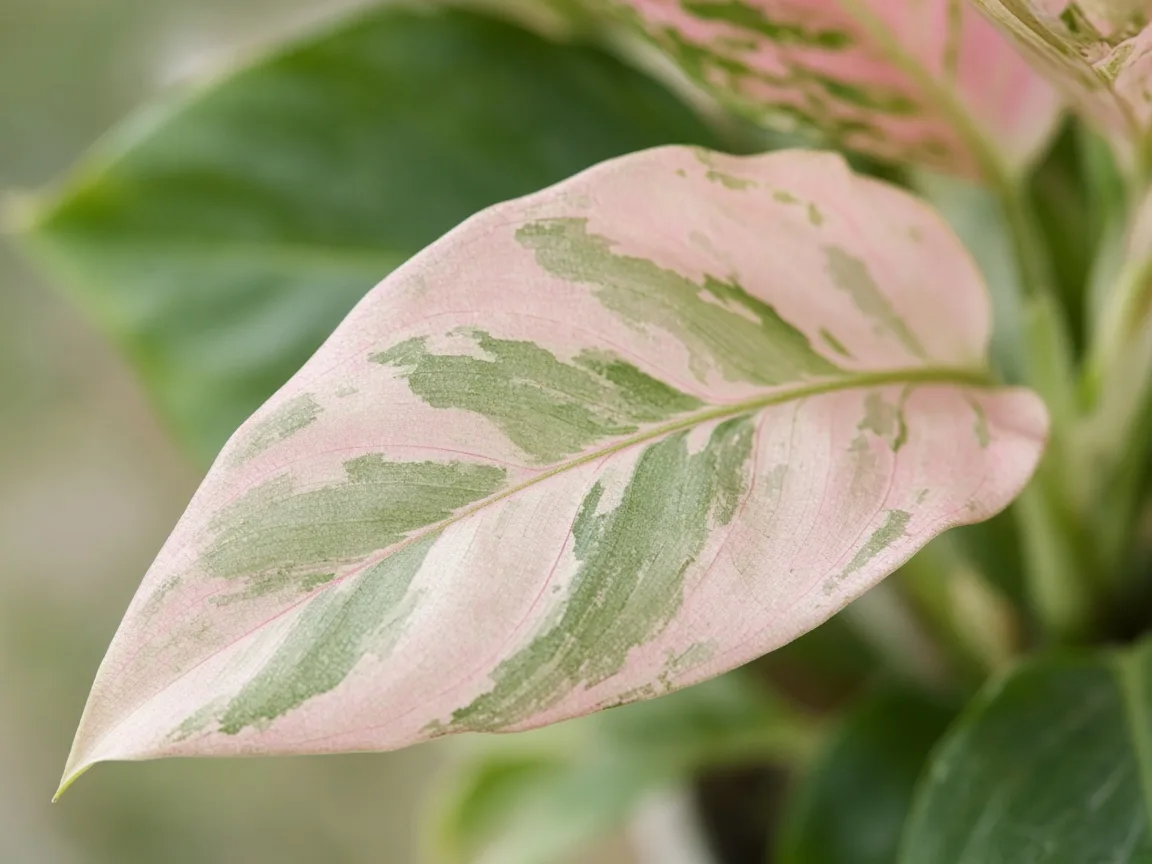
Faded cream and pink panels with mild paling can follow salt stress or poor root uptake on Triostar; compare the same leaf at the same time of day before diagnosing lockout.
Read Triostar variegation before you blame nutrients
Triostar does not behave like a typical high-light variegated plant. In very dim conditions it may shift toward more green, yet harsh direct sun can bleach pale panels first.Gardeners’ Path on Triostar light and variegation Compare a questionable leaf with another leaf on the same plant before deciding variegation has “failed.”
Lockout or deficiency is more plausible when several successive new spears lose cream and pink contrast while placement and watering have stayed steady. A single older leaf fading while the rest of the clump stays vivid is weaker evidence. If the whole plant is turning mostly green and stretching, start with the not-enough-light guide and faded-leaves guide before assuming nutrients are locked out.
Triostar’s nightly leaf fold is not a nutrient symptom
Stromanthe leaves fold upward at night, a Marantaceae trait shared with prayer plants.North Carolina State Extension on Stromanthe leaf movement That fold is normal; compare leaves at the same time of day when judging color or angle. Leaves that stay limp or folded through daylight often point to moisture or root stress, not a shortage you can fix with fertilizer. If wilt appears with wet mix, use the drooping leaves guide and overwatering guide before feeding.
Why Triostar is prone to salt stress in small pots
Container Triostars grow in a limited volume of peat- or coco-based mix that loses starter fertilizer within months and then depends on you for food during active growth.Ohio Tropics on depleted potting mix The same small root zone also accumulates fertilizer and hard-water minerals when feeding is frequent or doses are strong. University of Wisconsin-Madison Extension warns that houseplants in limited soil can suffer leaf damage from overfertilization and that excess water contributes to yellowing when roots cannot function.UW-Madison houseplant care
Triostar care guides often recommend dilute fertilizer and periodic flushing because sensitive roots burn easily.Smart Garden Guide feeding summary Leaf discoloration does not automatically mean the plant needs more nutrients: roots must absorb and move them through the plant.RHS on how plants absorb nutrients Impaired roots from wet soil can produce yellow or red-tinted foliage that looks like deficiency.UW-Madison on root rot mimicking deficiency
How to confirm the cause on your Triostar
Start with history, not the oldest leaf. Write down fertilizer product, dilution, dates, and whether you watered through winter. Note if you use tap water with visible deposits on pots or faucets. Triostar is commonly grown with filtered or purified water because mineral buildup adds to salt stress alongside fertilizer.
Check the pot without uprooting first. Feel whether the top inch is drying at a normal pace for your home, lift the pot to judge weight, and confirm water exits the drainage holes. Compare rhythm with the Stromanthe Triostar watering guide. Soggy mix that stays heavy for days makes lockout less likely and root failure more likely — follow the root rot guide if stems soften or several leaves decline at once.
Look for white or pale crust on the soil surface or inner pot wall. Ohio Tropics describes crusty residue from fertilizer or hard-water salts as a sign excess minerals have built up in the container.Ohio Tropics on salt buildup and flushing If crust is present but roots are firm and the mix drains, lockout from high soluble salts is more plausible than a simple nitrogen shortage.
If new growth is pale but there is no crust, inspect whether the mix has compacted or stopped draining. Dense mix can keep roots oxygen-starved even when you water carefully; see the wrong soil mix guide and compacted soil guide. Pot-bound plants can also show yellowing and stunted new leaves when the rootball has little fresh mix left.UW-Madison on pot-bound deficiency symptoms The root-bound guide helps decide whether repotting belongs in the plan.
Rule out lookalikes before you “correct” nutrients. Crisp brown edges after a strong feed may be fertilizer burn rather than lockout. General yellowing on multiple leaves belongs in the yellow-leaves guide. Slow unfurling with no salt signs may trace to slow growth from low light or cool conditions rather than unavailable nutrients.
First fix: pause fertilizer and sort the pattern
Stop all fertilizer while you decide what fits. This single pause prevents adding more salts to a stressed Triostar and gives you time to check moisture, crust, and new spear color without stacking treatments.
If you recently fed heavily or see crust, the pot drains freely, and the mix is due for water — not already wet — run plain filtered or soft water through until it flows from the drainage holes, then empty the saucer. Smart Garden Guide advises flushing with purified water when salts are suspected, and waiting for improvement before disturbing roots.Smart Garden Guide on flushing Triostar Skip flushing if the plant is wilting in wet soil or the pot has no drainage; fix water management first.
If there is no crust and roots are firm, do not resume feeding until you have ruled out light and moisture problems. When the Triostar is actively unfurling new leaves, use a dilute balanced houseplant fertilizer per label during the growing season only.Gardeners’ Path on seasonal Triostar feeding Details on strength and timing sit in the Stromanthe Triostar fertilizer guide and soil guide.
Recovery: watch the next spears, not the old panels
Judge progress by the next two or three leaves that unfurl. Established leaves that already turned dull or yellow-green rarely regain full pink and cream; what matters is whether new spears open with normal contrast and firm tissue. Triostar grows slowly compared with many houseplants, so allow several weeks before you change course again.
If yellowing keeps spreading, the pot stays wet, or new growth stalls, return to root and drainage checks rather than increasing fertilizer. Severe root rot can kill a plant even after salts are rinsed.UW-Madison root rot guidance When the main issue is dim light or dry air browning edges, correcting placement and humidity belongs ahead of any nutrient tweak — see brown tips and low humidity.
How to prevent nutrient lockout on Triostar
Feed lightly and only during active growth, pause in winter when new spears are rare, and record what you dilute and when you apply it. Flush the mix a few times per year with plain soft water if you fertilize regularly or use hard tap water.Smart Garden Guide on seasonal flushing
Keep the plant in bright filtered light, high humidity, and evenly moist but well-drained mix — the same baseline that supports color without forcing the roots.North Carolina State Extension Triostar culture Stable care makes it easier to tell true nutrient problems from ordinary Triostar stress; the Stromanthe Triostar overview ties the full routine together.
When to use this page vs other Stromanthe Triostar guides
Use this guide when pale or washed-out new variegation appears alongside questions about feeding, mineral crust, or whether roots can use the nutrients already in the pot. If damage clearly followed a strong dose, start with fertilizer burn. If yellow leaves follow chronic wet soil, compare overwatering and root rot. For color loss without a salt or root-zone story, use faded leaves and not enough light.
Browse the Stromanthe Triostar problems hub when the main symptom is not tied to feeding or the root zone.
Related tool
Use the Plant Problem Diagnosis Tool to organize checks for pale growth, feeding history, light, and root-zone moisture before you change more than one variable on your Triostar.
Related Stromanthe Triostar guides
- Fertilizer burn — use when crisp edges or speckling followed a recent strong feed.
- Faded leaves — use when color washes out without obvious salt crust or feeding excess.
- Yellow leaves — use when yellowing is the main symptom, whatever the cause.
- Overwatering — use when the pot stays wet and growth declines after watering.
- Fertilizer guide — use for normal feeding strength and timing after the plant is stable.