Wrong Soil Mix on Stromanthe Triostar: Causes, Checks &
Quick answer
Wrong soil mix on Stromanthe Triostar shows up as water that runs straight through, stays soggy for weeks, or never reaches the root core. First step: scratch the surface, identify whether the mix is mostly peat, mostly coarse bark or perlite, or dense garden soil, then run one slow watering test before repotting.
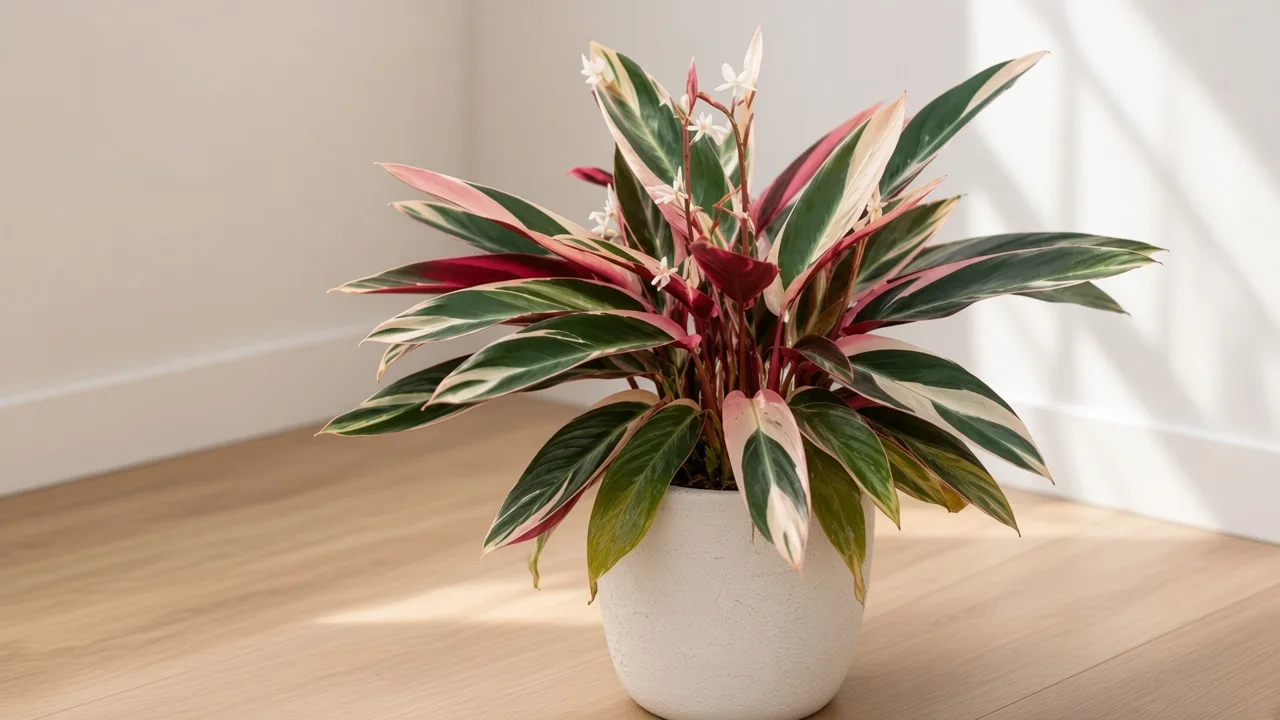
Wrong Soil Mix on Stromanthe Triostar: Causes, Checks & Fixes
This guide covers wrong soil mix on Stromanthe Triostar. See also the general Wrong Soil Mix guide, watering, and light pages for this plant.
Wrong Soil Mix on Stromanthe Triostar: Causes, Checks & Fixes
Quick answer
Wrong soil mix on Stromanthe Triostar means the potting medium cannot hold even moisture with enough air for fine prayer-plant roots—not a mystery disease on the leaves. Triostar needs humus-rich, moist, well-drained soils in a container that breathes between waterings. For universal wrong-mix signs, see the wrong-soil-mix symptom guide. On Triostar, bad mix usually masquerades as chronic over- or underwatering until you inspect texture and how water moves.
First step: scratch aside the top layer and identify what you actually planted in—peat-heavy nursery soil, fast-draining cactus mix, dense garden dirt, or a proper coir-perlite-bark blend. Then run one slow, full-surface watering and note whether water ponds, runs through instantly, or soaks evenly. Do not fertilize or prune heavily until you know whether the mix—not your schedule—is the weak link.
What wrong soil mix looks like on Stromanthe Triostar
Triostar flags soil failure through leaf symptoms that contradict each other because water moves wrong through the root ball. You might see crispy curled margins when the center is dry and the surface briefly damp, or yellow limp lower leaves when the bottom of a dense pot never dries.
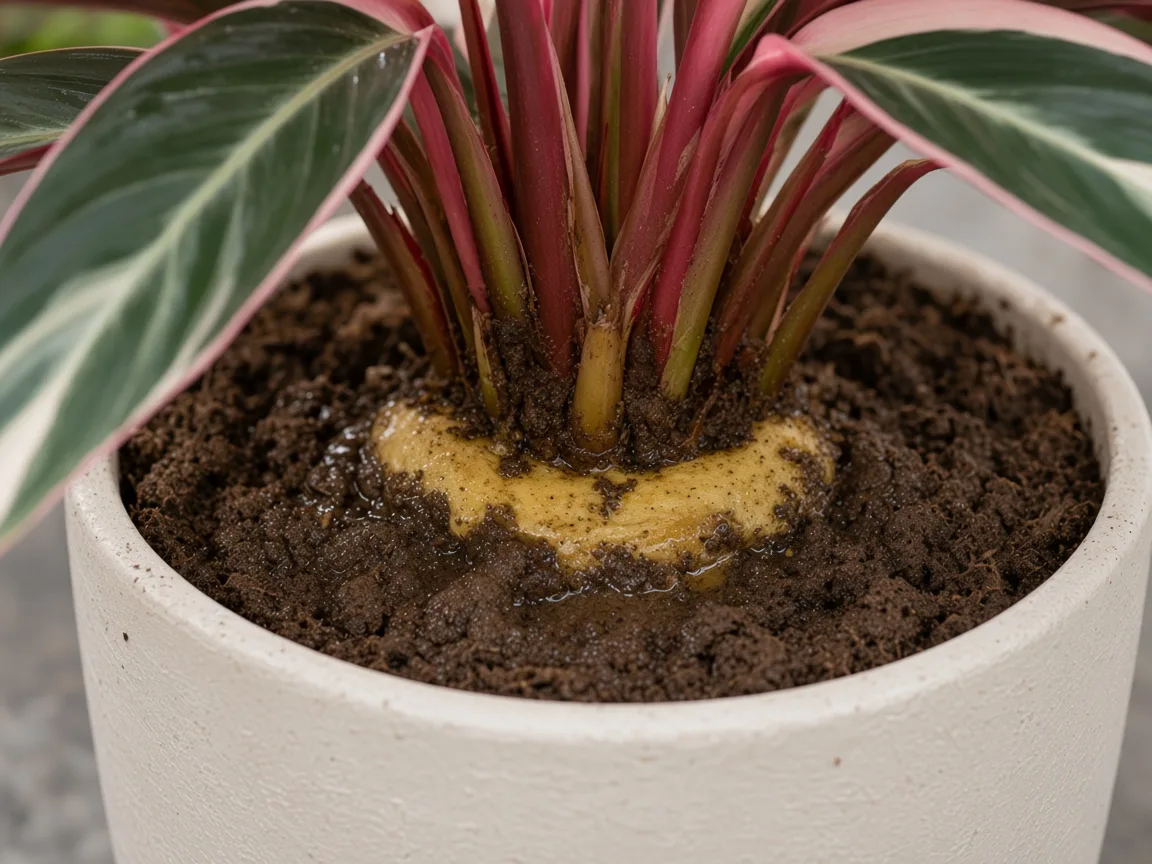
Dense, poorly aerated compacted soil around a Stromanthe Triostar stem base—heavy mix that holds water instead of a light tropical blend.
Common wrong-mix patterns on Triostar:
- Cactus or succulent blend — Pot dries in two days, mix shrinks from the wall, water runs down the gap; leaves curl with pale edge burn despite your effort to water often
- Straight peat or moisture-control potting soil — Surface stays wet for a week, center compacts; fungus gnats and soft yellow lower leaves resemble overwatering on Stromanthe Triostar even when you water lightly
- Garden soil or outdoor topsoil — Mix sets like a brick; water ponds on top or channels to the bottom; NC State Extension notes Stromanthe prefers moist well-drained soil—garden dirt rarely provides both in a pot
- Orchid bark–heavy mix alone — Dries too fast for a plant Missouri Botanical Garden describes as needing fertile moist well-drained conditions; edges crisp between waterings
- Old degraded peat — Dark, sludgy, odor when wet; breaks down after a year or two in a warm room
Stalled pink-and-green new spears are an early Triostar-specific clue: the crown pushes growth, but roots in the wrong medium cannot supply steady moisture for unfurling thin variegated leaves.
Why succulent mix fails Triostar’s fine roots
Stromanthe shares the Marantaceae habit of fine, shallow, oxygen-sensitive roots that want steady moisture—not the soak-and-dry lifestyle of succulents. A coarse cactus blend drains so fast that the root zone swings dry between waterings. Triostar then shows drought curl on pale panels even though you water on schedule.
RHS guidance for related calatheas—the same family group—calls for moisture-retentive, free-draining compost, not desert drainage. If your mix label says “cactus” or is mostly grit, treat it as wrong for Triostar unless you heavily amended it with coir or peat and still see even moisture.
Garden soil in a prayer-plant pot
Outdoor garden soil compacts in containers and holds water without the air pockets houseplant roots need. In a Triostar pot, that often means a wet anaerobic core plus a dry-looking top—classic false signals for water stress on Stromanthe Triostar.
Wisconsin Horticulture Extension recommends growing Triostar in any quality soilless growing medium kept evenly moist during active growth. Soilless does not mean “no structure”—it means engineered ingredients, not backyard dirt.
Peat-heavy nursery mix without aeration
Big-box tropical plants often ship in straight peat-based medium with almost no perlite or bark. That works in a greenhouse with constant mist; indoors it compacts, stays soggy in low light, or turns hydrophobic after a dry spell. Either path damages Triostar roots.
The fix is not more water or less water alone—it is rebuilding texture per the Stromanthe Triostar soil guide: roughly two parts peat or coir, one part perlite, plus a handful of bark fines for long-term porosity.
How to confirm the mix—not just the symptoms
- Ingredient audit — Read the bag or scrape the surface. Visible perlite, bark chunks, or coir fiber should be obvious in a suitable mix.
- Slow pour test — Water across the whole surface for 30 seconds. Ponding, instant tunneling to the bottom, or water sitting on top after five minutes suggests wrong texture or compaction.
- Skewer depth test — Insert a clean wooden skewer mid-pot. If it emerges muddy on a “dry” surface, the mix stratifies. If it emerges dusty while leaves curl, the center is desert-dry inside cactus mix.
- Dry-down timing — In bright indirect light at room temperature, note how many days until the top inch dries. Extremes under three days or over fourteen with decline symptoms warrant mix change.
- Root peek when mix fails tests — Slide the root ball out gently. Firm white-tan roots in sludgy mix still require repot; black mushy roots mean follow the root-rot guide as well.
If moisture checks match a healthy top-inch-dry rhythm from the watering guide but leaves still decline, return to mix diagnosis before chasing pests or fertilizer.
First fix for Stromanthe Triostar
If the mix is clearly unsuitable—garden soil, pure cactus blend, or waterlogged peat sludge—repot into fresh moisture-retentive, airy soilless mix in a pot only one size larger with open drainage holes.
Do not tamp the new mix into a brick. Set the clump at the same depth, fill loosely around rhizomes, water once to settle, and drain fully. If the mix is merely old but still crumbles with perlite visible, you may correct with one slow watering test first—but degraded black peat usually needs full replacement, similar to the compacted-soil guide.
If you are uncertain between overwatering and bad mix on a wet pot, empty the saucer and stop watering until the top inch dries—but schedule repot if the center stays saturated more than a week in moderate light.
Step-by-step repot for wrong mix
- Choose the blend — Follow Stromanthe Triostar soil ratios or African violet / prayer-plant premix with added perlite if your home runs warm.
- Right-size the pot — RHS repotting advice for Marantaceae relatives suggests only one or two sizes up; extra soil volume worsens wet cores.
- Preserve the clump — Triostar spreads from short rhizomes at the soil line. Wisconsin Extension notes clump division for propagation; for soil repair, leave the clump intact unless rot forces division.
- Trim only mushy roots — Firm roots stay. Soft brown tissue gets removed with clean shears.
- Water once, then wait — Let the top inch begin to dry before the next drink. Hold fertilizer four to six weeks.
- Bright indirect recovery spot — Stable light and humidity help the plant use the new mix predictably. See the light guide.
Recovery timeline
After repot into correct mix, expect pot weight to stabilize within one to two weeks. New spears may need two to four weeks to emerge with strong variegation.
Old yellow or crispy leaves typically stay marked. Judge success by clean new foliage and even moisture absorption, not by perfect legacy blades.
Severe root loss from long-term soggy wrong mix can push full recovery across a growing season. Soft black rhizomes at the crown limit salvage.
Lookalike symptoms to rule out
| Pattern | More likely cause | Next step |
|---|---|---|
| Wet heavy pot, calendar overwatering, fungus gnats | Overwatering habit | Overwatering guide after mix test |
| Light dry pot, crispy pale edges | Underwatering or low humidity | Underwatering, low humidity |
| Hard brick mix, slow soak, no ingredient change | Compacted old mix | Compacted soil — often overlaps this page |
| Water trapped in cachepot | Poor drainage setup | Poor drainage |
| Opposite wet/dry leaf signs weekly | Water stress from bad rhythm | Water stress |
Mistakes to avoid
Do not add gravel at the bottom instead of fixing mix or holes—it does not create drainage in a dense profile.
Do not repot into a much larger pot “so you water less.” Extra wet soil kills Triostar faster.
Do not reuse old cactus mix because “Triostar hated wet feet.” It hates stagnant wet feet; it still needs even moisture.
Do not press mix firmly when repotting. Loose fill preserves air.
Do not fertilize immediately after repot to “help color.” Roots need time in stable mix first.
How to prevent wrong soil mix next time
Mix or buy moisture-retentive soilless medium with perlite and bark, matching the moist well-drained soil profile NC State describes for Stromanthe. Refresh every one to two years or when breakdown turns airy peat into sludge.
Avoid garden soil entirely in indoor pots. When buying Triostar, plan to amend nursery peat with perlite within the first year if the greenhouse mix is too dense.
Pair mix with drainage holes and saucer emptying from the repotting guide. Good ingredients in a sealed cachepot still fail.
When to worry
Repot urgently when stems soften, mix smells sour, water cannot penetrate a hard puck, or leaves yellow rapidly on saturated wrong mix. Those signs can overlap active root rot.
You can wait if moisture checks are stable, ingredients look appropriate, and only one old leaf yellows at the base.
Conclusion
Wrong soil mix on Stromanthe Triostar is a root-zone engineering problem: the medium cannot keep even moisture and air for Marantaceae roots. Identify ingredients, test how water moves, and repot into a loose peat-or-coir blend with perlite and bark when the medium is clearly wrong. Leaf damage may linger, but steady dry-down timing and clean new spears tell you the mix is finally doing its job.
When to use this page vs other Stromanthe Triostar guides
- Stromanthe Triostar soil guide — Use for recipes and routine mix choice before assuming the current pot has failed.
- Compacted soil on Stromanthe Triostar — Use when the same ingredients have broken down into a hard mass over time.
- Poor drainage on Stromanthe Triostar — Use when the mix may be fine but water cannot leave the container.
- Overwatering on Stromanthe Triostar — Use when watering frequency—not texture—is the main driver.
- Stromanthe Triostar problems hub — Browse all common issues on this species.
Related Stromanthe Triostar guides
- Stromanthe Triostar overview
- Stromanthe Triostar soil
- Stromanthe Triostar watering
- Stromanthe Triostar repotting
- Compacted soil on Stromanthe Triostar
- Poor drainage on Stromanthe Triostar
- Overwatering on Stromanthe Triostar
- Water stress on Stromanthe Triostar
- Root rot on Stromanthe Triostar
- Stromanthe Triostar problems