Mealybugs on Syngonium Neon Robusta: Causes, Checks & Fixes
Quick answer
Mealybugs on Syngonium Neon Robusta hide as white cottony clusters in leaf axils and along vining stem nodes, leaving sticky honeydew that dulls pale pink leaves. Isolate the plant and dab each visible cluster with 70% alcohol on a cotton swab after a pale-leaf spot-test, then spray insecticidal soap into protected crevices on repeat intervals.
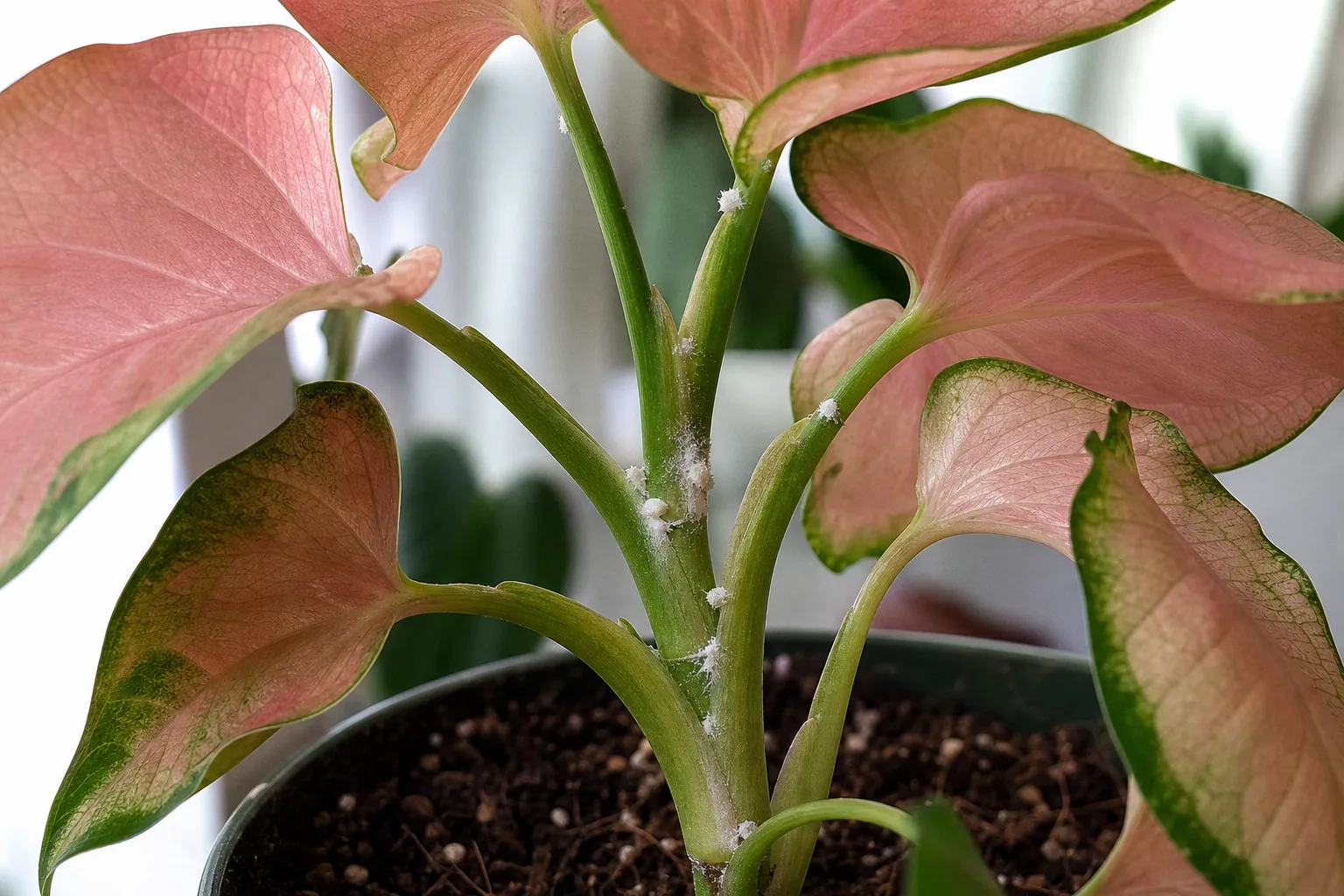
Mealybugs on Syngonium Neon Robusta: Causes, Checks & Fixes
This guide covers mealybugs on Syngonium Neon Robusta. See also the general Mealybugs guide, watering, and light pages for this plant.
Mealybugs on Syngonium Neon Robusta: Causes, Checks & Fixes
Quick answer
Mealybugs on Syngonium Neon Robusta (Syngonium podophyllum ‘Neon Robusta’) show up as white cottony masses tucked into leaf axils, stem nodes, and the soil line along vining stems. They suck sap, excrete sticky honeydew, and dull the plant’s soft pink chartreuse leaves-honeydew often appears on pastel tissue before you spot the wax at a node.
First step: move the plant away from others on your shelf, then spot-test 70% isopropyl alcohol on one hidden pale leaf and wait 24 hours. If tissue stays clean, dab every visible cluster with alcohol on a cotton swab, working into the tight joints where Neon Robusta leaves clasp the stem.
Mealybugs vs. aphids vs. spider mites on Neon Robusta - which guide to use
Honeydew and ants confuse owners because all three pests can produce them on pale arrowhead foliage. Route by what you see first:
| What you see | Likely pest | Guide |
|---|---|---|
| White cottony wax in leaf axils and nodes only | Mealybugs | This page |
| Soft pear-shaped insects on newest pink chartreuse shoots | Aphids | Aphids on Neon Robusta |
| Fine stippling, bronzing, and silk webbing on leaves | Spider mites | Spider mites on Neon Robusta |
| Sticky leaves but no insects yet | Hidden pest-inspect every node | Start here, then route above |
If honeydew appears without obvious wax, inspect stem tips for aphids and leaf undersides for spider mites before you commit to a mealybug treatment schedule.
What mealybugs look like on Neon Robusta
On a trailing pink arrowhead vine on a high shelf, mealybugs are easy to miss until honeydew dulls the pastel wash. Check these patterns together:
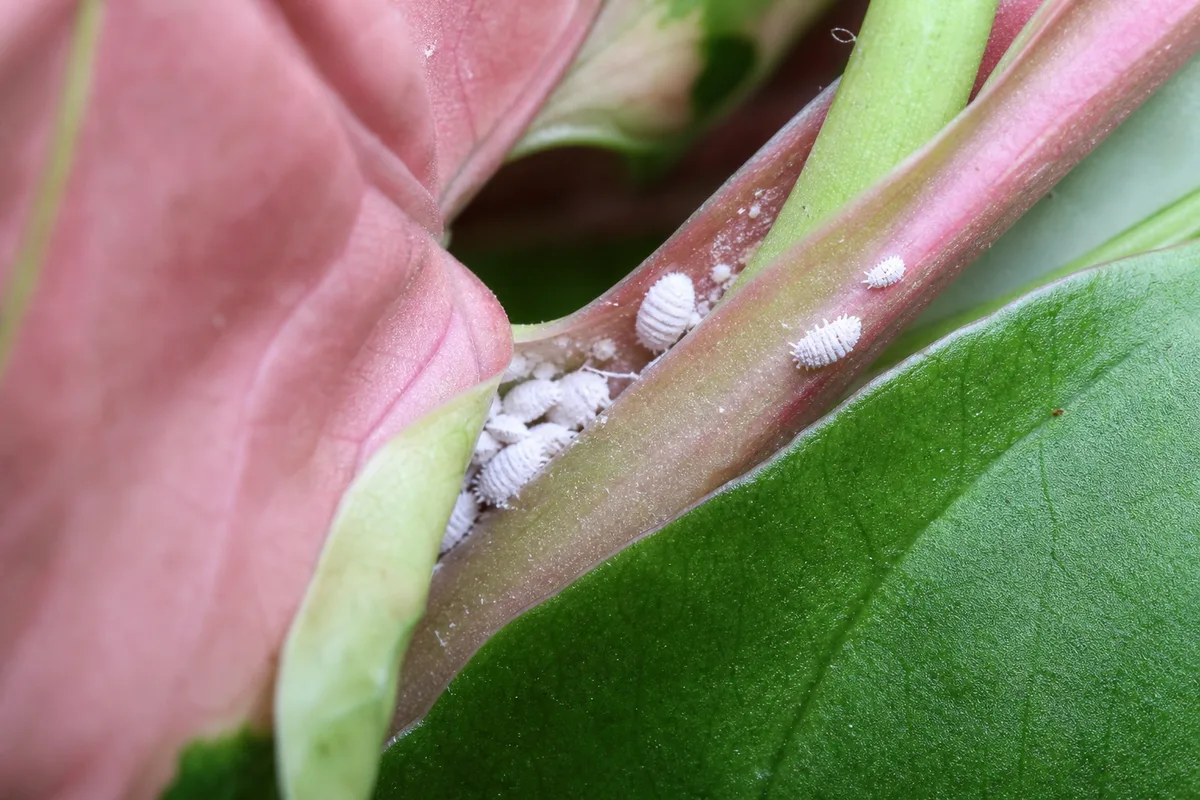
Mealybugs symptoms on Syngonium Neon Robusta - compare with healthy tissue on the same plant.
- White or gray cottony ovals clustered in leaf axils, stem crotches, and along trailing nodes
- Sticky, shiny residue on pale pink-green leaves; black sooty mold on honeydew in heavy infestations
- Slow yellowing, curling, or muted color on heavily fed shoots-the pink wash fades before you spot the pests
- Flat tan or brown disks on stems suggest scale, not the fluffy wax of mealybugs
- Fine stippling and webbing point to spider mites instead
Visual check at a vining node: pull the leaf back where it clasps the stem. Mealybugs look like tiny cotton balls wedged in the crevice. Perlite splash from watering sits as hard white grains on leaf tops or soil-it does not hide inside axils. Powdery mildew forms a flat dry film on leaf surfaces without stickiness or insects.
On Neon Robusta, inspect long unsupported stems extra carefully. The pastel leaves look sparse when pests hide at every node, and honeydew shows up starkly against light chartreuse foliage-often your first clue on a shelf plant viewed from below.
Why Syngonium Neon Robusta gets mealybugs
NC State Extension lists mealybugs among common insect problems on Syngonium podophyllum. Neon Robusta is a fast-growing arrowhead vine with soft new tissue and many protected crevices along each node-exactly where mealybugs prefer sheltered feeding sites.
Vining nodes and protected axils
As the plant trails from a shelf or climbs a pole, each node adds another axil where wax can hide. Long vines you have not pinched back carry more inspection points than a compact tabletop rosette. Mealybugs tuck under leaves pressed against petioles where a quick top-side glance misses them.
Introduction pathways and shelf spread
Most infestations start with introduction, not watering alone. Mealybugs hitchhike on nursery stock, shared pruners, or hands moving between pots on a crowded plant stand. A recent nursery purchase that skipped quarantine is the most common trigger on Neon Robusta-often visible first on soft new growth the cultivar pushes in warm months.
On a shared windowsill, trailing stems that touch neighboring pots give crawlers a bridge between syngonium, pothos, and philodendron. Isolate before you dab so you do not spread insects through contact.
Stress, dim corners, and soft tissue
Neon Robusta kept in dim corners grows softer, leggier stems with more hiding spots. Overwatered mix that stays wet also produces tender tissue pests colonize faster. Ants on the pot rim or nearby surfaces often signal honeydew above from mealybugs, aphids, or scale-not a separate problem to treat first.
How to confirm the cause
Work in good light with a magnifying glass if needed. Pull leaves back at each node and trace the vine from newest tip to soil line. Stationary white waxy clumps that dissolve when touched with alcohol confirm mealybugs. Flat white powder only on leaf surfaces may be powdery mildew, which needs different care.
Press an alcohol swab onto one cluster. Mealybugs turn orange-gray when killed; mineral deposits and dust do not. If stems look clean but the plant stays weak, slide it partly out of the pot and inspect the soil line and upper roots for root mealybugs-white wax without obvious aboveground colonies.
Rule out underwatering or root rot before blaming pests alone: firm stems with dry mix and no wax mean drought stress, not mealybugs.
First fix for Neon Robusta
Isolate the affected plant away from other houseplants-especially other Syngonium and trailing vines whose leaves touch.
Then dab each visible mealybug and egg mass with a cotton swab soaked in 70% isopropyl alcohol, pressing into leaf axils and node crevices. Clemson HGIC recommends wiping individual mealybugs with a cotton swab dipped in rubbing alcohol for light infestations.
Pale-leaf alcohol and oil spot-tests
Spot-test alcohol on one hidden pale leaf first if the plant was recently repotted or sits in hot direct sun. Syngonium foliage can burn if alcohol pools on pastel leaves. Wait 24 hours before treating the whole plant. The same caution applies to neem oil and horticultural oil-never apply in midday sun on Neon Robusta’s thin chartreuse-pink tissue.
Insecticidal soap repeat schedule
After dabbing, spray insecticidal soap to coat stems, leaf undersides, and the soil line, following label intervals. Repeat weekly for at least three weeks; eggs and crawlers hide in protected joints and survive a single pass. Clemson HGIC notes that mealybug wax repels pesticides, so repeat treatments are essential.
Do not stack Syngonium Neon Robusta repotting guide, heavy pruning, and multiple pesticides on the same day-make pest removal the one change, then watch new growth for five to seven days.
Step-by-step recovery
Light infestation (one to three axil clusters)
- Isolate on a separate shelf or cart away from touching leaves.
- Spot-test alcohol on one pale leaf; wait 24 hours.
- Dab every cottony cluster with alcohol; dispose of swabs in sealed trash.
- Re-inspect in five to seven days; repeat dabs if new wax appears.
Moderate infestation (wax on multiple nodes, honeydew present)
- Complete steps 1–3 above on day one.
- Spray insecticidal soap into crevices the swab could not reach.
- Wipe sticky honeydew from leaves so sooty mold does not spread and dull the pink color further.
- Repeat alcohol dabs and soap at label intervals weekly for three full cycles.
- Inspect quarantined neighbors weekly before ending isolation.
Heavy infestation (wax on new growth tips, ants, or root-zone colonies)
- Follow moderate steps with strict isolation-do not return the plant to a shared windowsill after one round.
- Add neem oil extract only after soap cycles if colonies persist: spot-test one leaf, apply in evening indirect light, coat every axil, repeat at label intervals for three to four weeks.
- If root mealybugs are present at the soil line and control fails after three weekly cycles, repot into fresh well-drained mix after rinsing roots-only then, not on day one.
- Contact your local Cooperative Extension office or master gardener helpline if wax returns after three full treatment cycles-they can confirm species and recommend labeled products for chronic indoor infestations.
Judge success by wax-free new pink-tinged tips, not by old dull leaves reverting.
Recovery timeline
Visible clusters often collapse within days of alcohol dabbing. Full control typically needs two to three weekly repeats because of hidden eggs. Expect clean new pink-tinged tips within two to three weeks once treatment works. Old scarred or dull leaves do not revert, but wax-free new growth and firm stems mean the plant is winning.
On a trailing Neon Robusta shelf plant, the first clean juvenile arrowhead leaf at an upper node-pink wash intact, no stickiness-is your clearest recovery signal around day 18 to 21 after consistent weekly treatment.
Lookalike symptoms to rule out
| Sign | More likely | Guide |
|---|---|---|
| Flat white film on leaf tops | Powdery mildew | Fungal care-not this page |
| Tan/brown raised bumps on stems | Scale insects | Inspect stems; alcohol test |
| Fine webbing, stippled leaves | Spider mites | Spider mites guide |
| Soft pear-shaped insects on new tips | Aphids | Aphids guide |
| White wax in leaf axils only | Mealybugs | This page |
| Ants without visible wax | Honeydew from hidden pests-inspect nodes | Start confirmation above |
| Hard white grains on soil surface | Perlite splash | Wipe dry-not pests |
What not to do
Do not stop after one alcohol dab or a single soap spray-mealybugs reproduce in crevices your first pass missed. Do not blast the plant with oil-heavy sprays without a pale-leaf spot-test; pastel Syngonium leaves can show phytotoxicity. Do not apply alcohol or neem in hot direct sun on Neon Robusta-the combination burns thin chartreuse tissue fast.
Do not increase watering because leaves look stressed; sap loss from pests is not fixed by wet soil. Do not confuse guttation droplets with honeydew: guttation is water pushed from leaf margins after heavy watering and is not sticky like sap exudate.
Wear gloves when handling infested tissue-the sap contains calcium oxalate crystals and can irritate skin; keep treated plants away from pets until sprays dry.
How to prevent mealybugs next time
Shelf-collection workflow for multi-plant owners:
- Quarantine every new Syngonium Neon Robusta on a separate cart or table for two weeks before it joins a windowsill collection.
- Inspect nodes with a phone flashlight at axils along trailing stems-the backlight makes cottony wax visible on pale tissue.
- Wipe pruners with alcohol between pots when pinching vines on a shared stand.
- Rotate pots weekly so you see all sides of trailing stems you normally view from one angle.
- Treat the first white wax spot before vines touch neighbors.
Keep the plant in bright indirect light per the light guide with well-drained potting mix so growth stays firm rather than soft and leggy. The overview hub lists purchase quarantine checkpoints for new Neon Robusta arrivals.
When to worry
Escalate when colonies cover new growth tips, multiple stems carry wax, or ants farm the plant heavily. Root-zone infestations combined with limp stems and sour-smelling mix need faster action than a few axil clusters on an otherwise firm plant.
Mealybugs will not kill a healthy Neon Robusta overnight, but unchecked feeding during warm active growth can stall the pink juvenile look and leave long bare vines going into the next season. If three full weekly alcohol-and-soap cycles fail, contact your county extension office before reaching for stronger products indoors.
When to use this page vs other Syngonium Neon Robusta guides
- Syngonium Neon Robusta watering guide - Use for routine moisture checks before assuming mealybugs is the main issue.
- Syngonium Neon Robusta problems hub - Browse all 1 common issues on this species.
Related Syngonium Neon Robusta guides
- Syngonium Neon Robusta overview
- Syngonium Neon Robusta watering
- Syngonium Neon Robusta light
- Syngonium Neon Robusta soil
- Syngonium Neon Robusta problems
- Leggy Growth on Syngonium Neon Robusta
FAQs
How can I confirm mealybugs on Syngonium Neon Robusta?
Look for white waxy cottony patches where leaves meet stems and at every node along the vine. Sticky honeydew, sooty mold, or ants on the pot rim point to sap-feeding pests-not dust on pale chartreuse leaves. A dab of alcohol turns dead mealybugs orange-gray.
Is the white stuff on my Neon Robusta mealybugs or perlite splash?
Perlite sits as hard white grains on soil or leaf tops and wipes off dry. Mealybugs form soft cottony tufts tucked into leaf axils and node crevices along the vine-they smear pinkish when crushed and do not brush away like mineral grit. Honeydew stickiness below a node confirms live sap feeders.
Will damaged Neon Robusta tissue from mealybugs recover?
Yellowed or dull leaves from heavy feeding usually give way to clean pink-tinged new growth once pests are gone. Cosmetic spotting on older leaves may remain. Wax-free new tips within two to three weeks mean recovery is on track.
Can I use neem oil on Syngonium Neon Robusta for mealybugs?
Yes, after alcohol dabs and insecticidal soap if colonies persist-but spot-test one pale leaf first and wait 24 hours. Neem and horticultural oils can burn pastel Syngonium tissue in hot sun. Apply in evening indirect light, coat axils thoroughly, and repeat at label intervals for three to four weeks.
How do I prevent mealybugs on Syngonium Neon Robusta?
Quarantine new syngonium on a separate shelf cart for two weeks before it joins a windowsill collection. Scout nodes monthly with a phone flashlight, wipe pruners with alcohol between pots, and treat the first white wax spot before trailing vines touch neighbors.
Conclusion
Sticky honeydew on pale Neon Robusta leaves without obvious insects? Inspect nodes for white wax here first, then route to aphids if you find soft bodies on new shoots or spider mites if stippling and webbing appear. Isolate, spot-test alcohol on pastel tissue, dab every cluster, repeat soap on schedule, and judge recovery by clean pink-tinged new tips-not old dull leaves.