Aphids on Syngonium Neon Robusta: Causes, Checks & Fixes
Quick answer
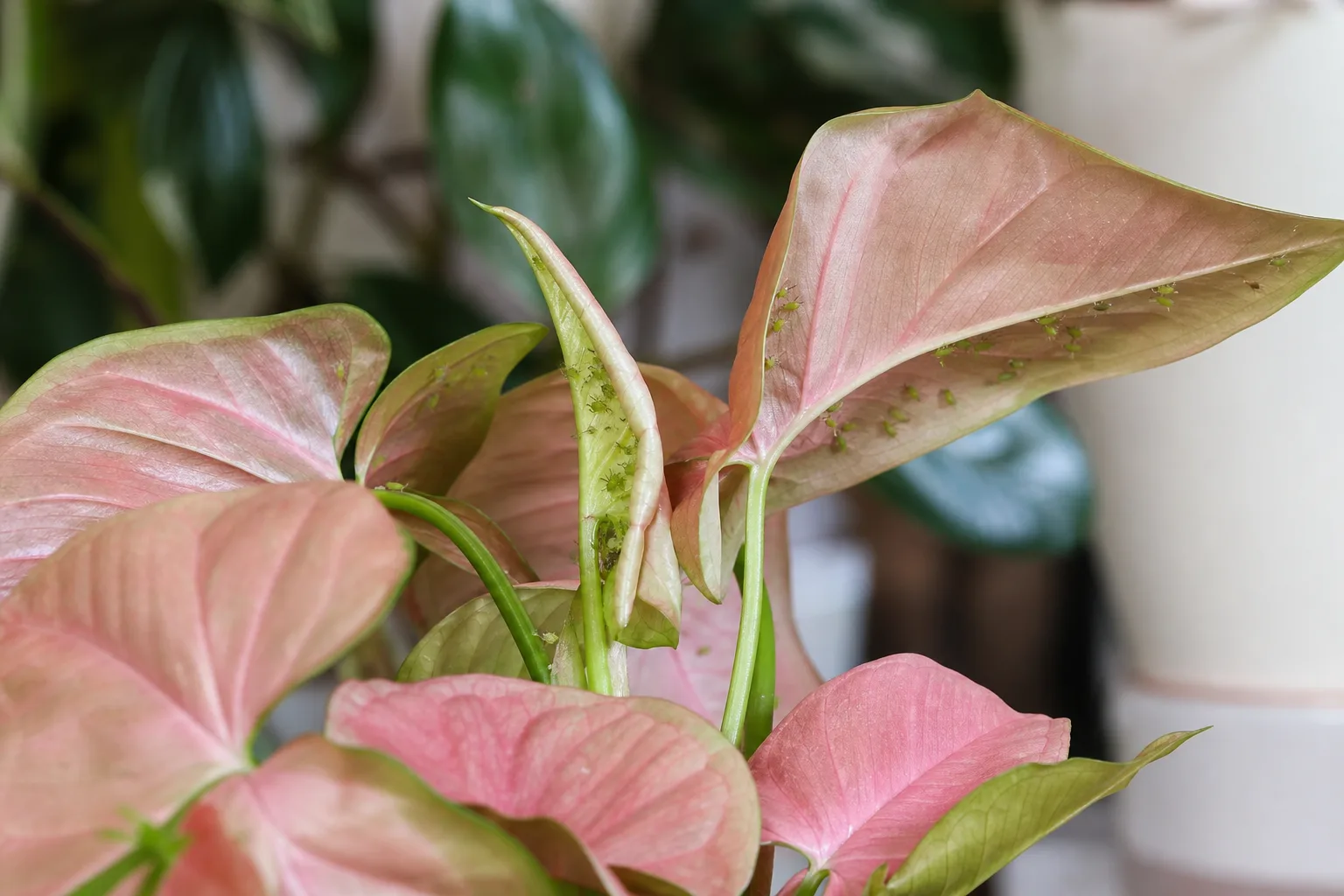
Aphids on Syngonium Neon Robusta cluster on soft pink-green new leaves and stem tips, leaving sticky honeydew that dulls the pastel foliage. First step: isolate the plant and rinse colonies off every leaf underside and growing tip with lukewarm water before applying any spray.
Aphids on Syngonium Neon Robusta: Causes, Checks & Fixes
This guide covers aphids on Syngonium Neon Robusta. See also the general Aphids guide, watering, and light pages for this plant.
Aphids on Syngonium Neon Robusta: Causes, Checks & Fixes
Quick answer
Sticky pink arrowhead leaves on your tabletop Syngonium Neon Robusta (Syngonium podophyllum ‘Neon Robusta’, plant patent PP18013) usually mean aphids-not overwatering. This patented pink-green selection pushes its softest tissue at stem tips and unfolding juvenile leaves, exactly where aphids concentrate on tender new growth. They suck sap, excrete shiny honeydew, and can curl or dull pastel foliage before you spot the insects themselves.
First step: isolate the plant away from other houseplants, then rinse colonies off every leaf underside and growing tip with lukewarm water. That knocks down live aphids and washes fresh honeydew so you can confirm the infestation and see whether numbers return before you reach for sprays. Do not apply insecticidal soap, neem, or alcohol on day one if you have not verified soft-bodied insects on tender new growth.
Before buying, the Neon Robusta overview flags sticky residue and clean leaf undersides as purchase checkpoints-aphid honeydew is one reason that inspection matters on this cultivar.
Why Syngonium Neon Robusta gets aphids
Pink-chartreuse juvenile growth as the primary feeding surface
On PP18013 Neon Robusta, the diagnostic surface is the matte pink-green wash on new arrowhead leaves-not the darker mature foliage lower on the vine. Honeydew catches ambient dust on that pale juvenile tissue, so stickiness and dulling often show from above before you see green aphid clusters camouflaged against chartreuse. Solid-green syngonium cultivars hide the same insects more easily; here, tacky shine on pastel shoots is often your first clue.
North Carolina Extension lists aphids among common insect problems on Syngonium podophyllum. In bright indirect light, Neon Robusta produces a steady flush of pink-tinged shoots in spring and summer, giving aphids fresh feeding sites every few weeks.
Introduction routes and quarantine failures
Aphids hitchhike on nursery stock, open windows in warm weather, or hands and tools moving between pots on a crowded shelf. They are not caused by a single missed watering-they arrive on soft tissue and multiply once established. Two weeks of isolation for new syngonium before shelf placement catches most hitchhikers before they reach your collection.
Ants and honeydew farming
Ants harvest honeydew and protect aphid colonies from predators. Ant trails on the pot rim, shelf edge, or nearby wall often appear before you spot the aphids feeding above on pale foliage. Treating only the plant while ants keep farming unreachable stem tips is a common reason colonies rebound within days.
Winged aphids and collection spread
Most indoor aphids are wingless, but crowded colonies produce winged forms that disperse to new hosts when food quality drops. Winged aphids are poor fliers but can drift on air currents between pots on the same stand-urgent reason to isolate Neon Robusta and inspect neighboring aroids the same day you confirm an infestation. For broader syngonium aphid biology, see the species-wide aphids guide.
Excess nitrogen and soft shoots
Heavy fertilizer during strong light produces lush soft growth aphids prefer. Neon Robusta does not need aggressive feeding; monthly light doses in spring and summer are enough when basics are right per the watering guide.
What aphids look like on Neon Robusta
- Small pear-shaped insects-green, black, pink, or yellow-clustered on newest leaves, stem tips, and leaf bases
- Colonies tucked under young arrowhead leaves and along tender petiole joints
- Sticky, shiny honeydew on pale pink-green foliage; black sooty mold on heavy infestations
- Ants climbing the pot or nearby surfaces toward the plant
- Curling, yellowing, or stunted newest leaves while older foliage looks otherwise normal
- White cast skins on leaf undersides after molting
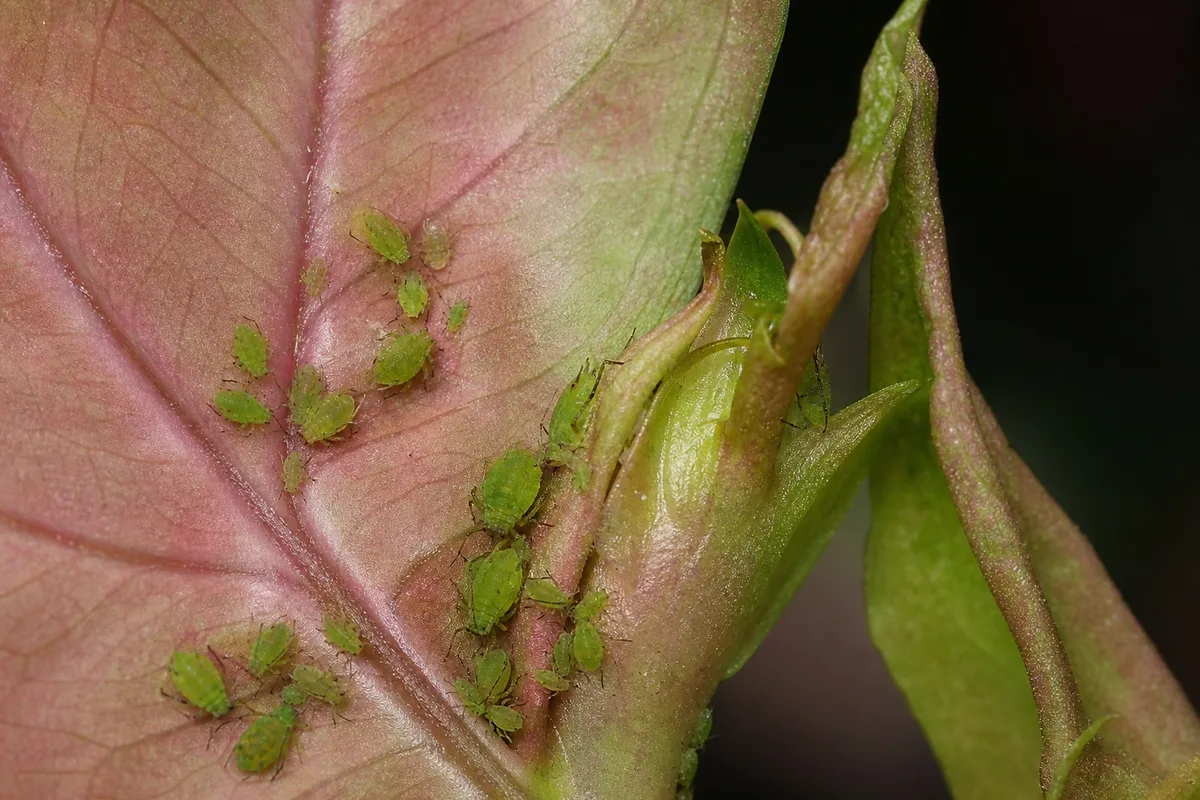
Aphids symptoms on Syngonium Neon Robusta - compare with healthy tissue on the same plant.
On Neon Robusta, honeydew and sooty mold show up starkly against light pastel leaves-often before you see the insects. Unlike mealybugs, aphids are not cottony white. Unlike scale, they move when disturbed. Unlike spider mites, they do not leave fine webbing or thousands of yellow pinprick stipples on older leaves.
Tabletop vs. trailing inspection
Compact tabletop Neon Robusta concentrates aphids on fewer visible shoot tips at the crown-easy to spot once you tilt the pot, but a modest colony can coat every pink juvenile leaf fast. Hanging baskets and long trailing vines spread feeding sites along many nodes; work stem by stem from the growing tip backward, checking each leaf axil where young foliage presses against petioles. A quick rinse of only the top rosette misses colonies halfway down a trailing stem.
Field example: sticky tabletop shoot
A 6-inch (15 cm) Neon Robusta on a kitchen shelf showed tacky shine on two pink chartreuse shoots but no obvious insects from above. Lifting the softest leaves revealed green pear-shaped aphids clustered at petiole bases; a damp cloth wipe returned sticky within 24 hours. After isolate-and-rinse every two to three days for ten days, honeydew stopped, ants left the pot rim, and the next arrowhead leaf opened with a clean pink wash-while two earlier curled tips kept their distortion. That timeline is typical when roots stay healthy and treatment starts before winged spread.
How to confirm the cause
Work through these checks in order:
- New-growth scan - Start at the softest pink-green shoots at stem tips and any leaves still unfolding.
- Underside inspection - Lift leaves back at each node and check where petioles meet stems. Colonies often hide below young foliage.
- Honeydew test - Wipe a pale leaf with a damp cloth. If stickiness returns within a day, sap feeders are still active.
- Ant trail follow - Ants marching up the pot or shelf strongly suggest aphids or other honeydew producers above.
- Soil and stress check - Confirm the top inch of mix is not waterlogged per the watering guide. Overwatering yellows leaves uniformly and softens stems-it does not produce clustered moving insects on new tips.
- Neighbor plants - Inspect every syngonium, pothos, or philodendron on the same shelf. Aphids spread by crawling and short flights before the index plant looks bad.
Confirmed aphids mean isolation and repeated treatment-not a single rinse and hope.
Lookalikes at a glance
| Symptom pattern | More likely cause | Quick check |
|---|---|---|
| Soft pear-shaped insects on shoot tips, sticky honeydew | Aphids | Insects move when nudged; ants on pot rim |
| White cottony masses in leaf axils | Mealybugs | Cottony wax; not loose clusters on tips |
| Hard brown or tan bumps | Scale | Immobile; does not move when touched |
| Yellow stippling, fine silk webbing | Spider mites | Dry air; no sticky honeydew pools |
| Dry white powder on leaf surfaces | Powdery mildew | No insects; wipes to powder, not tacky sap |
| Uniform yellow lower leaves, wet heavy pot | Overwatering | No clustered pests on stem tips |
| Even pink fade, no stickiness | Low light | Whole plant washes out; no ants or insects |
First fix for Syngonium Neon Robusta
Move the plant away from others, then shower or rinse every leaf underside and stem tip with lukewarm water.
Neon Robusta handles a thorough rinse well if you avoid waterlogging the pot. Support trailing stems, tilt the pot, and direct water across undersides from multiple angles. Wrap the soil surface in plastic if you rinse in a sink to keep mix from washing out. Let foliage dry in bright indirect light the same day-not hot direct sun, which scorches pale chartreuse leaves.
This single step dislodges a large share of adults and nymphs and washes fresh honeydew before it attracts ants or grows sooty mold. Repeat every two to three days for two weeks, focusing on new growth where aphids return fastest.
Do not repot, fertilize, or prune heavily on day one. Wear gloves when handling many stems; syngonium sap contains calcium oxalate crystals and the plant is toxic to cats and dogs-keep rinsed leaves and runoff away from pets. Contact your veterinarian or the ASPCA Animal Poison Control Center at (888) 426-4435 if a pet chews foliage during or after soap treatment.
Step-by-step recovery
After the initial rinse:
- Repeat water rinses every two to three days for two weeks. Aphids drop when disturbed but climb back-washing must be regular to work.
- Apply insecticidal soap if live aphids remain after several rinses. Cover undersides and stem tips completely and follow label intervals-typically every five to seven days for at least three applications to catch newly hatched nymphs.
- Wipe honeydew from pale leaves with a damp cloth between rinses. Sooty mold stops spreading once insects are gone and can be washed off.
- Treat ants separately if trails persist-removing aphids removes the food source, but ant baits may be needed on shelves where ants protect unreachable colonies.
- Trim only heavily distorted leaves that are mostly dead tissue-Neon Robusta will not repair severe curling. Keep enough foliage for photosynthesis unless the plant is fully coated.
- Inspect quarantined neighbors weekly with a hand lens. Treat any positive plant before returning the collection to shared placement.
If live aphids persist after three full soap cycles, escalate to a horticultural oil or neem product labeled for houseplants-still applied with direct contact on undersides, patch-tested on one pale leaf first, and never in hot direct sun. UC IPM notes systemic soil drenches as a last resort for stubborn indoor infestations when contact sprays fail; use only products explicitly labeled for the plant species and follow label intervals strictly.
Isolate until you see no new aphids, no fresh honeydew, and no winged forms for at least two weeks after the last treatment.
Recovery timeline
Visible aphids should clear within one to two weeks of consistent rinsing or soap treatment. Expect clean pink-tinged new arrowhead growth within two to four weeks once pests stay gone. Distorted juvenile leaves keep their blemishes permanently-judge success by unstained new shoots with restored pink wash, not by old foliage flattening out.
A compact tabletop Neon Robusta may look sparse for several weeks if you remove heavily damaged tips, but healthy roots and steady bright indirect light per the light guide support quick replacement growth when aphids are controlled.
Mistakes to avoid
Do not stop after one rinse when colonies were already visible-nymphs hatch within days and winged adults can recolonize neighboring pots.
Do not spray only the top of arrowhead leaves; aphids feed on undersides and stem joints.
Do not apply horticultural oil or soap in hot direct sun-pale Neon Robusta leaves burn easily.
Do not increase fertilizer hoping to push past damage-soft new tissue feeds aphids faster.
Do not ignore nearby plants that look fine; inspect them before ending quarantine.
Do not use homemade dish soap sprays; commercial insecticidal soaps are formulated to reduce leaf burn risk on thin foliage.
Do not let pets access treated plants while spray residue is wet-syngonium is toxic if chewed, and soap residue can irritate mouths further.
Syngonium Neon Robusta care cross-check
While treating aphids, keep basics steady without stacking stressors. Water when the top inch of soil dries per the watering guide-Neon Robusta tolerates brief drought but grows best with consistent moisture, not alternating flood and bone-dry cycles.
Bright indirect light per the light guide supports clean new growth after control. Deep shade slows replacement leaves, washes out the pink wash, and produces softer leggy stems pests colonize faster. Target moderate humidity around 50–60% and temperatures between 16–27°C (60–80°F). Avoid placing a recovering plant directly above a radiator.
How to prevent aphids next time
Quarantine every new syngonium for two weeks before placing it beside existing plants. Inspect stem tips weekly during spring and summer active growth-the season Neon Robusta pushes the most tender pink shoots.
Rinse foliage occasionally when you water, especially after bringing outdoor summer plants back indoors. Space pots so leaves do not touch and aphids cannot walk between neighbors on a shared shelf.
Avoid heavy nitrogen feeding that produces overly soft shoots. Scout at first sighting before colonies spread through a collection of trailing aroids on one plant stand.
When to worry
Escalate if winged aphids appear, new shoots repeatedly emerge coated in aphids after three full soap treatment cycles, if sooty mold covers most foliage, or if ants make colonies impossible to rinse away. Chronic feeding during active growth can stall the compact pink juvenile look for months even when roots stay healthy.
Aphids alone rarely kill a mature syngonium with firm roots, but they can ruin the aesthetic you bought Neon Robusta for and open the door to secondary stress if you respond with extra water or fertilizer instead of pest control.
When to use this page vs other Syngonium Neon Robusta guides
- Syngonium Neon Robusta watering guide - Use for routine moisture checks before assuming aphids is the main issue.
- Syngonium Neon Robusta problems hub - Browse all 1 common issues on this species.
Related Syngonium Neon Robusta guides
- Syngonium Neon Robusta overview
- Syngonium Neon Robusta watering
- Syngonium Neon Robusta light
- Syngonium Neon Robusta soil
- Syngonium Neon Robusta problems
- Leggy Growth on Syngonium Neon Robusta
Conclusion
On PP18013 Neon Robusta, winning against aphids means protecting the pink juvenile arrowhead growth this cultivar is sold for-not rescuing every old curled leaf. When honeydew stops, ants leave, and the next two shoots open with a clean pink-green wash, you have your answer. Keep scouting stem tips through the rest of the growing season; that weekly glance on soft new tissue is cheaper than treating a whole aroid shelf after winged aphids drift to the neighbors.