Spider Mites on Syngonium Neon Robusta: Causes, Checks &
Quick answer
Spider mites on Syngonium Neon Robusta show as fine yellow or bronze speckles on pale chartreuse leaves and silk webbing in hot, dry air near heating vents. First step: isolate the plant and rinse leaf undersides thoroughly before applying any spray.
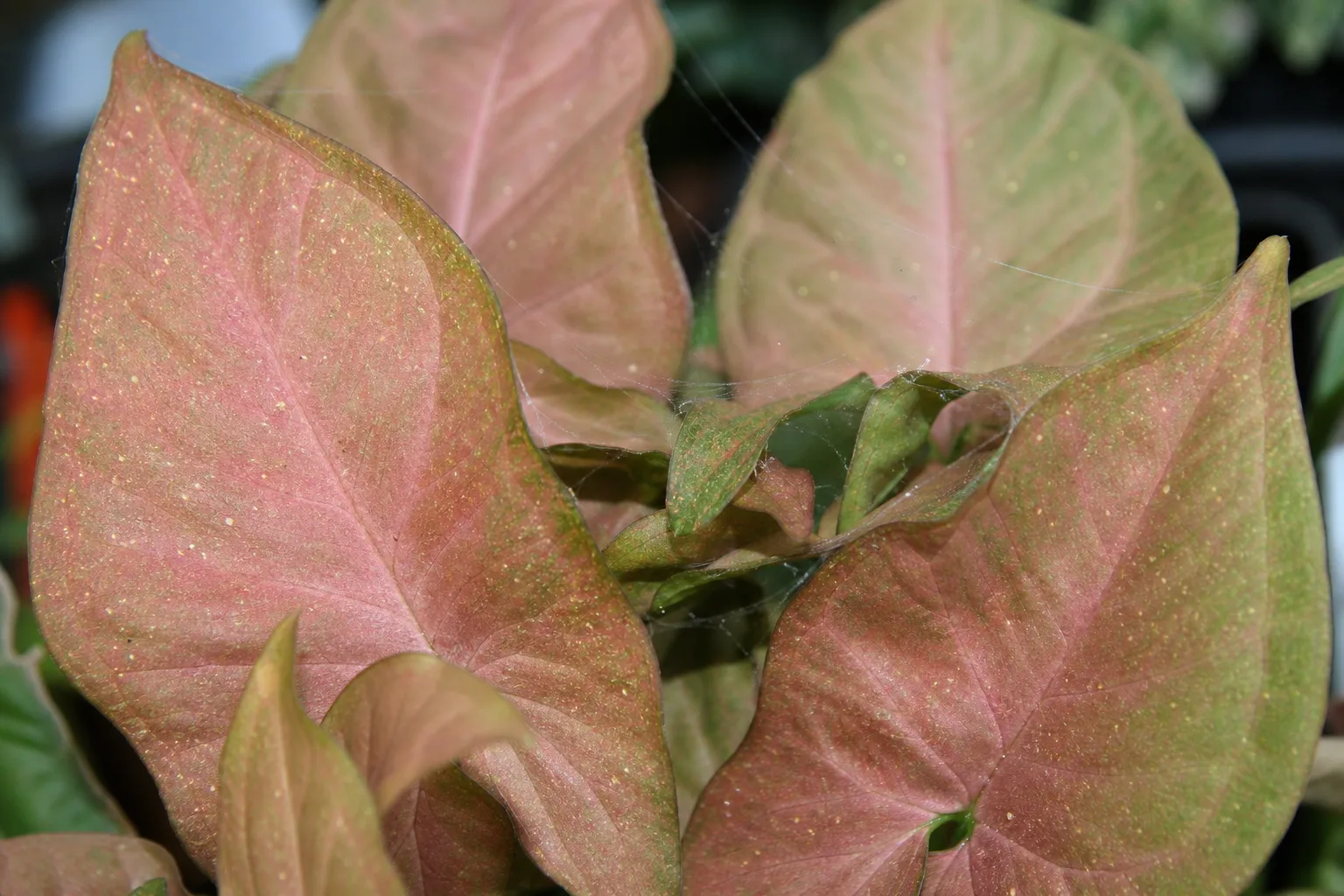
Spider Mites on Syngonium Neon Robusta: Causes, Checks & Fixes
This guide covers spider mites on Syngonium Neon Robusta. See also the general Spider Mites guide, watering, and light pages for this plant.
Spider Mites on Syngonium Neon Robusta: Causes, Checks & Fixes
Quick answer
Spider mites on Syngonium Neon Robusta (Syngonium podophyllum ‘Neon Robusta’) look like fine yellow or bronze speckles on soft chartreuse-pink arrow-shaped leaves, plus dull leaf color and fine silk webbing at tips and joints. They thrive in the same hot, dry microclimate many tabletop syngoniums sit in during winter-near heating vents, on sunny ledges, or above radiators where humidity drops fast.
First step: isolate the plant and rinse leaf undersides thoroughly with lukewarm water. Confirm active mites with a tap test or hand lens before reaching for sprays. One rinse rarely clears an outbreak because eggs hatch in cycles-plan on repeated washing or labeled contact treatments while you raise humidity and reduce dry stress.
What spider mites look like on Syngonium Neon Robusta
Neon Robusta carries thin, pale chartreuse-pink juvenile leaves that show mite damage early. Mite feeding pierces individual leaf cells, leaving tiny pale dots called stippling. On the soft pink wash, those dots read as tan or bronze freckles long before the whole leaf yellows. On greener tissue, stippling looks like a fine sandpaper texture in strong light.
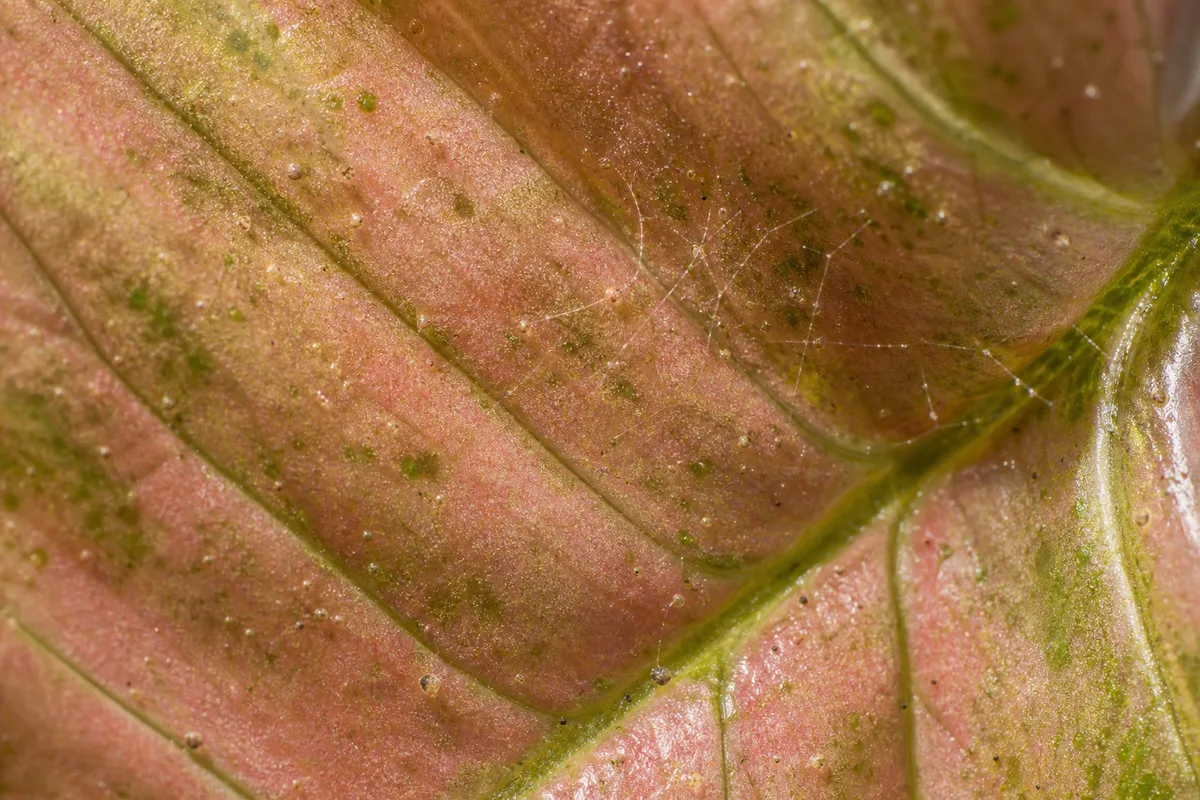
Spider Mites symptoms on Syngonium Neon Robusta - compare with healthy tissue on the same plant.
Because Neon Robusta is kept compact on tabletops for its pastel colour, even early damage is visually loud. A few stippled patches on a newly unfurled chartreuse leaf stand out immediately-unlike on darker solid-green houseplants where mild speckling hides longer.
Other signs to watch for:
- Fine silk webbing at leaf tips, along petioles, or between overlapping leaves on a vining stem
- Dull, dusty-looking foliage even after normal watering
- Bronzing or fading pink colour that spreads across several leaves on one side of the plant
- Tiny moving dots on leaf undersides-barely visible without magnification
- Crisp margins when feeding is heavy, though this can overlap with low humidity alone
Mites themselves are arachnids, not insects. Adults are roughly 1/50 of an inch long and usually live on the underside of leaves. Webbing is a late but reliable clue-it separates mite damage from most cultural problems on Syngonium.
Why Syngonium Neon Robusta gets spider mites
The most common setup that invites mites on Neon Robusta is a bright tabletop spot with winter heating and humidity that drops well below the 50–60% range this cultivar prefers. Growers often place Neon Robusta near a window to preserve its pink chartreuse colour. That warm, dry ledge is exactly where spider mites reproduce fastest.
Dry air favors mites in two ways. Higher humidity can reduce spider mite populations indoors while many natural enemies struggle. Dusty leaf surfaces-common on static indoor air near HVAC vents-also encourage mite activity on houseplants.
Stress makes the damage show sooner. Neon Robusta’s pale leaves transpire faster than darker syngonium cultivars and lose moisture quickly near heat sources. When mites feed on a plant that is also coping with uneven watering, drafty heat, or a recent move indoors, stippling spreads before you notice the population building.
Crowded plant shelves accelerate spread. Even a compact Neon Robusta eventually vines if not pinched; tangled stems touching neighboring pothos, philodendrons, and other aroids let mites walk silk threads between leaves. A single infested pot on a collector shelf can seed mites into half the collection within weeks if nobody inspects undersides.
New plants and seasonal moves are common entry points. Mites hitchhike on nursery stock, unquarantined trades, or outdoor summer outings brought back inside in autumn when furnace heat dries the room overnight.
How to confirm the cause
Work through these checks in order before you treat:
- Tap test - Hold a stippled leaf over white paper and tap the petiole sharply. Moving specks confirm live mites. Static debris does not walk.
- Underside inspection - Check the backs of leaves along the vine, especially upper nodes where new arrowhead leaves emerge. A 10× hand lens makes mites and eggs easier to see.
- Webbing check - Look for silk at leaf tips and axils. No webbing yet does not mean no mites-it may simply be early-but webbing strongly confirms them.
- Pattern and placement - Mite stippling often starts on the warmest, sunniest side of the pot. Overwatering yellowing usually hits older lower leaves first with soft tissue and wet soil, not fine speckles on new chartreuse growth.
- Neighbor scan - Inspect plants within arm’s reach on the same shelf. Mites rarely stay on one pot once colonies build.
- Soil moisture check - Confirm the aroid mix is not waterlogged. Soggy roots cause yellowing and collapse, not stippling with silk. Neon Robusta should dry slightly in the top inch between waterings.
If you see moving dots or webbing, you have confirmed spider mites-not thrips, mealybugs, or a watering mistake.
First fix for Syngonium Neon Robusta
Move the plant away from neighbors and rinse all leaf surfaces-especially undersides-with a forceful stream of lukewarm water.
Wrap the pot in plastic if you shower the plant so the aroid mix does not turn to mud. Aim the spray upward so water hits the backs of leaves directly. Let foliage dry in Syngonium Neon Robusta light guide the same day; avoid leaving the vine dripping in a dark corner overnight.
This single step physically knocks down adult mites and breaks webbing that protects eggs. Do not apply oil or soap in the same session as a heavy rinse unless the product label allows it-you need confirmation that live mites remain after the wash.
Do not repot, prune heavily, or fertilize on day one. Neon Robusta is already stressed; stacking interventions makes recovery harder. Do not move the plant to direct sun to “dry it off”-that worsens the dry heat mites prefer and can wash out pale leaves.
Step-by-step recovery
After the initial isolation and rinse:
- Repeat rinses weekly while populations persist. Eggs hatch on a cycle; one wash rarely clears an infestation completely.
- Raise humidity toward 50–60% with a humidifier near the plant-not by overwatering the pot. Stable ambient moisture discourages mite reproduction without keeping roots wet.
- Apply insecticidal soap or horticultural oil labeled for spider mites on ornamentals if rinses alone do not reduce stippling on new leaves within one week. Cover every leaf surface, especially undersides. Repeat at label intervals-typically every five to seven days-for at least three cycles.
- Prune only heavily webbed or crisp leaves that no longer photosynthesize well. Bag and discard clippings; do not compost infested tissue near other houseplants.
- Treat or inspect neighboring aroids on the same shelf. Mites on one Syngonium often mean early colonies elsewhere.
- Keep watering on the dry side of soggy while recovering. Check the top inch of mix before each drink. Wet, stagnant roots plus damaged foliage invite secondary problems.
If you use oils or soaps, avoid applying them during the brightest midday window on pale chartreuse leaves-they burn more easily than darker syngonium foliage. Morning or evening treatment is safer.
Recovery timeline
Expect to see fewer live mites within two to three days after a thorough rinse if the infestation is moderate. Stippling on existing leaves does not fade; those bronze freckles are permanent. Judge progress on new chartreuse-pink leaves emerging without fresh speckles.
A full soap or oil course often takes two to three weeks with label-interval repeats. Clean new growth for several weeks-not a single “better-looking” day-means control is working. Neon Robusta may pause new leaves briefly after treatment; resume scouting once the plant pushes growth again.
Webbing that reappears within days, widespread bronzing on new chartreuse leaves, or leaf drop despite repeated rinses means escalation-treat the whole nearby collection or consider discarding a severely defoliated plant to protect others.
Lookalike symptoms to rule out
Low humidity alone browns leaf tips and margins on Neon Robusta without fine uniform stippling or moving dots. If humidity is low and you see crisp edges but no webbing, raise moisture first-but still tap-test if speckles are present.
Too much direct sun washes pale chartreuse leaves to a tired, bleached look-often on the section closest to glass. Scorch blocks are larger and sharper-edged than the evenly distributed pinprick stippling mites leave.
Thrips scar leaves with silver streaks and black specks of frass. Thrips are slender and jump when disturbed; mites crawl and spin silk.
Mealybugs show as white cottony clusters in axils, not diffuse stippling. Honeydew and sticky leaves are common with mealybugs; mites do not leave tacky residue.
Overwatering yellows older leaves with soft petioles and sour-smelling mix. The pattern climbs from the base up; mite damage often hits newer chartreuse leaves on the active vine first.
Not enough light turns Neon Robusta dull and greenish evenly across the plant without speckling, webbing, or moving dots on a tap test. That is a colour shift from weak light, not a pest.
Mistakes to avoid
Do not stop after one rinse because the plant “looks better.” Eggs hatch continuously in warm dry rooms.
Do not spray only the tops of arrowhead leaves. Mites live underneath.
Do not crank fertilizer to push new pink growth during an active infestation. Soft, nitrogen-rich tissue is easier for mites to exploit.
Do not cluster Neon Robusta back with other plants until you have seen clean new growth for at least two weeks.
Do not use outdoor pesticide products indoors without a houseplant label. Read the label for ornamental foliage and mite species.
Do not ignore autumn quarantine. Plants moved indoors from patios or greenhouses often carry mites that explode once furnace heat dries the air.
Syngonium Neon Robusta care cross-check
While treating mites, keep the basics stable. Neon Robusta needs bright indirect light to hold its pink chartreuse colour, but the warmest window ledge should not also be the driest microclimate in the room. If the pot sits on a heat register or sun-baked sill, shift it a few inches back or add a humidifier nearby.
Water when the top inch of well-draining aroid mix dries. Pale leaves are slightly more sensitive to both drought and soggy roots. Mite-stressed plants need consistent-not extreme-moisture.
Maintain moderate airflow without blasting heat directly on foliage. Stagnant, humid corners invite fungal issues; hot dry drafts invite mites.
Syngonium Neon Robusta is toxic to cats and dogs. Wash hands after handling infested leaves and keep treated plants out of pet reach while wet sprays dry.
How to prevent spider mites next time
Inspect leaf undersides weekly during dry winter months and after any new plant joins the collection. Quarantine newcomers for at least two weeks before placing them beside Neon Robusta.
Run a humidifier or group plants only after any active pest is cleared-isolated humidity pockets should not hide spreading mites.
Rinse foliage occasionally in summer when indoor air is driest. A light shower removes dust mites favor and gives you a regular look at chartreuse colour on new leaves.
Keep a bright spot for Neon Robusta, but avoid letting leaves press against hot glass. A sheer curtain or a foot of distance reduces scorch and dry-edge stress.
When moving plants indoors in fall, treat the transition as a pest risk window. Inspect every stem before it returns to a shared shelf.
When to worry
Treat as urgent when webbing covers multiple leaves, new arrowhead growth emerges already stippled, or the plant drops leaves despite rinses. Neon Robusta loses its best-looking pink juvenile foliage slowly to replace; severe defoliation may leave a thin, sparse tabletop plant that takes months to rebuild even with regular pinching.
Discard and bag a plant only when most leaves are webbed, growth has stopped, and repeated labeled treatments fail-especially if the collection is nearby. Cover the plant with a bag before moving it to limit mite migration.
Early stippling on one or two chartreuse leaves is manageable. Widespread bronzing across the newest leaves is not-act the same day.
Conclusion
Spider mites on Syngonium Neon Robusta announce themselves through fine speckles on prized chartreuse-pink leaves and, later, silk webbing in hot dry air. Isolate, rinse undersides first, confirm live mites, then repeat washes or labeled contact treatments while humidity climbs back toward the range Neon Robusta already wants. Old stippled leaves will not heal-watch new growth. That path protects a compact tabletop syngonium without drowning it in unnecessary sprays on day one.
When to use this page vs other Syngonium Neon Robusta guides
- Syngonium Neon Robusta watering guide - Use for routine moisture checks before assuming spider mites is the main issue.
- Syngonium Neon Robusta problems hub - Browse all 1 common issues on this species.