Mold on Soil on Syngonium Neon Robusta: Causes, Checks &
Quick answer
Fluffy white or gray mold on Neon Robusta soil is usually harmless surface fungus feeding on damp organic mix-a warning that the top layer stays wet too long on this compact tabletop cultivar. First step: scrape off the moldy top inch and pause watering until that depth feels dry.
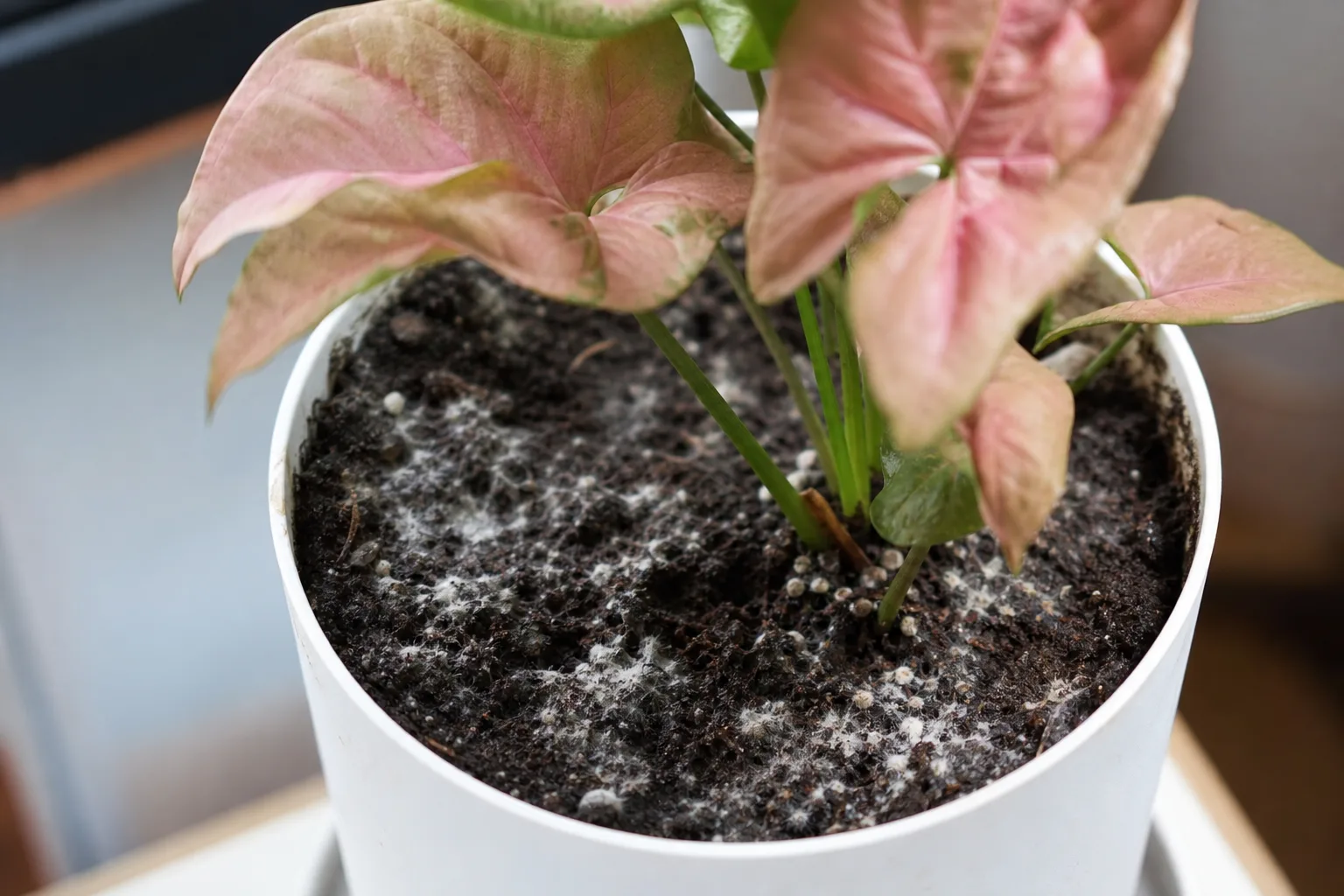
Mold on Soil on Syngonium Neon Robusta: Causes, Checks & Fixes
This guide covers mold on soil on Syngonium Neon Robusta. See also the general Mold on Soil guide, watering, and light pages for this plant.
Mold on Soil on Syngonium Neon Robusta: Causes, Checks & Fixes
Quick answer
A tabletop Syngonium Neon Robusta in a dim corner dries slower than a large vining syngonium-the compact pink arrowhead has less leaf mass to pull water from the mix, so the surface can stay damp for days while the plant still looks fine above the rim. White or gray fuzzy patches on that wet topsoil are almost always saprophytic fungus breaking down organic matter-not a disease attacking the pink-green arrowhead leaves.
The mold is usually cosmetic, but the moisture that feeds it is not. Neon Robusta is an aroid that needs well-drained mix and time for the surface to dry between drinks per our watering guide. Chronic wet topsoil invites fungus gnats and can stress roots over time-see overwatering when yellow lower leaves join the surface fuzz.
First step: scrape off the top 2–3 cm of moldy soil, discard it in household trash, and stop watering until the top inch of mix feels dry. Do not mist the soil or cover the surface while you correct the drying rhythm.
What mold on soil looks like on Syngonium Neon Robusta
On a healthy Neon Robusta, surface mold shows up as:
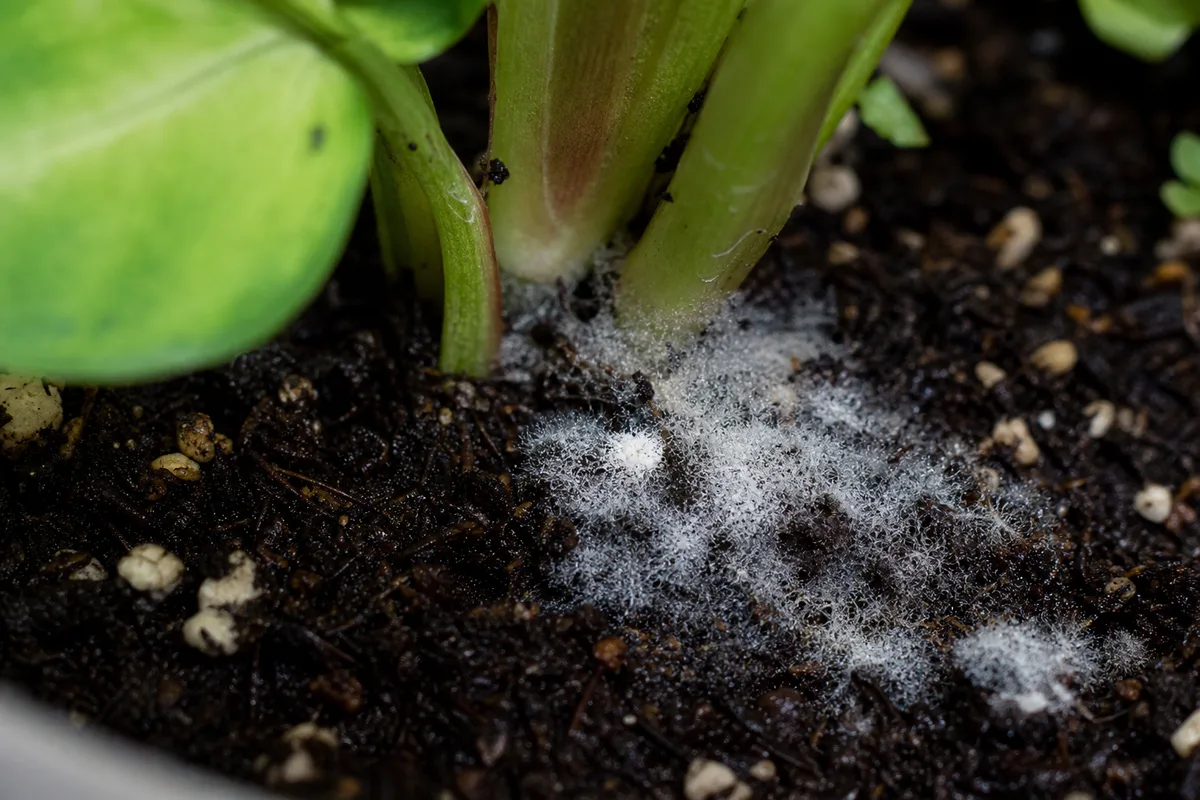
Mold on Soil symptoms on Syngonium Neon Robusta - compare with healthy tissue on the same plant.
- White, gray, or occasionally yellow-tan fuzz spread across the top of the pot, sometimes in circular patches
- Soil that looks wet or dark on the surface days after you last watered
- A musty smell when you lift the pot or scrape the surface-distinct from the sour rot smell that signals root rot
- Tiny dark flies that rise when you touch the soil-fungus gnats sharing the same wet habitat
- Fallen pink or green arrowhead leaves sitting on the mix, slowly breaking down into food for mold
The plant itself may look fine at first. Neon Robusta often keeps soft pink new growth and firm stems while only the soil surface looks wrong. That is why many owners treat mold as harmless fluff-and it often is-while missing the watering pattern underneath.
Mold on soil does not look like:
- Powdery white dust on leaf surfaces (that is powdery mildew on foliage, not soil fungus)
- Brown mushy stems at the soil line (that is rot-see the root rot guide, not surface mold)
- Sticky residue on leaves (pest honeydew, unrelated to soil mold)
Why Syngonium Neon Robusta gets mold on soil
Neon Robusta shares the same moisture needs as other Syngonium podophyllum cultivars: it wants consistent moisture in the root zone, but the surface should dry slightly between waterings. In commercial and home settings, several habits push the opposite on this compact tabletop form.
Slow water use in low light. Neon Robusta fades to dull green in dim corners per our not-enough-light guide and grows slowly there. A plant using little water still gets watered on the same schedule as one in bright indirect light-so the top layer never dries. Dim placement plus frequent watering is the most common mold trigger on tabletop syngoniums.
Peaty, organic-rich mix. Nursery pots often ship in moisture-retentive peat blends. Organic particles on the surface decompose and feed saprophytic fungi when they stay wet. Neon Robusta’s compact tabletop habit also means less transpiration from a small leaf mass, so the surface dries slower than on a large vining syngonium.
Overwatering and poor drainage. Watering before the top inch dries, leaving standing water in saucers, or using pots without drainage keeps the surface chronically damp. Wet soil also excludes oxygen from root zones-a setup where rot can follow if mold keeps returning. When lower leaves yellow on constantly wet mix, treat overwatering as the primary cause, not just the surface fungus.
Debris on the soil surface. Dropped arrowhead leaves, bark fines, and top-dressing mulch all give mold something to colonize. Pink cultivars shed older leaves regularly; leaving them on wet soil accelerates fuzzy growth.
Cool, stagnant air. Grouped plants on a shelf with little airflow evaporate less from the pot surface. Neon Robusta tolerates moderate humidity, but still air plus wet topsoil favors fungal colonies.
Oversized pots. A small root ball in a large wet reservoir means the top may dry while deeper mix stays soggy-or the whole pot dries unevenly, with the surface staying damp longest.
How to confirm the cause
Work through these checks before you repot or spray anything:
- Surface moisture - Stick a finger 2–3 cm into the mix. If it feels wet or cool and clings to your skin, the mold is tied to overwatering or slow drying, not a random spore landing.
- Stem firmness - Pinch stems at the soil line. Firm green or pink tissue with only soil-surface fuzz points to cosmetic mold. Soft, collapsing bases mean investigate roots per the root rot guide.
- Leaf pattern - Healthy newest leaves with good pink wash and no widespread yellowing suggest the roots are still functioning. Yellow lower leaves on constantly wet mix may mean root stress-link to overwatering before assuming mold alone is the problem.
- Pot weight - A heavy pot days after watering confirms slow drying. A light pot with surface mold may mean you top-watered recently but the plant is actually dry deeper down-still scrape mold, but adjust schedule by depth per the watering guide.
- Light level - Is the plant in bright indirect light or a dim shelf? Slow drying in low light strongly fits mold on syngoniums-see not-enough-light when pink wash has already faded.
- Gnats and smell - Flies on disturbance plus musty odor confirm a wet, organic surface. Sour rot smell is a different, more urgent problem.
- Recurrence - Mold that returns within a week of scraping means the environment still supports it-you have not fixed moisture yet.
If stems are firm, leaves look normal, and only the surface is fuzzy, you are dealing with saprophytic mold on wet mix-not an emergency leaf infection.
First fix for Syngonium Neon Robusta
Scrape off the top 2–3 cm of moldy soil and stop watering until the top inch of mix is dry.
Use a spoon or small trowel, discard the scraped material in household trash (not compost indoors), and wipe any mold from the inner pot rim. Leave the root ball undisturbed unless inspection shows soft tissue. Replace the removed layer with a thin topping of dry, well-draining potting mix only if the surface looks bare and uneven-do not pack it down.
Then pause watering. Neon Robusta should be watered when the top 1–2 inches dry, not on a fixed weekly date-the same dry-check standard in our watering guide. In brighter light that might be every five to seven days in summer; in dim winter corners it might stretch to ten days or more. Judge by the pot and your finger, not the calendar.
Move the plant to brighter indirect light if it has been sitting in a dim spot per the light guide. Better light increases water use and helps the surface dry between drinks. Avoid direct sun on pale pink leaves-it can bleach them-but a foot or two from an east or filtered west window usually speeds drying without burning foliage.
Do not reach for fungicide on day one. Do not repot immediately for a first-time mold patch on firm stems. Do not mist the soil or add moisture-retaining top dressings while correcting the problem.
Step-by-step recovery
After the initial scrape and dry-back:
- Empty saucers after every watering so the pot never sits in standing water.
- Remove fallen leaves from the soil surface promptly-they are mold food.
- Improve airflow by spacing pots slightly on the shelf or running a gentle fan in the room-not pointed directly at the plant.
- Adjust watering to when the top inch is dry per the watering guide. Water thoroughly until a little runs from drainage holes, then discard excess from the saucer.
- Set yellow sticky traps near the pot if fungus gnats appeared with the mold. Traps catch adults; drying the soil breaks the larval cycle.
- Refresh the top layer once the rest of the mix has dried if a thin crust of old organic matter remains after scraping.
- Repot only if mold returns repeatedly, the mix smells sour, roots feel soft on inspection, or the pot has no drainage. Choose a well-draining aroid-friendly blend with perlite or bark-not straight heavy peat.
If you must repot, use a container only slightly larger than the root ball, with open drainage holes. Let the plant settle for a week before returning to a normal watering rhythm.
Recovery timeline
Surface mold often clears within one to two weeks once the top inch dries reliably between waterings. You should see less new fuzz, fewer gnats, and stable firm stems.
If you scraped and corrected watering, expect the visible mold gone within days; preventing recurrence takes longer while you learn how fast this specific pot dries in your light and season.
New pink growth on upper stems is the best sign the roots are fine. Continued yellowing of lower leaves on wet mix means keep investigating moisture via the overwatering guide, not just the mold layer.
Lookalike symptoms to rule out
Green algae on soil and pot rims needs constant surface moisture plus low light-similar fix to mold (dry the surface, brighten indirect light per the light guide), but algae is photosynthetic green film, not white fuzz.
White perlite or mineral crust sits as discrete particles or hard pale patches, not spreading cottony threads. It does not smell musty and does not return after scraping.
Powdery mildew on leaves coats foliage in dry white powder, not the potting mix. Treat foliage and airflow, not soil scraping alone.
Root rot shows soft stems, sour smell, and yellowing despite wet soil-not just surface fuzz on an otherwise perky plant. Unpot per the root rot guide if rot signs appear.
Salt or hard-water crust forms stiff light deposits on soil and pot edges from tap water or fertilizer buildup. Flush the pot and switch to lower-mineral water if crust is the issue, not fuzzy mold.
Mistakes to avoid
Do not scrape mold weekly without changing watering-spores return within days on a still-wet surface.
Do not cover soil with decorative moss or rocks that trap moisture against the surface, especially on a slow-draining peat mix.
Do not water on the same schedule year-round. Neon Robusta uses far less water in low-light winter months.
Do not assume cinnamon, baking soda, or household sprays replace drying the soil-they may hide the symptom briefly but do not fix chronic wetness.
Do not increase watering when pink wash fades in a dim corner-fix light first per the not-enough-light guide.
Do not repot into an oversized container hoping fresh soil solves mold. A too-large pot holds more wet mix around small roots.
Do not ignore fungus gnats. They signal the same wet organic surface that grows mold-see the fungus gnats guide when flies persist after drying attempts.
Syngonium Neon Robusta care cross-check
Mold is a surface symptom; long-term control matches normal Neon Robusta care:
- Light: Bright indirect light preserves pink color and helps the plant use water at a steady rate per the light guide. Dim light slows drying and dulls foliage.
- Water: When the top inch of mix dries per the watering guide. Reduce frequency in cooler, darker months.
- Mix: Well-draining potting blend-peat alone stays wet too long for most indoor syngoniums.
- Humidity: Moderate humidity (around 40–60%) is fine; you do not need to keep soil surface wet for humidity.
- Pot: Drainage holes required; empty saucers after watering.
Keep this toxic plant on elevated shelves away from pets when scraping soil or repotting-sap and soil handling are not pet-safe tasks. Contact a veterinarian or the ASPCA Animal Poison Control Center at (888) 426-4435 if a pet ingests plant material or disturbed soil.
How to prevent mold next time
Let the top inch of soil dry between waterings per the watering guide. That single habit prevents most surface mold on syngoniums.
Use well-draining mix and pots with drainage. Refresh tired, broken-down peat every year or two if watering becomes unpredictable.
Place Neon Robusta where it gets enough indirect light to grow and drink steadily-not just where it looks prettiest if that spot is too dim per the not-enough-light guide.
Clean debris off the soil surface after leaves drop. Space plants for gentle air movement. Avoid oversized pots that stay wet in the root zone.
If you bottom-water, lift the pot out of the tray once the mix has absorbed moisture-do not leave it sitting in water. Bottom-watering can keep the surface drier, which helps prevent gnats and mold when done correctly.
When to worry
Treat as urgent when mold returns within days of removal, the pot smells sour or swampy, stems soften at the soil line, or leaves yellow widely while mix stays wet. Those patterns suggest root decline-follow the root rot guide rather than scraping alone.
Also escalate if fungus gnats are heavy and the plant stalls despite drying the surface-inspect roots when larvae may have stressed a small root system.
A one-time patch of white fuzz on firm stems, with good new pink growth and no smell, is not an emergency. Scrape, dry the surface, adjust light and watering, and monitor.
Escalation summary: Cosmetic surface mold on firm pink-green stems → scrape and dry-down (routine). Mold returns within a week despite corrected watering → unpot and inspect roots; repot into fresh airy mix if the lower half never dries. Sour smell, soft stems at the soil line, or widespread yellowing on wet mix → same-day root inspection per the root rot guide-do not scrape-and-wait alone.
FAQs
Does mold on Neon Robusta soil mean my pink color will fade?
Not directly-the mold feeds on wet organic matter, not leaf pigment. But the same dim corner and chronically damp surface that grow mold also wash out Neon Robusta’s pink wash and slow dry-down. Fix light per the not-enough-light guide and let the top inch dry before watering; color often rebounds on new arrowhead leaves once moisture rhythm improves.
Can I use cinnamon on moldy Neon Robusta soil?
Cinnamon is a home remedy some growers sprinkle after scraping, but drying the top inch and correcting watering is the extension-backed fix. On a pet-toxic syngonium, avoid powders that curious cats might ingest from the soil surface-scrape, discard mold in the trash, and fix moisture instead.
Should I bottom-water Neon Robusta to prevent mold?
Bottom-watering can keep the surface drier between drinks, which helps prevent saprophytic fuzz and fungus gnats on tabletop Neon Robusta pots. Lift the pot out of the tray once the mix has absorbed moisture-do not leave it sitting in water. Still check the top inch dries before the next soak per the watering guide.
Is white fuzz normal on new peat-heavy nursery pots for Neon Robusta?
Yes, briefly. Fresh peat-rich nursery mix plus dim shelf placement keeps the surface damp for days, and saprophytic fungi often appear within the first weeks. Scrape once, move to brighter indirect light per the light guide, and water only when the top inch dries-persistent fuzz after two weeks means the wet cycle has not changed.
Is white mold on Neon Robusta soil the same as root rot?
No. Surface mold with firm pink-green stems, no sour smell, and dry-down between waterings is cosmetic fungus on wet topsoil. Root rot adds soft stems at the soil line, yellow lower leaves, a rotten odor when you lift the plant, and limp foliage despite wet mix. Both share wet-soil causes but different urgency-use the root rot guide when soft stems or sour smell appear.
Related Syngonium Neon Robusta guides
- Syngonium Neon Robusta overview - cultivar biology and care hub
- Syngonium Neon Robusta watering - top-inch dry-down protocol
- Syngonium Neon Robusta light - bright indirect light for pink color and faster dry-down
- Overwatering on Syngonium Neon Robusta - yellow leaves on wet soil
- Root rot on Syngonium Neon Robusta - mushy stems and sour smell
- Fungus gnats on Syngonium Neon Robusta - flies that co-occur with surface mold
- Not enough light on Syngonium Neon Robusta - dim-corner slow dry-down
- All Syngonium Neon Robusta problems
Conclusion
Use this page to confirm mold on Syngonium Neon Robusta by surface checks and pot weight-not by treating every houseplant the same. When symptoms overlap with sibling pages, follow the linked guide for the matching cause before stacking fungicide, repotting, or home remedies.