Overwatering on Syngonium Neon Robusta: Causes, Checks &
Quick answer
On Syngonium Neon Robusta, overwatering often shows as limp soft leaves while the top inch of soil is still damp-especially when a dim corner slows water use and new growth opens dull green instead of pink-green. Stop watering, lift the pot for weight, and improve light before roots fail.
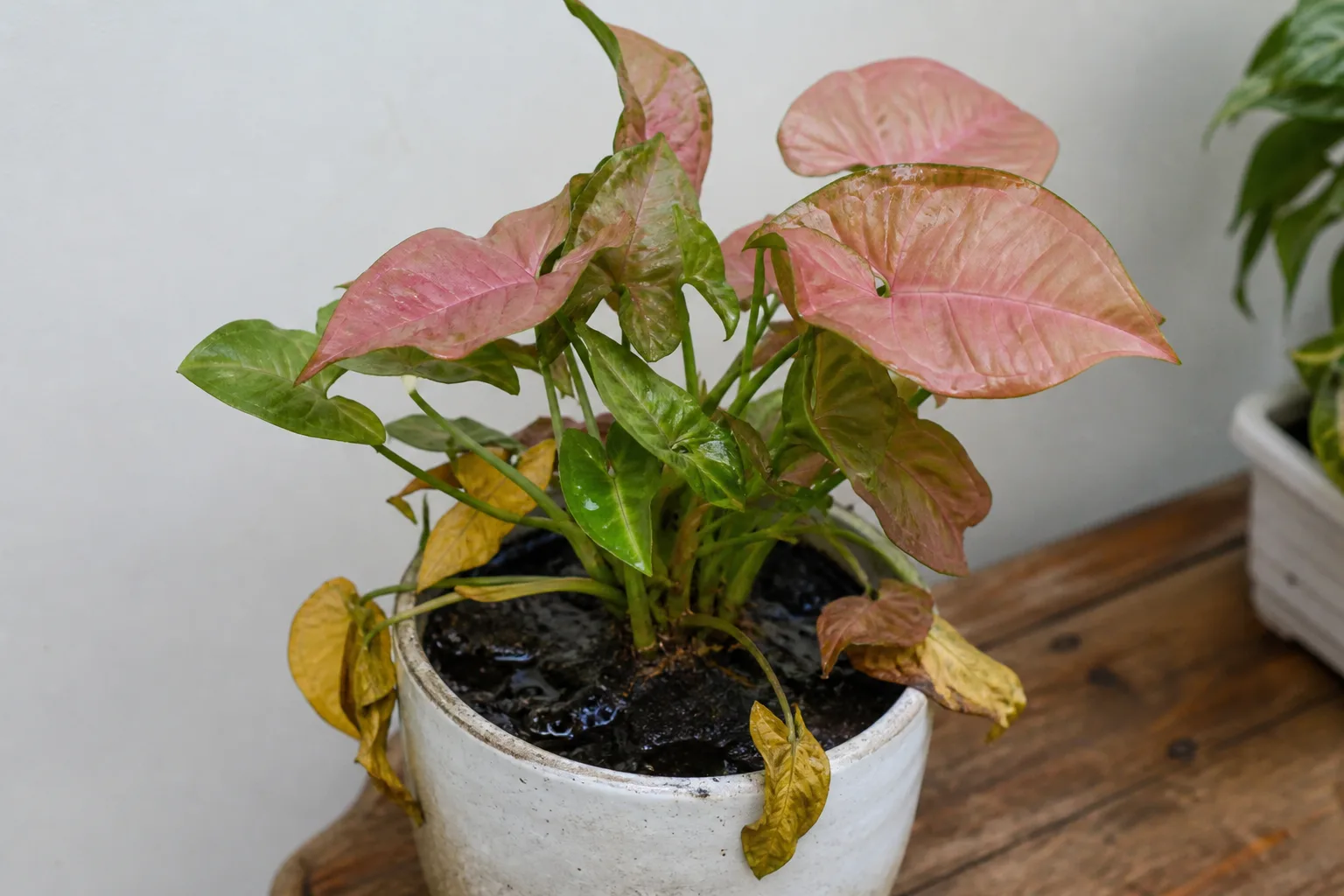
Overwatering on Syngonium Neon Robusta: Causes, Checks & Fixes
This guide covers overwatering on Syngonium Neon Robusta. See also the general Overwatering guide, watering, and light pages for this plant.
Overwatering on Syngonium Neon Robusta: Causes, Checks & Fixes
Quick answer
Your Syngonium Neon Robusta leaves are limp, but the soil still feels damp an inch down-that is the classic wilt-on-wet-soil trap on this pink arrowhead vine. Soft arrowhead foliage looks thirsty, so many growers pour again while the root zone is already saturated. Damaged roots cannot move water even though the mix is wet, which makes the plant droop more and invites another watering mistake.
First fix: stop watering immediately. Lift the pot, check whether it stays heavy for days, and move the plant to bright filtered light with airflow so the mix can dry. Early overwatering on Syngonium podophyllum ‘Neon Robusta’ (plant patent PP18013) often dulls the pink-green blush on new leaves before lower foliage turns fully yellow-treat that color fade as a stress signal, not a lighting-only problem, when the pot is also slow to dry.
This page covers early overwatering on Neon Robusta: how it differs from active root rot, what the pink blush fade means, step-by-step recovery paths, and when to escalate. For your everyday moisture rhythm, see the watering guide.
What overwatering looks like on Syngonium Neon Robusta
Neon Robusta is sold for soft pink-green juvenile arrowhead leaves, not solid chartreuse like some pothos cultivars. Overwatering symptoms on this cultivar follow moisture and color patterns-not generic “yellow houseplant” cues alone.
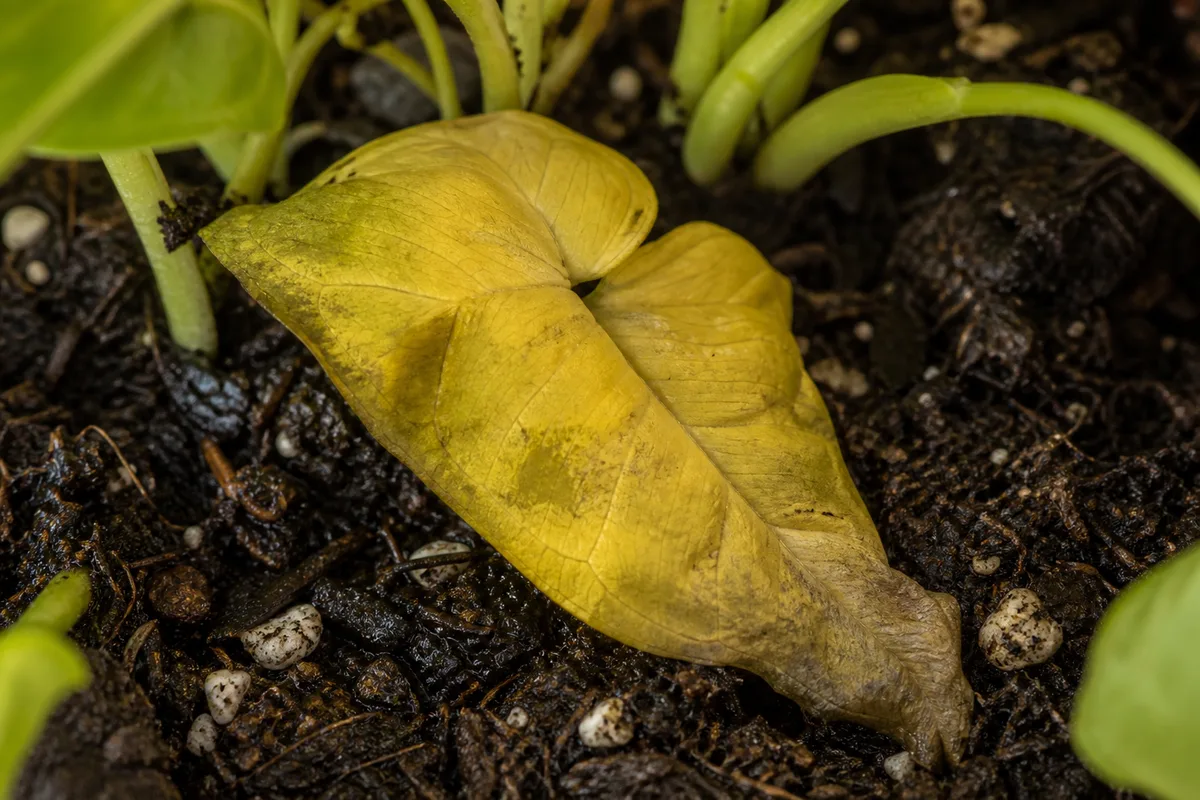
Overwatering symptoms on Syngonium Neon Robusta - compare with healthy tissue on the same plant.
Early stress (often before full yellow):
- Pink blush fades on new leaves; fresh growth opens dull medium green instead of rosy-green
- Pot stays heavy for a week or more after your usual watering while stems feel soft
- Longer gaps between new leaves in a dim corner where the plant uses water slowly-see not enough light if leggy growth pairs with a damp pot
Classic overwatering:
- Multiple leaves yellow at once, often starting on lower or inner foliage
- Leaves feel soft and limp, not crispy, while soil stays cool and damp
- Sour or musty smell from drainage holes; fungus gnats may hover over the surface
- Fully yellow tissue usually will not re-green; judge recovery by firm new growth after you fix the cause
Advanced warning signs:
- Stem base softening at the soil line
- Blackening on lower leaves while mix remains wet
- White healthy roots turning brown and mushy on inspection
Overwatering vs. root rot vs. underwatering wilt - read the pot before you pour
The same limp arrowhead leaves can mean three different problems. Pot weight and soil moisture at depth separate them faster than leaf color alone.
| Pattern | Pot weight | Top inch | New leaf color | Stem feel | Likely cause |
|---|---|---|---|---|---|
| Limp, soft yellow | Heavy, cool | Wet | Dull green, less pink | Soft | Early overwatering / root stress |
| Rapid yellow, sour smell | Heavy | Wet | Faded pink | Soft at base | Active root rot |
| Crisp edges, wilt | Light | Dry | Smaller, faded | Firm | Underwatering |
| Pink fade, long internodes | Often damp slowly | Variable | Dull green, leggy | Firm, leaning | Low light + wet soil overlap |
Key rule: If the pot is heavy and the top inch is wet, do not water-even if leaves look thirsty. If the pot is light and the top inch is bone dry, a thorough soak is the right first move, not a dry-down wait.
Overwatering is chronic wet soil before or during early root damage. Root rot is confirmed decay-mushy roots, sour mix, and often stem-base softness. This page focuses on catching the problem at the overwatering stage; follow the root rot guide when inspection shows widespread mushy tissue.
Why Neon Robusta is sensitive to overwatering
The wilt paradox (limp leaves while soil is wet)
Neon Robusta’s thin, soft leaves transpire steadily in bright light but store little water compared with succulents. When roots sit in saturated mix, they lose the oxygen they need to function. Wilted leaves may indicate soil that is too dry or too wet-damaged roots cannot take up water even though the pot feels heavy. Responding to that wilt with more water accelerates the decline.
Cool winter light and slow uptake
In fall and winter, day length drops and Neon Robusta growth slows. The same watering rhythm that worked every 7–10 days in summer can leave mix wet for 14–28 days or longer in a cool north room-exactly when growers should reduce watering from fall through late winter. Lower leaves yellowing while soil stays wet is a hallmark winter overwatering pattern on arrowhead vines.
Oversized pots, dense peat, and cachepot standing water
Large pots hold moisture around sparse roots for days. Peat-heavy store mix drains slowly indoors. A decorative cachepot without drainage traps saucer runoff at the root zone-roots breathe stale wet soil even when the surface looks acceptable. Any of these can overwater a healthy schedule on paper.
Fine aroid roots and oxygen need
Syngonium podophyllum is a tropical aroid vine whose adventitious roots need both moisture and oxygen. UF/IFAS EP244 warns that Syngonium media must stay moist but not wet because saturated mix is among the fastest ways to lose an otherwise forgiving arrowhead plant. Roots in waterlogged soil cannot absorb the oxygen they need.
Pink blush fading as an early stress signal
‘Neon Robusta’ inherits the same aroid physiology as green syngonium cultivars, but its PP18013 pink-green pigment is sensitive to chronic stress. In dim rooms with damp soil, new leaves often open dull green weeks before widespread yellow leaves appear. Do not assume that fade is only a light problem when the pot stays heavy-check moisture first.
How to confirm the cause
Work through these checks in order. One strong match is enough to pause watering; two or more confirm overwatering.
- Top-inch finger test - Insert your finger to the second knuckle. Cool, clinging mix means wait. If wet at depth pairs with limp leaves, overwatering is likely.
- Pot-weight comparison - Lift the pot right after a thorough watering and notice the heft. If it still feels nearly as heavy a week later while leaves droop, the plant is not using water fast enough-or drainage is blocked.
- Newest leaf color - Faded pink wash on slow new growth in a dim wet pot points to root stress before full yellowing.
- Stem squeeze at soil line - Firm green stems favor early overwatering you can correct with dry-down. Soft, squishy base means escalate toward root rot protocol.
- Smell and pests - Sour odor from drainage holes or fungus gnats over constantly damp surface confirms chronic wetness.
- Unpot inspection (if yellowing continues) - Healthy syngonium roots are firm and white or pale. Brown, translucent, or mushy roots confirm damage-trim and repot, or follow the root rot guide if decay is widespread.
If roots are firm, mix is dry, and leaves are limp with crisp edges, test for underwatering instead.
First fix for Syngonium Neon Robusta
Stop all watering. Move the pot to Syngonium Neon Robusta light guide and gentle airflow so the top inch-and eventually the root zone-can dry. Empty any saucer or cachepot immediately. Do not fertilize, mist, or repot on day one unless the mix smells sour or stems are softening.
Your only job for the first 48–72 hours is breaking the wet cycle while you observe whether stems stay firm and whether the pot weight drops.
Step-by-step recovery
Choose Path A for early soggy soil with firm stems and no sour smell. Choose Path B when the mix smells bad, roots are mushy, or multiple leaves yellow on a heavy wet pot.
Path A - Dry-down (early overwatering)
- Stop watering and move to brighter filtered light.
- Remove cachepots and confirm drainage holes are open.
- Wait until the top 1–2 inches feel dry and the pot lifts noticeably lighter-often 7–14 days in cool winter, faster in warm bright rooms.
- Inspect stems daily - firm is good; softening at the base means switch to Path B.
- Resume watering only when the top inch of soil dries: soak until runoff, then empty the saucer within 30 minutes.
- Watch new leaves - the first firm blush-toned arrowhead is your best recovery signal.
Path B - Unpot, trim, and repot (sour mix or mushy roots)
- Gently remove the plant from wet soil and rinse roots under lukewarm water.
- Trim brown, mushy roots back to firm white tissue with clean scissors. Sterilize blades between cuts.
- Let cut roots air-dry for 2–24 hours on paper towels if the rot was mild.
- Repot into a clean pot only slightly larger than the root mass, using airy mix-roughly 60% potting soil, 20% perlite, 20% orchid bark works well for syngonium.
- Water lightly once after Syngonium Neon Robusta repotting guide, then let the top inch dry before the next soak.
- Hold fertilizer until new growth returns-usually 2–4 weeks in bright light.
If more than a third of roots were mushy or the stem base is soft throughout, read the root rot guide for salvage and propagation options.
Recovery timeline and what to expect
| Stage | What you see | Typical timing |
|---|---|---|
| Dry-down start | Pot weight drops; top inch finally dries | 5–14 days |
| Stabilization | Stems firm; no new yellowing | 1–2 weeks after dry-down begins |
| First new growth | Small arrowhead opens; pink wash may be pale at first | 10–21 days in bright light |
| Normal rhythm | Resume check-every-few-days watering from the watering guide | After two successful dry-down cycles |
Improvement signs: pot dries on a predictable schedule, stems stay firm, new leaves open without immediate yellowing, pink blush slowly returns on fresh growth in adequate light.
Worsening signs: sour smell intensifies, stem base softens, rapid leaf drop on wet soil, or no new buds after six weeks in corrected conditions-escalate to root rot workflow.
Damaged yellow leaves will not turn green again; focus on new growth and root firmness, not old foliage color.
What not to do
Do not water on a fixed weekly schedule without checking the top inch-winter and dim corners need longer gaps. Do not mist or shower to fix wet roots; that adds surface moisture without solving drainage. Do not fertilize stressed roots hoping for greener leaves. Do not repot, trim, and soak on the same day unless the mix is actively sour-stack one change at a time.
Do not move a wet plant to a darker corner hoping to slow growth; low light slows water use further and compounds the problem. Do not confuse faded pink wash on wet soil with a pure lighting issue-always pair color checks with pot weight.
When handling wet soil and trimmed roots, keep debris away from pets-arrowhead plant is toxic to cats and dogs.
How to prevent overwatering next time
- Check on schedule, water on dryness - Use the watering guide rhythm: check every few days; water only when the top 1–2 inches dry. Summer may mean every 5–14 days; winter can stretch to 14–28 days or longer in low light.
- Learn your pot’s weight - Lift after every soak until “light enough to water” becomes muscle memory.
- Bright filtered light - Neon Robusta uses water predictably and holds pink color in bright indirect light; dim wet corners are the highest-risk combo.
- Drainage discipline - Use pots with holes, airy aroid mix, and empty saucers and cachepots within 30 minutes of every watering.
- Right-size pots - Avoid jumping two sizes up; extra soil volume holds water longer than sparse roots can use.
- Monitor pink on new leaves - Dull green new growth plus a heavy pot means check moisture before adjusting light or feed.
When to escalate to root rot recovery
Escalate when unpotting shows widespread mushy roots, the stem base is soft, leaves blacken rapidly at the soil line, or sour smell returns within days of repotting. Those patterns belong on the root rot page, not repeated dry-down alone.
Stay on this overwatering workflow when stems are firm, roots are mostly white and firm, and you caught the problem before the mix turned sour-dry-down or a light trim-and-repot is usually enough.
Related Neon Robusta problems
- Syngonium Neon Robusta overview - general care hub
- Watering - prevention rhythm and seasonal checks
- Root rot - active decay and salvage
- Underwatering - dry pot, crisp edges
- Yellow leaves - color fade and aging patterns
- Fungus gnats - wet-soil pest crossover
- Not enough light - dim-room slow uptake
- Wilting - collapse with wet or dry soil
When to use this page vs other Syngonium Neon Robusta guides
- Syngonium Neon Robusta watering guide - Use for routine moisture checks before assuming overwatering is the main issue.
- Syngonium Neon Robusta problems hub - Browse all 1 common issues on this species.