Underwatering on Syngonium Neon Robusta: Causes, Checks &
Quick answer
When Syngonium Neon Robusta goes limp with dusty-dry soil in the top inch and a noticeably light pot, underwatering is the likely cause. First step: water thoroughly until excess drains, then wait for the top inch to dry again before the next soak.
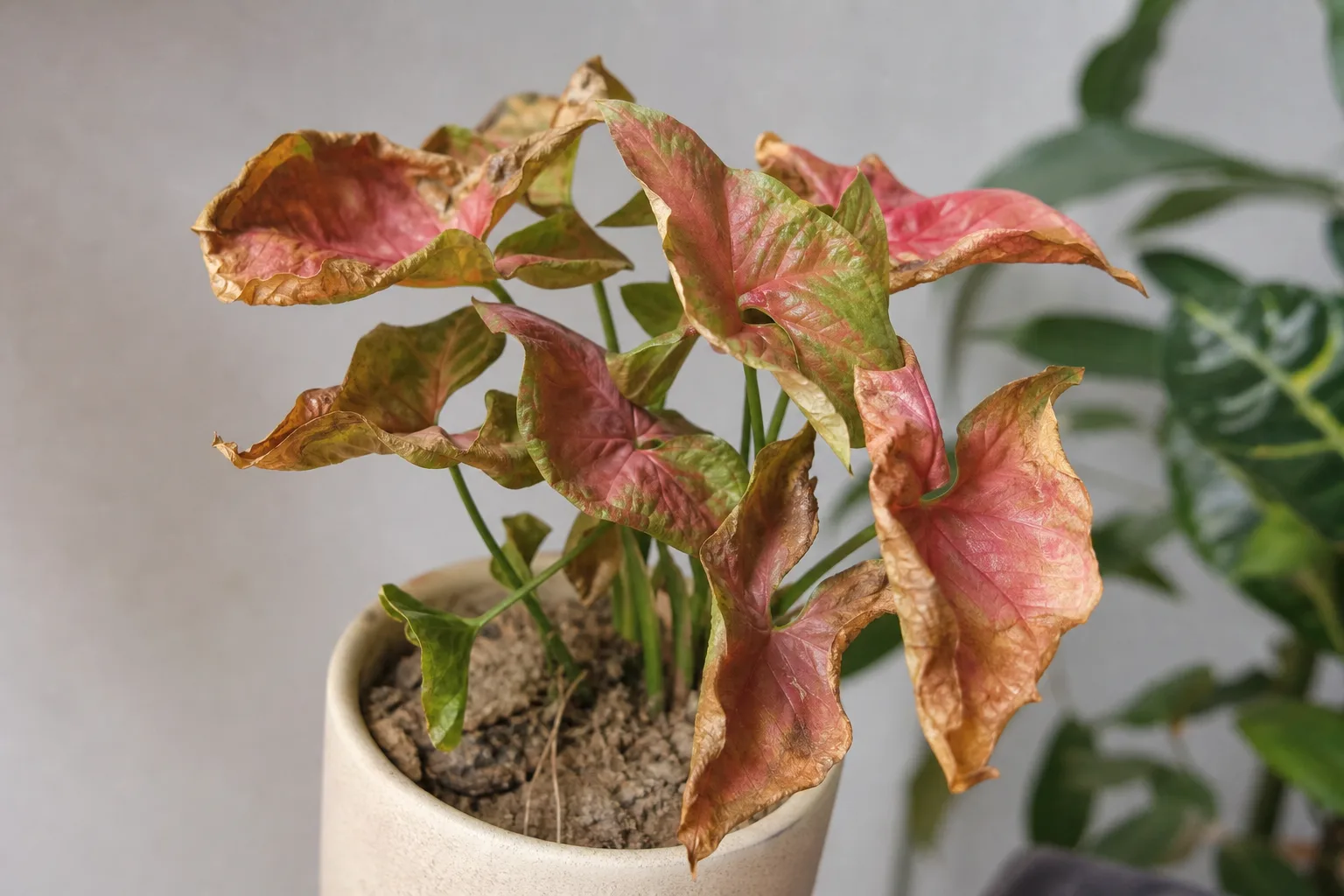
Underwatering on Syngonium Neon Robusta: Causes, Checks & Fixes
This guide covers underwatering on Syngonium Neon Robusta. See also the general Underwatering guide, watering, and light pages for this plant.
Underwatering on Syngonium Neon Robusta: Causes, Checks & Fixes
Quick answer
A thirsty Syngonium Neon Robusta looks dramatic long before it is dead. The soft pink-green arrowhead leaves go limp, sometimes curl inward, and the whole tabletop plant can look collapsed by afternoon-even though stems are still firm and the soil is dusty dry. That pattern is classic underwatering on this moisture-loving aroid, not a mystery disease.
First step: water thoroughly until excess runs from the drainage hole, then empty the saucer. If the top inch was dry and the pot felt light, leaves often perk within hours. Do not fertilize, repot, or mist heavily until you confirm the plant is taking up water again.
Why Neon Robusta dries out faster than you expect
Syngonium podophyllum ‘Neon Robusta’ is a tropical vine from the rainforest understory of Mexico through Central America into northern South America. In that habitat, roots access frequent moisture but never sit in stagnant water. Indoors, Neon Robusta inherits the same preference: moist but not wet potting media with a real dry-down between drinks-not bone-dry for weeks, but not soggy either.
This cultivar adds a wrinkle. Its juvenile leaves are thinner and softer than many darker arrowhead varieties, with a distinctive pink-green wash that fades when the plant is stressed. Thin foliage transpires steadily in Syngonium Neon Robusta light guide, so a small 4- to 6-inch tabletop pot can lose usable moisture in just a few summer days. Travel, a forgotten watering, a new bright window, or a heating vent nearby all accelerate drying.
Neon Robusta is also commonly sold as a compact young plant in peat-heavy nursery mix. That works fine when watered often, but as the mix ages it can become hydrophobic-water runs down the pot sides while the root ball inside stays dry. You may think you watered while the plant still dehydrates.
Underwatering is less immediately lethal than chronic overwatering on syngoniums, but repeated drought still matters. Fine root hairs die back, growth stalls, the pink blush on new leaves dulls to plain green, and older leaves yellow and drop as the plant sheds tissue it cannot support. UF/IFAS notes that media run too dry can turn old leaves yellow on Syngonium.
What underwatering looks like on Syngonium Neon Robusta
Typical underwatering signs:
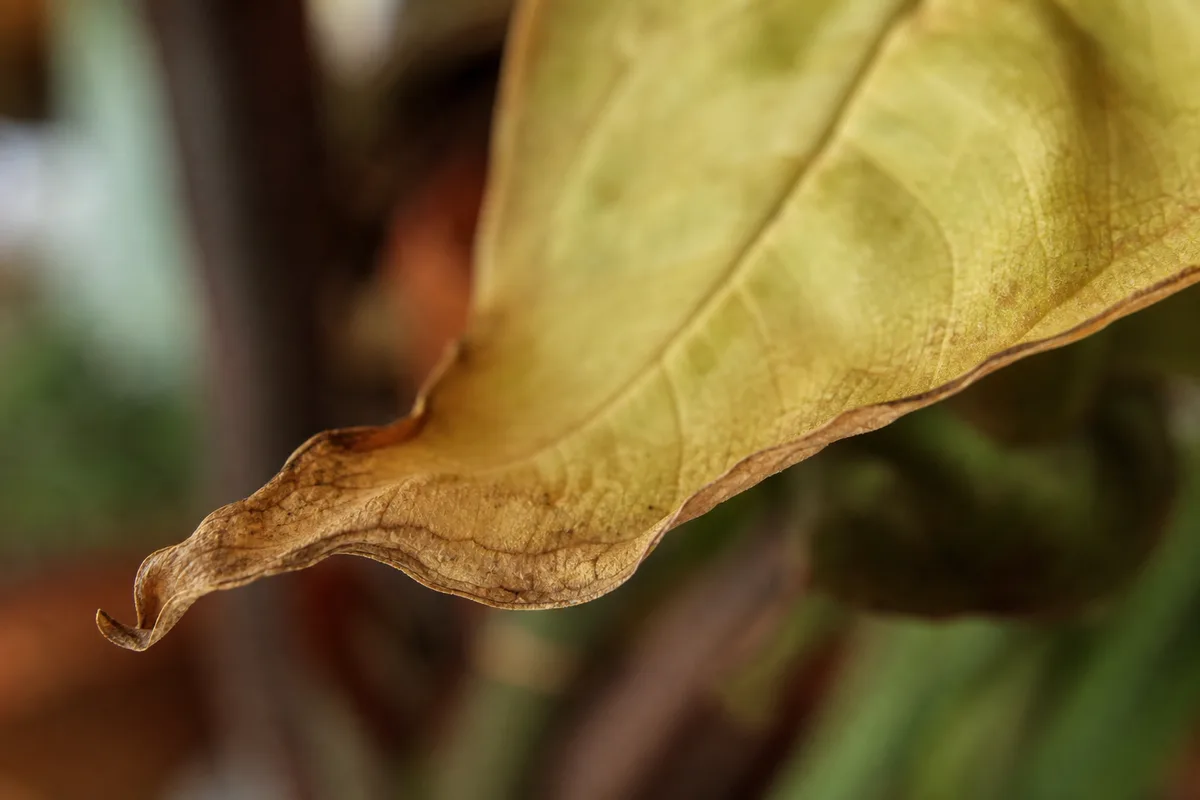
Underwatering symptoms on Syngonium Neon Robusta - compare with healthy tissue on the same plant.
- Soft arrowhead-shaped juvenile leaves droop or fold slightly along the midrib; the plant looks wilted but stems feel firm, not mushy
- Leaf edges turn crispy or tan if dryness persists for days
- Soil in the top inch feels dusty and light; the pot lifts easily compared with its weight right after watering
- New growth slows or opens smaller and greener, with less pink wash
- Lower, older leaves yellow and drop after repeated dry cycles
- Water poured on the surface may run straight through and out the drainage hole within seconds
What underwatering usually does not look like:
- Stems softening at the base with sour-smelling soil-that points to overwatering or rot
- Yellowing lower leaves while soil stays wet and heavy for a week or more
- Uniform brown patches with no recovery after watering-more consistent with cold damage or sun scorch
Neon Robusta wilts dramatically because its leaves store less water than thick succulents. A mildly dry plant can look almost as collapsed as a severely dry one. That is why the soil check matters more than the leaf drama.
How to confirm the cause
Work through these checks before you change anything else:
- Finger or skewer test - Push your finger into the top inch of mix, or insert a wooden skewer to the bottom third of the pot. If the top inch is dry and the skewer comes out clean and dry, underwatering is likely. If soil clings cool and damp several inches down, the plant may be wilting from damaged roots instead.
- Pot weight - Lift the container. A dry syngonium pot feels noticeably lighter than it did right after the last thorough soak.
- Stem squeeze - Pinch lower stems gently. Firm green tissue supports underwatering diagnosis. Mushy, collapsing tissue with wet soil means stop-do not add water yet.
- The recovery test - Water once deeply. Check the plant the next morning. Perked leaves with firmer petioles confirm drought stress. No change with wet soil suggests root damage or another problem.
- Hydrophobic mix check - If water channels out instantly and the surface stays pale while inner soil feels dry, the mix has gone water-repellent. Note that before your next pour.
If soil is wet, stems are soft, or the plant fails the recovery test, treat this as a possible overwatering or root problem-not underwatering.
First fix for Syngonium Neon Robusta
Water thoroughly until moisture runs freely from the drainage holes, then discard all saucer water within 30 minutes.
Use room-temperature water and pour slowly across the soil surface so the root zone actually absorbs moisture. For a standard 6-inch Neon Robusta, keep pouring until you see a steady stream from the bottom-one quick splash is not enough.
If the mix has shrunk away from the pot walls or water races through without wetting the core, switch methods:
- Bottom-water - Set the pot in a sink or basin of room-temperature water halfway up the container for 30 to 45 minutes. Media that has pulled away from pot sides may need slow rehydration before a normal top-water works again. Let the mix wick moisture upward, then lift the pot and drain fully.
- Repeat soak - If the first pour ran through too fast, wait ten minutes and water again.
- Aerate the surface - Gently loosen the top crust with a chopstick so water penetrates instead of channeling down the sides.
Do not fertilize a drought-stressed plant. Do not repot on day one unless the mix is so hydrophobic that repeated soaks fail. Do not mist leaves as a substitute for soaking roots-surface humidity does not rehydrate a dry root ball.
Step-by-step recovery
After the first deep soak:
- Wait for the dry-down - Resume checking the top inch before every watering. Neon Robusta grows best on a cycle of full soak, then real drying at the surface-not constant dampness and not weeks of drought.
- Trim only dead tissue - Snip fully crispy brown leaves at the base. Leave slightly wilted green leaves in place; they often recover.
- Stabilize light - Keep the plant in bright indirect light while it recovers. Very dim corners slow drying but also weaken new growth and fade color. Direct hot sun on a dehydrated plant worsens scorch.
- Address hydrophobic soil - If two thorough soaks in one week still leave the core dry, repot into fresh well-draining aroid mix with perlite and bark. Wait until the plant perks up before Syngonium Neon Robusta repotting guide if possible.
- Hold fertilizer - Skip feed until new growth looks normal for two weeks. Salt on drought-damaged roots adds stress without helping recovery.
- Track for 10 to 14 days - Note how many days the top inch takes to dry in your current season. Adjust your check rhythm, not a fixed calendar.
Recovery timeline
Mild underwatering often shows improvement within a few hours to one day after a proper soak-plants wilt when roots cannot supply enough moisture, but short drought often reverses once the root zone is wet again.
Repeated drought or a hydrophobic root ball may take one to two weeks before new growth looks vigorous and pink-toned again. Fine roots need time to regrow.
Crispy brown margins and fully yellowed leaves will not turn green again. Judge success by firm existing foliage and healthy new arrowhead leaves, not by old damage reversing.
Worsening signs: wilting that persists more than 24 hours after thorough watering with wet soil, spreading stem softness, or no new buds after two weeks in warm bright conditions. Those suggest root damage beyond simple drought.
Lookalike symptoms to rule out
Overwatering also wilts syngoniums when damaged roots cannot take up water even though soil is wet. Check stem firmness and soil moisture at depth before every pour. Yellow lower leaves on wet mix point away from underwatering.
Low humidity can crisp leaf edges on thin-leaved cultivars, but humidity alone does not make the pot feel light or the top inch bone dry. Dry soil plus limp leaves is still drought first.
Not enough light fades Neon Robusta’s pink wash and slows growth, sometimes mimicking chronic stress. A well-watered plant in dim light looks muted and leggy rather than dramatically collapsed mid-week.
Cold drafts or temperatures below roughly 55°F can damage leaf tissue and slow water uptake. Cold-injured leaves may not perk after watering if tissue is dead.
Root-bound pots dry unevenly-the center may stay moist while the outer root mass desiccates. Slide the plant out if watering seems inconsistent; a tight root coil with little mix left dries in a day or two.
Mistakes to avoid
Do not assume every drooping syngonium needs water. Wet-soil wilt from overwatering is common and deadly if you keep pouring.
Do not water on a weekly calendar without checking soil. Summer bright light and winter dormancy use different amounts of water in the same pot.
Do not give only a teacup splash because the pot is small. Small containers still need enough water to moisten the full root zone.
Do not mist instead of watering the soil. Brief leaf humidity does not fix root drought.
Do not fertilize, prune heavily, and repot the same week. Stack one change at a time on a stressed plant.
Wear gloves when handling cut stems if sap irritates your skin-Syngonium contains calcium oxalate crystals and is toxic to cats and dogs. Keep the plant out of reach during recovery.
Syngonium Neon Robusta care cross-check
Underwatering prevention on this cultivar comes down to matching water to how the pot actually dries:
- Water trigger - Check every few days; water when the top inch feels dry, not on a fixed weekday
- Light - Brighter indirect light increases water use and helps hold pink color; adjust frequency when you move the pot
- Season - Reduce watering frequency from fall through late winter, but do not let the plant dry out completely for long stretches
- Mix and pot - Use well-draining aroid mix with perlite or bark in a container with drainage holes; refresh peat-heavy soil that repels water
- Humidity - Moderate humidity (around 50–60%) supports leaf texture but does not replace soil moisture
How to prevent underwatering next time
Build a check habit, not a pour habit. Set a phone reminder to test the top inch every three to four days during active summer growth, and weekly in winter-then water only when dry.
Learn your pot’s weight at “just watered” versus “ready to drink.” That takes one week of lifting and is faster than guessing from leaf softness.
If Neon Robusta sits in a bright window or near a heater, expect shorter dry-down cycles. Move it back from hot glass if edges scorch while you are trying to keep up with watering.
Refresh old mix before it goes hydrophobic. A two-year-old peat pot that channels water is a recurring underwatering trap even for attentive owners.
When you travel, use a trusted soak-and-drain method before leaving, group plants to raise local humidity slightly, and avoid leaving the pot in a sealed cachepot with no drainage.
When to worry
Escalate if the plant stays collapsed more than a day after two thorough soaks, soil at depth remains dry despite bottom-watering, or stems soften while mix is wet. Unpot and inspect roots-trim mushy tissue, repot dry into fresh mix, and adjust watering only after you know whether roots are healthy.
Simple underwatering on a firm-stemmed Neon Robusta is rarely an emergency if you soak promptly. Prolonged drought in a root-bound, hydrophobic pot is more serious and may need repotting to fully recover.
Conclusion
Underwatering on Syngonium Neon Robusta is a soil-moisture problem dressed up as a leaf crisis. Confirm dry mix in the top inch and a light pot, soak thoroughly until water drains, and let the plant show you recovery by morning. Prevent repeat drought by checking the pot-not the calendar-and refreshing mix that stops absorbing water. Crispy old leaves may stay blemished, but firm stems and new pink-tinged growth mean you caught it in time.
When to use this page vs other Syngonium Neon Robusta guides
- Syngonium Neon Robusta watering guide - Use for routine moisture checks before assuming underwatering is the main issue.
- Syngonium Neon Robusta problems hub - Browse all 1 common issues on this species.