Yellow Leaves on Syngonium Neon Robusta: Causes, Checks &
Quick answer
On Syngonium Neon Robusta, losing the pink-green wash on new leaves often comes before full yellowing-especially when a dim, wet pot slows root function. Check whether the top inch of soil is wet or bone dry and whether only one lower leaf is fading before you change watering or light.
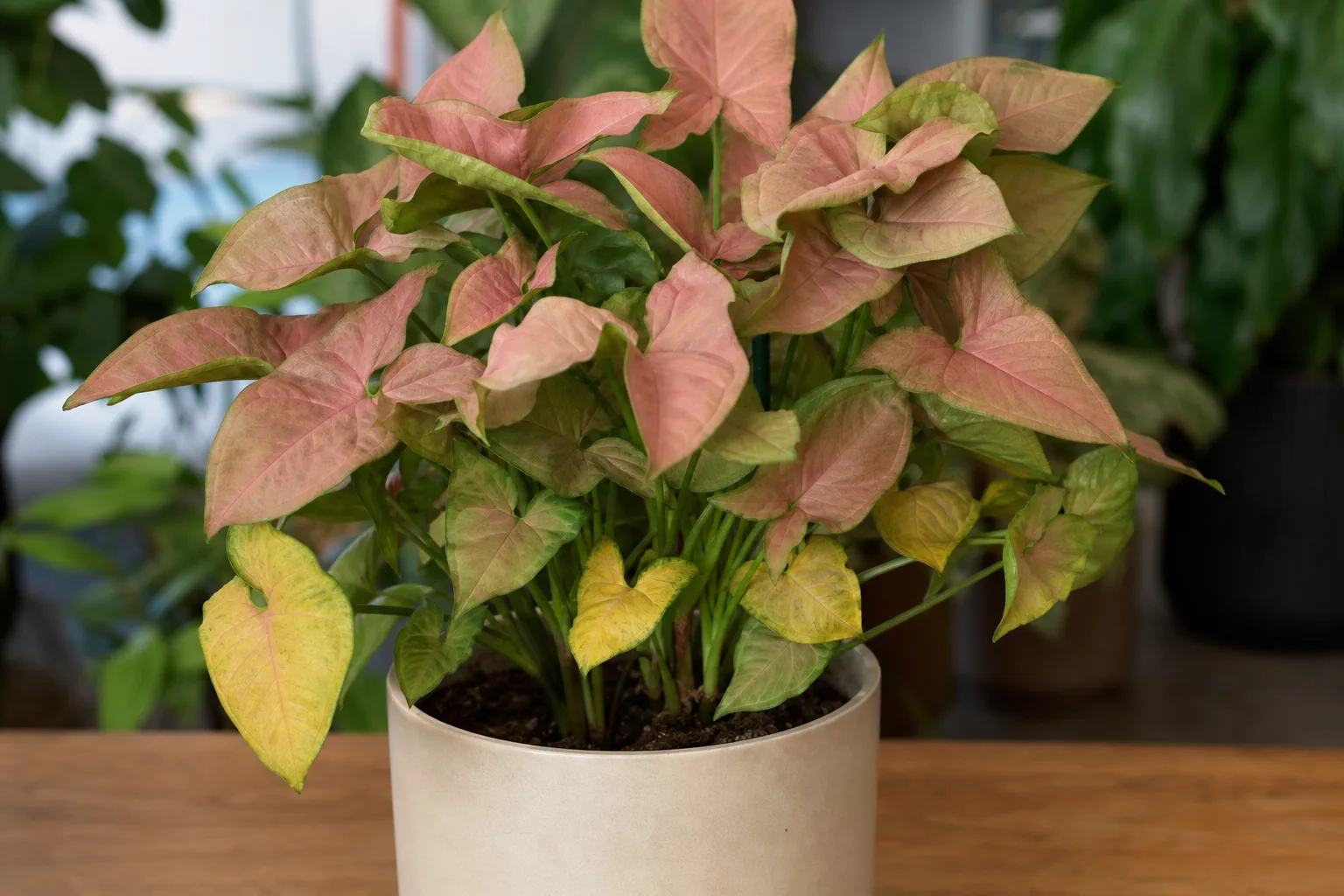
Yellow Leaves on Syngonium Neon Robusta: Causes, Checks & Fixes
This guide covers yellow leaves on Syngonium Neon Robusta. See also the general Yellow Leaves guide, watering, and light pages for this plant.
Yellow Leaves on Syngonium Neon Robusta: Causes, Checks & Fixes
Quick answer
If your Syngonium Neon Robusta (Syngonium podophyllum ‘Neon Robusta’) is turning yellow, start with what the newest leaves are doing-not just the oldest ones at the base. This pink-green cultivar often loses its rosy blush and opens dull green weeks before lower leaves go fully yellow, especially when a dim shelf keeps the pot wet too long. That early color fade is a faster stress signal than waiting for widespread yellowing.
Yellow leaves are not always a crisis. A single firm lower leaf fading over months while pink-tinged arrowheads keep emerging at the crown is normal aging on a self-branching vine. Multiple soft yellow leaves on a heavy wet pot with limp stems is different-that pattern points to overwatering or advancing root rot and needs root checks before you fertilize or repot on impulse.
First step: test the top inch of soil and lift the pot. Wet mix plus yellowing means pause watering and improve light so the plant can use moisture. Bone-dry mix with limp leaves points to underwatering. One change at a time-do not stack soak, repot, and feed on the same day.
What yellow leaves look like on Syngonium Neon Robusta
Neon Robusta is sold for soft pink-green juvenile arrowhead leaves, not solid chartreuse like some pothos cultivars. Yellowing on this plant shows up in patterns tied to color, moisture, and leaf age.
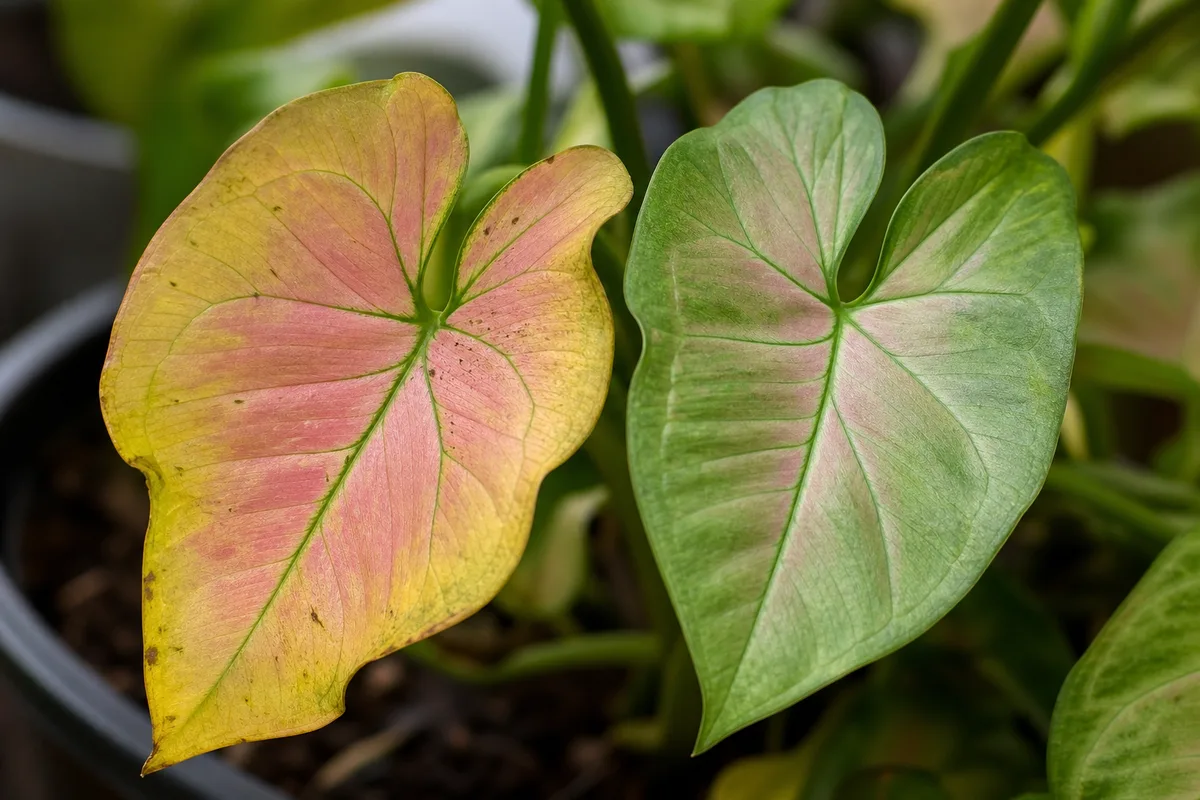
Yellow Leaves symptoms on Syngonium Neon Robusta - compare with healthy tissue on the same plant.
Early stress (often before full yellow):
- Pink blush fades on new leaves; fresh growth opens dull medium green instead of rosy-green
- Longer gaps between leaves on stems leaning toward the window-low light overlap covered on not enough light
- Pot stays heavy for a week or more after your usual watering while color dulls
Overwatering / root stress:
- Multiple leaves yellow at once, often starting on lower or inner foliage
- Leaves feel soft and limp, not crispy; stems may droop while soil stays damp
- Sour or musty smell from drainage holes; fungus gnats may hover over the surface
- Fully yellow tissue usually will not re-green; focus on new growth after you fix the cause
Underwatering lookalike:
- Crisp yellow or tan edges on leaves that wilt in a light, dry pot
- Soil dusty in the top inch; plant perks after a thorough soak if roots are still healthy
Normal aging:
- One oldest leaf at the soil line yellows slowly over weeks
- Stems stay firm; new pink-tinged arrowheads still open above
- No sour smell; pot weight matches your normal dry-down rhythm
Cold draft damage:
- Yellow or bronze patches on leaves facing a window, vent, or door-often after a cold night
- Tissue may feel thin and papery; damage can appear within days of exposure below about 55°F (13°C)
Pest-related yellowing:
- Stippling, webbing, or waxy bumps on leaf undersides while soil moisture looks normal
- Yellow spreads on leaves with uneven mottling, not uniform fade from base to tip
Sun scorch on pale leaves:
- Bleached yellow-white patches on leaves suddenly exposed to harsh midday sun
- More common on pink-toned tissue that formed in dim light-acclimate moves slowly
Why Syngonium Neon Robusta gets yellow leaves
Syngonium podophyllum is a tropical aroid vine that prefers bright indirect light and evenly moist but well-drained soil. Neon Robusta adds cultivar-specific behavior: its pastel pink-green leaves carry less chlorophyll than solid-green arrowheads, so low light triggers both color loss and slower water use-a double trigger this page sees often.
Overwatering and poor oxygen at the roots remain the most common indoor cause. When roots sit in wet mix, they cannot absorb oxygen; stunted growth with yellowing leaves is a classic overwatering symptom. Dim corners make it worse because transpiration drops and the same weekly watering schedule that worked in summer becomes excessive.
Low light without adjusting water is the second major trigger on Neon Robusta. The plant stretches, pink wash fades, and mix stays damp-setting up the root stress that yellows lower leaves. This is why yellowing after a move to a darker room should always trigger a light and dry-down review, not more fertilizer.
Underwatering yellows older leaves after repeated drought; UF/IFAS notes dry media can turn old Syngonium leaves yellow. Crispy edges and a light pot distinguish this from wet-soil yellowing.
Normal senescence on self-branching Neon Robusta sheds the lowest leaf as new crown growth continues-especially on mature bushy plants.
Cold drafts slow metabolism and damage leaf tissue on a warmth-loving tropical plant.
Pests (spider mites, mealybugs, and scale) drain sap and create mottled yellowing while watering looks fine.
Salt or fertilizer buildup can yellow leaf margins after heavy feeding without flushing-less common than water and light issues but worth noting if you feed frequently.
Indoor nitrogen deficiency is unlikely on a well-fed syngonium; yellow leaves with chronically wet soil almost always trace to water, light, or roots-not a missing nutrient dose.
Lookalike symptoms to rule out
| Pattern | Soil / pot | New growth | Stems | Likely cause | Next step |
|---|---|---|---|---|---|
| Soft yellow, multiple leaves | Wet, heavy | Dull green, less pink | Limp | Overwatering / root stress | Stop watering; see overwatering |
| Crisp yellow edges, wilt | Dry, light | Smaller, faded pink | Firm | Underwatering | Deep soak; underwatering guide |
| Pink fade, long internodes | Often damp slowly | Dull green, leggy | Firm, leaning | Low light + wet soil | Brighter light; not enough light |
| One lower leaf only | Normal rhythm | Pink-tinged arrowheads | Firm | Normal aging | No action; remove leaf when dry |
| Patchy yellow after cold night | Unchanged | May stall | Firm | Cold draft | Move off vent; stable warmth |
| Stippling, webbing | Normal | Mottled yellow | Firm | Pests | Inspect undersides; isolate |
| Bleached patches on sun side | Normal | Pale new leaves | Firm | Sun scorch | Filter light; acclimate |
How to confirm the cause
Work through these six checks in order before Syngonium Neon Robusta repotting guide, fertilizing, or pruning heavily:
- Top-inch moisture - Push a finger into the top inch of mix. Wet for days after one watering points to overwatering or low light slowing use. Dusty dry inch with limp leaves points to drought.
- Pot weight - Lift the container. A heavy pot days after watering supports wet-soil stress; a noticeably light pot supports underwatering.
- Newest leaf color - Compare the last two arrowheads to when the plant looked its best. Lost pink blush plus damp soil is an early root-stress warning on Neon Robusta.
- Leaf count and position - One yellow leaf at the base only suggests aging. Several yellow leaves at once with wet mix warrants unpotting to inspect roots for mushy brown tissue-dull yellow leaves with soft roots indicate overwatering damage.
- Stem squeeze and smell - Firm green stems with no odor favor light or aging issues. Soft base, sour mix-escalate to root rot workflow.
- Environment scan - Note AC vents, winter window gaps, recent moves to darker rooms, and leaf undersides for pests. Cold below about 55°F (13°C) and mite stippling both yellow leaves with normal-looking soil.
If roots are firm, mix is dry, and leaves wilt evenly, treat drought first. If soil is wet and stems soften, do not add water until you inspect roots.
First fix for Syngonium Neon Robusta (by confirmed cause)
Make one primary change based on what you confirmed-then wait one to two weeks before stacking more interventions.
Normal aging (one lower leaf, firm stems, healthy new growth)
Let the leaf yellow and drop naturally, or snip it when fully dry. No watering or light overhaul needed. Judge plant health by pink wash on the newest arrowheads, not by the oldest base leaf.
Overwatering or wet-soil root stress
Stop watering immediately. Move the pot to bright indirect light and airflow so the top inch can dry. If multiple leaves are soft-yellow on heavy wet mix, unpot and inspect roots-trim mushy tissue, repot into fresh well-draining mix, and follow the overwatering recovery sequence. Do not fertilize until new growth returns.
Low light with chronic damp soil
Increase light first-east window or filtered spot one to three feet from south/west glass. Skip the next scheduled drink if mix is still damp from the dim old location. See not enough light for placement detail.
Underwatering
Water thoroughly until excess drains, then empty the saucer. Leaves often firm within hours if roots are intact. Resume the water when top inch dries rhythm from the watering guide.
Cold draft damage
Move off the vent or drafty sill into stable indoor warmth (65–80°F / 18–27°C). Remove fully damaged leaves. Hold watering steady-cold-stressed roots use less water.
Pests
Isolate the plant. Rinse leaf undersides, confirm mites or scale, then treat appropriately. Yellow from pest damage will not reverse on old tissue; watch for clean new growth after control.
Recovery timeline
- Mild overwatering caught early: Yellowing stops spreading within one to two weeks after dry-down and brighter light; first healthy pink-tinged leaf may open in three to four weeks.
- Root trimming and repot: Four to eight weeks before new growth looks normal; older yellow leaves may drop rather than re-green.
- Low-light correction: Pink blush on new leaves only-often returns in three to six weeks after a brighter placement; old dull-green leaves stay unless pruned.
- Underwatering: Perk within hours to one day after a proper soak; edge crispness on old leaves remains.
- Cold damage: New growth resumes in two to four weeks once warmth is stable; damaged leaf tissue does not recover.
Judge success by firm stems, stable soil rhythm, and pink wash on the newest arrowhead-not by old yellow leaves turning green.
Worsening signs: rapid leaf drop on wet soil, stem base softening, sour smell intensifying, or no new buds after six weeks in corrected conditions. Those warrant root inspection and possible escalation to the root rot guide.
Annotated case: dim shelf, weekly watering, pink fade before yellow
A common pattern: a 6-inch Neon Robusta on a north-room bookshelf, watered every Saturday whether or not the mix dried. Over six to eight weeks, new leaves opened mostly green with weak pink wash; lower leaves yellowed one at a time; the pot felt heavy mid-week. After moving to an east windowsill, skipping one watering cycle, and letting the top inch dry before the next soak, the first rosy-green arrowhead opened in about three weeks. Lower yellow leaves were removed as they dried-recovery was measured on new crown color, not old tissue re-greening.
What not to do
Do not increase watering because leaves look pale in a dim corner-fix light first. Do not fertilize while soil is soggy or roots are damaged. Do not assume yellow leaves will turn green again; they usually drop and are replaced. Do not repot and trim and feed on the same day-stack one change at a time.
When removing fallen yellow leaves, keep debris away from pets-Syngonium is toxic to cats and dogs because of calcium oxalate crystals. Contact your veterinarian or the ASPCA Animal Poison Control Center at (888) 426-4435 if ingestion is suspected.
How to prevent yellow leaves next time
- Water trigger: Check every few days; water only when the top inch of soil dries-not on a fixed calendar.
- Light: Keep bright filtered light so Neon Robusta uses water predictably and holds pink color-see the light guide.
- Season: Reduce frequency in fall and winter when growth slows, but do not let a dim pot stay wet for weeks.
- Drainage: Use airy aroid mix, drainage holes, and empty saucers after every soak per the watering guide.
- Drafts: Keep the pot away from AC blasts and winter window gaps below about 55°F (13°C).
- Pests: Wipe leaf undersides monthly on plants near other houseplants.
When to worry
Treat yellowing as urgent when it pairs with sour-smelling soil, soft stems at the base, or rapid leaf drop on a heavy wet pot-that pattern can precede serious root rot. Also act promptly if yellowing followed a move to a much darker room, if every leaf is collapsing on bone-dry soil, or if pest webbing is visible.
For a single firm lower leaf on an otherwise bushy plant with pink-tinged new growth, wait and observe-that is normal aging, not an emergency.
Related Neon Robusta problems
- Syngonium Neon Robusta overview - general care hub
- Overwatering - wet pot, limp stems
- Root rot - mushy roots, sour mix
- Underwatering - dry pot, crisp edges
- Not enough light - pink fade, leggy growth
- Wilting - collapse with wet or dry soil
- Watering - prevention rhythm
- Light - maintaining pink blush
When to use this page vs other Syngonium Neon Robusta guides
- Syngonium Neon Robusta watering guide - Use for routine moisture checks before assuming yellow leaves is the main issue.
- Syngonium Neon Robusta problems hub - Browse all 1 common issues on this species.