Wilting on Syngonium Neon Robusta: Causes, Checks & Fixes
Quick answer
Wilting on Syngonium Neon Robusta is misleading-the same limp look comes from underwatering or from roots failing in wet soil. Before you water, check whether the top inch is dry and light or wet and heavy.
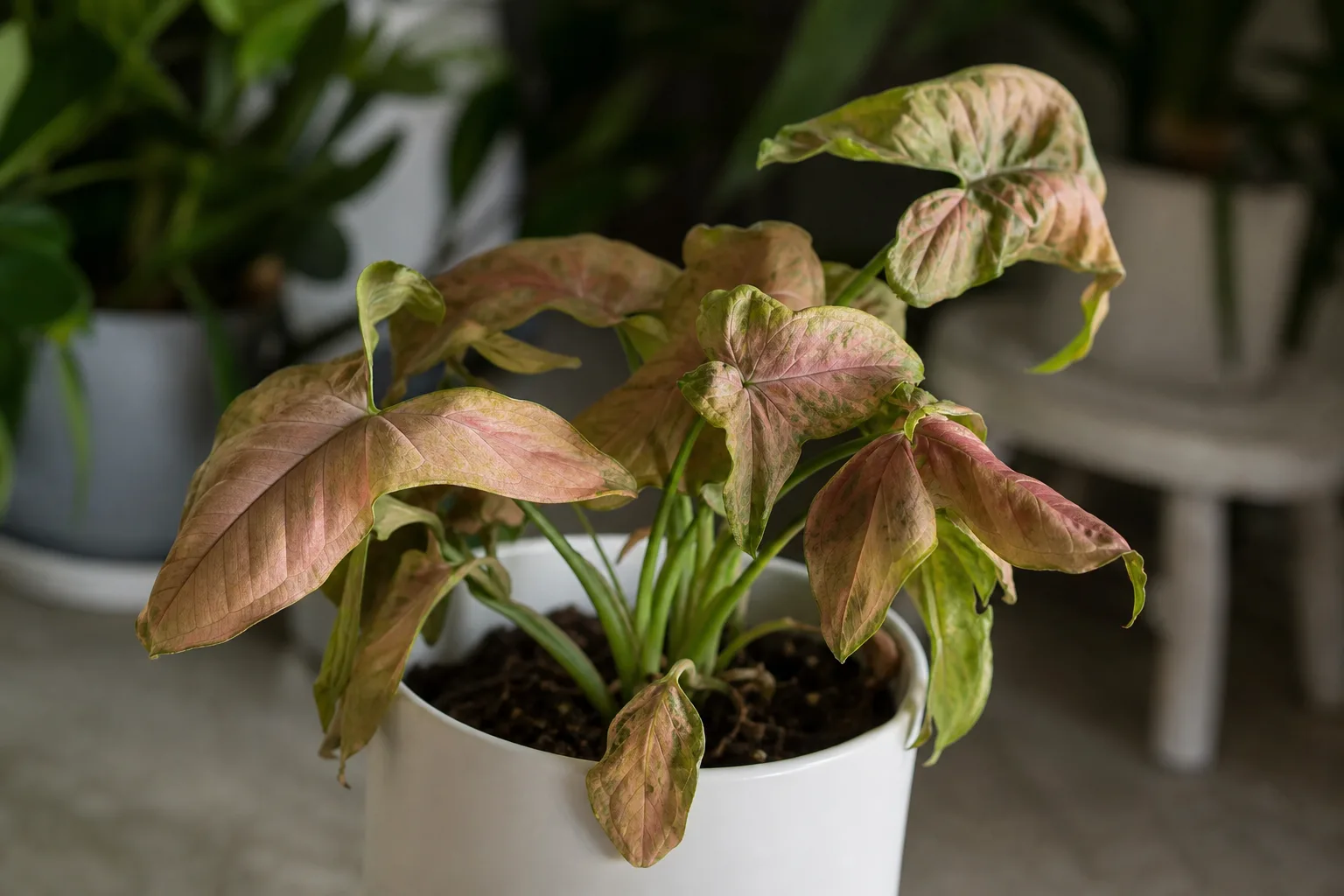
Wilting on Syngonium Neon Robusta: Causes, Checks & Fixes
This guide covers wilting on Syngonium Neon Robusta. See also the general Wilting guide, watering, and light pages for this plant.
Wilting on Syngonium Neon Robusta: Causes, Checks & Fixes
Quick answer
Wilting on Syngonium Neon Robusta looks dramatic but the cause is not always thirst. Chartreuse arrowhead leaves lose turgor and the whole plant can slump when roots cannot supply water-either because the mix is too dry or because roots in soggy soil have stopped working.
First step: check the top inch of soil and pot weight before you touch the watering can. Dry, light soil with firm stems means underwatering. Heavy, wet soil with limp stems means stop watering and inspect roots. Syngoniums are fast to collapse and fast to recover when the correct water problem is fixed early.
What wilting looks like on Syngonium Neon Robusta
Neon Robusta wilts as a whole-plant slump rather than one drooping leaf at a time. Soft chartreuse foliage hangs from thin vining stems; on a compact tabletop plant the collapse can look total even when only part of the root zone is affected.
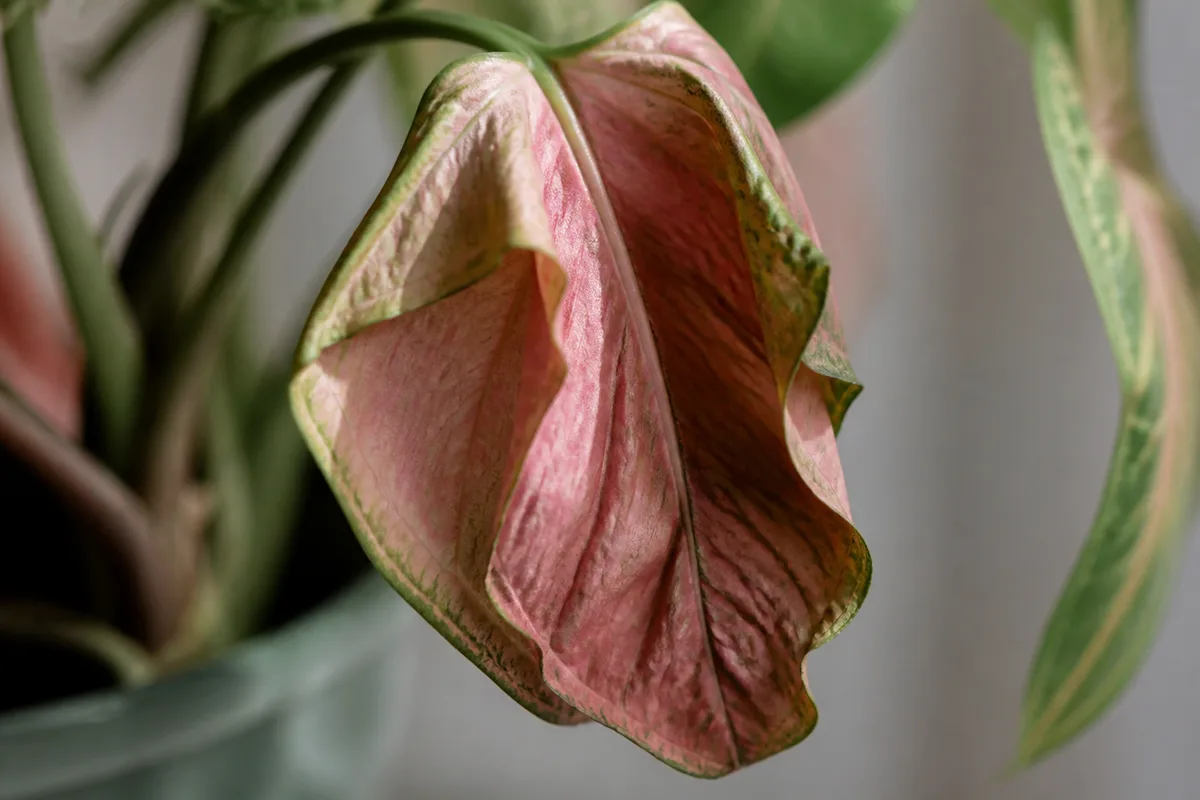
Wilting symptoms on Syngonium Neon Robusta - compare with healthy tissue on the same plant.
Dry-wilt pattern:
- Top inch of mix is dry or pulls away from the pot edge
- Pot feels light when lifted
- Stems stay firm if you bend them gently
- Leaves feel papery or slightly curled at the edges
- Often follows a hot bright window day or a missed watering during active summer growth
Wet-wilt pattern:
- Mix stays wet for a week or more between waterings
- Pot feels heavy; drainage hole may smell sour
- Stems soften at the soil line while leaves still hang limp
- Lower chartreuse leaves yellow before the slump spreads upward
- Common in dim corners where the plant uses water slowly
Temporary stress wilt:
- Occurs hours after repotting, a sudden move to stronger sun, or a cold draft
- Soil moisture reads normal and stems stay firm
- Plant often recovers within one to two days once conditions stabilize
Why Syngonium Neon Robusta wilts
Syngonium podophyllum is a tropical understory aroid that prefers evenly moist but well-drained soil-not constant saturation. Neon Robusta is the softer pink tabletop cultivar with chartreuse juvenile leaves that fade in low light. That combination makes wilting especially confusing at home.
Underwatering dehydrates thin arrowhead leaves quickly in bright indirect light. During warm months the plant pushes new growth and transpires faster than owners expect from a small pot. When the top inch dries completely and stays dry, cells lose turgor and the plant collapses. Syngoniums are known for dramatic wilt that reverses quickly once rehydrated.
Overwatering and root failure produce the same limp look with opposite soil conditions. Saturated mix excludes oxygen from roots; damaged roots cannot move water upward even though the soil is wet. This is the classic wilt paradox-adding more water makes it worse.
Low light slows water use. Neon Robusta in a dim shelf or north corner may stay wet for days after each watering. Owners who keep a summer watering rhythm through winter or in poor light often see yellowing followed by wilt while the mix is still damp.
Heat and light shock after a sudden move to direct sun can cause afternoon wilt when transpiration outpaces root supply. Pale chartreuse leaves are less tolerant of harsh sun than darker green syngonium forms.
Repotting or root disturbance can cause short-term wilt while fine roots re-establish, especially if the plant was watered heavily right after repotting or left in strong sun while stressed.
How to confirm the cause
Work through these checks in order. Do not skip straight to repotting or fertilizer.
- Top inch moisture - Push a finger into the surface. Dry means thirst is likely if stems are firm. Wet or cool damp mix with limp leaves means root uptake failure is more likely.
- Pot weight - Lift the pot. A light pot with wilt almost always needs water. A heavy pot with wilt needs drying and root inspection, not another drink.
- Stem firmness - Gently squeeze stems at the soil line. Firm tissue supports dry-wilt or temporary stress. Soft, mushy tissue at the base confirms serious root or crown involvement.
- Smell and drainage - Sniff near the drainage hole. Sour odor confirms chronic wetness. Confirm water flows freely from the hole and the saucer is not holding standing water.
- Light context - Note whether the plant sits in bright filtered light or a dim corner. Slow drying in low light explains wet-wilt even when watering frequency seems modest.
- Recent changes - Repotting within the last week, a move to a hotter window, or a cold draft from AC can explain temporary wilt with normal moisture.
If dry soil, light pot, and firm stems align, treat as underwatering. If wet soil, heavy pot, yellow lower leaves, or soft stem base align, treat as root stress before watering again.
First fix for Syngonium Neon Robusta
Check the top inch of soil and pot weight-then act on what you find, not on how limp the leaves look.
For dry wilt: Water thoroughly until excess runs from the drainage hole, then empty the saucer. Use room-temperature water and moisten the entire root ball. If water runs straight through dry, compacted mix, bottom-soak the pot in a basin for twenty to thirty minutes, then drain fully.
For wet wilt: Do not water. Move the plant to brighter indirect light with good airflow so the mix dries faster. If stems are soft at the base or the mix smells sour, unpot within twenty-four hours, trim mushy roots, air-dry cut surfaces, and repot into fresh well-draining mix.
For temporary stress wilt: Hold watering unless the top inch is genuinely dry. Stabilize light and temperature; avoid direct sun until turgor returns.
Do not fertilize a wilted syngonium. Do not repot on day one unless wet-wilt inspection confirms root damage.
Step-by-step recovery
After underwatering
- Soak and drain once, then wait.
- Expect visible perk within two to four hours for mild cases; severely dry plants may need twenty-four hours.
- Resume watering only when the top inch dries again-do not keep the mix constantly wet to “prevent repeat collapse.”
- Trim only leaves that stay crispy and brown after turgor returns; soft wilted leaves often recover.
After overwatering or root damage
- Stop all watering immediately.
- Gently remove the plant from the pot and rinse away wet soil.
- Cut away brown, mushy, or translucent roots with clean scissors until only firm white or tan tissue remains.
- Let the root ball air on a rack for several hours to overnight if rot was advanced.
- Repot into fresh well-draining aroid mix in a pot only slightly larger than the trimmed root mass.
- Give bright indirect light and wait five to seven days before the first light watering.
- If the stem base is fully mushy, take healthy stem cuttings above firm tissue before rot spreads-wilting will not reverse on a rotted crown.
After repotting shock
- Keep soil evenly moist but not soggy for the first week-not wet and not bone dry.
- Avoid direct sun and fertilizer until new growth appears.
- Expect partial recovery within three to five days if roots were healthy going in.
Recovery timeline
Mild dry wilt on Neon Robusta often shows improvement within hours of a proper soak. Moderate dehydration may take a full day for leaves to firm. Repeated dry collapses stress fine roots and slow future recovery.
Wet-wilt recovery depends on how much root tissue was lost. Plants with mostly firm roots after trimming may show new growth in two to four weeks. Severe rot with a soft stem base may not recover; propagation from healthy nodes is the realistic salvage path.
Old leaves that stayed limp for many days may remain slightly curled even after the plant stabilizes. Judge success by firm new stems and fresh chartreuse growth, not by every older leaf returning to perfect form.
Lookalike symptoms
Drooping without full wilt on long unsupported Neon Robusta stems is often gravity and weak structure, not water stress. Pinch or support vining stems; if turgor returns after watering, the issue was moisture.
Yellow leaves without immediate collapse usually precede wet-wilt by days. Yellow lower leaves with wet soil point to overwatering before full slump.
Leggy pale growth in dim light often shares the same spot where chronic wet soil causes wilt. Fix light first; watering rhythm usually follows.
Spider mites in dry heated air cause stippling and dull foliage but rarely the sudden whole-plant collapse typical of water problems. Check leaf undersides for fine webbing if wilt persists after correct watering.
Mistakes to avoid
- Watering because leaves look limp without checking whether the mix is already wet
- Keeping a dim Neon Robusta on a fixed weekly watering schedule through winter
- Leaving the pot in a full saucer after watering
- Moving a wilted plant into direct sun hoping light will “revive” it
- Fertilizing to perk up a stressed plant
- Repotting into a much larger pot while roots are damaged-extra wet mix holds moisture around a weak root system
- Ignoring soft stem tissue at the soil line while hoping the next watering helps
Wear gloves when handling cut tissue during root inspection; syngonium sap can irritate skin and the plant is toxic to pets if chewed.
How to prevent wilting next time
Match watering to how fast the top inch dries in your room, not to a calendar. Bright indirect light helps Neon Robusta use water steadily and keeps chartreuse color strong. In dim or cool conditions, stretch the interval between waterings.
Use well-draining potting mix and pots with drainage holes. Empty saucers after every soak. Avoid oversized containers that stay wet around sparse roots.
Learn your plant’s dry-wilt signal-many syngoniums slump slightly before the top inch is fully dry. Use that slump as a prompt to check moisture, not as an automatic order to flood the pot.
Rotate the pot weekly if you want even compact growth; long one-sided stems in a hot window dry unevenly and wilt on the exposed side first.
When to worry
Act within twenty-four hours if wilt comes with wet soil, sour smell, or soft stems at the base. That pattern can progress to crown rot quickly on container aroids.
Consider the plant may not be saveable if the stem base is mushy throughout, most roots are gone on inspection, and no new growth appears four to six weeks after corrective repotting. Healthy stem nodes above firm tissue can still be propagated.
Dry wilt that does not improve within twenty-four hours of a thorough soak suggests hydrophobic dry pockets or severe root loss from repeated drought-unpot and inspect if the mix repels water or stems stay soft despite dry surface soil.
Related Syngonium Neon Robusta guides
- Syngonium Neon Robusta overview
- Syngonium Neon Robusta watering
- Syngonium Neon Robusta light
- Drooping Leaves on Syngonium Neon Robusta
- Underwatering on Syngonium Neon Robusta
- Overwatering on Syngonium Neon Robusta
- Root Rot on Syngonium Neon Robusta
- All Syngonium Neon Robusta problems
Conclusion
Use this page to confirm wilting on Syngonium Neon Robusta by pattern and pot checks-not by treating every houseplant the same. When symptoms overlap with sibling pages, follow the linked guide for the matching cause before stacking fertilizer, repotting, or pesticide.