Fungus Gnats on Yucca Plant: Causes, Checks & Fixes
Quick answer
Fungus gnats on Yucca Plant almost always mean the soil surface stays wet too long. First step: stop watering and let the top 2–3 inches dry completely-yucca cane stores water in its trunk and tolerates dry mix far better than soggy conditions that breed gnats and rot.
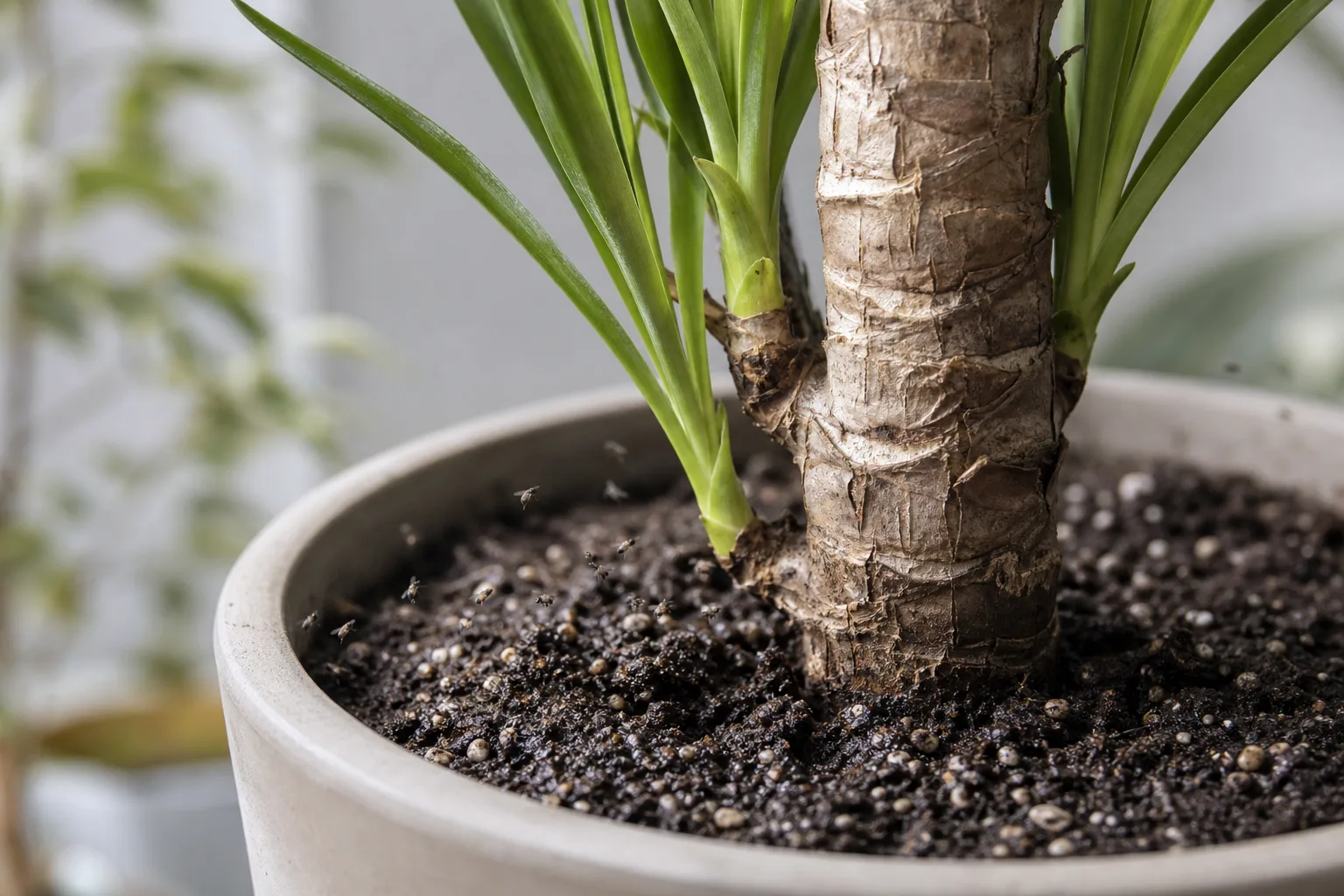
Fungus Gnats on Yucca Plant: Causes, Checks & Fixes
This guide covers fungus gnats on Yucca Plant. See also the general Fungus Gnats guide, watering, and light pages for this plant.
Fungus Gnats on Yucca Plant: Causes, Checks & Fixes
Quick answer
Fungus gnats on Yucca Plant (Yucca elephantipes) are almost never a yucca-specific pest-they are a moisture problem. Small dark flies breed in the top layer of damp organic potting mix. On a drought-adapted cane that stores water in its thick sword leaves and woody trunk, their presence usually means you are watering too often, using water-retentive soil, or both.
First step: stop watering and let the top 2–3 inches of mix dry completely before the next drink. Yucca cane tolerates dry spells far better than chronically wet conditions. Let the top 1–2 inches of soil dry completely between waterings to break the gnat life cycle while you assess whether your watering rhythm-not the flies themselves-is the real threat to the plant.
For seasonal dry-down tests and winter intervals, see the Yucca Plant watering guide.
What fungus gnats look like on Yucca Plant
Fungus gnats are tiny, mosquito-like flies roughly one-eighth inch long. They are weak fliers that tend to stay near pots rather than buzzing across the whole room.
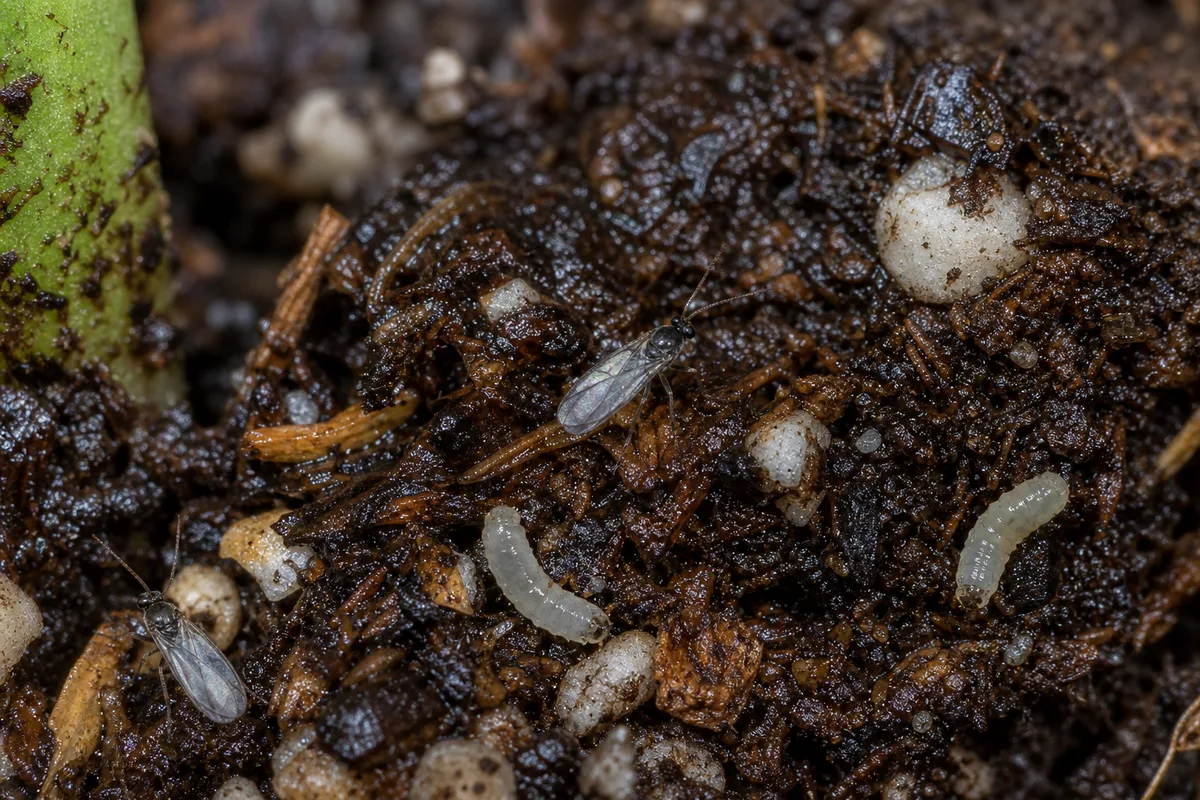
Fungus Gnats symptoms on Yucca Plant - compare with healthy tissue on the same plant.
Typical signs around a yucca pot:
- Small dark flies rise in a cloud when you water or poke the soil surface
- Adults rest on damp mix, pot rims, and nearby windows or lamps
- Yellow sticky traps placed at soil level catch many tiny gnat-like insects
- The top inch of mix stays visibly moist for days after watering
- Fine, translucent larvae may appear if you scrape back wet surface soil
What you usually will not see on healthy, mature yucca canes:
- Chewed sword leaves or stippling on foliage (that points to scale or mechanical damage)
- Cottony white clusters in leaf joints (mealybugs)
- Heavy leaf yellowing from gnat feeding alone-larvae mostly feed on fungi and decaying organic matter in mix
On yucca, the flies are the alarm. The underlying risk is the same wet soil that also causes root rot, soft trunk base, and sour-smelling mix-not direct gnat damage to thick, rigid leaves.
Why Yucca Plant pots get fungus gnats
Fungus gnat larvae need moist, organic-rich topsoil to survive. Adults lay eggs in the upper layer; larvae feed on fungi, algae, and decaying peat before pupating. Fungus gnats thrive in damp conditions, so overwatered plants are especially vulnerable-but yucca creates a specific mismatch when owners treat it like a thirsty tropical foliage plant.
Yucca-specific triggers:
- Watering on a calendar instead of when the pot is dry. Yucca stores water in its trunk and leaves for weeks. Weekly watering in winter-when lower light slows evaporation-often leaves surface mix wet long enough for gnats to multiply.
- Heavy peat-based mix in a low-light office. Standard bagged potting soil retains moisture yucca never needs. Slow dry-down in dim corners extends the larval breeding window. See wrong soil mix on Yucca Plant if your mix never dries.
- Oversized decorative pots without matching root mass. Extra wet soil volume stays damp around sparse roots while sword leaves still look green above.
- Full saucers and cachepots that trap runoff. Yucca should never sit in standing water-saturated bottom layers keep the whole profile wet.
- Misting or moss toppers on a plant that does not need humidity. Surface moisture invites gnats without helping the cane.
The irony is that yucca is one of the best candidates for dry-surface gnat control because its woody trunk and stored reserves survive dry spells easily. Most moisture-loving houseplants struggle when you let the top two inches go bone dry; yucca handles that correction safely while larvae die off.
How to confirm fungus gnats (and rule out lookalikes)
Work through these checks before buying treatments:
- Flight trigger - Disturb or water the yucca pot. Fungus gnats emerge from soil; fruit flies hover near kitchens and ripening produce, not potting mix. Shore flies also breed in wet mix but are stronger fliers with heavier bodies and often appear in greenhouses-not typical office yucca pots.
- Sticky trap test - Place a yellow sticky card at soil level for 48 hours. Dozens of tiny flies on the trap confirm active adults laying eggs in that pot.
- Potato slice test - CSU Extension recommends inserting 1/4-inch raw potato wedges cut-side down on the wet surface. Check the underside after two to three days for translucent larvae feeding. This confirms breeding in your yucca pot-not random room flies.
- Surface moisture - If the top 1–2 inches are still damp three to five days after watering, habitat-not random bad luck-is sustaining the infestation.
- Larval check - Scrape back the top half inch of wet mix with a spoon. Translucent worm-like larvae with dark heads confirm breeding in that pot.
- Trunk firmness - Press the cane near the soil line. Firm woody tissue all the way down means you caught a moisture habit early. Soft, spongy tissue at the base means wet soil has already progressed toward rot.
- Nearby pots - Gnats spread to any consistently wet container. Check plants on the same shelf, especially newly purchased ones in nursery peat.
If traps stay empty and flies only appear near the fruit bowl, you do not have a houseplant gnat problem.
First fix for Yucca Plant
Stop watering and let the top 2–3 inches of potting mix dry completely before the next drink.
This single step does two jobs at once: it kills fungus gnat larvae in the dry surface layer, and it moves yucca back into the conditions its drought-adapted roots expect. Insert a dry finger or wooden skewer to the bottom of the pot-if any depth still feels cool and damp, wait longer. In many indoor setups, that pause runs one to three weeks depending on pot size, light, and season.
While the mix dries:
- Empty saucers so no water wicks back upward
- Move to brighter indirect light if the yucca sits in deep shade-faster dry-down shortens the infestation without stressing a drought-adapted trunk
- Set one yellow sticky trap at soil level to catch egg-laying adults and monitor progress
Do not shower the plant, repot on day one, or drench with hydrogen peroxide before fixing the wet-soil habit. Those steps treat symptoms while leaving the breeding habitat intact.
Mild, moderate, and severe infestations on Yucca Plant
Match your response to how many flies you see and how the cane feels-not every gnat swarm needs the same intensity.
Mild - A few adults when you water, firm trunk, no yellowing, and soil that dries within one to two weeks after you pause watering. Dry-down plus one sticky trap is usually enough. Recheck with a skewer dry-down test before resuming the soak-and-dry rhythm.
Moderate - Sticky traps fill within 48 hours, potato slices show larvae, or gnats persist after one full dry cycle but the trunk stays firm. Continue dry-down, replace traps weekly, and add BTI drenches on a five- to seven-day schedule for two to three weeks.
Severe - Swarms increase weekly despite traps, widespread yellowing, sour soil smell, or any softening at the trunk base. Treat as overwatering and possible rot first-unpot, inspect roots, trim mushy tissue, and repot dry. BTI alone cannot fix a rotting caudex.
Step-by-step recovery if gnats persist
After the first full dry-down cycle, add controls in this order if adults still appear:
1. Adjust watering permanently
Water only when the top 2–3 inches are bone dry-or the entire root zone is dry in smaller pots. Allow soils to dry between waterings, soak thoroughly until a little water exits drainage holes, then discard saucer water. Many yucca owners water every 10 to 14 days in summer and once every three to four weeks in winter, but your pot’s dry time matters more than any schedule.
2. Keep using sticky traps
Replace traps when coated with flies. Traps reduce adult egg-laying; they do not reach larvae in soil. Use them as a progress gauge, not the sole treatment. On toxic yucca, place traps where curious cats and dogs cannot reach them.
3. Apply BTI for stubborn larvae
Bacillus thuringiensis subspecies israelensis (BTI)-found in products like Mosquito Bits-targets fungus gnat larvae in moist soil. Mix according to label directions and apply with a soil drench. BTI does not kill eggs or adults, so repeat every five to seven days until trap counts drop. It is safe for people and pets when used as directed, but keep treated pots away from pets that dig in soil on a toxic plant.
4. Improve mix or pot only if dry-down stays slow
If the pot still holds surface moisture more than a week after one thorough watering, the mix or container is too water-retentive for yucca. Repot into gritty cactus-style blend with perlite or coarse sand, confirm drainage holes are open, and downsize if the pot is much wider than the root ball. Yucca Plant repotting guide is a secondary fix-not day-one surgery-for gnat control alone.
5. Address co-occurring surface mold
White fuzzy growth on damp mix often appears alongside gnats. Scrape the top inch, let the surface dry, and follow the mold on soil guide if patches return. Both symptoms share the same root cause: mix that stays wet too long for a drought-adapted cane.
Recovery timeline and what improvement looks like
Expect two to six weeks for full suppression because eggs, larvae, pupae, and adults overlap in the same pot. You are succeeding when:
- Fewer flies appear when you water
- Sticky traps catch declining numbers each week
- Soil surface stays dry for several days between planned waterings
- Trunk remains firm and sword leaves stay rigid
- No new widespread yellowing or sour odor develops
Signs the underlying problem is worsening:
- Gnat numbers rise weekly despite traps
- Sword leaves yellow while soil stays wet
- Trunk base softens or smells at the soil line
- Leaves drop with wet-not dry-mix
Gnats alone on a firm yucca are a nuisance. Gnats plus soft trunk base are a root-health emergency-shift focus to overwatering and rot prevention immediately.
Lookalike symptoms and causes to rule out
| What you see | Likely cause | Quick check |
|---|---|---|
| Flies around kitchen fruit | Fruit flies | Not tied to soil moisture; clean counters and cover produce |
| Heavier flies on wet greenhouse benches | Shore flies | Stronger fliers than fungus gnats; uncommon on a single indoor yucca cane |
| Flies only on one new nursery pot | Imported eggs in peat | Isolate new plant; dry surface and use BTI |
| White mold on soil surface | Harmless surface fungus from damp mix | Often appears with gnats; see mold-on-soil guide |
| Yellow leaves + wet soil + gnats | Overwatering / early root stress | Press trunk base for firmness-not just trap counts |
| Webbing on sword leaves | Spider mites in dry heated rooms | Mites prefer dry foliage; gnats prefer wet soil |
Mistakes to avoid on Yucca Plant
- Spraying adults only with neem or soap while soil stays wet-new generations hatch every week
- Watering on the same weekly schedule year-round-winter dry-down is slower indoors; reduce winter watering to the minimum
- Assuming gnats mean the yucca is “unhealthy”-they mean the pot is too wet for Yucca Plant overview
- Misting or pebble trays on a plant that stores water in its trunk and tolerates normal room humidity
- Stopping treatment after one dry week-repeat BTI and trap monitoring until counts stay low
- Repotting every gnat-infested plant immediately-fix watering first unless mix is clearly failing
- Increasing humidity to “help” a gnat-infested yucca-more surface moisture feeds larvae and invites rot
Yucca care cross-check
Fungus gnats should prompt a full watering audit:
- Is the top 2–3 inches dry before each drink?
- Does mix drain within minutes and dry through within two weeks?
- Are drainage holes open and saucers emptied?
- Is the pot appropriately sized for the root mass?
- Did winter arrive without reducing water frequency?
Yucca in Yucca Plant light guide dries faster and grows more actively than one in a dim lobby corner-but both should still follow dry-down logic. Root rot in soils kept too moist is the primary disease concern for spineless yucca indoors; gnats are often the first visible sign that you are approaching that zone.
How to prevent fungus gnats next time
- Dry-down watering only-the top 2–3 inches should be bone dry before the next soak
- Gritty, well-draining mix matched to yucca needs, not moisture-retentive peat alone
- Quarantine new plants two to three weeks with sticky traps before placing near your yucca
- Monitor with traps in fall and winter when watering habits often lag behind slower growth
- Remove fallen sword leaves from the soil surface so they do not add decaying organic matter for larvae
- Skip decorative moss toppers that hold surface moisture against the trunk base
- Empty saucers promptly after every watering-never let yucca sit in runoff
When gnats stay gone and the trunk stays firm, you have aligned yucca culture with how the plant actually lives-not just eliminated flies.
When fungus gnats signal trunk rot on Yucca Plant
Sword-shaped leaves stay upright long after roots begin failing because the woody cane stores water. That is why gnats can swarm a pot that still looks fine above ground.
Low urgency: A few gnats, firm trunk all the way to the soil line, no yellowing, and soil that you can dry out within one to two weeks with a watering pause.
Higher urgency: Swarms increasing weekly, newly propagated cane cuttings in the same wet mix (larvae can damage tender roots when numbers are high), or any sign of trunk softening.
Act today: Soft trunk base, sour soil smell, or widespread yellowing alongside gnats-treat as overwatering and possible root rot or crown rot, not a standalone pest issue. Unpot, inspect, trim mushy tissue, and repot dry if needed.
Conclusion
Fungus gnats on Yucca Plant are a practical signal that soil has stayed wet too long for a drought-adapted cane. The fix starts with one clear action-let the surface dry completely-not a stack of sprays. Sticky traps and BTI help stubborn infestations, but permanent prevention is watering, mix, and pot choice that keep the top layer dry between drinks. When you see gnats, fix moisture first; your yucca will tolerate the dry spell far better than it tolerates the swamp that invited them.
Related Yucca Plant problems
- Yucca Plant watering - soak-and-dry schedule and seasonal dry-down
- Overwatering on Yucca Plant - shared root cause behind fungus gnats
- Root rot on Yucca Plant - when wet soil has damaged roots
- Mold on soil on Yucca Plant - co-symptom on damp mix
- Crown rot on Yucca Plant - soft trunk base at soil line
- Wrong soil mix on Yucca Plant - peaty mix that stays wet on top
FAQ
Why do gnats swarm my office yucca every winter?
Cooler rooms and shorter days slow evaporation while many owners keep a summer weekly watering schedule. The top of a large lobby pot stays damp for weeks, giving fungus gnat larvae a stable breeding zone even when sword leaves still look fine. Cut winter water to once every three to four weeks and confirm dryness with a skewer before every drink.
Are fungus gnats hurting my yucca roots?
A few gnats rarely damage mature yucca roots directly-larvae feed mainly on fungi and decaying organic matter in wet mix. The real threat is the chronic moisture that breeds them, which can rot roots and soften the trunk base on this drought-adapted cane. Treat gnats as a watering alarm, not just a flying nuisance.
Can I use hydrogen peroxide drench on Yucca Plant for gnats?
Hydrogen peroxide will not fix wet soil on its own and is not a reliable substitute for drying the mix and correcting your watering rhythm. On yucca, the safer first response is a full dry-down cycle, sticky traps, and BTI if larvae persist-not repeated chemical drenches that keep the root zone moist.
When are fungus gnats urgent on Yucca Plant?
Act fast when gnats come with a soft trunk base, sour soil smell, or widespread yellowing while mix stays wet-those signs suggest root or crown rot may already be underway. A few gnats around a firm cane in summer is low urgency; a winter swarm while you water weekly on schedule needs immediate watering changes.
How do I prevent fungus gnats on Yucca Plant long term?
Water only when the top 2–3 inches are bone dry, use gritty fast-draining mix, empty saucers after every soak, and cut back sharply in winter. Avoid oversized decorative pots that hold wet soil yucca roots never colonize. Quarantine new plants with sticky traps for two weeks before placing them near your yucca.
When to use this page vs other Yucca Plant guides
- Yucca Plant watering guide - Use for routine moisture checks before assuming fungus gnats is the main issue.
- Yucca Plant problems hub - Browse all 29 common issues on this species.
- Overwatering on Yucca Plant - Different entry point when symptoms overlap with fungus gnats.
- Root Rot on Yucca Plant - Different entry point when symptoms overlap with fungus gnats.
- Poor Drainage on Yucca Plant - Different entry point when symptoms overlap with fungus gnats.