Mold on Soil on Yucca Plant: Causes, Checks & Fixes
Quick answer
White mold on Yucca Plant soil usually means the surface stays damp from overwatering or peaty mix-not a dangerous disease on a healthy trunk. Scrape the mold, let the surface dry, and fix your watering rhythm.
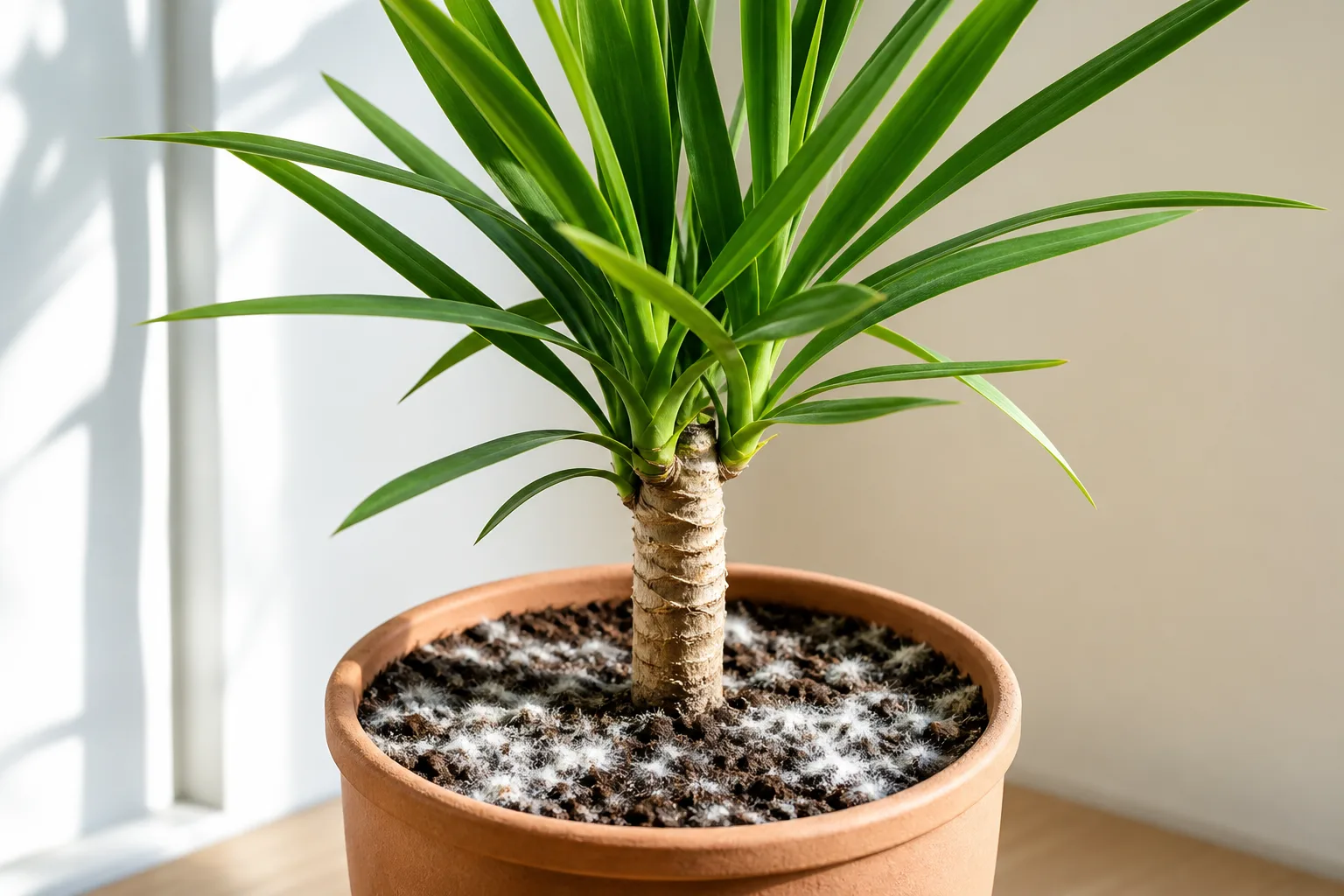
Mold on Soil on Yucca Plant: Causes, Checks & Fixes
This guide covers mold on soil on Yucca Plant. See also the general Mold on Soil guide, watering, and light pages for this plant.
Mold on Soil on Yucca Plant: Causes, Checks & Fixes
Quick answer
White or gray fuzzy growth on Yucca Plant (Yucca elephantipes) potting mix is almost always harmless saprophytic fungus feeding on damp organic matter-not mold attacking the cane directly. On a drought-adapted species that stores water in its thick sword leaves and woody trunk, surface mold is a moisture alarm: the mix is staying wet longer than yucca can tolerate.
First step: stop watering and scrape off the top inch of affected soil. Let the surface dry completely before the next drink. If the trunk feels firm all the way to the soil line and leaves stay rigid, you are correcting a care imbalance-not rescuing a dying plant. If the trunk base is soft or the mix smells sour, treat this as potential root or crown rot, not cosmetic mold alone.
For seasonal watering intervals and dry-down tests, see the Yucca Plant watering guide.
What mold on soil looks like on Yucca Plant
Healthy yucca pots should have a pale, dry surface between waterings. Mold shows up differently on cane yuccas than on leafy tropicals because the plant can look fine above ground while the mix stays wet underneath.
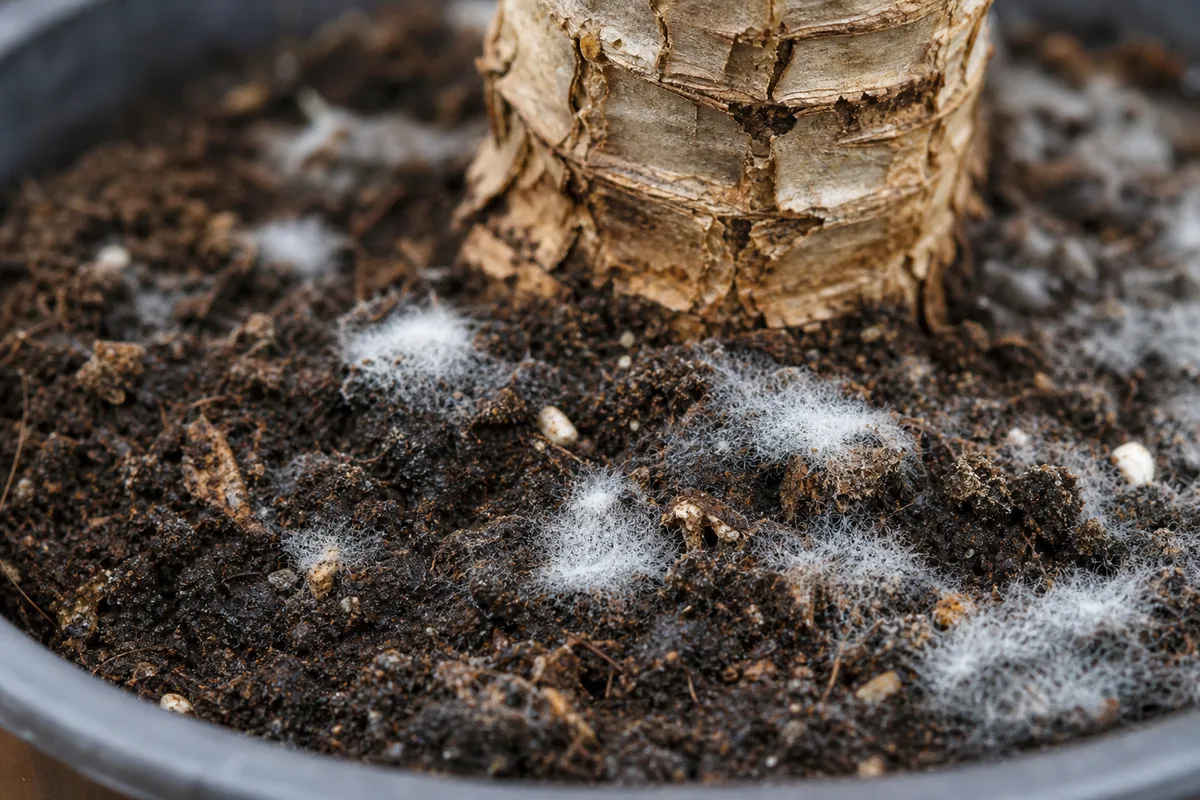
Mold on Soil symptoms on Yucca Plant - compare with healthy tissue on the same plant.
Typical harmless surface mold:
- White, gray, or occasionally tan fuzzy patches on the top of the mix
- Growth concentrated where organic debris collects-fallen sword leaves, peat fines, or decorative bark mulch
- Soil surface still damp or cool to the touch days after watering
- Firm woody trunk and rigid sword leaves when you press the cane near the soil line
Signs the wet conditions behind mold are hurting yucca:
- Mold returns within days of scraping
- Small dark flies hover when you water-fungus gnats sharing the same damp habitat
- Pot feels heavy long after the last watering, especially in oversized lobby containers
- Lower sword leaves yellow or droop while the mix is still moist
- Sour or swampy smell from the pot-distinct from normal earthy potting mix
- Soft, spongy tissue at the trunk base where canes meet the soil
Yucca rot often hides underground while sword-shaped leaves stay upright. The cane stores reserves, so foliage masks wet-soil problems until base tissue softens. Surface mold gives you an early, visible clue that roots may be sitting in conditions Yucca Plant overview was never built for.
Why Yucca Plant gets mold on soil
Spineless yucca evolved in dry Central American and Mexican climates with sandy, fast-draining soils. Indoors, it needs the mix to dry out fully between waterings-not a constantly moist surface. Mold appears when that dry-down never happens.
Common yucca-specific triggers include:
Overwatering on a drought schedule. Many owners water weekly out of habit while yucca may need a drink only every 10–14 days in bright summer light and once every three to four weeks in winter. Excess moisture keeps the surface damp and feeds fungal spores already present in peat-based mix.
Water-retentive potting soil. Standard indoor mix holds moisture too long for a plant with sparse, drought-adapted roots. Dense peat without perlite, sand, or grit stays wet at the surface even when you think you watered lightly. See wrong soil mix on Yucca Plant if your mix never dries.
Oversized lobby pots and poor drainage. Office and lobby yuccas often sit in decorative containers much wider than the root ball. Extra soil volume holds water around sparse roots for weeks, extending surface wetness two to three times longer than a correctly sized pot. Pots without drainage holes, full saucers, or cachepots that trap moisture keep the surface humid.
Low light and cool winter rooms. Yucca tolerates dim offices, but slow growth in winter means the plant uses even less water. Continuing the same summer watering rhythm in darker, cooler months prolongs surface wetness and triggers mold.
Organic surface debris. Fallen sword leaves and top-dressings like sphagnum moss or bark mulch give saprophytic fungi more food and hold moisture against the soil.
The mold itself is usually not pathogenic. The problem is the environment that grows it-the same environment that leads to root rot in soils kept too moist, crown rot, and fungus gnats on yucca.
How to confirm the cause
Work through these checks before Yucca Plant repotting guide or spraying anything. This numbered workflow delivers the “Checks” promised in the title.
- Surface moisture test - Press a finger into the top two inches. If it feels cool and clings to your skin days after watering, the mix is too wet for yucca.
- Pot weight - Lift the container. A heavy pot long after watering confirms saturation throughout, not just surface mold. Lobby-sized pots exaggerate this-compare weight to a correctly sized container if possible.
- Trunk firmness - Press the woody cane at the soil line. Firm tissue all the way down suggests mold is a moisture warning only. A firm cane above a soft trunk base means rot may have started below the soil line while surface mold was still cosmetic.
- Skewer test - Push a dry wooden skewer deep toward the pot bottom. Darkening or soil sticking to the wood means moisture remains throughout. Clean, dry wood means the root zone has dried enough to proceed.
- Smell check - Earthy odor is normal. Sour or rotten smell points to anaerobic decay in wet soil.
- Gnat check - Small flies rising when you disturb the surface mean larvae are feeding in damp organic soil in the same layer as the mold.
- Light and season context - Mold appearing in a dim winter office after unchanged weekly watering is a strong overwatering signal on slow-growing yucca.
If the trunk is firm, sword leaves are rigid, and the mix simply stayed wet too long, you are likely dealing with cosmetic surface fungus-not an active yucca disease. If the base is soft or smells bad, pivot to root rot or crown rot rescue.
First fix for Yucca Plant
Stop watering immediately and remove the upper layer of growing media along with the moldy surface using a spoon or fork.
Discard the scraped material in the trash-not the compost pile, where spores can spread. Leave the plant in place and let the remaining mix dry completely. Do not mist leaves, use humidity trays, or top-dress with more organic material while correcting moisture.
This single step addresses both the visible mold and the root cause: a surface that never dries. Yucca trunks and leaves tolerate-and prefer-extended dry periods, so withholding water is safe when tissue is still firm.
Wear gloves when handling moldy soil if you have sensitive skin. Yucca sap can irritate skin on contact, and the plant is toxic to cats and dogs if ingested-keep scraped soil away from pets.
Step-by-step recovery
After the first dry-down, work through these steps in order based on what you find:
If mold was cosmetic and the trunk is firm:
- Wait until a wooden skewer pushed to the pot bottom comes out dry.
- Water deeply once, then empty the saucer immediately.
- Move the plant to brighter indirect light if it sits in deep shade-faster evaporation helps the surface stay dry.
- Resume a dry-down rhythm from the watering guide: water only when the top 2–3 inches are bone dry in growth season, and cut back sharply in winter.
If mold returns within a week:
- Scrape the surface again and replace the top inch with dry, gritty mix (cactus blend or standard potting soil cut with perlite and sand).
- Confirm drainage holes are open and the pot is not sitting in a full saucer.
- Reduce pot size if the container is much wider than the root ball-extra soil holds moisture yucca never uses. See poor drainage if water pools on the surface.
If fungus gnats appear with mold:
- Let the top 1–2 inches of soil dry completely between waterings to break the gnat life cycle.
- Add yellow sticky traps to catch adults while soil dries.
- Remove fallen sword leaves from the pot surface so larvae have less organic matter to feed on. Full gnat protocol is on fungus gnats on Yucca Plant.
If the trunk base is soft or smells sour:
Stop surface fixes and treat this as potential crown or root rot. Unpot, trim mushy tissue, air-dry cuts, and repot in fresh gritty mix before watering again. Mold was the visible tip of a deeper moisture failure-follow overwatering and crown-rot rescue steps rather than scraping alone.
Lookalike symptoms
Not every white or crusty patch on a yucca pot is mold:
- Mineral salt crust - Hard white or tan film from fertilizer or hard tap water. Scraping reveals dry soil beneath, not fuzzy threads. Flush the pot and reduce feeding rather than changing watering frequency.
- Green algae - Smooth green film on constantly wet surfaces in low light. Same moisture fix as mold, but algae needs more light and less surface water.
- Decorative top moss - Store-bought moss holds moisture against the mix and can grow its own fungal colonies. Remove it on drought-tolerant yucca.
- Normal mycelium after repotting - Brief white threads in fresh peat-based mix after repotting can appear before the surface dries for the first time. Let the pot dry; it often disappears without treatment.
- Mealybugs at the base - Cottony white clusters on stems near soil level move when prodded and sit on the cane, not the mix surface. Mold stays on soil and does not crawl.
Mistakes to avoid
- Scraping mold without changing watering - The fungus returns within days if the surface stays damp.
- Spraying cinnamon, hydrogen peroxide, or fungicide as the first response - Surface treatments do not fix drainage or overwatering. Correct moisture first.
- Misting or pebble trays - Yucca does not need extra humidity at the soil surface. More moisture feeds mold.
- Watering on a calendar - Yucca needs water when the mix is dry, not every Saturday-especially through winter dormancy.
- Repotting into standard potting soil on day one - Mild mold usually resolves with dry-down and a grittier top layer. Repot only when mix stays soggy, mold recurs rapidly, or roots need inspection.
- Ignoring gnats - Flies mean the same wet soil that grows mold is also breeding pests that can stress roots.
- Trusting upright leaves alone - Sword foliage can look healthy while the trunk base rots from chronic wet soil.
Recovery timeline
Surface mold often clears within one to two weeks once the top layer dries and stays dry between waterings. You should see:
- No new fuzzy growth on the surface
- Lighter pot weight before the next watering
- Firm trunk when you press at the soil line
- Existing sword leaves unchanged-yucca rarely shows leaf damage from surface mold alone
New mold within a week, persistent gnats, yellowing lower leaves, or a softening trunk base mean the moisture fix was incomplete-escalate to mix change, pot downsizing, or root inspection.
Success markers: firm trunk, dry surface between drinks, and no new fuzz for at least two weeks.
How to prevent mold next time
Build a watering rhythm around yucca’s drought biology:
- Check dryness with a finger or skewer deep in the pot-not just at the surface.
- Allow soils to dry between waterings and use coarse, well-draining mix sized to the root ball, not the canopy width.
- Keep drainage holes open and empty saucers after every watering.
- Remove fallen sword leaves from the soil surface promptly.
- Reduce watering frequency in winter and in low-light offices-often once every three to four weeks instead of a summer schedule.
- Avoid decorative moss, heavy top-dressings, and cachepots that trap moisture.
- Skip mulch around the trunk base indoors-trapping moisture at the cane base encourages rot on yucca.
When the surface dries reliably between drinks, mold rarely comes back. Yucca is resilient once moisture matches what its cane and sparse roots expect.
When to worry
Treat mold as urgent when:
- The trunk base feels soft, hollow, or smells bad during a probe check
- Multiple canes yellow or collapse while soil stays moist
- Mold, gnats, and sour odor appear together
- Scraping and dry-down fail twice in a row
In those cases, the mold is signaling crown or root rot risk-not a harmless surface issue. Unpot and inspect before the plant collapses with little above-ground warning beyond a suddenly soft base.
Mild mold on a firm trunk with healthy sword leaves is low urgency. Fix the watering habit and the problem usually resolves without losing the plant.
Related Yucca Plant problems
- Yucca Plant watering - soak-and-dry schedule and seasonal dry-down
- Overwatering on Yucca Plant - shared root cause behind surface mold
- Root rot on Yucca Plant - when wet soil has damaged roots
- Crown rot on Yucca Plant - soft trunk base at soil line
- Fungus gnats on Yucca Plant - co-symptom on damp mix
- Wrong soil mix on Yucca Plant - peaty mix that stays wet on top
FAQ
Why does mold keep coming back on my office yucca?
Lobby-sized pots with sparse roots hold moisture at the surface for weeks. If you water on a calendar instead of checking dryness, the mix never dries and saprophytic mold returns within days of scraping. Downsize the pot or extend dry-down time using the winter intervals in our watering guide.
Can I save my yucca if the trunk base is soft but leaves look fine?
Sword-shaped leaves stay upright long after roots begin rotting because the woody cane stores water. A soft trunk base with mold and sour soil means chronic overwatering has progressed past a surface fix-inspect roots and follow crown-rot rescue steps rather than scraping alone.
Should I use cinnamon or hydrogen peroxide on Yucca soil for mold?
Surface sprays do not fix the wet conditions that grow mold on drought-adapted yucca. Scrape the top layer, stop watering until the mix dries, and correct drainage and schedule first. Fungicides are rarely needed when moisture is corrected.
When is mold on soil urgent on Yucca Plant?
Urgent if mold comes with soft trunk base, sour smell, or fungus gnats swarming the pot. Those signs mean wet soil may already be rotting roots underground-not just growing harmless surface fungus.
How do I prevent mold on Yucca Plant soil long term?
Use mineral-heavy gritty mix, water only when the top 2–3 inches are dry, empty saucers after every drink, and cut back sharply in winter. Avoid peaty mixes and oversized decorative cachepots that keep the surface wet for weeks.
When to use this page vs other Yucca Plant guides
- Yucca Plant watering guide - Use for routine moisture checks before assuming mold on soil is the main issue.
- Yucca Plant problems hub - Browse all 29 common issues on this species.
- Overwatering on Yucca Plant - Different entry point when symptoms overlap with mold on soil.
- Root Rot on Yucca Plant - Different entry point when symptoms overlap with mold on soil.
- Slow Growth on Yucca Plant - Different entry point when symptoms overlap with mold on soil.