Table of Contents
What Monstera Actually Needs to Thrive
A healthy Monstera deliciosa is not complicated. It just punishes sloppy care in predictable ways. Give it bright, indirect light, a chunky, free-draining potting mix, and a watering routine based on soil dryness instead of the calendar, and you solve most problems before they start. That’s the real beginner framework, and it lines up with current guidance from the RHS, Missouri Botanical Garden, and Penn State Extension. (RHS)
Monsteras are tropical climbing vines, not low-light ornaments that survive on random sips of water. In nature, they climb upward through filtered forest light, sending out aerial roots and maturing into larger, more dramatic leaves. That growth habit matters because it explains almost everything people notice indoors: why a moss pole helps, why juvenile leaves look plain, and why mature leaves develop splits and holes. When you understand that you’re caring for a climber, not a desk plant, your decisions get better fast. (RHS)
The easiest way to think about Monstera care is this: your job is to balance light, moisture, and oxygen around the roots. Too little light and the plant slows down, stretches, and stops making impressive leaves. Too much water in dense soil and the roots lose oxygen, which is how rot starts. Good care is not about perfection. It is about keeping those basics in the safe zone most of the time. (RHS)
Bright, Indirect Light
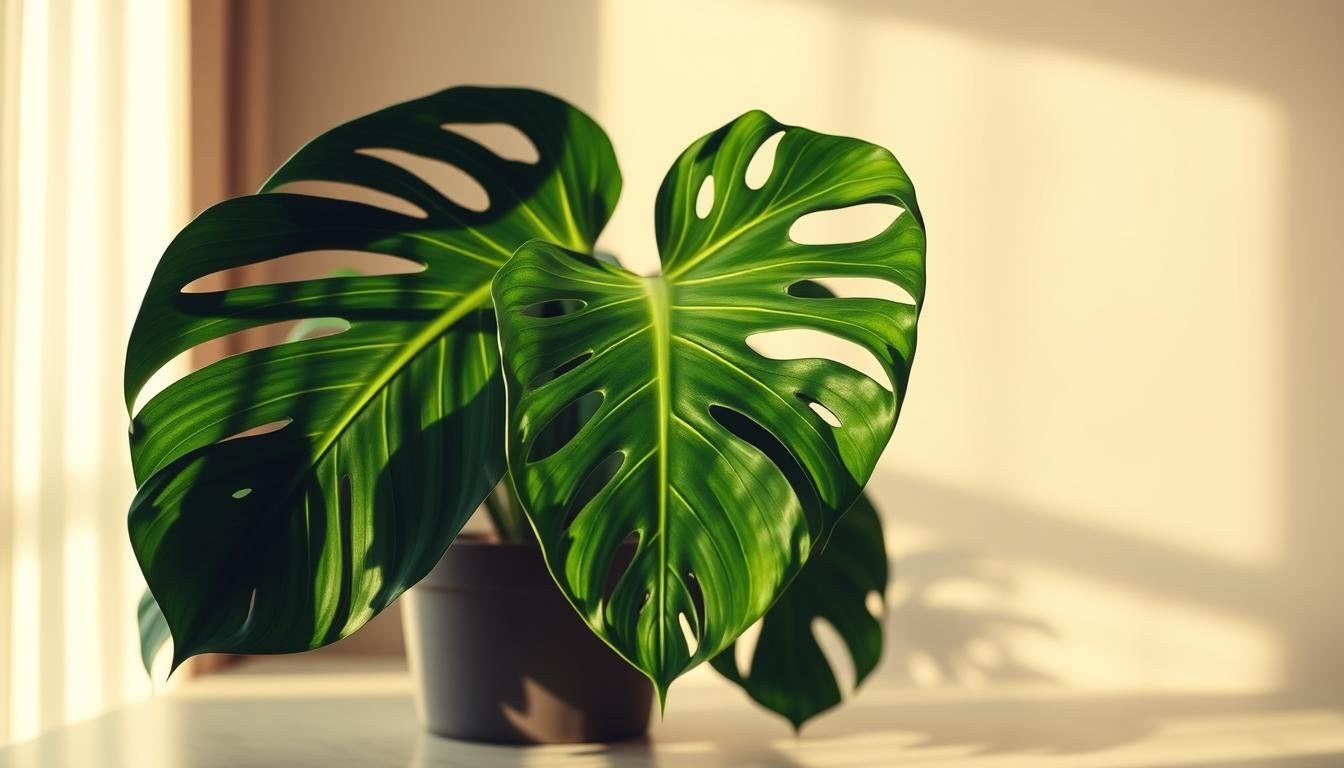
If you remember one rule, make it this: Monsteras want bright, indirect light, not harsh direct sun and not deep shade. The RHS recommends indirect light, such as near an east- or west-facing window or farther back in a brighter room, and warns that strong direct sun can scorch leaves. Missouri Botanical Garden also recommends bright indoor light with no strong direct sun. (RHS)
This is where most beginners drift off course. They hear “low light tolerant” and translate that into “happy in a dim corner.” Tolerant is not the same as thriving. In low light, your Monstera may survive, but growth slows, internodes stretch, leaves stay smaller, and fenestrations become sparse or absent. That is not the plant being dramatic. It is the plant conserving energy. (RHS)
A simple placement test works better than obsessing over direction alone. If the room is bright enough to read comfortably during the day without switching on lights, you are probably in the right zone. If direct afternoon sun hits the leaves hard for hours, move the plant back or filter that light with a sheer curtain. If the plant leans hard toward the window, starts stretching, or produces smaller new leaves, it is asking for more light. (RHS)
For homes with limited natural light, a grow light can close the gap. That does not make your home a greenhouse, but it does keep the plant from stalling. The main thing is consistency. A Monstera that gets enough usable light most days is easier to water correctly, less likely to yellow from stress, and more likely to produce mature, split foliage over time.
Watering Without Causing Root Rot
How often should you water a Monstera? Water when the top 1 to 2 inches of soil feel dry, then water thoroughly and let excess water drain away. Penn State Extension advises letting the top 1 to 2 inches dry between waterings, and Better Homes & Gardens says many indoor Monsteras land around every 1 to 2 weeks, depending on light, temperature, and humidity. (Penn State Extension)
That means the right answer is never “every Saturday.” Calendars create bad plant habits because your room conditions change. Summer growth, winter slowdown, bigger pots, smaller pots, brighter windows, dry heating, and different soil mixes all change how fast moisture disappears. The soil tells the truth. Schedules do not.
When you water, do it fully. Let water run through the pot, then empty the saucer or cache pot so the roots are not left sitting in water. RHS specifically warns against leaving the pot sitting in water because roots can rot, and overwatering is one of the most common Monstera failures across major care guides. (RHS)
The hard part is that overwatering and underwatering can both show up as yellowing or drooping leaves. That’s why soil checking matters. Wet soil plus yellow, limp leaves points toward overwatering. Bone-dry soil plus curling, wilting, or crisp edges points toward underwatering. If you diagnose from the leaves alone, you will often do the exact wrong thing.
Soil and Pot Choice That Prevents Problems
The best soil for Monstera is moisture-retentive enough to hydrate the plant, but open enough to let roots breathe. Missouri Botanical Garden recommends a peaty soil-based potting mix, and the RHS suggests a free-draining mix that can include peat-free compost plus orchid compost, while warning that poorly draining compost increases the risk of root rot. (missouribotanicalgarden.org)
In practical terms, a good Monstera mix is usually built from a standard indoor potting mix plus ingredients that improve structure, such as orchid bark and perlite. You are aiming for a chunky texture that holds some moisture but does not stay swampy. Beginners usually fail in one of two ways: they use dense, heavy soil that stays wet too long, or they overcorrect into something so coarse that the plant dries out too fast. Balance beats extremes.
The pot matters too. Use a container with drainage holes. That should not be controversial, but plenty of root-rot stories start with decorative pots that trap water at the bottom. If you love a cache pot, fine. Just keep the plant in a nursery pot inside it and empty excess water after watering. Good soil and proper drainage are not glamorous, but they quietly fix half of houseplant care.
Temperature and Humidity Basics
Monsteras like warmth and dislike abrupt stress. The RHS recommends keeping them around 18–25°C (65–77°F) and away from cold drafts and direct heat sources such as radiators. The Spruce notes that stress can show up below 60°F or above 90°F, especially when paired with other issues like dry air or watering mistakes. (RHS)
That temperature range tells you something useful: your Monstera is usually fine in normal indoor conditions, but not when it is parked next to a freezing draft, a blasting vent, or intense heat. Plants do not process stress in neat categories. A slightly dry plant in a warm, stable room often recovers easily. A slightly dry plant next to a heater with low humidity can tip into brown edges, droop, or stalled growth much faster.
Humidity gets talked about a lot because Monstera is a tropical plant, but the conversation often turns messy. Yes, the plant appreciates humid air. No, you do not need to recreate a cloud forest to keep it alive. What you need to know is when low humidity is merely “less than ideal” and when it is actively causing problems.
The Truth About Humidity Indoors
Better Homes & Gardens says Monsteras grow best around 60% to 80% humidity, while the RHS describes them as liking humid air and notes that dry indoor air can cause leaf edges to brown. That’s helpful, but it does not mean every home below that range is doomed. It means humidity becomes more important when your plant is already under other pressure, especially from strong light, heating, or inconsistent watering. (Better Homes & Gardens)
This is why misting gets overhyped. The RHS includes misting among ways to help humidity, but BHG notes that misting is not the most effective method for increasing humidity around Monsteras compared with more stable options like a humidifier or pebble tray. In real homes, brief surface moisture is not the same as meaningfully changing the room’s humidity level for hours. (RHS)
The practical playbook is simple. If your Monstera has healthy growth and no brown crisping, your humidity is probably adequate. If leaf edges keep browning and the rest of your care is sound, raise humidity with a humidifier, a tray with moist pebbles, or by grouping tropical plants together. And if you have one bright bathroom with reliable warmth and filtered light, yes, your Monstera may love it there.
Fertilizing for Strong, Steady Growth
A Monstera is not a heavy-feeding diva, but it does need nutrients once it has used up what is in the potting mix. The RHS recommends feeding with a balanced liquid fertilizer during the growing season from April to September, and The Spruce notes that nutrient deficiency can contribute to yellow leaves when a plant has been in old soil too long without fresh nutrients. (RHS)
The easiest mistake here is overdoing it. People see slow growth, assume the plant is hungry, and pour on fertilizer when the real issue is low light or soggy roots. Fertilizer cannot fix bad conditions. In fact, pushing nutrients into a stressed plant can make things worse by adding salt buildup and extra stress.
A better approach is modest and boring. Feed during active growth in spring and summer, reduce or stop during the lower-light months if the plant is not growing much, and repot into fresh mix when needed. If new leaves are consistently smaller, pale, or weak despite good light and sound watering, nutrition may be part of the puzzle. But treat fertilizer as support, not magic.
Moss Pole, Staking, and Climbing Support
Does a Monstera need a moss pole? Not always, but support usually makes the plant look better and grow more like a mature Monstera. The RHS says Swiss cheese plants are climbers that benefit from being tied onto a moist moss pole, and Missouri Botanical Garden notes they can be grown with a pole or trellis because without support they tend to sprawl horizontally. (RHS)
This matters more than people think. A Monstera grown without support often becomes awkward, wide, and top-heavy. It can still live that way, but it usually looks less controlled and less impressive. Support gives the plant a direction, helps keep it upright, and encourages its natural climbing behavior. That usually means stronger posture and, over time, more mature growth.
A moss pole is especially useful because aerial roots can anchor into it. That creates a more natural climbing setup than a slick stake or decorative hoop. You do not need a moss pole on day one for a small plant, but once your Monstera starts leaning, reaching, or producing longer stems, support shifts from optional to smart.
Why Fenestrations Happen and How to Get More
Those iconic holes and splits are called fenestrations, and they are not just a styling feature. The RHS notes that Monsteras usually show their distinctive holes once plants are a few years old, and explains that in very low light the leaves tend to have fewer holes. It also notes that climbing support often encourages larger, more mature leaves with more fenestrations. (RHS)
So if your plant is not making holes, do not panic. First, ask three questions. Is the plant still juvenile? Is it getting enough bright, indirect light? Is it climbing, or is it sprawling unsupported? In most cases, the answer is in those three factors. People often chase obscure fixes when the plant simply needs time and better conditions.
The fastest path to more dramatic leaves is not one trick. It is a stack: enough light, stable watering, real support, and patience. Mature Monsteras earn their look. They are not withholding it from you out of spite.
When and How to Repot a Monstera
Repot a Monstera when the current pot is limiting root function, not because social media says spring means repot everything. Signs include roots circling hard around the pot, roots growing from the drainage holes, soil drying out unusually fast, stalled growth, or frequent yellowing tied to a cramped root system. The Spruce notes that root-bound plants can struggle to absorb water and nutrients, which can show up as yellowing leaves. (The Spruce)
When you repot, size up gradually. A pot that is just one size larger is usually enough. Going too big is a common beginner mistake because extra soil volume holds extra moisture, and that increases the window for overwatering. Fresh mix plus a modest size increase is safer than dropping the plant into a bucket and hoping for the best.
Repotting is also the right time to inspect root health. Healthy roots are usually firm and lighter in color. If you find dark, mushy, foul-smelling roots, that points to rot. Trim what is clearly dead, refresh the mix, and correct the cause, which is usually excess water plus poor drainage or insufficient light. Repotting is not just maintenance. It is one of the best diagnostic moments you get.
Pruning, Cleaning, and Routine Maintenance
Monsteras do not need constant grooming, but basic maintenance keeps them healthier and more attractive. The RHS recommends wiping leaves regularly to remove dust, which helps them absorb daylight more efficiently, and The Spruce advises using clean, sharp tools when removing damaged foliage. (RHS)
Dusty leaves are not just ugly. They reduce the plant’s ability to make use of the light it gets. If your Monstera is already indoors, already filtered through glass, and already a few feet from the window, a thick dust layer is just another small handicap. A quick wipe with a damp cloth every so often is low effort and high return.
Pruning is mostly about shape, damage control, and size management. Remove leaves that are badly yellowed, broken, or diseased. Trim unruly growth if the plant is taking over the room. Just know the trade-off: the RHS notes that after a hard cutback, new stems often produce smaller, less mature leaves for a while. In other words, pruning helps manage the plant, but it can temporarily reset the look you were trying to build. (RHS)
How to Propagate Monstera
Monstera propagation is popular because it works, not because it is trendy. The RHS recommends taking stem cuttings from spring to late summer and rooting them in water in a bright spot before potting them up once a good root system develops. That makes water propagation one of the easiest entry points for beginners. (RHS)
The key is cutting the right piece. You need a node, which is the point on the stem where roots and new growth can emerge. A leaf without a node may stay green in water for a while, but it will not turn into a new plant. That single detail explains a lot of failed propagation attempts.
A simple propagation flow looks like this:
- Choose a healthy stem with at least one node.
- Make a clean cut below the node.
- Place the node in water with the leaf above water.
- Keep it in bright, indirect light.
- Pot it up once roots are established.
Propagation is also a good rescue move if a plant has severe root rot. If the root system is collapsing but healthy stem sections remain, cuttings can preserve the plant even when the original pot setup has failed. That is not ideal, but it is far better than watching the entire plant decline because you were reluctant to cut it.
Common Monstera Problems and Fast Diagnosis
Most Monstera issues are not mysterious. They are pattern recognition. The visible symptom matters, but context matters more. Yellow leaves in low light with wet soil mean something different from yellow leaves on an old bottom leaf of an otherwise vigorous plant. Brown edges in a dry room tell a different story than brown patches on leaves blasted by afternoon sun.
This is why random fixes fail. People respond to one symptom with one solution, even though the same symptom can come from opposite causes. A better strategy is to work backward from conditions: light, soil moisture, drainage, temperature, humidity, roots, and pests. Once you do that, most “plant drama” turns into a solvable checklist.
Yellow Leaves
Why are Monstera leaves turning yellow? The most common causes are overwatering, light stress, low humidity, nutrient depletion, and root crowding, though an occasional older yellow leaf can be normal aging. That pattern is consistent across current guidance from The Spruce and other care references. (The Spruce)
Start with the simplest distinction: one old lower leaf yellowing now and then is usually not a crisis. Several yellow leaves at once, especially if they are soft or paired with limp stems, usually mean something in the care setup is off. Overwatering is the first suspect because it is so common and because soggy roots quickly stop functioning well. That shows up above the soil as yellowing and decline.
If the soil is wet, stop watering and reassess drainage, light, and pot size. If the soil is dry and the plant looks limp or crispy-edged, you may be underwatering instead. If moisture seems reasonable, check for low light, nutrient issues, or a potbound root mass. Yellow leaves are not a diagnosis. They are a clue.
Brown Edges, Curling, and Drooping
Brown edges usually point toward dry air, underwatering, or occasionally too much direct sun. The RHS notes that dry air can lead to browning leaf edges, and The Spruce adds that strong direct sunlight can scorch leaves while inadequate moisture can create brown, crispy margins. (RHS)
Curling often shows up when the plant is too dry, stressed, or unable to move water efficiently. Drooping is trickier because both under- and overwatering can cause it. That is why touching the soil matters more than staring at the leaves and guessing. Dry soil plus droop usually means drink. Wet soil plus droop usually means trouble.
There is also a timing clue. If the plant perks up quickly after watering, you were probably too dry. If it stays limp in wet soil, the roots may be stressed or rotting. This is one of those moments where patience helps. Do not stack interventions all at once. Diagnose, correct the likely cause, and give the plant time to respond.
Pests and Root Disease
Monsteras are not the most pest-prone houseplants on earth, but they are not immune. Missouri Botanical Garden lists aphids, mealybugs, thrips, scale, and spider mites among the pests to watch for, and the RHS specifically mentions mealybugs as a common issue. (missouribotanicalgarden.org)
The sooner you catch pests, the easier the fix. Look under leaves, along stems, and near new growth. Sticky residue, stippling, distorted leaves, cottony clumps, or visible crawling insects all justify a closer inspection. Isolate the plant if needed, wipe leaves, and use an appropriate treatment before the problem scales.
Root disease is less visible but often more destructive. Overwatering and waterlogged compost can cause root rot and eventual collapse, according to the RHS and Penn State Extension. If the plant is declining in wet soil, smells sour, and has mushy roots, stop thinking “maybe it just needs fertilizer.” It needs a root-level reset. (RHS)
Monstera and Pet Safety
Monstera deliciosa is toxic to cats and dogs if ingested. The ASPCA lists Swiss cheese plant as toxic to both, with insoluble calcium oxalates as the toxic principle. Reported signs include oral irritation, burning of the mouth, drooling, vomiting, and difficulty swallowing. (ASPCA)
That does not mean having a Monstera automatically makes your home unsafe. It means you should be realistic about your pets. Some animals ignore houseplants for years. Others treat every leaf like a snack on day one. If your pet chews plants, placement matters. Put the Monstera out of reach, choose a different plant, or accept that plant safety needs to drive the decision.
If you suspect ingestion, do not wait to “see what happens.” The ASPCA advises contacting poison control or your veterinarian promptly. Fast action is the smart move because mouth irritation and gastrointestinal symptoms can escalate stress quickly for the animal. (ASPCA)
Conclusion
Monstera care gets easier the moment you stop treating it like a mystery plant. It wants what a tropical climbing aroid usually wants: bright, indirect light, warm stable conditions, good drainage, watering based on soil dryness, and support as it matures. Get those right and most of the popular problems either disappear or become much easier to correct. (RHS)
The bigger lesson is this: do not chase symptoms before you check the setup. Yellow leaves, droop, slow growth, no fenestrations, and brown edges usually trace back to a few core variables. Fix the environment, not just the visible damage. That is how you grow a Monstera that looks strong, architectural, and unmistakably healthy instead of one that keeps surviving in spite of you.
If you want the shortest version possible, here it is. Put it in bright indirect light. Use airy soil in a pot with drainage. Water when the top inch or two dries out. Keep it warm. Give it something to climb. That is Monstera care 101.
FAQs
How do you care for a Monstera for beginners?
Start with the basics that matter most: bright indirect light, a pot with drainage, chunky well-draining soil, and watering only when the top 1 to 2 inches of soil are dry. Keep it warm, avoid intense direct sun, and do not leave water sitting in the saucer. That core routine matches the main advice from RHS, Missouri Botanical Garden, and Penn State Extension. (RHS)
How often should I water my Monstera?
Usually every 1 to 2 weeks indoors is a reasonable ballpark, but the real rule is to check the soil first. Penn State Extension recommends letting the top 1 to 2 inches dry out between waterings, and BHG notes that environment changes the pace. More light and warmth usually mean faster drying. Less light and cooler conditions slow it down. (Penn State Extension)
Why is my Monstera not getting holes?
The most common reasons are immaturity, insufficient light, and lack of climbing support. The RHS notes that holes tend to appear as the plant matures, that very low light leads to fewer holes, and that climbing support often encourages larger, more mature leaves. So the fix is usually better conditions and time, not a special product. (RHS)
Does a Monstera really need a moss pole?
Need is too strong for a small or young plant, but a moss pole usually improves growth habit and appearance. Monsteras are climbers, and both RHS and Missouri Botanical Garden note the benefits of support. A pole helps keep the plant upright, gives aerial roots something to anchor to, and can encourage more mature foliage over time. (RHS)
Is Monstera safe for cats and dogs?
No. The ASPCA lists Monstera deliciosa as toxic to both cats and dogs. If chewed or ingested, it can cause oral irritation, drooling, vomiting, and difficulty swallowing. If you live with a pet that bites plants, placement or plant choice should be part of your care plan from the start. (ASPCA)