A pebble tray is one of the cheapest ways to give humidity-loving houseplants a little extra support without buying new gear. You do not need a designer tray, specialty stones, or a complicated setup. You need a shallow waterproof tray, some clean pebbles, and enough water to evaporate below the pot instead of soaking it. That simplicity is exactly why beginners like it: low cost, low risk, and easy to build in a few minutes. Current plant-care sources consistently describe pebble trays as an affordable DIY method for adding a bit of localized humidity around indoor plants. (The Spruce)
What makes pebble trays worth discussing is not that they are magical. They are not. The useful question is whether a modest humidity boost is enough for your plant, your room, and your budget. In many homes, especially during winter heating or air-conditioned dry spells, indoor air drops below the humidity range that many common houseplants prefer. University extension guidance says most houseplants do best around 40% to 60% relative humidity, while some tropical plants prefer even more. (Extension | University of New Hampshire)
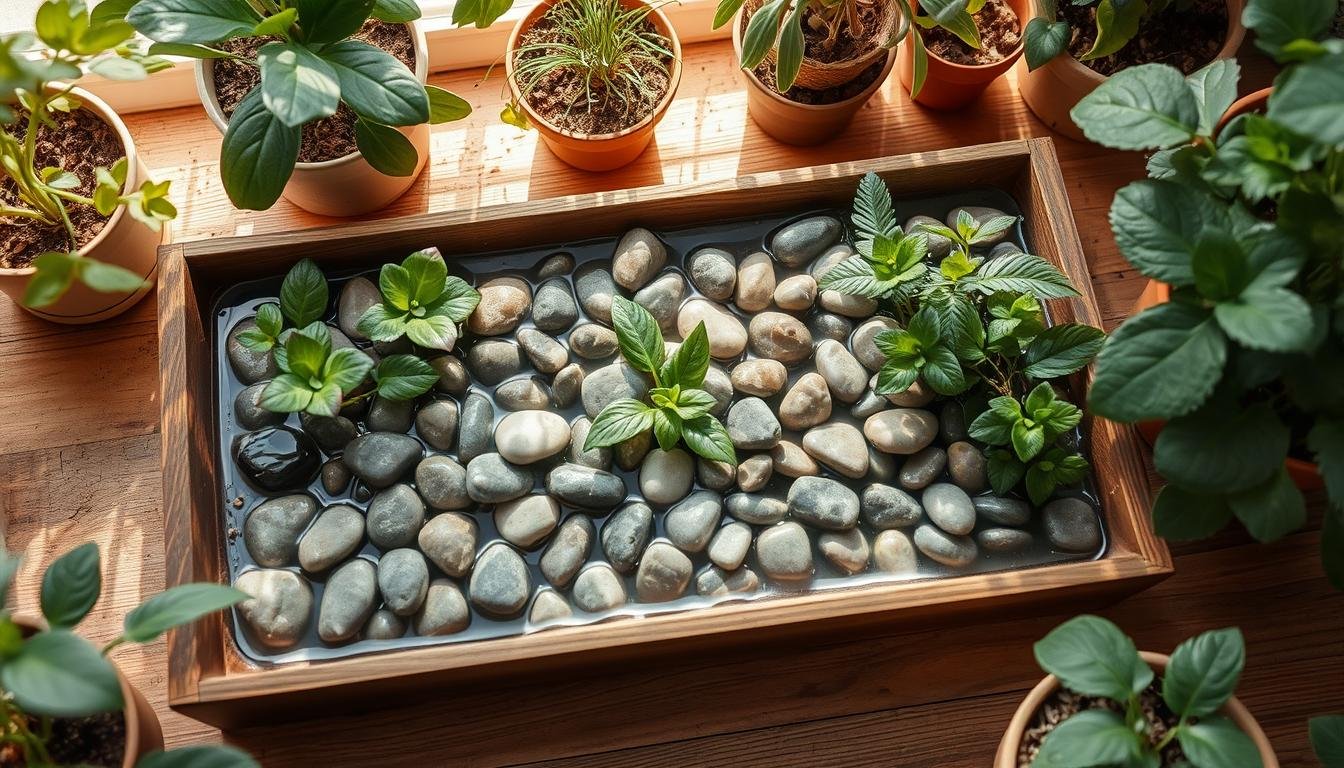
Table of Contents
What a Pebble Tray Is
A pebble tray is a shallow tray or saucer filled with pebbles and a small amount of water, with the plant pot resting on top of the stones rather than in the water. As the water evaporates, it adds moisture to the air immediately around the plant. Missouri Botanical Garden describes the method in almost exactly those terms, noting that the tray is lined with pebbles and filled with water just below the pebble surface so the surrounding air gets a humidity lift. (Missouri Botanical Garden)
That definition matters because beginners often confuse a pebble tray with a drainage saucer full of runoff. They are not the same thing. A drainage saucer catches extra water after watering and should not become permanent standing water under a pot. A pebble tray is a deliberate humidity setup where the pot is elevated above the waterline, which keeps roots from sitting in water while still allowing evaporation to happen. (The Spruce)
How It Raises Humidity
The mechanism is basic: evaporation. Water in the tray slowly turns into vapor, and that creates a slightly more humid pocket of air around the nearby foliage. Extension sources from UNH and Nebraska both support that explanation, noting that pebble trays can help by adding some moisture to the air around the plant. (Extension | University of New Hampshire)
The key word is local. A pebble tray is not changing the humidity of your whole apartment. It is creating a small microclimate close to the plant, especially if the tray is wide enough, the room is not overly drafty, and the plant is part of a grouped display. That makes pebble trays most useful for small to medium plants or clusters of humidity-lovers on a shelf, not for trying to fix an entire dry room. (Extension | University of New Hampshire)
Where It Helps and Where It Doesn’t
This is where most articles get sloppy. A pebble tray can help a little, and sometimes a little is enough. If your plant only needs a nudge, not a tropical cloud forest, a tray can reduce stress at the margins. That is why it shows up repeatedly in mainstream plant-care guidance for ferns, prayer plants, and other foliage plants that hate bone-dry indoor air. (RHS)
What it does not do is replace a humidifier when humidity is seriously low. UNH Extension says a portable humidifier near the plants provides the most benefit, while pebble trays help only a little. That is the honest frame beginners need. If your room sits well below 30% humidity in winter, a tray alone may not be enough for demanding plants like calatheas or delicate ferns. (Extension | University of New Hampshire)
Which Plants Benefit Most
The best candidates are humidity-loving tropical houseplants. That includes many ferns, calatheas, prayer plants, philodendrons, monsteras, orchids, and stromanthes. Current gardening and horticultural sources consistently tie these plant groups to higher humidity needs, and some RHS plant care guidance specifically recommends using a pebble tray to increase ambient humidity for humidity-sensitive houseplants. (RHS)
Succulents and cacti are a different story. They generally prefer drier air and better airflow, so adding humidity around them is usually unnecessary. A beginner mistake is assuming every houseplant wants the same treatment. It does not. A pebble tray is a targeted fix for plants that show stress in dry indoor conditions, not a universal accessory for every pot in the house. (The Spruce)
Signs Your Plant Needs Extra Humidity
Plants do not send polite notices, but they do give clues. The most common signs are brown or crispy leaf tips, browning edges, curling leaves, and foliage that looks dry even when watering is reasonably consistent. Multiple current plant-care sources list these as common signals that the air may be too dry around the plant. (The Spruce)
You still need judgment here. Brown tips can also come from underwatering, hard water buildup, fertilizer burn, direct sun, or inconsistent care. A pebble tray is useful when dry air is part of the problem, not when the real issue is soggy roots, poor drainage, or bad light. That is why using a hygrometer is smarter than guessing. The Spruce explicitly recommends checking humidity with a meter to see whether the tray is making a measurable difference. (The Spruce)
Materials and Cost
This project is cheap because the materials are basic and flexible. You need a waterproof tray or saucer, clean pebbles or small stones, and water. That is it. Several live how-to sources describe the same minimal materials list, which is part of the reason pebble trays stay popular with beginners. (The Spruce)
If you buy everything new, the cost is still low for a single tray. If you already have a spare saucer and can use washed stones from around the house or garden, the cost drops even further. Just be selective. The tray needs to hold water without leaking or wicking onto furniture, and the stones need to be clean enough that you are not bringing dirt, salts, or pests indoors. A free setup is great; a moldy, messy one is not.
Cheapest Setup That Still Works
The cheapest version that still works well looks like this: a plastic plant saucer, a handful of washed gravel or decorative pebbles, and tap water. You do not need marble chips, designer glass pebbles, or premium trays sold as “humidity stations.” A budget setup works because the function is simple: keep the pot raised above shallow water and let evaporation do its job. (Pistils Nursery)
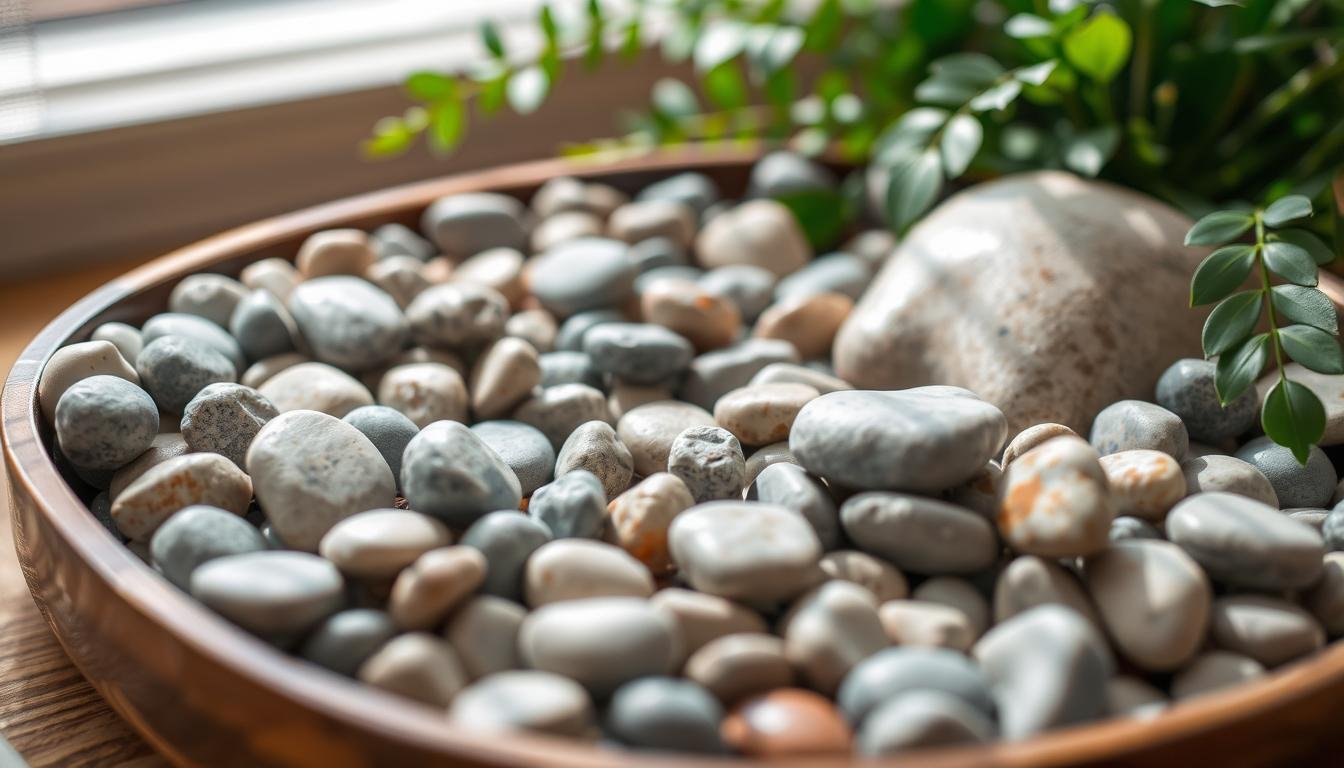
If you want a slightly better version without spending much more, choose a tray a bit wider than the pot and use medium-sized pebbles or LECA/clay pebbles. Recent sources note that clay pebbles are porous and can release moisture more gradually, which can be useful if you want a cleaner, lighter option. Still, regular pebbles are perfectly fine for beginners. Spend on a hygrometer before you spend on fancy stones. (Homes and Gardens)
How to Make a Pebble Tray
The build itself is easy. The part that matters is doing it in a way that helps humidity without creating standing-water problems. That means thinking about tray width, pot height, and water level from the start, not after the leaves start yellowing.
A good tray is broad enough to extend beyond the pot base and stable enough that the plant is not wobbling on top. Some current guides advise choosing a tray at least slightly wider than the pot, and wider trays tend to create a better evaporation zone because there is more exposed water surface. (The Spruce)
Step-by-Step DIY Instructions
- Pick a waterproof tray or saucer that is wider than your pot.
- Add a layer of clean pebbles thick enough to keep the pot base raised.
- Pour in water until it sits below the top of the pebbles.
- Place the plant pot on top and make sure it is stable.
- Check that the pot bottom is not touching the water.
- Put the tray where the plant already gets the right light and airflow.
- Refill the tray as the water evaporates. (The Spruce)
That is the basic method, and it takes only a few minutes. If you are setting up more than one plant, you can make a wider group tray instead of several tiny ones. Grouping plants together can help create a more humid microclimate, and UNH Extension specifically notes that plant grouping can boost humidity around them. A larger shared tray also cuts down on clutter and makes refilling easier. (Extension | University of New Hampshire)
The Water-Level Rule That Prevents Root Rot
This is the non-negotiable rule: the pot should sit on pebbles, not in water. If the base of the pot stays in standing water, you are no longer running a humidity tray. You are creating wet feet, and wet feet are an open invitation to root rot. Multiple current plant-care sources warn about overfilling trays for exactly this reason. (treleaf)
It gets worse if the pot has no drainage holes or if you leave runoff sitting in a saucer after watering. Recent gardening guidance continues to emphasize that standing water under a pot can contribute to root problems, while a separate piece on planter myths notes that rocks do not magically fix drainage issues. Good drainage starts with the pot and soil, not with wishful thinking. (The Spruce)
How to Use, Clean, and Maintain It
A pebble tray is low maintenance, not no maintenance. Water evaporates, dust falls, algae can build up, and mineral residue can collect over time. So the tray needs quick, basic upkeep. In dry conditions you may top it up every few days; in milder conditions it may last longer. Recent plant-care sources recommend refilling as water evaporates and checking levels more often during hot or dry indoor periods. (treleaf)
Placement matters too. Put the tray where it supports the plant’s actual care needs. That means correct light first, humidity help second. Do not shove a fern into a dark corner just because the tray looks nice there. Also avoid placing the setup where direct heat vents, strong fans, or intense drafts will strip away moisture as fast as the tray creates it. The goal is a stable microclimate, not a decorative science experiment losing to your HVAC system.
Cleaning is simple but worth doing. Every couple of weeks, empty the tray, rinse the pebbles, wipe out any residue, and refill with fresh water. If you see algae or slime, clean more often. This is not just about appearance. Cleaner trays reduce odor, reduce buildup, and make it easier to monitor water level accurately. Beginners often skip this because the tray looks harmless. Then it turns into a dusty mineral bath under the plant.
If you want to be more precise, use a small hygrometer nearby for a week before and after adding the tray. That gives you real feedback instead of hopeful guessing. The Spruce specifically suggests using a humidity meter to record the effect of a pebble tray, and that is excellent advice because the usefulness of the tray depends on your room conditions, pot size, tray width, and airflow. (The Spruce)
Pebble Tray vs Humidifier vs Misting
A pebble tray is the best fit when you want a cheap, quiet, low-effort humidity boost for a small setup. It is passive, easy to build, and gentle. That makes it a smart entry-level option. It is also visually unobtrusive, especially if you already use saucers or decorative trays around your plants. For many beginners, that matters because the best plant-care habit is the one you will actually keep doing.
A humidifier is better when the air is genuinely too dry or the plant is demanding. UNH Extension says portable humidifiers provide the most benefit, while pebble trays help only a little. If your hygrometer says the room is consistently far below the 40% to 60% range many houseplants prefer, or if you are trying to keep humidity-sensitive plants thriving through dry winter air, the humidifier is the stronger tool. (Extension | University of New Hampshire)
Misting sits in an awkward middle ground. It can give a brief leaf-surface moisture bump, but it is often short-lived and inconsistent. Some plant-care guides still mention misting, but many growers prefer trays, grouping, or humidifiers because they create a steadier environment. If you want beginner-friendly consistency, a pebble tray beats random spritzing. If you want serious humidity control, a humidifier beats both.
The honest ranking is simple. For budget and simplicity, go with the pebble tray. For measurable room-level humidity control, choose the humidifier. For beginners who already overwater, do not use misting as an excuse to ignore the real issue. Dry leaf tips are not always a call for a spray bottle.
Conclusion
A budget-friendly pebble tray DIY for beginners is worth doing because it is cheap, fast, and genuinely useful in the right situation. It can add a modest pocket of humidity around a plant, help reduce dry-air stress, and give you a beginner-friendly way to support ferns, calatheas, prayer plants, orchids, and other tropical houseplants. Reputable plant-care and extension sources back the basic method, and they also agree on its limit: it is a small assist, not a whole-room solution. (Missouri Botanical Garden)
That limit is not a weakness if you use the tray for what it is. Build it cheaply, keep the water below the pot, clean it regularly, and use a hygrometer if you want proof that it is helping. If your room is extremely dry or your plant is unusually humidity-hungry, move up to a humidifier. But for a beginner who wants an easy, low-cost, low-commitment humidity boost, a pebble tray is still one of the smartest plant-care DIYs you can make.
FAQs
Do pebble trays really work?
Yes, pebble trays can work, but the effect is usually modest and local rather than dramatic and room-wide. Extension and plant-care sources support the idea that evaporation from the tray can raise humidity around the plant, but UNH Extension also notes that humidifiers provide more benefit when stronger humidity support is needed. In practice, pebble trays are best for giving a small boost to nearby foliage, especially in a plant cluster or on a shelf. They are most useful when your plant needs a little help, not a tropical greenhouse. (Extension | University of New Hampshire)
What kind of pebbles should I use?
Use clean, medium-sized pebbles or small stones that keep the pot base elevated and stable. Decorative gravel, river pebbles, and clay pebbles can all work. Clay pebbles may release moisture a bit more gradually because they are porous, but regular washed pebbles are fine for a beginner setup. The important part is not luxury; it is cleanliness, stability, and enough height to keep the pot from touching the water. (Homes and Gardens)
How often should I refill the tray?
Refill it whenever the water has mostly or fully evaporated, which may mean every few days in dry indoor conditions and less often in milder conditions. Recent sources note that topping up becomes more frequent in hotter, drier periods, especially during winter heating. The best routine is simple: glance at the tray during your normal plant check and add a little water as needed. Consistency matters more than a rigid schedule because evaporation changes with room temperature, airflow, and tray size. (The Spruce)
Can I use one tray for multiple plants?
Yes, you can use one wider tray for multiple small plants, and that can actually improve the microclimate around them. Grouping plants is already a recognized way to increase local humidity, so combining grouping with a shared pebble tray can make practical sense. The tray just needs to be stable, waterproof, and wide enough that the pots are not crowded or sitting unevenly. This works especially well for small tropical plants with similar light and watering needs. (Extension | University of New Hampshire)
Should the pot touch the water?
No. The pot should never sit directly in the water. It should sit on top of the pebbles, with the waterline below the base of the pot. That separation is what allows evaporation to help humidity without creating constant saturation at the root zone. Current plant-care guidance repeatedly warns that overfilled trays can lead to root rot if the roots or pot base stay in standing water. (Pistils Nursery)