Table of Contents
What a Pebble Tray Is
A pebble tray is a shallow waterproof tray filled with pebbles and a small amount of water, placed under or near a plant to create a more humid pocket of air as the water evaporates. The idea is simple: the stones lift the pot so the roots are not sitting in water, while the exposed water surface slowly adds moisture to the air around the plant. Extension sources and the Royal Horticultural Society both treat pebble trays as one of several ways to raise humidity around indoor plants, especially when winter heating dries the air out. (University of Maryland Extension)
That last part matters. A pebble tray is not a watering method, and it is not a drainage hack. It is a local humidity tool. When people get poor results, it is usually because they use a tray that is too small, let the pot sit in the water, or expect the tray to change the humidity of an entire room. The right setup is less glamorous than the social-media version, but it works better.
Does a Pebble Tray Actually Work?
Yes, but the honest answer is not dramatically. University and extension guidance consistently describes pebble trays as a method that can raise humidity around plants, while also making clear that humidifiers provide stronger, more reliable control. Penn State and UNH both frame trays as a modest helper, not a miracle fix, and current horticulture commentary says they work best for small, low-growing, humidity-loving plants rather than large specimens in open rooms. (Extension | University of New Hampshire)
That is the right way to think about them: a pebble tray creates a small microclimate, not a rainforest. If your room is extremely dry, if the plant is large, or if the air moves quickly because of fans, HVAC vents, or open space, the extra moisture disperses fast. A tray can still help at the margins, especially with plants that respond to small humidity changes, but you should not expect it to rescue a demanding tropical plant in a bone-dry room on its own. (Extension | University of New Hampshire)
What It Can Realistically Do
A pebble tray is best viewed as a low-cost, low-risk humidity boost. Many houseplants prefer around 40% to 60% relative humidity, while tropical species often like even more. Iowa State, UNH, and other extension sources note that indoor winter air can fall to 10% to 20% in some homes, which is why leaf edges turn brown, tips crisp up, and humidity-loving plants stall out. In that context, even a modest local increase can reduce stress. (Extension | University of New Hampshire)
That makes pebble trays useful for plants that are already close to happy and just need a bit of help. They are especially handy when you do not want to run a humidifier all day, when you only have one or two small plants to support, or when you want a passive method that does not require electricity. Think of the tray as a nudge, not a full environmental control system.
When a Humidifier Is Better
If your hygrometer shows that the room is consistently dry, a humidifier is the stronger tool. UNH recommends pairing humidity control with a digital thermometer and hygrometer so you can actually see what is changing, and Penn State notes that bathrooms or grouped plants may help in some cases, but not always enough. A humidifier is the better choice for larger plants, collections of tropicals, heated rooms in winter, or any setup where you need steady, measurable humidity. (Extension | University of New Hampshire)
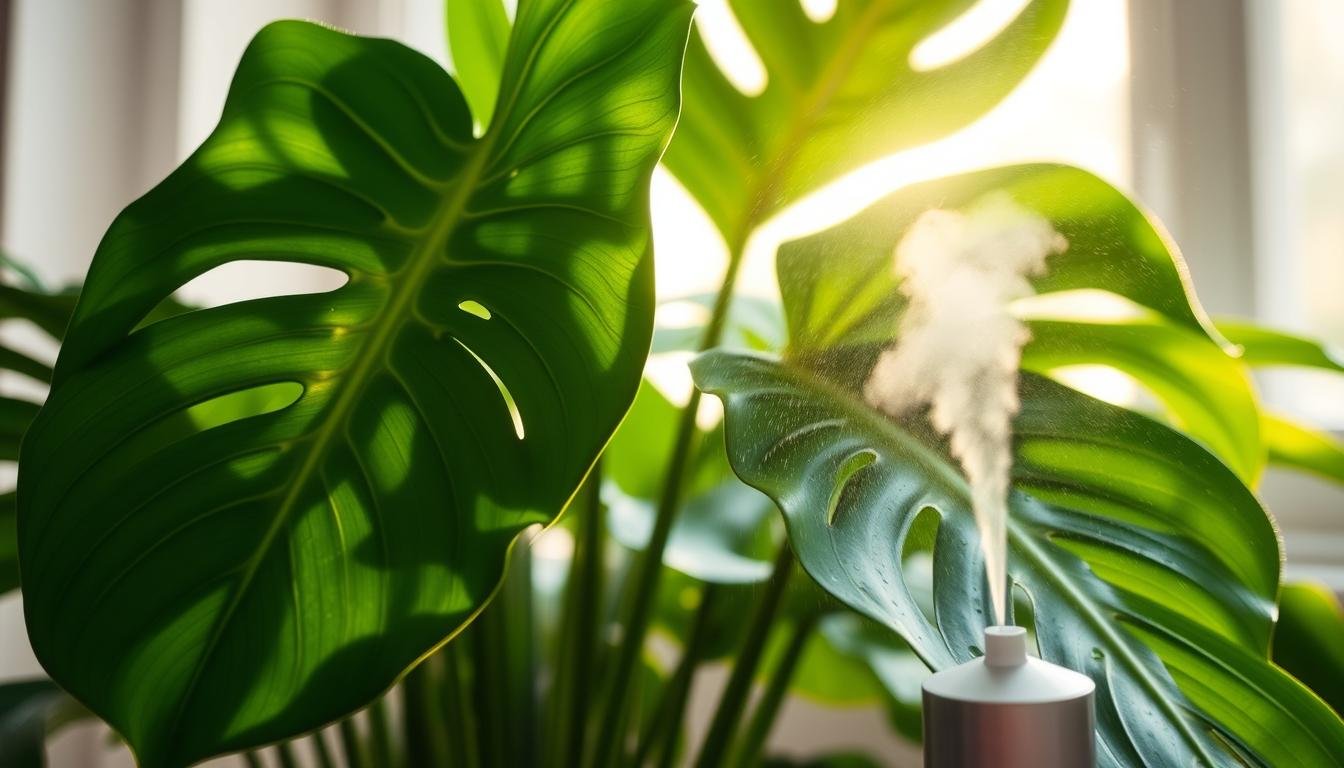
This is also where many articles undersell the difference. A pebble tray affects the immediate area around the plant. A humidifier changes the environment more consistently over time. If your calathea is browning despite a tray, the problem is not that you “set it up wrong” by one millimeter. It may just be the wrong tool for the level of dryness you are dealing with.
Which Plants Benefit Most
The best candidates are small to medium tropical houseplants that appreciate moderate to high humidity but do not absolutely require greenhouse conditions. Good examples include ferns, fittonia, maranta, calathea, peace lilies, some philodendrons, anthuriums, and certain orchids. Current horticulture guidance also points to smaller, low-growing plants as the best match because the evaporating moisture stays closer to the foliage zone. (Better Homes & Gardens)
Plants that usually do not need pebble trays include cacti, succulents, and other species adapted to drier air. Extension sources repeatedly distinguish these from humidity-loving tropicals. That distinction matters because people often throw every houseplant onto the same tray and assume more humidity is always better. It is not. Some plants simply do fine in average household air, and a tray adds complexity without solving a real problem. (Extension | University of New Hampshire)
Signs Your Plant Needs More Humidity
Low humidity usually shows up in the leaves first. The classic signs are brown tips, crispy edges, slight curling, dull-looking foliage, and leaves that seem to dry out faster than the soil situation alone would explain. These signs are common in winter, when indoor air dries out from heating. Extension guidance also warns that humidity stress gets worse near heat vents, radiators, or drafty windows where the air is unstable. (Extension | University of New Hampshire)
Still, dry leaf tips do not automatically mean humidity is the problem. They can also come from inconsistent watering, excess fertilizer salts, poor-quality water, root problems, or pests. That is why a pebble tray should follow observation, not superstition. If the soil stays soggy, fungus gnats are active, or the plant is in a dark corner, adding humidity may be treating the symptom while ignoring the cause.
What You Need Before You Start
You do not need much, but the details matter. You need a waterproof shallow tray or saucer, enough clean pebbles, gravel, or LECA to create a raised surface, and clean water. The tray should be stable, wide enough to hold the pot securely, and deep enough that you can add water without the pot base touching it. Illinois Extension and Iowa State both stress the same core rule: the bottom of the pot must stay above the water line. (Illinois Extension)
A digital hygrometer is optional, but it turns guesswork into evidence. If you are serious about dialing in humidity, measure the room before and after setup. UNH explicitly recommends using one with a humidifier, and the same logic applies here: if you cannot measure the air, you cannot tell whether the tray is making a meaningful difference. (Extension | University of New Hampshire)
Choosing the Right Tray, Stones, and Pot
Pick a tray that is wider than the plant’s nursery pot, not barely the same size. A bigger surface area means more evaporation and better stability. Use inert materials like washed pebbles, pea gravel, river stones, or LECA. You are not looking for decorative perfection. You are creating a platform that keeps the pot elevated while leaving pockets for water below. Recent horticulture commentary also notes that wider trays tend to work better than tiny saucers because they expose more water surface to the air. (Better Homes & Gardens)
Use a pot with a drainage hole if possible. That is not strictly about the tray itself; it is about overall root health. A pebble tray cannot compensate for a bad container setup. If the plant already sits in a decorative cachepot with trapped moisture, adding a humidity tray under it may confuse the issue and make overwatering harder to spot.
How to Set Up a Pebble Tray the Right Way
Start by washing the tray and stones. That removes dust, algae residue, and anything that will turn the water slimy faster. Add enough pebbles to make a stable layer, usually around 1 to 2 inches deep depending on pot size and tray depth. Then pour in water slowly until the level sits below the top of the pebbles and, more importantly, below the base of the pot once the plant is placed on top. That is the whole game. The water should evaporate into the air, not wick straight into the pot. (University of Maryland Extension)
After that, place the pot on the pebbles and check it from the side. If the drainage holes or pot base are touching water, remove some water or add more pebbles. Refill as the tray dries out, but do not top it off mindlessly. A pebble tray works because it creates evaporation from an exposed shallow reservoir. It stops being a humidity tool the moment it turns into standing water against the pot.
A simple version of the setup looks like this:
- Choose a wide, shallow, waterproof tray.
- Add a stable layer of washed pebbles or gravel.
- Pour water in until it sits below the pot base.
- Set the pot on top and confirm the pot is not sitting in water.
- Refill and clean the tray regularly.
That is the correct setup. Anything more complicated is usually unnecessary.
Placement, Spacing, and Grouping
Put the tray where the plant already has the right light and temperature. Do not move a plant into poor light just to sit it on a tray. Avoid blasting heat vents, strong fans, and locations with constant drafts because moving air strips away the small humid pocket the tray is trying to create. Oklahoma State and NC State both point out how dry heated air and drafts stress houseplants, especially in winter. (extension.okstate.edu)
Grouping plants can help. Iowa State and Maryland both recommend clustering houseplants because their combined transpiration slightly raises local humidity. That means a pebble tray often works better as part of a small plant zone than as a lone accessory under one plant in the middle of a large room. If you have three small tropicals on a shelf, a wide tray under the group or several trays within the cluster is usually smarter than treating each plant as a separate island. (Yard and Garden)
Maintenance That Keeps It Working
A pebble tray is low maintenance, but not no maintenance. Refill it when the water level drops, especially during dry weather or heating season when evaporation speeds up. At the same time, dump and refresh stale water instead of just topping it off forever. Fresh water helps reduce mineral crust, slime, and smell, and it gives you a chance to confirm the pot is still staying above the water line. Current gardening guidance and extension sources all point in the same direction here: trays need periodic attention to stay useful. (Better Homes & Gardens)
Clean the tray and stones regularly. If you notice algae film, mineral buildup, or cloudy water, you waited too long. Maryland notes that algae and fungal growth are encouraged by moisture and poor air movement, and Penn State and Wisconsin both connect overly wet conditions with fungus gnat problems. You do not need a sterilized lab setup, but you do need basic hygiene: rinse the stones, wash the tray, and do not let stale water become a permanent habitat. (University of Maryland Extension)
This is also where a hygrometer earns its place. If your tray is clean and correctly set up but the surrounding air still sits too low for the plant, the reading will tell you quickly. That saves you from overcommitting to a method that is only helping marginally.
Common Mistakes That Ruin Pebble Trays
The biggest mistake is letting the pot sit directly in water. Extension guidance is blunt on this because the consequence is obvious: roots stay too wet, oxygen drops, and the plant becomes more vulnerable to decline. A pebble tray is supposed to create humidity around the plant, not turn the root zone into a swamp. (Illinois Extension)
The second mistake is using a tray that is too small. Tiny saucers under large plants do not expose much water surface, so the humidity effect is weak from the start. The third mistake is using pebble trays for the wrong plants. Succulents, cacti, and many hardy foliage plants do not need the extra humidity and may be better served by better light, smarter watering, or nothing at all. (Better Homes & Gardens)
Another common error is trying to solve every brown tip with humidity. If the plant has fertilizer burn, inconsistent watering, poor roots, or pests, a tray will not fix the underlying issue. Low humidity is one possible cause, not the default answer. The same goes for misting: extension guidance says its benefits are questionable as a humidity strategy, and for some plants it can create leaf issues if done poorly or late in the day. (University of Maryland Extension)
Finally, do not ignore the pest angle. Fungus gnats are associated far more strongly with overwatered potting mix than with pebble trays alone, but any chronic moisture source plus stagnant conditions can make your plant area less pleasant. If you already have gnats, your first move should be to correct watering and let the growing medium dry appropriately between waterings, not keep adding wet surfaces everywhere. (Wisconsin Horticulture)
Conclusion
The right way to use a pebble tray is simple: use a wide waterproof tray, add clean pebbles, keep the water level below the pot base, place it where the plant already gets the right light, and maintain it like a real part of your plant setup instead of an afterthought. Done properly, a pebble tray can provide a small, steady humidity boost for the right kinds of houseplants, especially smaller tropicals dealing with dry indoor air. (University of Maryland Extension)
What it cannot do is just as important. It will not replace a humidifier for demanding plants in very dry rooms, and it will not fix bad watering, poor light, or root problems. If you treat it as a targeted tool rather than a cure-all, it earns its place. That is really the whole secret: not bigger claims, just better setup and better expectations. (Extension | University of New Hampshire)
FAQs
Can a pebble tray replace a humidifier?
Usually, no. A pebble tray can create a modest humidity increase right around the plant, but a humidifier gives far more consistent and measurable humidity control for larger plants, bigger collections, or very dry rooms. If your room stays dry through winter heating, a humidifier is the more reliable solution. (Extension | University of New Hampshire)
How much water should I put in a pebble tray?
Add enough water to sit below the top of the pebbles and below the base of the pot. The pot should rest on the stones, not in the water. If the pot touches water, the setup is wrong and you increase the risk of overwatering and root issues. (Illinois Extension)
Which houseplants benefit most from a pebble tray?
Small, humidity-loving tropicals tend to benefit the most, including ferns, fittonia, maranta, calathea, peace lilies, some orchids, and compact philodendrons. Cacti and succulents usually do not need this extra humidity. (Better Homes & Gardens)
Can pebble trays attract fungus gnats?
A pebble tray is not usually the main cause of fungus gnats; overwatered potting soil is the bigger driver. That said, dirty standing water and stagnant plant areas do not help. Keep the tray clean, refresh the water, and let the potting mix dry appropriately between waterings to reduce the risk. (Wisconsin Horticulture)
Is a pebble tray better than misting?
For sustained humidity, generally yes. Extension guidance questions how much misting really raises humidity, while pebble trays provide passive evaporation over a longer stretch. Still, both methods are limited compared with a humidifier, so the better choice depends on how much humidity your plant actually needs. (University of Maryland Extension)