The 5 Best Mold Removers for Quick Clean-Ups
Compare five mold removers by surface, formula, dwell time, and limitations—plus the safety steps that keep a small cleanup from becoming a bigger problem.
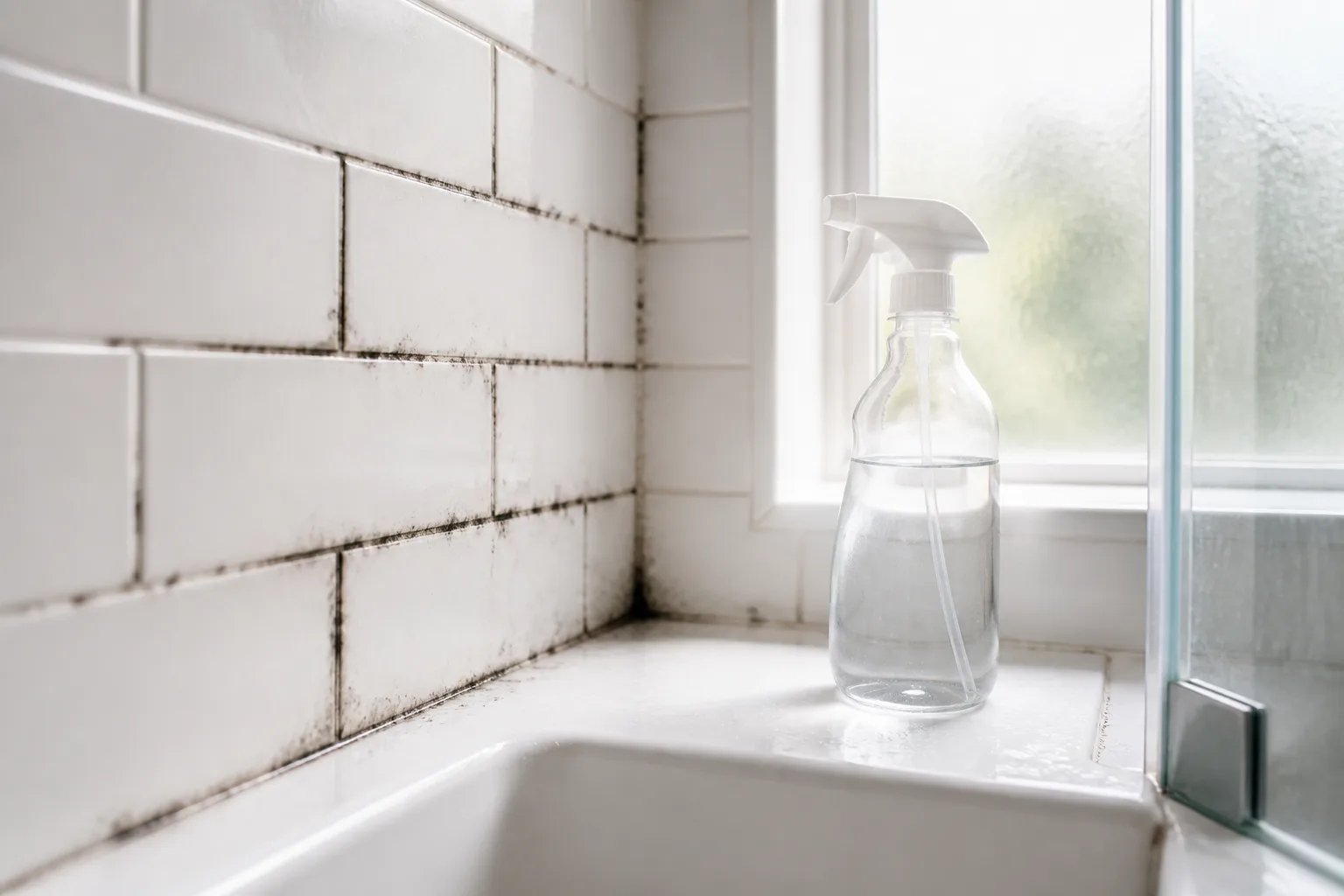
The best mold remover depends less on the darkest-looking spot than on what the spot is growing on. A bleach spray can be a sensible choice for a small patch on sealed white tile; it can be a poor choice for moldy drywall, unfinished wood, carpet padding, or a wall cavity.
This guide is for small, visible growth on a cleanable household surface. It is not a recipe for opening a wall, cleaning an HVAC system, or treating a flood-damaged room. The EPA recommends professional help when the moldy area is larger than about 10 square feet, and size is not the only trigger: hidden growth, sewage-contaminated water, porous materials, and a medically vulnerable occupant can all move a job beyond a quick spray-and-wipe cleanup. EPA mold cleanup guidance
Quick answer: match the remover to the surface and the job
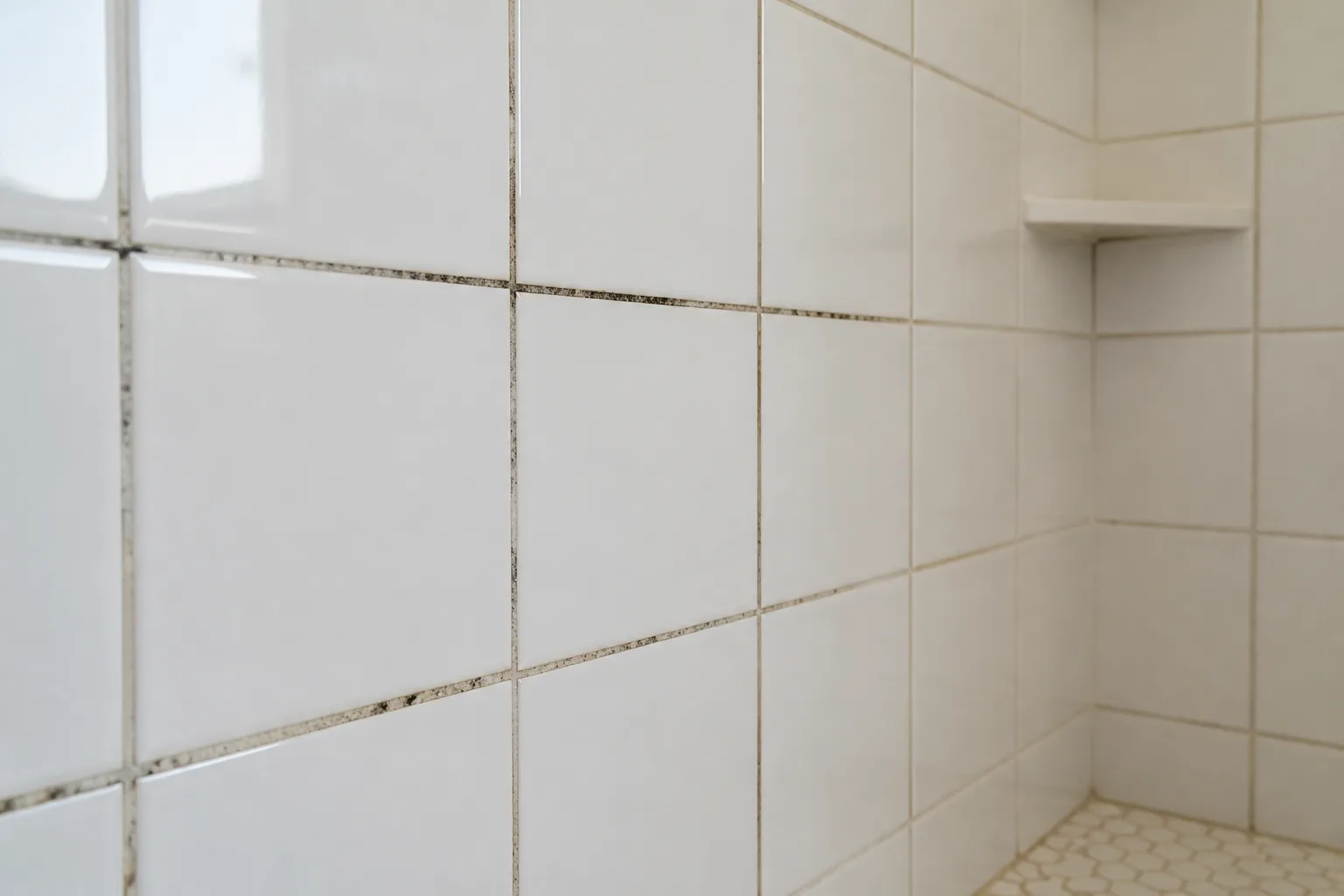
For a small patch on sealed bathroom tile, glazed porcelain, glass, or another label-approved non-porous surface, Clorox Tilex Mold and Mildew Remover is the strongest straightforward bathroom pick when you have ventilation and are comfortable handling bleach. CLR Mold & Mildew Clear is the better fit when you want a bleach-free foaming cleaner for a lighter patch and a broader range of hard surfaces.
RMR-86 is best understood as a fast stain-removal option, not permission to spray every porous material in sight. Mold Armor Mold Blocker makes sense after cleaning a hard surface when recurring dampness is controlled, while Aunt Fannie’s Cleaning Vinegar is the simplest DIY choice for a small, acid-tolerant patch when you want to avoid chlorine. None of these products fixes the leak, condensation, or high humidity that allowed mold to grow.
| Pick | Best use | Main strength | Important trade-off |
|---|---|---|---|
| Clorox Tilex Mold and Mildew Remover | Sealed bathroom tile and porcelain | Bleach-based cleaning and whitening | Strong fumes; bleach can damage finishes and must not be mixed |
| CLR Mold & Mildew Clear | Bleach-free hard-surface cleanup | Foaming contact with no chlorine bleach | Slower and less aggressive on heavy growth or staining |
| RMR-86 Instant Mold and Mildew Stain Remover | Rapid visible stain change | Fast-acting stain treatment | Strong chemistry; stain change does not prove hidden mold is gone |
| Mold Armor Mold Blocker | Prevention after cleaning | Leaves a protective treatment on compatible hard surfaces | Reapplication and moisture repair still matter |
| Aunt Fannie’s Cleaning Vinegar | Small DIY patch on acid-tolerant surfaces | Simple, chlorine-free ingredient | Takes longer, smells sharp, and is not for stone or porous materials |
First decide whether a spray is appropriate
The bottle is the easy part. The more important decision is whether you are looking at removable surface growth or a material that has absorbed water and needs to be removed, dried, or professionally assessed.
Use the surface test before choosing chemistry
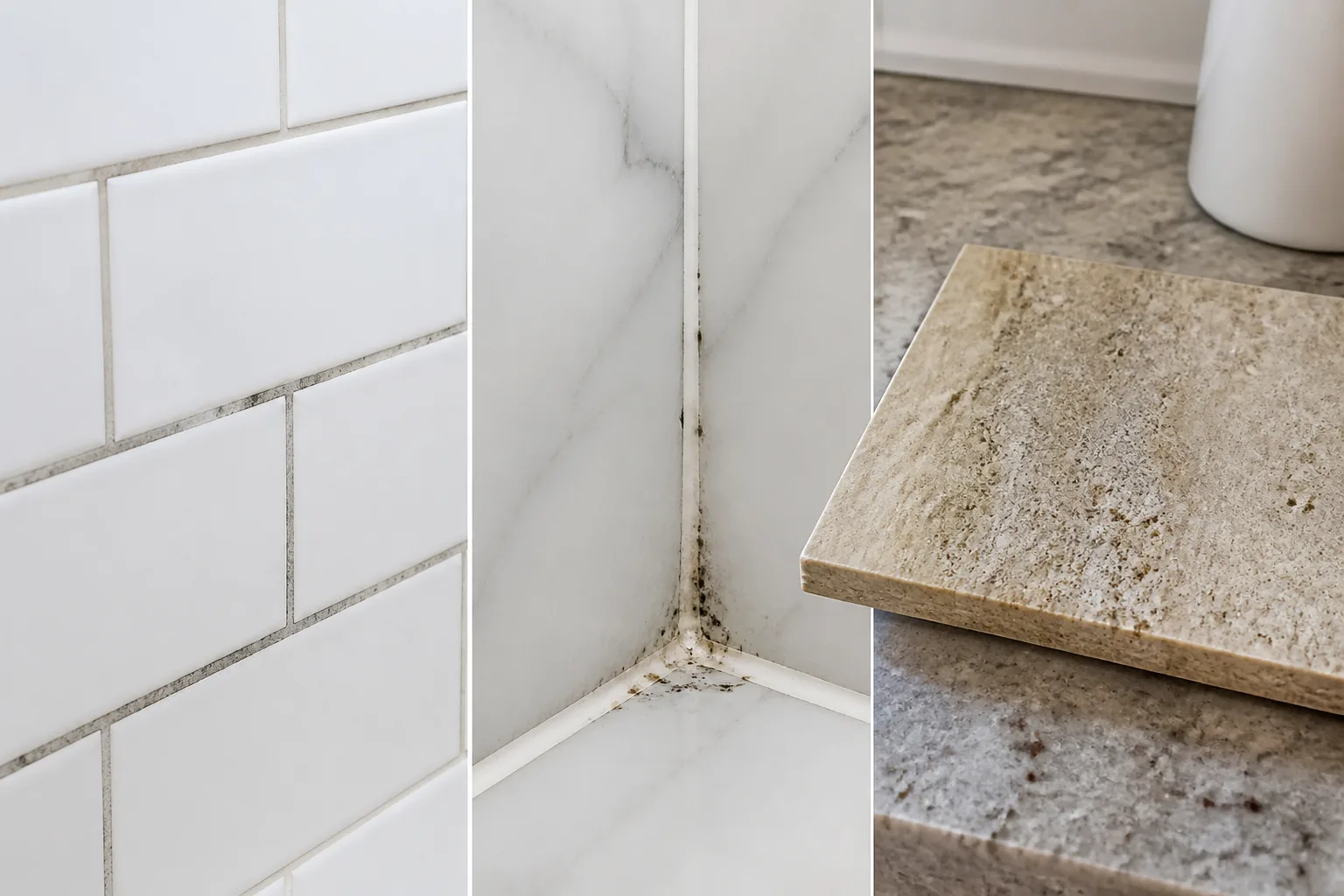
Ask whether the material behaves like a dinner plate or like a sponge. Sealed ceramic tile, glazed porcelain, glass, and some hard plastics are relatively straightforward because the growth is sitting on a surface that can be washed and dried. Even then, grout and caulk deserve caution: grout can be porous, and failed caulk can hold growth below its surface.
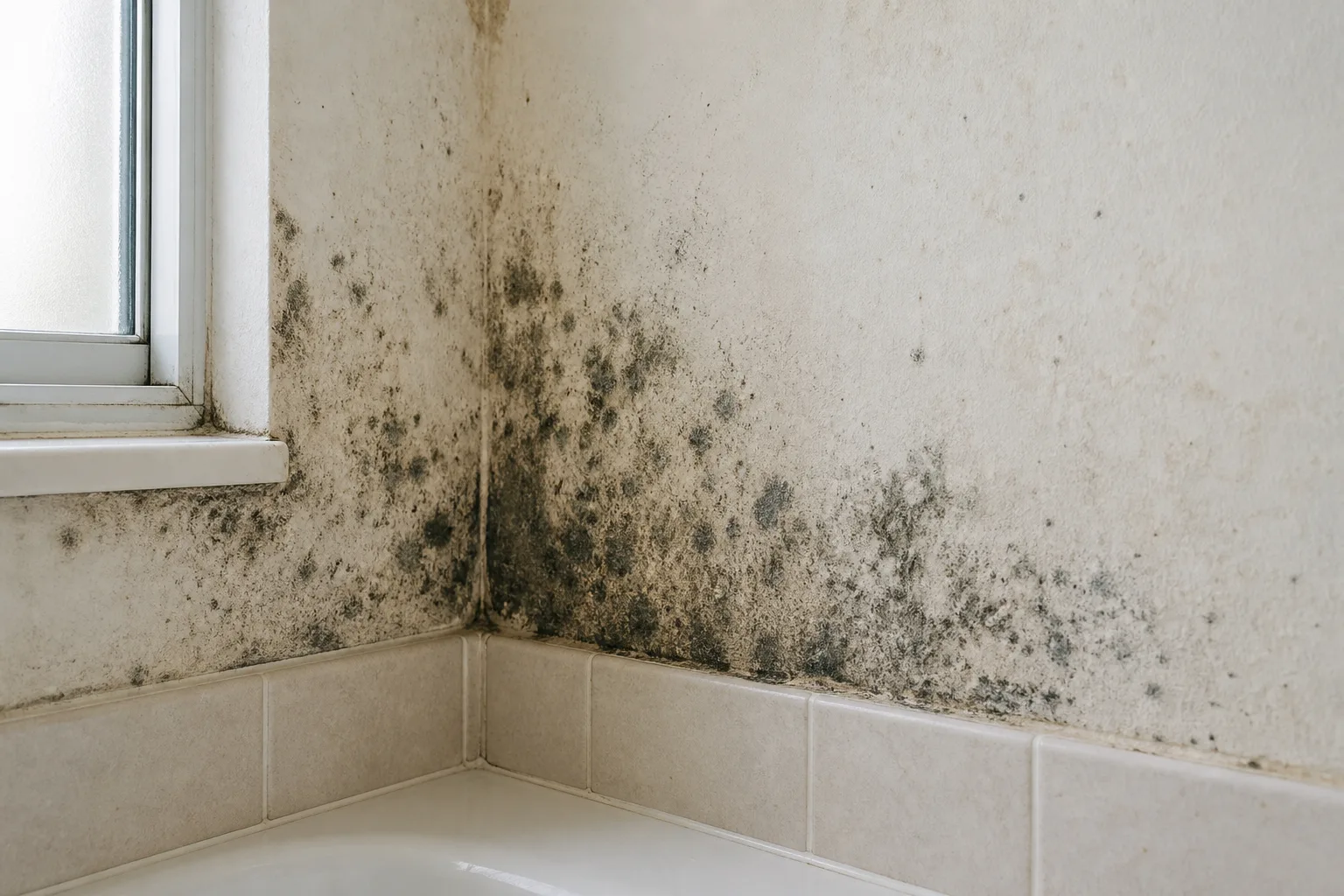
Drywall, insulation, ceiling tile, carpet pad, upholstery, paper, unfinished wood, and swollen laminate are poor candidates for repeated spray treatment. Liquid can carry contamination farther into an absorbent material, and a product that lightens a dark patch may have changed the color without removing the colony. The EPA’s guidance treats wet, moldy porous materials as potential removal-and-discard problems, not ordinary stain-cleaning jobs. EPA guidance on mold and moisture
Patch-test any product in an inconspicuous place, especially on painted surfaces, colored grout, natural stone, metal, finished wood, vinyl, and fabrics. A product may be effective against mold and still permanently bleach, etch, soften, rust, or discolor the thing you are trying to save.
Use the size, hidden-moisture, and occupant test
Measure the affected area rather than estimating from the darkest center. If the visible patch is approaching 10 square feet, if it continues behind furniture or trim, or if the odor is stronger than the visible evidence, pause before spraying and investigate the moisture source. A small visible edge can be the part of a larger wet assembly that you can see.
Do not make a person with asthma, chronic obstructive pulmonary disease, immune suppression, or a significant mold allergy the cleaner. The CDC says people in these higher-risk groups should not participate in mold cleanup, and they should not stay in a moldy home while it is being cleaned. CDC mold cleanup guidance
Treat floodwater, sewage, a wet HVAC system, a ceiling cavity, or mold that returns within days as a stop signal. A home mold test is not a safety certificate, and scrubbing a visible patch will not answer what is happening behind a wall. In those situations, moisture assessment and professional containment matter more than finding a stronger product.
How to compare a mold remover before buying
Marketing language makes products sound interchangeable. They are not. Read the front label for the promise, then read the back label for the surfaces, contact time, ventilation, rinsing, storage, and first-aid instructions that actually determine whether the product fits your job. A current editorial product comparison is useful for seeing the range of formats on the market, but the package label—not a roundup—is the final authority for application.
Cleaner, stain remover, biocide, or blocker?
A cleaner helps lift soil and organic residue. A stain remover changes or removes visible discoloration. A registered antimicrobial, disinfectant, fungicide, or other biocidal product may make a kill or control claim when used exactly as its label directs. A mold blocker or mildewstat is a follow-up treatment intended to slow regrowth on approved surfaces; it is not a substitute for removing existing growth or correcting moisture.
Those jobs overlap, but they are not proof of one another. A black mark that turns white is not automatically a cleaned wall, and a product that leaves an invisible protective film cannot keep a continuously wet surface dry. Pick the job first: remove a fresh surface patch, improve the appearance of stained tile, clean a narrow seam, or reduce recurrence after the surface is already clean and dry.
Match active ingredients to the material
Bleach, usually listed as sodium hypochlorite, is an oxidizing chemical that can kill exposed mold and lighten stains on suitable non-porous surfaces. It is fast and visually satisfying, but it has a sharp odor, can damage finishes and metals, and demands careful ventilation and chemical separation.
Bleach-free formulas can be useful when chlorine is undesirable, but “natural,” “green,” or “safer” does not mean harmless on every material or effective against every level of growth. EPA Safer Choice is a useful screening signal for products that meet the program’s ingredient and performance criteria, but you still need to follow the product label and surface restrictions. EPA Safer Choice
Vinegar is a practical household acid for some small surface jobs, but it is slower and its acidity makes it unsuitable for marble, limestone, travertine, some metals, and other acid-sensitive finishes. Do not combine it with bleach. Contact time, a gentle wipe or scrub, rinsing when the label or material calls for it, and complete drying matter more than choosing the most dramatic-sounding ingredient.
The five best mold removers at a glance
The shortlist below is organized by use case, not by a universal strength ranking. Product formulations, labels, sizes, prices, and claims change, so treat the current package label as the final authority before application.
1. Clorox Tilex Mold and Mildew Remover
Best for: sealed bathroom tile, glazed porcelain, shower doors, and other compatible non-porous surfaces. Clorox Tilex is the pick I would reach for when the problem is a visible bathroom patch and the priority is fast cleaning plus whitening of dark residue. A current editorial product comparison describes it as a bleach-based spray for hard non-porous surfaces that can work without scrubbing when used as directed.
Its advantage is also its boundary. Bleach can make a stained grout line look dramatically better, but it cannot reliably reach mold inside drywall paper, wood pores, carpet padding, insulation, or a failed seal. Use it only on label-approved surfaces, keep the area ventilated, follow the stated dwell and rinse instructions, and protect nearby colored textiles from overspray.
Choose something else if you cannot ventilate the room, if chlorine fumes bother anyone nearby, or if the surface is natural stone, bare metal, painted porous wallboard, or a finish you cannot replace. Never treat a white result as proof that the moisture source or hidden growth is gone.
2. CLR Mold & Mildew Clear
Best for: a lighter patch when you want a bleach-free foaming spray. CLR Mold & Mildew Clear is a useful middle ground for readers who want more contact than a thin general-purpose spray but do not want chlorine bleach. The foam can cling to a vertical hard surface long enough to work, and the formula is positioned for mold and mildew stains on compatible non-porous and some semi-porous surfaces.
Its trade-off is speed and intensity. A bleach-free cleaner may take longer or leave a shadow of the original stain, especially in deep grout texture. That is not necessarily failure: clean the surface according to the label, then judge whether the remaining mark is pigment, damaged sealant, or active growth rather than automatically escalating to a harsher chemical.
Patch-test first on colored grout, wood, painted surfaces, and anything with a protective finish. The product is a reasonable choice for routine hard-surface cleanup, but it still needs ventilation, gloves, eye protection, and a moisture-control plan.
3. RMR-86 Instant Mold and Mildew Stain Remover
Best for: rapid visible stain change on a label-approved surface. RMR-86 is the fast-acting stain-removal option in this group. It is useful when dark discoloration on a compatible surface is the immediate problem and you understand that “instant” refers to the visible treatment response, not a guarantee that a damp assembly has been remediated.
This is a strong-chemistry product, so treat it as a controlled application rather than a casual air freshener. Wear gloves and complete eye protection, protect surrounding finishes, avoid breathing the mist, and use only the surfaces and method listed on the current label. A practical DIY remediation reference also emphasizes that porous materials and wall damage should be addressed by removal, drying, and repair—not by repeatedly wetting the face of the material.
RMR-86 is not my default recommendation for moldy drywall, insulation, carpet pad, or hidden growth. If the patch disappears but odor, dampness, swelling, or regrowth remains, stop chasing the stain and deal with the assembly and moisture source.
4. Mold Armor Mold Blocker
Best for: slowing recurrence on a cleaned, dry, compatible hard surface. Mold Armor Mold Blocker earns a place for the follow-up job: the tile has been cleaned, the surface is dry, and you want a treatment intended to inhibit future mold or mildew growth. Editorial product coverage describes the product as suitable for indoor and outdoor hard non-porous surfaces, with reapplication schedules that vary by use.
The word “blocker” is important. It does not make a leaking window, wet shower corner, cold pipe, or humid basement dry. If moisture continues, a film on the surface can give false confidence while the real problem persists underneath or beside it.
Use the product only on label-approved materials and respect the required reapplication interval instead of assuming one treatment is permanent. It is a sensible maintenance step after cleaning, not a substitute for a working exhaust fan, repaired plumbing, a dehumidifier, or a replaced bead of failed caulk.
5. Aunt Fannie’s Cleaning Vinegar
Best for: a small DIY patch on an acid-tolerant hard surface when you want to avoid chlorine bleach. Cleaning vinegar offers a simple ingredient and a slower pace. Used undiluted on a suitable surface and kept wet for the label or planned contact time, it can help with small surface mold and mildew jobs where the finish tolerates acidity.
The limitation is easy to miss: vinegar is not a universal mold killer, and it is not a rescue treatment for porous building materials. It can damage natural stone, dull some metals, and leave a persistent sharp smell. It may also change the appearance of a finish without removing growth that has penetrated it.
Choose vinegar when the patch is genuinely small, visible, surface-level, and on an acid-tolerant material; choose a professional assessment when the material is absorbent, the area is extensive, or the patch keeps returning. Do not put vinegar in the same bottle, bucket, or cleaning session as bleach or an ammonia-containing product unless the surface has been fully rinsed, dried, and the label explicitly supports the next product. The safest default is one chemical treatment at a time.
Use a mold remover in a safe sequence
The product is only one part of the result. A disciplined sequence keeps spores and chemical mist from moving through the house and prevents a quick bathroom cleanup from becoming a finish-damage or exposure problem.
Prep the room and protect yourself
First, stop or reduce the water source if you can do so safely. Open a window or run an exhaust fan that vents outdoors, move clean belongings away from the work area, keep children and pets out, and do not point a portable fan across the moldy patch. Airflow aimed at the growth can distribute spores before you have contained the job.
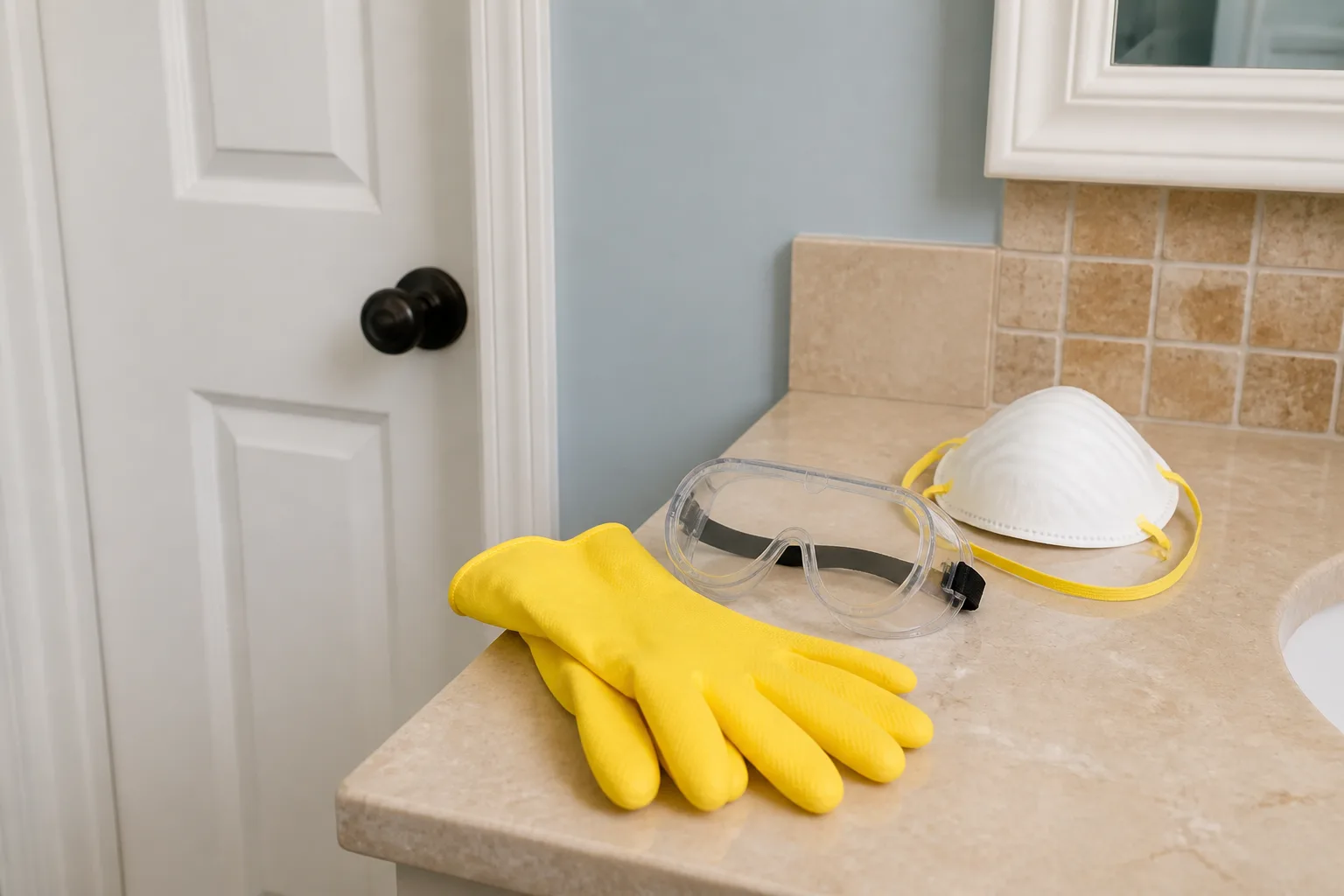
The CDC recommends at least a NIOSH-approved N95 respirator, non-latex gloves such as nitrile or rubber, and goggles that seal against dust and small particles; open-vent safety glasses do not provide the same protection. Wear long sleeves, long pants, and washable or disposable work clothing. CDC protective clothing guidance
Read the product label before opening the trigger. Check the active ingredient, approved surfaces, contact time, rinse requirement, ventilation warnings, and first-aid instructions. Keep a clean bucket of water and disposable wipes or a washable cloth nearby, but do not preload the room with several “backup” chemicals.
Apply, dwell, remove, and dry
Apply one product exactly as directed, aiming for the patch rather than fogging the room. Keep the surface wet for the stated contact or dwell time; wiping immediately can remove the product before it has worked, while letting a strong chemical dry on a delicate finish can create a second problem. Never extend the dwell time as a substitute for using the right product or material.
After the dwell time, wipe or gently scrub with a disposable cloth or non-metal brush that matches the surface. Rinse when the product label or material requires it, collect the dirty water without splashing, and bag disposable wipes. Do not use a household vacuum on loose mold debris unless the equipment and procedure are specifically designed for contaminated cleanup.
Dry the surface and the surrounding joint completely. A clean-looking shower corner that stays wet is not a finished job. If the stain remains, inspect the sealant and substrate instead of repeating stronger applications indefinitely; persistent discoloration can be damaged material, and persistent fuzzy growth means the conditions still support it.
Never combine mold-removal chemicals
This rule deserves its own heading because mixing is one of the fastest ways for a small cleaning job to become an inhalation emergency. Never mix bleach with ammonia, vinegar, acids, toilet-bowl cleaner, rust remover, or another cleanser. The CDC explicitly warns not to mix bleach with ammonia or any other cleanser and recommends fresh air when using cleaning products. CDC mold-cleanup safety guidance
Bleach plus an acid can release chlorine gas; bleach plus ammonia can create chloramine gases. Symptoms can include burning eyes, coughing, chest tightness, shortness of breath, nausea, and dizziness. If you accidentally combine products or smell a harsh gas, leave immediately, get fresh air, keep other people and pets away, and contact emergency services or poison-control resources for your location rather than trying to neutralize the mixture yourself.
Do not “layer” products because the first one did not remove a stain. Rinse the surface thoroughly, ventilate it, allow it to dry, and follow the label or obtain professional advice before considering another chemistry. In many cases the correct next step is replacing failed caulk or removing a porous material—not increasing chemical strength.
Why mold returns after cleaning
Mold is a moisture problem with a visible symptom. The source may be a plumbing leak, shower splash, condensation on a cold pipe, a window track that never dries, a roof or foundation leak, a poorly vented bathroom, or indoor humidity that stays high. A remover can reduce what is on the surface, but it cannot stop water entering the assembly.
Use a hygrometer if the room’s humidity is uncertain. The EPA recommends keeping indoor relative humidity below 60%, ideally between 30% and 50%, while recognizing that a cool wall or window can still collect condensation even when the middle of the room reads better. EPA moisture guidance
After a bathroom cleanup, run the exhaust fan during the shower and for a period afterward, wipe standing water from tile and tracks, repair leaks, and replace cracked or failed caulk. After a basement cleanup, look for foundation seepage, dryer or HVAC moisture, condensate problems, and air leakage; use a dehumidifier only as part of the moisture plan, not as proof that a wet wall cavity is dry.
If mold returns quickly, spreads beyond the original patch, smells musty without a visible source, or appears on drywall, insulation, carpet padding, ceiling tile, or HVAC components, stop shopping for a stronger remover. The right response is investigation, controlled removal or cleaning of the affected material, complete drying, and professional remediation when the scale or risk requires it.
Conclusion
For a small patch on sealed bathroom tile, Clorox Tilex is the direct bleach-based choice; CLR Mold & Mildew Clear is the more comfortable bleach-free alternative. RMR-86 is for rapid stain treatment on compatible surfaces, Mold Armor belongs after cleaning as a prevention step, and cleaning vinegar fits a small, acid-tolerant DIY job when you accept its slower action and limitations.
The most important purchase is still the right diagnosis. Choose one product, follow its current label, wear the protection the CDC recommends, keep chemicals separate, rinse or wipe as directed, dry the surface, and fix the moisture source. If the material is porous, the growth is hidden or extensive, or the problem returns, a stronger bottle is not the answer—remediation is.