35 Best Landscaping Plants for a Pulled-Together Yard
Choose from 35 landscaping plants by sun, shade, soil, size, and season. Get practical combinations for a front yard that looks intentional, not overstuffed.
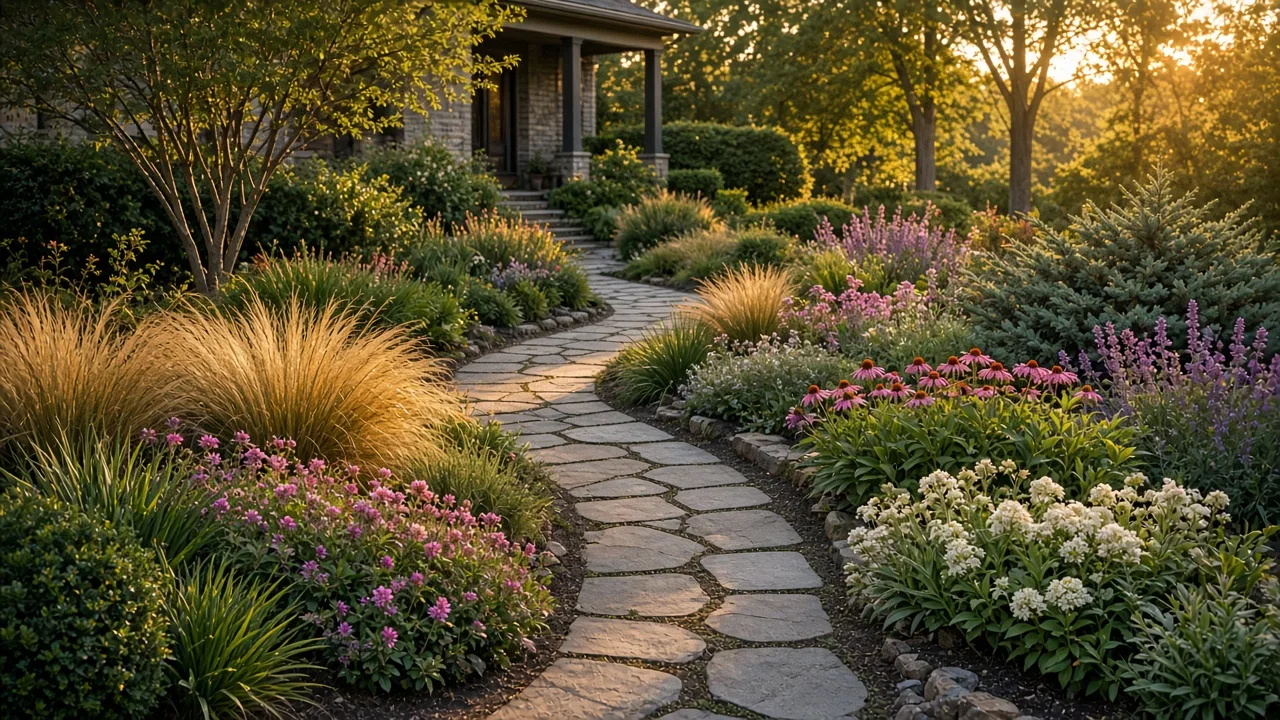
A yard looks intentional when it has repeating shapes, a clear height pattern, and plants comfortable in its conditions. A relaxed planting can look as finished as a hedge-and-border scheme when its plants share a rhythm and do not spend the season collapsing from stress.
The 35 landscaping plants below are organized by job: evergreen structure, flowering shrubs, grasses, sun perennials, shade plants, edible anchors, and seasonal color. Use the list as a design menu, not a shopping list. Choose by light, drainage, soil, mature size, and available maintenance.
Why a pulled-together yard is designed, not merely planted
The quickest way to make a yard look busy is to buy one of everything. A better landscape repeats three or four plants, then uses a few accents for contrast. Repetition creates visual rhythm; layers create depth; a defined bed edge keeps the planting from looking like it is leaking into the lawn.
“Low maintenance” also needs a realistic definition. It means fewer emergency interventions after the plant is established, not zero watering, pruning, or observation. A shrub that needs one annual shaping cut may be lower-care than a smaller shrub that must be trimmed every month because it was planted in the wrong space.
University extension guidance consistently puts site matching before plant preference. The University of Minnesota’s plant-selection tool frames a healthy, long-lived yard around choosing plants whose growing needs match the site, while Penn State Extension recommends checking light, soil texture, drainage, pH, climate, and mature space before buying. That is the foundation of every choice here.
Audit the site before you choose any plant
Walk the property at different times of day and mark where the sun actually lands. A south-facing bed beside a reflective wall is not the same environment as a bed under a deciduous tree, and “shade” can mean cool woodland soil or hot, dry soil beneath thirsty tree roots.
Measure light, drainage, and mature clearance
Record direct sun for a normal day, then repeat the observation in spring or summer if you are planning ahead. Full sun supports many flowering plants, but afternoon heat and reflected light can increase water demand. Part shade can be productive; dense shade is a different design brief where foliage, form, and texture matter more than flowers.
Test drainage after a substantial rain. If water remains in the hole or the bed puddles for a day or more, improve grading or drainage, or deliberately choose plants for a rain-garden-like site. On the other extreme, dry soil beneath established trees may need plants that tolerate root competition rather than plants described only as shade-loving.
Measure from walls, windows, walkways, utility lines, and the edge of the bed to the plant’s mature spread, not the size of the nursery container. The USU Extension tree-planting guide stresses a wide planting hole, a root collar at the correct grade, and post-planting watering because early root loss makes establishment the most vulnerable stage.
Match plants to roles, not a random shopping list
Give each plant one primary job. An evergreen shrub can make winter structure, a grass can repeat a vertical line, a low perennial can hide bare soil, and an annual can provide color while slower plants fill out.
Start with one backbone plant for every major view, then repeat it in groups of three, five, or more. Add a contrasting foliage shape and a seasonal accent afterward: tall structure at the back, rounded or fountain-shaped middle plants, and low mounding or spreading plants at the edge.
Six evergreen backbone plants
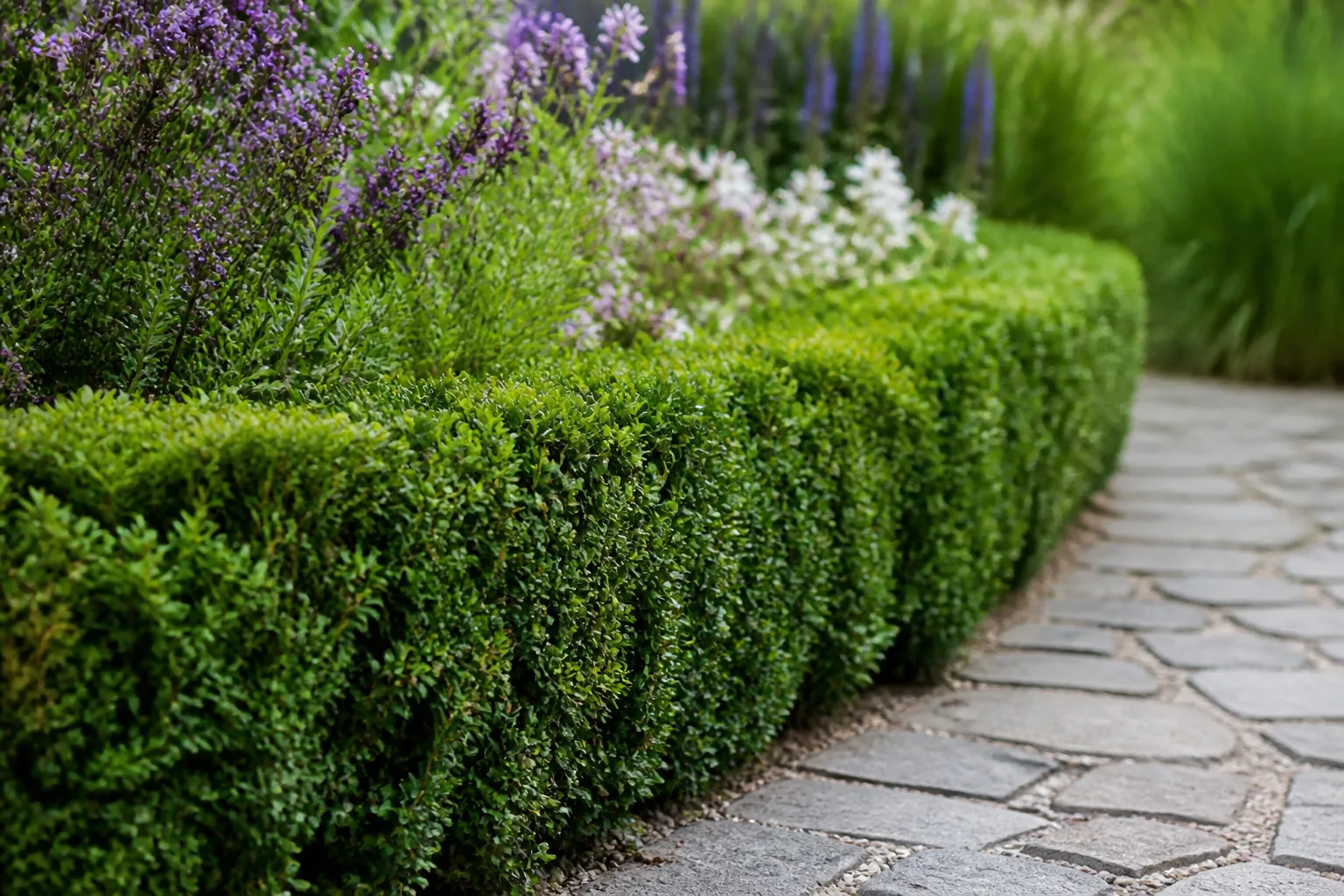
Evergreen plants keep a bed legible after perennials disappear. They are especially useful near an entry, along a foundation, or at the corners of a house, but they are also the category most likely to be overplanted. Leave enough space for the mature width and choose a cultivar that suits the site rather than forcing a large species into a narrow strip.
-
Boxwood (Buxus spp.) — Use compact cultivars to repeat rounded forms in foundation beds, formal borders, or containers. Give it good drainage and air movement, and confirm the cultivar’s mature size and winter hardiness.
-
Inkberry holly (Ilex glabra) — This North American evergreen suits a looser hedge or massing where soil is acidic and moisture is dependable. It can look sparse at the base as it ages, so plant several together and underplant the stems.
-
Blue Star juniper (Juniperus squamata ‘Blue Star’) — Its blue, needle-like foliage brings cool color and a compact, sculptural shape to sunny, well-drained beds. Treat it as a dry-site accent, not a plant for soggy clay.
-
Azalea (Rhododendron spp.) — Evergreen or deciduous azaleas bring spring flowers to part-shade beds and woodland-style foundation plantings. They fit only where soil is acidic, drained, and not baked by afternoon sun; in alkaline soil, choose a compatible plant.
-
Rhododendron (Rhododendron spp.) — Larger-leaved rhododendrons provide year-round mass and a strong spring display in cool, bright shade. Reserve them for a protected bed with organic matter, drainage, and room for their mature width.
-
Glossy abelia (Abelia × grandiflora) — Abelia bridges shrub and pollinator planting with glossy foliage, arching stems, and a long season of small flowers. It can take sun or part shade, but its shape is best when given space to arch; use it as a relaxed hedge or middle layer rather than pruning it into a tight cube.
Five flowering shrubs that carry a bed
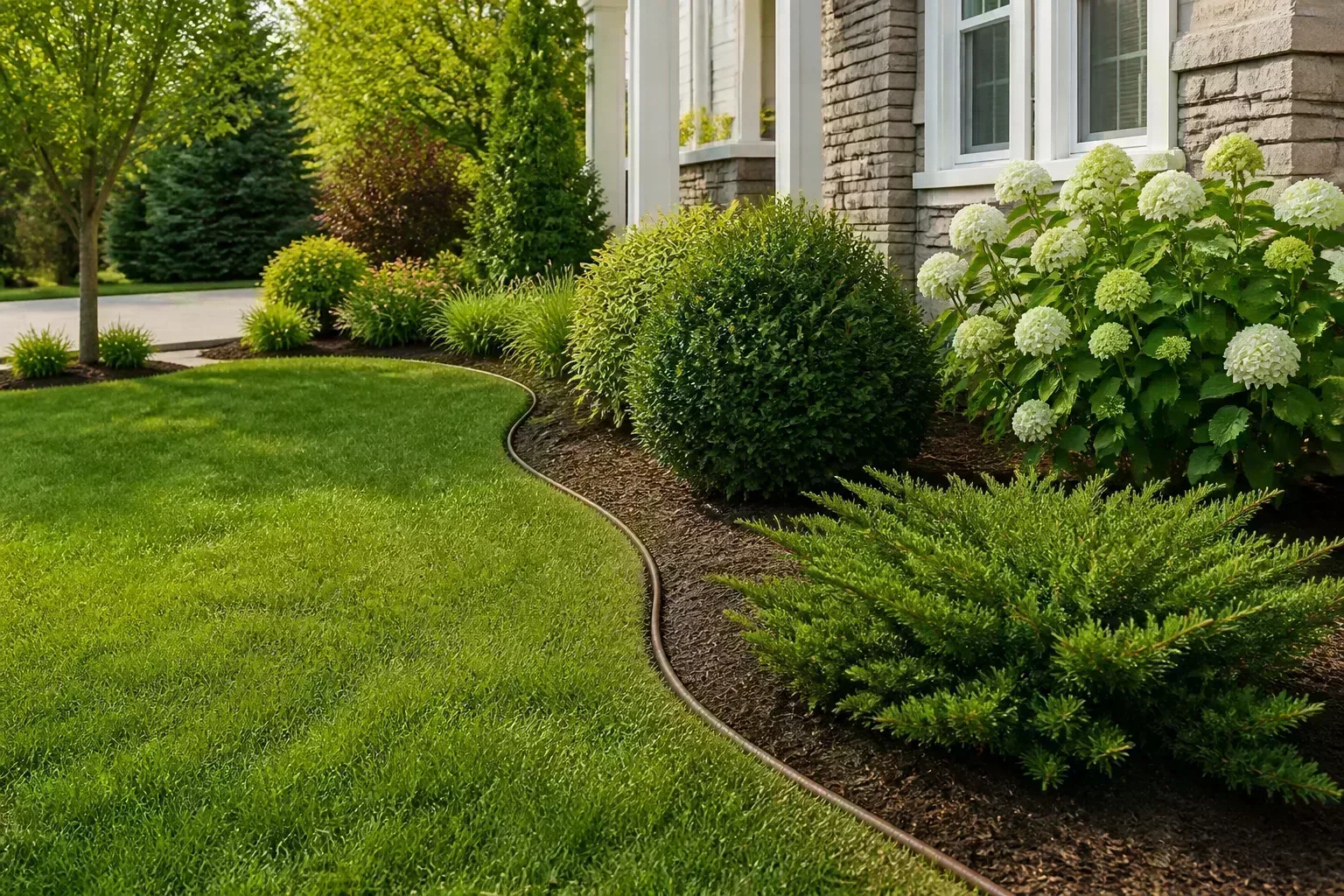
Flowering shrubs do more structural work than a single flush of bloom suggests. They occupy the middle or back layer, soften a wall, and give a bed a recognizable shape in months when perennials are dormant. Pair one reliable shrub with low foliage plants so the design still has a base after the flowers fade.
-
Hydrangea (Hydrangea spp.) — Choose the species and cultivar by light, mature size, and flower timing instead of choosing by bloom color alone. Many hydrangeas perform in morning sun or bright part shade with consistent moisture, but a dry, exposed strip beside pavement can make large-leaved types wilt repeatedly.
-
Viburnum (Viburnum spp.) — Viburnums offer spring flowers, textured leaves, fruit, and sometimes fall color. Because the genus varies widely, use the botanical name on the label and check mature spread before choosing a hedge, screen, or specimen.
-
Red-twig dogwood (Cornus sericea) — The bare red stems are the reason to grow this deciduous shrub: they keep a winter bed from going flat. Plant it where the soil stays evenly moist, then renew the best-colored stems by removing some older wood; in a dry, narrow foundation strip, choose a more drought-tolerant shrub.
-
Ninebark (Physocarpus opulifolius) — Ninebark combines peeling bark, spring flower clusters, and green, gold, or burgundy foliage. Allow its natural arching habit and prune after flowering only when size or shape requires it.
-
Bottlebrush buckeye (Aesculus parviflora) — Use this broad, suckering shrub when you have room for a large mass rather than a narrow foundation line. Its white summer flower panicles brighten part shade and attract pollinators, while the spreading habit can stabilize a woodland edge or fill the back of a spacious bed.
Five grasses and foliage plants for rhythm
Grasses and grass-like plants make a landscape look composed because they repeat narrow lines and moving texture. They also expose poor placement quickly: a sun grass grown in deep shade becomes floppy, while a shade grass in hot reflected light can scorch. Check the mature clump width and whether the plant spreads by runners before using it as an edge.
-
Liriope or lily turf (Liriope spp.) — Liriope makes a dependable low border for a path, shrub bed, or part-shade foundation. It handles a range of soils once established, but clumps can expand and old foliage can look tired; divide crowded plants and cut back at the right season for your climate instead of shearing them repeatedly.
-
Muhly grass (Muhlenbergia capillaris) — The fine foliage and hazy pink flower plumes create a soft counterpoint to walls and broad-leaved shrubs in full sun. It needs good drainage and performs best when not buried under irrigation aimed at thirstier plants.
-
Switchgrass (Panicum virgatum) — Switchgrass gives a strong upright clump, summer seed heads, fall color, and winter persistence. Cultivars vary widely in height and habit, so choose a compact form for a front bed and a taller form for a screen or back border; cut it back once annually rather than trying to keep it manicured.
-
Japanese forest grass (Hakonechloa macra) — Few ornamental grasses are as useful in bright shade. Its arching golden or variegated blades light up a dark edge, especially beside hostas or ferns, and it looks best when allowed to form a soft mound rather than trimmed into a straight line. Garden Design’s shade-plant reference likewise treats it as a shade grass that prefers protection from hot afternoon sun.
-
Sedge (Carex spp.) — Sedges are a broad group: some handle dry shade, others prefer moist soil, and some tolerate wet ground. Their fine texture works as a repeated matrix under shrubs or along a path, but read the label for spread.
Seven sun-loving perennials for reliable color
Full-sun beds benefit from plants that provide more than one attractive week. Combine a long-season foliage plant with two bloom periods and leave pockets of bare mulch while perennials mature. “Drought tolerant” usually means a plant can handle dry spells after establishment; it does not mean a newly planted root ball can go without water.
-
Daylily (Hemerocallis spp.) — Daylilies are durable mounding perennials for sunny borders and slopes, with cultivars from short edging plants to tall mid-border accents. Repeat bloom, flower color, and foliage quality vary, so select for the job rather than buying an anonymous mixed tray.
-
Peony (Paeonia spp.) — Peonies bring a strong late-spring focal moment and handsome foliage before and after flowering. Give them sun, air circulation, and room to form a clump; planting the crown too deeply is a common reason for disappointing bloom, and heavy flowers may need support rather than constant cutting.
-
Dianthus or pinks (Dianthus spp.) — The gray-green foliage, spicy fragrance, and compact flowers make dianthus useful along a path or at the front of a dry, sunny bed. Avoid waterlogged soil and choose perennial selections for your climate; short-lived types can still be worthwhile when used as a neat seasonal edge.
-
Coneflower (Echinacea spp.) — Coneflowers offer upright stems, long summer color, and seed heads that extend the season. They prefer sun and drainage, and established plants generally handle dry spells better than newly installed ones; leave some stems standing into winter if birds and winter structure are part of your plan.
-
Black-eyed Susan (Rudbeckia spp.) — Rudbeckia gives a bed a warm yellow anchor and works in drifts rather than isolated dots. Choose the species carefully because annual, biennial, and perennial forms behave differently; expect some reseeding and edit seedlings if you want a tight border.
-
Yarrow (Achillea spp.) — Yarrow’s flat flower clusters and ferny foliage create a horizontal contrast to grasses and upright perennials. It suits sunny, well-drained soil and can be a good low-water choice after establishment, but vigorous types may travel beyond a small border, so keep the clump edged.
-
Stonecrop (Sedum or Hylotelephium spp.) — Upright stonecrop supplies succulent foliage, late-season flowers, and a strong mound that holds its shape. It is particularly useful in hot, dry beds and containers, though it still needs drainage; winter-wet clay can be more damaging than summer drought.
Six shade and part-shade perennials
Shade is not a shortage to hide with random plants. It is a chance to use foliage contrast: broad hosta leaves, silver markings, fern fronds, fine grass blades, and low mounds can make a bed look full even when few plants are flowering. The key distinction is moist shade versus dry shade. Gardener’s Supply’s shade-plant guide notes that shade-tolerant plants often have leaf shapes adapted to capture limited light, but their moisture needs still differ.
-
Hosta (Hosta spp.) — Hosta is the reliable foliage workhorse for part shade, from small edging clumps to broad architectural mounds. Slugs, drought beneath trees, and hot sun can spoil the look; repeat two or three cultivars instead of collecting every leaf pattern.
-
Hellebore (Helleborus spp.) — Hellebores give late-winter or early-spring flowers and evergreen-to-semi-evergreen foliage in many climates. Place them in well-drained soil with bright shade or gentle sun, and remove damaged old leaves when new growth begins so the emerging flowers are visible.
-
Bleeding heart (Lamprocapnos spectabilis) — Its arching stems and heart-shaped flowers make it a natural focal accent in a woodland bed. It may retreat or look untidy after its spring display, so surround it with hosta, fern, or sedge that can cover the gap rather than treating its summer dormancy as a failure.
-
Coral bells (Heuchera spp.) — Coral bells add persistent mounds of purple, bronze, lime, or silver foliage where flowers are not the main event. Keep the crown from sitting in wet soil, give it filtered light, and refresh plants that heave upward over winter; the foliage is the design asset, so choose a color that contrasts with your mulch.
-
Japanese painted fern (Athyrium niponicum var. pictum) — This fern contributes silver, burgundy, and green fronds to cool part shade. It looks especially polished when repeated along a path or tucked beneath shrubs, but it prefers more consistent moisture than a dry-rooted tree can provide.
-
Foamflower (Tiarella spp.) — Foamflower is a compact woodland perennial with textured, often patterned leaves and airy spring flowers. Use it as a low matrix in moist, organic shade, allowing it to knit around taller plants without placing it where foot traffic will flatten the foliage.
Two edible or wildlife-friendly anchors
Edible plants can belong in an ornamental landscape when their fruiting season and mature shape are part of the design. They also make the bed more active: birds may eat fruit, fallen berries can stain paving, and netting may be necessary if you want a harvest. Place these where you can reach them without trampling the rest of the planting.
-
Highbush blueberry (Vaccinium corymbosum) — Blueberries offer spring flowers, summer fruit, fall color, and a useful hedge-like form. They require acidic soil and consistent moisture with good drainage, so test the site before planting; a raised bed or dedicated acidic border is easier than trying to make an alkaline foundation strip behave like a blueberry field.
-
Serviceberry (Amelanchier spp.) — Serviceberry can be grown as a multi-stemmed shrub or small tree, with spring flowers, edible berries, and fall color. Select a species for your space and keep fruit drop in mind near patios or walkways.
Four seasonal color plants to fill gaps
Annuals and short-lived plants are valuable when used deliberately. They can fill a new bed while shrubs and perennials establish, repeat a color from the house, or keep a shady entry from looking empty in summer. Their trade-off is labor: many need seasonal planting, watering, deadheading, or removal.
-
Zinnia (Zinnia spp.) — Zinnias are straightforward sun color from seed or transplants, with heights that work at the front, middle, or back of a bed. Mass one color or a restrained blend for a cleaner look, and give them airflow and enough spacing to avoid a crowded, mildew-prone thicket.
-
Caladium (Caladium spp.) — Caladiums bring dramatic pink, white, or red foliage to shade and containers. They are best treated as seasonal accents in cool climates and may need to be lifted or replaced, while warm-climate gardeners can use them as a recurring shade-bed rhythm.
-
Impatiens (Impatiens spp.) — Impatiens are useful for reliable color in bright shade where many sun annuals fail. Plant them in rich, drained soil and group them rather than dotting single plants through every gap; they provide color, not permanent structure.
-
Foxglove (Digitalis spp.) — Foxglove creates tall spires in part shade or gentle sun and can bridge the height between a shrub and a low perennial. It can self-sow, and the plant is poisonous if eaten; Poison Control’s foxglove guidance is a reminder to keep it away from children and pets who may chew garden plants and to choose a safer alternative for an accessible play or edible area.
Build a plant palette that looks intentional
The easiest way to move from a list to a landscape is to choose a limited palette: one backbone plant, one repeated foliage or grass texture, one flowering anchor, and one edge plant. Repeat them in more than one bed or view so the yard feels connected.
Sunny foundation recipe
For a sunny front bed with average drainage, repeat boxwood or glossy abelia as the evergreen or semi-evergreen structure. Add switchgrass or muhly grass for movement, place coneflower or yarrow in groups through the middle, and finish the edge with stonecrop or dianthus. This palette has winter shape, summer flowers, late-season texture, and a clear height progression.
If the bed is hot beside paving, reduce the thirstier plants and use more sedum, yarrow, and a drought-tough grass. If the house wall reflects heat, do not assume a plant labeled “full sun” will be comfortable without establishment water. Mulch can reduce competition, but it cannot turn a root zone with no irrigation into a consistently moist one.
Dry-shade recipe
Under mature trees, start with Japanese painted fern, foamflower, and hosta only if the soil retains some moisture. For truly dry shade, use fewer thirsty plants, improve the soil gradually, and look for locally adapted sedges or other ground-layer plants recommended by your extension office. A bed of three foliage textures often looks more finished than a struggling collection of flowering plants.
Keep the root zone of the tree in mind. Do not pile soil over major roots or dig aggressively around the trunk just to create a deeper bed. Use small plants, pockets of compost, and a thin mulch layer, then water new plants directly until their roots extend beyond the original container soil.
Low-lawn pollinator recipe
For a relaxed but deliberate border, repeat serviceberry or ninebark as the tall anchor, then use switchgrass and coneflower to create a middle layer. Add black-eyed Susan, yarrow, and sedum in clusters, with a crisp path or mown edge to keep the planting visually contained. Leave seed heads through part of winter if local wildlife and your neighborhood rules allow it.
Native status is valuable, but it is not a substitute for site matching. Penn State Extension’s landscape guidance recommends choosing plants adapted to the conditions and using an integrated approach to pests and maintenance. Check your state or regional invasive-plant list before buying a vigorous groundcover.
Plant, space, and mulch so the design lasts
Plant in the season your local extension service recommends, when the soil can be worked and the plant can establish before its hardest stress period. Set shrubs and trees with the root collar at grade or slightly above it, and dig the hole wider than the root ball rather than making a narrow, deep pocket. Backfill mostly with the soil the roots will eventually occupy.
Space from the plant’s mature width. A temporary gap is cheaper than removing a hedge that has swallowed the windows, or pruning a shrub so hard that it never flowers. If a label says a shrub will spread six feet, use that information in the drawing even if the plant currently fits in a one-gallon pot.
Water the entire root zone thoroughly after planting, then adjust frequency for weather, soil, drainage, and plant type. Keep newly planted shrubs from alternating between bone dry and saturated, but do not compensate for poor drainage by watering on a schedule. USU Extension notes that newly transplanted trees have greatly reduced root capacity and need careful watering during establishment, while established plants should not be kept waterlogged.
Use organic mulch as a surface layer, not a volcano around a trunk or crown. Two to three inches is a useful general range for beds, with a clear gap around stems; deeper mulch can hold too much moisture against bark and make the edge look as untidy as a weed patch. Penn State Extension also recommends composted mulch applied a few inches deep and kept away from the main stem.
Keep the yard pulled together with seasonal maintenance
In spring, remove winter-damaged stems, uncover emerging perennials, and check whether any shrub has outgrown its allotted space. Refresh the edge and pull unwanted seedlings before they become a design problem.
In summer, water new plants deeply enough to wet the root zone, inspect under leaves for pests, and deadhead only when it improves the plant or encourages useful rebloom. Let healthy foliage feed the roots; cutting everything back for a uniformly tidy look can shorten the season of interest.
In fall, leave ornamental grass and perennial seed heads when they provide structure or food, but remove diseased foliage and anything collapsing onto a crown. Check mulch depth, do not bury trunks, and protect evergreens from drying wind or salt only when the site requires it.
Penn State’s integrated landscape-management guidance recommends monitoring before treating. Inspecting regularly, identifying the actual cause, and using physical or cultural controls first reduces unnecessary pesticide use and helps you decide whether a chronically failing plant should be moved or replaced.
Mistakes that make a good plant list look messy
Planting mature shrubs too close to the house is the most expensive mistake because it creates years of pruning and may hide windows, block air movement, or crowd paths. Draw the mature spread before you buy, and choose a smaller cultivar when the bed is narrow.
Treating hardiness as a guarantee is another trap. A zone map describes average winter minimums, not reflected heat, wet roots, salt, wind, summer drought, or the behavior of a particular cultivar. Use the USDA Hardiness Zone Map as one climate reference, then compare it with local nursery labels and extension recommendations.
Using one irrigation schedule for the whole yard makes mixed beds fail. Blueberries, sedges, sedum, and newly planted shrubs do not have the same water demand. Group plants by similar conditions so your watering system supports the design instead of forcing every plant into the needs of its neighbor.
Filling every gap immediately creates a crowded bed that will look worse as plants mature. Mulch open soil, repeat thriving plants, and wait through a growing season before adding more.
Assuming native means maintenance-free ignores the site. Native plants can still be planted in the wrong moisture, light, or soil conditions, and a non-native plant from a similar climate can sometimes perform responsibly. The better standard is a plant that fits the site, is not invasive in your region, supports your goals, and can be maintained without constant correction.
Ignoring safety and access can put toxic plants beside a child’s play area, pet run, or edible garden. Keep foxglove and other plants with known ingestion risks out of reachable zones, and consider fruit drop, thorns, and slippery fallen leaves beside paths.
Conclusion
The best landscaping plants are not the ones with the most impressive labels. They perform the job you gave them in the conditions you can provide. Choose a backbone of shrubs or grasses, repeat foliage and form, add seasonal color in measured groups, and leave space for maturity.
Start with one bed. Measure its light and drainage, select three to five compatible plants from the list, install them at the right grade, and observe the result through a full season. A yard becomes pulled together through that repeated process: fewer emergency corrections, more intentional rhythm, and plants that look as though they belong where you put them.



