CobraHead Weeder: How to Use It in a Garden
Learn how to use the CobraHead weeder around vegetables, remove taproots, choose the right model, and build a summer garden routine that saves work.
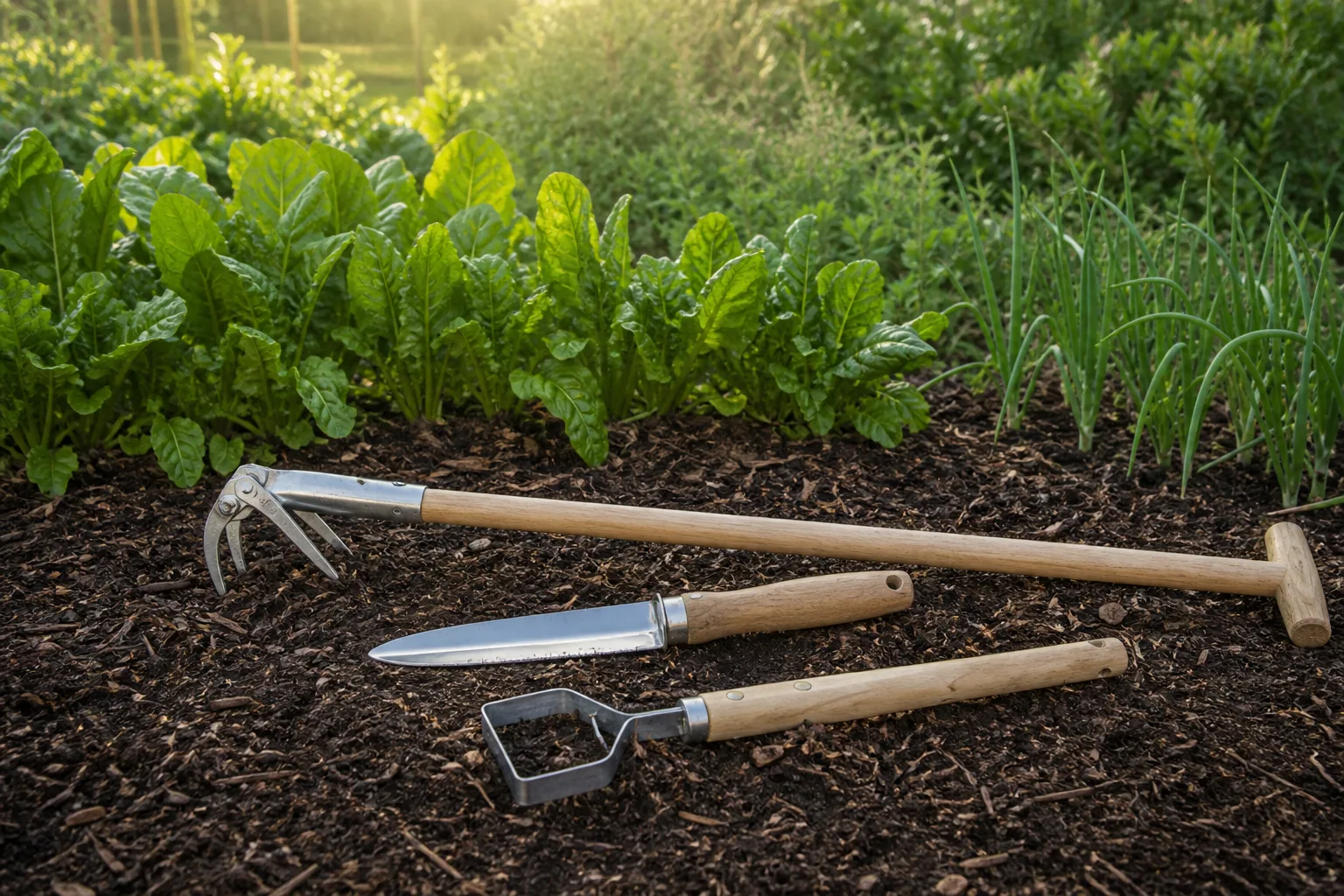
The CobraHead weeder is the rare garden tool that earns its place by doing small jobs exceptionally well. Its narrow, curved cultivating tine can slide between vegetable stems, get behind a weed’s crown, open a seed furrow, scrape a path edge, and loosen a patch of crusted soil without requiring you to swing a wide hoe through the whole bed.
That precision is the reason it can change the feel of a vegetable garden. It does not make weeds disappear, and it is not a substitute for a shovel when you are rebuilding a compacted bed. Used at the right time, though, it turns weeding from a tug-of-war into a short series of controlled movements—and that makes it easier to keep the garden on schedule.
Why the CobraHead earns a permanent place in a vegetable garden
What the narrow curved blade actually does
The tool is built around a single hooked tine with a sharp, leaf-shaped blade. The manufacturer describes it as a “steel fingernail,” which is a useful way to picture the action: the blade is an extension of your hand that can cut, pry, lift, and scrape in a small area rather than churn a broad section of soil. CobraHead’s own how-to guidance recommends using the blade at or below soil level for small weeds, placing it behind a taproot, and taking shallow bites when cultivating.
The shape matters more than the marketing name. A broad hoe is efficient when weeds are spread across a clear row, but it can nick a lettuce crown or bury a young bean when plants are close together. A conventional trowel can dig around a root, yet it often asks you to remove more soil than necessary. The CobraHead’s advantage is the narrow working zone: you can aim at the weed, keep a little soil between the blade and the crop root, and disturb only what you need to.
It is also a cultivator, not merely a puller. You can use the tip to open a shallow trench for seeds, make a small hole for a transplant, draw soil back around a plant, or scrape debris from a bed edge. Those secondary jobs are what make it useful enough to carry on every garden walk instead of leaving it in a shed until a weed emergency.
Which CobraHead model fits your body and bed
The Original is the general-purpose handheld choice for raised beds, in-ground rows, borders, and work between established plants. It gives you more leverage than a tiny scratch tool while still letting you kneel or sit close to the crop. For most vegetable gardeners who want one tool to learn first, this is the logical starting point.
The Mini is better when the working space is genuinely small: containers, seedling trays, narrow herb boxes, or dense plantings where even the Original feels oversized. Its shorter reach makes close work more precise, but it also means more bending and less leverage on a stubborn perennial root. Do not choose the Mini because a smaller tool sounds easier; choose it because the bed is small enough to reward that control.
The Long Handle is the option for gardeners who cannot kneel comfortably or who want to clear open paths and larger beds while standing. It uses the same general blade idea, but the leverage and posture are different. A hands-on review from Family Handyman found the long-handle version useful for larger weeds and noted that it works best with a sweeping motion rather than the bent-over posture people often use with a short hoe.
There is no virtue in buying the longest handle for a crowded raised bed. A long tool gives you reach but reduces the fine control you get when the blade is close to your hand. Match the model to the job you will do most often, your ability to kneel, and the distance between plants—not to the idea that one model should do everything.
How to use a CobraHead without harming crops
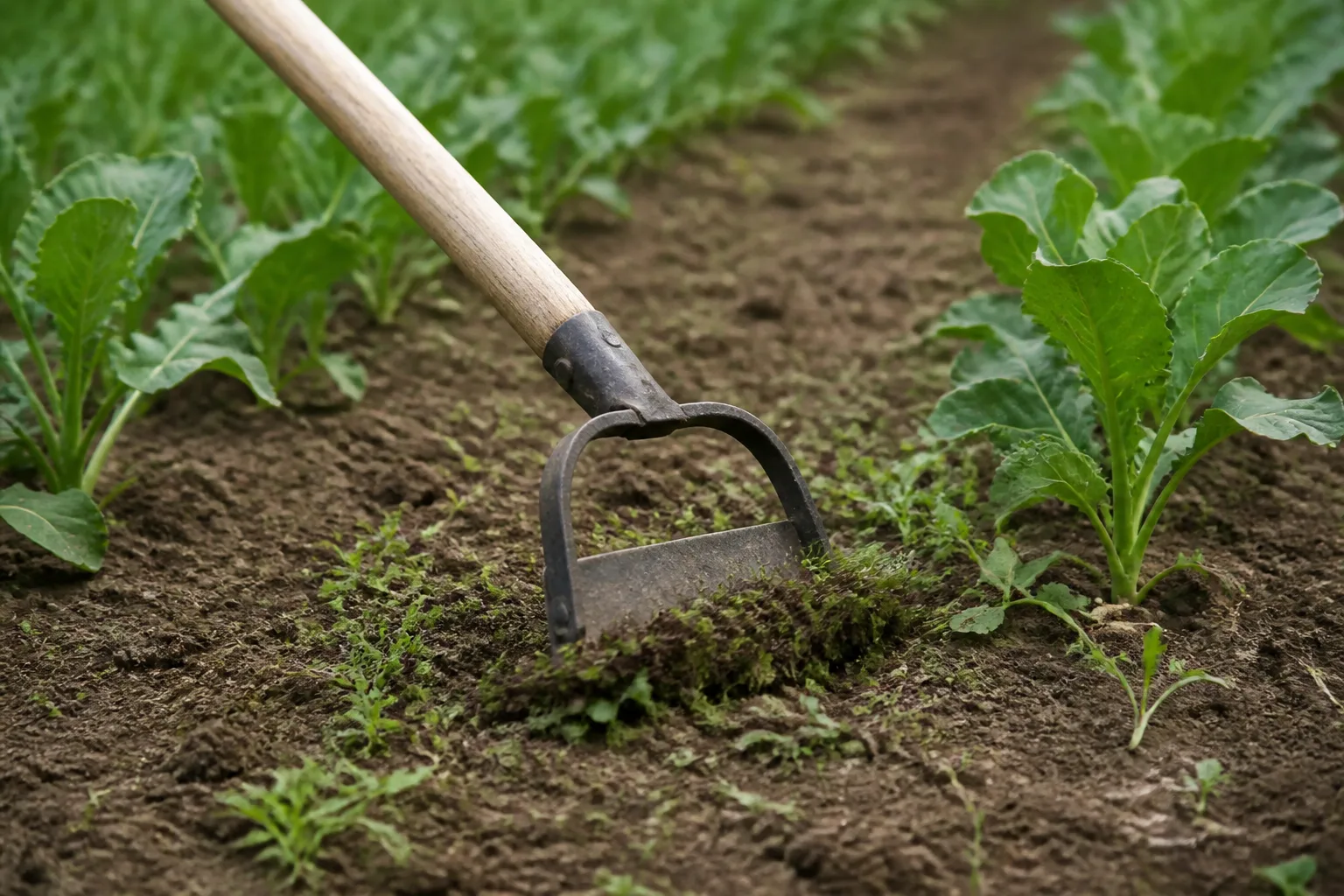
Small weeds, taproots, planting, and edging in one controlled sequence
Start when weeds are small. A seedling-sized weed usually has a short root system and little resistance, so the blade can slice it below the crown or lift it with a quick shallow movement. Waiting until a weed is flowering makes the job harder, increases the chance of disturbing crop roots, and gives the weed time to replenish the soil seed bank.
For a small weed between vegetables, hold the tool near the junction of the handle and metal shaft if you need fingertip accuracy. Place the blade beside the weed rather than stabbing blindly into the bed, then sweep or shave just below the soil surface. Pull the loosened weed with your free hand and leave the crop stem untouched. If the weed is directly against a plant, hand-pulling is safer than forcing the blade into a crowded root zone.
For a taproot such as a dandelion or a larger broadleaf weed, do not yank from the leaves first. Push the blade into the soil behind the root crown, keep a little soil between the steel and the thickest part of the root, and pull the handle toward you. That soil cushion reduces the odds of cutting the taproot in half. If the root snaps, remove the crown and keep scouting the spot; repeated removal of new growth may be necessary for a perennial weed.
For a runner or clumped root system, work around the edge of the plant rather than trying to lift the entire patch in one bite. Loosen one side, follow the root with the tip, and pull in sections. The goal is not to win a dramatic wrestling match with the soil. The goal is to remove enough of the plant to stop immediate competition without tearing through nearby crop roots.
Use the blade sideways for narrow cracks beside pavers, bed edging, or paths. Use it to open a shallow furrow for direct-sown carrots or greens, then cover the seed lightly with the soil you moved. When transplanting, make a small hole, set the plant at the right depth, and draw soil back around the root ball; the tool is especially handy when a full trowel would make an oversized cavity.
The basic technique is supported by the manufacturer’s step-by-step use guidance, but the important crop-protection rule is your own observation: the closer the blade is to a living stem, the shallower and slower the movement should be. A tool that is precise in an open row can still cause damage if you use it with the force and depth meant for a vacant patch.
Where the tool shines—and where it falls short
Tight rows, raised beds, and paver edges
The CobraHead is at its best in the awkward spaces a broad hoe cannot reach. It can work along the outside of a raised bed, between basil and tomato stems, under the edge of a trellis, or beside a crop row where you want to keep the soil surface open without burying the plants. That makes it particularly useful in intensive gardens, where every inch is planted and a careless swing has consequences.
It also helps with the unglamorous edges that let weeds reseed a vegetable patch. Pull young weeds at the end of a path, scrape grass from a brick border, and clear the narrow strip beneath a fence before those plants flower. UC IPM’s weed-management guidance emphasizes preventing weeds from producing seed and combining cultivation, hand removal, and mulch rather than expecting one method to do all the work.
The tool is a good fit for a gardener who notices weeds during a daily harvest. Keep it near the bed, remove five or ten weeds while you are already there, and the garden rarely reaches the stage where a full-day cleanup is required. That is a behavioral advantage, not a claim that the blade itself changes plant growth.
Hard, wet, rocky, or deeply compacted ground
Hard soil is where expectations need trimming. The blade can break a surface crust and work through moderately firm soil, but it is not a mattock, digging bar, or replacement for improving the bed. If you have a dry clay layer, construction debris, or a path compacted by foot traffic, use the right heavier tool first and reserve the CobraHead for finishing work.
Wet clay is also a poor target. Soil that sticks to the blade reduces its cutting action and can smear the surface into a dense layer that later dries like pottery. The manufacturer advises cleaning wet buildup as it occurs and taking shallow bites when the soil is tough. In practice, wait until the ground is moist enough to crumble but not so wet that it forms a ribbon when squeezed.
Rocks create a different problem. The blade may glance off a stone or stop abruptly, which is harder on the tool and your wrist than a smooth pull through soil. If you feel the tine bind, stop and expose the obstruction rather than twisting the handle sideways. A garden fork or digging bar is better for removing a large buried rock.
A 15-minute weekly weed-control routine
Scout, loosen, lift, and remove weeds before they seed
A short weekly pass works better than a heroic monthly session because it catches weeds while their roots are small and their stems are easy to see. Pick a day after light rain or irrigation, when the surface is workable but not muddy. Begin at one corner and move in a consistent direction so you do not miss the weeds hidden behind leaves.
Use this sequence for each bed:
- Scout first. Look beneath crop leaves, along the row edge, and at the base of trellis posts. Identify the weeds that are closest to flowering or competing with a young plant.
- Loosen, do not churn. Put the blade beside the weed and take the smallest bite that exposes the crown or root.
- Lift or shave. Pull the weed with your free hand when the root is loose; shave tiny annual weeds at soil level when lifting would disturb crop roots.
- Remove seed heads. Do not leave flowering weeds on the mulch where mature seed can continue to spread.
- Check the crop. If you nicked a root or loosened a plant, firm the soil gently and water the root zone if the bed is dry.
This sequence makes room for nuance. An annual weed with a shallow root can be scalped. A perennial with a taproot needs the blade behind the crown. A vine wrapped around a crop may be safer to cut at the soil line and remove later than to pull through the vegetable’s branches. The right goal is less competition with less collateral damage.
Finish with mulch and clean the blade
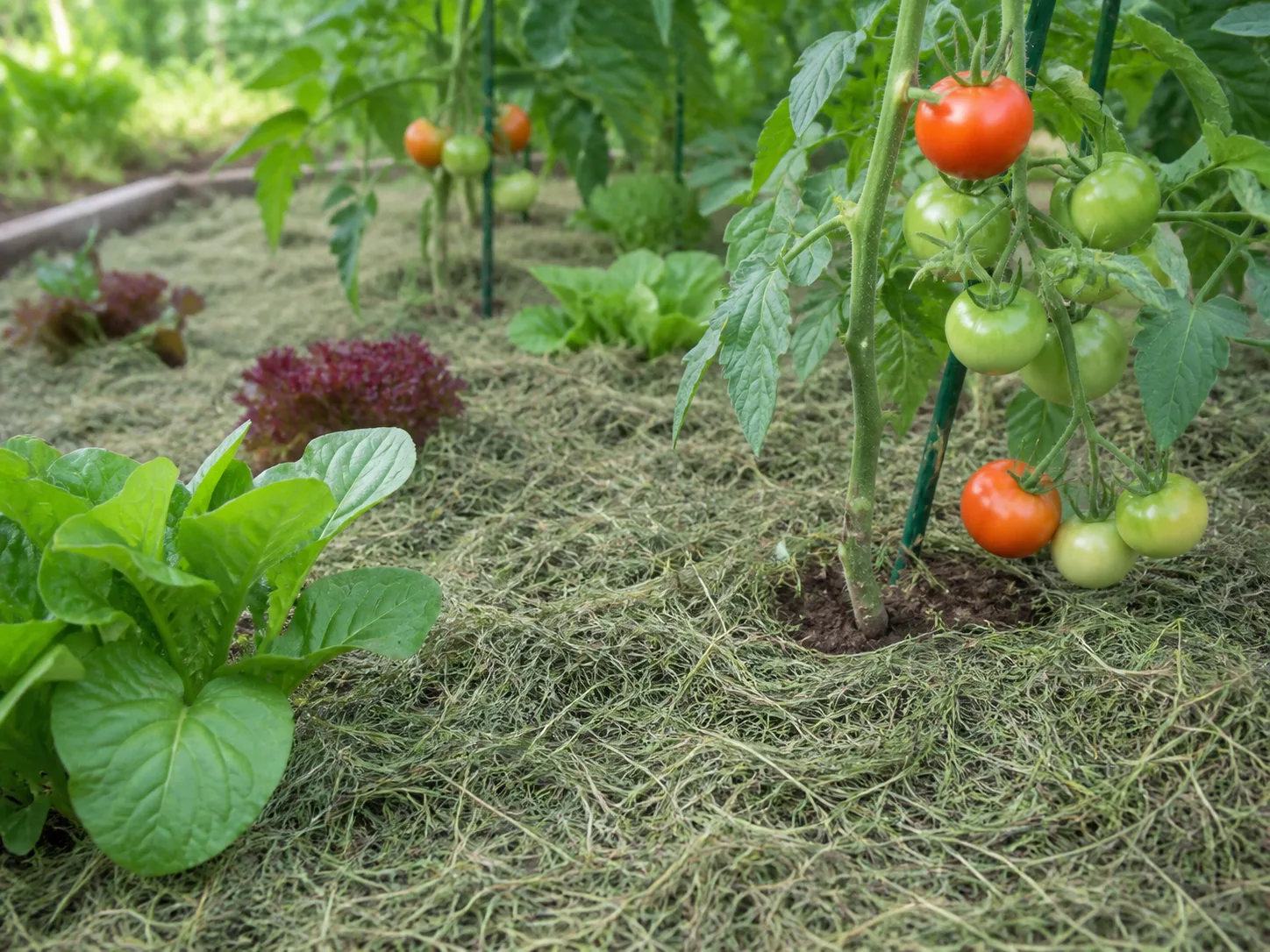
Weeding is only half the job. Once the bed is clear, cover exposed soil around established plants with an appropriate organic mulch. NC State Extension recommends applying organic mulch after the soil has warmed and the plants are established, generally 2 to 4 inches deep, while keeping the material away from stems and ensuring the soil is moist before mulching. Its vegetable gardening handbook also explains that mulch conserves moisture and reduces the amount of hoeing needed.
Use a thinner layer around tiny seedlings so you do not bury them or create a damp collar around the stem. Straw, shredded leaves, or finished compost can work in the right setting, but avoid bringing in mulch that contains mature weed seeds or unknown herbicide residues. Mulch is a barrier to new germination; it is not permission to leave established weeds underneath.
At the end of the routine, knock soil from the blade and let the tool dry. If you worked in wet clay, rinse it and dry it before storage. A sharp, clean edge needs less force, and less force is exactly what protects your wrist when a weeding session becomes a habit rather than an occasional chore.
Water the root zone, not the leaves
Weeding does not make a vegetable garden thrive by itself. Once weeds stop taking water and nutrients, the crop still needs a stable supply of both. NC State Extension uses 1 inch of water per week as an average starting point for vegetable gardens, but that is the amount to provide after accounting for rainfall—not a timer setting that applies to every garden.
Adjust the one-inch rule to soil, weather, and crop stage
In sandy soil, water drains quickly and the garden may need shorter intervals between deep applications. Clay soil can hold water longer but may become waterlogged if you apply a large amount too quickly. Raised beds and vertical crops often dry faster than in-ground beds. Newly seeded rows and young transplants need more frequent attention because their roots have not reached the deeper, more buffered moisture zone.
Measure instead of guessing. Put a rain gauge in the garden or place straight-sided containers under a sprinkler to see how much water is actually landing. Push a trowel into the bed after irrigation and check whether moisture has reached the main root zone rather than wetting only the first inch. Avoid frequent shallow watering, which encourages a shallow root system and leaves plants vulnerable when the surface dries.
Water the soil directly when practical. Drip irrigation and soaker hoses reduce leaf wetness and keep water from splashing soil onto foliage, while a gentle nozzle can work for a small bed if you aim at the base of the plants. Morning is a useful default in many gardens because leaves have time to dry, but the best timing also depends on temperature, humidity, disease pressure, and the irrigation system. The rule is not “always morning” or “always night”; it is to deliver water where roots need it without keeping foliage wet unnecessarily.
Weeds can be a moisture signal. If the soil is dry enough that a small weed comes out as a brittle stem with no attached soil, the crop may also be under stress. If the soil is saturated and the weed pulls effortlessly from a muddy hole, pause before adding more water. A CobraHead can help you read the soil while you work, but it cannot correct a bed with poor drainage.
Support, feed, and harvest before summer gets away from you
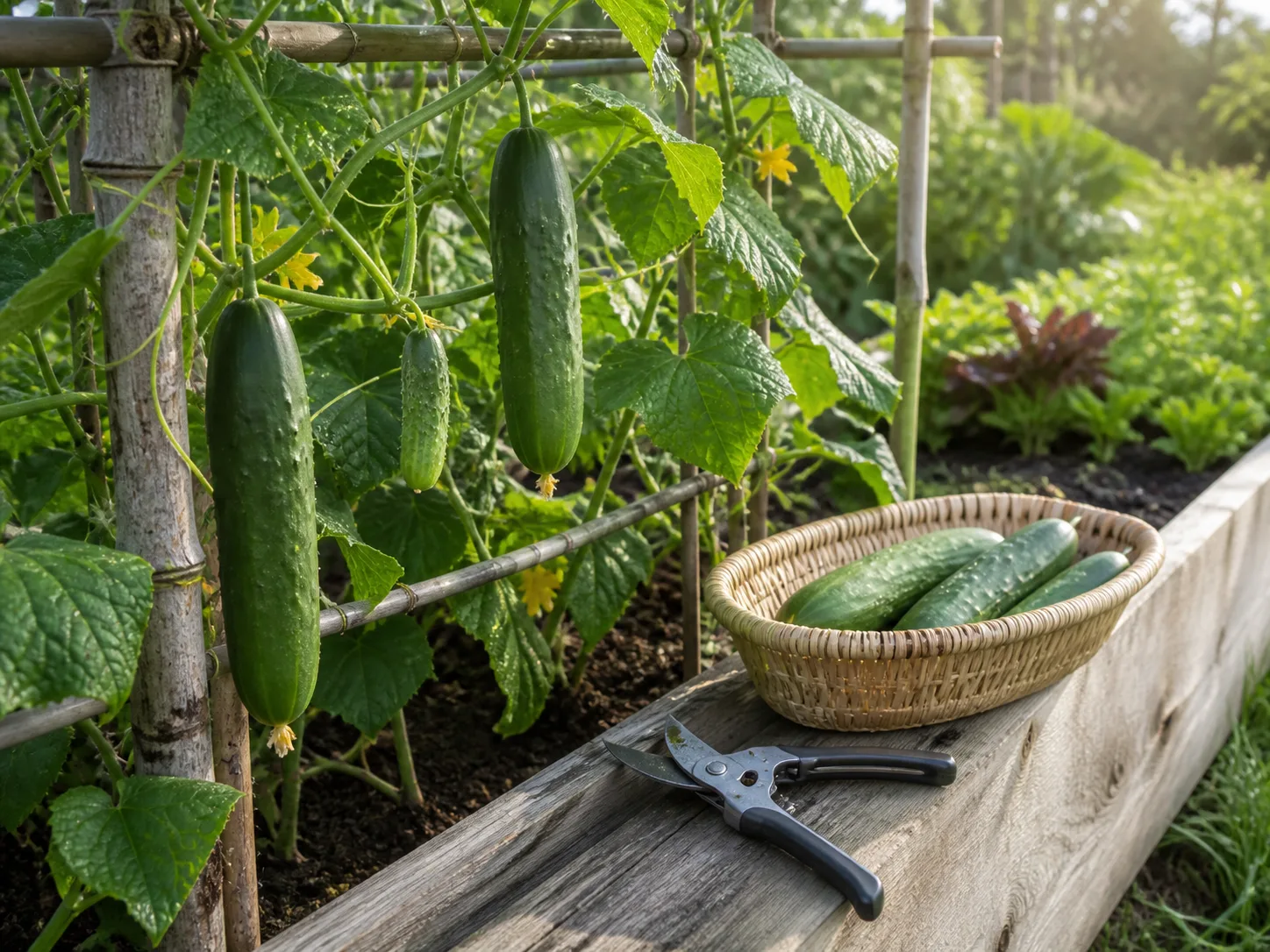
Support vines and heavy branches before they sprawl
Put supports in place while plants are small. Cucumbers, pole beans, and some melons can be trained to a trellis; tomatoes need cages, stakes, or another support system; and peppers or eggplant may need a stake when fruit loads make branches bend. Supporting a plant after it has sprawled through neighboring crops is harder on the stems and makes weeding much more difficult.
NC State Extension notes that vertical gardening can save ground space, but vertically grown plants are more exposed and may dry faster. Place tall trellises where they do not shade shorter crops, and inspect the shaded side for weeds and dry soil. A support system should improve access, not create a wall that hides the soil.
Use soft ties and attach them loosely enough for stems to expand. Keep fruit off the ground when possible, but do not force a heavy melon onto a flimsy trellis; a sling or cradle may be safer. The CobraHead is helpful for opening a hole for a stake or clearing weeds around a support, but it should not be used to pry a deeply anchored post from compacted ground.
Fertilize from soil needs, then plant and pick strategically
Fertilizer is not a reward for having a weedy garden, and more is not automatically better. Start with a soil test where one is available, amend with mature compost when needed, and follow the crop’s requirements. Long-season vegetables such as tomatoes, peppers, and eggplant may need additional feeding, while rich soil and a heavy compost application may mean a light touch is enough.
Avoid using a calendar as a substitute for observation. Pale new growth, stalled growth, excessive leafy growth with few flowers, and poor fruit set can have different causes, including light, temperature, water, root damage, or nutrition. Diagnose the pattern before adding fertilizer, especially in containers and raised beds where salts can accumulate.
For a longer harvest, use succession planting rather than sowing the entire garden on one weekend. NC State describes staggered planting of the same crop, varieties with different days to maturity, and replacing a finished crop with a new one. That can mean sowing lettuce or arugula every couple of weeks, following spring radishes with a summer crop, or starting fall greens while warm-season plants are still producing.
Pick often once crops are ready. NC State’s harvest guidance notes that leaving mature cucumbers on the vine can slow new production, and the same basic observation applies to beans and summer squash. Frequent harvest keeps the garden in an active cycle and gives you another reason to inspect for weeds, pests, broken stems, and dry soil before a small problem becomes a large one.
Design a vegetable garden that needs less weeding
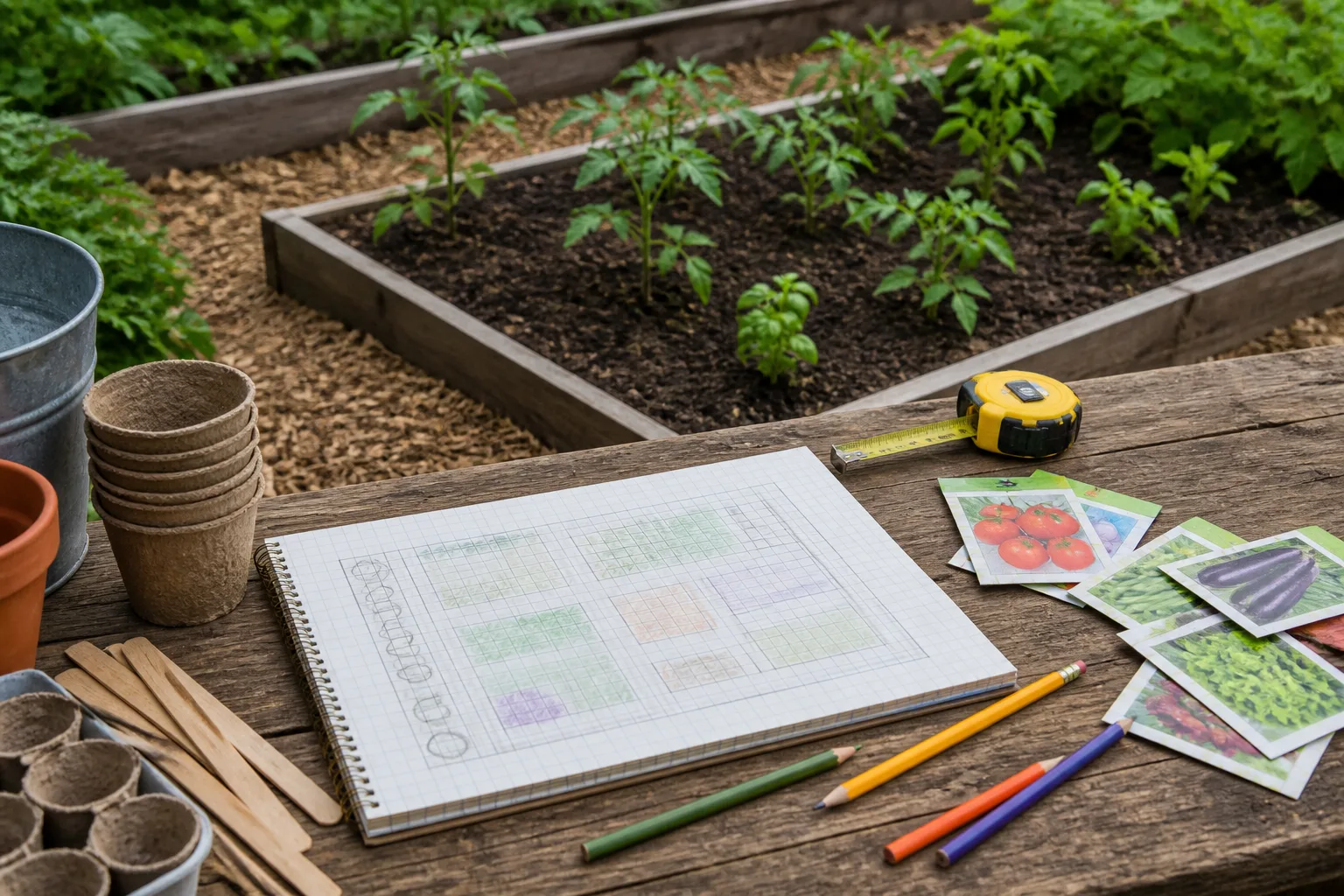
The easiest weed to remove is the one you never give room to establish. That does not mean packing plants together until air cannot move; it means planning beds, paths, crop spacing, and harvest access so that irrigation and maintenance are concentrated where plants grow.
Keep paths defined and avoid walking on the bed soil. Compaction reduces pore space, makes cultivation harder, and creates the crusted conditions that invite you to use too much force with a hand tool. Beds that are narrow enough to reach from both sides let you weed the center without stepping between crops.
Use the garden’s vertical dimension carefully. Trellised cucumbers, tomatoes, beans, and melons can leave more ground available for lower crops, but they need dependable support and water. Place tall structures on the north side of the bed in the Northern Hemisphere when possible, and put shade-tolerant crops where the structure’s shadow will fall.
Make room for a clean transition between one crop and the next. When a lettuce row is harvested, remove roots and debris, pull any weeds that appeared underneath, add only the amendments the soil needs, and sow the next crop. Savvy Gardening’s practical overview of weeding tools makes a similar broader point: a tool works best when it is matched to the weed, soil, and planting situation rather than treated as a universal answer.
Finally, reduce the seed supply around the bed. Mow or remove weeds before they flower in paths and margins, compost only plant material that will not spread viable seed, and inspect purchased compost or manure for persistent herbicide concerns. A neat bed inside a weedy perimeter is still a weed nursery.
Common CobraHead mistakes, limits, and safety rules
The first mistake is using the tool too deep. A CobraHead can cut through soil, but deep bites bring more soil to the surface, disturb crop roots, and ask your wrist to provide force the blade could have supplied with a shallow pass. Start near the surface and increase depth only when the root or task requires it.
The second is pulling every weed with the same motion. Scalping a shallow annual, levering a taproot, cutting a runner, and loosening a grass clump are different jobs. If you feel a stem stretching while the soil stays tight, stop pulling and expose the root instead of increasing the strain.
The third is working too close to a crop because the blade feels precise. Precision is a capability, not a guarantee. Roots can extend beyond the plant’s visible canopy, especially in loose raised-bed soil, so hand-pull directly beside stems and use the tool farther out where you have a safer margin.
The fourth is treating the tool as a soil-repair machine. Use a fork, broadfork, shovel, or mattock when the task involves deep compaction, hardpan, large roots, or rocks. Use the CobraHead to finish, cultivate shallowly, make a furrow, and maintain a bed that is already workable.
Wear gloves, keep the blade pointed away from your body, and do not work through repetitive pain. The manufacturer specifically advises gloves, switching hands, taking breaks, and stretching when using its tools. If you have limited grip strength, arthritis, or a history of wrist or shoulder injury, test the tool for a few minutes in soft soil and consider whether the Original, Mini, or Long Handle gives you the best control.
The final limit is emotional rather than mechanical: the tool cannot rescue a garden that is too large for the time you have. Start with a bed you can inspect weekly, add mulch after the soil warms, support crops before they sprawl, and expand only when the maintenance loop feels manageable. A smaller garden kept consistently is more productive than a large garden that disappears under weeds every July.
Conclusion
The CobraHead weeder is worth considering when you want a narrow, high-control tool for vegetable rows, raised beds, seed furrows, edges, and the weeds that grow where a broad hoe cannot safely reach. Its curved blade can loosen a taproot, shave young weeds, and cultivate shallowly, but it works best when you use the right motion for the weed and stop before the crop’s root zone becomes collateral damage.
The bigger lesson is that the tool earns its keep inside a system. Weed briefly while plants are small, mulch exposed soil, water to the root zone, install support early, feed from soil and crop needs, and harvest often. With those habits in place, the CobraHead becomes what a good garden tool should be: a simple way to make the next necessary job smaller.