Front Yard Clutter to Remove for Better Curb Appeal
Declutter a busy front yard with a curbside audit, mature-size planting rules, and a practical keep, relocate, prune, or remove plan.
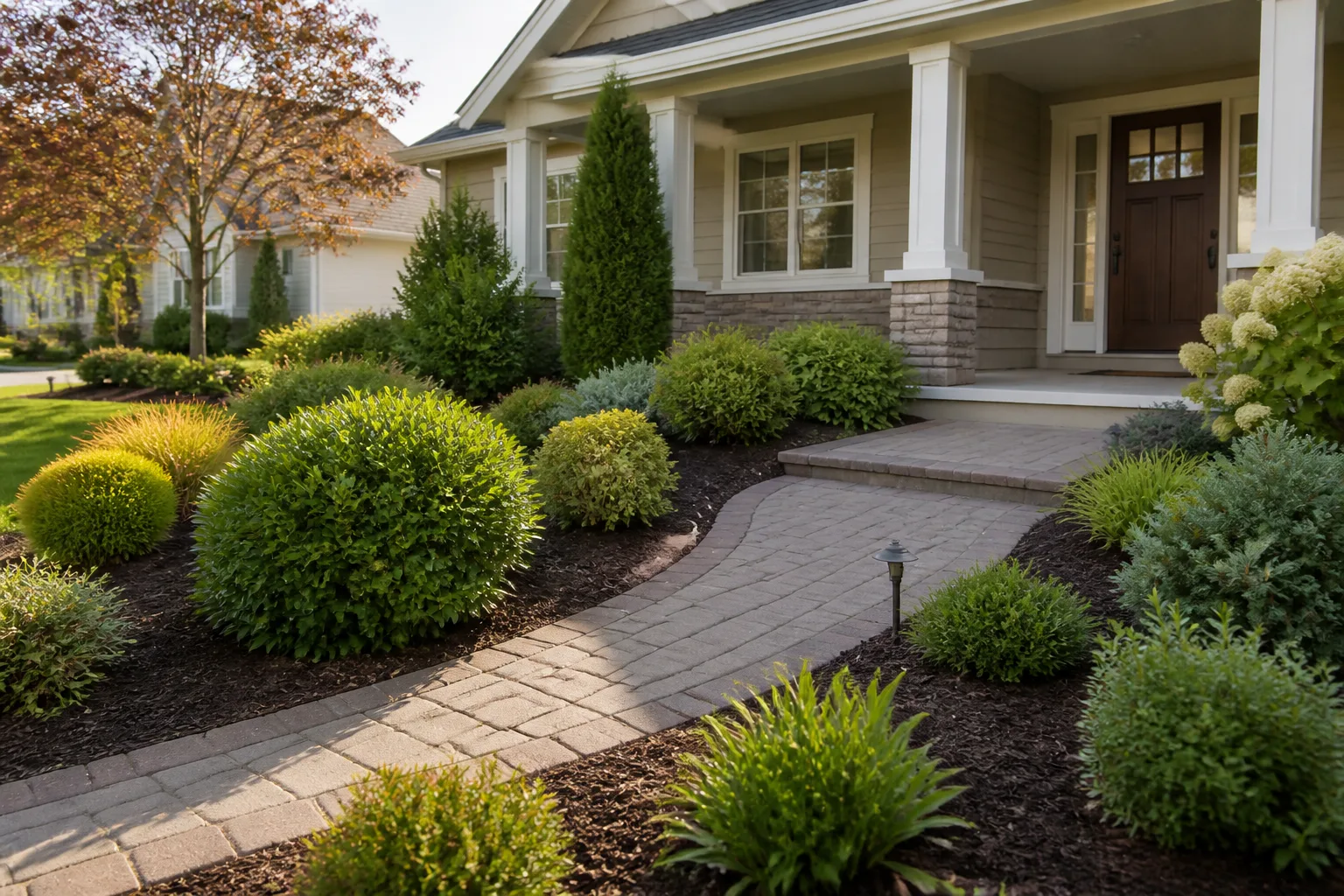
Your front yard does not have to look empty to look valuable. It needs to look intentional: a visitor should be able to see the house, understand where to walk, and notice a few strong landscape features without having to sort through a jumble of plants, objects, signs, and seating.
That distinction matters if you are selling, but it also matters if you plan to stay. The National Association of REALTORS’ 2023 outdoor-features report found that 92 percent of REALTORS had suggested that sellers improve curb appeal before listing, while 97 percent considered curb appeal important in attracting a buyer. Those figures describe professional opinion and buyer perception—not a guaranteed increase in appraisal or sale price. Design, neighborhood expectations, upkeep, and the condition of the home still matter more than any single flower bed.
The useful question is not “How do I make my yard boring?” It is “Which things are competing for attention, blocking movement, or creating future work?” Start by removing the features that obscure the home or look accidental. Keep the plants and objects that provide structure, welcome, shade, habitat, or genuine enjoyment.
What Makes a Front Yard Feel Too Busy?
A busy front yard usually has too many visual signals at the same time. A line of shrubs crowds the windows, several unrelated pots sit on the steps, bright flags compete with a sculpture, and a curving bed has no clear edge. Each element may be attractive by itself, but the combination makes the eye stop everywhere and settle nowhere.
Landscape designers describe this problem through ideas such as scale, proportion, repetition, unity, and visual weight. UF/IFAS’s basic principles of landscape design explains that plants and hardscape are organized through qualities such as line, form, color, texture, and visual weight, while principles such as proportion, order, repetition, and unity help those features work together. In plain language, a yard feels calmer when the house has a clear visual lead, planting has enough negative space, and accents repeat or support a recognizable style.
Clutter can also be functional rather than decorative. A walkway that is technically present but narrowed by pots is cluttered. A shrub that hides the front door is cluttered. So is a lawn crowded with objects that have no job, or a planting bed that requires constant shearing because every plant was installed too close together. The best edits improve sight lines and maintenance at the same time.
The Curbside Audit: Look Before You Remove Anything
Before pulling a healthy shrub or hauling every ornament to the curb, make a quick inventory. Take photographs from the street, the sidewalk, the driveway, the front porch, and the rooms that look toward the front yard. Mark the views that feel blocked, the paths that feel tight, and the places where your eye lands first.
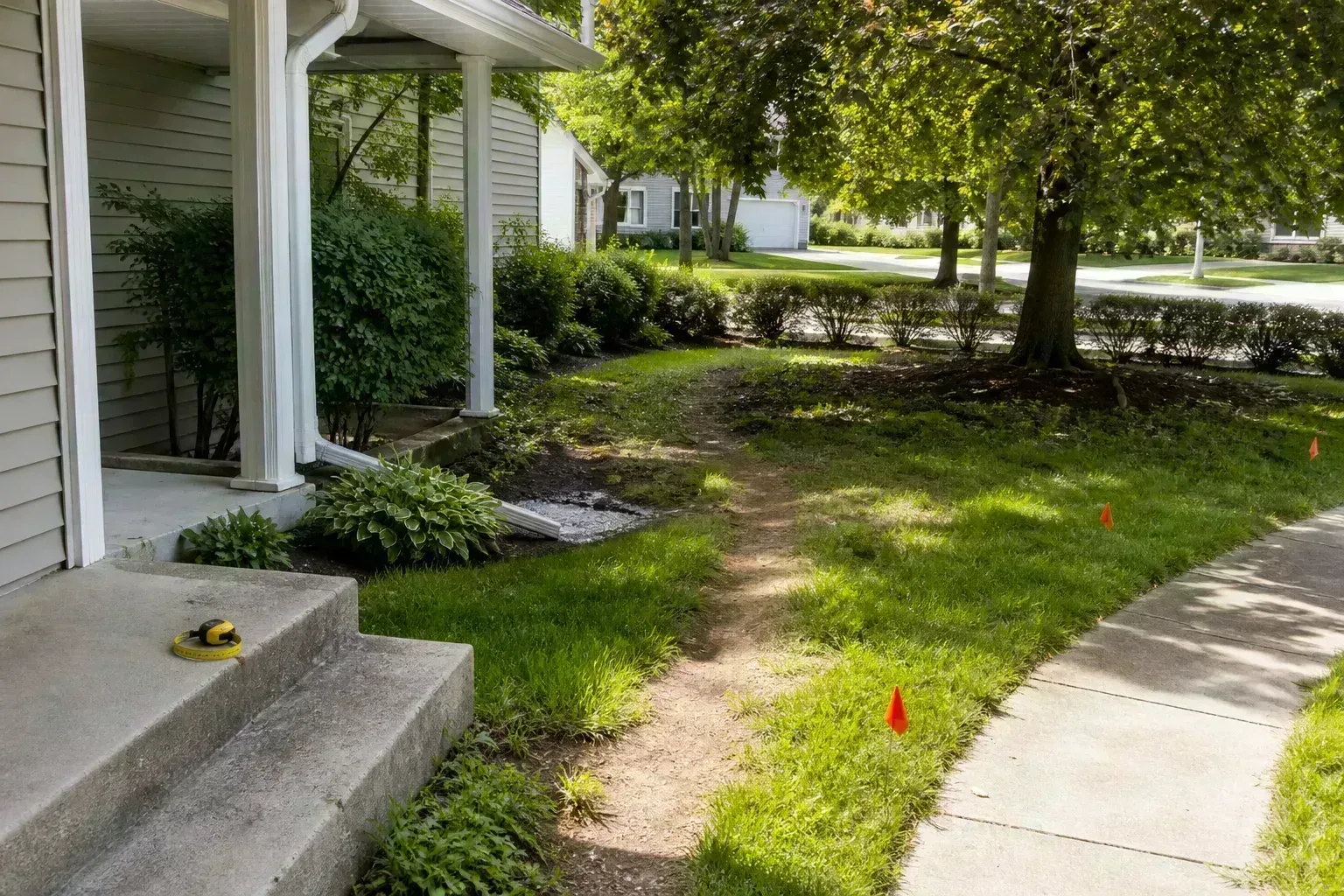
Walk around at different times of day if you can. Morning light may reveal a crowded porch while afternoon shadows make a bed look flat. Note seasonal changes too: a dormant perennial may look sparse in winter but be exactly the right size in July, while a small nursery shrub may already be on track to cover a window. For a more exact inventory, the RHS guide to creating a garden plan recommends mapping the space, existing features, and sunlight before committing to changes.
Use six labels for every feature: keep, edit, relocate, prune, divide, or remove. “Keep” is for an element that earns its space. “Edit” means reduce a collection or simplify its surroundings. “Relocate” is for a good feature in the wrong spot. “Prune” applies when the plant is healthy and responds well to the cut. “Divide” can rescue crowded perennials. “Remove” is for dead, hazardous, invasive, chronically unhealthy, or truly misplaced material.
The goal is not symmetry at any cost. Some front yards are formal, some are cottage-style, some are wildlife-friendly, and some are mostly lawn with one tree. A strong audit asks whether the landscape fits the house, the site, the people using it, and the amount of care available—not whether it resembles a single magazine style.
Test the Yard from the Street, Sidewalk, and Windows
Stand across the street and squint. Squinting reduces detail and lets you see the large shapes: roofline, tree canopy, shrubs, lawn, bed lines, and front door. If the house disappears behind a wall of greenery, the issue may be plant height or placement rather than too many plants overall. If the yard becomes a field of unrelated bright dots, reduce accents before reducing all the green.
Then walk the actual approach. North Carolina State Extension’s landscape-design guide treats the front yard, driveway, walk, and main entrance as a public-use area whose job includes directing visitors to the front door. Check that two people can walk side by side where appropriate, that steps and paving are clear, and that a tall plant does not block a driver’s view of the sidewalk or driveway.
Finally, check the house-side views. A mature tree that frames a porch from the street may provide welcome shade, while a shrub pressed against a window may turn a room dark and make exterior maintenance difficult. Preserve elements that frame the architecture; edit the ones that erase it.
1. Overplanted Beds
Overplanting is the most expensive kind of front-yard clutter because it gets worse with time. A bed can look pleasantly full when the plants are newly purchased, then become a tangled mass once shrubs reach their mature width and perennials fill in. Constant trimming does not solve a spacing problem; it turns the landscape into a high-maintenance attempt to keep plants smaller than they want to be.
North Carolina State Extension recommends considering a plant’s mature height and spread, growth habit, bloom cycle, and seasonal interest before selecting it. Its landscape-design guidance also notes that plants near buildings should be placed at least half their mature width plus a minimum of 1 foot from the structure. That is a planning rule of thumb, not a universal answer for every species or climate, but it illustrates the right approach: measure from the plant’s future footprint, not the nursery pot.
Thin a crowded bed by starting with the plants that create the biggest problems. Remove dead or declining material first. Next, identify plants that block doors, windows, utilities, air-conditioning equipment, or a safe walkway. Then compare each remaining shrub’s mature size with the available space. If three plants will eventually occupy the footprint meant for one, moving or removing one now is kinder to all three than waiting until their roots are intertwined.
Plan for Mature Size, Not Nursery Size
Read the full plant tag or a regional extension database, including mature height, mature spread, sun, soil, water, and hardiness information. A dwarf cultivar may be a good foundation plant in one climate and still be too broad for a narrow path. Conversely, a naturally small shrub may look lost in a wide bed until it is grouped with compatible plants.
Do not fill every gap immediately. NC State cautions against the temptation of an “instant landscape”: smaller plants are often more economical and establish faster, while oversized nursery stock can suffer more transplant stress. A little open soil around a new plant is easier to manage than a bed that demands emergency removal three years later.
If an existing plant is valuable but too close to the house, ask whether it can be moved safely during the right season for that species and climate. Large trees, plants with sensitive roots, and specimens near utilities are not casual DIY relocations. Call 811 before digging in the United States, and hire an arborist or qualified landscape professional when removal could affect a structure, utility, retaining wall, or mature tree.
2. A Collection of Mismatched Plants
Variety is not the same as cohesion. A front bed can contain many species and still feel composed when they share a growing condition, color relationship, foliage texture, or repeated shape. It feels disjointed when every plant is a one-off accent with a different height, bloom color, maintenance schedule, and visual direction.
RHS guidance for planning a border recommends knowing the soil and drainage, considering ultimate plant height and spread, and placing structural plants first. That order is useful in a front yard: establish the bones, add repeated groups, and reserve a small number of contrasting plants for emphasis. It prevents the common mistake of shopping for individual flowers first and trying to invent a design afterward.
Use Repetition to Make Variety Look Intentional
Choose a limited planting language. You might repeat one evergreen shape, one grass-like texture, and two seasonal colors. Or use a single shrub as a quiet rhythm along the walk, with one contrasting tree near the entry. Repetition gives the eye a pattern to follow, while negative space keeps the pattern from becoming a wall.
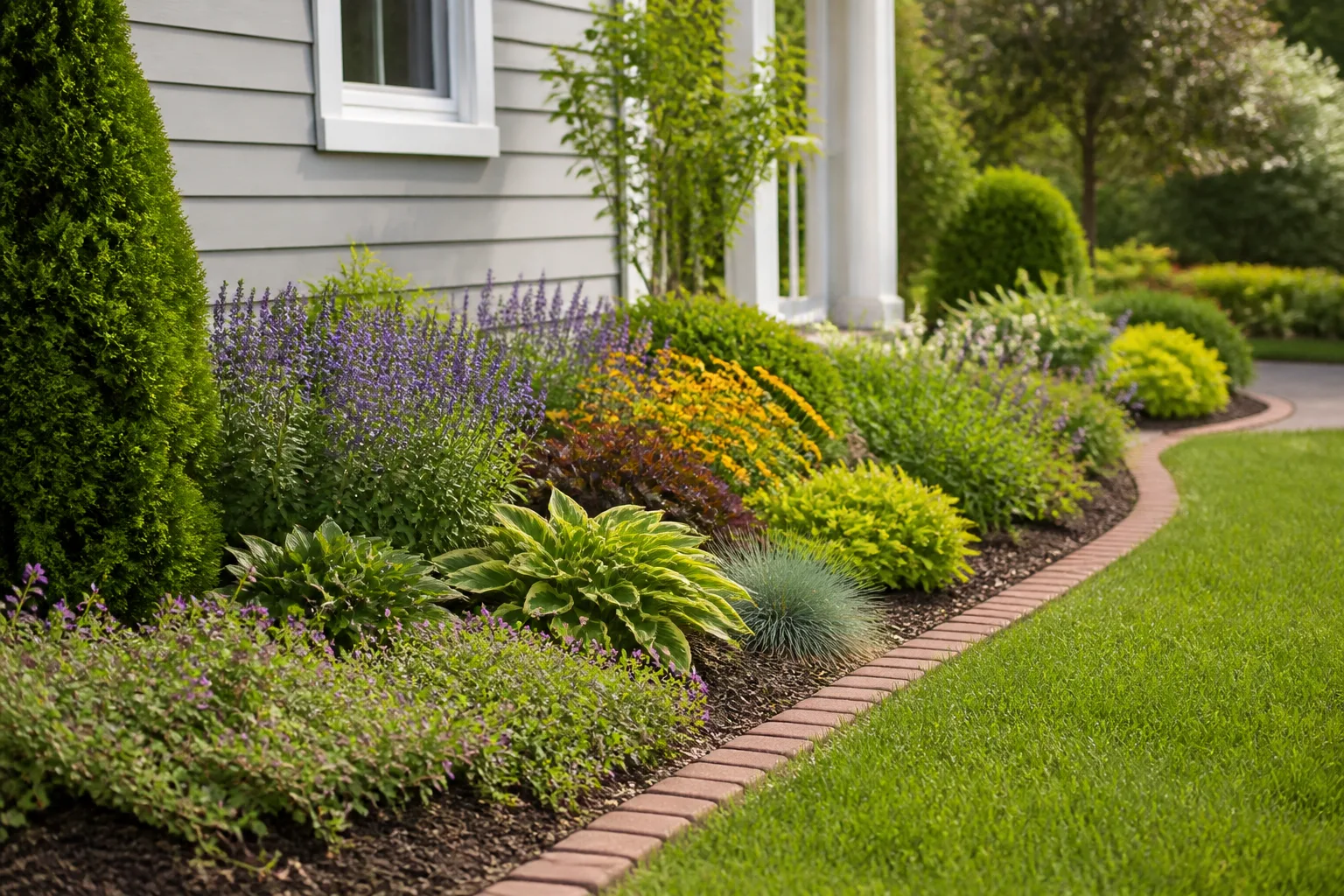
Group plants with similar sun, moisture, and soil needs so the bed is easier to water and maintain. The right plant in the wrong place is not a design accent for long; it becomes a struggling, yellow, overwatered, or constantly pruned problem. The RHS’s “right plant, right place” guidance connects site conditions with more resilient planting and fewer costly replacements.
You do not need to remove every plant that differs from its neighbors. First ask whether it serves as a focal point, seasonal bridge, wildlife resource, or personal memory. If it has a legitimate role, repeat one of its colors or textures nearby so it feels connected. If it has no role beyond filling an empty spot, it is a good candidate for relocation or removal.
3. Multiple Seating Areas and Loose Furniture
One bench, bistro set, or pair of chairs can make a front yard feel lived-in and welcoming. Several unrelated seating areas can make the same space look undecided, especially when furniture spills across the lawn, porch, and planting beds. The problem is not outdoor furniture itself; it is furniture without a clear room, destination, or scale.
Keep the area that supports a real habit. If you drink coffee on the porch, edit the front-yard seating down to that spot and give it a clean approach. If the front yard is used for watching neighbors or supervising children, choose one durable arrangement that leaves the walk and sight lines open. Store extra chairs, folding tables, cushions, and seasonal pieces out of view when they are not in use.
Furniture should also relate to the house. A single material or color repeated in the door hardware, porch, fence, or containers can make a small seating area feel intentional. Garden Design’s front-yard guidance makes the same practical connection between scale, function, traffic flow, and the way a front space is experienced from the street. Avoid forcing a lounge arrangement into a narrow strip simply because the yard has unused square footage; negative space is part of the design.
4. Flags, Signs, and Seasonal Messages
Flags and signs attract attention by design, which is why too many of them can overwhelm a front elevation. Political signs, school banners, sale notices, novelty messages, and seasonal markers may be meaningful to the household, but a cluster turns the yard into a bulletin board and can distract from the home itself.
The practical rule is simple: keep only what has a current purpose, a reasonable scale, and a permitted location. Check local sign ordinances, HOA rules, and visibility requirements before installing or leaving anything near a sidewalk or driveway. For a normal day, one restrained seasonal message is usually enough. For a listing, remove temporary signs and personal messages unless they are legally required or directly relevant to the sale.
Do not use signs to compensate for a confusing entry. If guests cannot tell where to go, fix the path, lighting, house numbers, or planting that blocks the door. A clear approach is more welcoming than a larger sign.
5. Too Many Garden Ornaments
Garden ornaments work best when they have breathing room. A bird bath, sculpture, urn, or favorite gnome can act as a visual stop or a small point of personality. Several objects competing with a bright door, flowering shrubs, containers, and flags can make the yard feel like a collection rather than a landscape.
Edit by category. Gather all ornaments, seasonal decorations, hanging items, and containers in one place, then return only the pieces that support the home’s style or the garden’s function. Discard or repair cracked, faded, unstable, or unsafe objects. Move wildlife features where they are useful and easy to maintain rather than placing them only where they are visible from the street.
Keep One Focal Object and One Supporting Detail
Pick the feature you want visitors to remember: perhaps a well-shaped tree, a distinctive planter, a bird bath, or the front door itself. Let the other pieces support that focal point through scale or material. UF/IFAS notes that one or two strongly contrasting forms can create emphasis, but too many contrasting forms create chaos. That is a helpful editing limit even if you prefer an eclectic garden.
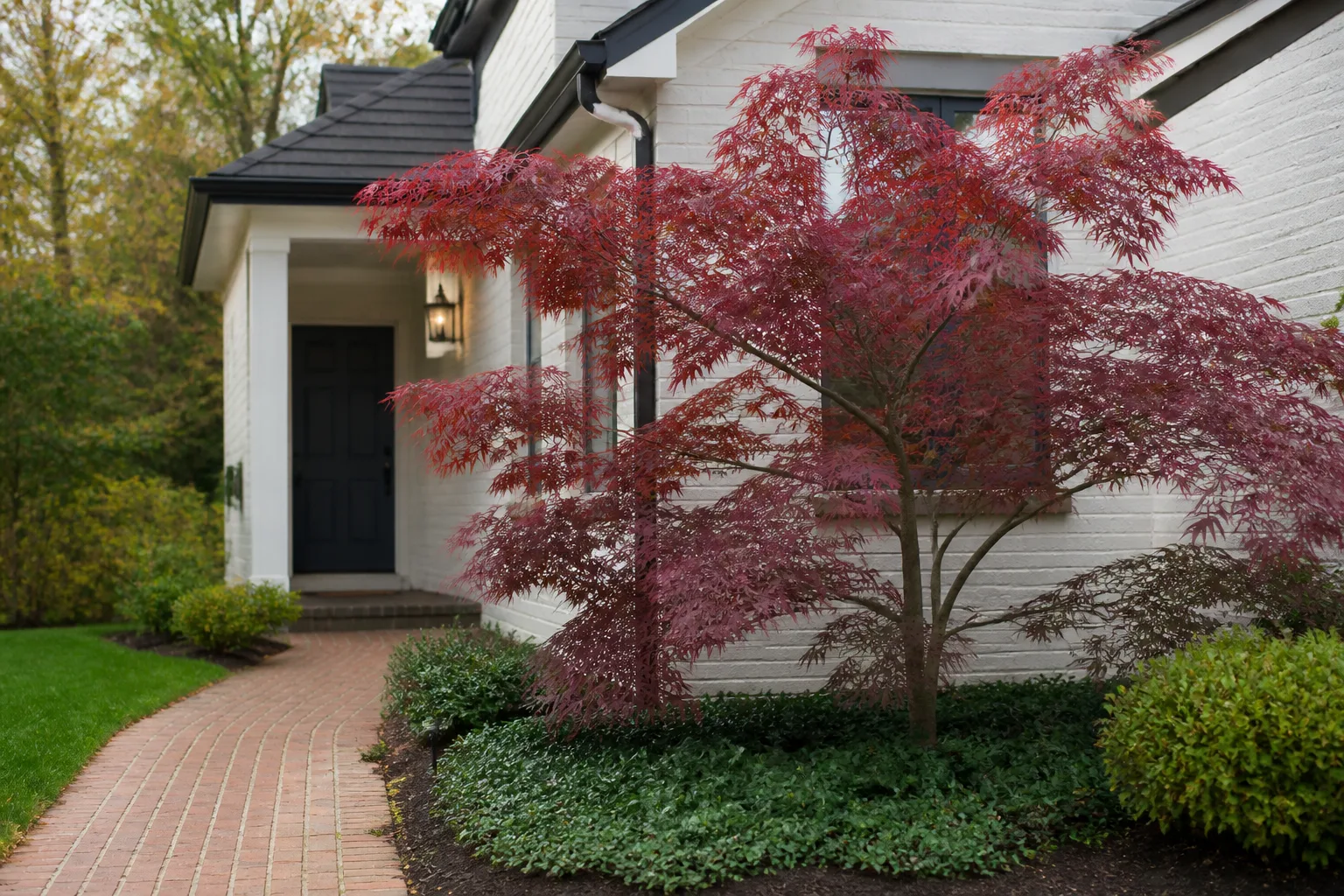
Protect the space around the focal feature. If a sculpture is hidden by foliage, or a planter is squeezed between two shrubs, the solution is not always a larger object. Prune or relocate the surrounding plants, widen the visual gap, and let the feature be seen from the approach. A focal point should guide the eye toward the house, not create a dead-end obstacle.
6. Thick or Scattered Mulch
Mulch is useful, but it is not a substitute for a bed design. A thin, even layer can visually unify soil, reduce weed pressure, and help moderate moisture. Mulch scattered across turf, piled against trunks, spilling over the sidewalk, or applied in several unrelated colors makes the yard look unfinished and can harm plants.
The common “mulch volcano” around a tree is especially poor practice. Keep mulch away from trunks and the crowns of perennials, and do not use a deep pile to hide exposed roots, drainage problems, or a bed edge that has disappeared. The right depth varies with material and site; the goal is a settled, consistent layer that does not smother stems or redirect water toward the house.
Reset the Bed Edge and Mulch with Purpose
First define the bed line. Use a hose or rope to test a broad, simple curve, or follow the architecture with a clean straight edge. Avoid narrow islands, sharp corners, and awkward pockets that are difficult to mow and water. NC State specifically recommends avoiding irregular edges and tight corners when designing for lower maintenance.
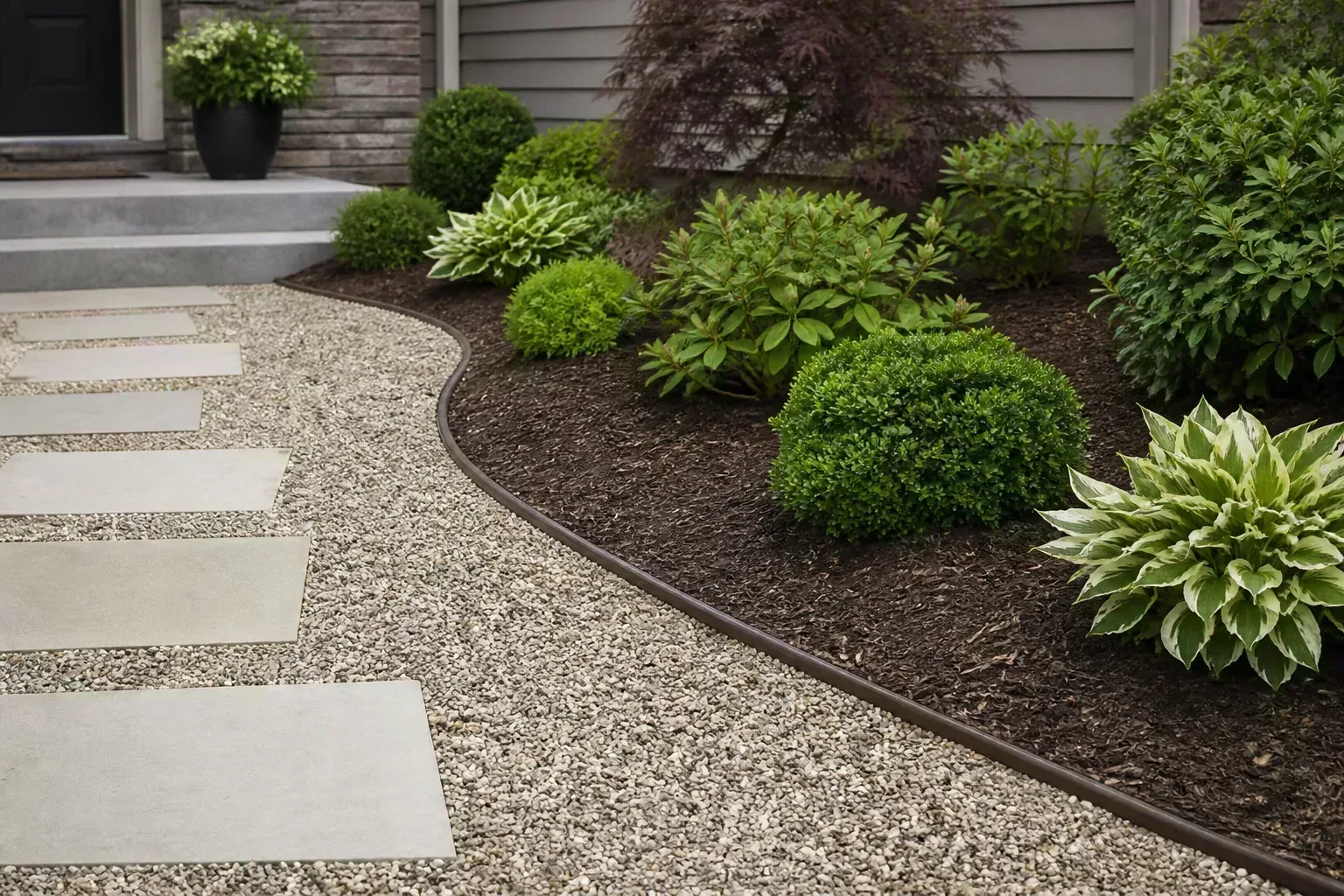
Next, rake stray mulch off pavement and lawn, pull weeds, and check whether the existing layer is already thick before adding more. If the bed is compacted, waterlogged, or eroding, solve that condition instead of burying it. A compatible ground cover, leaf litter under established trees, or a small area of rock may be more appropriate than applying fresh mulch everywhere; choose the material for the plant, water, climate, and maintenance plan rather than color alone. Garden Design’s front-yard planting advice likewise pairs mulch with site-appropriate, lower-maintenance plants rather than treating it as a cure-all.
What to Keep: Build a Simple Front-Yard Hierarchy
Once the obvious clutter is gone, organize what remains in layers. The first layer is the house and entry: front door, steps, walkway, windows, address numbers, and lighting should be legible and accessible. The second is the structural planting: a tree, evergreen, shrub mass, or ground cover that gives the yard shape across seasons. The third is seasonal interest: flowers, foliage color, berries, or a container that changes the scene without taking over.
Use one clear focal point near the entry or along the natural approach. Repeat a plant, color, material, or curve to lead the eye toward it. Leave some open lawn, paving, or mulch as visual rest. Empty space is not wasted space; it shows the scale of the house and gives every remaining feature room to register.
The best hierarchy is site-specific. A hot, dry front yard may be strongest with a small tree, repeated drought-adapted shrubs, and a permeable walk. A shady lot may need fewer, larger foliage masses rather than a string of colorful annuals. A wildlife-friendly planting can look abundant and still be orderly when the bed edge is clear, plants are grouped, and the entry remains visible.
How to Declutter Without Harming Your Landscape
Do the work in the right order. Photograph the yard, identify utilities and irrigation, and mark plants you want to preserve before you cut or dig. Remove trash, dead annuals, broken décor, and loose objects first; they create an immediate improvement and do not require a horticultural decision.
Then address access and sight lines. Clear the walk, reveal the front door, trim only branches that truly obstruct a view, and move pots away from steps. After that, thin crowded plants based on mature size and health. Save major tree pruning, transplanting, and removals for the correct season or a professional assessment.
Decide Whether to Prune, Relocate, Divide, or Remove
Prune a healthy plant when the obstruction is limited and the species responds well to that timing and method. Do not shear every shrub into a smaller geometric shape if it will quickly grow back or lose its natural form.
Relocate a desirable young plant that is healthy but wrongly sited. Move it only when the root system, season, soil, and aftercare make success realistic. A plant that is too large, stressed, or close to utilities may be safer to leave temporarily while you plan.
Divide crowded herbaceous perennials when the species and season allow. Replant divisions in a compatible location or share them rather than forcing all the pieces into the same bed.
Remove dead, invasive, hazardous, chronically diseased, or irretrievably misplaced material. If a plant is mature and valuable, consult a qualified arborist before deciding. NC State recommends evaluating existing plants for health, environmental benefit, mature size, and contribution to the design; the biggest plant is not automatically the one that should go.
A 48-Hour Pre-Listing Reset
If a home is going on the market soon, focus on what a visitor sees in the first minute. Do not start a full redesign or remove established trees in a rush. A clean, accessible, well-maintained yard usually helps more than a dramatic but unfinished makeover.
On the first pass, remove litter, hoses, empty pots, toys, tools, dead containers, extra furniture, and temporary signs. Sweep the walk and porch, clean the house numbers, empty overflowing bins, and store anything that makes the front yard look like a work area. Keep one seating arrangement if it demonstrates how the space functions.
On the second pass, cut back only dead or clearly obstructive growth, pull weeds from the entry path, refresh a thin or uneven bed edge, and redistribute existing mulch rather than burying the bed in a new layer. Water stressed plants appropriately, but do not fertilize or heavily prune just before photographs or showings; fresh stress, wilt, or harsh cuts can make the landscape look worse.
Use this priority order:
- Clear the front door, steps, walkway, driveway, and house numbers.
- Remove broken, personal, temporary, or competing objects.
- Reduce the most visible overgrowth and dead material.
- Make bed lines and mulch look even without piling material against plants.
- Leave healthy structure, useful shade, privacy, and established trees in place unless a professional identifies a safety problem.
The NAR report’s cost-recovery estimates are based on representative projects and vary with design, material quality, location, home condition, and owner preferences. Treat curb appeal as a way to improve first impressions and reduce buyer friction, not as a promise that every landscaping dollar will return at closing.
When a Busy Yard Is Actually a Good Garden
Abundance is not automatically a defect. A pollinator garden, cottage border, edible front yard, or native planting may contain many species because it is designed to support seasonal bloom, wildlife, food, or layered habitat. Its success depends on whether the abundance has a pattern and whether the people using the property can maintain it.
Keep a full garden when the bed has a readable edge, the entry is safe, plants are healthy, and the density is intentional. Group plants by needs, repeat a few forms or colors, and give tall plants enough room to sway without covering the house. If the garden is meaningful to you, preserve its character and edit only the parts that block access, create hazards, spread invasively, or demand more labor than you can give.
The same principle applies to selling. A buyer does not need a blank yard; they need to see how the yard works and how much work it may require. A tidy, legible garden can feel more valuable than an empty one because it shows possibilities without hiding the costs.
Conclusion
A busy front yard is not defined by a number of plants, ornaments, or square feet of mulch. It is defined by competition: too many features demand attention, plants outgrow their spaces, objects obstruct movement, or maintenance has blurred the original design.
Start across the street, test the approach, and edit in a safe order. Remove temporary clutter, clear the entry, thin or relocate plants based on mature size, repeat a small number of design cues, and let one focal point lead the eye. Keep the healthy trees, useful shade, habitat, and personal details that genuinely serve the yard. That balance improves curb appeal for visitors and buyers while leaving you with a landscape that is easier to care for and better to live with.