How to Get Rid of Spiders in the House: What Works
Learn how to get rid of spiders in the house, remove webs and egg sacs safely, find entry points, and choose a control method that fits the problem today.
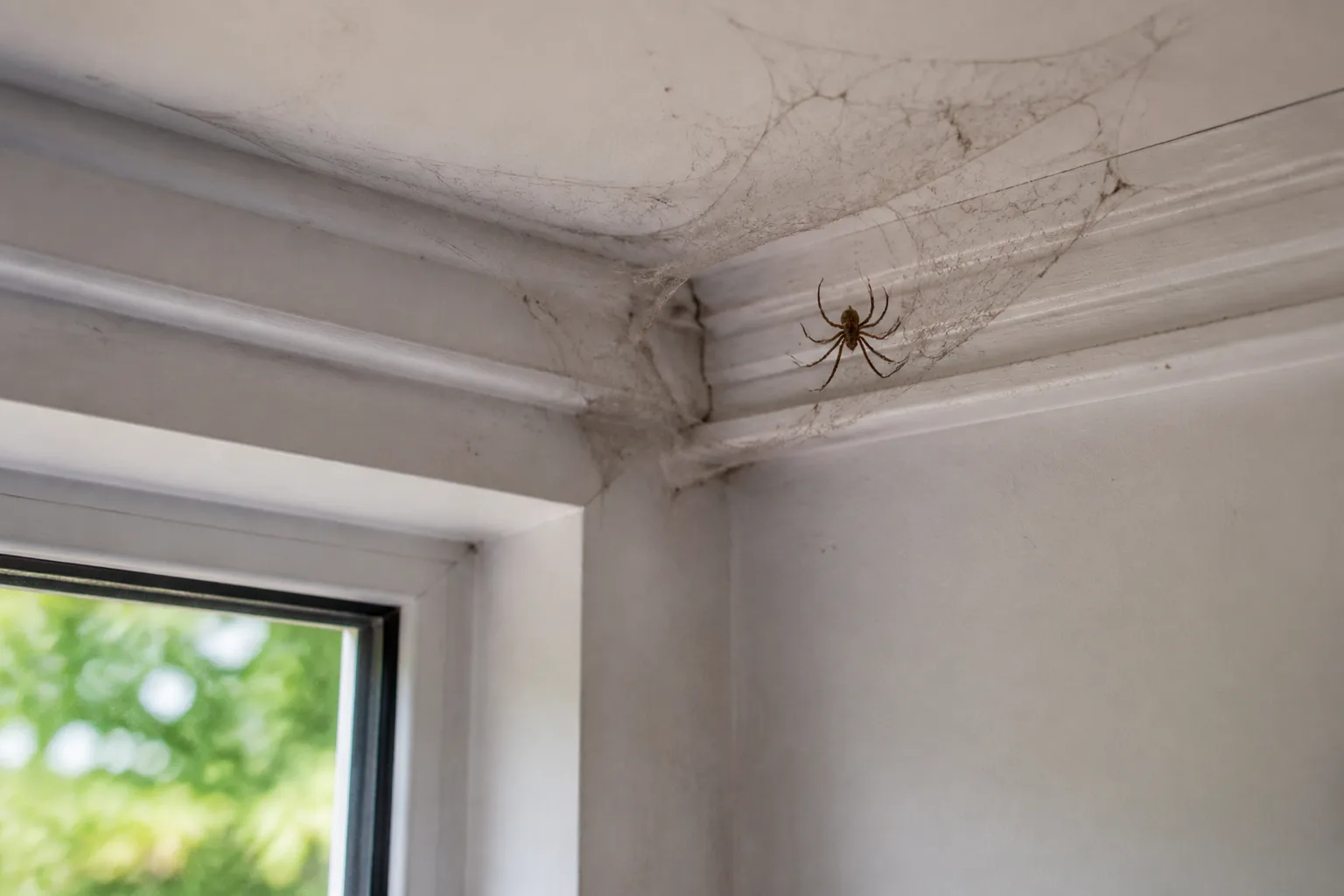
The fastest way to get rid of a spider in the house is to remove it without touching it, then clean the web or egg sac and check why that spot is useful to spiders. A vacuum wand is usually the simplest option for a reachable corner; a clear container and stiff card can work for someone who wants to release a clearly ordinary spider. If spiders keep appearing in one room, the lasting fix is to address the local combination of insects, undisturbed shelter, and entry gaps instead of spraying every baseboard.
Most spiders pose little risk to people and can help reduce other insects. That does not mean you have to tolerate webs over a bed, in a child’s room, or beside a doorway. A focused indoor plan lets you remove the nuisance while keeping the response proportionate and avoiding a cycle of broad pesticide use.
Start by sorting a one-off sighting from a repeat problem
One spider crossing a wall is not proof that a home has an infestation. It may have entered through a door, arrived in a box or firewood, or wandered from a quiet place that has been disturbed. Make a quick note of the room, the time, whether you saw a web or egg sac, and whether similar activity has shown up there before. That small record helps distinguish a stray from a recurring pattern without turning every sighting into a house-wide search.
Repeated fresh webs in the same corner suggest that a spider has found a steady web anchor and a route where prey passes. Several spiders in a single storage area may reflect undisturbed boxes or clutter, while repeated sightings near a bright window may point toward flying insects drawn to light. Activity appearing in unrelated rooms, persistent egg sacs, or spiders emerging from inaccessible gaps deserves closer inspection and may be a reason to call a professional.
What webs, egg sacs, and wandering spiders tell you
Web type and location can help with the next step, but they do not identify a species with certainty. A messy web tucked into a ceiling corner points to a web-building spider; a long-legged spider in a basement web may be a cellar spider; a fast spider crossing open floor may be hunting rather than waiting in a web. A dusty web may be abandoned, while clean, maintained silk is more likely to be in use. Either can be removed if it is somewhere you do not want it.
Look for a pale, round or pear-shaped silk sac near a web anchor, beneath a shelf, or behind stored objects. Shape and color vary, so avoid opening or handling an unfamiliar sac. A single sac is not a reliable headcount of the spiders in a home, but it is a useful reason to vacuum the surrounding corner and recheck that location. Colorado State University Extension notes that spider populations indoors are better managed with sanitation and habitat changes than with pesticides alone (Colorado State University Extension).
Species and medical risk vary by location. Black widows and brown recluses are important in some parts of the United States, but many lookalikes are harmless, and identifying a spider by a quick phone photo or a bite mark is unreliable. If the spider is unfamiliar and hiding in a dark, undisturbed area, do not put your hands close to it; use a photo taken from a safe distance or ask a local extension service for identification advice.
Remove a spider or web with the least risky method
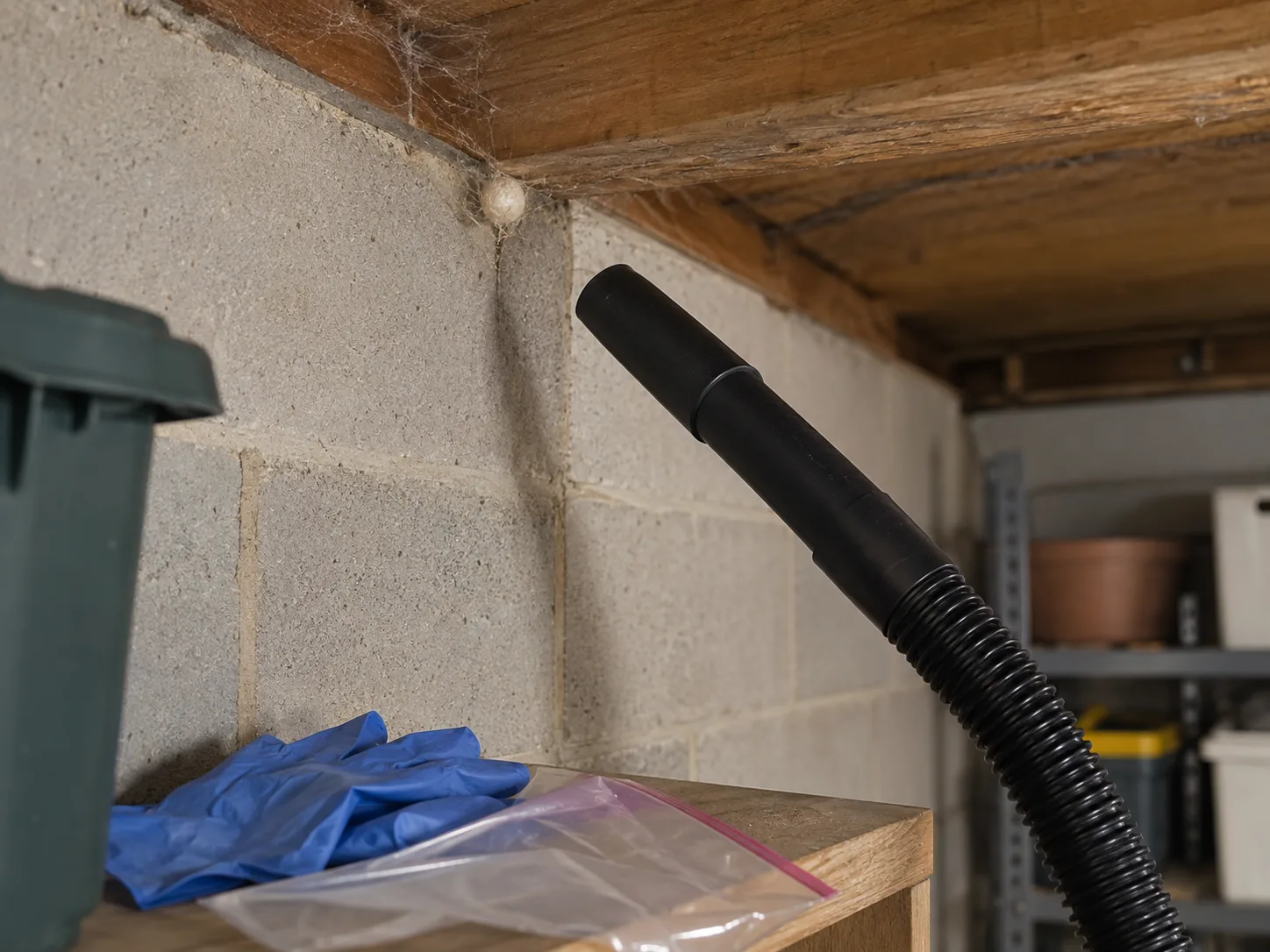
For a reachable indoor spider, use the vacuum hose or wand with a crevice attachment. Move the nozzle close enough to capture the spider, then trace the web’s anchor and vacuum the nearby corner, sill, and baseboard. UC Integrated Pest Management recommends sweeping or vacuuming spiders and webs as an effective indoor control step; it also notes that spiders generally do not survive the tumbling path through a vacuum hose (UC IPM). Empty a bagless canister outdoors into a sealable bag, or remove and seal the vacuum bag promptly. Follow the vacuum manufacturer’s cleaning guidance, especially if the canister contains dust or debris.
If you prefer to release a spider, place a clear jar or container over it and slide a stiff card underneath so the opening stays covered. Carry it outside and release it in a sheltered spot away from doors. Use this only when the spider is visible, low enough to reach without climbing, and does not appear medically significant. Skip the container method if it requires reaching behind furniture, putting your hand near a webbed gap, or standing on an unstable chair.
For high corners, a long-handled duster or vacuum extension is safer than a ladder or a swing at the spider. Do not move a refrigerator, pull out a stove, or reach behind a washer if the area contains wiring, hot surfaces, gas connections, or water lines. A spider is a small problem; a damaged appliance connection or a fall can be much harder to fix.
Vacuum, capture, monitor, or leave it alone?
Choose by location and confidence, not by the spider’s size alone. Vacuuming is quick and low-contact for a web or spider within reach. Capture and release is reasonable when the spider is clearly accessible and you are comfortable doing it. Leaving a spider alone can be sensible in a low-traffic basement corner if it is not a risk concern and you do not mind the web; remove it when the location matters to you. Sticky traps can help show whether spiders are traveling along a wall, but they can also catch other small animals and should be kept where children and pets cannot reach them.
After removal, close the vacuum bag or empty the canister outside rather than leaving the spider and web in the machine indoors. If you cannot do that immediately, seal the vacuum contents in a bag and keep it out of reach. Do not assume that one pass found every egg sac hidden behind a shelf. Recheck the specific corner over the next several days; an empty room does not require a daily chemical treatment or an exhaustive search of every object.
Find why activity keeps returning to the same room
Spiders do not need a dirty house; they need a place to shelter and prey to eat. The most useful inspection starts with the location where you found the spider. Check the window or door closest to a web, nearby light sources, cracks around pipes, and the edge of any storage or furniture that has not moved for a long time. Then look for small insects around lamps, windows, sinks, pet-food areas, or recycling. The goal is to identify a local route or resource rather than blame the whole room.
Bathrooms and basements can support insects around leaks, drains, or damp materials, but moisture does not attract every spider directly. Fix a dripping faucet, condensation, or a persistent leak because it can sustain prey and make a quiet corner more favorable. If the room is dry and clean but webs cluster around one window, focus first on the screen, frame, and insects gathering at the glass. If sightings occur in a closet or storage room, inspect the boxes and clothing that remain undisturbed, using gloves and a flashlight rather than reaching blindly.
Bedrooms need a different threshold because people sleep there and have less control over contact with a wandering spider. Pull bedding away from the floor, keep shoes and laundry off the floor, and check the bed frame and window before bedtime if sightings repeat. Do not spray a mattress, bedding, or upholstered furniture unless a product label specifically permits that exact use. If a suspected medically important spider is found near a child’s bed, stored clothes, or a play space, keep people away and get professional identification or pest-control help rather than handling it.
Read the room before moving appliances or stored items
Start with what you can see. A spider in a dusty upper corner often needs only a vacuum and a check of the nearby window or exterior wall. A web repeatedly rebuilt near a lamp suggests insects are concentrating there; changing the timing or direction of the light may help, but the relevant signal is whether insects and new webs decrease. A spider under a cardboard stack points to sheltered space, so move one box at a time and inspect before lifting or reaching inside.
Do not treat sticky traps as a census of the house. A trap along a wall can show activity on that travel line, but it cannot tell you whether a spider came from an adjacent room, a wall gap, or an item brought indoors. Use traps selectively for a short monitoring period, check them regularly, and remove them when the question is answered. If captured spiders are numerous or difficult to identify, save a clear photo or contact a local extension office instead of placing more traps everywhere.
Reduce indoor prey and hiding places
Once the visible spider is gone, a small cleaning pass around that room is more useful than a marathon deep clean. Vacuum ceiling corners, window tracks, baseboards, and behind accessible furniture; wipe away insect remains and loose silk. Reduce the insects spiders hunt by keeping food scraps and recycling clean, storing pantry food in closed containers, repairing screens, and addressing the separate pest that is gathering around a light, drain, or pet-food bowl. Do not use an insecticide for an unidentified insect problem; first identify what is present and choose a control approach for that pest.
Clear only the clutter that creates sheltered, hard-to-inspect pockets. Leave enough space between storage boxes and walls to vacuum behind them, and use lidded containers for seasonal clothing or seldom-used items. Cardboard itself is not food for spiders, but stacks provide dark spaces and can hold insects or carry a spider indoors. Before bringing in firewood, patio cushions, outdoor toys, or a plant that has been outside, look over the item and shake or inspect it in a well-lit area.
If spiders appear near a porch-facing window, make the room less attractive to flying insects. Turn off decorative exterior lights when they are not needed; use a timer or motion sensor for security lighting and keep the beam pointed away from windows where practical. Colorado State University Extension describes spiders as predators of insects and notes that outdoor lighting can concentrate prey near buildings (Colorado State University Extension). Keep this change modest: it is a way to reduce one food source, not a guarantee that a spider will never enter.
Close the entry routes spiders use
Clean-up removes current spiders; exclusion reduces the chance that another can use the same gap. Inspect the room’s nearest door and window first, then follow the exterior wall to visible openings. Repair torn window screens and check that each screen sits tightly in its frame. Replace worn door weatherstripping or install a fitted door sweep if you can see daylight below the closed door. Small cracks around trim, pipes, and cable penetrations can often be sealed with an appropriate caulk after the surface is clean and dry.
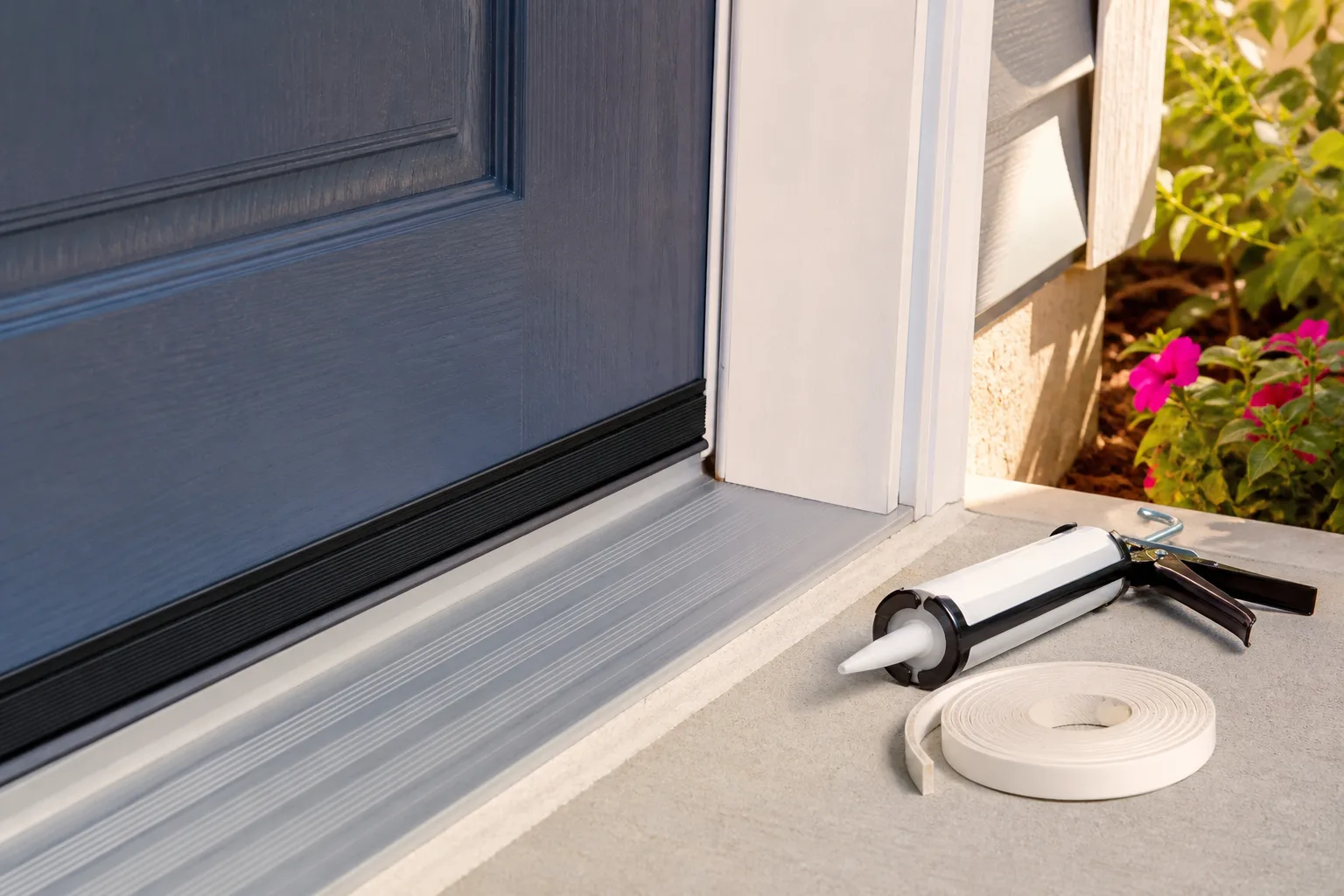
Avoid plugging vents, drainage openings, weep holes, or gaps whose purpose you do not understand. A vent blocked to stop spiders may trap moisture or interfere with safe equipment operation. For large foundation cracks, roofline gaps, shared-wall openings, or holes near wiring and gas lines, ask a qualified building professional to recommend a repair. UC IPM specifically recommends sealing cracks and gaps around windows and doors and maintaining screens as spider-prevention steps (UC IPM).
The repair does not have to make the structure airtight to help. Start with openings next to repeat activity, then inspect the threshold and screen during the next week. If the sightings move to another side of the house, follow the new location instead of spraying the original room again. The pattern gives you a practical way to use time and materials where they matter.
Check screens, thresholds, and utility openings
Test the door by closing it and looking for a visible gap along the bottom and sides. Run a hand near the frame to feel for a draft, but avoid placing fingers into an unlit crevice. For a window, confirm that the screen has no tear, the frame locks fully, and accumulated leaves or dirt are not preventing it from closing. Check the lower corners, where screens can bow away from the frame.
At utility penetrations, look for a gap where a pipe, cable, or hose enters a wall. Use materials suitable for that specific opening and local building requirements; expanding foam is not a universal fix, and some areas need fire-rated sealants or continued airflow. Never seal a combustion-air intake or appliance exhaust. If the opening is behind a heavy appliance, do not move it alone just to inspect a small spider concern.
Do sprays, sticky traps, and scent remedies work?
Different products solve different parts of the problem. A contact spray may kill a spider only if it reaches the spider; a glue trap can catch a spider traveling along the floor; a residual product can affect pests that cross a treated area. None of these methods repairs a door gap, removes hidden clutter, or stops insects from gathering at a window. For the usual isolated indoor spider, vacuuming and entry-point repairs are often more direct than spraying a room.
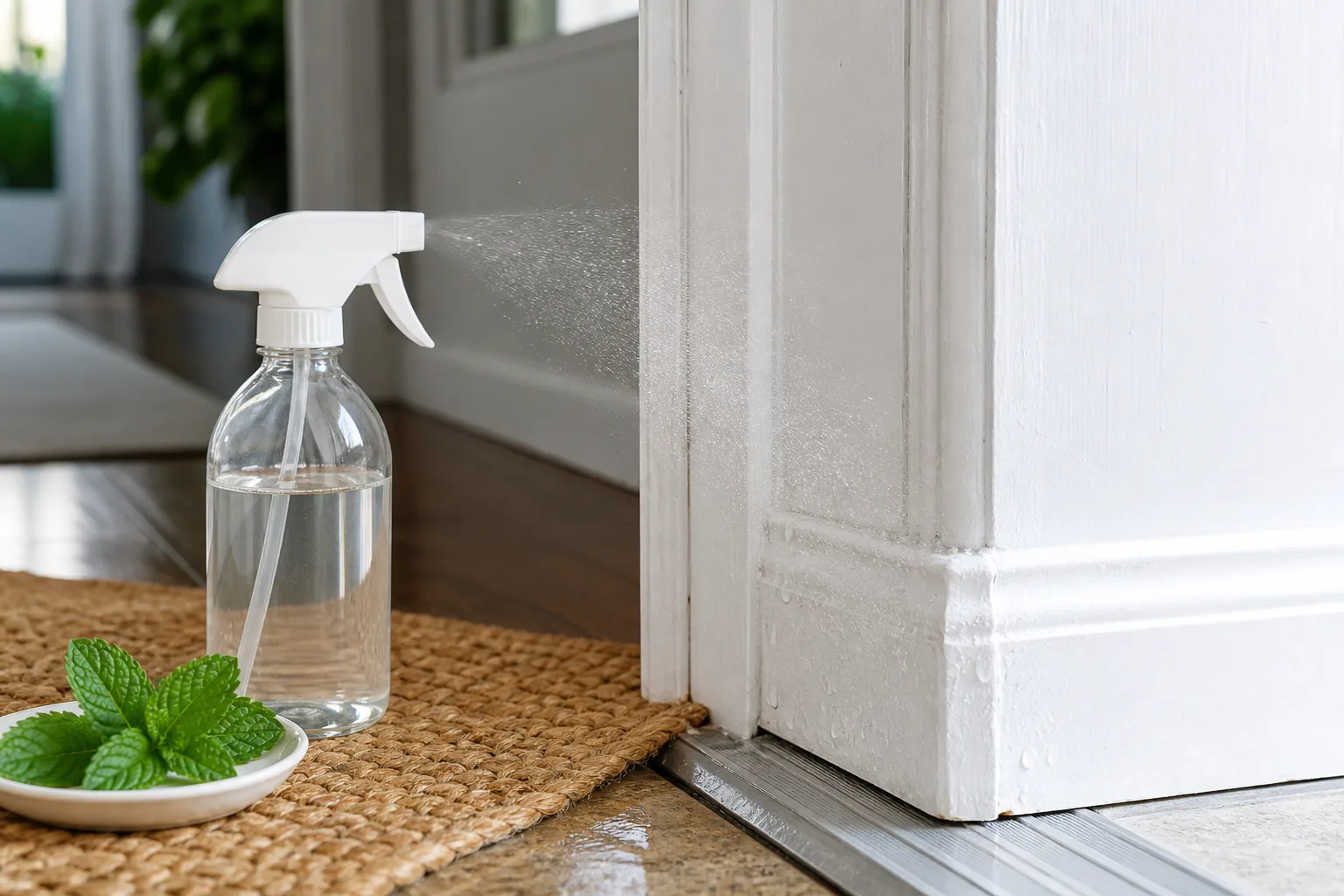
Peppermint, citrus, vinegar, and plant sachets are widely promoted as spider deterrents, but a pleasant smell is not evidence of dependable whole-house control. A recent feature from the gardening publication Gardening Know How suggests a peppermint plant may discourage web spinning, but a live pot is not a validated barrier across a window or doorway (Gardening Know How). A peer-reviewed study tested commonly repeated claims about lemon oil, peppermint oil, and chestnuts against several spider species in laboratory choice tests; the results varied by substance and species, and the study did not establish a lasting home treatment for every spider that could enter a house (Journal of Economic Entomology study indexed by PubMed). Treat scent products as optional experiments, not a replacement for removing webs, reducing prey, and sealing gaps. Essential oils can also irritate people or be unsafe around some pets, so do not spray them on beds, pet bedding, or surfaces where children play.
Sticky traps are most useful as monitors in places people and pets cannot contact them, such as behind a cabinet toe-kick or along a rarely disturbed basement wall. They can indicate a travel route, but they can also catch beneficial insects and do not address where a web-building spider lives. Check traps at least weekly and remove or reposition them if they collect nothing or present a safety concern. Never place glue boards where a child or pet could step on or touch them.
When a pesticide may be justified
Consider a labeled spider product only when sightings continue despite cleanup and exclusion, the affected location can be treated precisely, and the label allows that spider, site, and method. Read the full label before opening the container. Follow its rules for ventilation, protective equipment, re-entry, food surfaces, and keeping children and pets away. Do not combine products, increase the concentration, apply pesticide to bedding, or use an outdoor product indoors.
Avoid total-release foggers and casual broadcast spraying as a first response. A fog may miss a spider in a web or a crack, while leaving a pesticide on surfaces people and pets touch. UC IPM notes that spider control with insecticides is difficult unless the spider is directly reached and that effects from spraying are temporary without housekeeping and habitat changes (UC IPM). In the United States, the product label is the legal instruction for use; the EPA explains that pesticide labels specify where and how a product may be applied (U.S. EPA pesticide labeling). If the only proposed solution is repeated whole-room spraying, ask the applicator to explain the target, treatment location, and prevention plan before agreeing.
Use a seven-day reset to track whether the plan works
A short follow-up prevents two common mistakes: doing nothing after removing one spider, or treating a home indefinitely without checking whether the treatment helped. Focus on the room where you saw activity and keep a simple note of dates, locations, new webs, and visible insects. You do not need to count every spider or inspect every object.
Day 1: Vacuum the spider, accessible web, and visible egg sac from the affected room. Empty the vacuum outside, clean the nearby sill or corner, and photograph any spider you can safely document from a distance. Record which room and whether the spider was in a web or wandering.
Days 2–3: Inspect the nearest screen, door threshold, pipe opening, light, and cluttered storage edge. Make the straightforward repairs and cleaning changes you can complete safely. If a gap needs a building repair or you suspect a hazardous species, leave that task to the appropriate professional.
Days 4–7: Check the cleaned location once each day, preferably in daylight, and note whether a fresh web or spider appears in the same place. One new sighting after a door has been open does not automatically mean your plan failed; repeated activity at the same anchor or several new locations is stronger evidence that a route or prey source remains. If nothing returns, go back to ordinary periodic cleaning rather than escalating treatment.
At the end of the week, compare the pattern. Fewer webs after fixing a screen or light suggests you addressed a local cause; unchanged activity near a hidden void may need a more complete inspection. A room-by-room log can also help a licensed pest professional focus the visit. If traps are part of monitoring, note where they were placed and inspect them according to their directions.
Know when to call a pest professional
Call a licensed pest professional when spiders or egg sacs recur across several rooms, activity seems to come from wall or attic voids, or repeated cleanup and obvious gap repairs have not changed the pattern. Professional inspection is also appropriate when you suspect a black widow or brown recluse in a high-contact area, cannot safely reach a nest, or live with someone whose disability or severe phobia makes removal impractical. Do not handle a spider just to bring a sample to the appointment; a safe, clear photograph and the location are useful starting information.
Ask the professional to identify the likely spider group, point out the entry or prey source, describe each proposed product and placement, and explain what preparation and re-entry precautions apply. A useful service plan should discuss sanitation and exclusion along with any pesticide treatment. The National Pesticide Information Center advises homeowners to seal openings and reduce conditions that support spiders, and explains that residual pesticides indoors may affect other pests but may not give long-term spider control (NPIC: Spiders). If a company recommends treatment without inspecting the site or explaining where the spider problem originates, get another assessment.
What to do if someone may have been bitten
Many skin irritations blamed on spiders have another cause, and a bump alone cannot identify a spider. Wash the area with soap and water and use a cool compress. If pain or swelling is worsening, symptoms spread beyond the bite area, or you suspect a black widow or brown recluse, contact a medical professional or poison center for advice. For trouble breathing, fainting, severe muscle cramps, or another emergency symptom, call emergency services.
In the United States, Poison Control offers online guidance and a 24-hour phone line at 1-800-222-1222 (Poison Control: Insect and spider bites). MedlinePlus likewise advises medical care for severe symptoms and recommends washing a suspected bite and applying a cool pack (MedlinePlus: Spider bites). Do not cut the skin, try to suck out venom, or apply pesticide to the person. If the spider is still present, do not capture it by hand; a professional or clinician can advise whether a safe photograph is useful.
Conclusion
To get rid of spiders in the house, remove the visible spider and web with a vacuum or another low-contact method, then check the room for the route and conditions that let it stay. Repair a screen or door gap, reduce accessible hiding places, and follow the prey insects rather than spraying the entire house. A single spider can be an ordinary stray; a repeated pattern calls for a targeted inspection and a measured response.
Use pesticides only when a label-approved, targeted treatment makes sense and you can follow every safety direction. Call a licensed professional for persistent activity, inaccessible webs or egg sacs, or a suspected medically important spider; seek medical or poison-control advice for a possible bite with worsening or systemic symptoms. The goal is a home with fewer unwanted encounters, not a promise that no spider can ever enter.



