20 Flowers That Look Like Sunflowers for Any Garden
Discover 20 flowers that look like sunflowers, from compact containers to tall native perennials. Compare color, height, bloom time, zones, and garden fit.
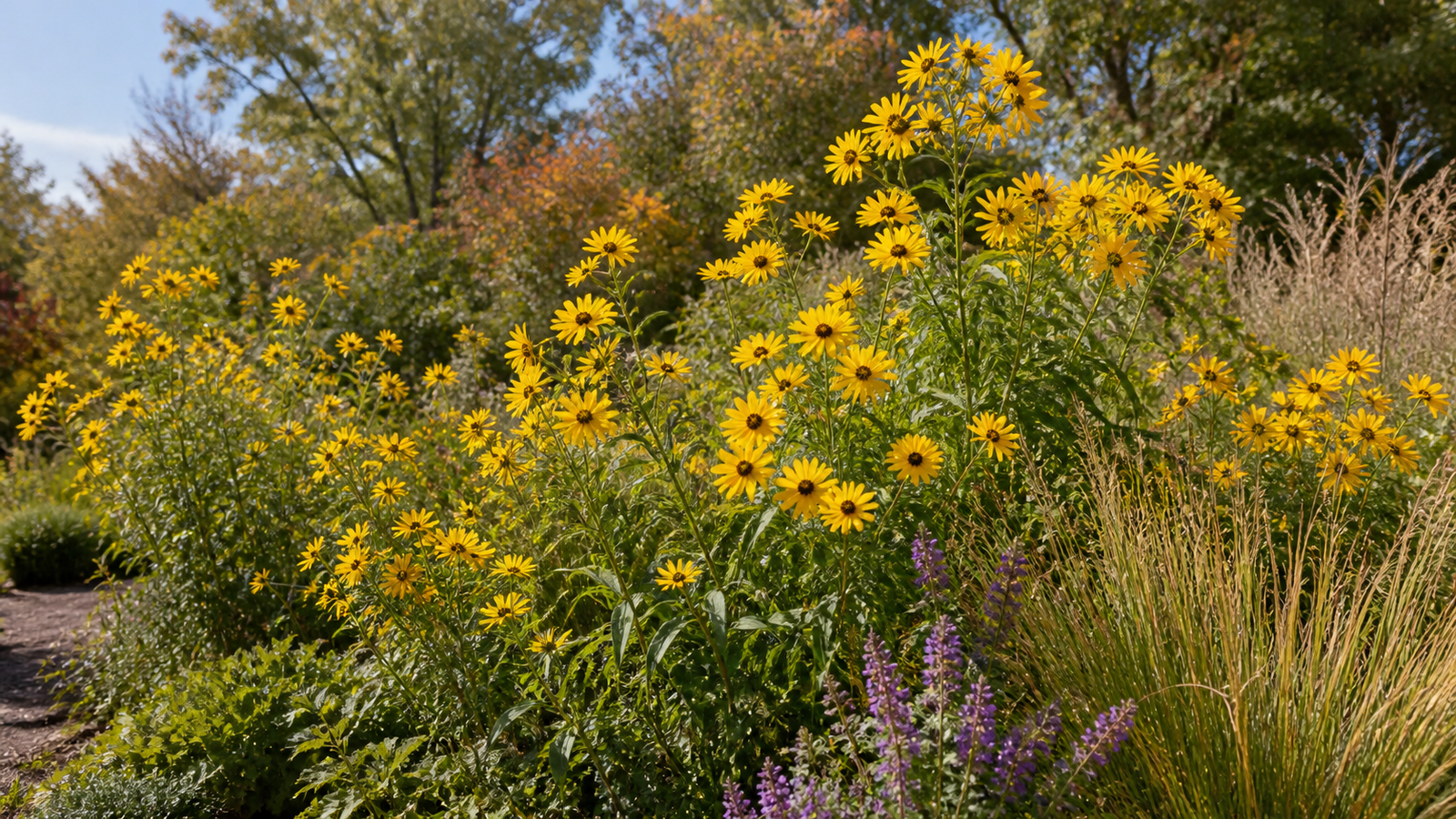
If you love the sunny face of a sunflower but not its height, short bloom window, or space-hungry habit, you have plenty of alternatives. Some are compact enough for a pot, some return every year, and others trade yellow petals for orange, red, pink, or white while keeping the same open, daisy-like shape.
The most useful distinction is not simply “yellow versus not yellow.” Choose by mature size, bloom timing, soil moisture, and how much freedom the plant has to spread. A plant that is perfect for a prairie border can be a terrible choice beside a walkway, while a compact container annual may give you more sunflower impact in a small space than a six-foot perennial.
These 20 choices are all ray-flowered plants or close visual relatives. In botanical terms, what looks like one daisy flower is usually a head made of many tiny disk florets surrounded by ray florets; the Royal Horticultural Society explains this composite structure and why open flower heads are useful to short-tongued pollinators.
Start with the garden job, not just the flower color
Start by deciding what you want the replacement to do. If you need the closest visual match, look at false sunflower or Black-eyed Susan. If you need a plant for a sunny pot, start with gazania or a compact chrysanthemum. If your goal is a wildlife border, prioritize native Rudbeckia, Echinacea, Helenium, or Silphium rather than choosing only by flower color.
| Garden job | Strongest starting choices | Main trade-off |
|---|---|---|
| Closest classic sunflower shape | False sunflower, Black-eyed Susan | Taller plants may flop or self-sow |
| Small pot or narrow bed | Gazania, Gerbera daisy, calendula, compact chrysanthemum | Some are annuals or tender outside warm zones |
| Dry, hot, sunny site | Blanket flower, golden tickseed, yellow coneflower | Sharp drainage matters more than rich soil |
| Pollinator border | Black-eyed Susan, false sunflower, coneflower, sneezeweed | Wildlife-friendly plants may look less tidy after bloom |
| Late-season color | Chrysanthemum, sneezeweed, goldenglow, Mexican sunflower | Many need room behind shorter plants |
| Bold back-of-border screen | Cup plant, Jerusalem artichoke, whorled rosinweed | Mature spread can overwhelm a small bed |
Match the plant to the space
Measure the planting area before buying. “Three feet tall” describes height, not the full footprint, and a six-foot plant with a two-foot spread can still shade shorter neighbors or lean into a path. In a small border, use the mature width as the minimum spacing and leave a little extra for air movement and access.
Support is another design decision. Tall stems exposed to wind or grown in very rich soil often need a discreet stake, a late-spring cutback, or sturdy companion plants. The NC State Extension pollinator-garden example places the tallest plants toward the center or back and uses small groupings to make a large planting easier to read and maintain.
Match the plant to the bloom window and maintenance
Annuals give the fastest payoff but must be replanted or allowed to reseed. Perennials cost more up front and may take a season to establish, but they can provide a dependable framework. Biennial or short-lived plants sit between the two: they may return from seed, but not necessarily in the exact spot where you planted them.
Deadheading is not one universal rule. Remove spent flowers when you want more bloom or fewer seedlings; leave some seedheads when birds, winter texture, or natural reseeding is part of the plan. For plants that spread by rhizomes—especially Jerusalem artichoke—deadheading alone will not keep the colony contained.
Best classic sunflower silhouettes
These four plants give the clearest visual echo of an ordinary sunflower: a central disk, radiating petals, and a strong upright presence. They are the best place to start when the look matters more than a specific color or season.
False sunflower and Black-eyed Susan
1. False sunflower (Heliopsis helianthoides) is the closest all-purpose substitute on this list. Its yellow to orange-yellow rays and brown or golden cone are unmistakably sunflower-like, but the plant returns as a clumping perennial in much of its range. NC State Extension describes it as a native plant of open woods, prairies, meadows, and roadsides that typically reaches 3 to 6 feet and tolerates clay, dry soil, and poor soil when drainage is adequate; see its false sunflower profile.
It also differs in useful ways: the ray petals tend to remain on the head as it fades, and the flower heads stay more upright than those of a true sunflower. Give it full sun, allow roughly 2 to 3 feet of width, and cut stems back in late spring if you want a shorter, more branched plant. It can self-sow and look weedy if planted in a formal bed, so use a compact cultivar when you want the look without the height.
Do not confuse “oxeye sunflower” with common oxeye daisy, Leucanthemum vulgare. The latter has white petals and a creeping root system; the National Park Service warns that oxeye daisy can spread aggressively in some natural areas. Read the botanical name on the tag before you buy.
2. Black-eyed Susan (Rudbeckia hirta) is the familiar yellow-and-brown option for a low-fuss meadow or pollinator bed. The species can behave as an annual, biennial, or short-lived perennial depending on climate and cultivar, so do not promise yourself that every plant will return from the crown. Its typical 2- to 4-foot height, full-sun tolerance, rough foliage, and ability to reseed make it a generous filler for gaps between longer-lived perennials.
NC State lists Rudbeckia hirta as a native wildflower that supports butterflies and birds and tolerates full sun or partial shade. The extension profile is also a useful reminder that “low maintenance” does not mean “never manage it”: thin seedlings, deadhead selected stems, and leave a few mature cones for fall seed.
Golden tickseed and golden marguerite
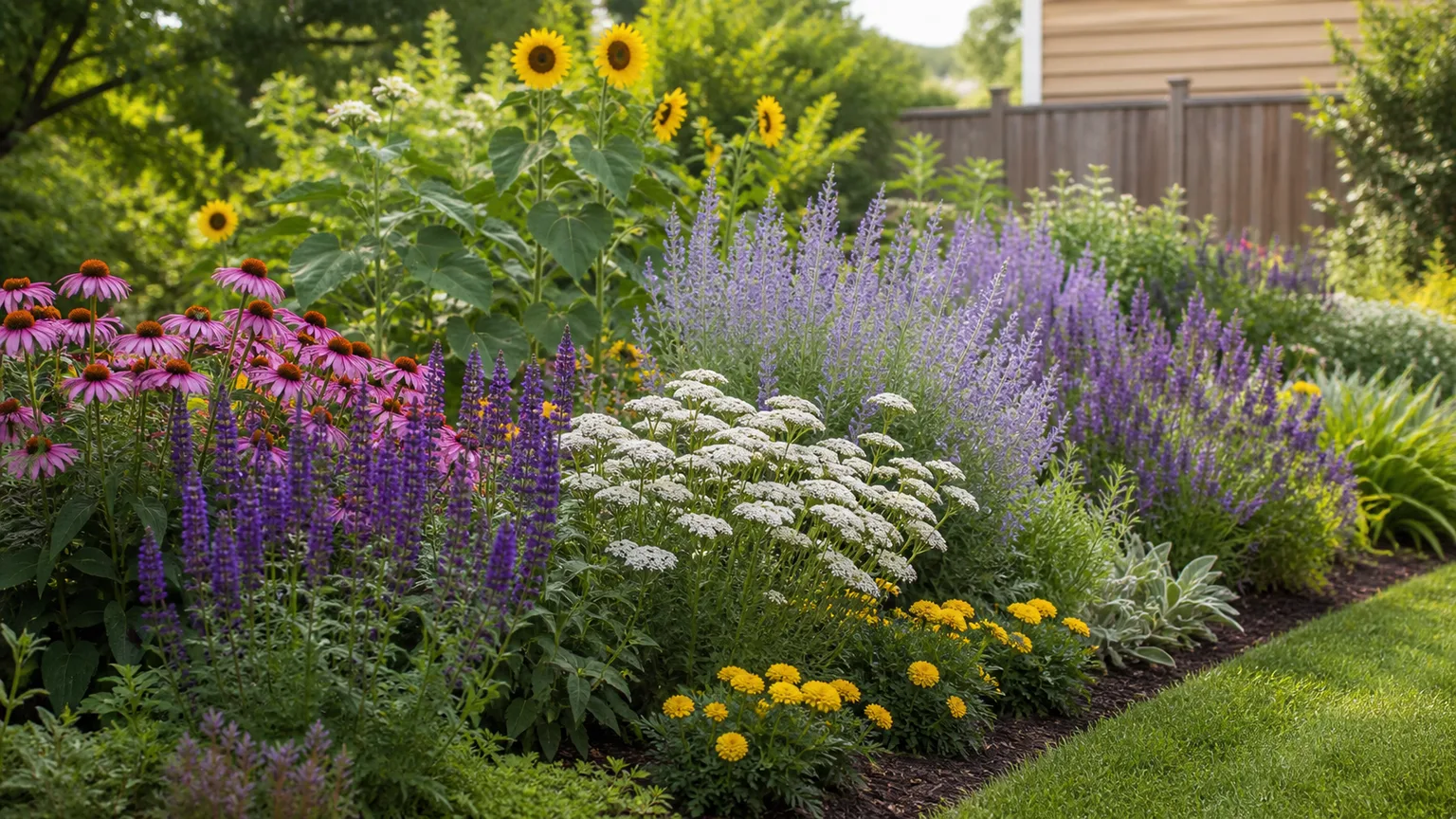
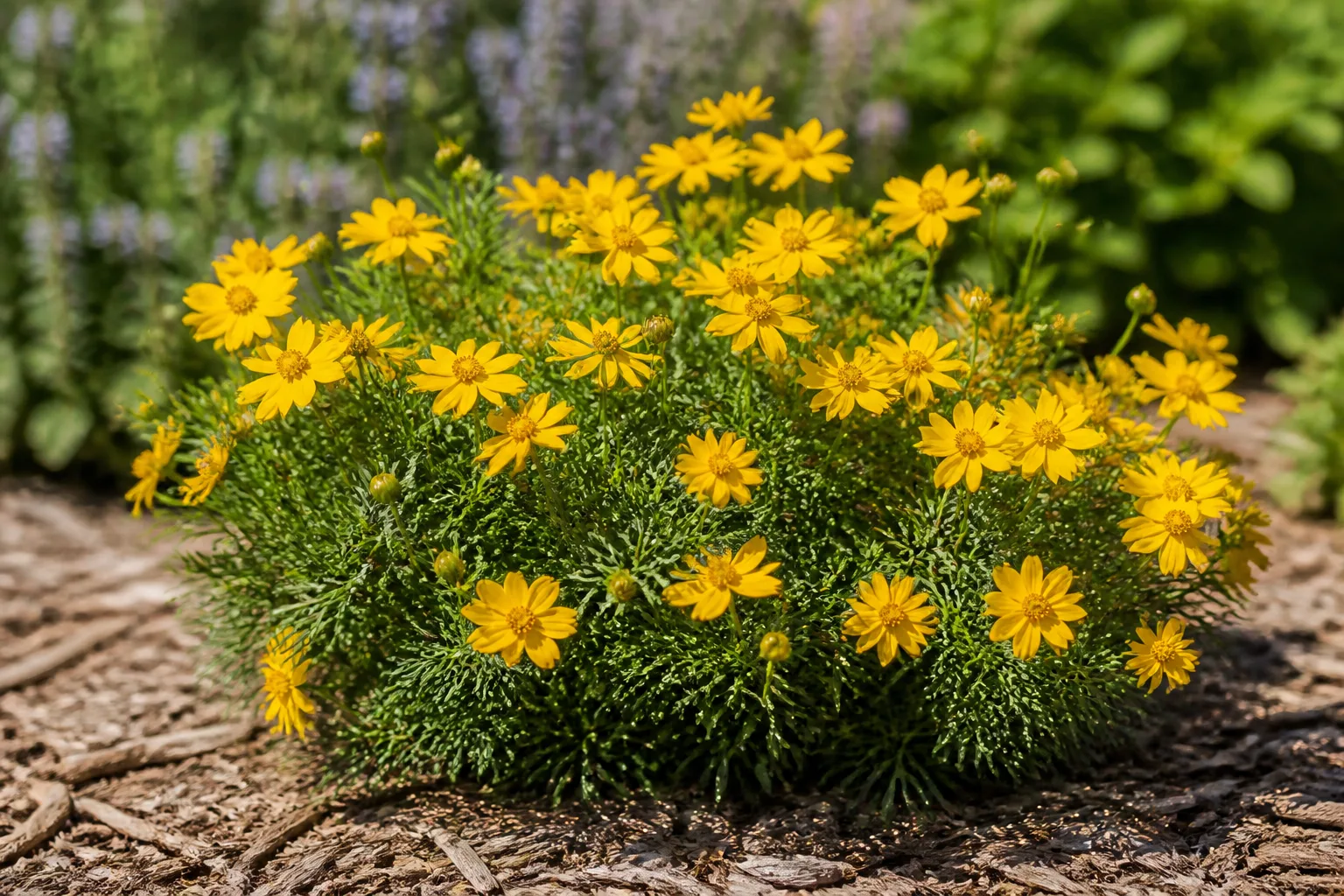
3. Golden tickseed (Coreopsis spp.) brings a smaller, airier version of the sunflower shape. Species and cultivars vary from low mounds around 10 inches to plants near 3 feet; lanceleaf coreopsis is a particularly useful yellow perennial for a sunny, lean bed. It handles heat and drought once established, attracts pollinators, and blooms for a long stretch when old flowers are removed.
The catch is spread. NC State’s lanceleaf coreopsis profile notes that it can sprawl in overly fertile soil and self-seed aggressively. Plant it where a little drift is welcome, or deadhead before seed ripens and shear a sprawling clump after its first flush. In a formal border, a compact cultivar is easier to control than a species selected for naturalizing.
4. Golden marguerite (Anthemis tinctoria) has ferny foliage and masses of yellow button-centered daisies on roughly 2- to 3-foot stems. It is a good choice when you want the golden color to read as a soft cloud rather than a few giant flower heads. Give it full sun, good drainage, and room to branch; established plants are notably more drought-tolerant than newly planted ones.
Golden marguerite suits a cottage border, cut-flower patch, or informal pollinator planting. It can become untidy after a heavy bloom flush, so cut back tired stems rather than trying to make the whole plant look perfect through the season. That relaxed habit is a feature in a meadow and a liability at the front door.
Best for containers and tight beds
Not every sunflower alternative needs to be a giant border plant. These four stay relatively compact, make strong container subjects, or flower in a way that lets you refresh a small space without giving up the cheerful daisy profile.
Gerbera daisy and hardy chrysanthemum
5. Gerbera daisy (Gerbera jamesonii) is the choice for large, clean flower faces in a pot. Cultivars produce red, orange, yellow, pink, or white blooms, often on 12- to 18-inch plants. They are tender perennials in warm climates but are commonly grown as annuals or overwintered under protection elsewhere, so check the cultivar rather than assuming a garden-center plant will survive winter.
Use a container with excellent drainage and place it in full sun to part sun, with protection from the harshest afternoon heat in hot climates. Gerberas make a bright focal point but are less forgiving of cold, waterlogged roots, and neglect than native prairie perennials. If you want a reliable return next year, treat them as a seasonal display unless your zone and winter conditions are clearly suitable.
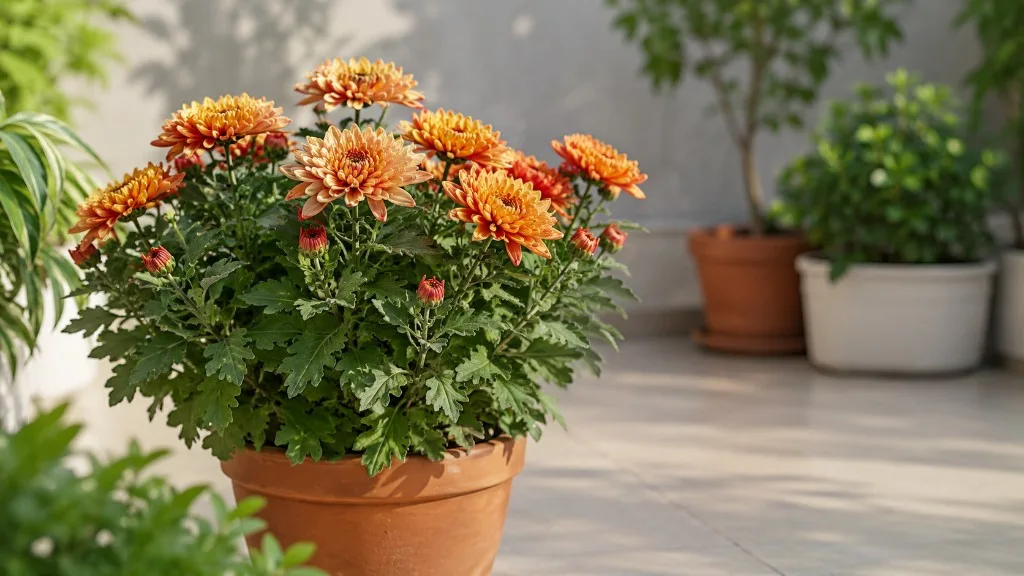
6. Hardy chrysanthemum (Chrysanthemum spp.) gives you sunflower-like single blooms as well as button, semi-double, and double forms, with the strongest display arriving in late summer and fall. Garden mums commonly reach 1 to 3 feet, and yellow cultivars can mimic a small sunflower while staying dense and easy to shape.
Pinch growing tips in late spring or early summer to encourage branching, then stop pinching before buds form. Buy plants labeled as garden or hardy mums when winter return matters; a florist’s mum may be beautiful but is not automatically a reliably hardy perennial in your garden. Mums also need sun and good drainage, and a plant that dries out repeatedly in a small pot can finish its bloom season early.
Calendula and gazania
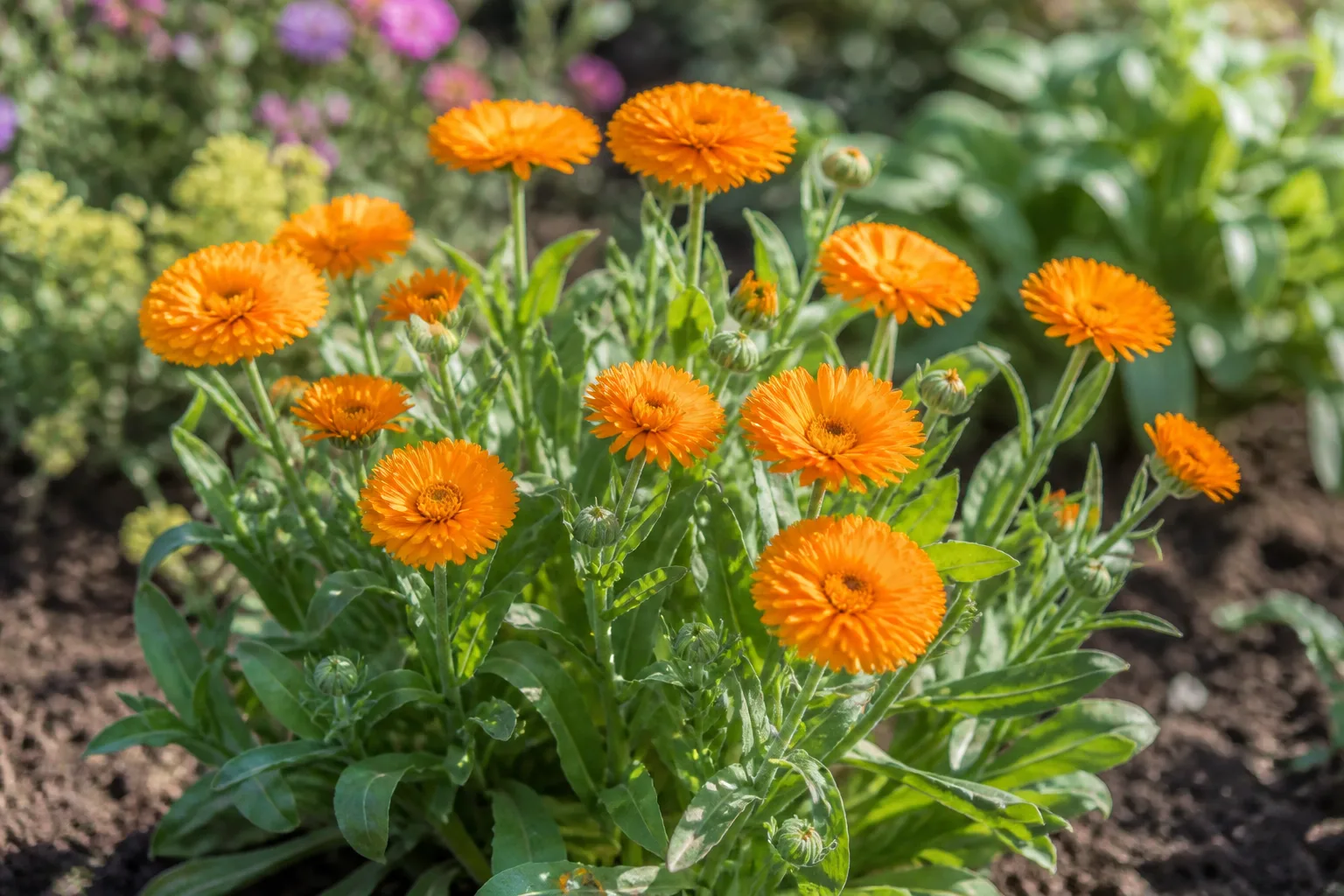
7. Pot marigold (Calendula officinalis) is a cool-season annual with orange or yellow flowers that look like small, fuller-petaled sunbursts. It reaches about 1 to 2 feet, works in containers and edible gardens, and can provide color in spring and fall when heat-loving annuals pause. NC State Extension recommends full sun, well-drained soil, direct sowing near the last frost, and deadheading for more bloom.
Calendula often struggles in intense summer heat and drought, so it is not the best replacement for a midsummer sunflower in a hot climate. Treat the petals as edible only when the plant has been grown without ornamental pesticides and you have confirmed the identification. Otherwise, enjoy it as a cheerful border and cutting flower, and let a few seedheads mature if you want volunteers.
8. Gazania (Gazania spp.) is a compact, sun-loving daisy for hot containers, rock gardens, and sharply drained beds. Plants generally stay around 6 to 12 inches tall, but the flowers can be several inches across and come in yellow, orange, red, white, and dramatic bicolors. The blooms often close at night or in low light, so a shady patio can make a healthy plant look flowerless.
Grow gazania as a perennial in warm zones where the species is hardy and as an annual elsewhere. It wants bright light and drainage rather than a rich, constantly wet bed. Its small footprint makes it a better sunflower substitute for a balcony or narrow edging than a tall Silphium or Helianthus.
Best native perennials for pollinators
If the real reason you love sunflowers is the life around them, choose a plant that supplies nectar, pollen, seeds, or caterpillar habitat in your region. Native status is local, not a marketing adjective: a plant native to one part of North America may be introduced or naturalized somewhere else.
Yellow coneflower and blanket flower
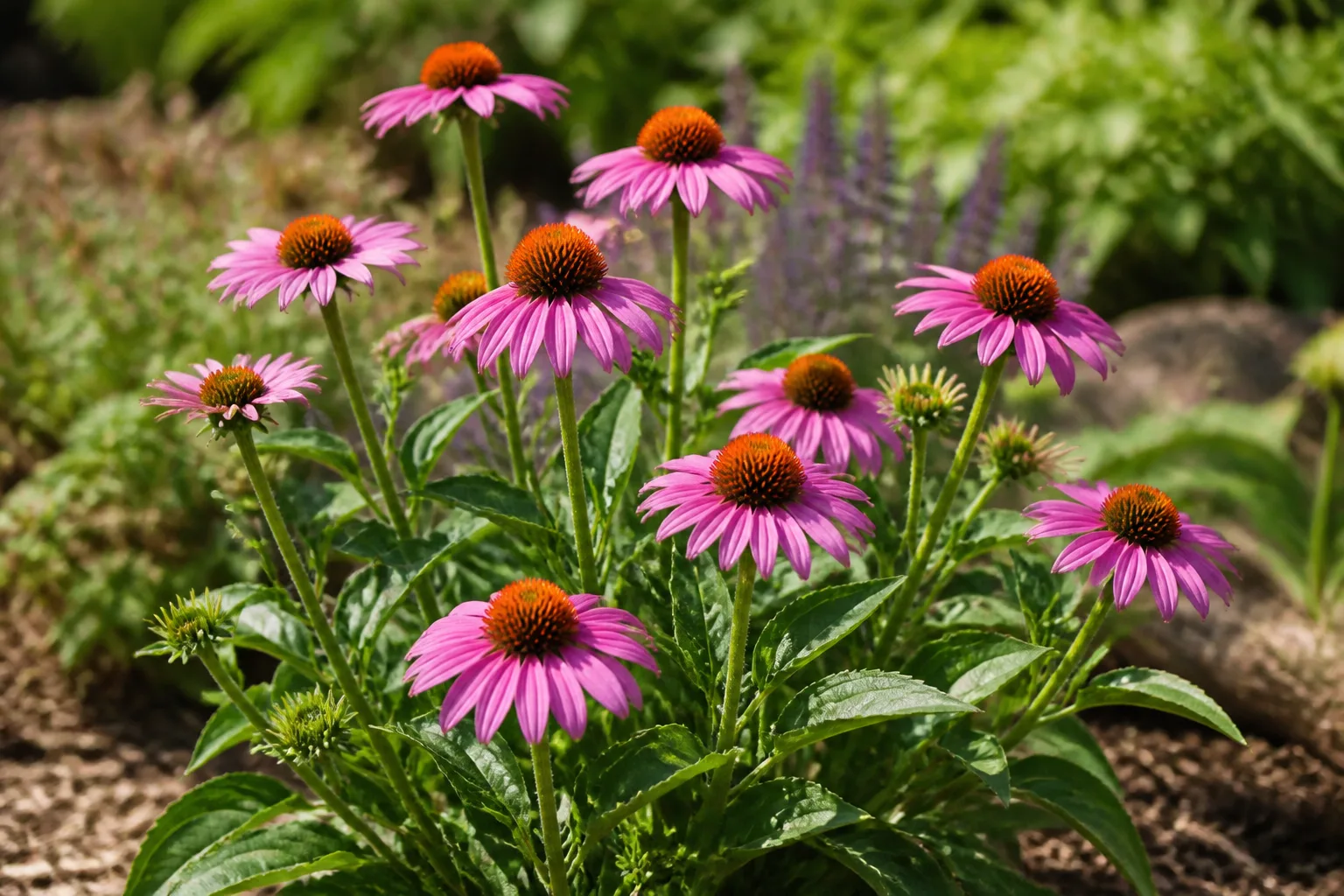
9. Yellow coneflower (Echinacea paradoxa) combines yellow rays with the raised, spiny cone associated with coneflowers. It reaches about 2 to 3 feet, blooms in early summer, and uses a deep taproot to handle dry spells once established. It is native to the central United States and works especially well in a group of three or more with native grasses or purple-flowered companions.
The deep root also means it dislikes being moved repeatedly, so choose its location carefully and avoid heavy, wet soil. NC State notes that the species is threatened in Arkansas; use nursery-propagated plants and do not collect wild specimens. Its extension profile is a good example of why “drought-tolerant” still assumes proper establishment and drainage.
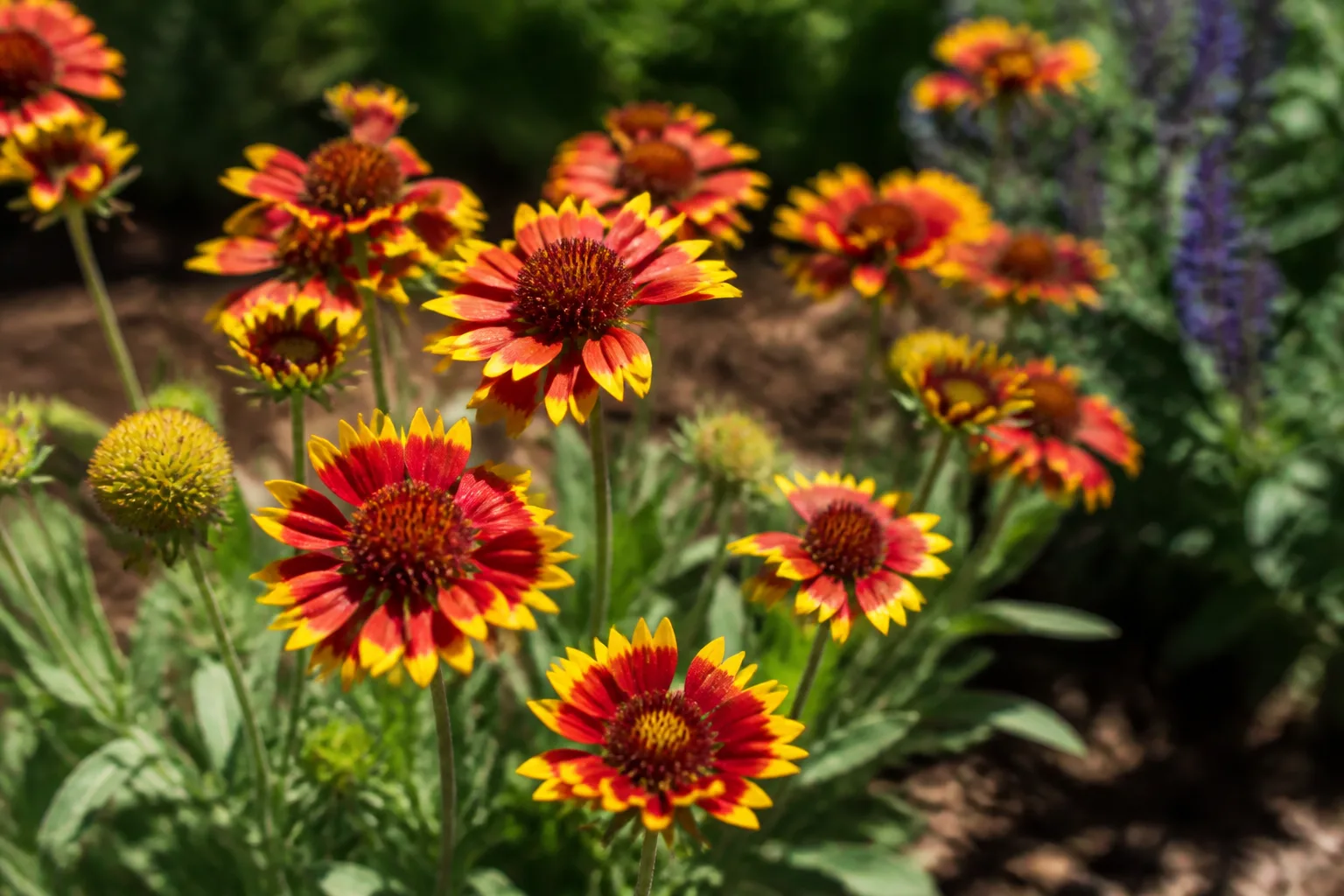
10. Blanket flower (Gaillardia spp.) is more red, orange, and yellow than pure sunflower yellow, but its round brown center and radiating petals deliver the same heat-of-summer energy. Depending on the species and hybrid, it is a short-lived perennial or annual, generally 1 to 3 feet tall. It is one of the best choices for hot, dry beds, gravel gardens, and places where rich soil would make other plants too lush.
Give blanket flower full sun and sharp drainage, and resist the urge to fertilize heavily. NC State’s blanket-flower guidance emphasizes heat and drought tolerance but also the need for well-drained soil. Remove a few spent flowers to keep the plant blooming, then allow some seed to mature if you want more plants; wet winter soil is a bigger threat than summer heat.
Sneezeweed and goldenglow
11. Autumn sneezeweed (Helenium autumnale) earns its place when you need a late-summer-to-fall flower with a sunflower-like center but have moist soil. Its yellow, orange, or red rays surround a rounded dome, and plants commonly reach 3 to 5 feet. Unlike blanket flower, it is not a dry-site recommendation: NC State lists moist to wet conditions and suggests cutting plants back in early summer to encourage branching and more flowers.
Use sneezeweed near a pond edge, rain garden, or bed that holds moisture without staying stagnant. The common name comes from historical use of the plant, not a promise that it causes seasonal allergies. Stems can lose lower leaves, so place sneezeweed behind a bushier front-of-border plant; the RHS yellow-daisy guide makes the same practical point for taller forms.
12. Goldenglow (Rudbeckia laciniata) is a tall, late-season Rudbeckia with yellow flowers and a loose, airy habit. It can reach around 5 to 6 feet and is best at the back of a large border, along a woodland edge, or in a naturalized planting where a colony will not crowd smaller perennials. Expect a less polished silhouette than a compact Black-eyed Susan, especially after rain or wind.
Give it space, watch for seedlings, and check the plant’s status with your local extension service before adding it to a natural area. The same common names can be applied inconsistently across regions, and a plant that behaves politely in a managed bed may be too vigorous for a small suburban border.
Compass plant and whorled rosinweed
13. Compass plant (Silphium laciniatum) is a prairie-scale sunflower relative with yellow flower heads on 3- to 6-foot stems and deeply divided foliage. Its leaves often orient edge-on toward the sun, which gives the plant its common name. A strong taproot helps it persist through dry conditions, but it also makes the plant a poor choice for a shallow container or a bed you plan to redesign every year.
Plant compass flower in full sun in a meadow, native border, or large back-of-border space. It is a structural plant as much as a flower, so pair it with grasses and shorter perennials that can hide lower foliage if it becomes ragged later in the season. Water it consistently during establishment; drought tolerance is not an excuse to let a new transplant dry out.
14. Whorled rosinweed (Silphium trifoliatum) brings the same prairie scale in a less familiar form. It can approach 7 feet, tolerates clay, and produces yellow flowers from summer into early fall. Birds, native bees, butterflies, and moths can use the plant, while its size and natural habit make it a better fit for a large wildlife planting than a narrow foundation border.
Do not plant it because a tag says “easy” and ignore the footprint. Measure the mature height against windows, paths, and utility lines, and group it where its late-season stems can stand without blocking everything behind it. A small group reads as intentional; a single overgrown plant can look like a weed.
Best tall plants for a back border
The next four choices are for gardeners who want the vertical drama of a sunflower and have the room to support it. They are useful for screening, meadow edges, and wildlife gardens, but they require honest spacing and a plan for their spread.
Cup plant and golden crownbeard
15. Cup plant (Silphium perfoliatum) is named for the cup-shaped leaf bases that collect rainwater around the stem. Its yellow, sunflower-like flowers arrive in late summer, and the plant can grow roughly 4 to 8 feet tall. The RHS profile describes the bold foliage as a feature long before the flowers open.
Cup plant prefers full sun and soil that stays evenly moist, making it a better candidate for a rain garden or moist back border than a dry gravel bed. Give it at least several feet of clearance, and expect a strong presence even when it is not in bloom. If the ground is too dry, the leaves may lose the lush quality that makes the plant distinctive.
16. Golden crownbeard (Verbesina encelioides) forms clumps of yellow flowers on roughly 3- to 4-foot stems and is useful where you want a tough, open-prairie look. It attracts bees and handles sun, heat, and lean conditions better than many lush border plants. In warm regions it can act as a perennial; in colder areas it is usually treated as an annual or reseeding seasonal plant.
Buy it by the botanical name and check local guidance before allowing it to naturalize. A species that is attractive and wildlife-friendly in one region may spread beyond the garden in another. Deadhead for a tidier bed; leave selected seedheads only when you have room for volunteer seedlings.
Mexican sunflower and Jerusalem artichoke
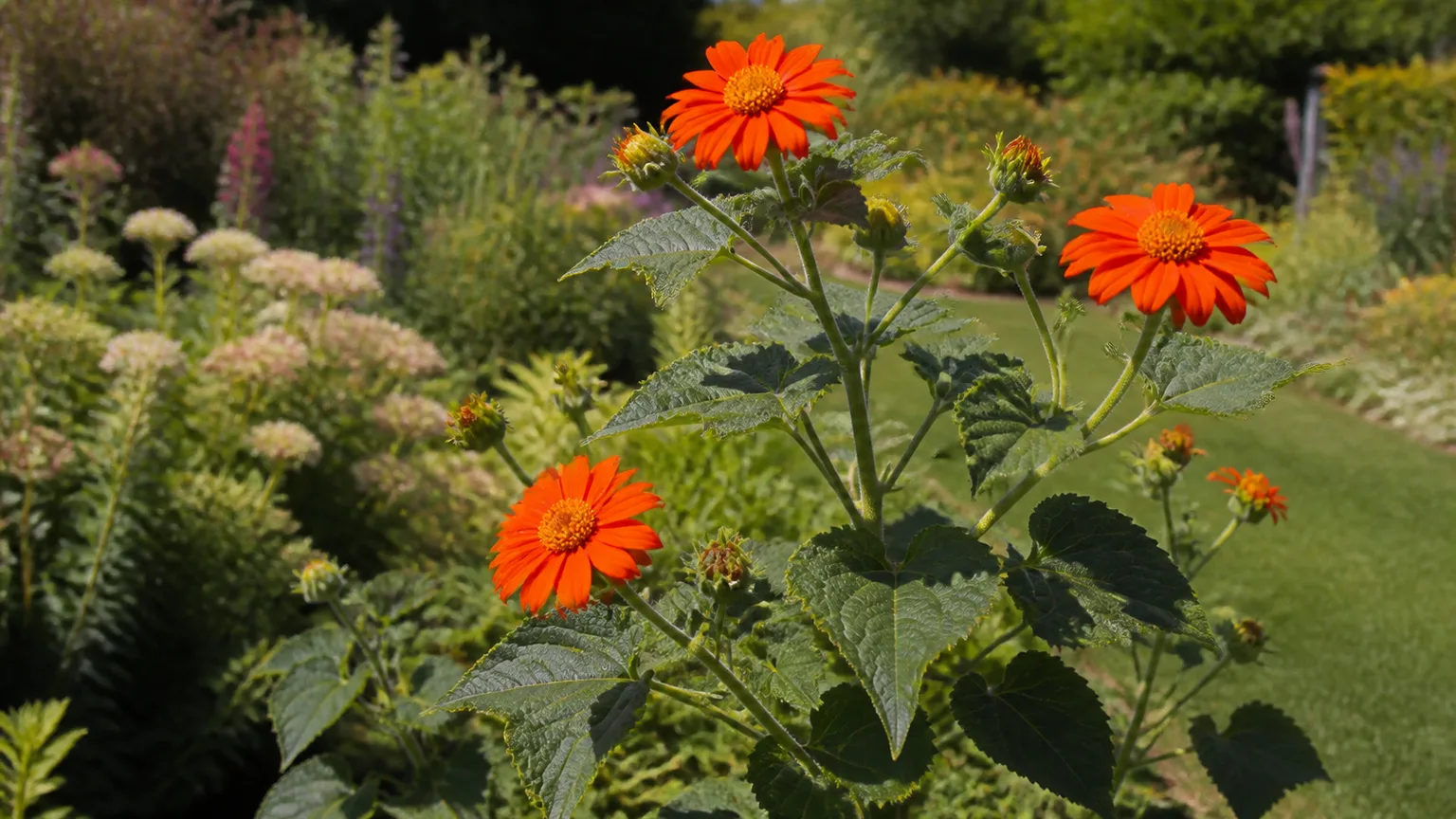
17. Mexican sunflower (Tithonia rotundifolia) is a fast-growing annual with orange to red-orange flowers on 3- to 8-foot plants. It is a strong choice when you want sunflower scale in one season, especially in a warm, frost-free garden or vegetable plot that benefits from late-summer pollinator activity. It prefers full sun and well-drained soil and is more forgiving of lean ground than a heavily fed border plant.
The plant is not a small-space substitute just because it is an annual. Give it a back-row position, expect branching, and remove spent flowers if you do not want volunteers. Compact forms are better for large containers, but even these need more width and light than a typical patio annual. The Epic Gardening overview is useful for comparing this warm-climate option with smaller sunflower look-alikes.
18. Jerusalem artichoke, or sunchoke (Helianthus tuberosus), is the choice only if you want both yellow late-season flowers and edible underground tubers. The plant reaches 6 to 10 feet, blooms from late summer into fall, and can feed birds and pollinators. It is a true Helianthus relative, so the sunflower resemblance is strong, but the perennial roots make it much more permanent than a packet of annual sunflower seed.
This is the plant on the list to treat most cautiously in a small bed. NC State Extension notes that it spreads by rhizomes and can be difficult to remove because even small pieces may regrow. Plant it where a colony is acceptable, use a contained growing area if appropriate, and do not assume cutting the tops will stop underground spread.
Special cases worth planting carefully
The final two choices are valuable because they fill gaps that the big yellow summer flowers do not: early spring color and a woodland-edge option. They also show why plant identity matters more than a generic “sunflower look-alike” label.
Leopard’s bane and hawkweed
19. Leopard’s bane (Doronicum orientale) is an early-season option with lemon-yellow, button-centered flowers that can appear in spring, often around April or May. Plants generally range from about 1 to 3 feet and can handle full sun to part shade, making them useful along a woodland edge or in a border that needs color before summer perennials take over.
Leopard’s bane is better thought of as a spring bridge than an all-season sunflower replacement. Give it a site that does not become brutally hot and dry, and expect its foliage and flowering rhythm to differ from a summer daisy. Confirm the botanical name before planting, especially if children or pets might chew unfamiliar ornamentals; common names are not dependable safety labels.
20. Hawkweed (Hieracium venosum) is a small eastern native with yellow flowers above basal foliage, useful in a woodland, meadow edge, or part-shade planting. It is much shorter and less sunflower-like at a distance than false sunflower, but its simple yellow heads provide a welcome bridge between spring woodland plants and taller summer flowers.
“Hawkweed” is also used for several other species, some of which are invasive in parts of the United States. Buy from a reputable native-plant source, keep the botanical name on the label, and check your state or county plant list before sowing it widely. The USDA PLANTS Database is a good starting point for accepted names and distribution, but local extension offices are the right place to confirm what is appropriate in your specific region.
Conclusion
The closest visual match is false sunflower, while Black-eyed Susan is usually the easiest native-style choice for a sunny, informal bed. For a small space, choose gazania, Gerbera daisy, calendula, or a compact chrysanthemum. For a dry site, start with blanket flower, golden tickseed, or yellow coneflower; for a moist late-season border, use sneezeweed or cup plant.
Before you buy, check four things on the tag: mature width, hardiness or annual status, moisture preference, and whether the plant spreads by seed or rhizomes. Then plant in groups sized to the space, keep new plants watered while roots establish, and leave a few seedheads only where volunteer seedlings will be welcome. That simple filter gives you the cheerful sunflower effect without forcing a giant, short-lived, or overly vigorous plant into the wrong garden.