How to Grow Dracaena draco Indoors: Full Care Guide
Learn Dracaena draco care for indoors: choose bright light, a gritty draining mix, and soil-based watering, then troubleshoot brown tips and slow growth.
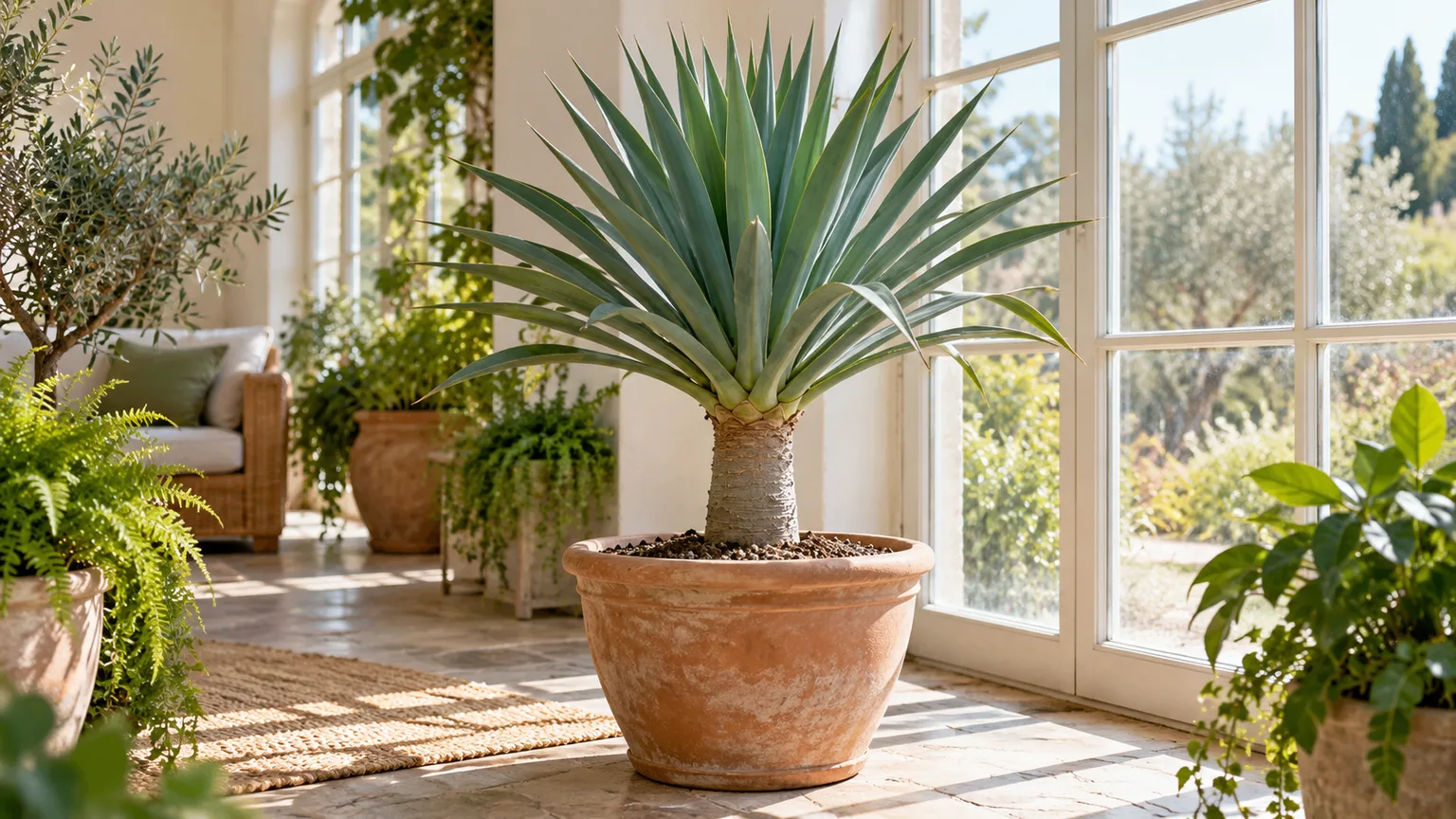
The true dragon tree, Dracaena draco, is a slow-growing, architectural plant with a stout trunk and a crown of stiff, sword-shaped leaves. It can live indoors for years, but it needs more light and root-zone restraint than its reputation as a “tough dracaena” suggests. The practical formula is simple: give it the brightest comfortable spot you have, use a pot that drains freely, and water only after the upper soil has dried.
One point prevents a lot of confusion: D. draco is not the same plant as the narrow, red-edged Dracaena marginata commonly sold as a “dragon tree.” Care tips written for one species may not transfer perfectly to the other. The notes below focus on D. draco, with broader Dracaena guidance identified where it helps.
First, make sure you have the true dragon tree
Dracaena draco belongs to the Asparagaceae family; ITIS lists the species as accepted under that name. Young plants usually have one thick, gray-green stem topped by a dense rosette of broad-based, pointed leaves. As it matures, the trunk can branch and form a spreading, umbrella-like crown. The RHS describes the species as slow-growing and gives a mature landscape size of several meters, reached over decades, so a small potted specimen is not necessarily a dwarf cultivar—it may simply be young.
The common name is messy. D. marginata is also called the Madagascar dragon tree, but it has slim canes and narrow leaves with red or pink margins. If your plant has those traits, it is the other species, and its care needs and size expectations differ. The RHS profile for Dracaena draco is a better identification reference than a generic “dragon tree” label. Its species profile notes a long time to maturity; indoors, plan around gradual growth rather than an indoor tree racing toward its outdoor size.
Give the crown a bright, stable place
Light is the main indoor constraint. The RHS species profile lists full sun for outdoor cultivation and recommends full light under glass with protection from hot sun; its broader Dracaena growing guide calls for year-round warmth and indirect light for the genus. In a home, place the plant close to a bright east- or west-facing window, or near a south-facing window behind a sheer curtain if the afternoon beam is intense. A dim corner may keep it alive, but the plant is likely to grow even more slowly and may lean toward the nearest window.
Use bright light and acclimate any sun
Bright light does not mean exposing a plant that has lived in a nursery or shaded room to a full afternoon of direct sun on its first day. Glass can intensify heat, and an abrupt change can bleach or scorch the leaves. Start the plant a short distance back from the window, then move it closer over a week or two while checking the leaf surfaces. If new pale, dry patches appear on the window-facing side, step it back or filter the hottest hours; if growth is weak and the crown is stretching, move it gradually brighter.
A useful placement test is to look at the plant at midday. You should be able to read comfortably near it without the room feeling dim, and the crown should receive strong ambient daylight for much of the day. Rotate the pot a quarter turn every few weeks if the rosette is tilting, but avoid moving it repeatedly between very different light levels. Stability matters more than chasing a theoretical “perfect” window.
Keep warmth steady and humidity moderate
Treat D. draco as a warm indoor tree, not a cold-tolerant cactus. Keep it in a room that stays comfortably warm through the year, away from a frequently opened exterior door, cold window glass, air-conditioning vents, and radiators that heat one side of the crown. The RHS care profile for D. draco recommends growing it under glass in full light and moderate humidity; the genus guide likewise emphasizes warmth. A brief cool spell is not a reason to panic, but repeated chilling and cold, wet soil together raise the risk of decline.
You do not need to turn the room into a greenhouse or mist the plant several times a day. Average household humidity is often workable if the roots are healthy and the leaves are not pressed against a heater. If the air is very dry and leaf tips keep crisping, first check watering consistency, water quality, and heat exposure; a room humidifier may help the room generally, but misting only wets foliage temporarily and does not fix a dry root ball.
Choose a draining mix and a stable pot
The root zone should hold some moisture after watering but let excess drain away promptly. Use a quality peat-free potting mix amended with coarse pumice, fine orchid bark, or horticultural grit so the mix stays open instead of packing into a dense, wet block. A practical starting point is about three parts potting mix to one part pumice or coarse mineral grit; if your home is cool or the pot is large, increase the mineral portion modestly so the mix dries more evenly. The exact recipe matters less than two checks: the mix should wet through when watered and drain without leaving the lower root zone saturated for days.
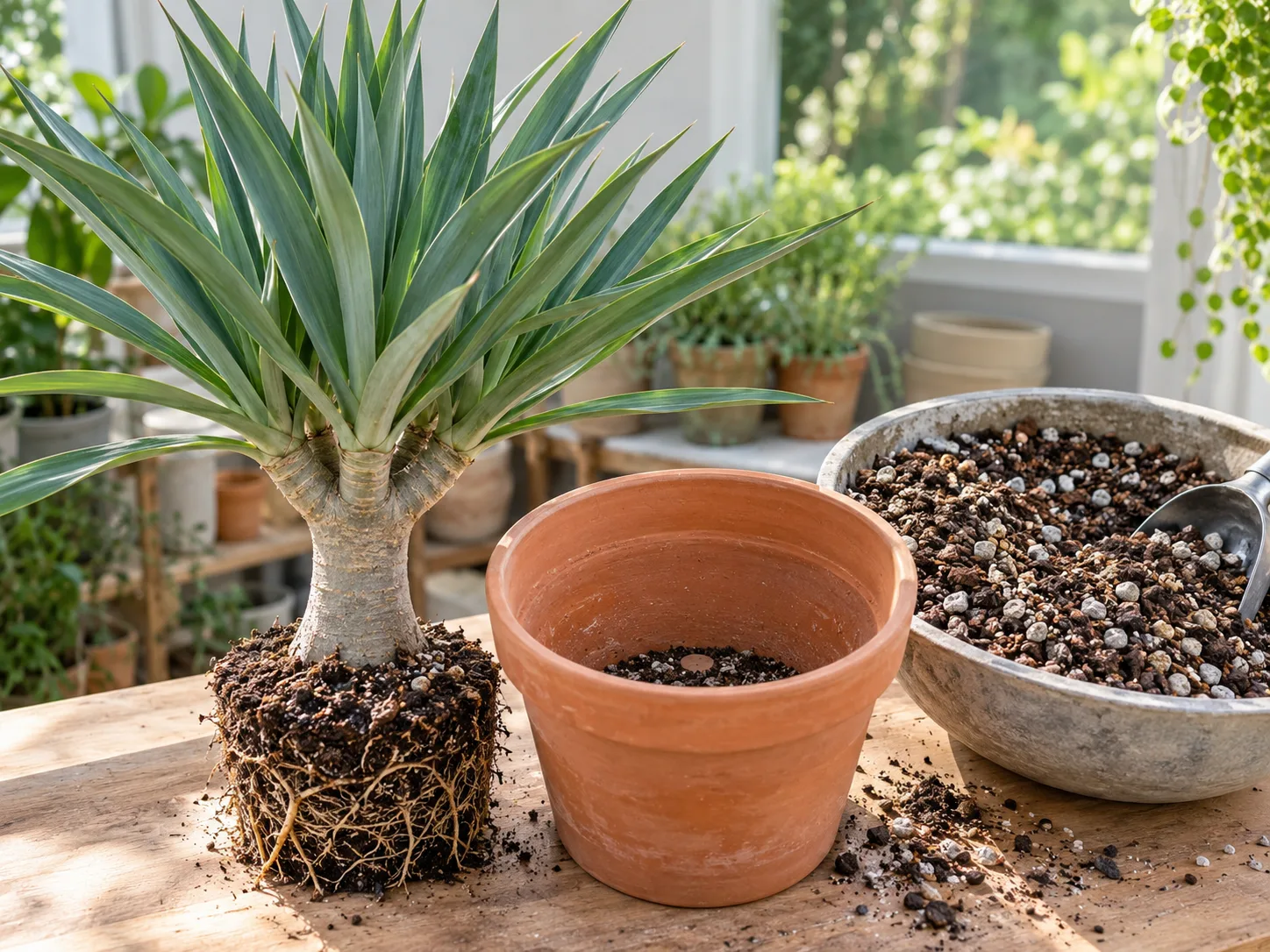
Choose a pot with open drainage holes and only a little extra width around the root ball. An oversized container holds a larger volume of wet mix than the roots can use, which makes overwatering easier even if you do not water often. A heavy pot is useful because a tall crown can become top-heavy, but weight does not replace drainage. If you like a decorative cachepot, keep the plant in a nursery pot inside it and empty any water that collects in the outer pot after watering.
Water by the root zone, not a calendar
Water only after the top inch or two of mix feels dry, then pour slowly over the soil until water exits the drainage holes. Let the pot drain fully and empty the saucer. The exact interval changes with window exposure, temperature, pot material, root volume, and season, so a weekly or monthly schedule is a poor substitute for checking the mix. In bright warmth the plant may use water faster; during short winter days, the same pot may remain damp much longer.
Use a finger, wooden skewer, or pot weight to judge the root zone rather than relying on a dry-looking surface alone. If the top is dry but a skewer pulled from deeper in the pot is cool and coated with damp mix, wait. If the whole root ball has become bone dry and water runs down the sides without wetting it, water in two or three smaller passes, allowing each pass to soak in. Do not leave the plant standing in runoff, and do not compensate for poor drainage by watering in tiny sips every day.
Test water quality if fresh growth keeps browning
Brown tips can have several causes: fluoride or mineral buildup, inconsistent moisture, dry heat, damaged roots, or sudden changes in light. Dracaenas can be sensitive to fluoride in tap water; both the RHS genus guide and Gardening Know How’s Dracaena care article discuss water quality as a possible foliage issue. However, a brown tip by itself does not prove fluoride damage. First check that the mix drains, the roots are not sitting wet, and the plant is not directly over a heater or in a harsh sunbeam.
If those conditions look sound and newly formed leaf tips continue to brown, try rainwater or filtered water for several watering cycles and watch the new growth. Gardening Know How’s watering guide also recommends thorough watering followed by draining the saucer. Existing brown tissue will not turn green again; trim only the dry edge with clean scissors if its appearance bothers you, following the leaf’s natural point rather than cutting into healthy green tissue.
Feed lightly while it is growing
A slow-growing dragon tree does not need a heavy feeding program. During active growth in spring and summer, apply a balanced liquid houseplant fertilizer at the label rate about once a month, or use a weaker solution if your plant grows very slowly and the mix already contains fertilizer. The RHS species profile recommends monthly balanced liquid feeding from spring through autumn under glass; its Dracaena guide warns that excess fertilizer can damage roots and hinder growth. That is a reason to feed modestly, not to increase the dose when the plant is not putting out leaves.
Skip fertilizer when the plant is dormant in winter, when it is stressed, or immediately after repotting into a fresh, pre-fertilized mix. A white crust on the soil, worsening leaf-edge burn, or a history of frequent feeding suggests that salts may be accumulating. Correct the feeding pattern and confirm that the container drains before flushing the mix; flushing a pot that stays waterlogged can worsen root problems. Fertilizer cannot make a naturally slow species grow quickly or compensate for insufficient light.
Repot when roots—not the calendar—say so
Unlike fast-growing tropical foliage plants, D. draco can remain in the same container for several years. Repot when roots are densely circling, the root ball is lifting out of the pot, water passes through without wetting the mix, or the soil structure has broken down and stays soggy. A few roots appearing at a drainage hole are a prompt to inspect, not an automatic emergency. If the plant is stable, growing normally, and the mix still drains, there is no advantage to disturbing it on an annual schedule.
Spring or early summer gives the plant the longest warm, bright period to settle after repotting. Move up only one pot size, loosen a tightly circling outer layer gently, and keep the trunk at its previous soil line. Do not bury the stem to make a leaning plant look upright; use a stable container, a temporary support, or correct the light direction instead. After the move, water through once, drain the pot, and wait for the normal dry-down before watering again.
Prune only to manage height or remove damage
A healthy plant does not need routine shaping. Remove fully dry lower leaves by cutting close to the stem without gouging it, and leave green leaves in place because they still contribute energy. If the plant has outgrown its space, you can shorten the trunk with a clean, sharp blade during active growth. The crown above the cut can be used as a top cutting, and a healthy stem may produce new shoots below the cut, although the exact number and direction of shoots are not guaranteed.
Think through the silhouette before making a large cut. The plant’s natural appeal comes from the relationship between its woody trunk and crown; cutting several times to force a compact shape can leave it lopsided or bare for a long period. For a tall plant that is unstable, first check whether it needs a heavier pot, brighter light, or a more secure position. Pruning is a height-control option, not a substitute for fixing weak conditions.
Propagate Dracaena draco from cuttings or seed
The most practical home method is a stem cutting, but success is not instant or certain. The RHS profile recommends spring seed sowing at 18–21°C and rooting semi-hardwood cuttings or leafless stem sections with bottom heat; its general Dracaena guide describes summer cuttings as another option. This timing overlap points to the useful rule: propagate when the plant is actively growing and the room is warm, rather than trying in a cold, dim winter corner. Use a clean blade and a small pot with an airy medium so the cutting can stay lightly moist without rotting.
Root a crown cutting or cane section
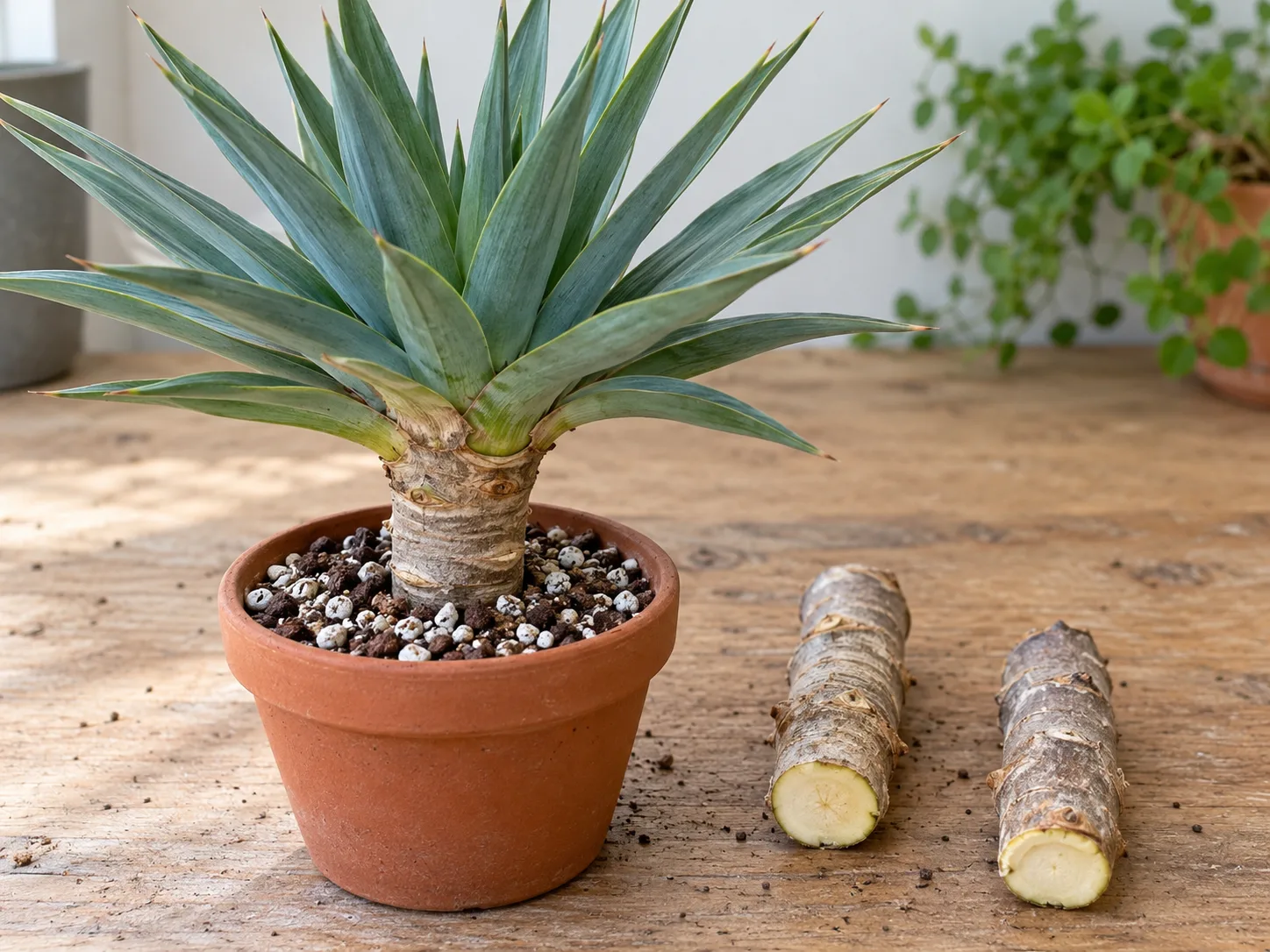
For a crown cutting, cut several inches below the rosette so the piece includes firm stem, then remove only leaves that would sit below the mix. Let the cut surface dry briefly if it is wet, and place the lower stem into a small pot of lightly moist propagation mix. Keep the cutting warm in bright indirect light and provide gentle bottom warmth if available; do not seal it in an airtight, waterlogged bag. Check moisture with a finger and add a little water only when the mix begins to dry.
Leafless cane sections can also be tried, but mark the top end before cutting so you can maintain the original orientation. Set each section upright with its lower end in the medium, or follow a proven horizontal cane method if you can keep the section in contact with the mix. Avoid repeatedly tugging on the cutting to check for roots. New leaf growth is a better sign that it is establishing; once a rooted cutting resists a gentle movement and resumes growth, pot it on without jumping to a much larger container.
Try seed when fresh seed is available
Seed is a slower, less predictable project. Indoor plants rarely flower or set fruit, and the RHS notes that seedlings are started in a heated propagator at roughly 18–21°C. If you obtain fresh, viable seed, sow it shallowly in a clean seed-starting mix, keep the medium evenly damp rather than saturated, and provide warmth and bright filtered light. Germination time can vary with freshness and conditions, so do not discard a pot after a few weeks just because nothing has emerged.
Seedlings need steady warmth and careful moisture because a small root system dries faster than an established plant but is also easy to suffocate in wet mix. Pot them individually after they have grown enough to handle, then increase light gradually. Seed-grown plants may not match a named parent exactly, and the juvenile stage can last a long time. If your goal is simply to make a second plant, a stem cutting is usually the more direct route.
Diagnose leaf changes before changing care
One symptom rarely identifies one cause. Start with the pattern: are only the oldest leaves declining, are tips browning on new leaves, are patches on the sun-facing side, or is the whole crown soft? Then check the soil several inches down, look at the drainage holes and stem base, and note any recent change in window position or water source. Change one likely factor at a time and watch the next leaves; established brown or yellow areas will not reverse, so new growth is the useful measure.
A single older leaf turning yellow and drying at the base can be normal as the plant renews its foliage. Several yellowing leaves at once, especially while the soil is damp, point toward root stress and call for checking drainage before adding water or fertilizer. Crispy tips after a move to brighter sun suggest scorch or abrupt acclimation; soft, dark tissue at the soil line is more urgent because it may indicate a rotting stem or roots. If the plant is stable, avoid repotting, pruning, and fertilizer changes all in the same week—you will not know which adjustment helped.
Check for mites, scale, and mealybugs
Inspect the undersides of leaves, the leaf bases, and the woody stem when the plant looks dull, speckled, sticky, or unusually weak. Fine webbing and tiny moving dots can indicate spider mites; cottony clusters suggest mealybugs; small, fixed bumps may be scale. The RHS species profile lists glasshouse red spider mite and scale as possible pests. These are easier to control early, so isolate the plant before treating it and examine nearby houseplants as well.
Start with physical removal: rinse the foliage where practical and wipe the stem and leaf bases with a damp cloth. If pests persist, use a product labeled for the pest and indoor ornamental plants, following its instructions and testing a small area first. Do not mix household chemicals or apply a pesticide more often than the label allows. Persistent leaf spotting without visible insects may be cultural or disease-related; improve airflow, keep the crown dry when watering, and remove badly damaged leaves rather than applying a fungicide by guesswork.
Move the tree outdoors only in mild weather
A sheltered patio can provide bright light and air during warm months, but an indoor-grown plant needs gradual acclimation. Begin in bright shade, then move it into gentle morning sun over a week or two. Avoid a hot west-facing wall, strong wind, heavy rain that keeps the pot saturated, and any location where the container can tip. A container makes it easier to bring the tree back inside before cold weather and to control the mix around its roots.
Do not use outdoor hardiness numbers as a guarantee for a potted plant. The RHS profile describes a landscape tree with a long time to maturity and recommends under-glass cultivation in cooler climates; a container root ball is more exposed to cold than roots in the ground. Bring the plant indoors before chilly nights become routine, check for hitchhiking insects, and reduce watering as light and growth slow. If your outdoor climate is prone to freezes, keep D. draco as a container plant rather than risking permanent exposure.
Keep the plant and sap away from pets
Treat the plant as unsafe for pets to chew. The RHS species profile lists it as harmful if eaten by dogs, cats, rabbits, and rodents. Pet Poison Helpline’s Dracaena page identifies saponins in Dracaena leaves and stems and describes gastrointestinal signs after ingestion; that page names D. marginata, so it supports a genus-level caution rather than a species-specific dose estimate. Keep the pot out of reach, remove fallen leaves, and avoid placing it where a cat can climb to the crown.
The tree’s name also refers to its reddish resin, sometimes called dragon’s blood, that can appear when tissue is cut or wounded. That botanical curiosity is not a reason to use the resin or let pets mouth cuttings. If an animal chews the plant, remove access and contact a veterinarian or an animal poison service for advice; the risk depends on what was eaten and on the animal, so a general care guide cannot assess an individual exposure.
Conclusion
Dracaena draco is a long-lived, slow-growing plant that rewards a stable setup more than constant intervention. Give the crown strong filtered light, use an airy mix in a draining and steady pot, and decide when to water by checking the soil rather than following a calendar. If tips brown or leaves yellow, examine the root zone, water source, light history, and pests before changing several conditions at once.
The simplest success plan is also the easiest to maintain: choose the brightest comfortable spot, let the upper mix dry between thorough waterings, feed modestly only during active growth, and repot when the roots actually need room. Keep the plant away from pets, and expect gradual development rather than quick height. With those expectations, the true dragon tree can be a striking indoor specimen without demanding a complicated care routine.



