Arrowhead Vine Care for Lush, Healthy Growth
Grow a fuller arrowhead vine with clear advice on light, soil, watering, humidity, pruning, propagation, pests, root rot, and pet safety.
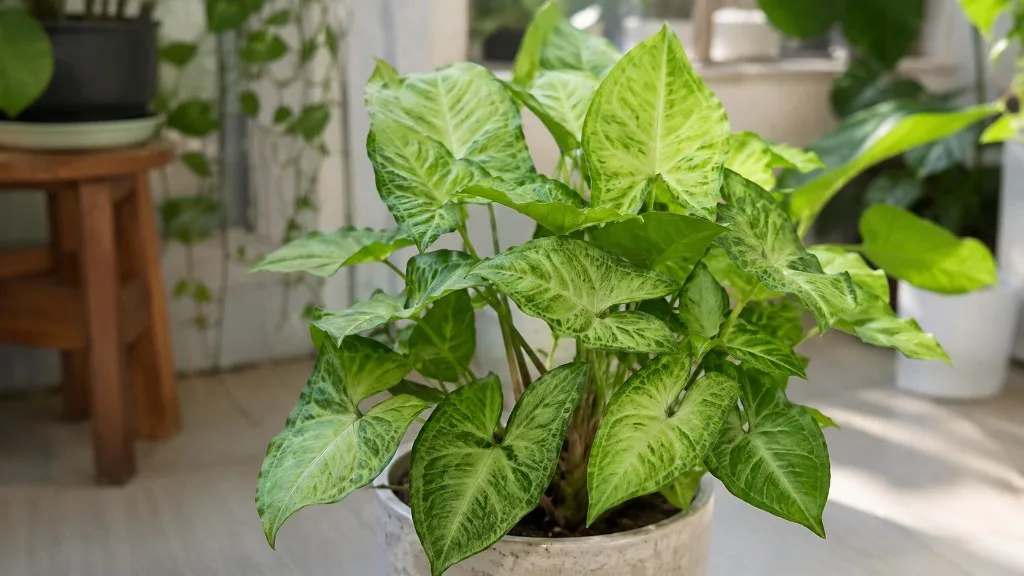
The arrowhead vine (Syngonium podophyllum) is easy to grow when you treat it as a fast, shape-shifting tropical aroid rather than a small desk plant forever. Young plants form a tidy clump of arrow-shaped leaves; with age, the stems trail or climb, and mature foliage can become lobed. That change is normal, not a sign that your plant has “mutated” or received the wrong fertilizer.
The reliable routine is simple: give it bright filtered light, an airy mix in a pot with drainage, and water when the root zone has partly dried—not when the calendar says so. Then decide whether you want a compact mound, a hanging cascade, or a climbing plant and prune or support it accordingly. NC State Extension’s plant profile describes the species as a low-maintenance perennial shrub or vine that can climb to about 6 feet, but your indoor plant can be kept much smaller with regular tip pruning.
Meet Arrowhead Vine: A Shrub That Becomes a Climber
Arrowhead vine is also sold as arrowhead plant, nephthytis, American evergreen, and trileaf wonder. It belongs to the Araceae family and is native across tropical parts of Mexico, Central America, and South America. In a home, it is usually sold in its juvenile form, which explains the compact habit and simple arrowhead leaves seen in garden centers.
As stems mature, the plant may produce aerial roots and begin to reach. If you give those stems a pole, trellis, or other gentle support, they can climb; if you leave them unsupported, they will drape over a shelf or hanging basket. The RHS profile for a Syngonium cultivar notes the same progression from young arrow-shaped foliage to more lobed adult leaves and lax stems that climb appropriate supports.
That growth habit affects every care decision. A dense tabletop plant uses water differently from a long vine in a small hanging pot, and a climbing plant needs its support installed before the stems become tangled. The species can flower in warm growing conditions, but its small arum-like inflorescences are rarely the reason to grow it indoors; foliage and form are the main rewards.
Start With the Right Location
Place an arrowhead vine near a bright window where direct midday rays are softened by a sheer curtain or distance. An east-facing window is often an easy fit, while a south- or west-facing window can work several feet back from the glass. Brightness should reach the leaves without turning the hottest part of the day into a sunbeam focused through the window.
Avoid the two common placement errors: a dim corner that produces weak, widely spaced growth, and a hot pane that bleaches or scorches leaves. Keep the pot away from heating vents, air-conditioner outlets, and cold drafts. A bathroom can be comfortable if it has usable daylight, but humidity cannot compensate for a room with almost no light.
Match Light to Leaf Color and Growth Goals
Solid-green arrowhead vines generally cope with lower light better than heavily variegated or pink cultivars. “Cope” means they may stay alive; it does not mean they will remain full. In weak light, stems stretch toward the window, new leaves emerge smaller, and variegation can become less pronounced. Gardening Know How likewise recommends bright but indirect light indoors and warns that direct sun can damage foliage.
Use the growth pattern as your light meter. If the newest leaves are smaller than the older ones and the gaps between leaves are lengthening, move the plant brighter before pruning. If only the window-facing leaves show crisp pale or brown patches, filter the light or move the pot back. Rotate the container every few weeks so one side does not become permanently stretched toward the glass.
Water by Soil, Pot, and Season
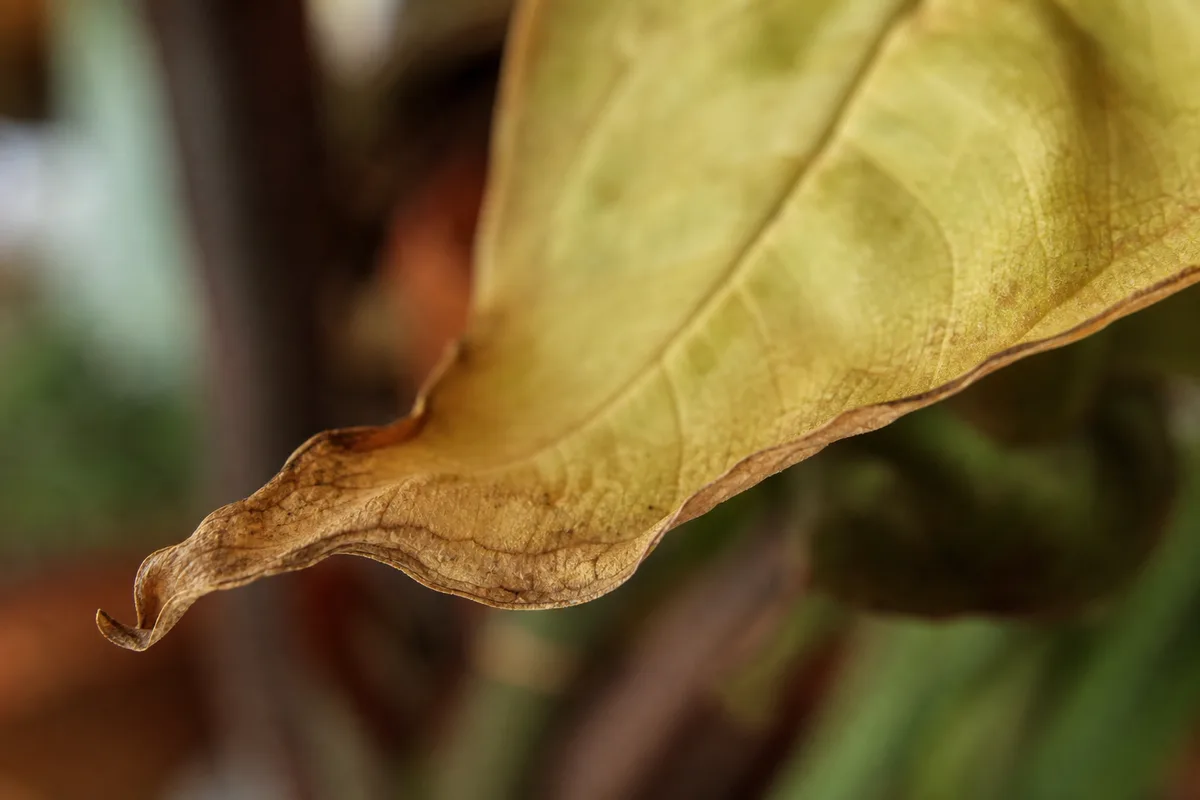
Arrowhead vine prefers consistent moisture, but “moist” does not mean permanently wet. Water thoroughly when the upper portion of the mix has dried and the lower root zone is beginning to lose its cool, saturated feel. The right interval may be about weekly in a warm, bright room, longer in a cool or dim room, and longer still when a large pot holds more mix than the plant can use.
Water at the soil line until a little drains from the bottom, then empty the saucer or cachepot. A small sip every few days can leave the center of the root ball dry while the bottom stays swampy. Conversely, soaking a plant whose mix is still wet can remove oxygen from the roots and create the conditions for rot.
Use a Reliable Moisture Test
Before watering, push a finger into the mix or slide a bamboo skewer several inches down near the inner edge of the pot. If the skewer comes out cool and coated with damp mix, wait. If it is mostly clean and the pot feels noticeably lighter, water thoroughly. With a tall cachepot or a dense root ball, use both touch and pot weight because the surface can dry while the lower half remains wet.
Adjust the routine after changes in light, temperature, pot size, or season. A plant moved from a bright windowsill to a low-light shelf will use water more slowly even if the pot and mix have not changed. In winter, reduce watering as growth slows, but do not let a small pot stay bone dry for weeks if the room is warm and the foliage is actively growing.
When leaves droop, check the soil before watering. A dry, light pot with limp leaves points toward thirst; a heavy pot with limp leaves points toward stressed or damaged roots. The difference matters because adding water to a wet, drooping plant makes the original problem harder to solve.
Choose a Fast-Draining Potting Mix
Choose a light, well-drained indoor mix that holds some moisture but has visible air spaces. A practical starting blend is two parts quality indoor potting mix, one part perlite or pumice, and one part fine orchid bark or coco coir. You can adjust from there: add more aeration if the pot stays wet, or a little more moisture-holding base if the plant dries dramatically between checks.
The exact ingredients matter less than the result. After watering, excess water should leave the drainage hole freely, and the mix should become slightly lighter over the next several days rather than remaining dense and cold. Do not use garden soil in an indoor container; it compacts easily, drains poorly, and may carry pests.
The RHS cultivation guidance calls for humus-rich, well-drained compost and bright filtered light. That is a useful combination because the plant can have access to regular moisture without leaving its roots in stagnant conditions. Covering the surface with a thick decorative layer of moss can slow drying, so skip it if you already tend to water too frequently.
Pot and Repot Without Creating Root Rot
Use a nursery pot with drainage holes inside a decorative cachepot, or choose a breathable terracotta pot if your home is humid and you often overwater. The container should be only a little wider than the root ball. An oversized pot is not a shortcut to a larger plant; it creates a larger reservoir of wet mix around a still-small root system.
Repot when roots circle densely, emerge from the drainage holes, the mix has collapsed into a slow-draining mass, or the plant dries almost immediately after watering. If the plant is healthy and the pot still drains well, repotting on a schedule is unnecessary. Spring and early active growth are convenient times, but a failing, waterlogged root system should be corrected whenever you find it.
Slide the plant out, loosen only the outermost congested roots, and inspect their color and texture. Firm cream, tan, or light-brown roots can be viable; dark, mushy, foul-smelling tissue is a warning. Trim only clearly damaged roots with clean snips, move the plant into fresh airy mix, and use a pot that matches the remaining root mass. Water it in once to settle the mix, then return to a cautious dry-down routine rather than keeping the new soil constantly wet.
Train, Prune, and Keep the Plant Bushy
Arrowhead vine becomes bushier when you cut growing stems just above a node, the small joint where a leaf and bud emerge. New shoots can develop from lower nodes, especially when the plant has enough light to support new growth. Remove yellow or fully dead leaves at their base, but do not strip a stressed plant of every imperfect leaf at once; green leaves are still supplying energy for recovery.
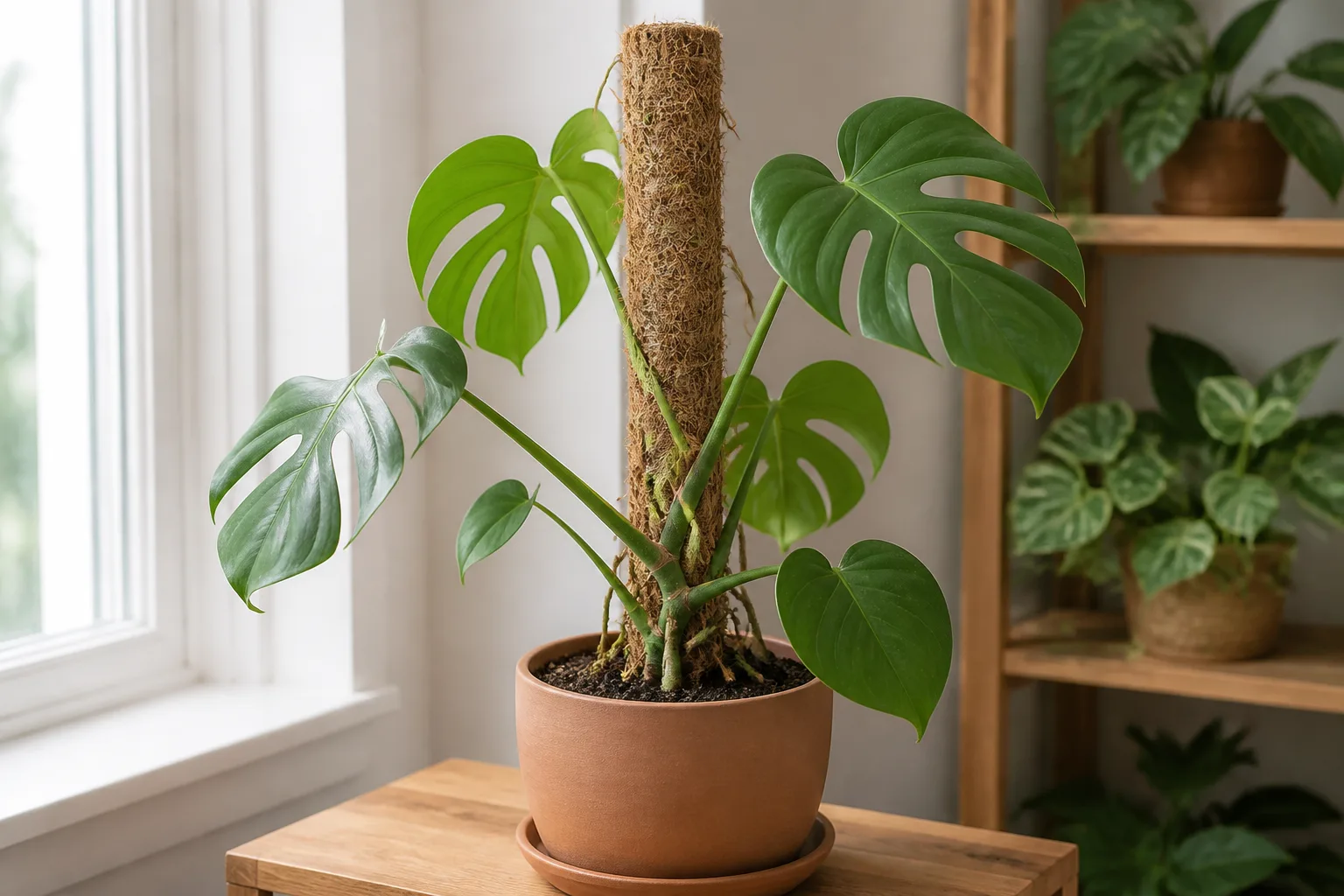
To keep a compact mound, pinch or cut long stems back by one or two nodes and rotate the pot so new shoots receive even light. To grow a cascade, allow several stems to lengthen over the edge and shorten only the ones that have become bare near the pot. To climb, install a moss pole, coir pole, bamboo trellis, or narrow ladder while the stems are flexible, then loosely secure them without crushing the nodes.
Support is not a cure for low light. A plant that is already stretched will look taller on a pole, but it will not become full until the light improves and fresh shoots develop. Likewise, pruning cannot repair roots sitting in cold wet mix; correct the root environment first, then shape the top growth.
Prune With Propagation in Mind
If you want cuttings, make deliberate cuts rather than removing random leaf tips. Each cutting should include at least one healthy node; a leaf without a node can stay green briefly but cannot reliably produce a new vine. Keep a few leaves on the parent plant so it can continue photosynthesizing, and avoid taking many cuttings from a plant already dealing with pests, rot, or severe drought stress.
Wear gloves if the sap irritates your skin and wash the snips afterward. Joy Us Garden’s practical arrowhead-care notes also flag sap irritation, dense growth, and the need for regular pruning when stems become rangy.
Propagate From a Stem Node
Stem cuttings are the most accessible way to make new arrowhead vines. Propagation is easiest during warm, bright active growth, but a healthy cutting can root at other times if the plant and room are stable. Division is another option when a crowded pot contains separate rooted shoots, but stem cuttings let you reshape a leggy parent at the same time.
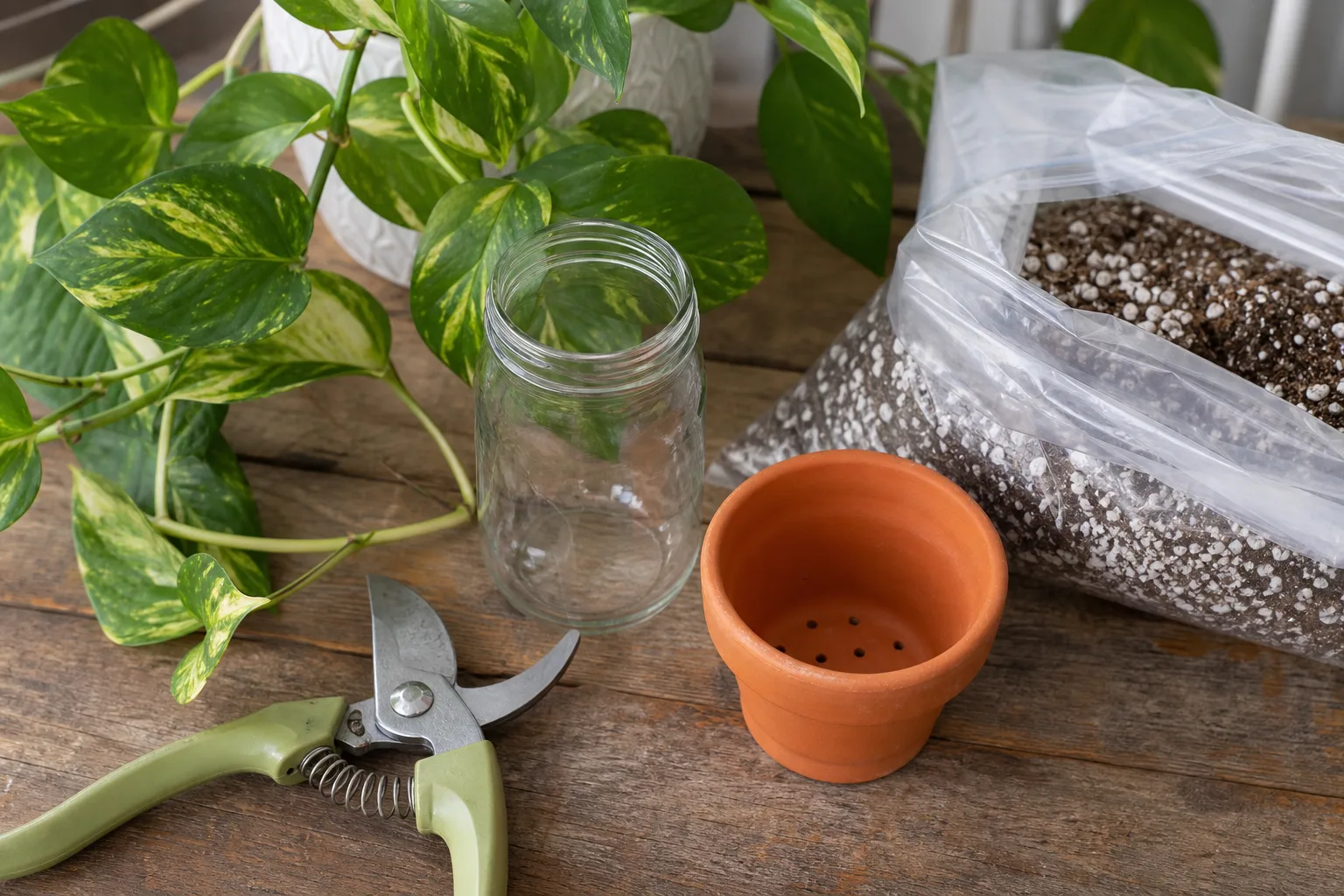
Start with a clean, sharp snip just below a node. Remove the lowest leaf so it will not sit underwater or rot in the propagation mix, then place the node where it can stay consistently moist. Keep the cutting warm in bright indirect light and check it rather than tugging on it every day.
Choose Water or Potting Mix
Water propagation makes the node easy to observe. Put the node below the water while keeping most foliage above it, refresh the water when it becomes cloudy, and pot the cutting once several roots have formed and begun to branch. Roots grown in water are adapted to a permanently wet environment, so transition gently: use a small pot of airy mix, keep it evenly damp for the first week or two, and then let the surface begin to dry between waterings.
Soil propagation avoids that transition. Set the node into a lightly moist, airy mix, firm the medium around it, and keep it from drying completely while roots develop. The cutting should resist a very gentle tug after a few weeks, but visible top growth may take longer. Gardening Know How recommends both water and moist potting mix and notes that a cutting may be ready to repot in roughly six weeks, though warmth, light, and cutting health can change the timeline.
Feed for Steady, Not Floppy, Growth
Feed during active growth in spring and summer, and continue into fall only if the plant is still making leaves and your home remains warm and bright. A balanced liquid houseplant fertilizer at the label’s indoor rate—or weaker if the product is concentrated—once a month is a reasonable starting point. Slow-release granules can work, but they are harder to remove if the plant becomes stressed or the soil is already rich.
Do not fertilize a bone-dry, freshly repotted, pest-ridden, or waterlogged plant. Watering first protects dry roots from a concentrated fertilizer solution; waiting on a wet, declining plant prevents you from adding salts to an already compromised root zone. Brown leaf edges after repeated feeding can reflect salt buildup, not a need for more fertilizer.
If growth is thin and pale, inspect light and roots before increasing feed. More nutrients cannot compensate for insufficient light, and a plant with damaged roots cannot use fertilizer normally. Once the plant is growing steadily, modest feeding supports new leaves; it should not be used to force a particular variegation pattern or mature leaf shape.
Raise Humidity Without Creating Disease
Arrowhead vine appreciates humid air, but it can grow in an average home when the roots, light, and temperature are right. A hygrometer is more useful than guessing from how tropical the plant looks. Grouping plants together, moving the pot away from a dry vent, or running a room humidifier can help when indoor air is consistently very dry.
Pebble trays are optional and limited: the pot must sit above the waterline on the stones, and the tray should not keep the container base in standing water. Do not treat a pebble tray as a substitute for drainage. It may modestly raise moisture immediately around the plant, but it cannot rescue a dry room or compensate for a poor root environment.
Avoid frequent misting that leaves dense foliage wet for hours. Wet leaves, poor airflow, and crowded growth can encourage bacterial or fungal spotting. If you rinse dusty foliage, do it early enough for the leaves to dry, and give the plant enough space for air to move through the stems. The best humidity adjustment is the one that improves the room without turning the leaves or soil into a constantly damp surface.
Choose a Cultivar That Fits Your Space
Arrowhead vine cultivars vary in color, size, and how quickly they become rangy. A compact cultivar can suit a tabletop or small shelf, while a vigorous green plant may be a better choice if you want a long trailing basket or a supported climber. The plant’s label is useful, but compare the actual growth habit of the specimen in front of you because nursery plants can be sold at very different stages.
Common choices include ‘Bold Allusion’ with soft green leaves and pink veining, ‘Pink Allusion’ with muted pink accents, ‘Strawberry Cream’ with pink new growth, ‘Mini Pixie’ for a smaller form, and ‘Albo Variegatum’ for high-contrast white and green leaves. More white in a leaf means less green tissue available for photosynthesis, so a heavily variegated plant usually benefits from brighter filtered light and closer observation of growth speed.
Do not choose a cultivar solely by its shop color. Ask whether you want compact, trailing, climbing, fast, or strongly variegated growth, then choose the plant that fits your available light and willingness to prune. A healthy ordinary green Syngonium in the right window will usually outperform a spectacular cultivar placed in a dim corner.
Diagnose Yellow, Brown, and Drooping Leaves
Leaf symptoms are clues, not diagnoses. Start with the newest growth, the distribution of the damage, the pot’s weight, and the condition of the roots before changing several variables at once. A single old lower leaf turning yellow can be normal aging or shading from dense outer foliage; widespread yellowing after frequent watering deserves a root-zone check.
Use this quick pattern match:
- Long gaps, small new leaves, and fading variegation: light is probably too weak. Move the plant brighter and wait for new growth before pruning hard.
- Pale or bleached patches on the window-facing side: light is too intense. Filter the window or move the plant back.
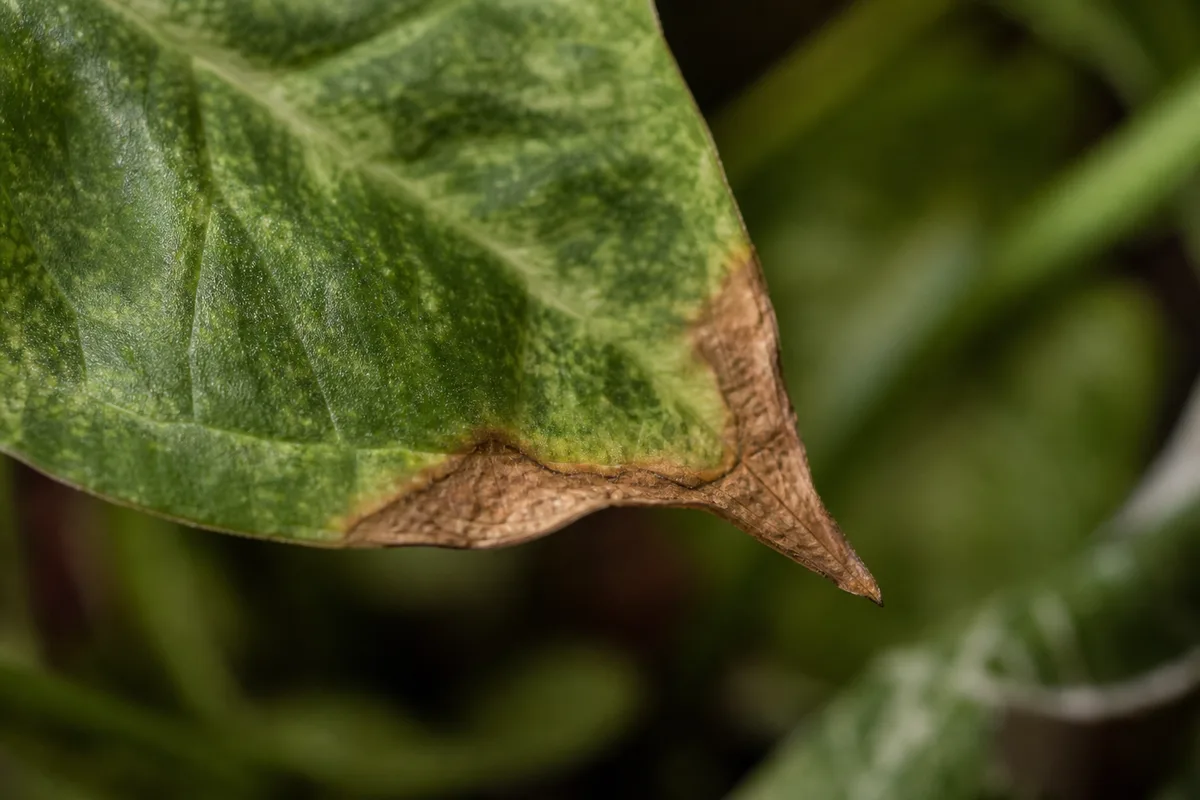
- Crisp brown tips with dry, light soil: underwatering, dry air, or a damaged root ball is more likely than disease. Rehydrate gradually and inspect how quickly the pot dries afterward.
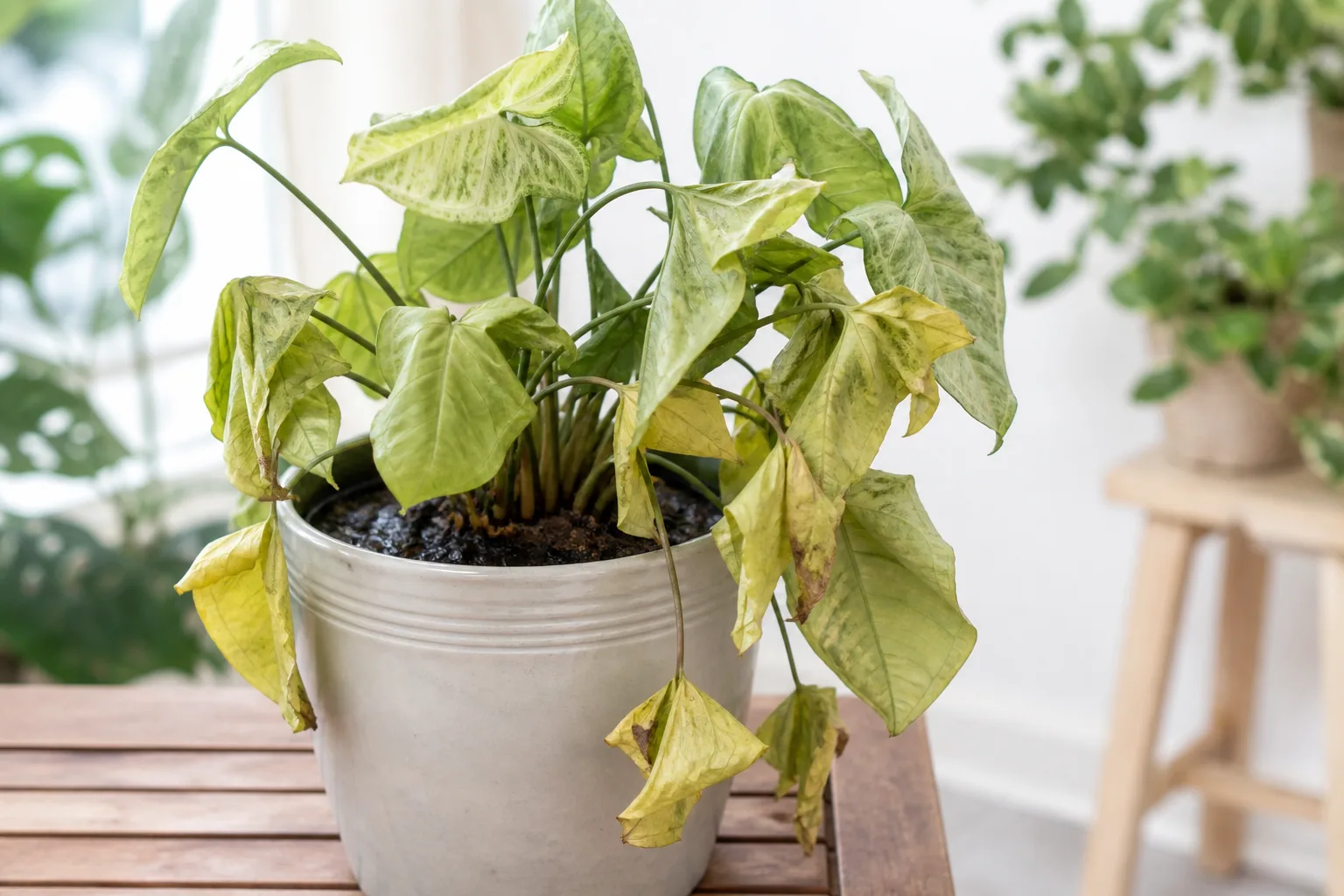
- Yellow leaves, soft stems, sour-smelling mix, and a pot that stays heavy: overwatering or root rot is likely. Stop watering and inspect below the soil.
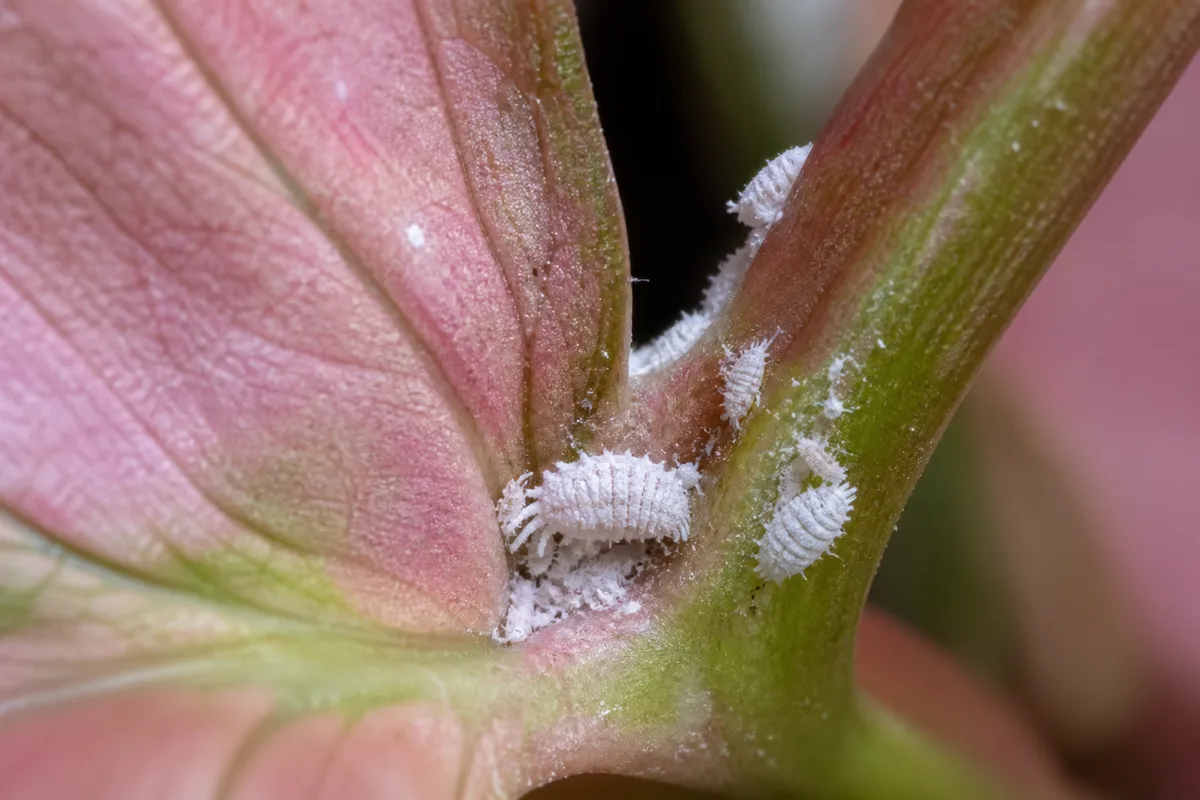
- Sticky residue, white cottony clusters, fine webbing, or scattered stippling: inspect nodes and leaf undersides for pests.
Do not remove every yellow leaf before correcting the cause. Trim tissue that is fully dead or diseased, but leave partly green leaves in place while the plant rebuilds. A problem that persists through two or three appropriate watering cycles deserves a root and pest inspection rather than another dose of fertilizer.
Check for Pests Before Reaching for Treatment
Dense arrowhead foliage creates hiding places for mealybugs, aphids, scale, and spider mites. Inspect new growth, petiole joints, leaf undersides, and the center of the plant whenever you water. Isolate a visibly infested plant from other houseplants, rinse accessible foliage gently, and remove pests you can see before choosing a treatment.
Repeat any treatment only according to its label and test a small section first, especially on thin, pink, or heavily variegated leaves. Avoid spraying a plant in hot direct sun or leaving a wet canopy in stagnant air. NC State Extension lists aphids, mealybugs, and spider mites among the species’ common insect problems, while the RHS notes mealybugs and glasshouse red spider mite as risks under protected conditions.
Recognize Root Rot and Act Early
Root rot is more likely when the plant stays wet for too long, especially in a large pot, dense mix, or dim room. Early clues include repeated yellowing, drooping despite wet soil, leaf drop, a sour smell, and stems that feel soft near the soil line. A surface layer of mold is not proof of root rot by itself, but it is a prompt to check moisture, airflow, and watering habits.
Unpot the plant if the mix never dries or the symptoms are escalating. Remove loose wet mix, trim mushy roots back to firm tissue with clean snips, and repot into a clean, appropriately sized container with fresh airy mix. If most roots are gone but a few stems remain firm, take healthy node cuttings as insurance; do not keep the original plant in a saturated pot hoping that a fungicide or extra humidity will reverse the damage.
Keep Arrowhead Vine Safe Around Pets and Skin
Arrowhead vine is not a pet-safe houseplant. The ASPCA lists it as toxic to dogs, cats, and horses because it contains insoluble calcium oxalates. Chewing can cause oral irritation, pain and swelling of the mouth, tongue, and lips, excessive drooling, vomiting in some animals, and difficulty swallowing.
Place the plant where pets and young children cannot reach trailing stems or fallen leaves. Wear gloves if the sap bothers your skin, wash hands after pruning, and keep cuttings and rinse water away from animals. If a pet chews the plant and shows symptoms, contact a veterinarian or ASPCA Animal Poison Control promptly rather than waiting for the plant to “pass.”
Conclusion
Successful arrowhead vine care comes down to matching the plant’s fast, flexible growth with a predictable root environment. Give it bright filtered light, use an airy mix and a draining pot, water after checking the root zone, and change the routine when the room, season, or container changes.
Then use its growth habit to your advantage. Tip-prune for a bushy mound, let healthy stems trail from a basket, or add a support before a mature vine becomes tangled. Take node cuttings from a stable parent, inspect pests in the leaf joints, and treat yellowing or drooping as a pattern to investigate—not an automatic signal to water or fertilize. With those checkpoints in place, Syngonium podophyllum gives you colorful foliage and a long-lived indoor plant that can adapt to the space you actually have.