How to Grow and Care for Common Poppies From Seed Outdoors
Grow common poppies in full sun with a practical direct-sowing plan. Get timing, seed depth, spacing, watering, deadheading, and pet-safety guidance.
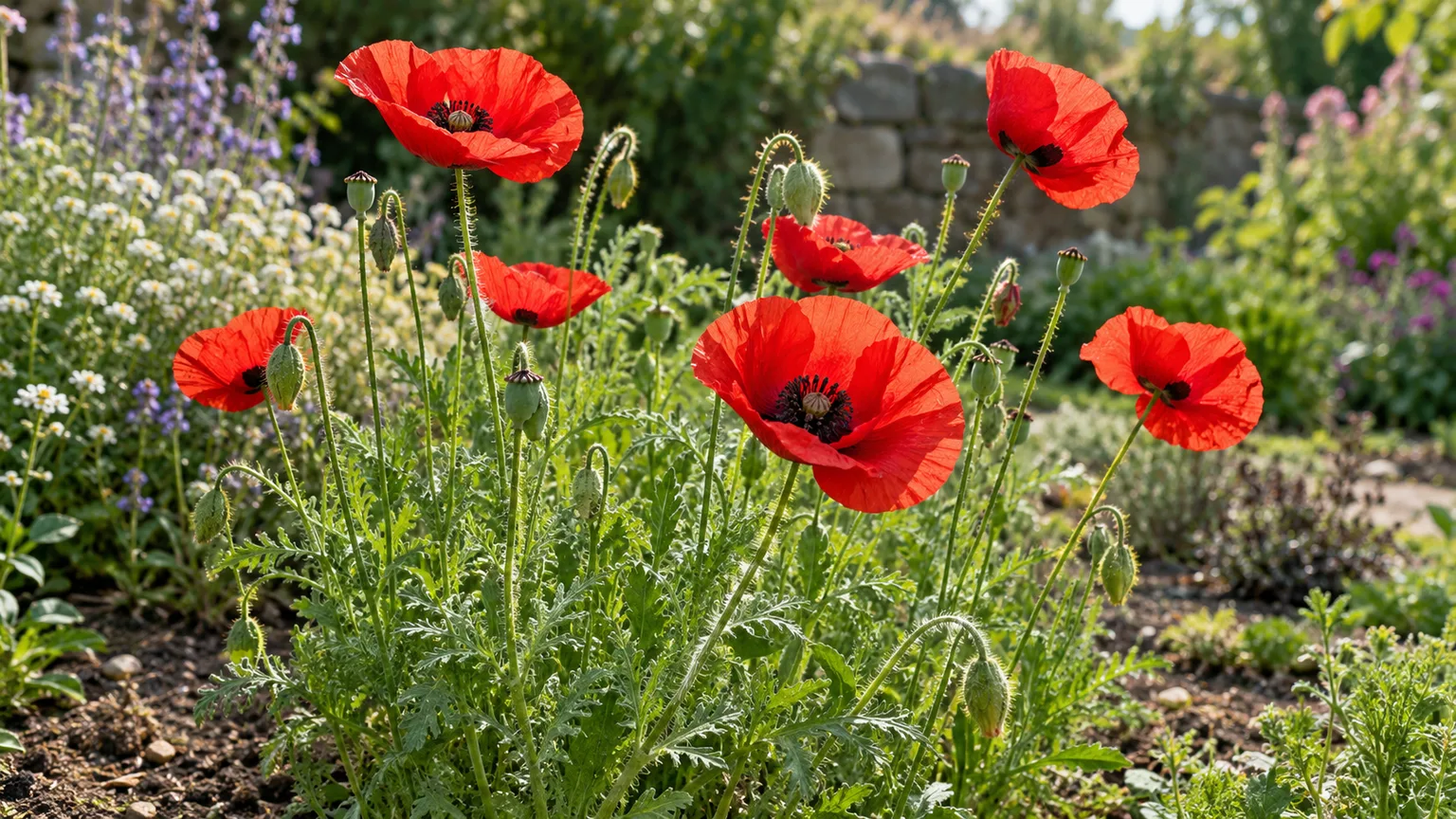
The common poppy is one of those flowers that looks effortless once it is established, yet can frustrate gardeners at the very first step: sowing. Its seeds are tiny, its seedlings dislike being moved, and a patch that self-seeds freely can be either a welcome spring show or a nuisance, depending on where you planted it.
The reliable approach is simple: choose a sunny place with good drainage, sow directly where the plants can stay, keep the seedbed lightly moist, and thin seedlings before they crowd. Then decide whether you want to remove spent flowers for a tidier bed or leave a few capsules to seed the next generation.
Common poppy at a glance
The common poppy, corn poppy, field poppy, or Flanders poppy is Papaver rhoeas, an annual in the poppy family. Its familiar wild form has scarlet, papery flowers with dark marks near the base of the petals and finely divided, hairy foliage. The Royal Horticultural Society describes plants around 75 to 90 centimeters tall, while cultivars and growing conditions can produce shorter or taller plants. Shirley poppies are selected forms of the same species; they can have single or double flowers in shades beyond red. Do not confuse them with Oriental poppies, which are perennial, or California poppies, which belong to another genus. The RHS plant profile and NC State Extension profile describe the species’ annual life cycle, appearance, and range.
An annual plant does not return from the same crown after its season ends. Common poppies can appear year after year because they drop seed and produce new seedlings; this is self-seeding, not perennial growth. That distinction matters when you plan a border or diagnose a missing patch. If you want an exact repeat of a particular flower color or form, buy the named seed again: seedlings from saved seed may vary, especially when selected cultivars cross-pollinate.
Pick a sunny, well-drained site
Choose the spot before you open the seed packet. Papaver rhoeas forms a taproot and does not respond well to root disturbance, so it is easier to direct-sow than to raise in a tray and move later. An informal border edge, gravel garden, open meadow patch, or sunny pocket between other plants can work. Give it a place where a few self-sown seedlings would be acceptable, or plan to remove the seedheads before they mature.
Light: full sun is the bloom setting
Aim for at least six hours of direct sun. The RHS lists full sun as the preferred position, and NC State Extension records full sun as the light requirement. In hot-summer areas, a little afternoon shade can reduce heat stress, but a deeply shaded bed is likely to produce fewer flowers and softer, more stretched growth. If the site is sunny only in the morning, try a small sowing first rather than expecting a dense field of blooms.
The plant’s delicate stems can lean or lodge in wind, especially when seedlings are crowded or grown in rich, sheltered conditions. A patch with open air movement is usually better than a tightly packed bed, but wind exposure is not a reason to stake every plant. Sow in small drifts among lower companions, and use neighboring plants as a light visual backdrop rather than letting vigorous foliage smother the poppy seedlings.
Soil: drain first, enrich sparingly
The key soil feature is drainage. The RHS lists chalk, loam, and sand as suitable textures and accepts acid, neutral, or alkaline soil; its general growing advice is fertile, well-drained ground. NC State Extension likewise recommends fertile, medium-moist soil that drains well. A moderately fertile garden bed is enough. If the ground is compacted clay or stays wet after rain, loosen the surface, add organic matter to improve structure, or sow in a raised bed rather than trying to compensate with more fertilizer.
Poppies are not a case for dumping compost or a high-nitrogen feed into the bed. Excess fertility can produce more leafy growth than flowers, while poor drainage can rot roots and seedlings. If plants have abundant foliage but few buds, check sun, crowding, and soil fertility before adding a phosphorus product. A soil test is a better basis for a nutrient amendment than guessing that one element is missing.
When to sow common poppy seeds
Direct sow in cool weather. In cold-winter regions, spring sowing as soon as the soil can be worked is a straightforward option. In milder areas, sowing in late summer or early autumn lets plants establish before winter and can bring an earlier display the following year. The RHS Plants sowing instructions recommend shallow direct sowing in spring or late summer to early autumn, while Gardenia’s seed guide also points to fall or early spring timing depending on climate.
Match fall or spring sowing to your winter
Use the season that gives seedlings time to grow before intense heat, not a fixed calendar date. If your winter is cold and wet, early spring is often the lower-risk choice: wait until the soil is workable rather than sowing into mud. If winters are mild and summer heat arrives early, fall sowing can give seeds and small plants a cool growing window. In a region with long, cool springs, sowing in early spring is usually simple and effective.
A late spring or summer sowing can germinate poorly when the soil is hot and dries quickly. If you missed the cool window, wait for the next suitable season instead of keeping the bed constantly wet to force seeds through heat. For a longer display in a cool climate, sow a small second batch a few weeks after the first; each batch will still flower within its own season, and timing varies with weather.
How to direct-sow poppies
Prepare the bed, sow thinly, and leave the seedlings where they emerge. This simple sequence avoids the taproot damage that can happen when plants are started in a crowded tray. It also makes it easier to see where the poppies are growing before neighboring plants fill in.
Prepare a bare, fine seedbed
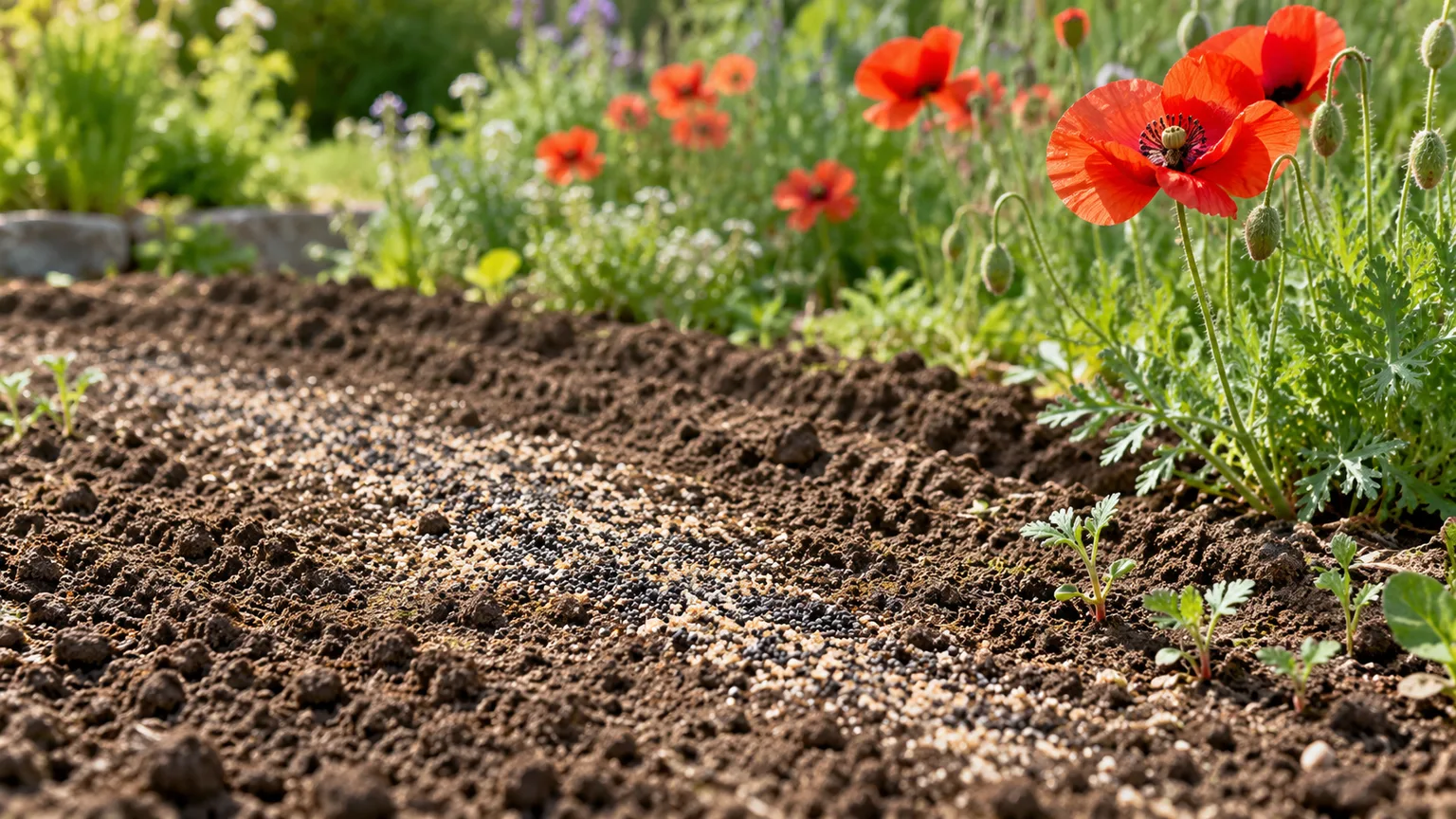
Remove weeds and any thick mulch from the area. Rake the top layer until it is fine and crumbly, then firm it lightly so seeds will make contact with soil instead of falling into deep cracks. Poppy seedlings are small; if the bed is rough, covered with clods, or full of vigorous weeds, they may emerge but disappear before you notice them.
You can mix the tiny seeds with a little dry sand to help distribute them over a larger patch. The sand is a spacing aid, not a planting medium: use enough to see where you have scattered seed, but do not pour a thick layer over the bed. If the area is a meadow strip, sow into bare patches rather than scattering over established turf, where grass will compete strongly with the seedlings.
Scatter evenly and cover shallowly
Sprinkle seed thinly, then press it against the surface or cover it only shallowly. Published directions vary: RHS Plants says to sow shallowly, while Johnny’s Selected Seeds specifies a quarter-inch covering for its corn-poppy seed because it requires darkness, and lists germination in 14 to 21 days at 60 to 75°F. So do not assume every seed lot needs light. Follow the instructions on the packet you have; the practical point is to avoid a deep trench or heavy mulch over these small seeds. Gardenia likewise recommends pressing or barely covering seed according to the packet in its poppy seed-starting guide.
Water with a fine spray or gentle rose so the seed stays in place. Keep the top of the bed lightly and evenly moist until germination, but do not saturate it. A hard stream can wash seed into clumps or bury it along the edge of the bed. Outdoor germination is not perfectly uniform, so mark the patch and give it time before deciding that the seed failed.
Thin seedlings in place
Once seedlings have several true leaves, keep the strongest and remove the extras at soil level. Do not pull a crowded seedling if doing so might disturb the roots of its neighbor; snipping it off is the safer choice. Johnny’s growing instructions give a 6- to 8-inch spacing for its selection, while RHS Plants recommends thinning to 12 inches. For a home border, roughly 8 to 12 inches apart is a useful starting range: use the closer end for compact plants and the wider end for taller cultivars or a more open look.
Thinning feels wasteful when the bed is still sparse, but crowded poppies compete for light and air. The result is often thin stems and fewer flowers per plant. If you want a carpet effect, sow across a wider area and keep reasonable spacing between plants instead of letting several seedlings occupy the same small hole.
Care after germination
Established common poppies are low-maintenance, but “low maintenance” does not mean ignoring the seedling stage. Small plants need light, room, and enough moisture to establish; after that, excessive irrigation and feeding can do more harm than good. Keep weeds from shading the rosettes and let rainfall do most of the work when conditions are moderate.
Water by growth stage; skip routine fertilizer
During germination, keep the surface from drying completely. Once seedlings are established, water when the soil itself is dry rather than giving frequent shallow sprinkles. The RHS Plants care instructions recommend watering thoroughly when soil becomes dry, not watering “little and often.” In a dry spell, soak the bed slowly so moisture reaches the root zone, then allow the surface to dry between waterings. In rainy weather or heavy soil, skip irrigation and check that water drains away.
Routine fertilizer is usually unnecessary in average garden soil. If a bed has been amended heavily or receives lawn runoff, avoid adding more nitrogen. If growth is unusually pale, weak, or nonflowering, first check whether the site has enough sun, whether plants are overcrowded, and whether water is pooling. Use a soil test if nutrient deficiency still seems likely. That sequence prevents an unnecessary feed from making the foliage problem worse.
Bloom management and self-seeding
A common poppy is an annual with a succession of short-lived flowers, not a single bloom that stays open for weeks. NC State Extension notes that an individual flower may last only a day, even though the plant can produce repeated blooms in spring, summer, and, in some conditions, fall. A cool spring and a well-spaced stand may stretch the display; a sudden hot spell can shorten it.
Deadhead some flowers and leave selected pods
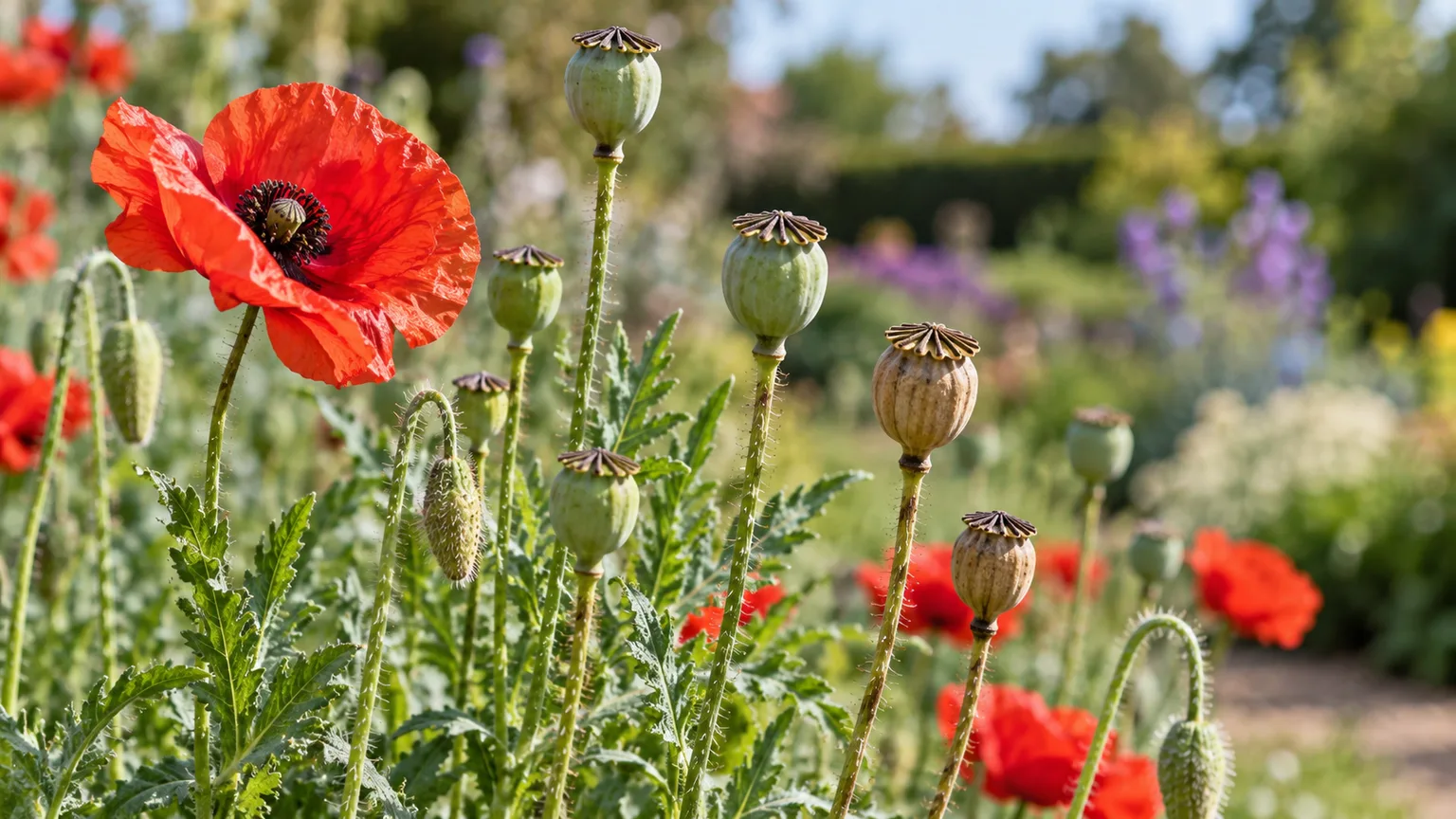
Choose between current-season tidiness and next-year seedlings. Remove spent flowers before they form mature capsules if you want to limit volunteers or keep the bed looking clean. If you want the plants to self-sow, leave a portion of the flowers to develop seedheads. You can deadhead the front edge and leave a few plants farther back, which preserves a controlled seed source without letting every capsule mature.
Seed capsules are ready to scatter seed when they have dried and the seeds are mature; do not wait until every pod has already opened if you want to collect them. Gather dry heads into a paper bag, let them finish drying, then shake out the tiny seeds and store them cool and dry. If you simply want another crop in place, shake a ripe pod over the bare patch and let the weather determine when seedlings emerge.
Seedlings from saved seed may not match a named cultivar exactly. Shirley forms are selected for flower color and shape; open-pollinated seedlings can vary, and nearby plants may contribute pollen. For a uniform planting, start with fresh seed from the desired cultivar. For a naturalistic patch where variation is welcome, self-sowing is an easy way to renew the display.
Containers: when they make sense
A container is useful when you have a sunny patio, poor drainage in the ground, or a small area where you want to keep seedlings visible. Choose a deep, stable pot with drainage holes and sow directly into its final position. Avoid starting poppies in a shallow tray and moving them later; the taproot is the reason a permanent container is more reliable than transplanting.
Use a free-draining potting mix and do not overfill the pot with rich compost. Scatter seeds sparingly, cover according to the packet, and thin to a few well-spaced plants rather than keeping every seedling. Containers dry faster than garden beds, so check moisture more often while seedlings are establishing. Once plants are growing well, water deeply when the mix begins to dry rather than keeping it constantly wet.
Troubleshooting: weak growth, few flowers, or no seedlings
If seeds have not emerged, check whether you buried them too deeply, washed them into a pile, let the surface dry, or sowed into a weedy bed. Germination can take a couple of weeks under suitable conditions; Johnny’s seed guide lists 14 to 21 days at its stated temperature range, but outdoor weather makes timing less predictable. If several weeks pass in cool, moist conditions with no seedlings, reseed a small test area with fresh seed and compare surface contact and cover depth before redoing the whole bed.
Leggy stems usually point to too little direct light or excessive crowding. Thin the plants that are packed together and leave the rest in the sunniest available spot. If plants are leafy but flower poorly, look first for shade, excess nitrogen, or a late sowing that left too little cool weather for growth. Do not automatically add phosphorus; use a soil test to identify a real nutrient need.
Yellowing or collapsing at the base is more concerning when the soil is wet. Improve drainage, stop watering until the bed begins to dry, and remove badly rotted plants rather than trying to rescue them with fertilizer. NC State Extension lists wet soil as a root-rot risk and also notes that Botrytis and powdery mildew can occur. Plants in a crowded, damp bed are more likely to develop fungal problems than those with spacing and air movement.
Pests, disease, pet safety, and spread
Pest problems are not usually the main reason common poppies fail, but aphids can cluster on soft new growth, and mildew or other fungal disease can appear in damp, crowded conditions. The RHS notes possible susceptibility to aphids, downy mildew, powdery mildew, and wilts, while NC State Extension lists no known routine pest problems and highlights wet-soil root rot and occasional fungal disease. That difference supports a practical approach: inspect plants, correct dampness and crowding, and treat an actual outbreak rather than spraying preemptively.
A small aphid cluster may come off with a directed stream of water or by snipping the most heavily infested tip. Preserve nearby beneficial insects and avoid broad insecticide use on flowers that attract pollinators. For mildew, improve spacing, water the soil rather than repeatedly wetting foliage, and remove badly affected material. If a labeled garden treatment is truly needed, use only a product approved for the site and follow its label; do not apply an unverified home mixture to blooms.
Common poppies can seed themselves vigorously. NC State Extension describes P. rhoeas as capable of escaping cultivation and being weedy; that is a more useful warning than a blanket label that it is either “invasive” everywhere or harmless everywhere. The species is native to Europe and Asia and introduced in parts of North America. If you are planting outside its native range, check local weed guidance, especially before adding it to a restoration or meadow mix. In a home bed, remove seedheads before they ripen, pull young volunteers while the soil is moist, and avoid repeated soil disturbance that can bring buried seed to the surface. NC State notes reports of common poppy seed germinating after very long dormancy, including 80 years; treat that as an exceptional record rather than a lifespan to expect from every seed, but do not assume a missed crop has erased the seedbank.
Pet exposure needs a quick call
Keep pets from chewing the leaves, stems, flowers, or capsules. The Pet Poison Helpline describes poppy plants as containing alkaloids that differ by species; ingestion can cause gastrointestinal and central nervous system effects, and the outcome depends on the plant and amount eaten. The helpline’s page covers Papaver species generally, so it does not predict an individual animal’s risk from a specific nibble. If a dog or cat eats any part of a poppy, contact a veterinarian or animal poison service promptly with the plant name and an estimate of how much was eaten. Do not wait for symptoms or try a home remedy.
Conclusion
For reliable common poppies, sow Papaver rhoeas outdoors where you want it to grow, in a sunny bed that drains well. Give tiny seeds shallow coverage, keep the seedbed lightly moist, and thin seedlings instead of moving them. After flowering begins, decide whether you value a tidier, more contained border or a self-seeding patch; deadhead accordingly, and leave only the seedheads you actually want.
Remember that yearly poppies are usually new seedlings, not the same perennial crown returning. That makes it easy to renew the display, but it also makes seed management part of care. With a planned sowing spot, modest watering, and a clear decision about the pods, common poppies can provide spring color without turning into an unplanned garden project.



