Chinese Money Plant Care: Light, Water & Pups
Keep Pilea peperomioides full and balanced with a workable watering rhythm, fast-draining soil, gentle light, and step-by-step pup care.
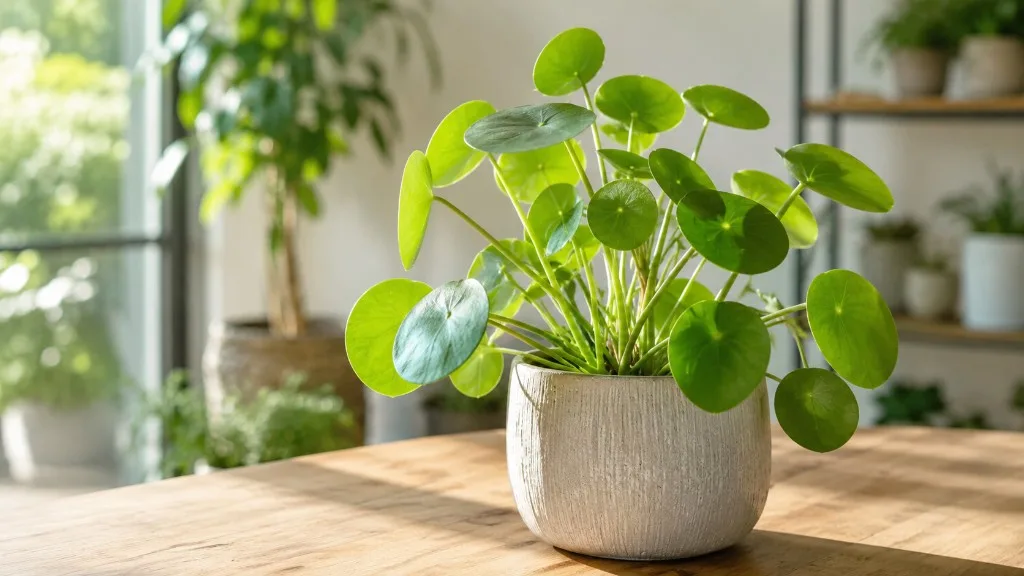
A Chinese money plant (Pilea peperomioides) is easiest to keep when you treat it as a bright, cool-room houseplant with a shallow root zone—not as a succulent you can ignore or a tropical plant that must sit in a steamy bathroom. Give it enough indirect light to stay compact, let the top of the mix dry before watering again, and keep excess water away from the roots. Those three choices prevent most of the yellow leaves, leaning stems, and soft, collapsing growth that make new owners think the plant is difficult.
The round leaves are technically peltate: the leaf stalk attaches near the center instead of at the edge. The NC State Extension profile describes the species as a compact, clumping perennial from the cool, shady mountain areas of southern China, with fleshy circular leaves and small flowers that are uncommon on indoor plants. Indoors, a healthy plant usually stays around 8–12 inches tall and wide, although a mature stem can become taller and produce a skirt of offsets.
Chinese Money Plant Care at a Glance
Use this table as a starting point, then adjust to the way your home dries a pot. A plant in bright light near a warm window may need water twice as often as one in a dim, cool room, even if both are the same size.
| Care factor | Practical target | The checkpoint that matters |
|---|---|---|
| Light | Bright, indirect light; gentle morning sun can be acceptable | Leaves stay green and firm without bleached patches |
| Water | Thorough soak after the top 1–2 inches dry | Pot feels lighter and water drains freely |
| Soil | Airy indoor mix with added perlite | Mix moistens evenly, then dries within a reasonable interval |
| Temperature | About 60–75°F (15–24°C) | No cold glass, drafts, radiator, or hot vent |
| Humidity | Average room air is usually workable; 40–60% helps in dry homes | Leaf edges stay firm rather than crisping |
| Fertilizer | Half-strength balanced feed during active growth | New leaves are steady, not soft or scorched |
| Rotation | A small turn every week or two | Growth stays balanced toward the room, not the window |
| Repotting | Only when roots crowd or mix fails | Roots circle the pot or water runs straight through |
The most reliable sequence is light → soil dry-down → root-zone inspection → fertilizer. If you skip straight to fertilizer because growth is slow, you can add salts to a pot that is actually too dark or too wet. If the plant is drooping, check the soil before watering; a drooping plant with wet soil needs an oxygen and root check, not another drink.
Get to Know Pilea peperomioides
This species has several common names, including coin plant, pancake plant, UFO plant, friendship plant, and missionary plant. The “friendship” name fits its habit: a healthy plant often makes offsets, or pups, around the base that can be separated and shared. The RHS species profile identifies it as an upright, evergreen perennial with fleshy rounded leaves and tiny pale flowers.
The plant is not a deep-rooted specimen that needs a tall container. Its central stem and long petioles make the canopy top-heavy, while pups and fine roots occupy the upper part of the pot. A stable, moderately shallow container with a drainage hole usually gives a better result than a large decorative pot filled with slow-drying mix.
NC State Extension also tags Chinese money plant as pet friendly. That means it is a sensible choice for a home with cats or dogs, but it does not mean pets should eat foliage; chewing any plant can cause stomach upset, and an unknown ingestion should be discussed with a veterinarian.
Why the Leaves Look Like Coins
The stalk joining the center of each round leaf is the visual clue that separates Pilea peperomioides from many plants sold under similar names. New leaves emerge from the top and expand outward, while older leaves may sit lower on the stem and eventually yellow and drop as the plant builds new growth.
This natural aging can look alarming when a plant loses one old leaf. It becomes a care problem when many leaves yellow at once, the stem feels loose at the soil line, or the mix stays wet for days after watering. Read the pattern across the whole plant instead of diagnosing a single leaf in isolation.
Choose the Right Light Before Adjusting Water
Give a Chinese money plant bright, indirect light for most of the day. An east-facing window is often the easiest placement because the plant receives gentler morning sun; a west or south window can work a little farther back or behind a sheer curtain. RHS growing guidance recommends bright but indirect light, with south-facing plants set back from strong summer sun.
Gentle direct rays are not automatically harmful. A plant can handle a small amount of mild morning sun if leaves stay cool and the color does not bleach, but intense afternoon glasshouse heat can scorch the circular leaf surface. Brown, papery patches on the window-facing side are a light problem first, so move the plant back or diffuse the rays before changing watering.
Low light creates a different pattern: long spaces between leaves, a bare lower stem, smaller new leaves, and a strong lean toward the window. The plant may survive, but it will not keep the compact, evenly fanned silhouette people want from a pilea. Move it closer to a bright window gradually, or use a grow light on a timer, and rotate the pot rather than tying the stem upright and burying it deeper.
The Pilea light guide has the detailed placement notes. The key rule is simple: if the mix stays wet and the plant is stretching, improve the light before increasing fertilizer or watering frequency.
Build a Fast-Draining but Moisture-Holding Mix
The best Chinese money plant soil does two jobs at once: it holds enough moisture for fleshy leaves and fine roots, then gives excess water a clear path out. NC State Extension lists moist, well-drained conditions with loam or sand texture and good drainage; RHS growing guidance likewise advises a free-draining, peat-free houseplant compost.
For a practical home mix, combine four parts quality indoor potting mix with one part perlite by volume. A coir- or peat-free base is fine if it does not compact in your home; a small amount of fine orchid bark can help in a mix that collapses quickly. You are aiming for a light, crumbly blend—not a gritty cactus mix that dries before a shallow-rooted pup can establish.
Use a pot with at least one unobstructed drainage hole. Do not put gravel in the bottom as a substitute for a hole; it reduces the volume of usable mix and does not stop a perched wet layer from forming. If water sits on the surface, smells sour, or emerges only from one channel, refresh the mix rather than pouring smaller amounts forever.
You rarely need to chase a precise pH for this plant. A quality bagged mix is more useful than repeated pH adjustments, and a stable dry-down matters more than a number on a meter. For recipe alternatives and the cachepot trap, see the Pilea soil guide.
Water by Soil Condition, Not the Calendar
Water when the top 1–2 inches (2–5 cm) of mix feel dry, not simply because seven days have passed. Press a finger into the soil near the pot edge, slide in a wooden skewer and read the darker damp section, or lift the pot after watering so you learn the difference between a full and nearly dry container. These tactile checks also appear in Plantvale’s Pilea profile; a moisture meter can be a useful comparison tool, but it should not replace checking the root zone and pot drainage.
When it is time to water, pour slowly over the soil until water exits the drainage hole. Let the pot drain fully, then empty the saucer or cachepot; never leave the root ball sitting in runoff. RHS growing guidance explains that waterlogged compost can kill roots and recommends discarding excess water after watering.
In a bright, warm home, a mature plant may dry in roughly 7–10 days during spring and summer. In a cool room or winter low-light period, 10–14 days—or longer—can be normal. Those numbers are starting points only: a terracotta pot, a small nursery pot packed with roots, a humid bathroom, and a large plastic cachepot all change the dry-down.
Use the Pilea watering guide for a deeper seasonal routine. The goal is not constantly moist soil; it is a repeatable cycle of thorough watering, drainage, and partial dry-down before the next soak.
What Drooping, Yellowing, and Wet Soil Mean
Drooping leaves are useful only when paired with a soil check. If the mix is dry several inches down and the pot is light, water thoroughly and look for recovery over the next day; if the mix is wet and the leaves still sag, suspect poor drainage, root damage, sudden temperature stress, or low light.
Yellowing is also a pattern, not a verdict. One oldest lower leaf can be normal aging, while several yellow leaves on a plant with wet soil point toward overwatering or root stress. Do not fertilize yellow leaves until you have checked the pot, because added salts cannot repair roots that are already short of oxygen.
Keep Temperatures Steady and Humidity Reasonable
Chinese money plants prefer ordinary cool-to-average indoor temperatures, roughly 60–75°F (15–24°C). Keep the plant above about 50°F (10°C), away from cold drafts and chilled window glass, and out of the direct blast of a radiator, heater, or air-conditioning vent. RHS growing guidance notes that pileas tolerate a range of indoor temperatures but should remain above 10°C and protected from draughts.
Average household humidity is often enough for Pilea peperomioides, especially when watering and light are correct. A hygrometer is more useful than guessing from the calendar: if the room sits below about 35–40% for long periods and brown edges keep appearing, move the plant away from dry airflow and consider a humidifier for the room or plant group.
Do not confuse humidity with wet soil. A plant can have crispy margins in a damp pot if it is beside a hot vent, in direct sun, or carrying fertilizer salts. Fix the environment and root-zone problem separately rather than keeping the mix wet in an attempt to soften the leaves.
A Pebble Tray Can Help, but It Cannot Fix Dry Air
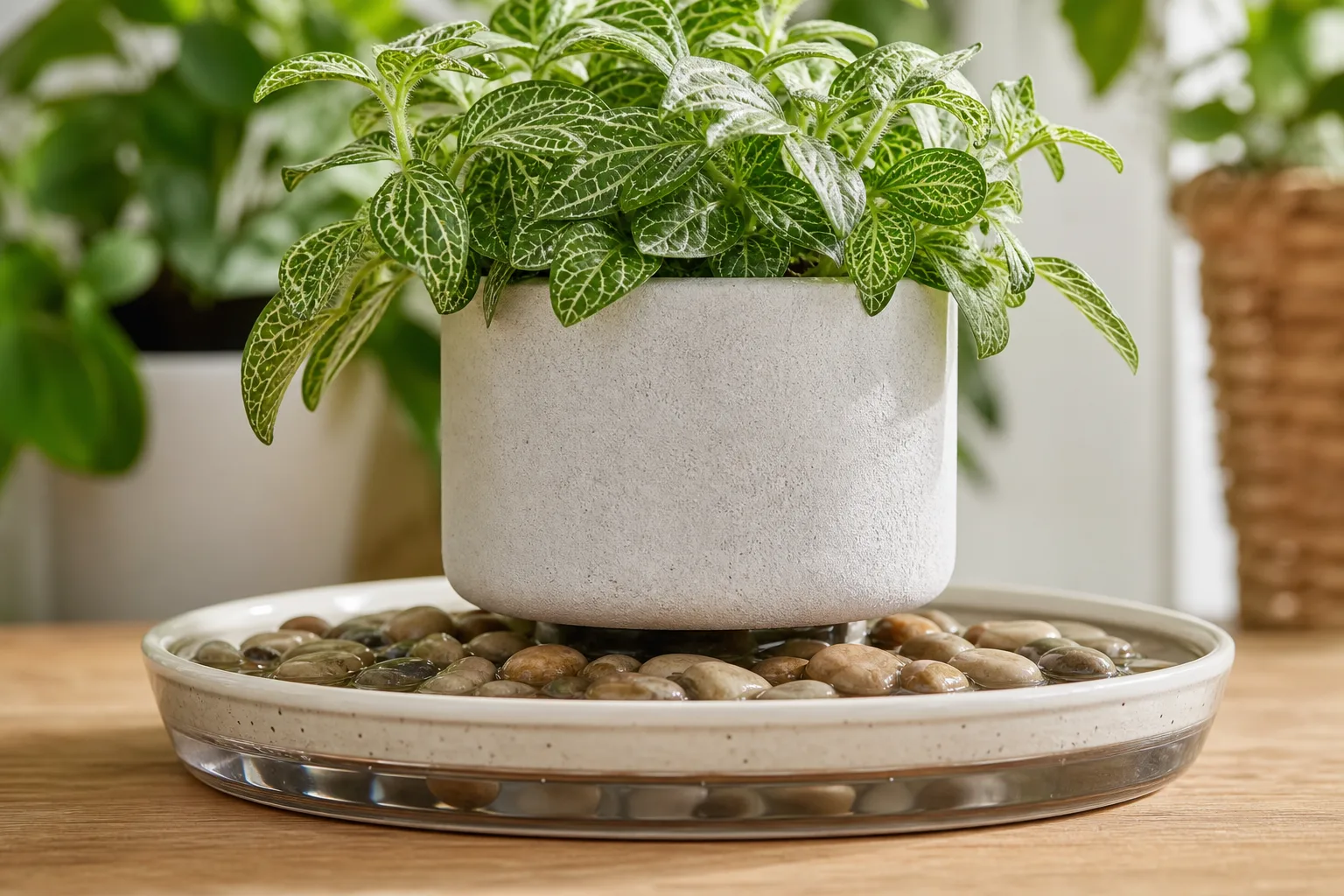
A pebble tray can create a small humid pocket immediately around the pot, but it is not a whole-room humidifier. Put pebbles in a watertight saucer, add water so the level stays below the tops of the stones, and set the pot on the pebbles, never in the water. The pot’s drainage hole must remain above the waterline.
Grouping plants, using a humidifier, or placing the pilea in a bright bathroom can help more than occasional misting. Misting leaves raises humidity briefly and leaves wet foliage behind; NC State cautions against wetting foliage because it can contribute to leaf spots. If you use a pebble tray, clean it regularly so algae, stagnant water, and fungus gnats do not become the new problem.
Fertilize Lightly During Active Growth
Feed a healthy Chinese money plant during active growth in spring and summer with a balanced liquid houseplant fertilizer diluted to half the label strength. Monthly feeding is a workable starting rhythm in good light; in a slower, dimmer room, every six to eight weeks may be enough. RHS recommends feeding pileas every month or two from April through September and warns that overfeeding can do more harm than good.
Water the plant first if the mix is dry, then apply diluted fertilizer to already-moistened soil. Skip feeding a newly purchased, drought-stressed, pest-infested, or freshly repotted plant until it resumes healthy growth. Stop or sharply reduce feeding in winter when light and growth slow; fertilizer cannot compensate for a dark room.
If leaf tips turn brown after a feeding increase, flush the pot with plain water and let it drain completely, then restart at a lower rate. Brown tips can also come from dry air, harsh sun, irregular watering, or mineral accumulation, so do not assume the fertilizer is the only cause.
Repot Only When the Roots Need Room
Repot in spring or early summer when roots circle densely, emerge from the drainage hole, the mix has broken down, or water runs straight through without wetting the center. A newly bought plant usually benefits from a short acclimation period before repotting unless the nursery mix is waterlogged, the pot has no drainage, or pests and rot are obvious.
The RHS growing guide suggests checking roots each spring and repotting pileas when crowded, usually every couple of years. The calendar is less important than the root ball: repotting a healthy, lightly rooted plant into a much larger pot creates more wet soil than the roots can use.
Pot Size and Drainage Rules
Choose a container only 1–2 inches wider than the current root ball, with a drainage hole and enough weight to resist a top-heavy stem. Keep the stem at the same soil line; do not bury bare stem tissue to correct a lean. Fill around the roots with fresh mix, water once to settle it, and return the plant to bright indirect light.
After repotting, expect the larger soil volume to dry more slowly. Check moisture at depth before watering again, and wait until new growth resumes before fertilizing. If you see a sour smell, black or mushy roots, or a soft stem base, treat it as a root problem rather than routine repotting; the Pilea root-rot guide covers that escalation.
Propagate Pups, the Reliable Method
The easiest way to make another Chinese money plant is to separate a rooted pup from the mother plant. RHS growing guidance lists offsets as a standard propagation route for Pilea peperomioides, and the method is more forgiving than starting with a single leaf because a mature pup already has a growing point and, often, roots.
Propagate when the parent is actively growing and healthy. Do not remove every pup from a plant that is already struggling with root rot, low light, or an active pest outbreak; stabilize the parent first and leave enough foliage to support recovery.
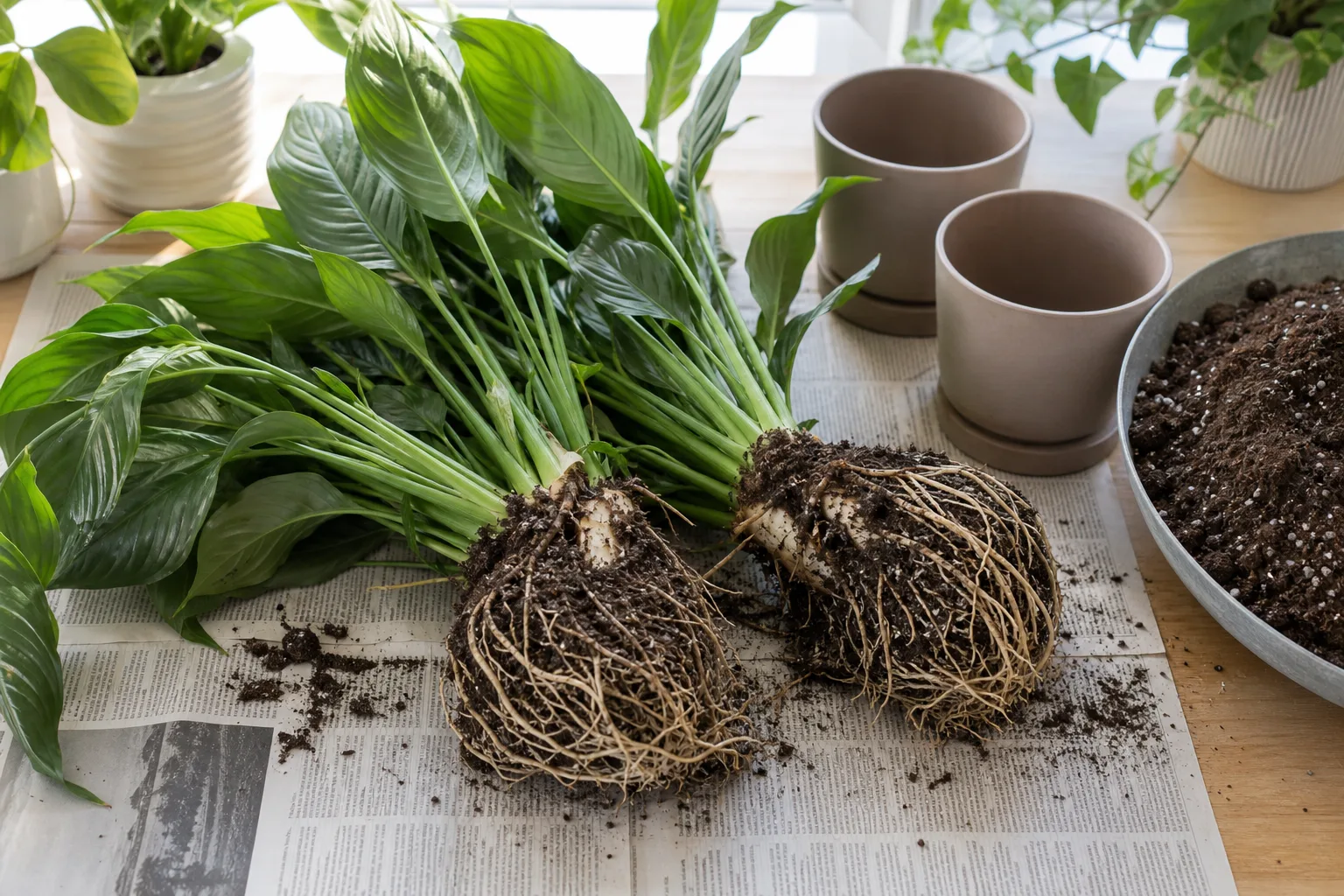
Follow this sequence:
- Choose a pup with several leaves and its own roots, ideally a few inches tall rather than a tiny shoot.
- Water the parent the day before if the soil is dry, then slide the plant from its pot by holding the container or root ball, never the leaf stalks.
- Brush away enough mix to see where the pup joins the parent. Use a clean, sharp knife or pruners to cut the connecting stem or root tissue with one decisive cut.
- Pot the pup in a small container of lightly moist, airy mix. Set roots below the mix, but do not bury the central stem.
- Place it in bright indirect light and keep the mix lightly moist while new roots establish. Once you see fresh growth, let the top layer dry between thorough waterings.
You can leave pups attached if you prefer a fuller clump. Separate them when the container becomes crowded, when you want gifts, or when multiple stems compete for the same small root zone. A full pot is not automatically healthier; crowded roots still need enough air and moisture movement.
Water Propagation and Leaf Cuttings
Stem sections or stem-bearing pups can be rooted in clean room-temperature water. Keep leaves above the waterline, change the water about weekly, and move the cutting into airy mix once it has a small network of roots rather than waiting for a long, tangled water root system. The Moose Plant Shop propagation guide also emphasizes mature pups, clean cuts, and warmer active-growth conditions.
A leaf without any piece of stem may root, but it is an experiment rather than the dependable route to a new plant. For a higher chance of continued growth, take a section that includes the leaf stalk’s attachment to the mother stem, or choose a rooted pup. Keep water-propagated plants in bright indirect light and expect a transition pause after potting.
Prune and Rotate for a Balanced Plant
Turn the pot a quarter turn every week or two so new leaves do not all face one window. RHS growing guidance specifically recommends turning bushy pileas after watering to reduce one-sided growth. Rotation will not cure a plant that is already too dark, but it prevents the light-seeking lean from becoming extreme.
Remove yellow, dead, or badly damaged leaves at their base with clean scissors. If an old plant has a long bare stem, you can cut back a tall stem in spring or summer to encourage new growth lower down, or root a healthy top section as a cutting. Do not strip a plant just to make it look tidy in one afternoon; leave enough healthy leaves for it to rebuild.
Never bury the bare stem to hide a lean. Improve the light, rotate gradually, and support the pot if needed while new growth changes the balance. A woody lower stem is common on older pileas and can be part of the plant’s character rather than proof that it must be discarded.
Prevent Pests and Catch Them Early
Chinese money plants are generally resilient, but indoor plants can still host spider mites, mealybugs, scale, aphids, and fungus gnats. RHS growing guidance lists sap-sucking insects such as mealybugs, red spider mites, scale, and thrips among the problems to watch for; NC State also flags fungus gnats and root rot.
Inspect leaf undersides, stem joints, and the soil surface whenever you bring home a new plant or notice speckling. Fine webbing and pale stippling suggest mites, cottony clusters suggest mealybugs, and small flying adults around wet soil suggest fungus gnats. Isolate the plant before treatment so an infestation does not move through a crowded shelf.
Start with physical control: rinse foliage gently, wipe accessible pests away, remove badly infested leaves, and let the soil surface dry appropriately. If a labeled insecticidal soap or other product is needed, follow that product’s directions exactly, test a small area first, and repeat only at the label interval; “natural” does not automatically mean harmless to leaves, pets, or beneficial insects.
The library has focused next-step guides for Pilea spider mites, mealybugs, and fungus gnats. Use them when you need a treatment plan rather than adding more water or fertilizer to the overview problem.
Diagnose Brown, Yellow, Curling, or Falling Leaves
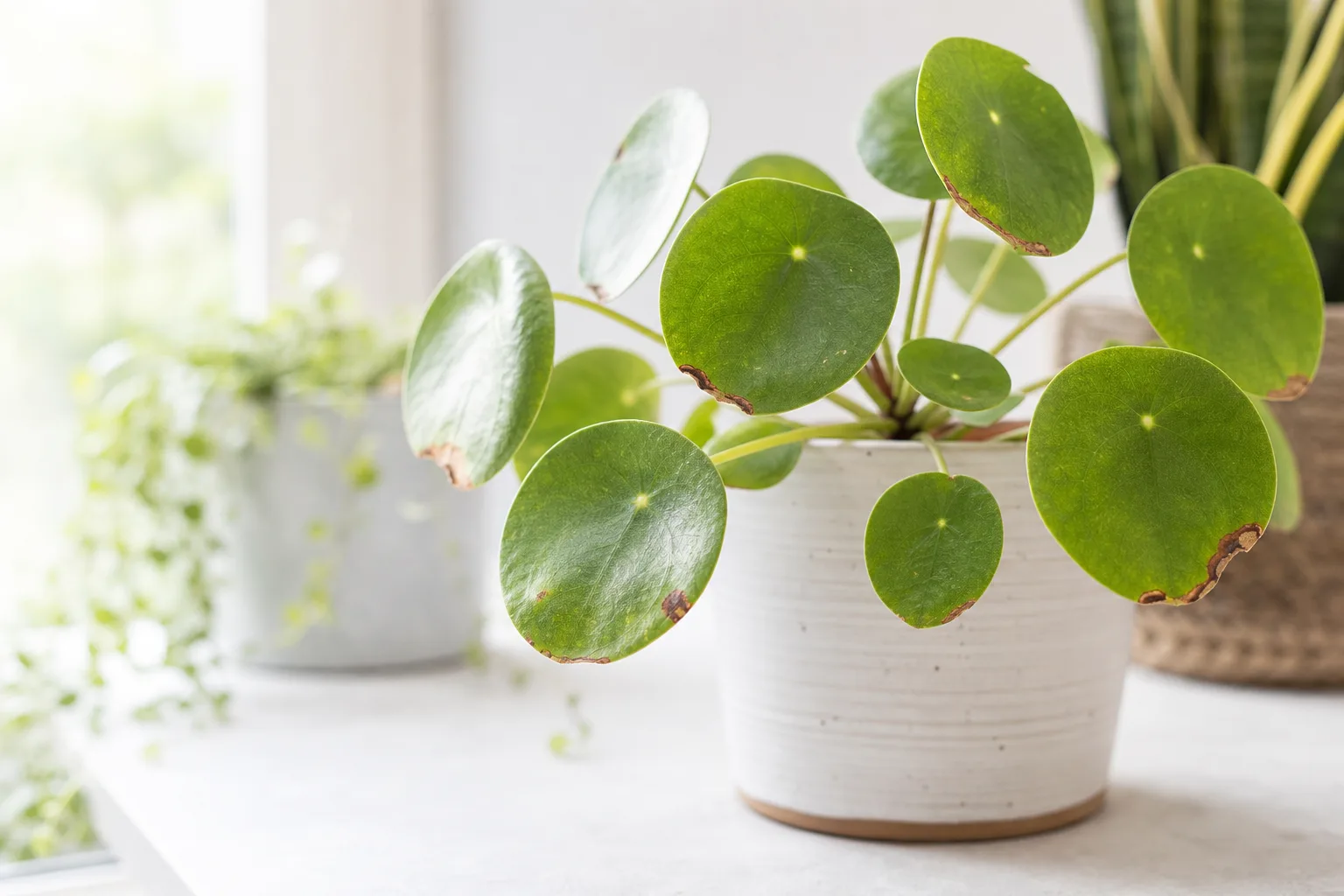
Start with the pot and the newest growth, then inspect the leaf undersides. The following triage keeps you from applying the wrong fix to a symptom that has several possible causes.
| What you see | Check first | Lowest-risk next action |
|---|---|---|
| Brown tips or edges | Dry mix, hot sun, dry vent, or recent fertilizer buildup | Correct the environment, water consistently, and trim only the dead tissue |
| Brown bleached patches | Window-facing exposure and leaf temperature | Diffuse direct sun or move the pot back from the glass |
| Several yellow leaves | Whether the center and lower mix are still wet | Pause watering, improve drainage and light, and inspect roots if it stays wet |
| One old yellow lower leaf | Whether new leaves and the stem remain firm | Remove the leaf when fully yellow and continue normal care |
| Curling or cupping | Dry root zone, heat, direct sun, or mites under leaves | Check soil and leaf undersides before changing humidity or fertilizer |
| Widespread leaf drop | Wet roots, a cold draft, abrupt relocation, or severe dryness | Stabilize location and moisture; inspect the root ball if the mix is wet |
| Long bare stem and small leaves | Light level and distance from the window | Increase bright indirect light and rotate; prune or propagate only after recovery |
| White chalky flecks | Whether spots wipe away and no pest signs are present | Wipe gently and watch new growth; cottony residue or webbing needs pest inspection |
Brown tips are damage, not a diagnosis. Low humidity, inconsistent watering, direct sun, and concentrated fertilizer can look similar, and a damaged edge will not turn green again. Judge the fix by the next leaves: if new growth is clean, the cause is probably being addressed even though old leaves still show the history.
Root rot deserves faster action than cosmetic browning. If the mix stays wet, the plant droops despite moisture, the stem base softens, or roots are brown and mushy, unpot it, remove clearly rotted tissue with clean tools, and repot into fresh draining mix. If only the crown and healthy pups remain, save the viable material rather than repeatedly watering the failing root ball.
Can Chinese Money Plants Bloom Indoors?
Yes, a mature plant can produce small white to pinkish flowers on slender spikes, but indoor flowering is uncommon and not especially showy. NC State’s plant profile notes that houseplants rarely flower, while RHS describes tiny pale flowers on the species.
Do not force bloom by putting the plant in a cold room or by adding extra fertilizer. A stable growing location, sufficient indirect light, sound roots, and seasonal slowing are safer priorities. If flowers appear, enjoy them as a sign that the plant is mature and settled, then remove the spent spike only if it becomes untidy.
Conclusion
Good Chinese money plant care is mostly about avoiding extremes. Put Pilea peperomioides in bright indirect light, use airy soil in a pot with drainage, water only after the top layer dries, and empty the saucer every time. Keep it away from cold drafts and hot vents, feed lightly during active growth, rotate it so the coin leaves develop evenly, and let a healthy plant make pups before you reach for complicated propagation methods.
When something goes wrong, check the root-zone moisture before guessing. Dry soil, wet soil, harsh sun, low light, pests, and dry airflow can all change the leaves, but each leaves a different clue; correct one condition at a time and judge progress by new growth.