Norway Spruce: Plant Care and Growing Guide
Norway spruce care for zones 2–7: spacing, soil, watering, cultivars, windbreak layout, and how to tell it apart from blue spruce and Douglas fir.
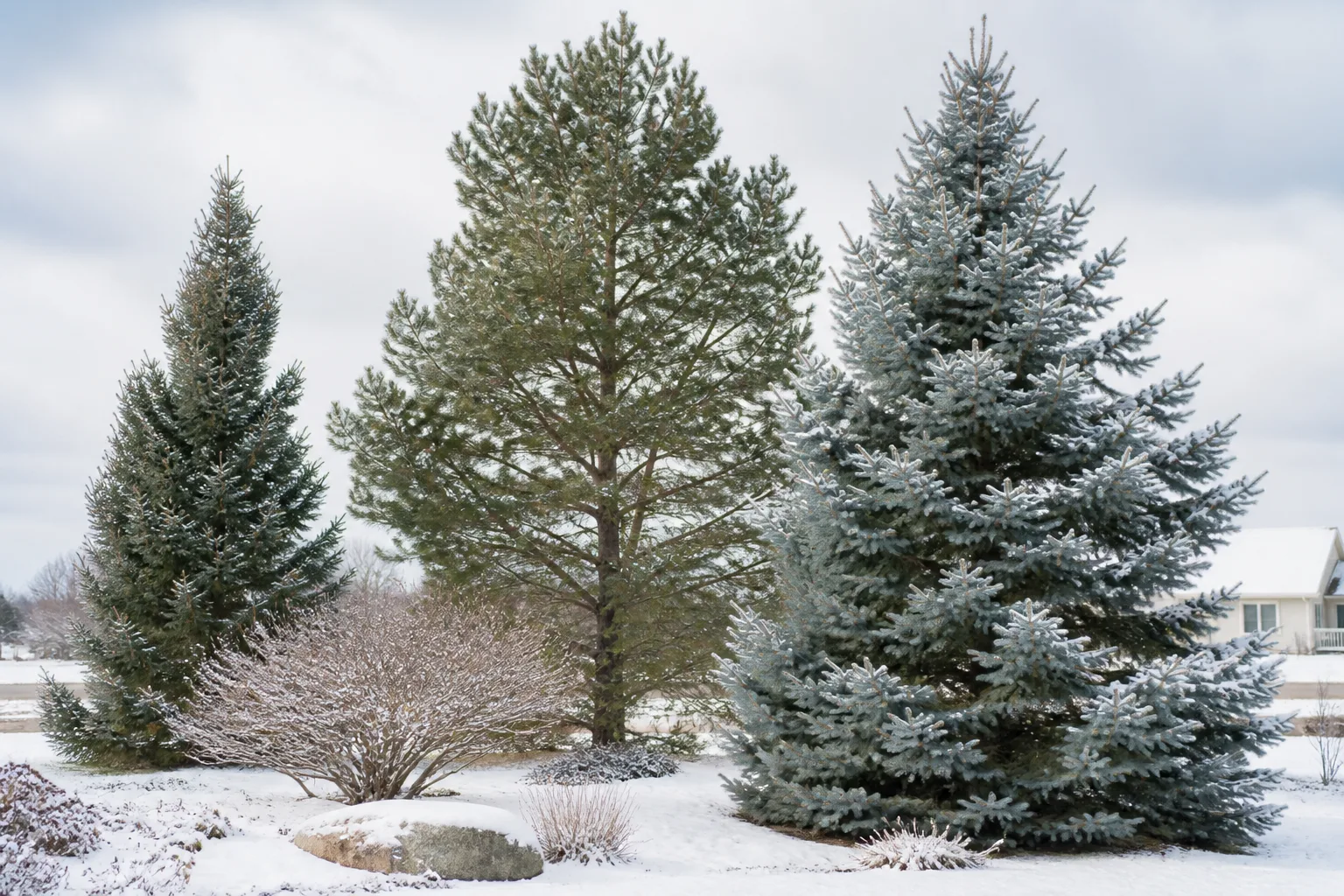
Norway spruce (Picea abies) is the tall, pyramidal evergreen behind countless windbreaks, rural privacy screens, and cut-your-own Christmas tree farms across the northern United States. Native to the mountains of northern and central Europe, it is a rapidly growing needled conifer in the pine family (Pinaceae) that can add serious vertical structure in a single decade when sited correctly. NC State Extension notes it has served as the U.S. Capitol Christmas tree multiple times and remains the classic holiday tree in Great Britain.
That pedigree is not the same as “easy everywhere.” Norway spruce wants cool summers, acidic well-drained soil, and room to spread. It develops a shallow, wide root system that makes understory planting tricky and leaves mature trees vulnerable to windthrow on wet or compacted sites. This guide covers whether the species fits your lot, how to plant and water it through establishment, which cultivars suit small spaces, and how to keep a healthy tree from turning into a stressed magnet for canker and borers.
What Makes Norway Spruce Different From Other Evergreens
Norway spruce is built for speed and scale in cold climates. In its native range it routinely reaches 100–150 feet; in North American landscapes it more often matures around 40–60 feet tall and 25–30 feet wide, according to the Missouri Botanical Garden. Young trees hold a stiff pyramidal outline with slightly upturned primary branches; secondary branches become pendulous with age, giving mature specimens a layered, cathedral-like silhouette.
Growth is genuinely fast for an evergreen — commonly 2–3 feet per year in favorable northern sites, and sometimes more on young stock in deep, moist loam. Needles are four-sided, dark green, and about 1 inch long, arranged in spirals along the branch. They attach to tiny pegs on the twig — a spruce trait that helps you separate spruces from firs at a glance. Cones are among the largest in the genus: pendulous cylinders 4–9 inches long that start green to violet and ripen silvery brown. Squirrels and birds work the seeds heavily; that wildlife value is one reason Norway spruce anchors mixed windbreak plantings in farm country.
What Norway spruce is not: a heat-loving southern screen tree, a tight foundation shrub (unless you buy a named dwarf cultivar), or a drought-proof xeriscape plant. NC State Extension is explicit that it does poorly in the southern end of zone 7 where summers run hot and humid. Treat that as a hard planning limit, not a suggestion.
Quick Reference Profile
| Trait | Norway spruce (Picea abies) |
|---|---|
| Type | Large needled evergreen tree |
| USDA zones | 2–7 (Missouri Botanical Garden) |
| Mature size (typical in North America) | 40–60 ft. tall × 25–30 ft. wide |
| Growth rate | Fast; often 2–3+ ft./year when young |
| Sun | Full sun best; tolerates light shade |
| Soil | Acidic, moist, well-drained; sandy loam ideal |
| Root habit | Shallow, spreading — respect dripline |
| Cones | Pendulous, 4–9 in., among largest spruce cones |
| Best uses | Windbreaks, large screens, specimens, Christmas trees |
| Weak spots | Heat, wet feet, tight spaces, salt |
Use this table as a pre-purchase filter. If your bed is 12 feet wide between a driveway and a porch, a species Norway spruce is the wrong plant — no pruning schedule fixes a tree bred to spread 25 feet.
Is Norway Spruce Right for Your Landscape?
Norway spruce solves one job exceptionally well: large-scale evergreen structure in cool climates. It does not solve small urban courtyards, saline coastal strips, or low-maintenance foundation corners without a dwarf cultivar on the tag.
When Norway Spruce Is the Best Fit
Choose Norway spruce when you need a windbreak, farm shelterbelt, or tall privacy screen on a lot with depth to spare. It shines on rural acreages, long fence lines, and open side yards where a row can mature without crowding structures. The species transplants more readily than many large conifers, which matters when you are installing balled-and-burlapped field stock for a screen that must close gaps quickly.
Norway spruce also earns its keep as a cut or living Christmas tree where cool fall weather holds needle retention. For broader privacy strategy — sightline audits, mixed screens, and fence coordination — see our backyard privacy ideas guide. If you are comparing fast evergreen options for cold regions, our cold-hardy evergreen trees guide puts Norway spruce in context with blue spruce, Scots pine, and concolor fir.
When to Choose a Different Tree
Pick Green Giant arborvitae or eastern white pine when you want a faster-closing hedge in slightly warmer zones with less acid soil fuss — see our Green Giant arborvitae guide for spacing and salt limits. Choose Colorado blue spruce when silvery color and a more compact habit matter more than maximum height gain, understanding blue spruce also struggles in hot, humid zone 7 summers.
Skip species Norway spruce if your soil stays soggy after rain, you are within 15–20 feet of the mature dripline of a house or overhead utilities, or you need a tree for a zone 8+ yard. Dwarf cultivars can work in smaller beds, but only when the nursery tag names a cultivar with a verified mature size — not a generic “dwarf spruce” label.
Light and Site Selection
Norway spruce performs best in full sun — at least six hours of direct light daily. It tolerates light shade when young but grows thinner and more open over time, which defeats the purpose of a windbreak or screen. Avoid planting on the north side of tall buildings where winter shade and ice linger; new transplants already fight desiccation without added shade stress.
Wind exposure matters twice: Norway spruce is valued in windbreaks, but a lone young tree in an open, gusty field may need staking its first season. Mature trees with compromised root zones — construction cuts, grade changes, or chronic wet soil — can snap in storms because the root plate is shallow and wide rather than deep and anchoring.
Keep the dripline clear for at least the first decade. The shallow root system competes aggressively with turf, perennials, and shrubs planted under the canopy. If you want groundcover beneath conifers, plan a mulch ring instead of a shade garden that will slowly starve in root competition.
Soil, Water, and Climate Needs
Norway spruce prefers acidic, evenly moist, well-drained soil. Missouri Botanical Garden describes it as easily grown in average acidic soils when drainage is good; rich sandy loam is ideal. It dislikes alkaline clay, compacted construction fill, and standing water — a combination that shows up as yellowing interior needles followed by branch dieback.
pH: Aim for roughly 5.0–6.5. If a soil test shows high pH, amend with organic matter and consider acidifying only when tests confirm need; guessing with sulfur on an established tree rarely fixes a wrong-site planting.
Climate: Cold hardiness is exceptional — roots and shoots tolerate northern zone 2 winters. The limiting factor is summer heat and humidity in the lower Midwest and upper South. NC State Extension warns performance drops in zone 7 southern exposures. If your summers include weeks of 90°F-plus with humid nights, measure twice before committing to a long-lived 60-foot tree.
Fertilizer: Established Norway spruce in decent forest-edge soil rarely needs feeding. At planting, fix soil chemistry if tests demand it; otherwise skip routine fertilizer that pushes soft growth vulnerable to frost and pests. If a soil test shows genuine deficiency, use a balanced slow-release product in early spring only — never late summer.
How to Plant Norway Spruce the Right Way
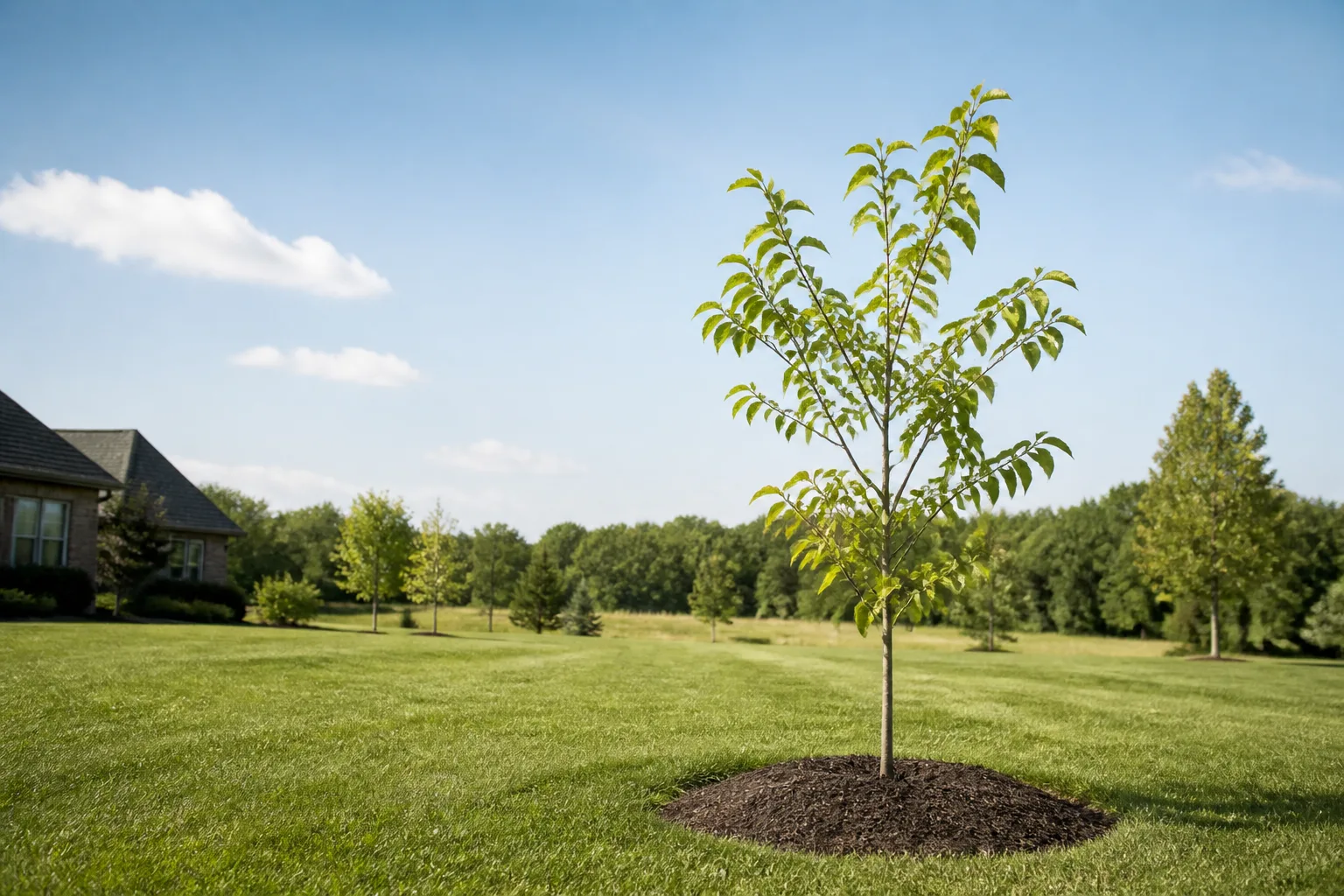
Plant in early spring after frost risk passes or in early fall six to eight weeks before the ground freezes. Fall planting lets roots grow in cool soil while top growth slows; spring planting works when you can irrigate through the first summer.
Digging: Make the hole two to three times wider than the root ball but only as deep as the root ball height. Norway spruce is sensitive to planting too deep — the root flare where trunk meets roots must sit at or slightly above finished grade. Ohio State’s plant profile emphasizes moist, well-drained conditions at establishment; burying the flare is one of the fastest ways to void that advantage.
Setting the tree: Remove wires, burlap (at least from the top half), and containers. Spread roots on bare-root stock radially. Backfill with native soil amended lightly with compost — not a pure compost plug that dries differently from surrounding earth. Water halfway through backfill to settle soil, then finish and soak again.
Mulch: Apply 2–4 inches of shredded bark or wood chips in a ring at least 3 feet wide, keeping mulch several inches away from the trunk. Volcano mulching against bark invites rodent chewing and cambium rot.
Staking: Stake only if the tree wobbles in wind; remove ties after one growing season so the trunk can strengthen.
Watering and Mulching Through the First Years
Year one is when Norway spruce lives or dies on your watch. The tree needs consistent moisture while roots expand, but not saturated soil. Deep, infrequent soakings beat daily sprinkles that wet only the top inch.
Establishment schedule (rough guide):
- Weeks 1–8 after planting: Water when the top 3–4 inches of soil dry; roughly 1 inch of water per week from rain plus irrigation combined.
- Months 3–12: Extend interval to 10–14 days in cool weather; shorten to 7 days during hot, dry spells.
- Year 2+: Taper irrigation unless drought persists; established trees tolerate brief dry periods but are not true xeriscape plants.
Watch interior needle browning on south-facing sides in late winter — classic desiccation when sun and wind pull moisture from needles while frozen soil blocks uptake. Water thoroughly before freeze-up in fall, maintain mulch, and consider burlap wind screens on exposed new transplants. Anti-desiccant sprays are a supplement, not a substitute for correct siting.
Norway Spruce Cultivars Worth Knowing
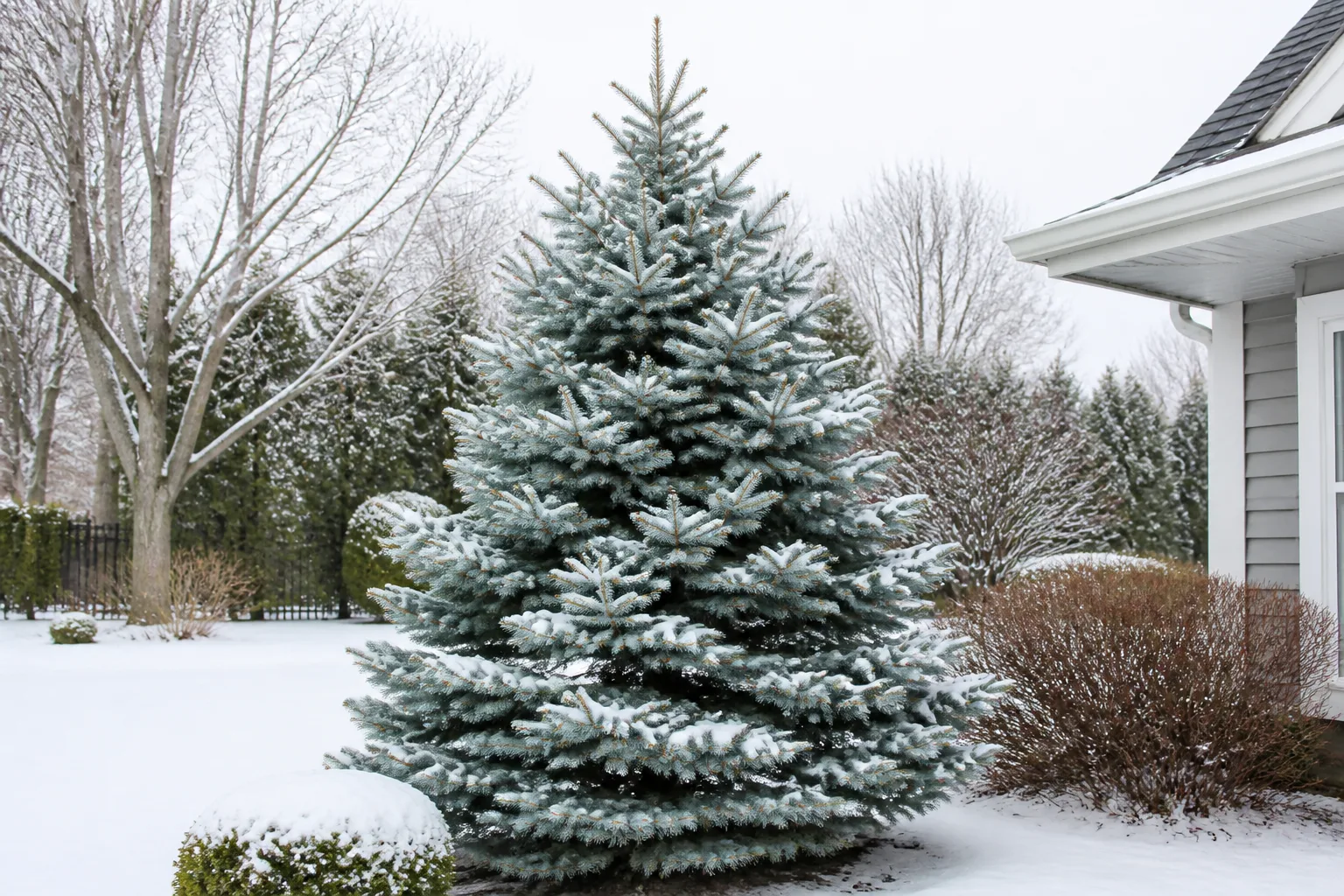
Species Norway spruce is a forest tree. Landscapes usually need one of the 150+ named cultivars NC State Extension lists — but only a handful are commonly stocked. Read tags for mature dimensions; cultivar names are often confused at retail.
Dwarf and Nest-Form Selections
- ‘Nidiformis’ (bird’s nest spruce): Low mounded habit with a slight depression in the center; typically 3–4 feet tall and wide over many years. Excellent rock garden or foundation accent in zones 3–7.
- ‘Pumila Glauca’: Compact blue-green needles; stays near 4 feet with slow spread. Good when you want spruce texture without a 40-foot commitment.
- ‘Acrocona’: Early cone production with showy reddish young cones on a small tree — often 8–10 feet in gardens — for winter interest near a walk you actually use.
Weeping and Columnar Forms
- ‘Pendula’ (weeping Norway spruce): Requires staking to develop height; branches sweep downward. Specimen trees can reach 15–40+ feet tall with training but stay narrow. Oregon State Landscape Plants notes hardiness to zone 3 and slow growth on pendulous branches.
- ‘Columnaris’ and other narrow forms: Vertical accents for tight spots where a full pyramid would overhang walks. Verify width at 10 years on the label — “columnar” without measurements is marketing.
When a cultivar is the right choice, you still owe it full sun, drainage, and winter wind protection while young. Dwarf does not mean wet-tolerant.
Pruning for Health, Not Shape
Norway spruce’s natural pyramidal form is the point. Routine shearing is unnecessary and often ruins the layered branch structure that makes mature trees handsome. Prune only to remove dead, damaged, or diseased wood, or to reduce sail on trees in extremely windy corridors.
Make cuts just outside the branch collar — the swollen tissue where branch meets trunk. Never leave stubs; never remove the central leader on a young specimen unless you are deliberately training a cultivar. If you must lower height on an overplanted tree, hire a certified arborist; topping creates weak regrowth and entry points for decay.
Timing: late winter while dormant, before spring sap rise. Avoid pruning during wet springs when fungal spores are active if cytospora has been a problem in your area.
Propagating From Cuttings and Seed
Home propagation is possible but slow compared with buying nursery liners for screens.
Hardwood cuttings (most practical for clones): In late winter, take 6-inch cuttings from young, flexible side shoots. Strip needles from the bottom inch, wound the base lightly, dip in rooting hormone, and stick in a sandy, sterile medium under humidity. Bottom heat around 70°F and bright indirect light improve success. Rooted cuttings need two seasons in containers before field planting.
Seed (species variation): Collect cones in fall when scales open. Extract seeds, then cold-stratify 3–4 weeks in the refrigerator in moist sand. Soak 24 hours; discard floaters. Sow in shallow trays at room temperature; germination often takes 3–6 weeks. Grow seedlings in pots at least one full season — Norway spruce rewards patience with a stronger root system before transplant shock.
Neither method is a shortcut for a 200-foot windbreak; buy bare-root or B&B stock for that scale.
Christmas Trees, Windbreaks, and Screen Spacing
Norway spruce holds needles reasonably well when harvested after a few hard frosts and kept in water indoors — one reason it dominates cut-tree farms in cool regions. For living Christmas trees, plan on one to two seasons in a pot maximum, then plant out before root circling and dry indoor air wreck the tree. It is not a houseplant; it is a temporary guest.
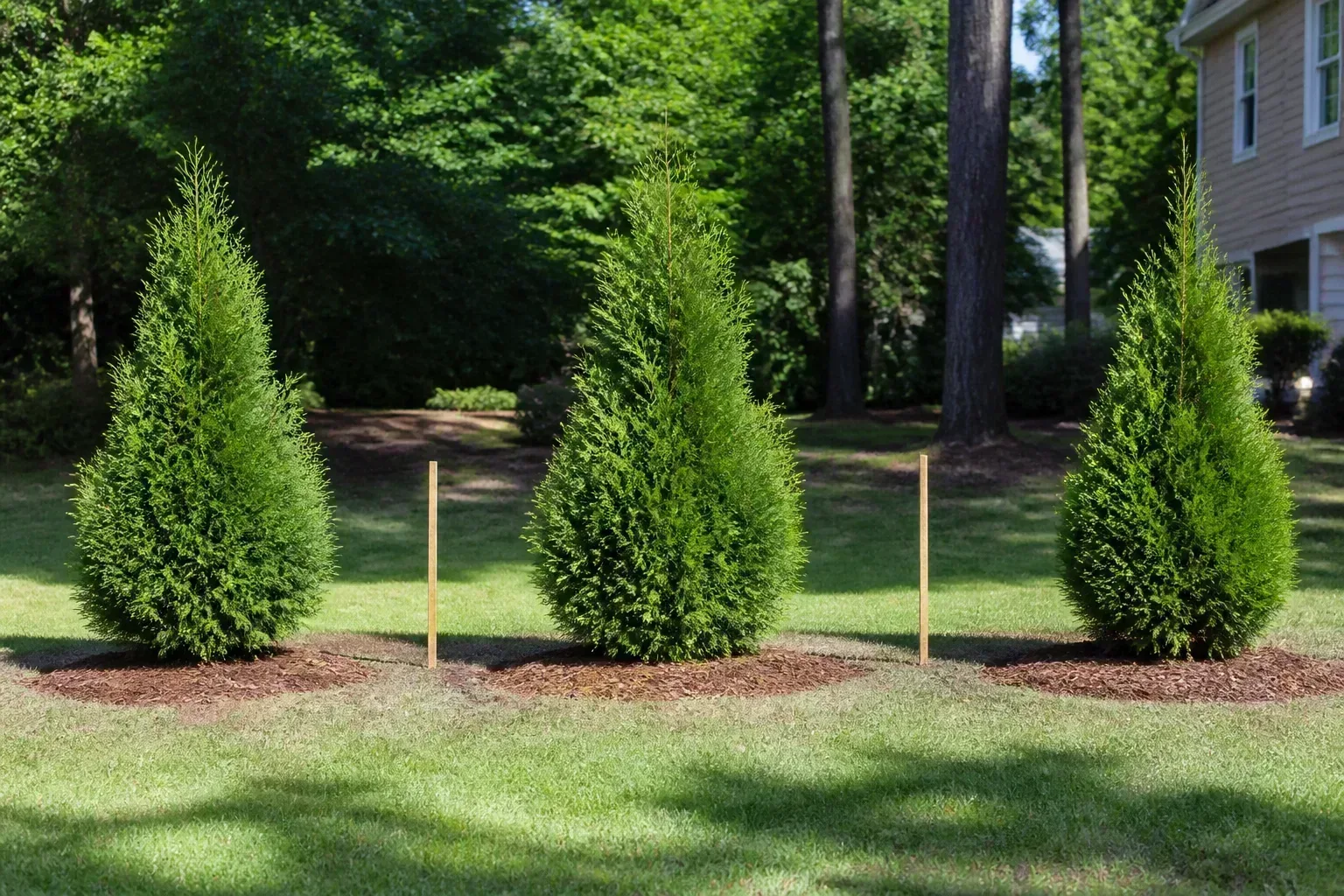
Windbreak and privacy spacing determines whether your row closes into a wall or becomes a picket fence of gaps:
| Goal | Spacing (on center) | Notes |
|---|---|---|
| Dense farm windbreak | 10–12 ft. | Stagger a second row offset for turbulence reduction |
| Property-line screen | 14–18 ft. | Faster closure; thin later if overcrowded |
| Specimen in lawn | 30+ ft. from structures | Plan for 30-ft. spread at maturity |
| Mixed wildlife belt | 12–16 ft. with shrubs between rows | Leave access lanes for maintenance |
Rows run perpendicular to prevailing winter wind when possible. Mixing deciduous shrubs in the lee row slows wind at ground level where you actually live. For disease-conscious tree selection in mixed plantings, see our disease-resistant trees guide.
Pests, Diseases, and Stress Problems
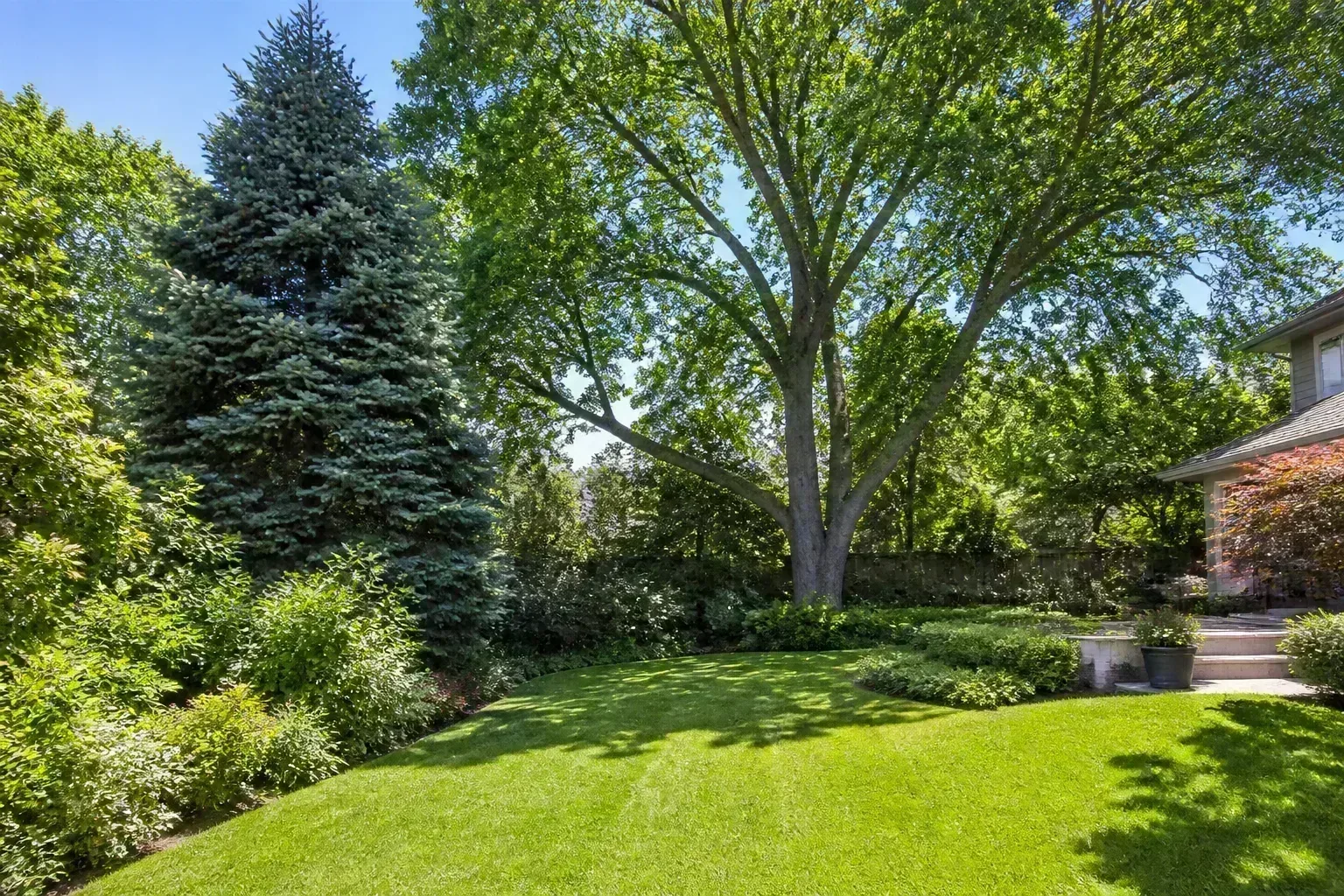
Healthy Norway spruce on the right site is low-drama. Problems cluster on stressed trees: drought, buried trunks, compacted soil, or heat injury.
Insects to watch: aphids, bagworms, budworms, borers, and spider mites — the last especially on dusty, drought-stressed roadside plantings. Bagworms are mechanical: hand-pick small infestations; larger outbreaks may need targeted treatment when caterpillars are active. Borers leave round exit holes and sawdust at the base; once cambium is girdled, call an arborist — sprays rarely fix established trunk infestations.
Diseases: Missouri Botanical Garden lists Cytospora canker, wood decay, needle cast, and rust. Cytospora shows as sunken, resin-bleeding patches on branches — often after drought. Prune affected branches in dry weather, improve water and mulch, and accept that severely cankered leaders may need removal. Needle cast causes interior browning and premature drop; fungicides help only when rotation and timing match the pathogen — fix drainage and airflow first.
Diagnostic order: soil moisture → planting depth → mulch contact → mower/string-trimmer damage → insects. Skipping straight to spray on a tree planted too deep wastes money and time.
Norway Spruce vs. Blue Spruce and Douglas Fir
Retail lots mix these three constantly around the holidays. Needles tell the story fastest.
Norway spruce vs. Colorado blue spruce (Picea pungens): Both are spruces — square, sharp needles that roll easily between fingers, and woody pegs on the twig after needles fall. Norway spruce needles are longer and greener; blue spruce is stiffer and silvery-blue. Norway grows faster and taller in cool, moist sites; blue spruce stays denser and more colorful but also hates heat south of zone 7.
Norway spruce vs. Douglas fir (Pseudotsuga menziesii): Firs are soft, flat needles with two white stomatal bands underneath — they do not roll easily and lack persistent pegs. Douglas fir buds are pointed and papery; spruce buds are sharper. Merchants label trees loosely; trust your fingers over the sign.
If you want a spruce ID rule: “SP” for spruce — spikey, square. “F” for fir — flat and friendly.
Conclusion
Norway spruce rewards gardeners who respect its scale and climate. Put it in full sun on acidic, well-drained soil in zones 2–6 (and cautious zone 7), give it room for a 30-foot spread, and water steadily through the first two years. Use species trees for windbreaks, large screens, and Christmas tree plantings; use named dwarf, weeping, or columnar cultivars when the lot is measured in feet, not acres.
Get planting depth, summer heat, and spacing right and you inherit a tree that can outlive your mortgage with modest pruning. Force it into a wet foundation bed or a hot southern exposure and you inherit a decade of spider mites and canker. Measure the yard, read the cultivar tag, and plant for the tree it will become — not the cute sapling in the pot today.



