How to Grow Sesame Plants: Planting, Care, and Harvest
Grow sesame in a sunny, warm garden with practical advice on sowing, watering, spacing, containers, pests, and harvesting seeds before pods split.
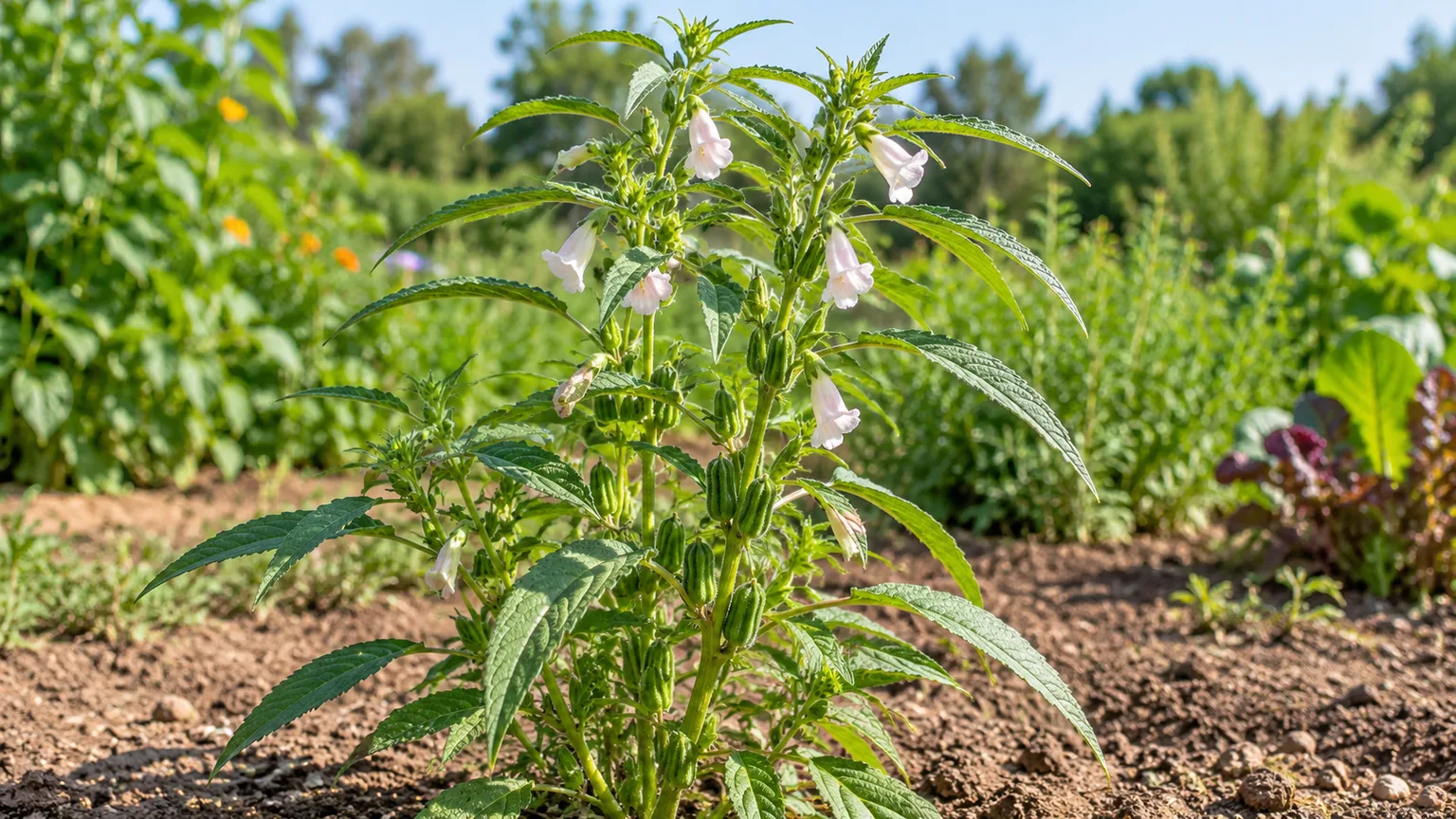
Sesame is a heat-loving annual that rewards a long, bright summer with delicate flowers and seed-filled capsules. The main challenge is timing: plant into cold soil and seedlings stall, keep the roots wet and plants struggle, or wait too long to harvest and dry capsules can open on the stalk and scatter the seed.
For the best chance of a useful harvest, start with a warm sunny site, sow only after the soil has warmed, and plan backward from your first fall frost. Then watch the capsules rather than relying on a date printed on a calendar; sesame flowers and matures over a stretch of time, so pods on one stalk can be ready while newer ones are still green.
Sesame Plant Care at a Glance
| Need | Practical target | Why it matters |
|---|---|---|
| Light | Full sun, ideally six or more hours | Warmth and light help a long-season crop finish seed. |
| Planting temperature | Soil around 70°F (21°C), after frost danger | Cold soil slows germination and early growth. |
| Soil | Loose, fertile enough, and fast draining | Sesame tolerates different textures but not waterlogged roots. |
| Water | Keep the seedbed lightly moist; reduce after establishment | Germinating seeds need moisture, while established plants handle dry spells better. |
| Time to harvest | Often about 90–150 days, with additional drying time | Cultivar, warmth, and season length change the finish date. |
| Harvest cue | Lower capsules turn tan and begin to split | Waiting for every pod to dry can mean losing the first seed. |
Sesame (Sesamum indicum) is grown as a warm-season annual in most home gardens. Plants can reach a few feet or taller depending on cultivar and growing conditions, and an individual stem may carry leaves, flowers, young capsules, and maturing capsules at once. The species is often described as drought tolerant after establishment, but that does not mean seeds can germinate in dry soil or that plants should be neglected through a prolonged heat wave.
Choose a Warm, Sunny, Well-Drained Site
Choose the warmest spot in the garden that receives direct sun through most of the day. Sesame is a poor fit for a cool, shaded corner or a bed that stays wet after rain; even rich soil cannot compensate for a short, cool season or saturated roots.
Full Sun and a Long Season
Give sesame at least six hours of direct sun, and choose more sun when the site is otherwise suitable. A south- or west-facing garden bed, a warm raised bed, or a sheltered place near a heat-retaining wall can help the plant build growth during the season, but leave enough airflow around stems and do not crowd them against masonry where drainage is poor.
Sesame is frost tender. Wait until frost risk has passed and the soil has warmed to roughly 70°F before direct sowing; UF/IFAS Extension advises planting only once soil is above 68°F, while NC State Extension uses about 70°F as a practical threshold. In other words, a warm afternoon is not enough if the ground is still cold from spring nights. Use a soil thermometer if you have one, and delay sowing a few days if a cold spell is forecast.
The crop needs a long runway. Extension field guidance estimates about 100 days to seed maturity, followed by roughly 7–14 days of drying, while garden sources describe a wider 90–150-day range across growing conditions and varieties. Check your seed packet and local frost dates. In a short-season region, an early cultivar or a careful indoor start can help; neither method can fully replace the heat and time the plant needs to mature capsules.
Soil Texture and Drainage
Sesame can grow in more than one soil texture, but drainage is essential. NC State Extension notes that waterlogging is intolerable, so avoid low spots, compacted beds, and heavy soil that remains saturated after storms. A modestly raised planting row can help where water tends to collect; a raised bed is useful only if its mix drains freely rather than acting like a water-holding tub.
Loosen the top several inches before sowing and remove large clods that would leave tiny seeds suspended in air pockets. If a soil test shows a deficiency or unsuitable pH, follow its recommendations rather than applying a generic fertilizer dose. NC State gives a broad pH range around 5.5–7 for sesame, while also noting that the crop’s precise optimum has not been well established; a healthy, draining bed is more important than chasing a decimal point.
Choose Seed and Plan Your Planting Date
A seed packet labeled for planting is the most reliable way to choose a cultivar and estimate its season length. Sesame seed sold as food may germinate if it is raw, whole, and untreated, but toasted, hulled, or processed seed is unreliable, and a grocery package will not identify a cultivar’s maturity period. Homes & Gardens notes that raw grocery-store seeds can sometimes be grown; if you want to experiment, test a small sample first rather than making it the only seed in your garden.
To test a handful, place seeds between damp paper towels in a loosely covered container kept warm, not submerged. Check them daily and sow promptly if roots emerge; if only a few sprout, purchase fresh garden seed so you can plan spacing and avoid gaps.
Direct Sow After the Soil Warms
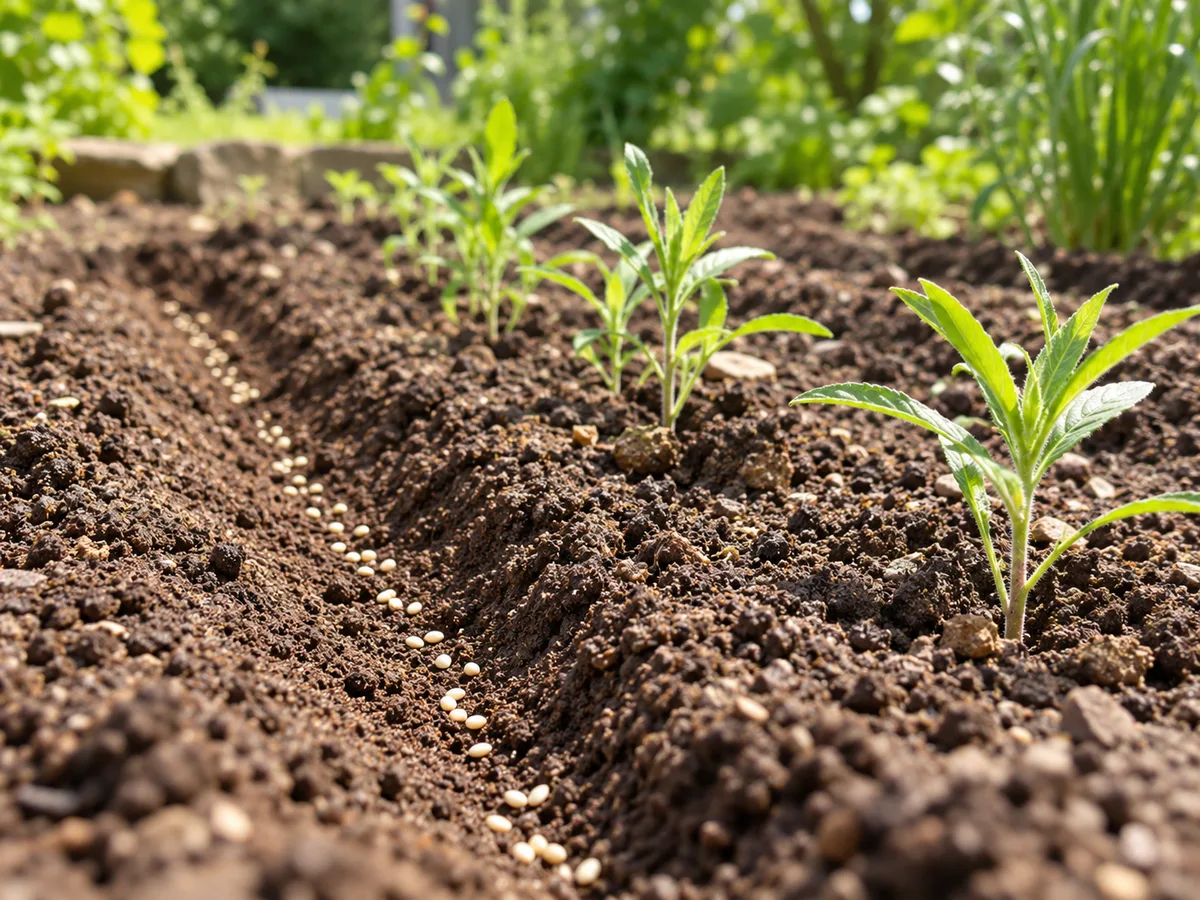
Direct sowing avoids transplant shock and suits gardeners with a long, hot growing season. Make a shallow furrow, sow seeds about ¼ to ½ inch deep, and cover lightly with fine soil; small seeds need contact with moist soil but should not be buried under a heavy crust. Water gently after sowing so the row settles without washing seeds into a clump.
Keep the seed zone consistently damp—not waterlogged—until seedlings emerge. Sesame is slow and vulnerable early in its growth, so mark the row and keep competing weeds out while the plants are small. Once seedlings have several true leaves, thin them to the spacing recommended for your cultivar; a practical home-garden range is about 6–12 inches between plants, with more room for branching varieties or in humid gardens. Follow packet guidance where it differs, and leave enough space to reach the pods at harvest.
Start Indoors When the Season Is Short
In a region with a short warm season, sow indoors about four to six weeks before the expected outdoor planting window, a timing also recommended in Savvy Gardening’s sesame-growing guide. Use small individual pots or cells to limit root disturbance, cover seed lightly, and keep the mix warm and evenly moist. Sesame germination improves with warmth; a sunny windowsill may still be cool at night, so a warm propagation area can be more dependable than a cold sill.
Harden seedlings off gradually before transplanting by moving them outdoors for increasing periods over about a week. Set them into the garden only once the soil is warm and nights are mild, and handle the root ball gently because seedlings can pause after rough transplanting. Starting indoors is a head start, not a license to plant into cold ground; waiting for warmth usually produces sturdier plants than rushing a transplant outside.
Plant Sesame Seeds for Reliable Germination
Sesame seed is small, so a smooth, crumbly seedbed gives it a better start than a coarse surface covered in large chunks. Press the row lightly after covering to establish soil contact, then water with a fine spray or a gentle shower so seeds stay in place. NC State Extension describes sesame seed as sensitive to crusting and notes that moisture during the first days after sowing is important for germination.
Plant a few extra seeds rather than sowing every seed exactly where you want a finished plant. When seedlings are several inches tall, thin by snipping extras at soil level or carefully lifting a spare while the ground is moist; leave the strongest plants evenly spaced. Crowded seedlings compete for light and can become difficult to thin without disturbing the roots you intend to keep.
Avoid moving sesame repeatedly or starting it in a large communal tray that requires teasing roots apart. If you start indoors, use separate cells and transplant while plants are still young. In a direct-sown bed, fill a missed gap with a fresh seed only if there is enough time left in the season for the new plant to mature; late replacement seedlings may flower but not finish seed before frost.
Water During Establishment, Then Let Soil Breathe
Water sesame consistently while seeds germinate and young plants establish. The top layer of soil should not dry into a crust during that period, but the bed should never remain swampy; if water puddles or the row stays slick well after watering, pause irrigation and improve drainage rather than adding more water.
After plants develop several sets of leaves and begin steady growth, they tolerate short dry periods better than seedlings do. Water deeply when the soil is dry below the surface and plants show a sustained need, then let excess drain away. UF/IFAS Extension describes sesame as drought tolerant once established and cautions that overly wet conditions can hinder performance; the useful takeaway is to respond to soil and weather instead of following an automatic daily schedule.
A finger check works in a small bed: feel the soil an inch or two below the surface near the root zone. If it is cool and slightly moist, wait; if it is dry and loose, water at the base of plants. During a very hot, windy stretch, check more often, especially in containers, which dry faster than ground beds. Mulch can reduce evaporation after seedlings are established, but keep it light and do not bury the stems or use a thick wet layer that keeps the crown damp.
Fertilize Conservatively and Weed Early
Start with a soil test and amend only what it identifies. A bed enriched with mature compost may not need a separate fertilizer at planting; excess nitrogen can produce lush, tall growth without solving a real nutrient deficiency and may increase lodging risk. NC State’s recent sesame production guidance reports inconsistent nitrogen responses and recommends against assuming a high nitrogen requirement, while some home-gardening sources suggest feeding during growth. For a backyard crop, the cautious approach is to use test results, moderate compost, and restrained fertilizer rather than adding a high-nitrogen product on a fixed schedule.
Weeding deserves more attention than routine feeding. Sesame grows slowly during its early weeks and competes poorly with weeds, so remove weeds when they are small and shallow-rooted. Hand-pull close to young stems or cut weeds at the soil surface to avoid damaging sesame roots; once the canopy is taller, it shades some new weeds, but do not let established weeds tangle through the crop.
If plants are pale or growth is unusually weak, first check soil moisture, drainage, temperature, and competition. Yellow leaves are not automatic proof of a fertilizer shortage. A nutrient application will not correct roots sitting in water, a cold planting date, or shade, and extra fertilizer can make the problem harder to diagnose.
Understand Flowers, Capsules, and an Indeterminate Crop
Sesame’s growth pattern explains why the lower capsules mature while flowers are still appearing near the top. The plant is indeterminate: flowering and capsule development progress over a period, rather than every pod ripening at once. NC State Extension reports that flowering may begin within about a month under suitable conditions and continue for weeks, so a single plant can carry several stages at the same time.
Flowers are usually pale and tubular, emerging from leaf axils. Individual flowers last briefly; a flower that fades and drops after a day can be part of the normal cycle rather than a sign that the whole plant is failing. UF/IFAS describes sesame as self-pollinating, though garden visitors may also visit the flowers. The important follow-up is whether a small capsule forms behind a flower, not whether the blossom stays attached for several days.
Capsules develop along the stem and fill with many small seeds. Their number and seed count vary with cultivar and growing conditions, so avoid using a promised seed yield as your measure of success. In a short season, the top of the plant may still be flowering when the oldest lower pods approach harvest; this uneven timing is why inspecting the bottom third of the stalk is more useful than waiting for every capsule to look identical.
Support, Pruning, and Routine Care
Most garden sesame plants can grow without elaborate support if they have enough space and are sheltered from strong wind. Tall plants grown close together or in very fertile soil may lean, particularly once capsules add weight. If a plant begins to bow, use a loose stake or a small ring support that does not constrict the stem, and place it early enough to avoid driving a stake through established roots.
Routine pruning is usually unnecessary. Do not remove flowers or developing capsules if seed is your goal, and avoid topping a plant simply to make it shorter: cutting the growing tip can change branching and reduce time for capsules to mature. Remove only broken or diseased material with clean pruners, and keep the center open by thinning crowded seedlings at the start rather than trying to reshape a mature plant later.
Inspect stems and leaf undersides during ordinary garden checks. Sesame is not free of pests, but a few insects do not automatically justify treatment; identify the pest and assess actual damage before acting. The best prevention is adequate spacing, drainage, and early observation, which also makes harvest easier.
Grow Sesame in a Pot or Raised Bed
Sesame can be grown in a container when the pot is roomy, stable, and has unobstructed drainage holes. As a practical starting point, use one plant in a container roughly 12 inches or more wide and deep, or choose a larger pot for a branching cultivar; these dimensions are home-garden guidance rather than a universal crop-research standard. A larger volume buffers moisture and gives the roots more room than a small decorative pot.
Fill the container with a free-draining potting mix and place it where it receives full sun and warmth. Water when the upper inch or two begins to dry, then empty any saucer so roots are not left standing in water. Containers need more frequent checks during hot weather because wind and sun can dry the root zone quickly, but daily watering is still inappropriate if the mix remains wet.
A raised bed follows the same rules as an in-ground bed: choose a sunny position, sow after the soil warms, and avoid overwatering. Raised beds can warm earlier in spring, but do not assume the calendar makes the bed warm enough; check soil temperature if conditions are borderline. Container plants may be easier to move under cover before a light chill, but moving them indoors does not replace the sunlight and growing season required for mature seed.
Diagnose Slow Growth, Yellowing, and Pest Damage
Slow growth soon after sowing often points to cold soil, uneven moisture, a crusted surface, or weed competition. Sesame seedlings take time to establish, so compare conditions before adding fertilizer. If the bed is wet for days after rain, improve drainage or move future plantings rather than repeatedly watering a weak seedling.
Yellowing late in the season can be part of natural maturation as leaves decline and capsules finish. Yellowing much earlier, especially with soft stems or persistently wet soil, suggests a root or drainage problem; yellow leaves with dry soil may indicate the crop has been stressed by heat or missed watering. Look at the whole plant and recent weather before deciding what to change.
Aphids may gather on tender growth, while stinkbugs or caterpillars such as corn earworms can damage foliage or developing capsules. Inspect the plant closely, remove a small number of insects by hand or rinse aphids off when practical, and seek local extension guidance if damage is spreading or you cannot identify the pest. Leaf spots can appear in humid weather; remove badly affected material, avoid overhead irrigation late in the day, and keep enough space for foliage to dry. Do not apply a pesticide to an unidentified problem or to flowering plants without checking the label and local pollinator precautions.
Harvest Before the Capsules Shatter
Harvest timing is the most important late-season decision. Sesame does not ripen all at once, and waiting until every capsule is dry can allow the earliest pods to split and lose seed. Start watching the lower capsules as they turn from green toward tan or brown; cut a stalk when the bottom pods are mature and the first seams begin to open, while many upper capsules may still be green.
Use hand pruners to cut the stem rather than pulling or shaking it. Work on a dry day if possible, and carry the stalks carefully so ripe capsules do not rub together. UF/IFAS advises harvesting as the upper portion of the stalk begins drying, while other garden guidance recommends cutting pods before they open fully; together these cues point to a prompt, staged harvest based on the lower pods and the first signs of splitting.
Dry the Stalks and Save Clean Seed
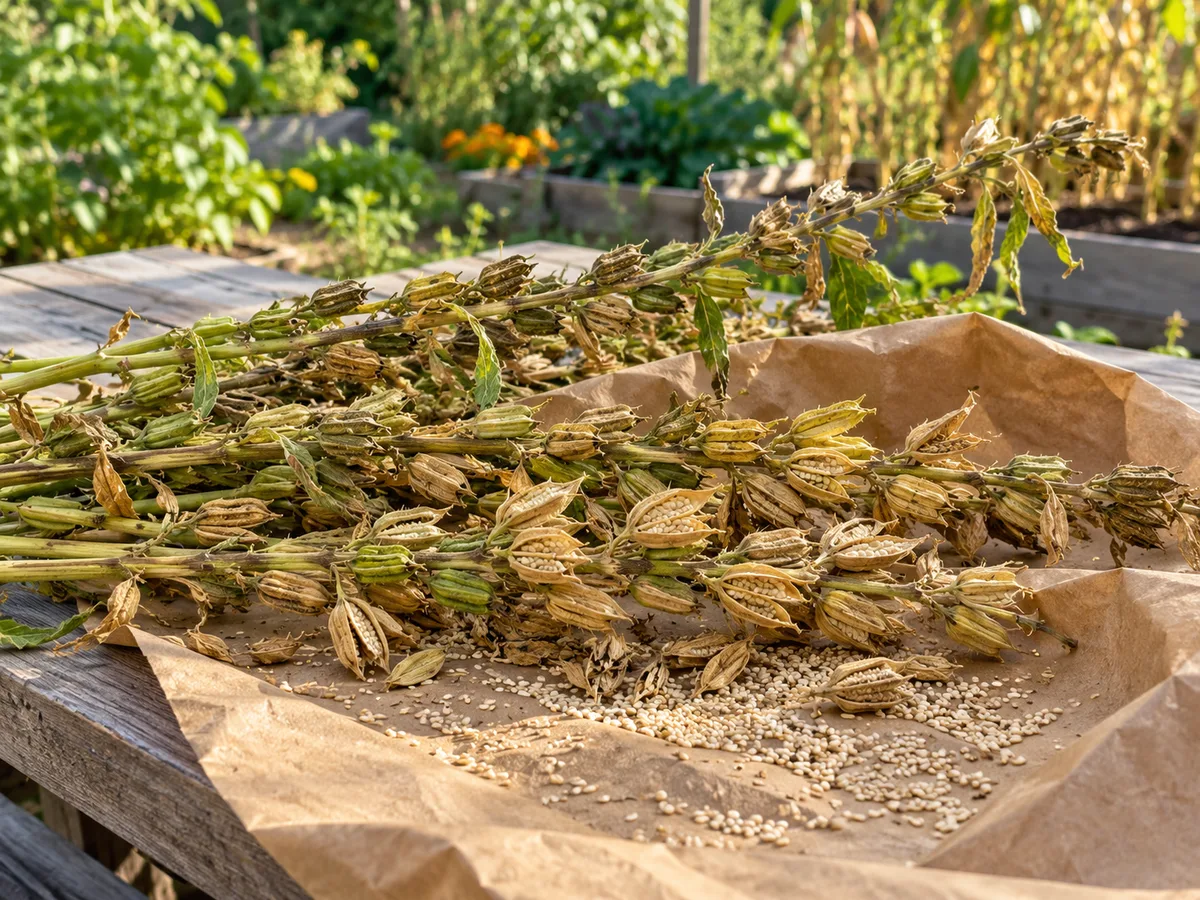
Lay cut stems horizontally over a large paper sack, cloth, or tray in a dry, airy place. Avoid hanging the stalks upside down over a floor: ripe capsules can open as they dry and the seeds will scatter. A paper bag with the top loosely folded can catch seed while allowing airflow, but do not seal damp plant material in an airtight container.
Let the stems dry until capsules are brittle and seed releases readily, checking them every few days. If many pods remain green, separate the mature lower sections from the rest and allow each portion to finish; the whole plant does not need to be at one stage. Gently shake or crumble dry capsules over a clean sheet or bowl, then sift out pieces of pod and plant debris.
Before storage, make sure the seeds are fully dry. Keep clean seed in an airtight container in a cool, dark, dry cupboard and label it with the harvest year; discard seed that smells musty or shows moisture damage. For planting next year, set aside seed from the healthiest plants and keep it dry and protected from insects. Gardening Know How also emphasizes cutting and drying capsules before they shatter, a useful reminder for a crop where harvest handling affects how much seed you actually keep.
Conclusion
Grow sesame like a warm-season crop with a clear finish line: wait for warm soil, give it sun and drainage, protect seedlings from weeds, and keep moisture steady only while the seedbed is establishing. As plants flower and set capsules over time, inspect the lower stalks regularly instead of expecting every pod to ripen together.
Cut mature stems as the first lower capsules begin to split, then dry them over a catcher so the seed stays in your harvest. A raw grocery-store seed experiment can be fun, but fresh garden seed, an early planting window, and a dry harvest setup give you the most dependable path from sowing to a jar of sesame.



