How to Grow Silky Dogwood: Planting, Care, and Pruning
Grow silky dogwood with the right sun, moist soil, mulch, and pruning. Get planting, propagation, and troubleshooting tips for this wildlife-friendly shrub.
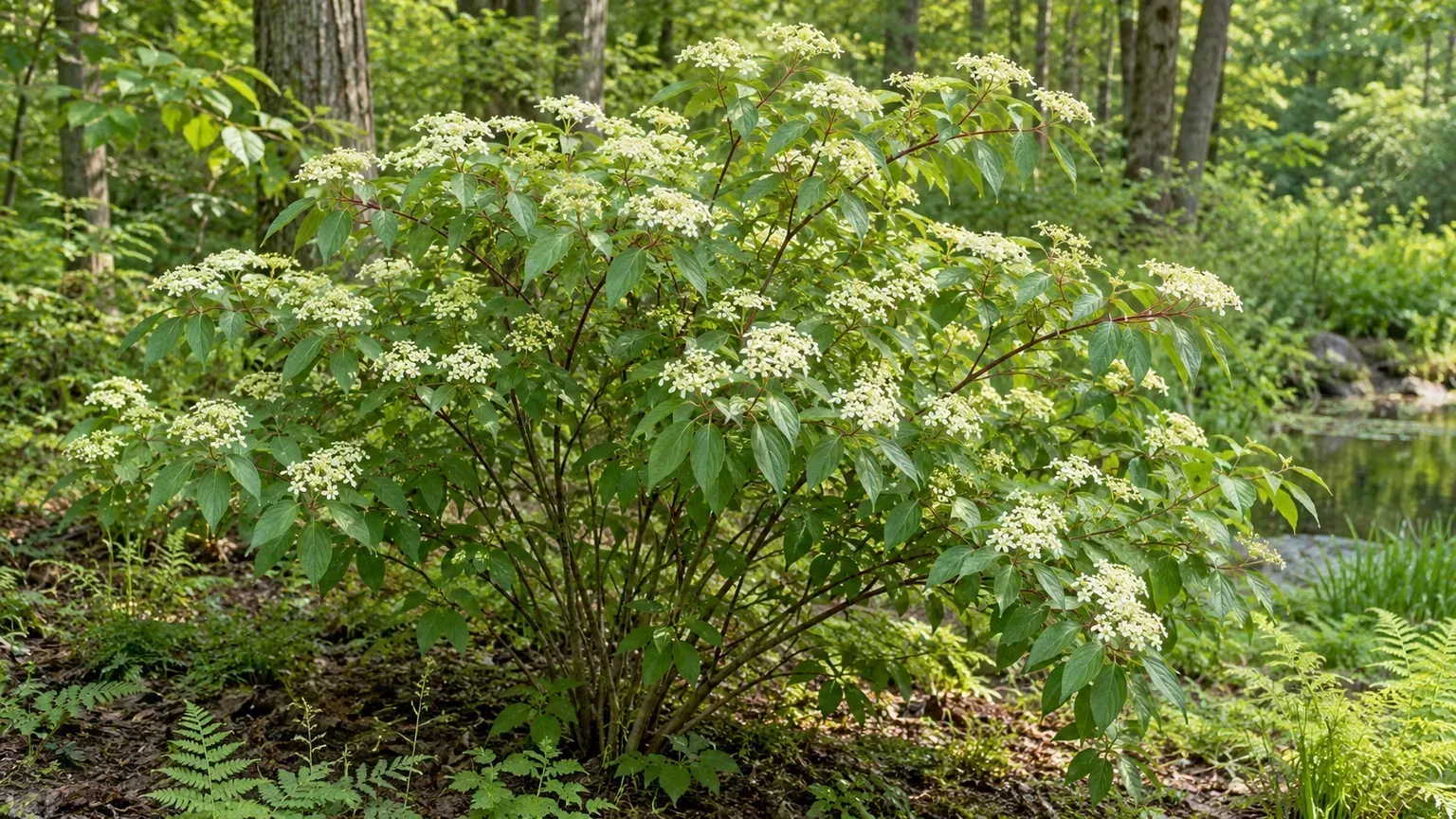
Silky dogwood (Cornus amomum) is a deciduous, multi-stemmed native shrub for gardeners who have a moist edge, woodland border, rain garden, or streamside bed with room for a natural shape. Give it sun to partial shade, soil that stays evenly moist, and enough space for stems to arch and root; water new plants through establishment and mulch the root zone. It needs little fertilizer and usually little pruning once it is growing in the right place.
The most important decision is not a fertilizer or pruning schedule. It is whether your site can supply moisture during dry spells and accommodate a shrub that can spread into a thicket. If you want a tightly clipped foundation plant or have only a small, dry bed, choose another shrub.
Is Silky Dogwood Right for Your Site?
Silky dogwood is native to central and eastern North America, where it is often found near wetlands, ponds, and streams. In a yard, that translates to a useful shrub for a rain garden’s upper edge, a low area that drains slowly, or a naturalized property boundary—not a plant that needs to sit in standing water year-round. NC State Extension describes its soil preference as moist to occasionally wet and lists it for woodland, pond, and naturalized settings. NC State Extension
Expect a rounded, open shrub about 6 to 12 feet tall and wide, with additional spread possible where low branches touch damp soil and root or where suckers emerge. It can help cover a broad, erosion-prone area and provide wildlife habitat, but that same growth habit can crowd a narrow path or neighboring plants. Leave room around the planting, or plan to remove unwanted rooted stems while they are small. A simple site check helps: after a soaking rain, note where water pools and feel the soil a day or two later. Choose a place that remains damp rather than permanently submerged; if the root zone dries back to dust in warm weather, either plan to irrigate or choose another species.
Silky dogwood is also a poor long-term container shrub. A pot limits the root room needed by a 6- to 12-foot plant, dries faster than garden soil, and makes it harder to keep the roots cool during summer. If you garden only on a patio, choose a shrub naturally suited to containers instead of trying to keep this one small by repeated hard pruning.
Hardiness listings vary slightly. NC State Extension lists USDA Zones 5a through 8b, while Oregon State University’s landscape plant database lists the species as hardy to Zone 4. If you garden near the colder edge of those ranges, use local nursery or extension guidance and choose a sheltered site; a zone label does not account for summer drought or the moisture this shrub prefers. Oregon State University
Identify the Shrub Before You Buy
The botanical name on the plant tag matters because several dogwoods share common names and similar wet-site uses. Silky dogwood is Cornus amomum; swamp dogwood is often listed as Cornus obliqua, and red-osier dogwood is Cornus sericea. Common names can overlap, so ask for the Latin name if you need this species for a native-plant plan.
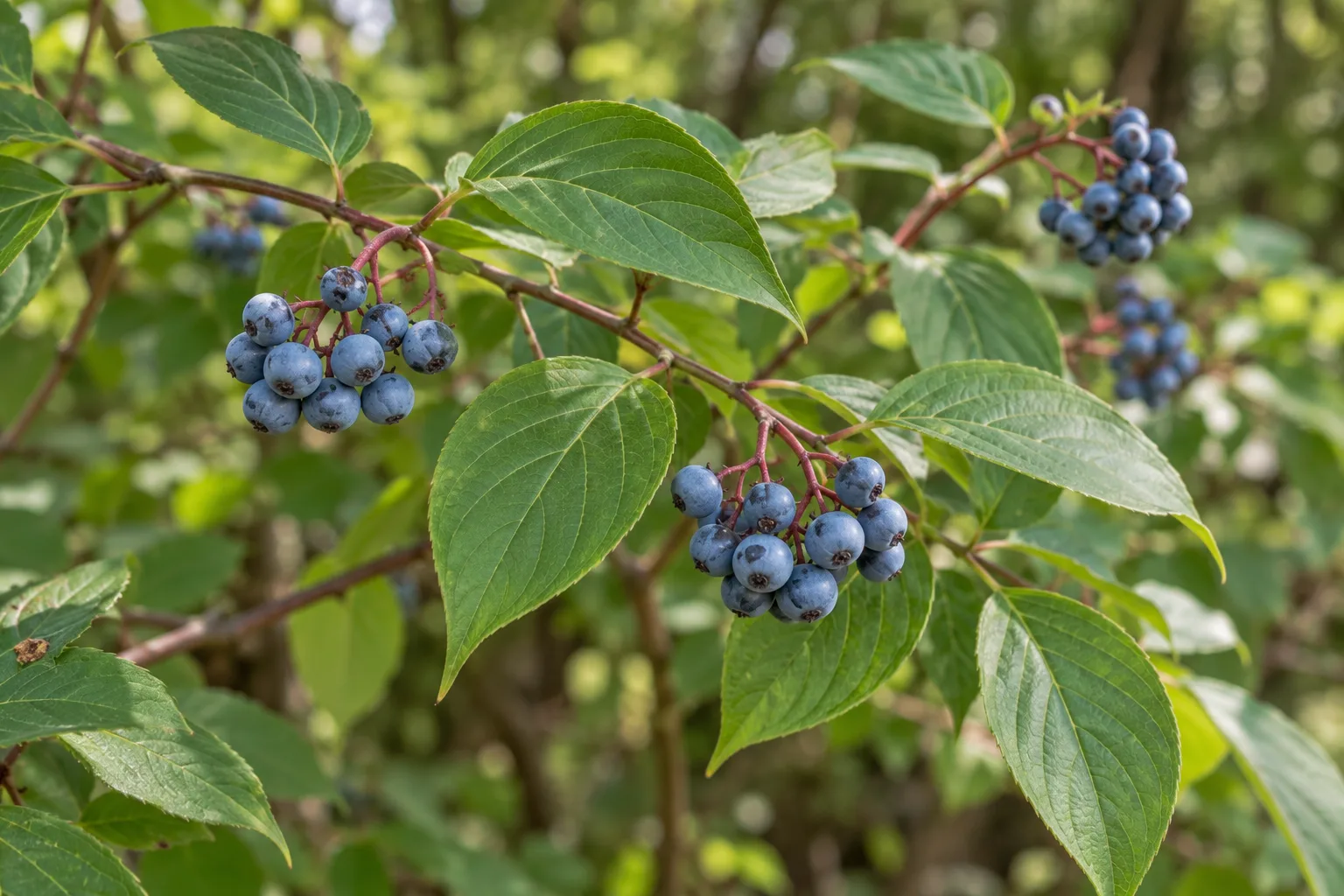
Silky dogwood has opposite oval leaves with fine hairs, small creamy-white flower clusters in late spring, and blue, berry-like drupes later in the season. Its open, multi-stemmed habit and reddish-purple younger twigs also help with identification. Virginia Tech’s dendrology profile provides leaf, flower, fruit, and twig details for checking a nursery plant. Virginia Tech Dendrology
Where and When to Plant Silky Dogwood
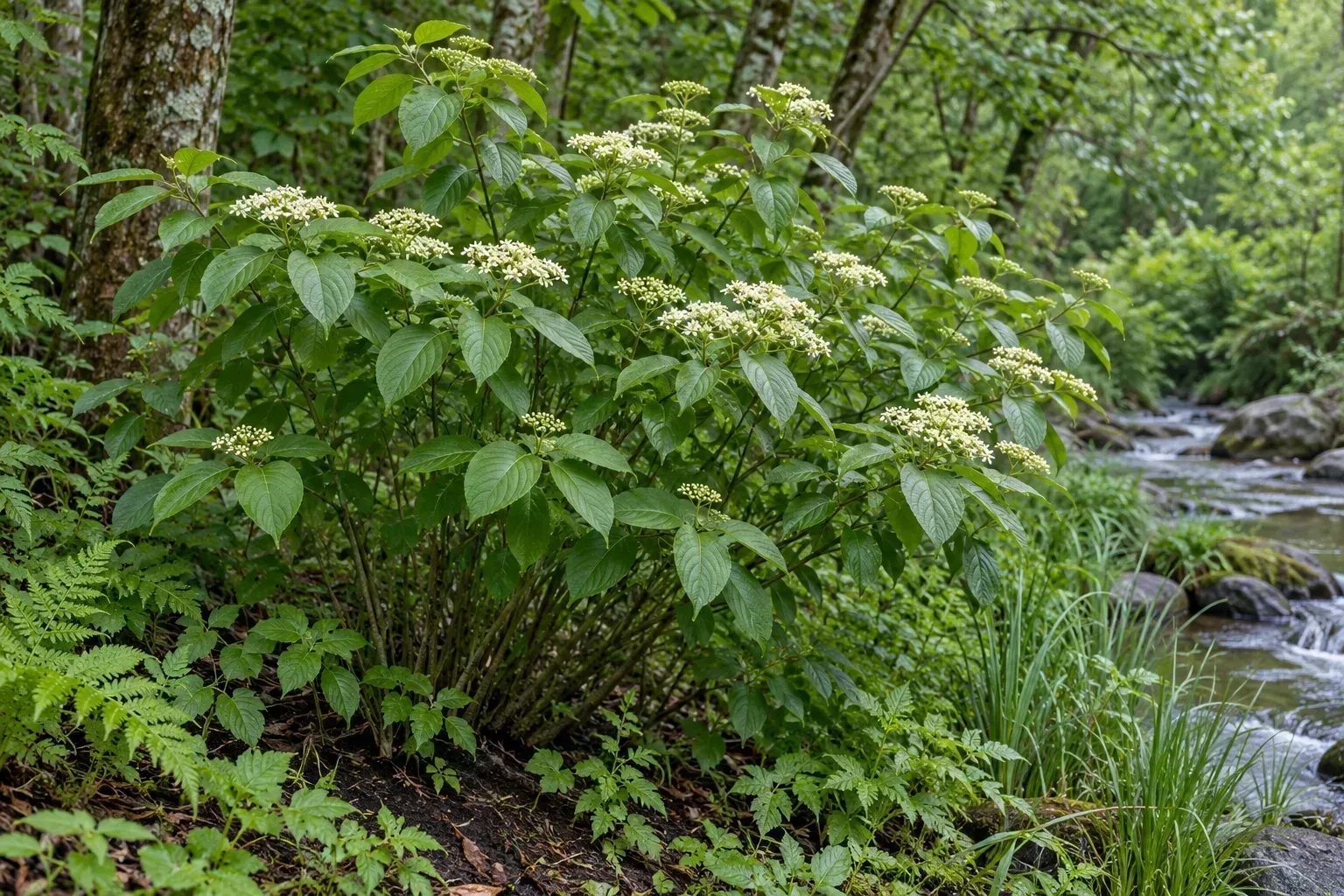
Choose a site where the soil is naturally moist or can be kept moist without constant irrigation. Good locations include a rain garden that is wet after storms but not permanently submerged, the transition between a lawn and a woodland, or a broad bank where spreading stems can help cover soil. Silky dogwood tolerates clay and occasional wetness, but a dry, compacted, hot spot makes establishment harder and increases summer watering.
Plant in spring or fall when temperatures are moderate and the soil is workable. Fall planting gives roots time to settle before summer heat, while spring planting can be easier where winter is severe; either way, avoid planting into frozen ground or during a hot, dry stretch unless you can keep the root ball consistently moist. Because a mature shrub can approach 12 feet across, space multiple plants for their adult spread rather than the small size of a nursery pot. A loose group can eventually knit together; a tight row will need regular thinning to keep paths and nearby shrubs clear.
Match Light to Soil Moisture
Silky dogwood can grow from full sun to shade, but the best balance is usually morning or all-day sun with moist soil, or afternoon shade in a hot climate. More sun generally supports better flowering and fruiting; shade is acceptable where the site is naturally damp, though the plant may be looser and less floriferous. NC State Extension lists full sun, partial shade, and deep shade as tolerated conditions, while its preferred soil drainage is moist to occasionally wet.
Do not change the soil pH just because a guide calls the plant an acid-soil shrub. Some university profiles favor acidic soil, while Virginia Tech notes that the species tolerates alkaline soil. Start with the soil you have if it retains moisture and drains enough to avoid persistent standing water; amend pH only after a soil test and local recommendation.
Plant at the Right Depth
Water the nursery pot before planting so the root ball is evenly damp. Dig a hole as deep as the root ball and about twice as wide, loosen circling roots gently, then set the shrub so the top of the root ball sits level with the surrounding soil. Backfill with the excavated soil rather than creating a pocket of rich compost that holds excess water around the roots.
Water slowly after planting to settle soil around the roots, then spread 2 to 4 inches of mulch over the root zone, keeping it several inches away from stems. The mulch helps maintain cool, moist soil; NC State Extension recommends this depth for protecting the roots. NC State Extension
Water, Mulch, and Fertilizer
For the first growing season, check moisture a few inches below the surface every few days during warm, dry weather. If that layer is beginning to dry, water slowly and deeply over the root ball and surrounding soil. Do not follow a rigid weekly calendar: rainfall, soil texture, temperature, and the plant’s exposure all change how quickly the site dries. Check the nursery root ball as well as the surrounding bed because container mix can dry at a different rate from native clay or loam. Apply water slowly across both areas so the whole root system is wetted; a quick sprinkle that dampens only the surface may leave the original root ball dry. Recheck more often during the hottest weeks, especially in full sun, and ease off when rain keeps the soil moist.
Once established in a naturally moist location, silky dogwood needs less supplemental water. During a prolonged drought, water deeply before leaves curl or brown; short dry periods are different from weeks of hot, dry soil. A fresh mulch layer can slow moisture loss, but it cannot replace irrigation in a site that dries completely. Gardening Know How also recommends regular watering while young shrubs establish and a 2- to 3-inch mulch layer to help keep roots cool and soil moist. Gardening Know How
Routine fertilizer is usually unnecessary. If the shrub grows poorly, first check moisture, light, planting depth, and competing roots, then use a soil test before adding fertilizer or an acidifying amendment. This avoids pushing excess leafy growth when the actual problem is dry soil or a poor site; Gardeners’ Path notes that silky dogwood does not require fertilization. Gardeners’ Path
In winter, let the shrub go dormant naturally. It is deciduous and cold hardy across much of its recommended range, so a healthy plant in a suitable site does not need to be wrapped or brought indoors. Refresh mulch if it has thinned, but do not pile it against the stems.
Pruning and Controlling Suckers
Prune for a reason, not to force a naturally open shrub into a compact ball. Remove dead, broken, rubbing, or diseased stems at their point of origin, and take out rooted suckers that are heading into a path or bed you want to keep open. Use clean, sharp bypass pruners for small stems and loppers for larger ones; avoid leaving long stubs.
If you want to reduce size or renew an older thicket, thin selected stems at ground level instead of shearing the outer surface. Remove a few of the oldest or least vigorous stems at a time, then reassess the shape the following season. Heavy pruning can temporarily remove flowers, fruit, and cover for wildlife, so reserve major renovation for a shrub whose size or health truly calls for it.
Choose Light Thinning Over Shearing
Timing depends on which display matters most. Prune just after flowering if you want to shape the shrub soon after enjoying the bloom; that can still reduce the current crop of berries. If fruit for birds is a priority, leave fruiting stems until the berries are gone and prune lightly. Late-winter thinning can help with access and size, but it may reduce that season’s flower display.
Silky dogwood can root where low branches meet moist soil, so a branch that has rooted may be easier to lift and replant than to keep cutting back. Where you do not want a colony, remove young suckers promptly and avoid leaving cut branches in contact with damp soil. Follow a sucker to its point of origin where possible, then cut it cleanly at the base rather than simply shearing off the visible tip. In an open habitat planting, allow some natural spread; in a small garden, choose a less suckering shrub instead of fighting the plant every year.
Flowers, Berries, and Wildlife
Silky dogwood flowers in late spring, commonly around May and June, with small cream or yellowish-white blooms arranged in flat-topped clusters. The display is subtle up close rather than a large showy bract, but it is useful to pollinators. Its appeal comes from a succession of flowers, fruit, and habitat value rather than one dramatic bloom or bright red winter stems. NC State Extension identifies silky dogwood as a host plant for spring and summer azure butterflies and notes that its flowers attract pollinators and specialized bees.
After pollination, the flowers develop into small blue drupes that ripen in late summer into fall. Birds and other wildlife eat the fruit, so berries may disappear before the foliage changes color. If you want berries, leave the flower clusters to develop rather than trimming the shrub immediately after bloom; fruit can be brief once birds find it. Its value is not limited to food: a multi-stemmed thicket can provide cover and nesting structure, while the shrub’s roots and spreading stems help stabilize moist soil. Leave some fruiting stems and avoid aggressive annual pruning if wildlife habitat is part of the reason you planted it. NC State Extension
How to Propagate Silky Dogwood
The easiest route depends on what you have. Layering uses a low branch that can reach the soil and is the simplest choice for a small number of plants; cuttings produce new shrubs without waiting for seed; seed works best when you can tolerate slower, less predictable results. For a large planting, buying locally grown plants is usually faster than producing many seedlings yourself.
Layer a Low Branch
In spring or early summer, find a flexible, healthy stem close to the ground. Bend a section of it down, remove leaves from the part that will be buried, and cover a node with a few inches of moist soil while leaving the tip exposed. Hold the stem in place with a landscape pin or a small stone, and keep the soil damp through the growing season.
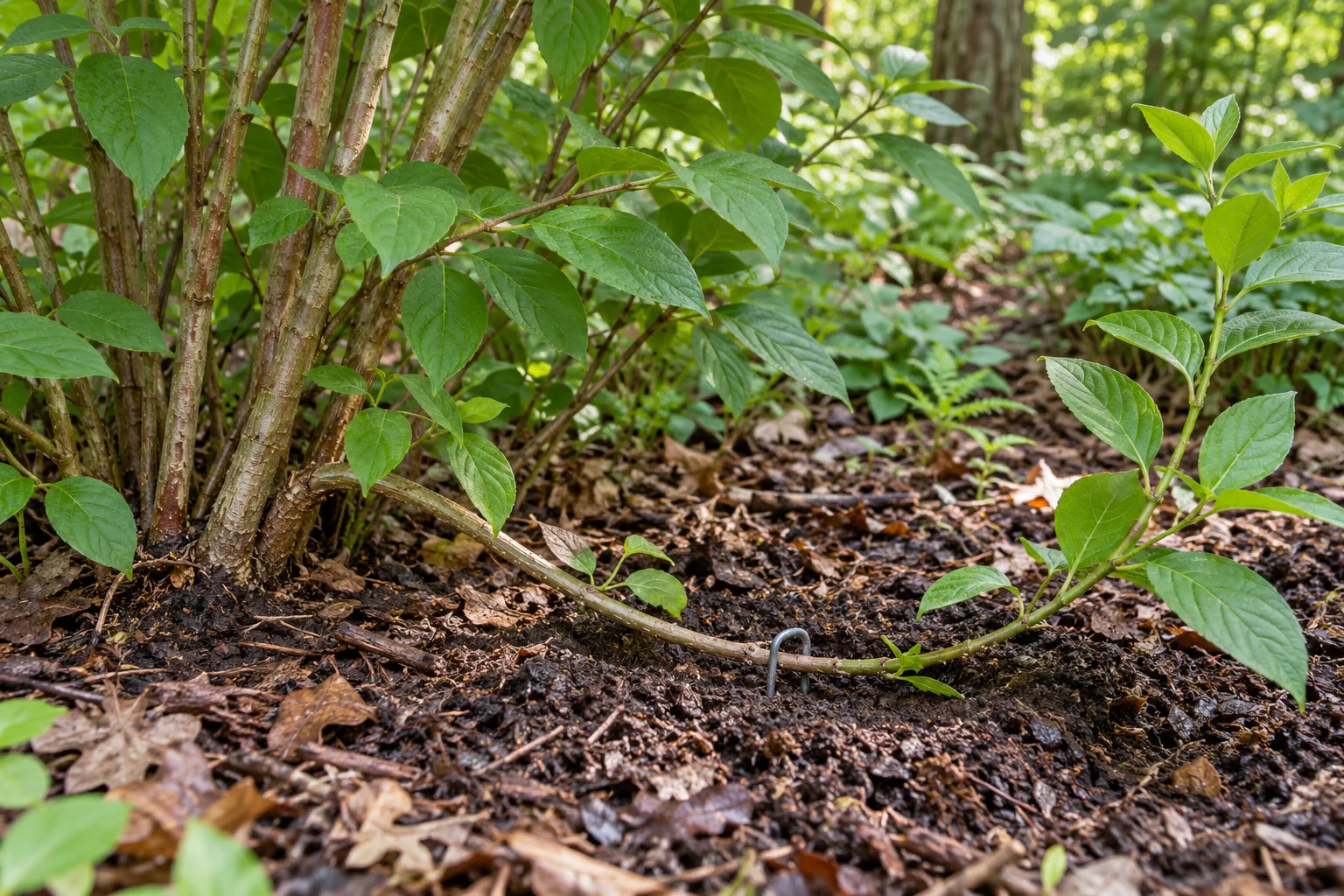
After several months, check for roots by gently tugging the buried section; do not sever it just because a few leaves appear. When the rooted section holds firmly, cut the connecting stem between the parent shrub and the new plant, then transplant it during cool weather. Because low branches can root naturally where they touch wet ground, layering works with the shrub’s growth habit rather than against it.
Choose Hardwood or Softwood Cuttings
Softwood cuttings are taken after flowering, when new growth is still flexible but not limp. Cut several 3- to 5-inch tips just below a leaf node, remove the lower leaves, and insert the bare portion into a clean pot of moist, free-draining propagation mix. Cover the pot loosely with a clear bag to hold humidity, keep it in bright indirect light, and air it briefly each day; discard any cutting that turns black or develops mold.
Check for roots after about six to eight weeks, but use new growth and gentle resistance to a light tug as signs rather than relying on the calendar alone. Gardeners’ Path also describes fall hardwood cuttings planted directly into very moist soil, a method that can work where winters are not too severe and the site stays damp. The softwood method offers more control over moisture, while hardwood cuttings require less equipment but depend more heavily on the outdoor site. Both methods produce plants with the parent shrub’s traits, which is useful if you want to repeat a particular flower or growth habit. Gardeners’ Path
Start Seed From Ripe Fruit
Collect fruit when it has turned blue and is fully ripe, then remove the fleshy pulp so it does not mold around the seed. Sow cleaned seeds outdoors in fall for natural cold exposure, or mix them with barely damp vermiculite in a labeled bag and refrigerate them for a cold-moist period. Gardeners’ Path recommends about 60 days of refrigerator stratification, a practical starting point rather than a guarantee because seed lots and conditions vary. Gardeners’ Path
Sow the chilled seed about a quarter inch deep in a moist seed-starting mix and keep it evenly damp, not waterlogged. Germination may take months and can be uneven; keep the tray labeled, protect it from rodents, and pot seedlings individually after they develop several true leaves. Seedlings may not match a selected cultivar exactly, and they take longer to reach landscape size than rooted cuttings or nursery plants. Move young plants outside gradually before planting them in the garden, and keep them watered while their roots expand; a small seedling is more vulnerable to a dry spell than an established shrub.
Common Problems and What to Check First
Silky dogwood is generally resilient, but poor placement can still cause trouble. NC State Extension lists scale, borers, leaf miners, leaf spot, canker, blights, root rot, and powdery mildew as possible problems while noting that serious pest or disease issues are uncommon. Start by checking the plant’s site and the pattern of damage before reaching for a spray; stressed roots and drought often explain more than a single insect. A few damaged leaves do not automatically call for treatment. Look for a spreading pattern, active insects, stem dieback, or a white coating, and compare affected growth with healthy stems before deciding whether to prune or ask a local extension office for a diagnosis.
Diagnose Browning or Early Red Leaves
Brown leaf edges during hot weather usually call for a moisture check first. Feel the soil beneath the mulch and water deeply if the root zone is dry; if it stays wet, check that mulch is not piled against stems and that the plant is not sitting in stagnant water. Avoid adding fertilizer to a shrub with scorched foliage until you know whether the root zone is too dry, too wet, or compacted. If the damage starts on one branch or appears as spots rather than dry margins, inspect the stems and leaf undersides for pests or disease before treating the whole shrub.
Silky dogwood’s fall color can vary from green or brown to purplish red, so color alone is not a diagnosis. Red leaves well before autumn, especially with powdery growth, spotting, or stem dieback, justify closer inspection and a local extension diagnosis. Leaf spot and powdery mildew are possible on dogwoods, but the right response depends on what is actually present. Improve airflow by thinning crowded stems and water at soil level where practical; prune out dead or badly affected stems and dispose of diseased debris. Use a pesticide only if the pest or disease is identified and the product label supports that use.
Troubleshoot Sparse Flowers and Berries
If a healthy shrub makes leaves but few flowers, consider whether it is growing in deep shade, was pruned before flowering, or is still young. Moving a mature shrub is stressful, so first observe a full season, reduce competing shade if appropriate, and shift shaping until after bloom. Do not try to force flowers with high-phosphorus fertilizer unless a soil test shows a need.
Few berries can also be normal in a young planting or a site with limited pollinator activity, and birds may eat fruit quickly once it ripens. Improve the conditions the shrub can use—adequate light, consistent moisture, and minimal disturbance—before assuming disease or a nutrient shortage. If the shrub is vigorous and fruiting but spreads more than you want, remove rooted stems or replace it with a more compact species rather than repeatedly cutting the whole plant back.
Conclusion
Silky dogwood is at its best where the soil stays moist and the shrub has room to grow into its natural, multi-stemmed form. Plant it in sun or part shade, water through establishment and extended dry weather, mulch the root zone, and skip routine fertilizer. Keep pruning selective, choose the propagation method that fits your patience, and let the flowers, berries, and layered stems do the work of supporting a wildlife-friendly corner of the garden.



