How Often Should You Mow Your Lawn? A Practical Guide
Learn how often to mow by grass type and growth rate, use the one-third rule, adjust for season and weather, and handle tall, wet, or newly seeded lawns.
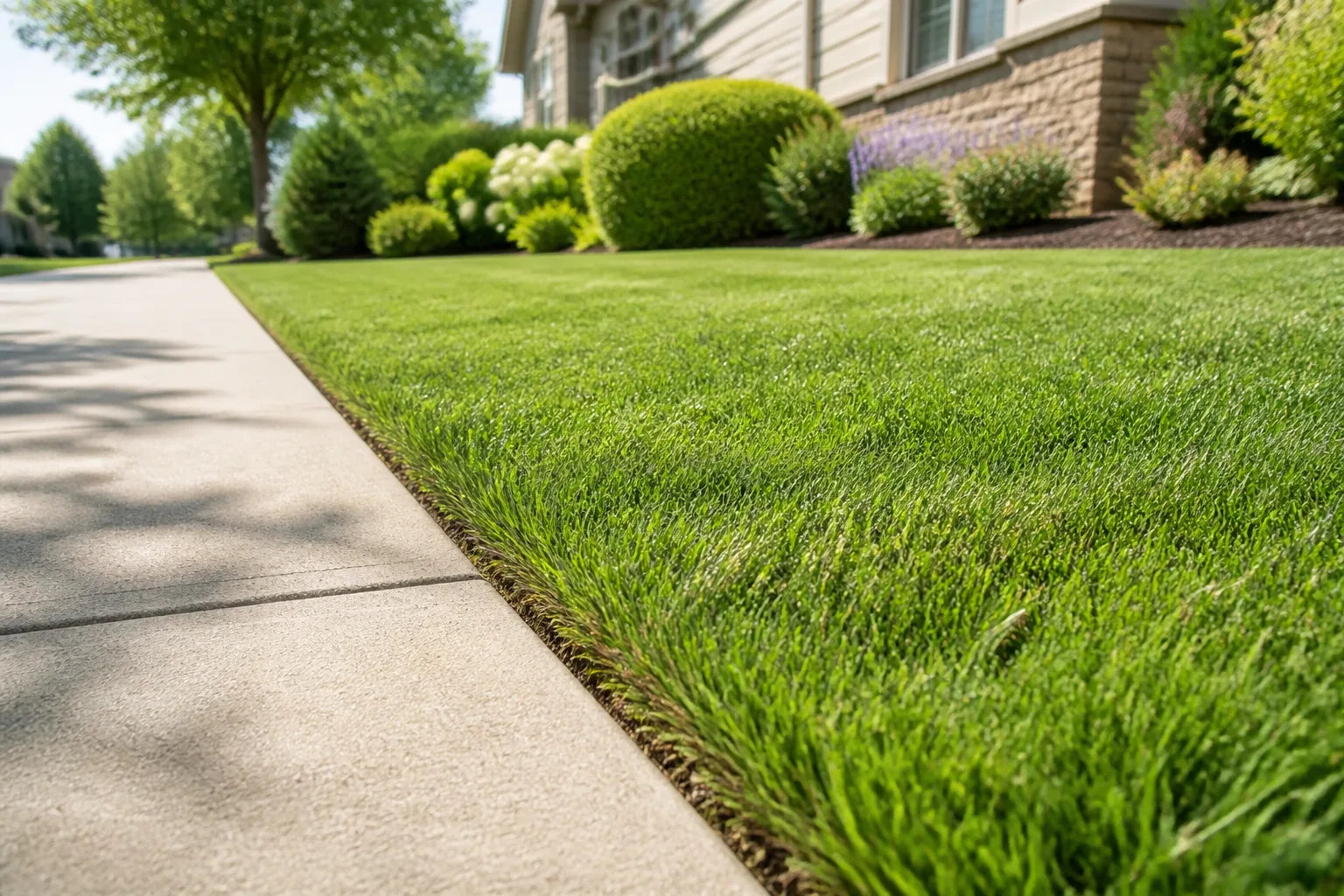
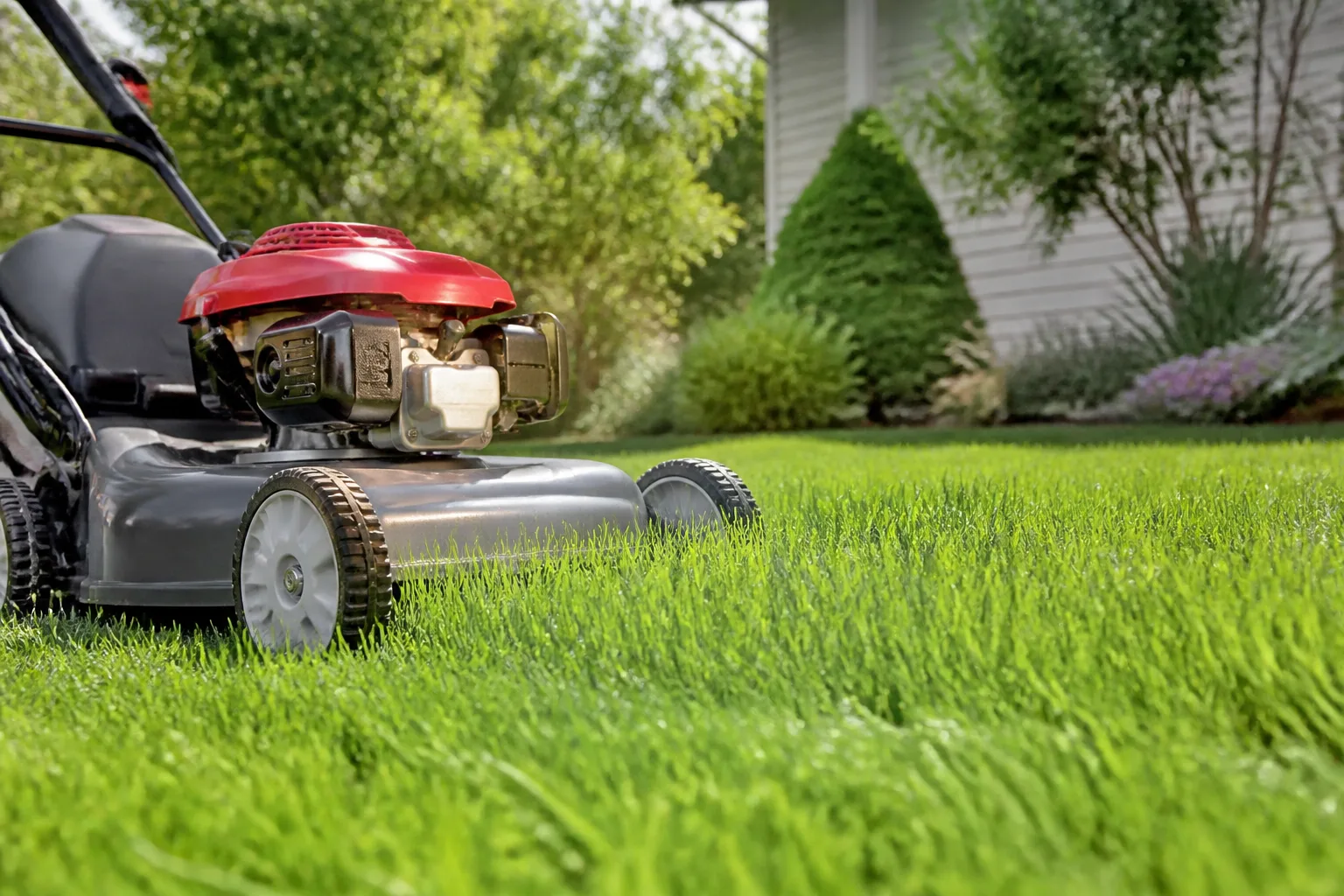
Most lawns do not need to be mowed on the same day every week. They need to be mowed when they have grown enough that you can remove no more than one-third of the leaf blade and still leave the turf at its appropriate height. In a fast-growing lawn, that may mean cutting every few days; when growth slows in heat, drought, cold, or shade, the interval can stretch much longer.
A weekly cut is a useful starting point during active growth, not a rule for every grass or climate. The reliable routine is to know your grass type, set a target mowing height, and check whether the lawn is approaching the one-third threshold. Then wait for dry foliage and soil firm enough to support the mower.
The quick answer: mow by growth, not by the calendar
If you want the shortest answer, mow often enough to keep the grass within its recommended height range and avoid removing more than one-third of its height at once. For many home lawns, that works out to about once a week during spring growth or the warm-season growing period, but rain, temperature, species, sunlight, irrigation, and fertilizer can shift the interval. Some lawns need two cuts in a fast growth flush; others may go two weeks or more between cuts when growth is slow.
A schedule should tell you when to check, not force you to mow. Walk the lawn once or twice a week during the growing season, look at several representative spots, and use the tallest typical grass as your signal. Skip a planned mowing if the grass is still short, but do not let a vigorous patch get so tall that bringing it back in one pass would scalp the rest of the lawn.
The one-third rule is a better schedule than “every week”
The one-third rule means you remove no more than one-third of the grass blade at a single mowing. If you want to maintain Kentucky bluegrass at 2 inches, for example, Kansas State University Research and Extension says to mow when it reaches about 3 inches. The rule is useful because it connects timing to what the lawn is doing, instead of assuming all lawns grow at the same rate (Kansas State’s turf mowing guide).
Cutting too much at once removes a large share of the green leaf area the grass uses to grow. The plant then has to replace that leaf area before it can support normal root growth; repeatedly scalping a lawn can leave it thinner and more vulnerable to weeds, heat, drought, and disease. A modest trim may look less dramatic than a close cut, but it usually asks less of the turf.
Calculate the next mowing trigger from your target height
Choose a suitable finished height first. If your target is 3 inches, mow before most of the lawn reaches about 4.5 inches. If your target is 2 inches, check when it is near 3 inches. That is a simple way to apply the one-third rule: at the trigger height, lowering the turf back to the target removes roughly one-third of the standing blade.
Use this as a measuring shortcut, not a promise that every blade is uniform. A lawn has dips, shade patches, fast-growing edges, and different grass species; use the typical height across the area you are mowing and keep the deck setting consistent. A ruler or a marked stick makes the check more reliable than guessing by looking across the entire yard.
| Desired finished height | Check for the next mow at about | Why |
|---|---|---|
| 2 inches | 3 inches | The cut removes about one-third of a 3-inch blade |
| 2.5 inches | 3.75 inches | The lawn has room to grow without exceeding the rule |
| 3 inches | 4.5 inches | A 3-inch finish removes one-third at the trigger |
| 4 inches | 6 inches | A higher target can mean fewer visits if your grass tolerates it |
The best target depends on the species and the lawn’s conditions. Do not choose the highest number in this table unless it is appropriate for your turf, mower, and intended use. In shade or during stress, extension guidance often favors the upper part of the species’ recommended range because extra leaf surface helps the grass cope.
What to do when the grass is already too long
Do not lower the deck to your normal setting and remove half the lawn’s height in one pass. If the turf is 6 inches tall and you want a 2-inch finish, Kansas State Extension recommends first cutting it to about 4 inches, then lowering the height in later mowings, with several days between cuts. That staged approach follows the one-third rule and gives the grass time to recover.
If grass has grown tall enough to leave heavy clumps, collect or spread the clippings rather than leaving them in a dense mat. Make the first cut only when the leaves and soil are dry, and check for hidden objects before mowing an overgrown patch. The result may take several visits to look even, but a gradual reduction is much safer than a single scalping cut.
How mowing frequency changes by season
Season changes growth rate, but it does not set an exact mowing interval by itself. Cool-season and warm-season grasses peak at different temperatures, and local rainfall can matter as much as the month on the calendar. BBC Gardeners’ World gives a helpful temperate-climate example: roughly fortnightly cuts in early spring, weekly mowing in late spring and summer, and sometimes twice-weekly cuts when growth peaks; it also recommends less mowing when growth slows (BBC Gardeners’ World’s lawn-mowing guide). Treat those intervals as a regional illustration, then use your own turf’s height as the trigger.
Cool-season lawns grow fastest in spring and fall
Kentucky bluegrass, fine and tall fescues, and perennial ryegrass generally grow most during cool, moist stretches. That often creates a spring flush and another period of growth as autumn temperatures moderate. In those windows, a seven-day check may be sensible, but an irrigated lawn after rain or a fertilizer-fed patch can cross the one-third threshold sooner.
Growth often slows during hot summer weather, especially if the lawn is dry. Do not keep mowing at the same rate just because the calendar says it is summer. Leave the grass toward the higher end of its recommended range and mow only when it is actively growing enough to need a cut. If it is dormant or barely growing, another cut adds wear without improving the lawn.
Warm-season lawns need cuts during active summer growth
Bermuda, zoysia, centipede, and St. Augustine grass grow most actively during warm weather after they green up. Their peak mowing season is therefore shifted later than cool-season turf. In a warm, rainy summer, an established Bermuda lawn may need frequent trimming; the same lawn may need little mowing before it begins growth or after it turns dormant.
Do not apply a cool-season schedule to a warm-season lawn in early spring. Wait for active growth, then mow at the right height for the species. University of Georgia Extension lists different ranges for common warm-season turf types and advises mowing often enough that no more than one-third of the blade is removed; its UGA Extension’s lawn-care guidance also notes that recommended heights should rise during hot weather.
Heat, drought, shade, rain, and fertilizer change the interval
Rain and irrigation can accelerate growth, while a dry spell may slow it. A nutrient application can also bring on a growth flush, so plan to check the lawn more often after conditions that promote growth. These are reasons to observe the grass rather than reasons to keep a weekly appointment automatically.
Shade and stress call for a different balance. Grass in shade often grows more slowly and is less able to replace leaves lost to mowing; keep it toward the taller end of its recommended range and avoid taking it down to a very short finish. During heat or drought, a higher cut protects more leaf area. UGA Extension and Kansas State both recommend raising the cut when turf is stressed, while Gardeners’ World similarly advises a higher setting in hot, dry weather.
A named-author Hunker lawn guide also points out that grass type and weather determine how quickly the one-third threshold returns; its examples illustrate why a taller target can mean fewer mowing sessions, not why every lawn should be kept at the same height (Hunker’s frequency explainer).
Set the mowing height for your grass type
Frequency and height belong together. A lawn kept short reaches its cut threshold sooner and may require more visits than the same species maintained at a higher, suitable height. The following are reference ranges from extension guidance, not universal commands; cultivars, mowing equipment, local climate, shade, and the lawn’s use all affect the best setting.
| Grass type | Common mowing-height range | Source note |
|---|---|---|
| Fine-leaf or tall fescue | 2–3 inches | Kansas State University Research and Extension |
| Kentucky bluegrass | 2–3 inches | Kansas State University Research and Extension |
| Perennial ryegrass | 2–3 inches | Kansas State University Research and Extension |
| Common Bermuda | 1–2 inches | University of Georgia Extension |
| Hybrid Bermuda | About 0.5–1.5 inches | UGA lists lower ranges for hybrid cultivars; many home mowers are not suited to very low cuts |
| Centipede | 1–2 inches | University of Georgia Extension |
| St. Augustine | 2–3 inches | University of Georgia Extension |
| Zoysia | About 1–2 inches | Ranges vary by cultivar and region; Kansas State gives 1–1.5 inches |
Warm-season recommendations can differ by location and lawn management. UGA’s county recommendations include low heights for certain hybrid Bermuda varieties; that does not mean a homeowner must mow every residential lawn that low. If your mower scalps on uneven ground or the lawn is shaded or stressed, choose a suitable higher setting within local extension guidance. If you do not know the grass species, take a close-up photo or a small sample to your county extension office before following a highly specific height chart.
Wait for dry grass and firm soil
A planned day is not automatically a good mowing day. Wet leaves bend over, stick together, and can leave an uneven cut; wet clippings are more likely to form heavy clumps. If the soil is saturated, mower wheels can rut the surface or compact the soil, especially on slopes and low spots. Wait until both the grass and the ground are dry enough to support equipment without smearing or slipping.
Kansas State Extension advises mowing when turf is dry, and Gardeners’ World makes the same distinction between dry grass and sodden ground. After a shower, let the leaf blades dry and test a soft area with a footstep: if it sinks or leaves a deep print, give the soil time to firm up. Mowing in rain or on saturated ground can damage the lawn more than postponing a day.
If rain continues for several days and grass grows beyond its normal trigger, do not mow a waterlogged lawn simply to stay on schedule. Wait for a safe, dry window and then reduce the height gradually if needed. On a slope, the traction and rutting risk matter more than catching up with a calendar.
New lawns need a careful first cut
A lawn grown from seed or freshly laid sod should be treated differently from established turf until it is anchored. Mowing too soon can pull seedlings or sod loose, while delaying until the grass is far beyond its target height may force an unnecessarily severe cut. Follow the seed supplier’s or installer’s establishment guidance, then make the first cut once the grass is firmly rooted, dry, and tall enough to mow without removing more than one-third.
For a seeded patch, check whether the young grass is upright and rooted rather than relying on a fixed number of weeks; germination and establishment vary with species, temperature, and moisture. Gardeners’ World advises waiting until newly sown grass is around 4 centimeters tall before mowing in its UK lawn guide, but your local species and recommended mowing height may call for a different threshold. Use a sharp blade, a higher setting, and light turns so wheels do not tear soft soil or pull seedlings.
Fresh sod needs enough time to knit into the ground before a mower crosses it. If the turf shifts when you walk on it or lift an edge gently, wait and follow the installer’s directions. Once established, move into the normal one-third routine; do not compensate for a late first cut by scalping a new lawn.
Leave short clippings; collect heavy mats
Short, dry clippings can usually stay on the lawn. They fall between the standing blades and break down, returning some nutrients and organic matter. Kansas State Extension notes that normal short clippings do not build thatch; long clumps are the problem because they break down slowly and can shade the grass below.
Collect or disperse clippings when they are wet, unusually long, thick enough to cover the turf, or contaminated with visible disease. If your mower leaves a few clumps, rake them apart or make a light pass after the turf dries. Do not leave a windrow that blocks light and air from the grass underneath.
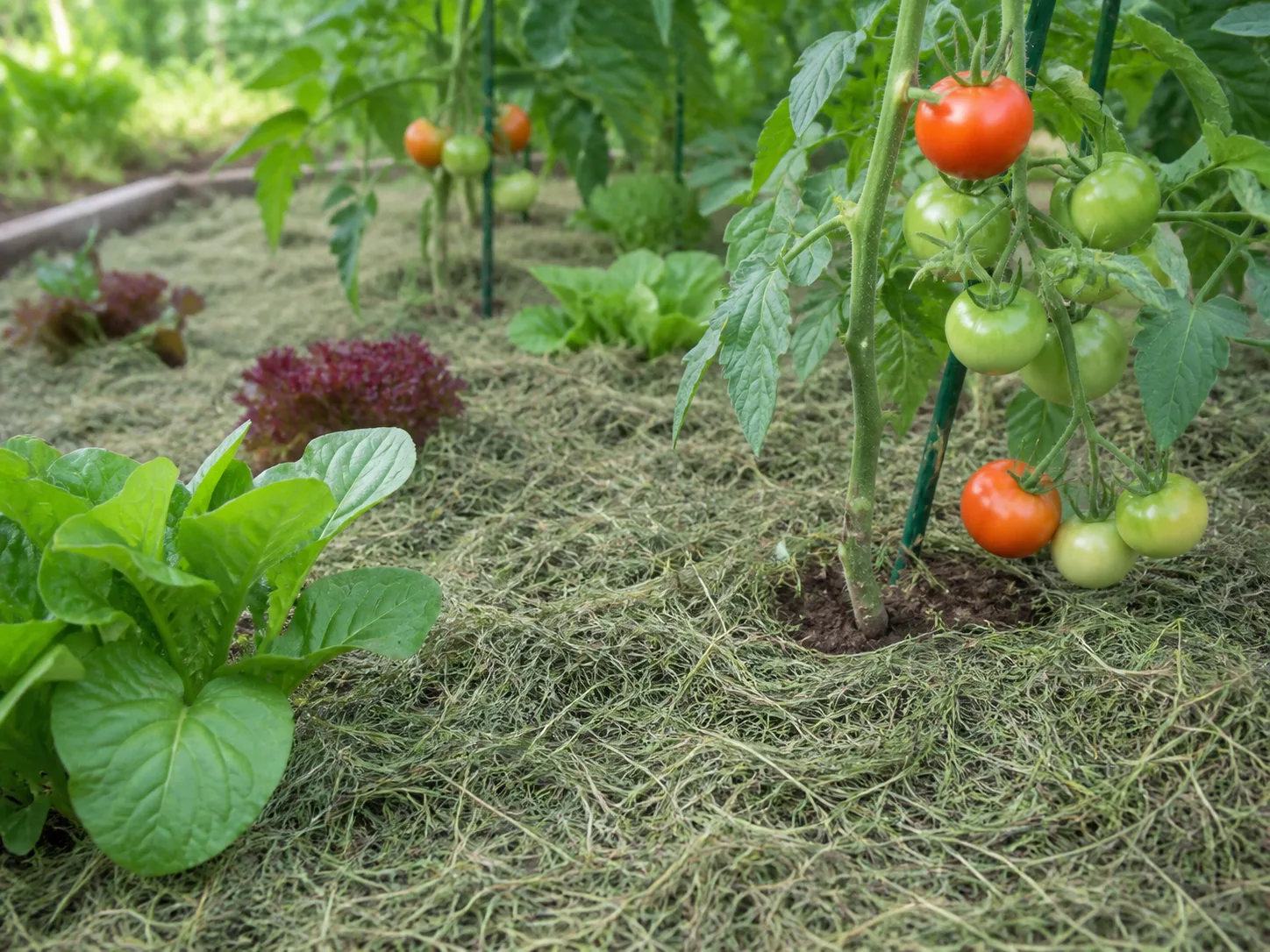
If you have more clean clippings than the lawn can absorb, compost them or use a thin, dry layer around plants. Do not spread a thick fresh layer where it can mat down. If the lawn has been treated with a herbicide, read the product label before using clippings in a vegetable garden or compost; the label determines whether treated material can be reused and how long restrictions last.
Sharp blades and mowing patterns improve each cut
A mowing interval cannot compensate for a dull blade. A sharp blade severs leaf tissue cleanly; a dull one tears and shreds the tips, leaving a ragged, pale cast that can make a lawn look stressed. Kansas State Extension notes that torn leaf edges can increase water loss and disease risk. Check the cut quality periodically: ragged tips, uncut strips, or repeated passes are signs to inspect or sharpen the blade.
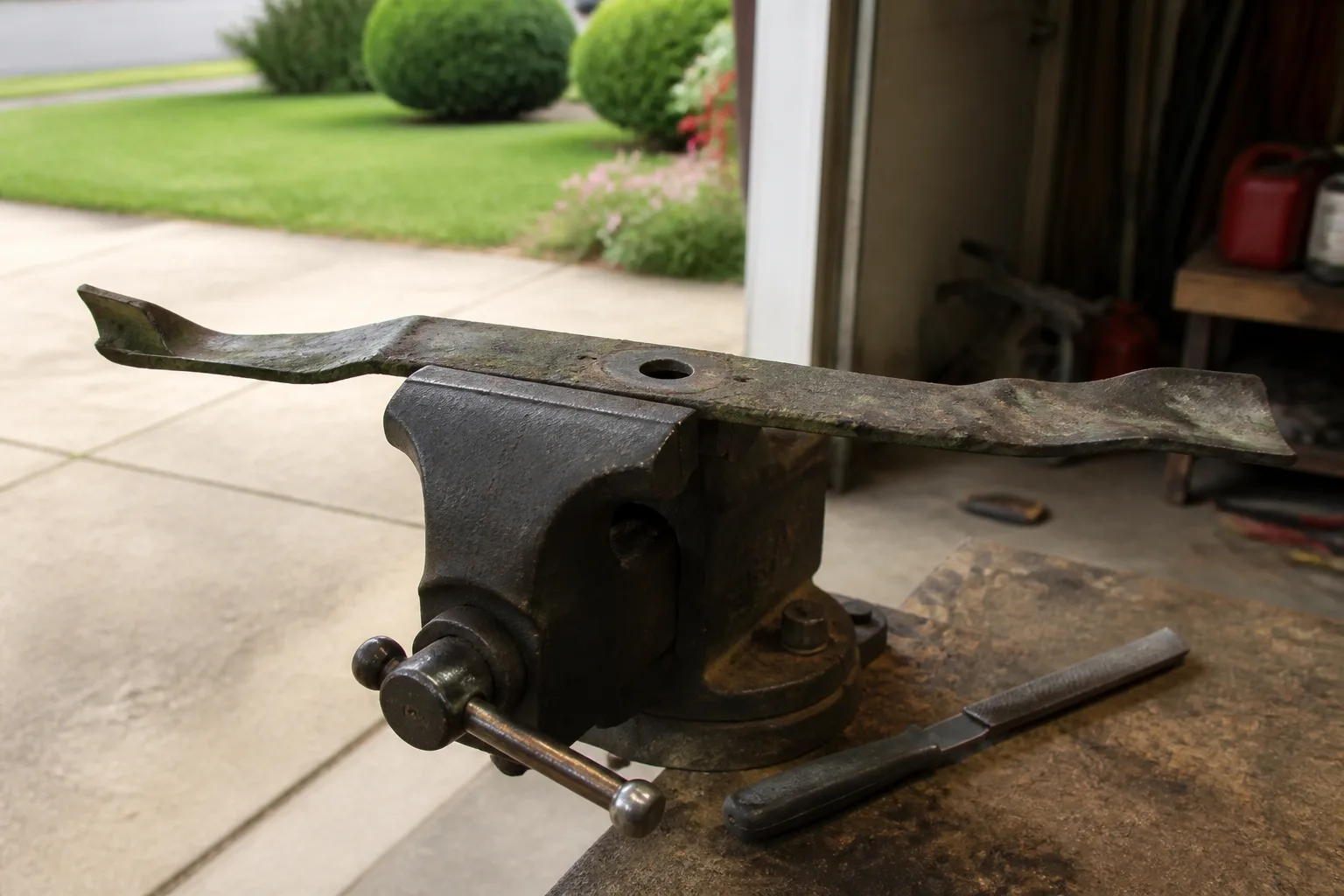
Measure the mower’s cutting height on a level surface and set all wheels to the same notch or measurement. Avoid changing height drastically in one go, especially in heat or when the lawn is already long. If you mow in the same direction every time, alternate the pattern occasionally so the wheels and grass do not lean along the same tracks.
A freshly cut lawn does not have to be extremely short to look neat. A uniform cut at the correct height can look tidy while protecting the crown and leaves. If mowing is taking too much time, maintaining a taller height within the species’ suitable range may let you wait longer before the next cut, as long as the one-third rule still holds.
First and last mow of the year
The first mow should follow growth, not a date on the calendar. Once the grass is actively growing and has reached its one-third trigger, cut it at the normal target height or slightly higher. Remove sticks and debris first, avoid scalping bumps, and do not use the first mow as a reason to cut the whole lawn unusually short.
The last mow is also not a reason to scalp the turf. Kansas State’s guidance is to finish the season at the normal mowing height rather than leaving the lawn extremely short or excessively long. In cold climates, stop when grass has stopped growing; in milder climates, mow again if it continues to grow and reaches the threshold. Do not force a winter schedule if the lawn is dormant.
If leaf fall overlaps with the last few cuts, decide whether to mulch, bag, or rake based on how much material covers the grass. A thin layer of finely shredded leaves can be dispersed by the mower; a thick blanket that hides the turf should be removed so the grass is not smothered. The lawn’s condition, not the month alone, determines whether another pass is useful.
Build a mowing routine that fits your yard
A practical plan needs only a few repeatable checks. First, identify the grass type or use a broad local extension recommendation if you are unsure. Set the mower within a suitable height range, then make a note of the height you want to keep. During active growth, inspect the lawn once or twice a week and measure a few representative areas rather than scheduling a cut on a fixed weekday.
When the grass approaches one-and-a-half times your chosen target height, check the forecast and soil. If the lawn is dry, growing, and not heat-stressed, mow and return it to the target without removing more than one-third. If rain has softened the ground, wait; if growth is slow, skip the cut; if the lawn has become very tall, raise the deck and bring it down over multiple sessions.
This routine makes the interval responsive without turning lawn care into daily measurement. A simple reminder to inspect on weekends may work for a typical yard, but the grass should decide whether that inspection becomes a mowing session. After a few weeks, you will see how quickly your lawn grows in each season and can plan the next check accordingly.
Conclusion
How often you should mow depends on how quickly your grass grows and the height that suits its species. Weekly mowing is a practical baseline during active growth, but a height-based trigger is more reliable: mow before removing more than one-third of the blade, wait for dry grass and firm soil, and raise the cut during heat or drought.
Choose a suitable height range for your grass, then check the lawn rather than following a rigid calendar. If growth is slow, leave the mower parked; if you miss a cut, lower the grass in stages. That approach keeps the lawn more even while reducing the risk of scalping, weak roots, and clumps of excessive clippings.