How to Get Rid of Gophers in Your Garden Safely: A Plan
Find out how to get rid of gophers in your garden with a clear plan for traps, barriers, plant baskets, bait risks, and repeat activity over time each season.
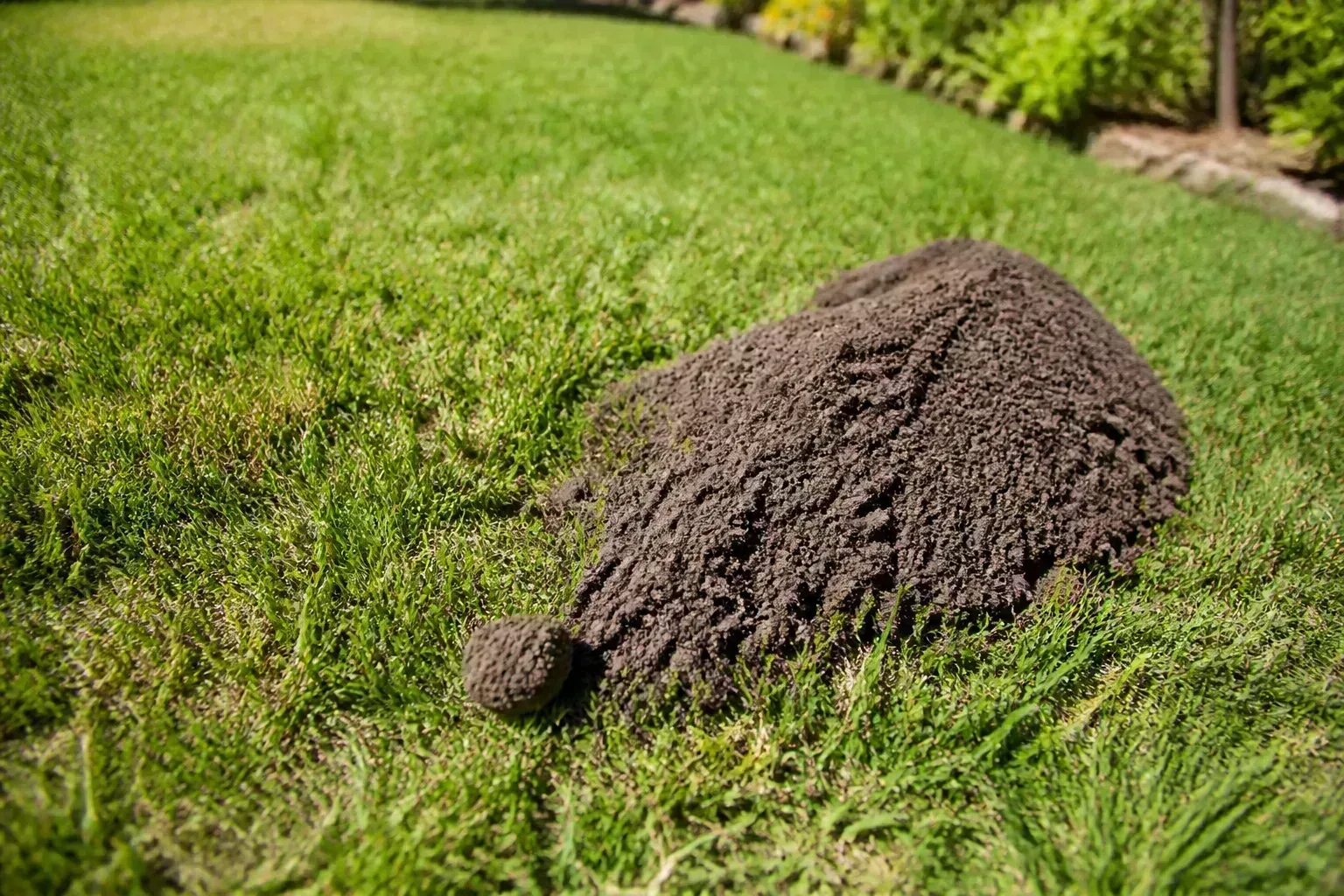
A fresh mound beside a wilted plant is a useful warning: a pocket gopher may be feeding beneath the bed. The most dependable garden plan is to confirm the animal, trap in an active tunnel if you need to remove it, then exclude gophers from vulnerable beds and plants. Odor tricks and vibrating stakes are not a substitute for those steps.
There is no single treatment that keeps every gopher off a property forever. Trapping addresses an animal already using the yard; buried mesh protects a defined planting area; toxic bait carries additional risks and must follow local rules and the product label. Start with the problem you need to solve, not the most dramatic-looking mound.
The practical answer: remove the active gopher and protect what matters
If a gopher is actively damaging a small garden, use fresh mounds to locate the tunnel system and place a gopher-specific trap in an active run. Follow the trap maker’s directions, secure it so it cannot be lost underground, and cover or guard the opening anywhere children, pets, or other animals could reach it. Check and reset it often rather than leaving it unattended.
At the same time, decide what needs lasting protection. A raised bed can be screened underneath before it is filled, and a young tree or prized perennial can be planted inside a roomy wire basket. If you only remove the resident animal, neighboring gophers may later move into the same attractive soil; if you only build a barrier, active animals can keep damaging plants outside it.
Make sure the animal is a pocket gopher
Pocket gophers live mostly underground, so the animal itself is rarely the first clue. Look for fresh, loose soil pushed into a fan-shaped or crescent-shaped mound, usually with a plugged opening off to one side. Gophers feed on roots, bulbs, and other plant parts below ground; unexplained wilting, a plant pulled downward, or a severed root system near a fresh mound supports the diagnosis. UC IPM’s pocket gopher guide and Utah State University Extension’s identification notes describe these signs and the animal’s underground habits.
Moles create a different pattern: rounder, volcano-like mounds and, often, raised surface ridges from shallow feeding tunnels. They eat soil invertebrates rather than plant roots, so a mound alone does not prove a gopher is killing a vegetable or ornamental plant. Voles leave surface runways and small open holes, while ground squirrels use visible burrow entrances; choosing the wrong animal wastes time and can expose the wrong species to a trap or bait.
Map fresh activity before you choose a control
Mark new mounds with a small flag, then flatten or rake older mounds so new activity is easier to see. Gophers can make several mounds as they extend a system, and an old mound may connect to a tunnel the animal no longer uses. A short observation period can spare you from placing a trap in a dead end.
To look for a main tunnel, use a purpose-made probe or a long, sturdy rod and work near the plugged side of a fresh mound. Extension guidance describes probing a few inches from the plug and below the surface until the probe drops into a tunnel; soil depth and compaction vary, so treat those distances as a starting point, not a guaranteed measurement. A sudden drop means you may have found a run, but if the soil is loose, rocky, or confusing, open a small inspection spot with a hand trowel before setting anything.
A simple activity log helps when mounds are scattered: record the date, location, whether the mound is fresh, nearby plants affected, and any trap result. After flattening the old mounds, check again over the next day or two. A fresh mound near the same area identifies active work more reliably than the size of a pile or the number of old mounds.
Which gopher control method fits your yard?
Match the method to the job. For a current animal in a small garden, trapping is usually the most direct option; for repeated losses in one bed, exclusion gives more durable plant protection. Bait and professional service may make sense in specific situations, but neither is a casual first step.
| Method | Best fit | Main limitation |
|---|---|---|
| Gopher-specific traps | A fresh, active tunnel near a small yard or garden | Placement takes practice; traps can injure people or non-target animals if left exposed |
| Buried mesh or root baskets | Protecting a raised bed, new planting, or high-value tree | Must be installed completely and can restrict roots if undersized |
| Registered bait | Larger or persistent infestations where the exact product and use are legal | Poison can harm pets and wildlife; placement and use are label-specific |
| Professional control | Many active areas, repeated failed trapping, or concern about safe placement | Cost, access, and quality vary; ask what methods will be used |
You do not have to choose only one. In a heavily planted yard, trap the active system while installing barriers during the next bed renovation or replanting. The goal is to reduce immediate damage and make the plants you care about less accessible underground.
Trap an active burrow, not just a mound
Use a trap designed for pocket gophers, such as an appropriate pincer-style or box-style model, and follow its instructions for placement and handling. Find a fresh mound, probe for the connected tunnel, and expose just enough of the run to set the trap securely. Depending on trap style, extension guidance commonly recommends setting traps in opposing directions or treating more than one tunnel opening, because the gopher may approach from either side of the run. UC IPM’s trapping instructions explain why a main tunnel is a better target than an unused lateral opening; Gardening Know How’s practical trap overview also emphasizes paired, correctly oriented traps.
Most gopher traps do not need a food lure. The tunnel itself is the travel route, and adding a carrot or other bait does not correct a trap set in the wrong place. Keep the trap’s trigger and jaws clear of loose dirt, and tether the trap to a stake or other secure anchor if the manufacturer recommends it so you can find it again.
Cover the opening after setting a trap if people, pets, or wildlife could contact it. A board, bucket, or secured cover can block access and light without collapsing the tunnel onto the trap. Do not leave an exposed set where a child or curious dog can put a hand or nose into it; use gloves only if the manufacturer calls for them, since human scent itself is not a reliable reason to delay setting a trap.
Check the set at least daily or at the interval required by the trap instructions and local law. If it has not caught anything after a day or two, relocate it to another fresh, active run rather than adding more bait or leaving it indefinitely. Once you get a catch, reset where new activity appears; if mounds continue, you may have missed a second tunnel or a new gopher may have arrived.
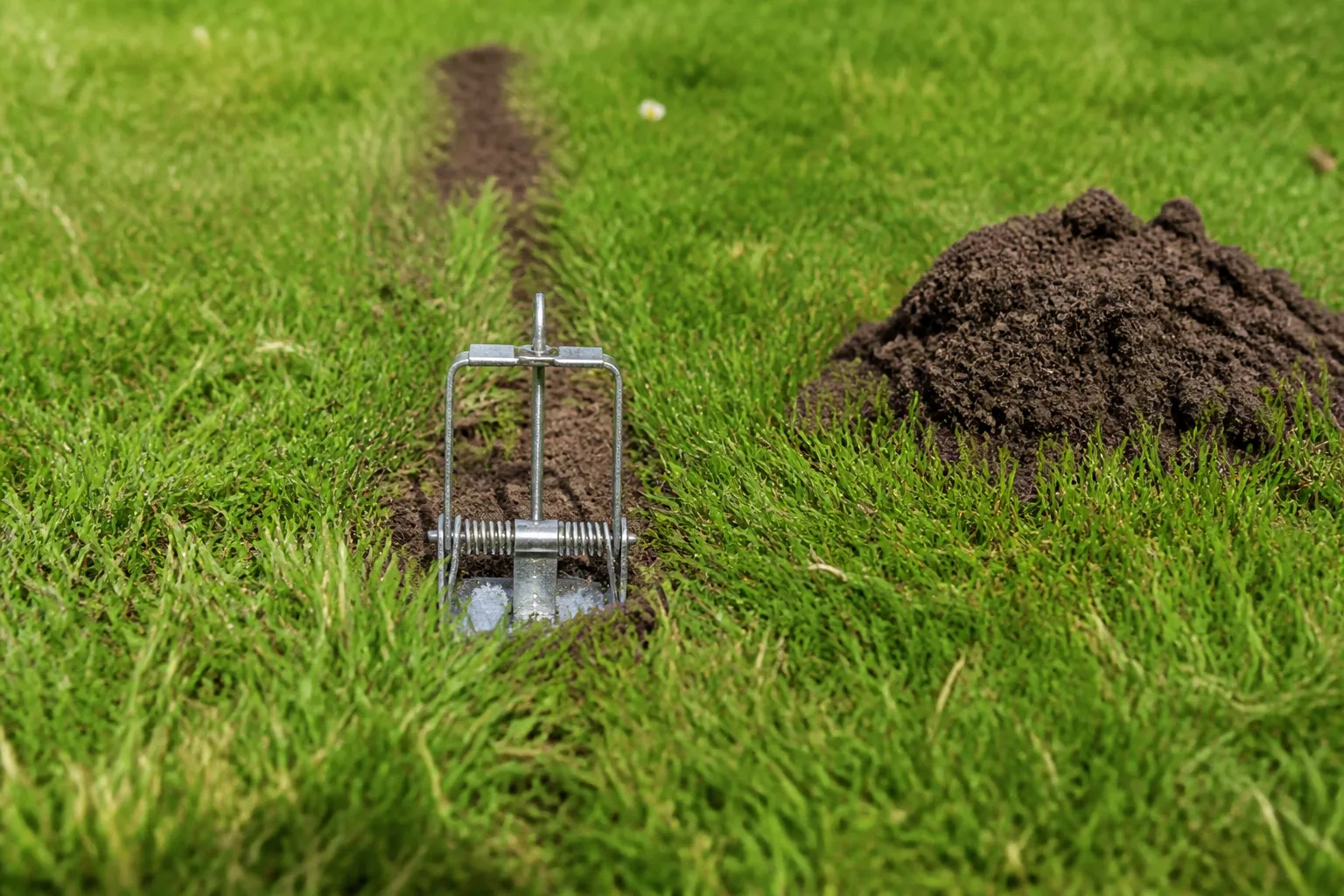
The trap belongs in the active underground run, not on top of the mound or in an unverified hole.
Protect raised beds and garden rows with wire
For a new raised bed, install sturdy galvanized or stainless hardware cloth across the entire bottom before adding soil. Use openings small enough to block a gopher while still allowing drainage; about 1/2 inch is a practical choice for many garden beds, and local extension recommendations may differ by site and material. Overlap seams generously, fasten them together, and attach the mesh to the frame so soil settling or digging at an edge does not create an easy gap.
For an in-ground bed or a tree row, a complete underground perimeter can help, but the boundary must be continuous. Extension recommendations often call for a deeper buried barrier with an outward-facing apron, because a gopher can dig under a straight shallow edge; UC IPM’s exclusion guidance gives a detailed example for landscape trees and beds. Adapt dimensions to the crop, soil, climate, and local advice rather than assuming a single trench depth will work everywhere.
Choose metal mesh that will withstand soil contact and avoid flimsy poultry netting with large openings. Check the frame, corners, drainage openings, and places where irrigation tubing crosses the barrier. A narrow seam is more important than a tall wall if the gopher can simply tunnel through a gap at the bottom.
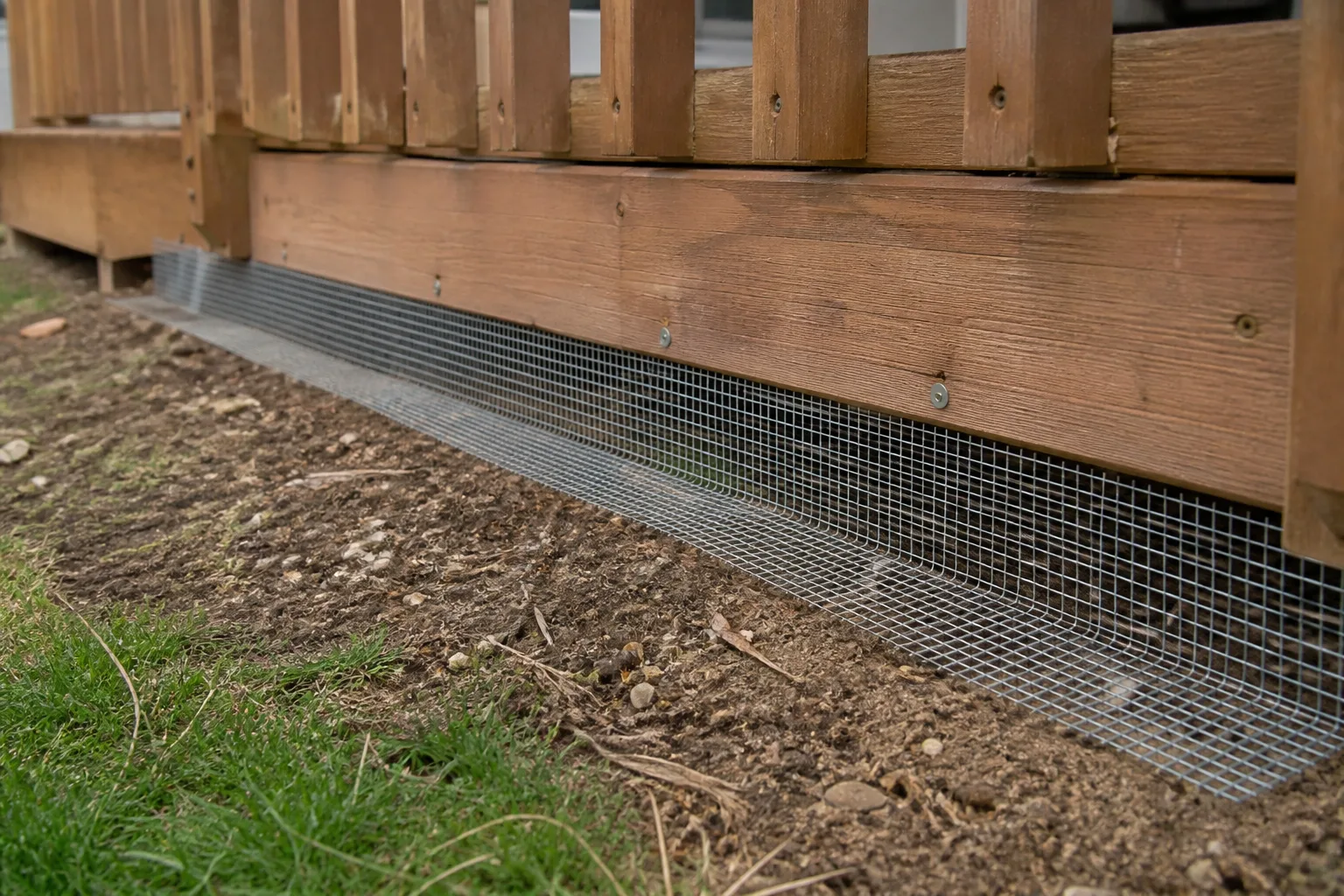
Continuous wire exclusion is most effective when seams and edges meet without gaps.
Use root baskets for valuable individual plants
A wire basket can protect a new shrub, tree, bulb clump, or perennial where screening a whole bed is impractical. Set it in the planting hole before placing the root ball, and size it to leave room for roots to grow rather than wrapping mesh tightly around the crown. Fold sharp wire ends away from the roots and keep the plant’s stem or trunk above the soil line.
Material choice involves a tradeoff. Galvanized or stainless mesh lasts longer in soil, while lighter ungalvanized wire may eventually rust away; whichever you use, a basket that is too small or has sharp edges can damage roots as the plant matures. Do not excavate around an established tree and cage its roots without expert guidance, because cutting or constricting structural roots can create a new problem.
Individual baskets protect only the plants inside them. They do not remove the gopher, keep it out of the surrounding garden, or prevent damage to unprotected irrigation lines. For a row of vegetables, bulb bed, or raised bed, whole-bed screening is usually less piecemeal than installing many small cages.
Repellents: what scents and scraps can’t promise
Coffee grounds, pet droppings, fish scraps, dryer sheets, essential oils, and strongly scented herbs are often suggested as gopher repellents. There is no reliable basis for treating these items as a way to clear an active burrow or protect a garden. UC IPM notes that repellents currently sold have not successfully protected plants from gophers and that commonly named plants such as garlic have not been shown to repel them from an area; Gardening Know How likewise describes repellents as the least effective control approach.
Avoid putting feces, meat, or fish waste in vegetable beds. Besides not solving the tunnel problem, those materials can attract other animals, create sanitation concerns, and contaminate areas where food is grown. Coffee grounds can go into compost in sensible amounts if they suit your composting plan, but sprinkling them in a tunnel is not a proven control method.
Scent barriers also fade, wash away, or need frequent replacement, so they are especially poor choices when a prized plant is already under attack. If you enjoy lavender, rosemary, or alliums, grow them because they suit your garden—not because their fragrance will drive a gopher out. Spend control effort on a trap placed in fresh activity or on a barrier installed around the plant roots.
Do noise, predators, or frightening devices solve the problem?
Vibrating stakes, ultrasonic spikes, pinwheels, and wind chimes can make a garden feel like it is doing something, but research-based extension guidance does not consider them dependable gopher controls. Gophers spend most of their lives in sealed underground tunnels, and changing a sound or vibration at the surface does not guarantee that an animal will abandon a territory. UC IPM specifically cautions that vibrating stakes, ultrasonic devices, and wind-powered devices have not been effective in research trials.
Owls, snakes, and other predators are part of a healthy ecosystem, but attracting a predator is not a precise way to protect a vegetable bed this week. Predators hunt across a wider area and do not remove every gopher; pets should not be asked to dig for or catch wildlife. Fine Gardening’s discussion of garden critters supports barriers and a layered, non-toxic approach, while also noting that no one tactic eliminates every animal.
If you want a low-impact strategy, prioritize exclusion and monitoring rather than buying a collection of devices. You can still maintain habitat for native predators, but treat that as a broad wildlife benefit, not as a substitute for trapping or mesh when roots are being eaten.
Treat toxic bait as a regulated last resort
Gopher baits can expose pets, children, scavenging wildlife, and other non-target animals to poison. Products and permitted uses vary by location, and a bait that is legal for one setting may not be approved for another. If you consider this approach, read the current label from start to finish, confirm that it names pocket gophers and your intended site, and follow every placement, handling, and disposal direction; never scatter bait on the soil surface or improvise with household food.
Correct underground placement also takes skill. A person must identify an active main tunnel and keep bait from spilling into the garden or onto the ground, where birds and other animals could encounter it. UC IPM describes bait as a conditional control with placement and non-target risks, and warns that backyard settings require particular caution. When children, pets, poultry, or wildlife use the yard, choose traps and exclusion or ask a licensed professional about locally permitted options instead.
Do not treat “natural” or “organic” as synonyms for safe. A poison can still harm a non-target animal, and a homemade bait or an unregistered product can create additional risk without improving control. For a small residential garden, trapping plus barriers is usually easier to monitor than a toxic product that must be placed underground with precision.
Why flooding and smoke usually fail
Pouring a hose into a new mound may loosen the soil or briefly disturb a tunnel, but it is not a reliable way to remove a gopher. The burrow system may extend well beyond that opening, and gophers can plug sections rather than evacuate the whole area. Flooding also wastes water, can erode soil, and may send water into neighboring beds or structures; reserve irrigation for plants, not as a control strategy.
Smoke, gas cartridges, and similar fumigation tricks are unreliable in burrows that can be closed off or bypassed. UC IPM notes that gophers quickly seal tunnels, which limits fumigation’s effectiveness. Do not use vehicle exhaust or unlabelled chemicals in a burrow; these can create health and environmental hazards and may violate local rules.
Repair the garden after the gopher is gone
Once fresh mounds stop appearing, rake soil piles back over low areas and remove stones or clods that could damage a mower. Check drip tubing, sprinkler lines, and buried low-voltage wire near the tunnel route; gophers can chew flexible lines, and a leak may remain hidden beneath a mound. Reconnect or replace damaged parts and run the system briefly while you watch for leaks before replanting.
For a wilted plant, gently inspect around the root zone before assuming the gopher is gone. A plant with a few intact structural roots may recover with careful watering and support, while one that has lost most of its root system may not. Replanting into the same unprotected bed without changing the barrier plan invites another loss.
Flattening old mounds after the control step also gives you a clean baseline. If soil reappears in the same area, the animal is still active or another one has moved in; if no fresh sign returns, keep the area on a light monitoring schedule rather than continuing to disturb the soil.
Prevent repeat damage and monitor new mounds
A successful trap removes an animal from a tunnel system; it does not create a permanent property boundary. Gophers may re-enter from nearby open land, and a garden with perennial roots, irrigated soil, bulbs, or vegetables remains attractive. This is why the best long-term plan combines removal with barriers around the highest-value plantings.
Walk the garden edges and vulnerable beds every few days while activity is recent, then check weekly during the growing season or after new plantings. Flatten new mounds as you find them so the next round of soil movement is easy to spot, and note whether plant damage tracks with the same corridor. A small map in a notebook or phone helps you distinguish a lingering animal from renewed activity in another corner.
Protecting every square foot may be too expensive or disruptive. Prioritize a raised vegetable bed, newly planted fruit tree, treasured bulbs, or the drip lines you cannot easily replace; leave low-value areas for monitoring if damage there is tolerable. This targeted approach often protects the harvest and avoids digging a deep trench around the entire property.
When to hire a wildlife or pest professional
Bring in a professional when fresh mounds keep appearing after careful trap relocation, damage is spread across several areas, the burrow may cross a property boundary, or you are unsure whether the animal is a gopher, mole, or another species. A professional can identify active runs and explain what the proposed method will do, whether it is lethal, and how pets and non-target wildlife will be protected. Ask whether the service includes follow-up checks, what triggers a return visit, and how it will distinguish a new arrival from an unsuccessful first treatment.
Before approving bait or fumigation, ask for the product or device name and the exact label directions for residential garden use. Ask how the operator will prevent exposure above ground, what local rules apply, and what alternatives are available if you prefer not to use poison. A reputable provider should be comfortable explaining limits instead of promising that one visit will keep all gophers away permanently.
For a single fresh mound beside a small bed, start with identification, a properly placed trap, and protection for the most vulnerable plants. For repeated losses over a large landscape, combine professional removal with a barrier plan rather than paying for repeated treatments while leaving the same roots exposed.
Conclusion
To get rid of gophers in a garden, first confirm the animal and locate fresh activity. Trap an active tunnel if you need to remove a gopher, then screen raised beds or protect valuable roots so the next animal cannot repeat the damage as easily.
Skip pet waste, coffee grounds, dryer sheets, noise stakes, flooding, and smoke as stand-alone fixes. Use poison only when the product is legal for your location and its label fits the site, or ask a professional to assess it. Check for new mounds after treatment; your best measure of success is fewer fresh signs and protected plants, not a promise that no gopher will ever return.