How to Get Rid of Spider Crickets and Keep Them Out
Spider crickets in the basement? Identify camel crickets, place sticky boards well, fix moisture and entry points, and know when to call a pest professional.
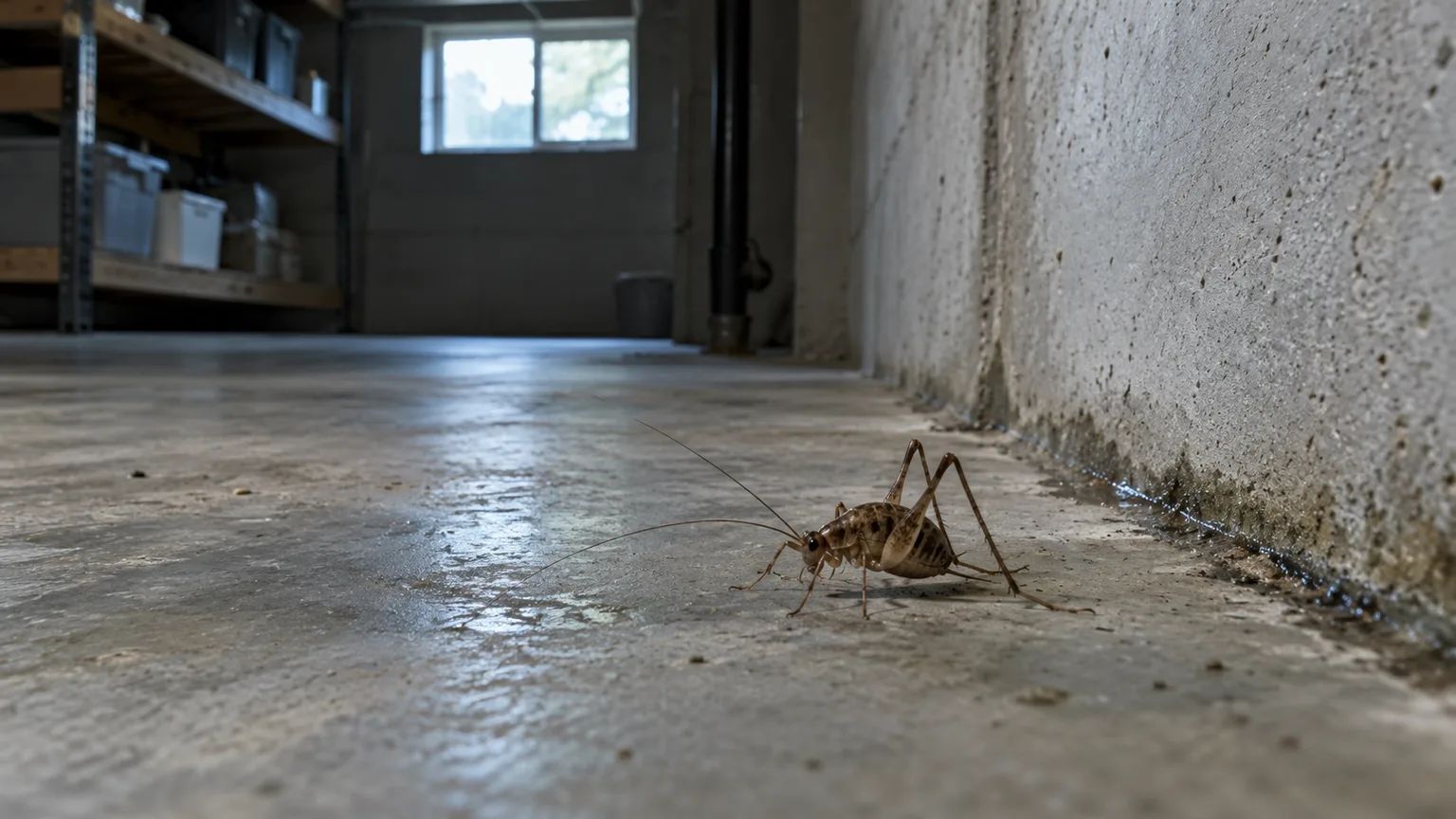
If you have spider crickets in a basement, crawl space, or garage, remove the ones you can see, set sticky boards along the room edges, and look for the damp shelter or gap that lets more wander in. Spider crickets are also called camel crickets and cave crickets; their long hind legs help them jump, but the jump is an escape reflex, not a sign they are attacking you. A few captures call for monitoring and basic exclusion. Repeated sightings in the same damp area call for finding and fixing the moisture problem.
The order matters. Traps can reduce visible activity tonight, while a dehumidifier alone cannot stop water entering through a leaking pipe or wet foundation. For a durable fix, pair immediate removal with moisture control, less outdoor shelter at the foundation, and repairs to the routes insects use to get inside.
What to do in the first 24 hours
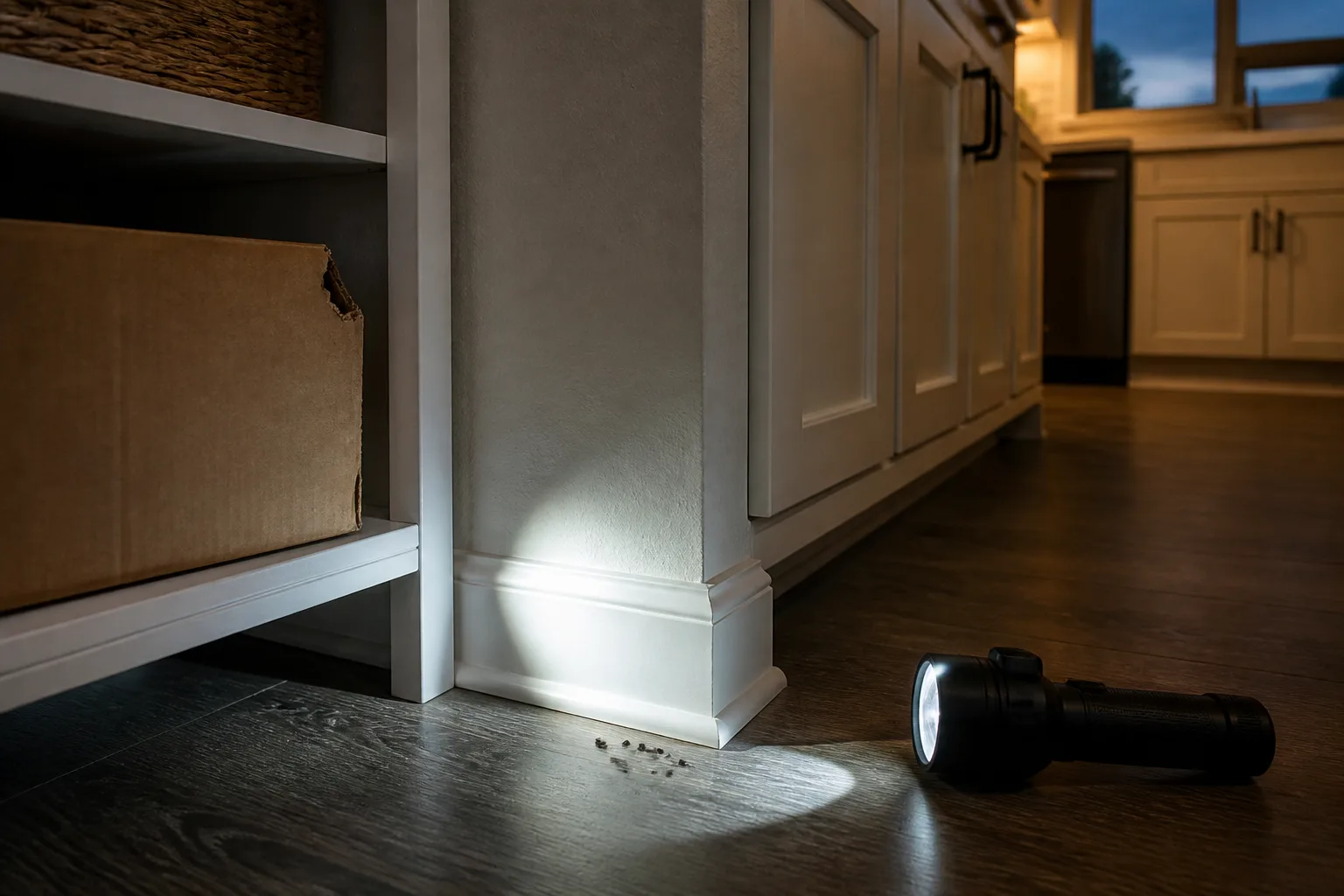
Start with a flashlight and a quick count. Note the room, the side of the room, and whether you found one insect or several; check the basement, garage, laundry area, crawl-space access, and the wall beside plumbing or exterior doors. That simple map gives you somewhere to place traps and helps distinguish a stray from a recurring source.
For the first night, use a vacuum hose or a cup and stiff card to remove insects you can reach. Put a few glue boards flat against walls near sightings and likely travel lanes, then remove standing water, wet cardboard, and piles that touch the floor. Avoid scattering powder or spraying an entire room before you know where the crickets are coming from.
The next day, inspect the nearest source of moisture and the nearest exterior opening. Look for a dripping valve, a damp foundation seam, a downspout discharging beside the house, a loose basement-door sweep, or a gap around a pipe. You do not need to seal a weep hole or block a vent to close a route; keep required drainage and ventilation clear, and seal only gaps that are meant to be closed.
Confirm you’re dealing with a spider cricket
Spider, camel, and cave cricket are common names for members of the family Rhaphidophoridae. The typical indoor visitor is wingless, brown or tan, humpbacked, and equipped with six long legs, very long antennae, and enlarged hind legs. It does not chirp. The NC State Extension camel-cricket fact sheet notes that camel crickets lack adult wings and that a chirping sound points to another kind of cricket; the Better Homes & Gardens spider-cricket guide makes the same distinction between silent camel crickets and familiar chirping crickets. A Leafy Place identification guide by gardening writer Jessica Nolan also describes the humpbacked body, long antennae, and jumping legs that make this group recognizable.
A spider has eight legs and no antennae, while a camel cricket has six legs and two antennae. A field or house cricket has a less arched body and may chirp; if you hear a steady chirp but see nothing jumping in the basement, you may have a different pest with a different hiding pattern. Identification does not need to reach species level for most home control, but getting the broad type right changes where you look: spider crickets make damp, dark spaces more important than pantry crumbs or sound.
Signs the basement has a recurring problem
A single camel cricket found after a storm or a period of very dry weather may have wandered in from outdoors. The NC State Extension camel-cricket fact sheet describes crickets moving into storage buildings, crawl spaces, basements, garages, and other damp areas, with weather extremes sometimes triggering nuisance activity. University of Maine Cooperative Extension likewise describes them as accidental invaders attracted to cool, dark, moist places, especially basements and laundry or shower areas.
Treat the pattern, not one startling jump, as your clue. Several sightings in the same corner, glue-board captures that continue night after night, or dark fecal smears near stored linens warrant a closer search for a nearby harborage or damp route. Camel crickets are not termites and do not chew a house’s structural framing like wood-destroying insects, but a persistent population may feed on stored textiles, cardboard, or other organic material when those items are accessible. If you find damage, inspect the storage and surrounding area before assuming the crickets caused every mark; other insects can damage fabrics too.
Remove visible crickets and use traps as monitors
Physical removal is the fastest way to reduce the insects you can see. Traps then answer a second question: are crickets still moving through this spot after you remove the visible ones? Keep a small note of where each board sits and how many insects it catches; moving a board every day makes that signal harder to interpret.
Vacuum or capture the ones you can see
A vacuum with a hose lets you collect a jumper without trying to swat it. Empty a bagless canister outside into a sealed rubbish bag promptly, or remove and seal a disposable vacuum bag according to the vacuum maker’s directions. This prevents a captured cricket from remaining in the home or escaping when you clean the appliance.
A cup and card works for a single insect in a finished room: lower the cup over it, slide the card underneath, and release it outdoors away from the door. In a damp utility room, vacuuming is usually easier than chasing a cricket that leaps unpredictably from floor to wall. Avoid grabbing one by the legs; gentle capture is safer for you and the insect, and it keeps you from knocking objects or stored items over.
Removal alone rarely ends repeated sightings. If the same corner produces more crickets over several nights, leave traps there while you inspect the adjacent wall, nearby floor drain, window well, and crawl-space door. A strong pattern in one location is more useful than spraying every basement wall without knowing where insects travel.
Place sticky boards where crickets travel
Set glue boards flush with the wall-floor edge, in protected corners, behind or beside appliances, near a basement window or exterior door, and at the inside edge of a crawl-space access. Crickets tend to move along edges and hide under or behind stored objects; a board in the middle of an open floor is less likely to intercept them. The NC State Extension camel-cricket fact sheet specifically recommends sticky boards in corners and behind appliances for indoor camel-cricket control.
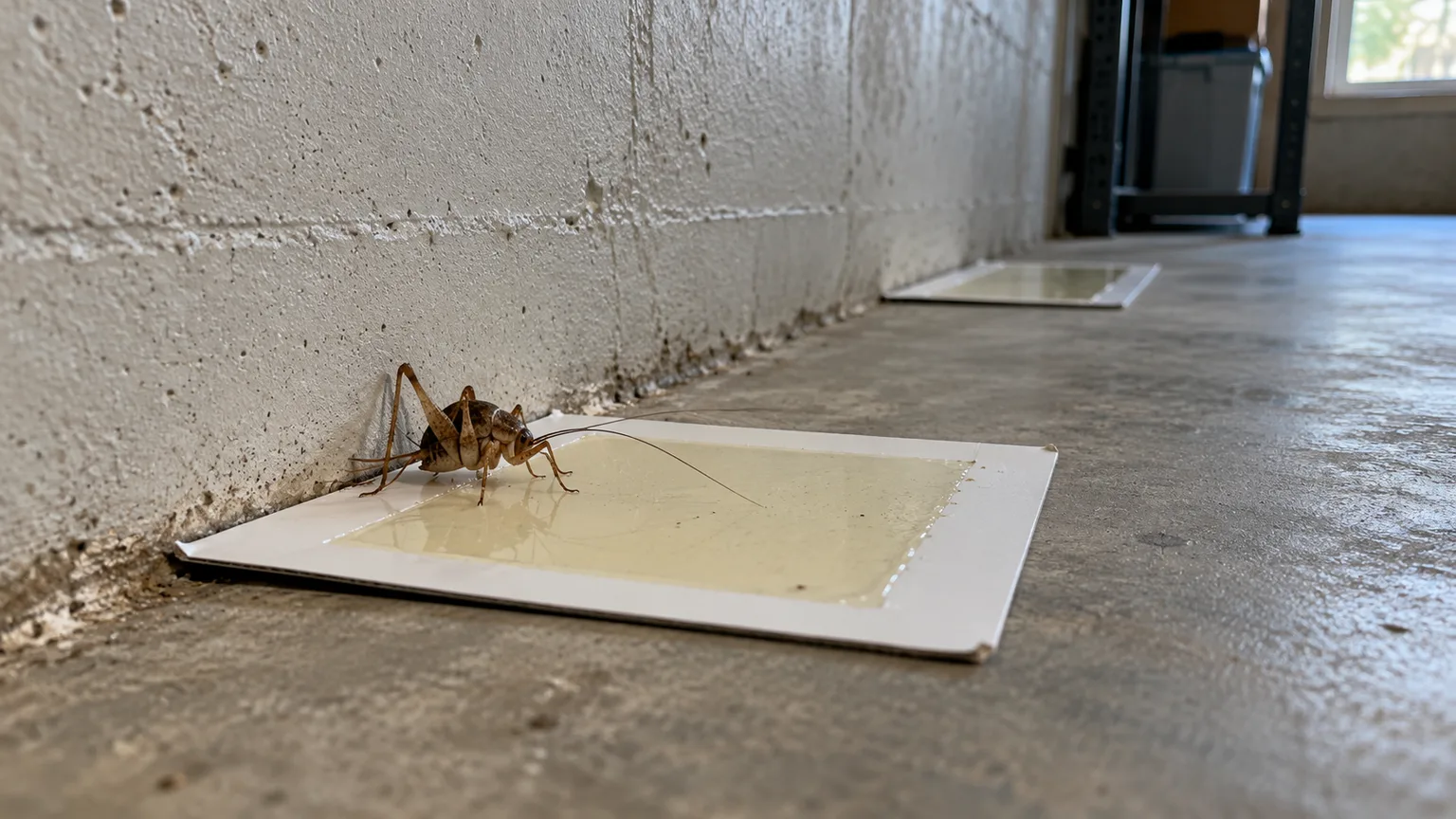
Check boards every day or two at first. A board with several camel crickets tells you that route is active; it does not tell you exactly where the insects entered. Add a second board on the other side of the suspected opening rather than placing a large cluster in one spot. If pets or young children can reach a board, use a covered trap or put it somewhere inaccessible, and inspect it often so non-target animals are not caught.
Some editorial guides suggest baiting a board with food, but bait is not essential for a glue board to intercept insects that travel along an edge. I would not add moldy bread or pet food to a basement trap: it can introduce another food source, attract other pests, and obscure whether the board location itself is effective. Keep the site clean and let the capture count show whether your placement is working.
Use caution with water traps and bait
A shallow soap-water pan or bucket can catch crickets that fall in, but standing water is an avoidable risk where children, pets, or anyone walking through a dark utility room might encounter it. It also adds water to a room you are trying to keep dry. Do not leave open buckets, bowls, or bait unattended in a shared path; sticky boards or direct vacuum removal are easier to monitor and do not create a spill or drowning hazard.
If you choose to try a water trap in a locked, inaccessible area, use a stable, shallow container and check it daily. Empty and clean it rather than allowing water or food bait to sit for a week. These traps may catch individual wanderers, but they do not fix a wet foundation, a crawl-space gap, or outdoor vegetation touching the siding.
Dry the habitat, then solve the moisture source
Camel crickets favor cool, damp, sheltered places. That is why sightings cluster around basements, crawl spaces, garages, laundry rooms, and other areas with water or humidity problems. A damp room can be the actual habitat, or it can be a convenient sheltered route from an outdoor population; the distinction matters because a cricket caught indoors does not prove it has bred there.
Look first for liquid water and the path it follows: a plumbing leak, condensation around cold pipes, water entering at a window well, a sump problem, overflowing gutters, or a downspout that releases water beside the foundation. The NC State Extension camel-cricket fact sheet recommends reducing indoor and crawl-space moisture as part of non-chemical camel-cricket control. If you find water intrusion, fix that source before relying on a dehumidifier to compensate.
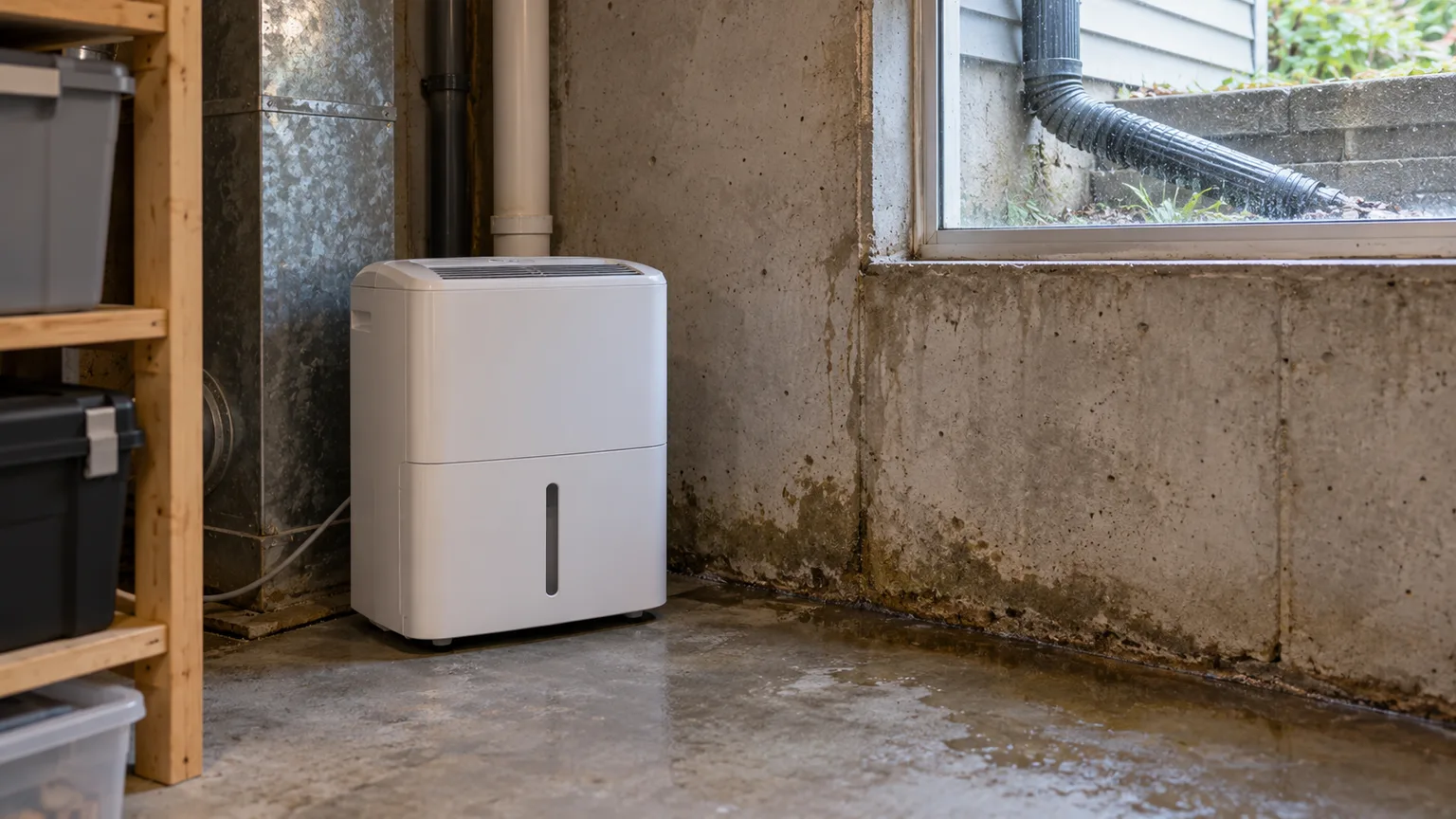
A dehumidifier is support, not repair
A dehumidifier can help when room humidity is persistently high, but it cannot repair a leak or redirect runoff. Use a separate hygrometer to see whether the basement remains humid over several days, then compare readings with the rest of the home. Do not choose a target number solely because a pest article gives one: the right indoor humidity depends on climate, season, and the building, while visible seepage needs a building repair regardless of the meter reading.
Improve airflow where it is safe to do so, keep basement doors or vents in their intended operating state, and make sure the dehumidifier drains correctly or is emptied as directed. If water keeps returning after heavy rain, stains appear on walls, or the floor-wall seam remains wet, look at gutters, grading, drainage, and foundation repairs. A persistent leak or suspected mold problem calls for an appropriate building or moisture professional; running a larger dehumidifier does not solve a structural water entry.
Seal likely entry routes
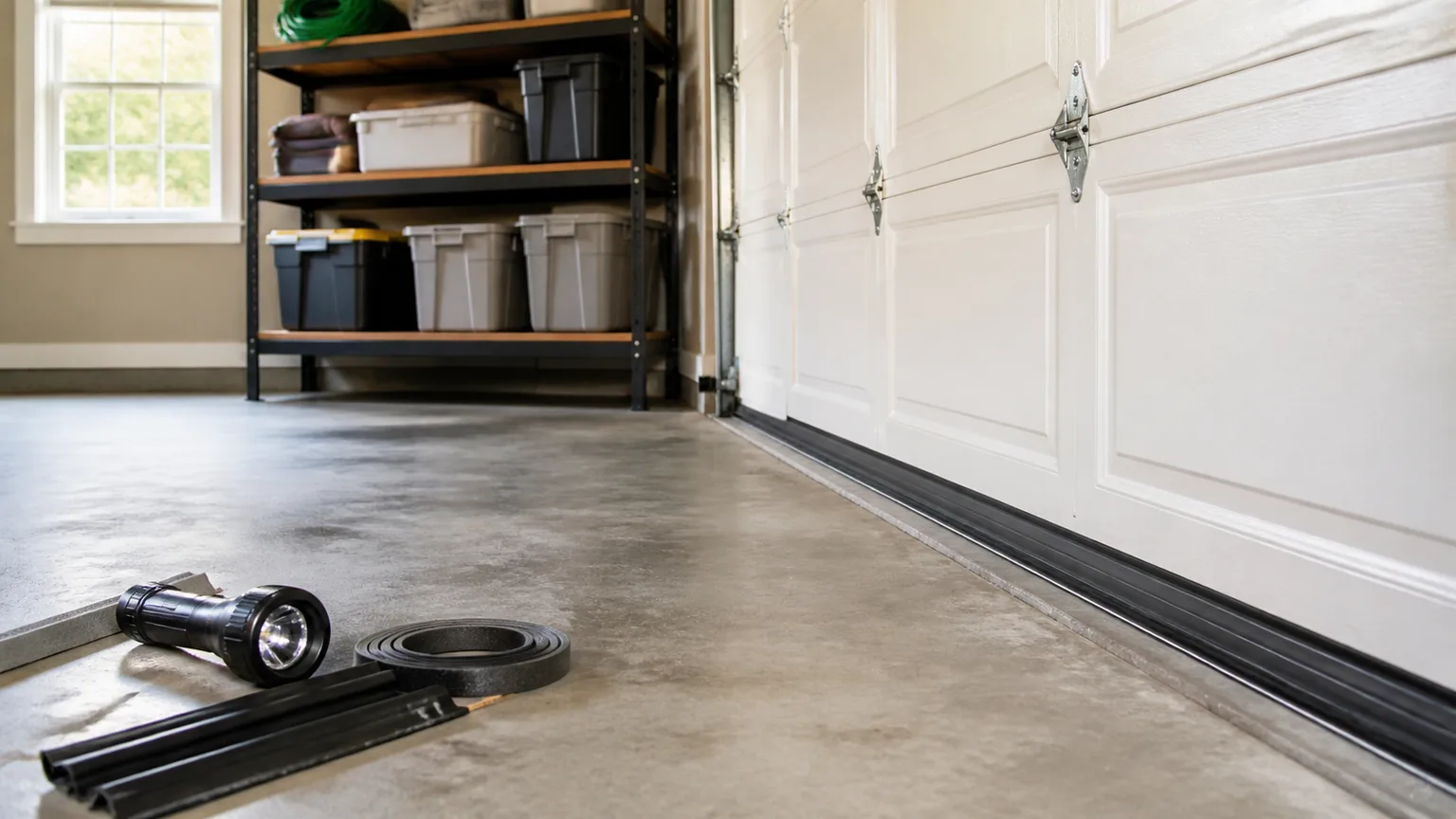
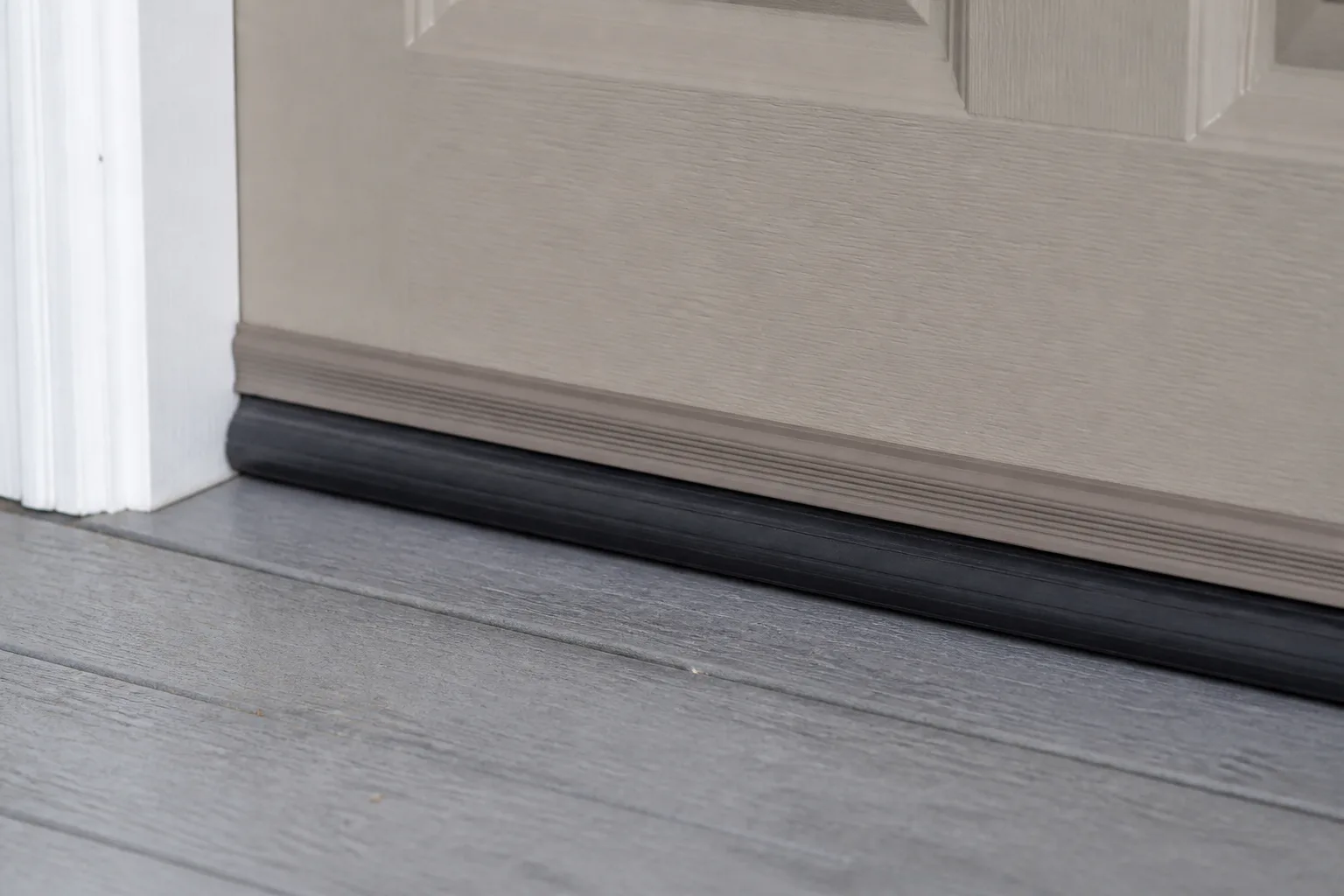
Once you identify a likely route, close gaps around basement doors, window frames, utility penetrations, foundation openings, and crawl-space access doors with materials suited to the opening. Replace a door sweep or weatherstripping when daylight or air can pass under the door. The NC State Extension camel-cricket fact sheet recommends sealing openings at windows, doors, foundations, vents, and service lines and fitting weatherstripping tightly against door thresholds.
Inspect rather than seal every hole you see. Dryer exhausts, designed foundation vents, and drainage outlets need to function; cover appropriate openings with a correctly fitted screen when the opening is meant to be screened, but do not plug a vent or weep opening with caulk. Around pipes or cables, use an appropriate sealant without covering moving parts or service access. If you find a wide foundation crack, recurring water entry, or a gap you cannot safely reach, have the repair assessed instead of hiding it with a temporary patch.
Reduce outdoor shelter beside the foundation
Outdoor camel crickets live in cool, moist shelter beneath stones, logs, firewood, dense ground cover, and debris. If those places sit directly against the foundation, crickets need to travel only a short distance to find a basement opening. The NC State Extension camel-cricket fact sheet recommends moving mulch and ground cover at least 12 inches from the foundation when possible, keeping shrubs and ground cover away from siding, and storing firewood away from the house.
You do not need to remove every plant or mulch bed from the yard. Focus on the first few feet around the house: pull ivy off siding, thin dense ground cover, move leaf piles and lumber away from doors and vents, and raise firewood on a rack away from the structure. Keep exterior drainage flowing away from the foundation and avoid creating a new dry-looking but poorly drained trench that traps water at the wall.
The goal is to make the foundation edge less like a continuous shelter corridor. Leave useful habitat elsewhere in the garden, but give doors, vents, window wells, and the foundation a clear inspection zone. If you reduce cover and still catch crickets inside, the next clue is more likely a particular opening or a hidden damp space than a need to spray the entire perimeter.
Make storage less attractive
Basements and garages often contain exactly the combination a camel cricket can use: quiet gaps, cardboard, dampness, and items left undisturbed for months. Replace boxes resting on a concrete floor with lidded plastic bins where practical, and put stored belongings on shelving with a small gap between the shelves and the wall. This improves airflow and makes it easier to see droppings, shed skins, or live insects during routine checks.
Sort through damp or mold-damaged cardboard rather than transferring it straight into a new container. Before storing linens, sleeping bags, or seasonal clothing, make sure they are clean and fully dry; seal them in storage bags or lidded containers instead of leaving fabric folded in open boxes. Vacuum behind shelves and appliances where insects can hide, then keep the floor clear enough to see whether the trap count is changing.
Clutter reduction is not a substitute for exclusion or moisture repair. If you move boxes but leave them piled beside a wet wall, the crickets still have the conditions they need. The useful change is a drier, more inspectable storage zone where every new sighting can be tied to an identifiable edge or opening.
Should you use diatomaceous earth or insecticide?
Do not make powders or sprays your first response to a few camel crickets. Sticky boards, vacuum removal, moisture correction, outdoor cleanup, and sealing are better first steps because they reduce exposure and address the conditions that bring crickets near the house. A dry insecticidal dust may lose effectiveness when it gets wet, and airborne particles should not be treated as harmless simply because a product is described as natural or food grade.
If sightings remain frequent after those changes, consider a product only if its label permits the specific indoor or outdoor use and target pest. Broadly spraying a floor, foundation, or whole crawl space can expose people, pets, and non-target wildlife without fixing the route or habitat. The Pesticide Environmental Stewardship program advises users to read the complete label, use a product only for labeled purposes and amounts, and keep children and pets away for the interval specified on the label.
If you use a pesticide, follow the exact label
Use an indoor product indoors and an outdoor product outdoors; never bring an outdoor-only pesticide inside. Treat only the location and surface the label allows, use its protective equipment and application rate, ventilate as directed, and observe the stated re-entry interval. Do not double the amount, mix products, apply a bait where a child or pet can reach it, or infer that “natural” means safe for every person, animal, or surface.
If crickets are entering through an inaccessible crawl space, or a treatment would require spraying a confined area, bring in a licensed pest-management professional rather than improvising. Ask for an integrated plan that starts with inspection and moisture/exclusion work, identifies where traps will monitor activity, and explains why any pesticide is necessary. A professional should be able to name the active ingredient, its labeled use, precautions, and what change you should expect to see.
When a pest professional makes sense
Call a qualified pest professional if you keep catching crickets in several rooms, sightings stay frequent after you correct visible gaps and moisture, or activity appears to come from a crawl space you cannot inspect safely. Professional help is also reasonable when water enters through the foundation, a large area may be damp, or you are not confident that the insects are camel crickets. In those cases, identification and source inspection matter more than a stronger spray.
Before booking treatment, ask whether the service includes inspection and follow-up monitoring. Provide your trap locations and dates, point out leaks or wet areas, and ask the technician to separate the pest-control work from any repair that needs a plumber or drainage contractor. A good plan should explain the entry route and environmental conditions, not promise that one application will keep every outdoor insect away permanently.
Check results with a simple weekly log
For one or two weeks after placing traps, record the date, room, trap location, number and type of insects caught, and any rainfall or plumbing changes you noticed. Keep each board in roughly the same location during the monitoring period. If captures fall and no new crickets appear in living areas, continue the moisture and exclusion work and check the boards weekly until activity stays low.
If counts stay flat or rise, troubleshoot in order. First confirm the insects are camel crickets; then check whether the board is along an edge rather than in open floor space; next inspect the nearest hidden damp spot and the exterior opening on the opposite side of the wall. A board that catches one cricket and one that catches ten do not demand the same response: concentrated captures near one door suggest a route, while captures across multiple damp rooms suggest a broader habitat or crawl-space source.
After you have a clear baseline, remove spent boards safely and replace them when dusty, wet, or full. Keep one or two monitoring boards in the spots that were active during the season or weather conditions that brought the crickets in. That way, a return of activity becomes an early signal to check the area instead of a surprise infestation months later.
Conclusion
To get rid of spider crickets, remove the ones you can reach, use glue boards to find active travel lanes, and make the basement or crawl space less damp and less accessible. Seal appropriate foundation and door gaps, move exterior debris and dense ground cover away from the wall, and store belongings off damp floors in closed containers.
If the same locations keep producing crickets, follow the captures back to a leak, wet foundation edge, crawl-space harborage, or unsealed route. A dehumidifier can support moisture control, and a correctly labeled pesticide can have a limited role when simpler measures fail, but neither replaces inspection. When activity is widespread or comes from an unsafe-to-enter space, ask a pest professional for an inspection-led plan.