How to Grow Cucumbers Vertically in 3 Ways
Grow cucumbers vertically on a trellis, in a container, or over a pergola. Learn how to choose supports, train vines, water evenly, and harvest clean fruit.
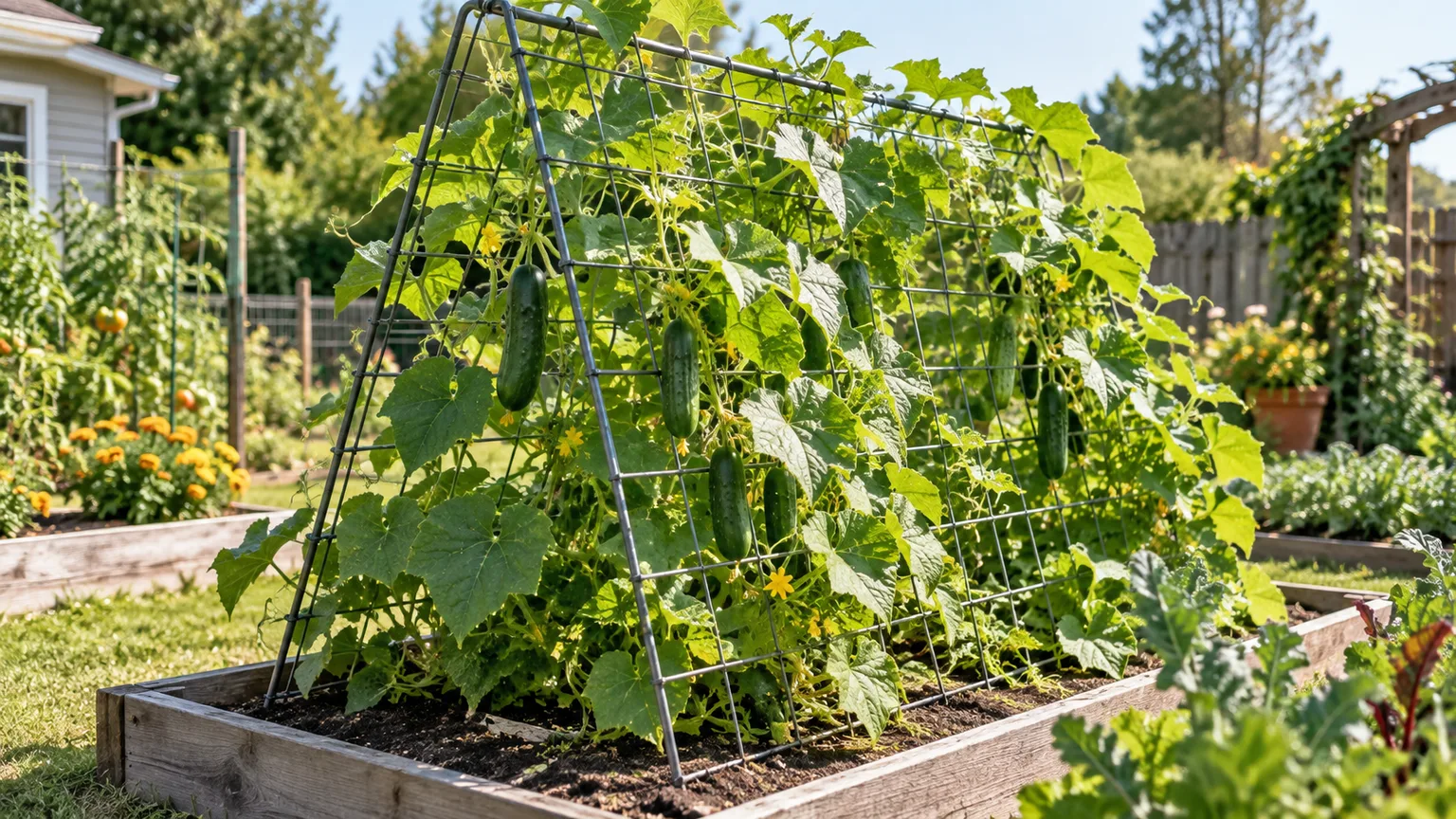
When cucumber vines run along the ground, they can occupy several feet of bed and hide fruit under overlapping leaves. Training a vining variety upward saves bed space, keeps developing cucumbers cleaner, and puts more of the crop where you can find it at harvest. A support also improves access around a dense plant, although it cannot compensate for poor light, dry soil, or a cucumber variety that is not suited to your season.
You can grow cucumbers vertically on a freestanding trellis, in a large container with its own support, or over a pergola. The right choice depends on the site you already have: use a ground trellis for a vegetable bed, a container system when you have a sunny patio but no soil, and a pergola only when its canopy gets enough light and the structure can safely accommodate a vigorous vine. Set up the support before planting; adding it later risks damaging roots and makes it harder to guide the first stems.
Pick the Right Cucumber and Support Plan
Most cucumber varieties send out long, flexible stems and tendrils that can be trained onto a mesh, net, or other narrow support. These vining types are the easiest to grow vertically. Before buying seed, check the packet for growth habit, whether the variety is for outdoor or protected growing, expected fruit size, disease resistance, and pollination requirements. A compact or bush cucumber can be a better fit for a small pot, but it usually benefits from a short cage or stake to keep fruit off the soil rather than a tall trellis.
Match the plant’s mature size to your available support. A long-fruited slicer needs space for its fruit to hang freely, while smaller snack cucumbers are easier to fit along a narrow panel or compact patio trellis. For a short outdoor season, prioritize a variety described as suitable for outdoor growing in your region; greenhouse types may depend on more consistent warmth or different pollination conditions. The RHS cucumber guide distinguishes outdoor and greenhouse varieties, and notes that cucumbers can be trained up supports in beds, containers, and small greenhouses.
Vining, Bush, and Pollination Types
Do not assume every cucumber needs the same height or every flower needs a bee. Vining plants are the natural candidates for vertical growth, while bush types stay more compact and may not reach a high support. Some varieties set fruit without pollination; others need pollen transferred to female flowers. Read the seed packet, especially if you plan to grow in a greenhouse, where doors, vents, or insect netting can limit pollinator access. The RHS advises checking the variety because some greenhouse cucumbers are all-female and can produce bitter fruit if pollinated, while outdoor types typically need pollination and should retain their male flowers.
This distinction also affects your expectations. A climbing habit describes how the plant grows; it does not guarantee that flowers will set fruit or that every fruit will mature normally. If your trellised vine produces healthy leaves but no cucumbers, check its variety and flower type before changing fertilizer or cutting off blooms. Avoid removing male flowers unless the variety guidance specifically calls for it.
Choose and Install a Strong Support Before Planting
A useful cucumber support is tall enough for the chosen vine, anchored so it will not sway or tip, and open enough for tendrils and fingers to pass through. For most backyard setups, a 5- to 7-foot support gives a vining cucumber room to climb while keeping fruit within reach. Taller canes can work when the vine and gardener can be managed safely, but a structure is not automatically stronger just because it is taller. A mature wet vine catches wind, and its fruit adds load, so secure the frame at multiple points and push stakes deeply enough to resist movement.
Place the support at planting time, not after a vine has spread across the bed. The RHS recommends putting up supports when planting so the tendrils have something to grab, and its vertical-vegetable advice describes sturdy poles, wigwams, double rows of canes, obelisks, and existing pergolas as options. Check that a fence or wall can take the load before fastening a trellis to it; do not rely on a loose panel leaning against a fence.
Match the Mesh, Height, and Anchors to the Site
Cucumber tendrils wrap around thin pieces, so a surface with repeated narrow crossbars is easier for a vine to use than a smooth, thick pole. Garden netting, welded wire, cattle panels, and a wood-and-twine grid can all work when firmly attached. Choose openings large enough to reach through for harvesting but close enough that a tendril can catch an edge. Avoid sharp cut wire ends at hand and stem height, and cap or turn them away from the vine.
Plan access as carefully as height. A flat trellis needs a clear strip behind it or a reachable front face; an A-frame gives you two growing faces and a center aisle; a pergola puts fruit overhead and may require a stable step stool for picking. The RHS vertical veg guide recommends matching the support to the crop and tying stems gently, particularly cucurbit stems that can be constricted by tight string. Check joints and anchors after windy weather and again as vines become heavy.
1. Grow Cucumbers on a Freestanding Garden Trellis
A freestanding trellis is the most flexible choice for an in-ground vegetable bed. It can be a flat panel, a cattle-panel arch between two beds, or an A-frame made from sturdy stakes with netting stretched across each side. The frame should not wobble when you press it lightly before planting. If your soil is loose or your garden is windy, add cross-bracing or stake the legs separately instead of depending on the plant bed to hold a light frame upright.
Use an A-frame if you want to grow on both sides and keep a path beneath or between the panels. A flat trellis is easier to inspect from one side and can sit along the north edge of a bed, where it is less likely to shade shorter crops in the Northern Hemisphere. In either case, orient it so the plant receives the sun its variety needs and air can move through the foliage. A trellis may reduce direct soil contact and make fruit easier to pick; it will not eliminate mildew, beetles, or other garden problems.
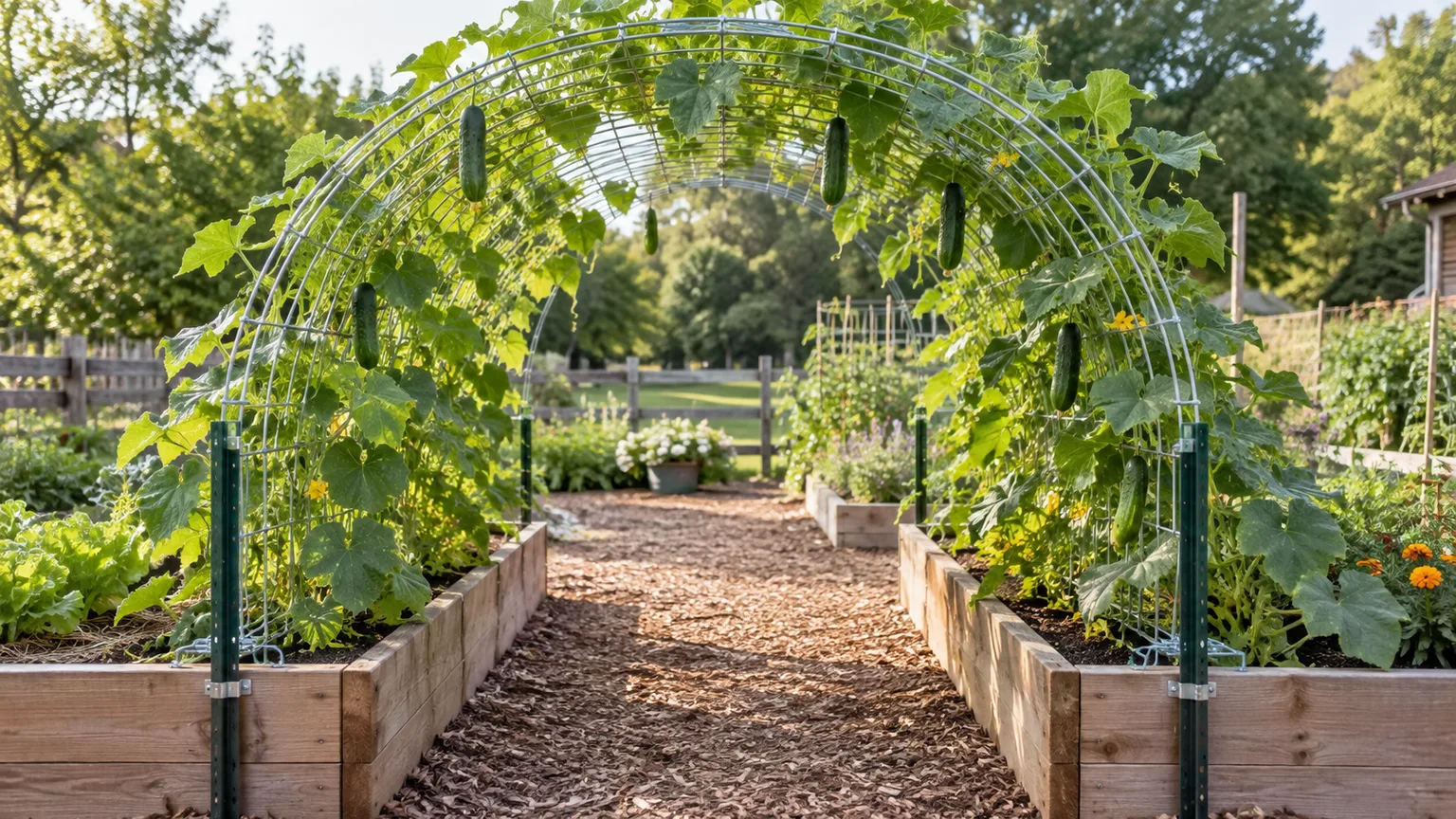
Build an A-Frame or Use a Panel
For a simple A-frame, set two rows of strong stakes opposite each other, angle the tops together, and fasten a horizontal crossbar along the ridge. Attach netting or mesh to both sloping faces and anchor the lower corners so wind cannot billow the net. If you are using a rigid cattle panel, form a broad arch only when it is designed to bend safely; fix its ends to solid stakes or bed frames that can resist the outward pull. A panel bowing outward under load needs additional support before vines cover it.
Avoid treating thin decorative tomato cages as a full-height cucumber trellis. A small cage may suit a bush cucumber, but a vigorous vining plant can grow past it and pull it over. Use a cage only if it is tall, firmly anchored, and has openings that let you reach fruit; otherwise it creates a leafy knot that is harder to maintain than a simple mesh panel.
Plant and Train Vines Along the Trellis
Plant one seedling at the base of the trellis, following the spacing on its packet. As a practical starting range, GrowVeg recommends spacing supported cucumber plants about 12–18 inches apart when the vines are trained and maintained; give them more room if the variety is particularly vigorous or your area is humid and still. If you are sowing directly, thin to the strongest seedling rather than leaving a cluster to compete at one post. Water the root ball before transplanting and avoid crushing it as you set the plant in place.
Point the young main stem toward the mesh and loosely secure it with soft garden twine if it does not find the support on its own. Do not tie the stem like a bundle: leave enough room for it to thicken, and attach ties below a leaf node so the vine cannot slip out. Tendrils will begin to wrap around bars or netting as the plant grows. Check the vine every few days during rapid growth, guide it through an open section, and remove ties that start to bite into the stem.
2. Grow Cucumbers Vertically in a Container
A container is the practical option for a balcony, paved patio, or rented yard with little planting soil. The plant still needs a warm, bright position, good drainage, and enough root volume to stay evenly moist between waterings. Choose a container with drainage holes and use fresh, free-draining potting compost rather than dense garden soil. The RHS cucumber guide recommends a pot at least about 30 centimeters (12 inches) wide and deep; a larger container gives you a wider margin against rapid drying, especially in hot or windy weather.
Grow one vining cucumber per pot unless the container is exceptionally large and the seed label supports closer planting. Put the support in place before the seedling, or assemble it around the pot without driving stakes through established roots. The RHS guidance on vegetables in containers stresses choosing the right container for the crop, while its cucumber guide notes that container plants need regular watering and feeding. A small pot may grow leaves, but constant wilting can interrupt flowering and fruit development.
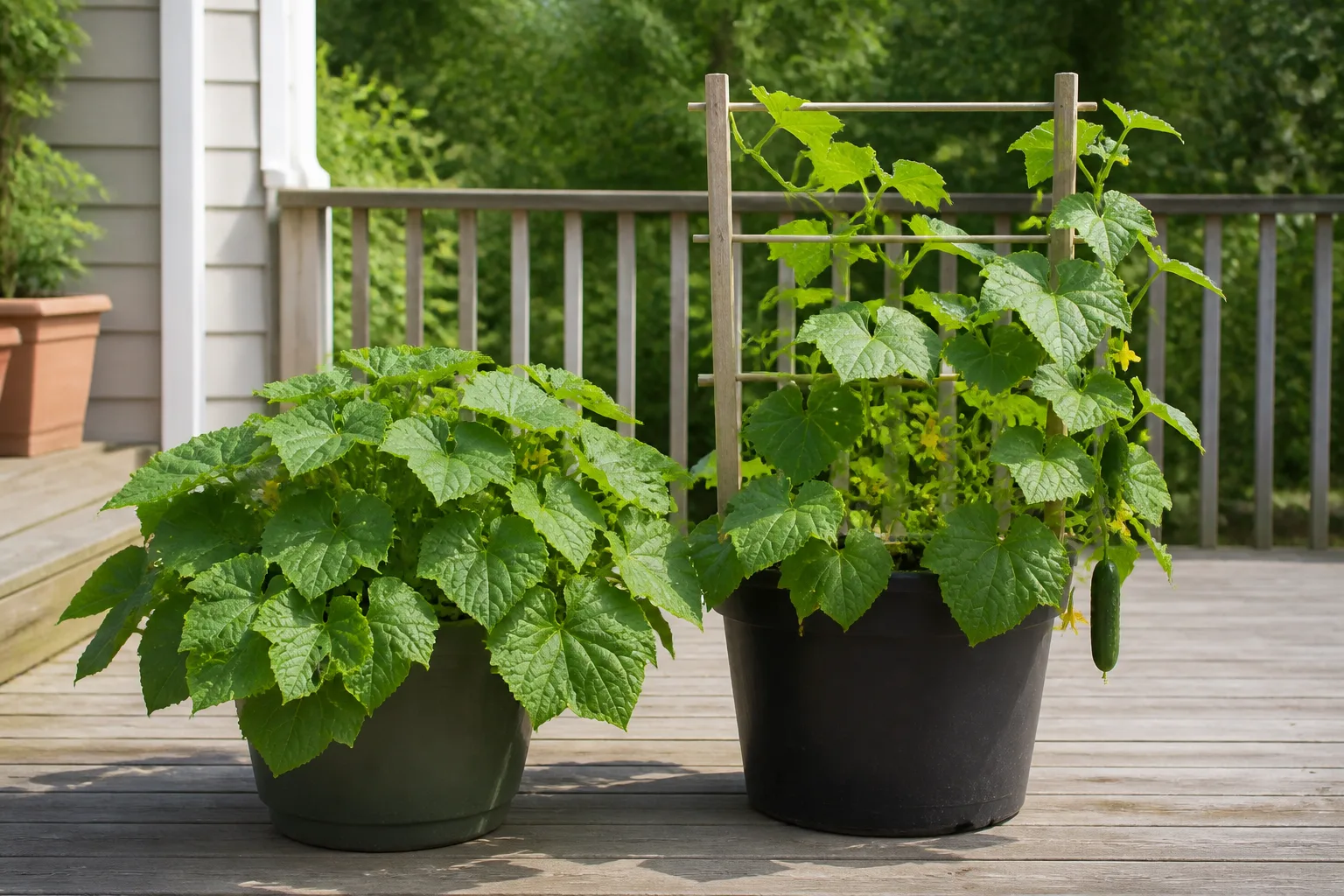
Match Pot Size, Drainage, and Trellis to the Vine
The easiest container support is a small obelisk or sturdy cage that sits inside a broad, heavy pot. A separate narrow trellis can also work if it is fixed to a wall, railing, or freestanding frame rather than balanced loosely in the compost. Choose a pot with a stable base; a tall wire structure attached to a lightweight pot can tip as leaves catch the wind. Put the container where it will grow before filling it, because wet compost and a mature plant make it difficult to move.
Use a quality container mix that holds moisture but drains freely, and leave space at the rim for watering. Do not add stones to the bottom as a substitute for drainage holes; make sure excess water can escape. If the pot sits on a saucer, empty standing water after it drains so roots do not remain waterlogged. Mulch the surface lightly if the mix dries quickly, leaving a small gap around the stem to reduce the chance of rot.
Keep a Small-Space Container Stable and Evenly Moist
Check container moisture with a finger a short distance below the surface, not just by looking at the top. Water thoroughly when the mix begins to dry, allowing excess to run out of the holes, then check again during hot spells; a cucumber in a sun-warmed patio pot may need water daily. Do not follow a rigid calendar if weather and pot size change the drying rate. Uneven moisture can stress the plant, while saturated compost deprives roots of air.
Containers also exhaust nutrients faster than open ground. Start with fresh potting mix and follow its feeding directions; when the plant is flowering and setting fruit, use a fertilizer intended for vegetables at its label rate rather than adding an extra dose “for yield.” The RHS cucumber guide recommends regular feeding for container-grown plants and steady moisture, especially while fruit forms. If a pot dries out by midday, increase the container size, reduce reflected heat, or use a drip line rather than trying to fix the problem with frequent shallow splashes.
3. Train Cucumbers Over a Pergola
A sunny pergola can support cucumbers while turning an unused overhead plane into growing space. This setup makes sense when planting beds or containers can sit at the posts and the top receives enough direct light for healthy growth. A pergola shaded by a building or dense tree canopy may be a poor growing site even if its beams look convenient. Before planting, consider whether leaf cover will shade a patio you use, block a path, or create a damp ceiling of foliage that is difficult to reach and prune.
Inspect the structure rather than assuming it can carry a crop. A cucumber vine is lighter than a mature squash, but multiple wet vines, foliage, wind, ties, and fruit all add load. Use a sound pergola with solid posts and joints, and attach garden mesh, netting, or horizontal strings where tendrils can catch. Do not drill or screw into a rented or delicate structure without approval, and keep plant ties away from electrical fixtures, gutters, and moving louver hardware.
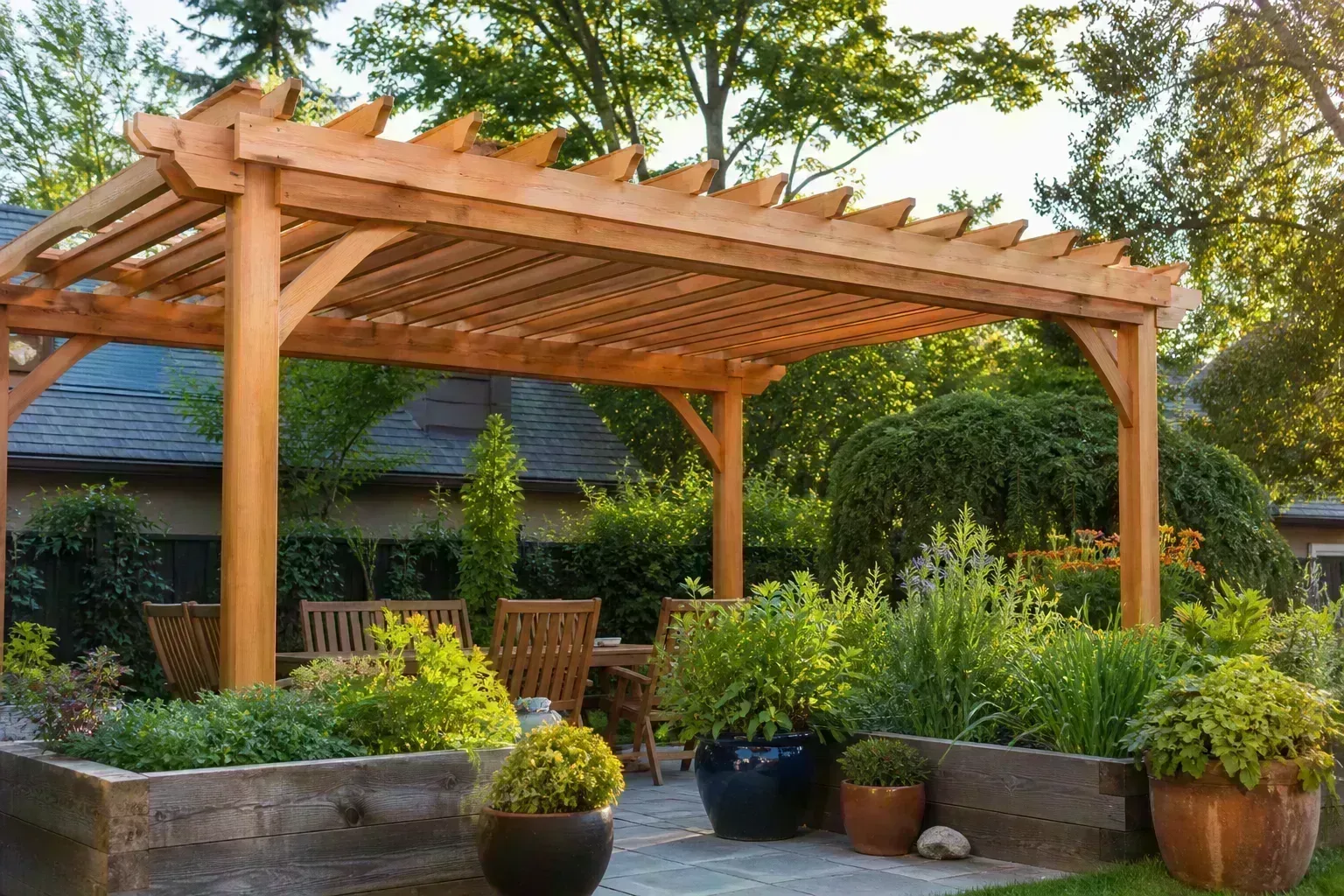
Create Reachable Routes Across the Canopy
Plant one or more cucumbers near separate posts, with spacing determined by their variety and the size of the canopy. Guide each main stem up a post using loose ties or a vertical line of netting; do not expect the vine to climb bare, wide timber on its own. Once the stem reaches the canopy, route it along a crossbeam or a horizontal string that has been fixed securely beforehand. Keep the path of each vine visible so you can tell where a stem starts and find all its fruit later.
Train vines across the edge or a section of the roof instead of covering every beam at once. Leave clear strips for light and airflow, and keep growth away from doors, lights, and other areas where you need access. A few well-placed vines can provide a leafy canopy; overfilling the structure makes the fruit harder to locate and the foliage slower to dry after rain. Cut or redirect an errant shoot while it is still flexible, rather than pulling it across the pergola after its tendrils have anchored.
Protect the Fruit and Keep the Structure Usable
As cucumbers hang beneath the canopy, inspect them from below and harvest before they overgrow. Long fruits need clear space to lengthen; redirect a vine if a cucumber is pressed against a beam or trapped against a wall. Standard cucumber fruit usually hangs without a sling, but a support net or soft sling can help with an unusually heavy, long-fruited variety if its stem is being strained. Do not use tight plastic ties around the fruit or fruit stem.
Keep the pergola’s original job in view. If it shades an outdoor seating area, a thick layer of leaves can make that area darker and more humid. Prune only enough to separate crossing vines, remove damaged growth, and keep the route through the structure open; hard cutting may remove productive leaves or flowers. The RHS vertical-vegetable guide also identifies an existing pergola as a possible support but emphasizes choosing a sturdy framework and tying cucurbit stems gently.
Train Vines Gently as They Grow
Young cucumber stems bend more easily than mature ones. Once or twice a week during fast growth, lift a loose section and position it in front of a mesh opening or along its string, then let tendrils do the finer gripping. If the plant needs a tie, use a soft, flexible material and make a loose figure-eight around the support and stem; the gap between the two loops keeps the stem from rubbing on the frame. Check each tie as the vine thickens and remove or loosen any that press into it.
Do not wind the entire stem tightly around a pole, twist the vine against its natural direction, or pull a tendril off the support just to make the plant look tidy. A tendril that has attached elsewhere can be left in place if it is not constricting anything. For a stem that begins to lean away from the trellis, use a second loose tie lower down and guide the new tip toward the nearest opening. If the vine has passed the top, you can drape it back over if the bend is broad and gradual, or pinch the growing tip if there is no safe room; avoid forcing a sharp fold.
The RHS advisor’s guidance on creative vegetable supports recommends tying climbing vegetables as they grow and notes that thin jute or similar twine is preferable to a tight tie on easily constricted cucurbit stems. That advice applies to support systems too: inspect attachment points at the canopy and top rail, not just at the base. A temporary tie is helpful only if it stays loose as the plant expands.
Water, Feed, Pollinate, and Harvest Consistently
Vertical growing changes where the plant sits, not its basic needs. Cucumbers want warmth, sun, fertile soil or potting mix, and an even supply of moisture. Water at the base so the roots get a deep drink and the leaves dry quickly; mulch the soil in a bed to slow evaporation, but keep mulch off the stem. A container will dry faster than a bed, and leafy growth on a pergola may hide a pot that needs watering, so check the root zone rather than judging from the leaves alone.
Feed according to the variety and product label, especially for container plants where nutrients are limited. Too much nitrogen can produce abundant leaves without matching fruit production, while a depleted mix can reduce vigor. Do not correct a weak plant by applying fertilizer blindly: first check whether it has enough sun, whether the soil is wet or dry at root level, and whether the roots have room. The GrowVeg cucumber growing masterclass recommends steady watering, mulching to reduce evaporation, and starting regular feeding when flowering begins; its practical advice reinforces the value of stable conditions over one-time boosts.
Pollination depends on the cultivar. Follow the packet’s instructions about whether flowers require pollination, and do not assume that growing on a pergola or beside a wall changes that requirement. If an outdoor variety needs pollinators, keep flowers accessible to bees; netting installed to exclude pests may need to be opened when flowers appear, unless you can hand-pollinate. A parthenocarpic variety can set fruit without pollination, which can be useful in protected spaces, but it must be labeled as such.
Check vines every couple of days once fruit begins to form. Pick cucumbers when they reach the size and color described for that variety, and cut the stem with clean scissors or pruners rather than twisting or tugging. Fruit tucked behind leaves can grow surprisingly large before you see it, so inspect the back of a flat trellis and look up under pergola foliage. Regular picking removes mature fruit before it becomes oversized and helps you notice fresh flowers, damage, or vines that have come loose.
Troubleshoot Common Vertical-Growing Problems
When a vertical cucumber is struggling, check the support and root conditions separately. A plant may look wilted because its pot is dry, because it is waterlogged, because a stem tie is tight, or because it is under heat stress. The support itself can also make the canopy too dense if many shoots are crowded into a small area. Make one change at a time and check the plant again over the next few days rather than changing watering, feeding, pruning, and pollination at once.
Vines Won’t Cling, Lean, or Have a Broken Stem
If the vine will not climb, look first at the support surface. Thick smooth poles offer little for tendrils to grab; add mesh, netting, or a horizontal string grid and loosely tie the main stem until it reaches it. Tendrils do not pull a heavy vine upright if the whole frame is unstable, so brace the trellis or secure the pot before adding more growth. Do not wait until fruit load makes the support lean visibly.
If a young stem is bent or partly split but still attached, bring it gently against the support and loosely secure it above and below the damaged area without crushing it. Keep the plant watered and avoid disturbing the stem for several days. If the main stem is fully severed, remove the detached piece cleanly; if a strong side shoot remains, train it as the replacement leader. A bush type may branch naturally, so do not cut the whole plant back merely because it does not behave like a single tall vine.
Fruit Is Hidden, Misshapen, or Leaves Develop Mildew
Hidden fruit usually means you need a better harvest route, not a more aggressive pruning plan. Tie or redirect a crossing vine, space plants more widely next season, and check the back and underside of the foliage regularly. Misshapen or bitter fruit can have several causes, including cultivar traits, inconsistent water, heat or cool stress, or pollination differences; first compare the fruit with the variety’s expected shape and check whether soil moisture has swung between dry and saturated. Do not assume a lack of fertilizer is the problem.
If leaves develop powdery mildew, remove badly affected material with clean pruners and improve airflow by separating crowded stems. Water the root zone instead of wetting leaves, and avoid removing so many healthy leaves that fruits become exposed to harsh sun. A trellis makes inspection easier but does not guarantee disease-free plants. Use disease-resistant varieties when available, clean tools between plants when disease is suspected, and follow local extension guidance if symptoms spread quickly or do not match familiar mildew.
Conclusion
To grow cucumbers vertically, choose a vining variety and install a sturdy support before planting. Use a freestanding trellis for a garden bed, a large stable pot with its own trellis for a patio, or a sunny, sound pergola when overhead growing fits the space. Guide young stems loosely, keep the root zone evenly moist, and check ties and fruit often. The best setup is the one you can reach, anchor, water, and harvest safely throughout the season.