9 Types of Iris for a Colorful Flower Garden
Find the right iris for a sunny border, woodland edge, or damp pond margin. Learn which types need exposed rhizomes, moist soil, or bulbs.
Iris is not one care recipe in nine colors. Some garden irises grow from exposed rhizomes in a sunny, sharply drained border; others are clump-forming plants that flower best with steady moisture, and Dutch iris grows from a bulb. Matching the type to the bed is what turns a brief burst of bloom into a plant that settles in and returns.
The American Iris Society groups irises broadly as bearded, beardless, and aril types, while horticultural classifications also distinguish bulb-grown irises. For an everyday garden, the most useful first questions are simpler: Does the spot stay wet or dry? How much sun does it get? Is the plant a bulb, a creeping rhizome, or a clumping perennial? The American Iris Society’s classification guide and the Royal Horticultural Society’s iris guide both make clear that “iris” covers plants with quite different habits. The practical grouping used in BBC Gardeners’ World’s guide to growing irises also separates border, bulb, and moisture-loving types.
Start With the Growing Habit, Not the Flower Color
The most recognizable distinction is the flower. Bearded irises have fuzzy rows of hairs—the beard—on the lower petals, called falls. In beardless irises, those falls lack the fuzzy line; crested irises have a raised ridge or comb instead. Flower shape helps you identify a plant, but the underground structure is a better clue to where it belongs: most popular bearded types have thick rhizomes that should not be buried deeply, while Dutch iris is sold as a bulb and several beardless groups form dense clumps.
A second useful distinction is moisture. Tall and dwarf bearded irises usually fail in a low, waterlogged spot, even if the flowerbed looks fertile. Japanese and Louisiana irises are much better candidates for soil that stays consistently moist, and Siberian irises bridge the gap with a preference for dependable moisture during active growth but good drainage overall. These are broad group tendencies, not a guarantee for every cultivar. Before ordering, check the botanical or group name, hardiness information, mature height, bloom period, and planting depth on the nursery label.
1. Tall Bearded Iris: A Sunny Border Classic
Tall bearded iris is the showpiece many gardeners picture first: large flowers held on branching stalks above sword-shaped leaves, with a soft beard at the base of each fall. Cultivars vary widely in color, fragrance, height, and bloom time, but the group’s defining feature is the beard rather than a particular shade. The American Iris Society’s classification places tall bearded plants above roughly 27.5 inches; the exact size on a plant label is more useful for spacing a specific cultivar.
Give this type a sunny, open bed where water drains readily. Its fleshy rhizome spreads at the soil surface, so plant it with roots fanned downward and the upper face of the rhizome at or just above the soil line in ordinary garden conditions. Heavy clay, a thick layer of mulch over the rhizome, or a depression that stays soggy can suppress flowering or encourage decay. The Society recommends at least a half-day of direct sun for bearded irises and stresses drainage in its planting guidance.
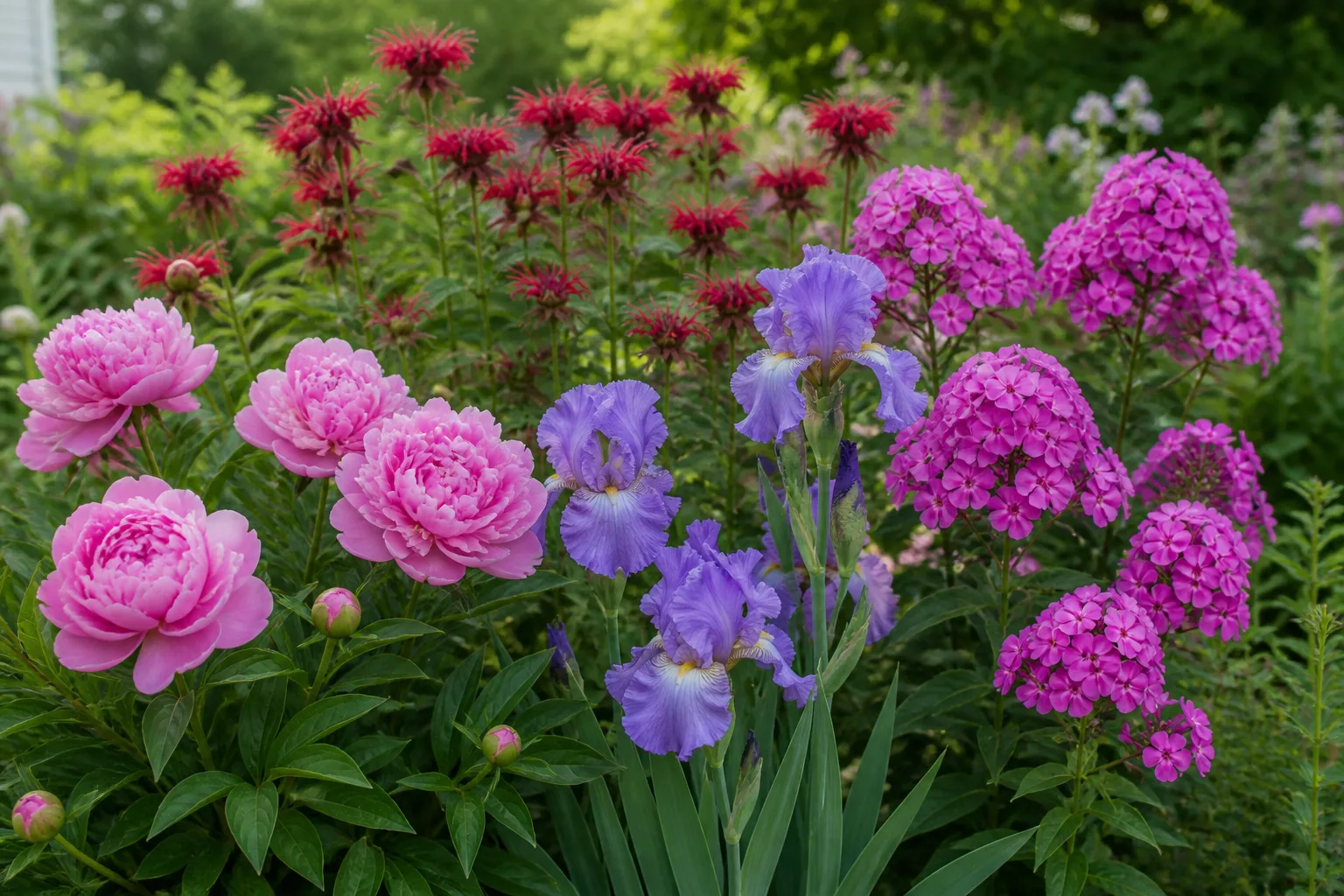
Tall bearded irises suit the middle or back of a perennial border, where their flowers rise above lower foliage. They are also useful as cut flowers, but their stalks can need support in exposed windy gardens. Leave the leaves after bloom so the plant can replenish its rhizome; cut away only dead or badly damaged foliage. If a mature clump produces leaves but few flowers, first check sun, crowding, planting depth, and drainage before adding fertilizer.
2. Dwarf Bearded Iris: Early Color at the Front of a Bed
Dwarf bearded irises offer the same fuzzy beard and surface-growing rhizome in a compact frame. The smallest miniature dwarf cultivars reach about eight inches or less; standard dwarf bearded types are usually around eight to sixteen inches tall. They often flower earlier than tall bearded cultivars, so they can bring the first bearded-iris color to a border, rock garden, raised bed, or pot with very free-draining mix.
Their small size does not mean they want a shady, damp site. Give dwarf bearded varieties sun and drainage just as you would a tall bearded iris, then place them where larger perennials will not bury them in summer. A dense groundcover can shade the rhizomes and leaves even when the bed technically receives several hours of sun. In a container, use a pot with generous drainage holes and avoid letting a saucer hold rainwater against the roots.
Choose dwarf cultivars when you want an edging plant or a compact early-season focal point, not when you need a wet-soil iris. Let the cultivar name and the grower’s local-zone guidance steer the final choice: dwarf groups include many hybrids, and neither height nor flower date is identical across every selection. The American Iris Society’s classifications distinguish miniature dwarf plants up to eight inches from standard dwarfs that can reach sixteen inches. Because the fans can multiply into a tight mat, inspect the center of a clump over time and divide only when crowding or declining bloom makes it worthwhile.
3. Dwarf Crested Iris: A Woodland Groundcover
Dwarf crested iris (Iris cristata) is a very different answer to a shaded garden. This low-growing eastern North American species has delicate blue, lavender, or white flowers marked with yellow and a small raised crest rather than a fuzzy beard. It spreads through slender rhizomes into a colony, making it useful at a woodland edge, beneath high deciduous trees, or beside a shaded path where tall sun-loving irises would struggle.
Give it bright or dappled shade and soil that holds some moisture but does not remain swampy. Leaf litter and humus help recreate a woodland floor, but a heavy layer pressed over the plant can smother the short foliage. It may tolerate more sun where the soil stays cooler and moist, yet hot afternoon exposure is a poor default in warm climates. Local native-plant nurseries and extension references are especially useful for matching the species to your region.
This is a good choice when the challenge is shade, not standing water. If a bed is wet because it lies beside a stream or receives runoff, select a species documented for those conditions instead. Purchase nursery-propagated plants; do not dig wild colonies, which can damage local populations and the habitat around them. Once established, a colony can fill a small shady area, but it will not provide the towering cut-flower stalks of a bearded cultivar.
4. Siberian Iris: Graceful Foliage for Moist Borders
Siberian iris (Iris sibirica and related garden hybrids) is a beardless, clump-forming iris with narrow, upright foliage and elegant flowers in blue, violet, purple, and white. Its grassy leaves remain an attractive vertical accent after bloom, so the plant can contribute structure longer than a flower-only border choice. Many cultivars reach about two to four feet, though nursery labels give the best mature-size estimate for the variety in hand.
Plant Siberian irises in sun or light shade, with rich soil that stays evenly moist through spring and flowering. They can tolerate drier conditions after establishment better than Japanese irises, but a dry, hot border may reduce vigor and bloom. A pond margin, rain garden that drains between storms, or consistently moist perennial bed can suit them; permanent stagnant water is not a safe assumption for every cultivar. The RHS recommends dividing congested Siberian clumps when the center flowers poorly, rather than forcing a fixed division schedule.
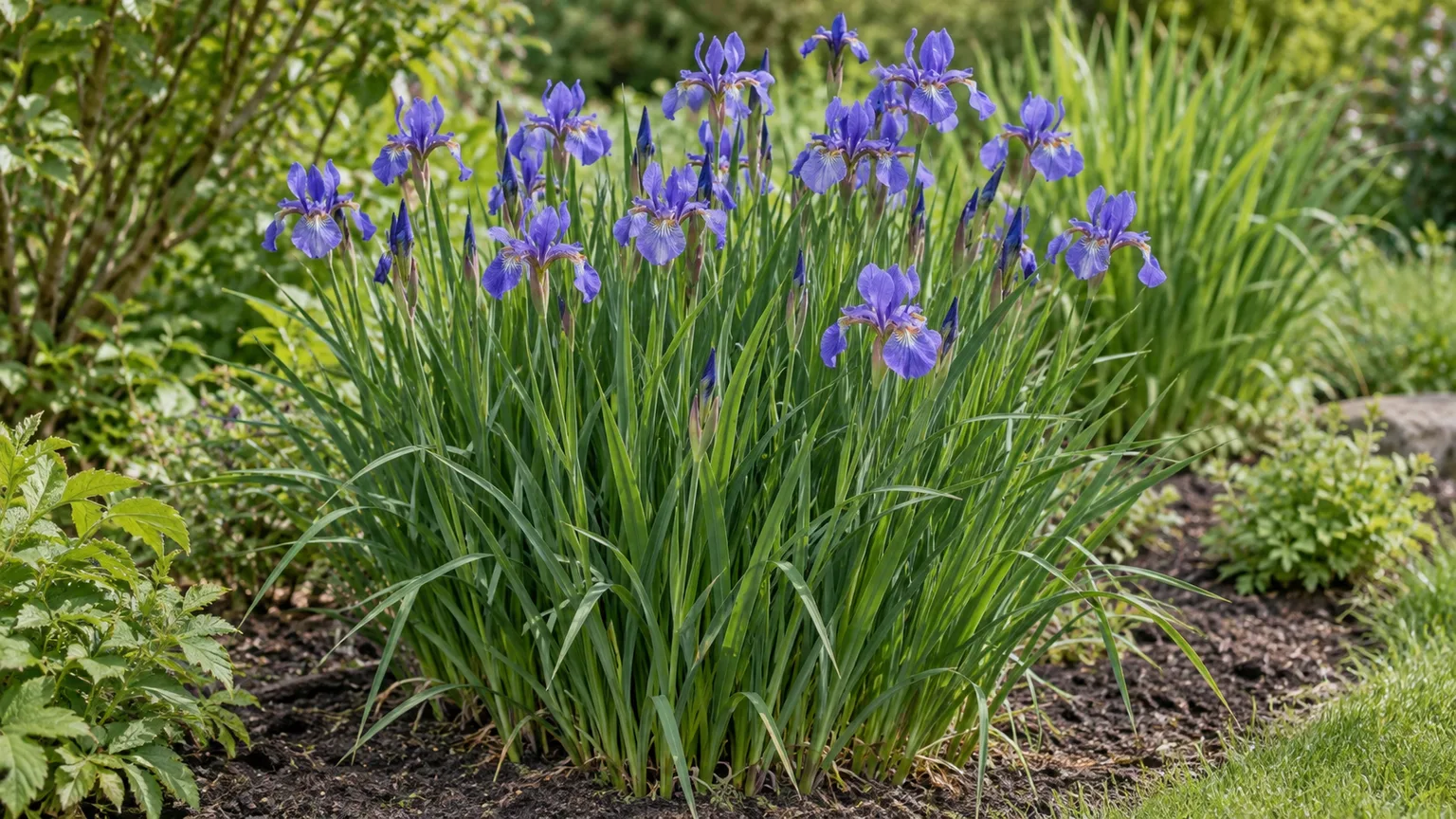
Use Siberian iris where you want a softer, upright texture beside daylilies, grasses, or other moisture-tolerant perennials. Its flower shape lacks the beard, and its foliage forms a clump rather than a spreading mat of fleshy rhizomes at the surface. Give newly planted divisions regular moisture while roots establish, then watch the soil through dry spells. If a clump becomes hollow in the center or flowers decline despite suitable conditions, divide a healthy outer section and replant it at the original depth.
5. Japanese Iris: Dramatic Blooms for Damp Soil
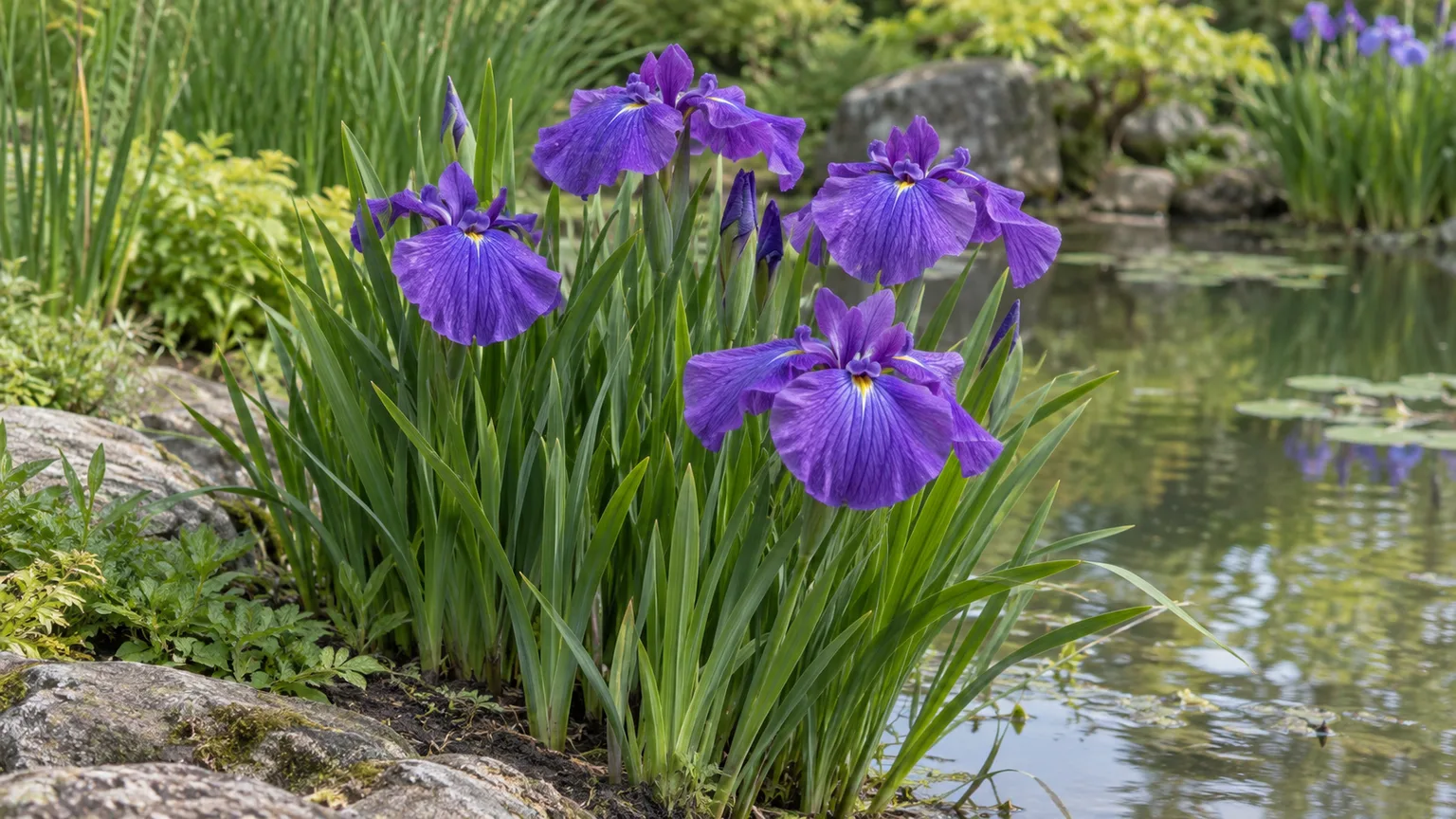
Japanese iris (Iris ensata) is prized for broad, flat flowers that can be exceptionally large and intricate. The leaves are upright and sword-like, and flower stalks may rise several feet, making a clump visible from across a water garden or border. It typically blooms later than many bearded types, helping carry the iris season toward summer. Color and form vary by cultivar, so check the label rather than assuming every Japanese iris is a blue pond plant.
Moisture is the key: Japanese iris wants reliably damp soil during active spring growth and flowering. A low garden bed, rain garden that stays moist, or pond edge can work if the cultivar and the site are compatible. Do not translate “likes wet soil” into “keep the rhizome submerged year-round.” Outside its growth and bloom period, the plant still needs oxygen around its roots; standing water and winter conditions vary by cultivar and climate. A dedicated tub or large container can make moisture easier to manage where the garden dries quickly, provided it has the right seasonal water routine.
Choose Japanese iris for a gardener willing to monitor moisture, not for a bed that dries hard between weekly watering visits. It appreciates sun and can tolerate some light shade, but too much shade may reduce flowers. If your water source is alkaline or the soil is strongly alkaline, consult local advice before trying to correct pH; avoid adding sulfur or acidifying products by guesswork. A soil test and a cultivar suited to your region are safer than applying amendments simply because a label says “acid-loving.”
6. Louisiana Iris: Color for Rain Gardens and Water Edges
“Louisiana iris” is a garden group built around several native southern U.S. species, including Iris fulva, I. brevicaulis, I. giganticaerulea, I. hexagona, and I. nelsonii. Their hybrids come in a wide range of saturated colors and can make a vivid display in a rain garden, wet border, or water garden. The name does not describe one uniform height or hardiness: hybrids differ, and some are better suited to warmer climates than others.
Most Louisiana irises need consistently moist to wet soil during active growth. Their natural Gulf Coast heritage makes them useful where a conventional bearded iris would rot, but garden performance still depends on cultivar, winter conditions, and the length of a dry season. Ask a regional iris grower or extension service which selections are dependable locally, especially beyond the Gulf South. Plant them where moisture is available without assuming every cultivar can stand in deep water continuously.
They are a strong option when the garden already has a damp site and you want colorful, upright flowers rather than a plant that merely tolerates occasional rain. Keep their foliage intact after flowering while it remains green, and remove seed stalks if you do not want seedlings. Like other moisture-loving groups, they should not be forced into a dry sunny border simply because their flowers look like those of bearded irises.
7. Dutch Iris: A Bulb for Spring Displays and Cutting Gardens
Dutch iris (Iris × hollandica) is grown from a true bulb rather than the thick rhizome of a bearded iris. The slender stalks carry refined flowers in shades such as blue, violet, white, and yellow, often with a contrasting signal on the falls. Gardeners value Dutch iris for spring color in a cutting bed, mixed bulb planting, or container, where the stems rise neatly among other spring flowers.
Plant the bulbs in fall according to the depth and spacing on the package, in a sunny position with soil that drains well. A bulb will rot in a waterlogged pocket, so improve the bed or choose another iris for persistent wet ground. Dutch iris is also a practical choice when a garden has space for a seasonal bulb display but not for a spreading, surface-level rhizome. The RHS iris guide lists bulb irises separately from border and wet-soil irises for good reason: their planting material and seasonal care differ.
Allow the foliage to yellow naturally after flowering instead of cutting it down while green. Leaves collect energy that supports the bulb’s next cycle. In climates where these bulbs are not reliably perennial, they may be treated as an annual display; in a suitable site, they may return and multiply. Follow local growing advice and the supplier’s guidance, because winter wetness, summer dormancy, and climate all affect how dependable they are from year to year.
8. Yellow Flag Iris: Beautiful, but a Risk Near Natural Water
Yellow flag iris (Iris pseudacorus) is a tall European and western Asian species with bright yellow flowers and an ability to grow in wet ground. Its vigorous rhizomes and seed production can let it form dense stands, crowding native wetland vegetation and altering shorelines. A peer-reviewed study documents yellow flag as a non-native invasive wetland plant in North America that can exclude native vegetation and form extensive stands (Invasive Plant Science and Management). Since local status and management rules vary by jurisdiction, this is not a carefree pond plant.
Before buying, moving, or sharing yellow flag, check the current invasive-plant list for your state, province, or country. Local rules and ecological risk are not uniform, and a plant’s legal status can differ across borders. Do not dump rhizomes, seedheads, or garden waste into a ditch, stream, pond, or natural area. If you already have it beside natural water, ask your local conservation or extension authority about safe removal methods; cutting it casually can leave viable plant fragments behind.
For a wet garden, consider a native iris suited to your region instead, such as blue flag where local references recommend it, or a regionally appropriate Louisiana iris. Native does not mean suitable everywhere, so verify the species and its expected height and moisture needs. Choosing a contained ornamental cultivar does not automatically eliminate risk when the species itself can spread into connected waterways.
9. Regional Species Irises: Choose for Your Local Habitat
Beyond the familiar hybrid groups, hundreds of iris species grow in habitats ranging from wet meadows to dry slopes and woodlands. “Species iris” is a botanical description, not a single care category. A western mountain species such as Rocky Mountain iris (Iris missouriensis), an eastern blue flag (I. versicolor), and bamboo iris (I. confusa) differ in climate, moisture, height, and winter tolerance. The right species depends on the garden’s region and the ecological conditions it can offer.
If you want to grow a native iris, start with the state or regional native-plant society, university extension, or botanical garden rather than a generic zone chart. Ask whether the species is native to your area, whether the nursery stock is propagated rather than wild-collected, and whether it needs summer-dry soil, spring moisture, shade, or a winter chill. A native plant sold far outside its natural range may still grow in a garden, but “native” on a label is not a substitute for matching habitat and climate.
Species irises are especially rewarding when a conventional cultivar seems poorly suited to a local garden condition. They can also be harder to source and less forgiving of a mismatch than widely grown hybrids. Buy from a specialist who names the species accurately, keep its provenance, and resist transplanting plants from wild sites. A little regional research before purchase avoids turning an unusual iris into an expensive experiment.
Match an Iris to Your Garden Site
Choose the growing condition first, then narrow by flower color and height. The quick guide below points to likely candidates; the named cultivar’s label and local horticulture advice still take priority.
| Garden condition | Good starting choices | Main caution |
|---|---|---|
| Sunny, dry-to-average, well-drained border | Tall or dwarf bearded iris | Keep the rhizome near the surface; avoid persistent wetness. |
| Bright woodland edge or dappled shade | Dwarf crested iris | Protect it from hot, dry exposure and heavy mulch. |
| Moist perennial bed with seasonal drainage | Siberian iris | Water while establishing and through dry spring weather. |
| Consistently damp rain garden or pond margin | Japanese or Louisiana iris | Match the cultivar to climate; wet soil is not identical to permanent submersion. |
| Sunny bed with seasonal spring bulbs | Dutch iris | Plant bulbs in fall in soil that drains well. |
| Naturalized wetland planting | Regionally native species only | Verify local ecology and never use yellow flag as a default. |
Sun, airflow, and room to grow
Bearded irises are the clearest sun lovers: aim for at least six hours of direct light in a bed with open airflow. Heavy shade often produces foliage without a satisfying bloom display. Dwarf crested iris is the exception for a woodland setting; it can flower in partial shade where many larger irises would stretch or bloom sparsely. Siberian, Japanese, and Louisiana irises can accept some light shade, but “partial shade” should not be interpreted as a dark site beneath dense evergreen trees.
Check the mature height and spread before planting. Put tall bearded, Japanese, and taller Louisiana cultivars where their flower stalks are visible without shading shorter plants. Set dwarf irises near the front, but leave enough space to see their blooms and prevent neighboring foliage from smothering them. A breezy site helps foliage dry after rain, while a fence or shrub can protect tall flower stalks from strong wind without stealing most of the day’s sun.
Soil drainage and the right moisture pattern
Drainage is not simply “dry” or “wet.” Tall and dwarf bearded irises want water to move through the root zone and away from the exposed rhizome; Japanese and Louisiana types want dependable moisture in the season when they are growing and flowering. Siberians prefer moist, fertile soil but benefit from a site that does not stay stagnant through every season. Dutch iris bulbs need a draining bed, while dwarf crested iris likes woodland moisture with air still reaching its roots.
If you are unsure how a bed behaves, watch it after a heavy rain. Does water remain at the surface the next day? Does the soil dry to dust in a week of warm weather? A simple observation over several weather cycles is more useful than assuming the soil is “clay” or “loam” by appearance alone. Improve a site only in ways that fit the iris: a raised bed or slope helps bearded types, while a damp low spot is an asset for moisture-loving groups. Do not amend an entire bed to suit one plant before checking the drainage and local soil test.
Know Whether You Are Planting a Bulb or Rhizome
A rhizome is a horizontal stem that stores energy and produces roots, fans of leaves, and flower stalks along its length. Bearded iris rhizomes grow at or near the surface, with the roots anchored below; burying them deeply or covering them with wet mulch is a common way to reduce flowering and invite rot. Some beardless rhizomatous irises are planted at a different depth, so do not copy the bearded-iris method for every group. Follow the species or cultivar label.
A bulb is a compact underground storage organ. Dutch iris bulbs are planted at the package’s recommended depth and should not be handled like a bearded rhizome. Other bulbous irises, including early reticulated types, have still different timing and garden uses. The RHS dividing guide notes that bulb irises are not suitable for the same division routine as clump-forming or rhizomatous irises.
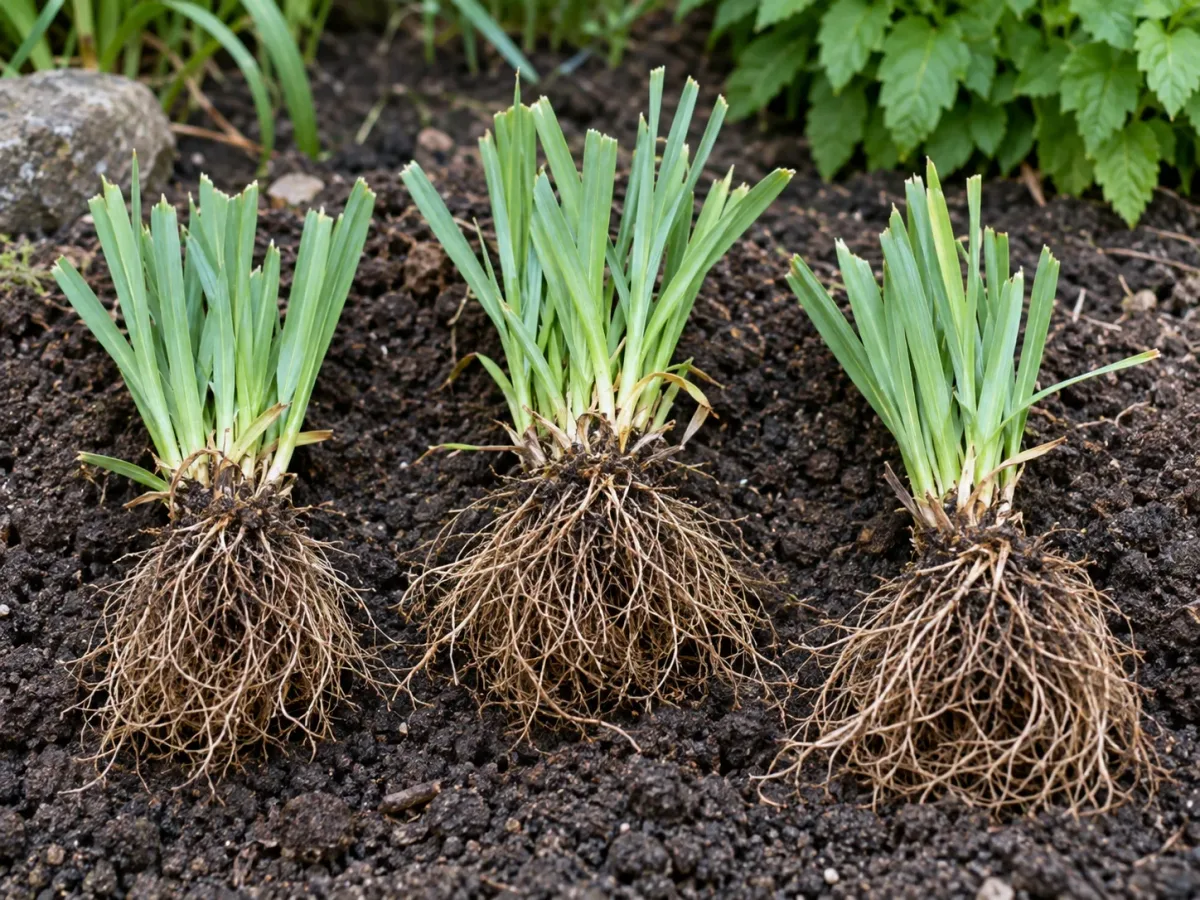
Division timing also depends on type. The RHS recommends lifting and dividing congested bearded irises every three to five years, ideally about six weeks after bloom; Siberian clumps are divided when their center flowers poorly, and other clump-forming groups have their own timing. That means the scrape’s one-size-fits-all advice to divide every iris every few years is not a reliable rule. Divide because a clump is crowded, hollowing, or declining—not simply because the calendar says it is time. Use clean tools, keep healthy outer growth, and replant each division at the depth appropriate to that iris.
Build a Bloom Sequence Instead of Expecting One Iris to Rebloom
A thoughtful mix can extend iris color beyond the peak of a single cultivar, but local spring temperatures move bloom dates by weeks. Dwarf bearded irises often open before tall bearded cultivars; many tall bearded selections flower in mid-to-late spring. Siberian, Louisiana, and Japanese groups can carry color later, with Japanese irises often among the later choices. Dutch iris timing also varies by region and planting date. These are broad seasonal patterns rather than a calendar promise.
For a sunny, well-drained border, combine dwarf and tall bearded types with perennials that hide the iris foliage only after it has finished its seasonal work. For a moist bed, sequence Siberian and later Japanese or Louisiana cultivars, but leave enough space for their full clumps. You can also select cultivars listed as reblooming, though a second flush depends on the variety, season length, and growing conditions; it is not guaranteed in every climate.
Use the breeder or nursery’s bloom classification—early, midseason, or late—when available. Gardener’s Path’s overview of iris types and BBC Gardeners’ World’s growing guide describe broad sequences, but local spring temperatures and cultivar choices shift the dates. Plant several cultivars in small repeating groups rather than scattering one of each across the bed. The repeated forms make the display easier to read, and if a bloom period is shorter than expected, a nearby companion perennial can keep the border from looking empty. Avoid cramming all types into one “iris bed” if they need contradictory moisture or soil conditions.
Avoid the Mistakes That Cost Irises Their Flowers
The first mistake is treating all irises as water plants. A gardener sees a showy iris beside a pond and assumes every iris wants soggy soil; the result can be a rotting bearded rhizome. The opposite error is planting a moisture-loving Japanese or Louisiana iris in an ordinary border that dries hard between waterings. Identify the type before choosing the bed, then water to the plant’s season and site instead of giving the whole genus the same routine.
The second mistake is planting every rhizome at the same depth. Expose or barely cover bearded rhizomes in typical conditions, but use the label’s instructions for other iris groups. Deep planting, a heavy blanket of mulch, or a low spot that stays wet can all hide the rhizome and make it harder to diagnose declining growth. Conversely, leaving newly planted roots completely dry is not a sound way to “keep the rhizome dry”; water newly planted divisions so roots establish, then maintain the drainage the type needs.
A third mistake is cutting foliage back immediately after flowering. The green leaves continue to support next year’s growth, even if the bloom stalks look finished. Remove spent stalks if you want to prevent seed formation, and tidy diseased or fully dead leaves, but keep healthy foliage until it yellows naturally or the plant enters its normal seasonal decline. Finally, resist both routine overfertilizing and routine dividing: correct sun, depth, moisture, and crowding first, then act only when the plant gives a reason.
Conclusion
The best iris for your garden is the one whose underground structure, moisture needs, and bloom timing fit the site you actually have. Tall and dwarf bearded irises bring color to sunny, drained beds; crested iris opens a woodland option; Siberian, Japanese, and Louisiana types cover different levels of moisture; Dutch iris supplies bulb-grown spring color; and regional species can serve a particular habitat. Treat yellow flag as a spread risk, not a default pond choice. Start with the soil and light, confirm the type on the label, and the flower color becomes the enjoyable final decision.