Is Coleus a Perennial or Annual? Winter Care Guide
Coleus is perennial in frost-free climates but acts like an annual in cold regions. Find your best winter plan: bring in a pot, root cuttings, or replace it.
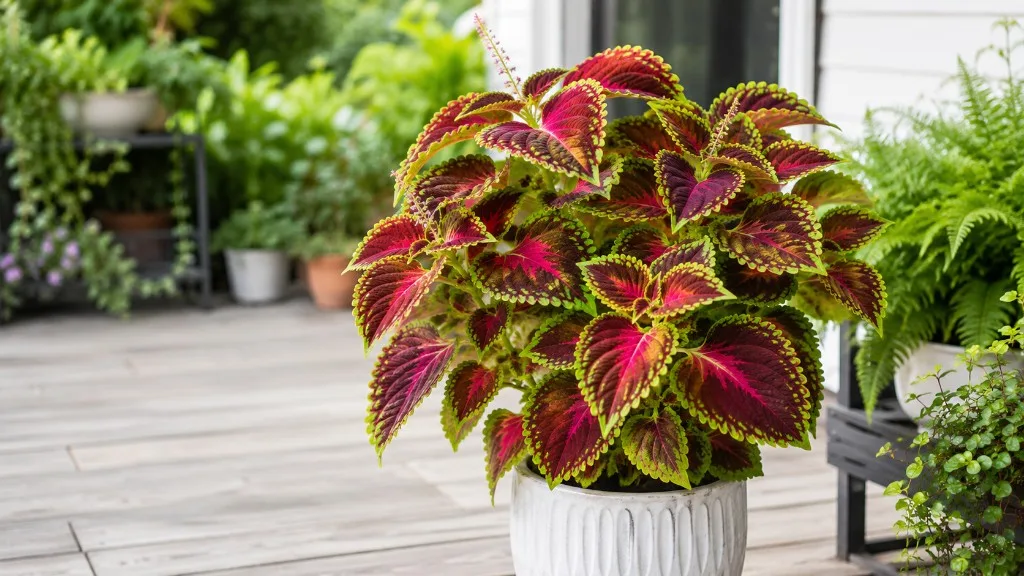
Coleus is a tender perennial by nature, but gardeners in places with cold winters usually grow it as an annual. In frost-free tropical and subtropical climates, the plant can continue growing year after year; where frost arrives, an outdoor coleus generally will not survive winter in the ground. You can keep a favorite cultivar by bringing a container indoors or rooting a few healthy stem cuttings before cold weather sets in. (North Carolina State Extension, Missouri Botanical Garden)
That difference between botanical lifespan and garden-season behavior explains why you may see coleus described as both perennial and annual. The practical question is not just what the label says, but whether your winter stays warm enough, whether you have a bright indoor spot, and whether the plant is worth saving as a whole. Here is how to make that call and protect the foliage before temperatures drop.
The short answer: a tender perennial grown as an annual in cold climates
The common garden coleus is Coleus scutellarioides, a tropical plant in the mint family. North Carolina State Extension describes it as an upright annual or herbaceous perennial and notes its tropical and subtropical Asian to northern Australian native range. Missouri Botanical Garden calls it a tropical evergreen tender perennial and lists it as winter hardy in USDA Zones 10–11. (North Carolina State Extension, Missouri Botanical Garden)
In most of North America, a gardener can enjoy coleus outdoors from late spring until cold weather but should not expect the bedded plant to return after winter. If you live in a consistently warm, frost-free climate, it may persist outside; if your region gets frost, plan on replacing it or moving a healthy specimen indoors. A plant can be perennial in the botanical sense and still be sold, planted, and discarded like an annual where it cannot survive the local winter.
Why both labels can be correct
“Annual” describes how a plant behaves in a particular growing season: it germinates, grows, and is removed or killed before the next season. “Perennial” means it can live for multiple years when its environment suits it. Coleus does not have a built-in one-season lifespan; cold is the limiting factor in temperate gardens.
That is why catalogs may call coleus an annual even when a botanical description calls it a tender perennial. In a frost-free landscape, the same plant can remain in the garden; in a garden that freezes, it behaves like a seasonal accent unless you protect it. Plant labels are describing expected use for your climate, not contradicting the plant’s biology.
The botanical name has changed in older references, too. You may see Plectranthus scutellarioides, Solenostemon scutellarioides, or Coleus blumei used as earlier names or synonyms; North Carolina State Extension notes the plant is now placed in Coleus. These names usually point to the familiar ornamental coleus, though an unfamiliar “coleus” in a catalog may be a different related species, so check the full botanical name if hardiness or care appears unusual. (North Carolina State Extension, Missouri Botanical Garden)
Where coleus can live outdoors year-round
Missouri Botanical Garden and Proven Winners list coleus as hardy in USDA Zones 10–11. Treat that as a broad starting point, not a guarantee: a sheltered urban garden may stay warmer than an exposed slope, and different cultivars can respond differently to cold. If your winter includes regular frost or freezing soil, the reliable plan is to treat outdoor coleus as a warm-season annual and save it indoors only if you want to. (Missouri Botanical Garden, Proven Winners)
Even in a warm region, a brief cold snap can damage tropical foliage. Coleus should not be left outside unprotected when frost is forecast, and a pot is more exposed to cold than garden soil because its roots sit above ground. If you are near the edge of a warm hardiness zone, grow a treasured plant in a movable container or keep backup cuttings instead of relying on a mild winter every year.
Do not confuse “comes back” with “reseeds true.” Some coleus flower and set seed, but hybrid seedlings may not match the color, leaf pattern, or shape of the parent. If you want the same cultivar again, take cuttings or keep the original plant rather than counting on volunteer seedlings.
What coleus needs during its outdoor growing season
Plant coleus after the danger of frost has passed and nights have warmed. Proven Winners advises waiting until temperatures are consistently above 60°F before planting outdoors; if a late cold spell is forecast, keep young plants in a protected place rather than putting them into chilly soil. Tender new growth can stall or suffer even when the day feels warm. (Proven Winners)
Coleus likes soil that holds some moisture while draining excess water. In a garden bed, add organic matter to improve the soil structure if needed; in a pot, use a standard quality potting mix and make sure the container has drainage holes. The plant can wilt quickly if its root ball dries in heat, but persistently waterlogged soil risks root rot.
Check moisture rather than watering by the calendar. Proven Winners suggests watering when the top one to two inches of soil feel dry, then giving more attention during hot or windy weather. Containers may need checking more often than beds because the smaller volume of mix warms and dries faster; let rainfall count, and empty water from saucers after a deep watering. (Proven Winners)
How cultivar changes sun tolerance and growth
Coleus is not one uniform plant. Cultivars range from compact mounds to broad, taller plants, and leaf colors include burgundy, pink, lime, green, cream, and patterned combinations. The mature size on the tag helps you choose a place and pot that will fit; a compact edging variety and a large-leaved container cultivar may need different spacing and pruning.
Most coleus do well in partial shade or bright filtered light, especially where afternoon sun is hot. NC State says the species grows best in part shade and can tolerate full shade, though too much shade can cause leggy growth. Some newer selections tolerate more direct sun; Proven Winners recommends morning sun with afternoon shade for strong foliage color and notes that many newer cultivars can handle full sun. Follow the cultivar label and acclimate a plant gradually before exposing it to stronger sun. (North Carolina State Extension, Proven Winners)
Use the plant’s growth as feedback. Scorched or washed-out patches on leaves suggest the light is too intense for that cultivar, while long spaces between leaves and leaning stems point toward insufficient light. A little morning sun and bright shade through the hotter part of the day is a safe starting point when the label does not specify a sun-tolerant selection.
Pinch the growing tips of young stems if you want a fuller mound. Flower spikes are normal, not a sign that the plant is dying; remove them if your goal is a tidy foliage display, or leave some if you enjoy the small blue flowers and want to observe seed. Pinching branches encourages side shoots, but avoid a severe late-season haircut that leaves a weak plant just before winter.
Can coleus grow as a houseplant all year?
Yes. Coleus can live indoors as a houseplant if it gets enough light and warmth. A bright window or a grow light can help maintain colorful growth; a dim room may keep the plant alive but often makes it stretch, lose color, and become less compact. The New York Botanical Garden’s Mertz Library guidance recommends bright light and cautions that temperatures below 55°F can cause leaves to wilt and drop. (New York Botanical Garden Mertz Library)
Keep the potting mix lightly and evenly moist while the plant is actively growing, but check before watering because indoor growth slows as days shorten. Cold glass, heating vents, and drafty doors can create abrupt temperature changes even in a warm room. A stable spot with bright light, comfortable warmth, and a pot that drains freely is usually more useful than frequent misting.
Indoor coleus can also attract pests such as aphids, spider mites, or whiteflies. Inspect the undersides of leaves and stem joints when you bring the plant inside and again over the next few weeks. Isolate it from other houseplants if you see insects, and avoid introducing a heavily infested or diseased plant to a crowded indoor collection.
When to bring a potted coleus indoors
Do not wait for a frost warning. A practical conservative trigger is to move a potted coleus inside as nighttime temperatures approach roughly 50–55°F. Epic Gardening notes that coleus becomes stressed below 50°F, while the New York Botanical Garden warns that leaves may wilt and drop below 55°F; the exact response depends on cultivar and exposure, but both recommendations leave a margin before freezing. (Epic Gardening, New York Botanical Garden Mertz Library)
Before moving the pot, remove dead leaves, look for pests, and rinse the foliage if dust or insects are present. Check the drainage holes and make sure the plant is not sitting in water inside its saucer. If the pot contains a mixed planting, decide whether it is easier to separate the coleus or save the entire arrangement; sharing a container means the other plants must also tolerate the indoor conditions.
After the move, expect an adjustment period. Some older leaves may drop as light and humidity change, but persistent wilting can signal cold damage, dry roots, or soggy mix. Keep the plant bright and warm, and change one condition at a time so you can tell whether it is recovering.
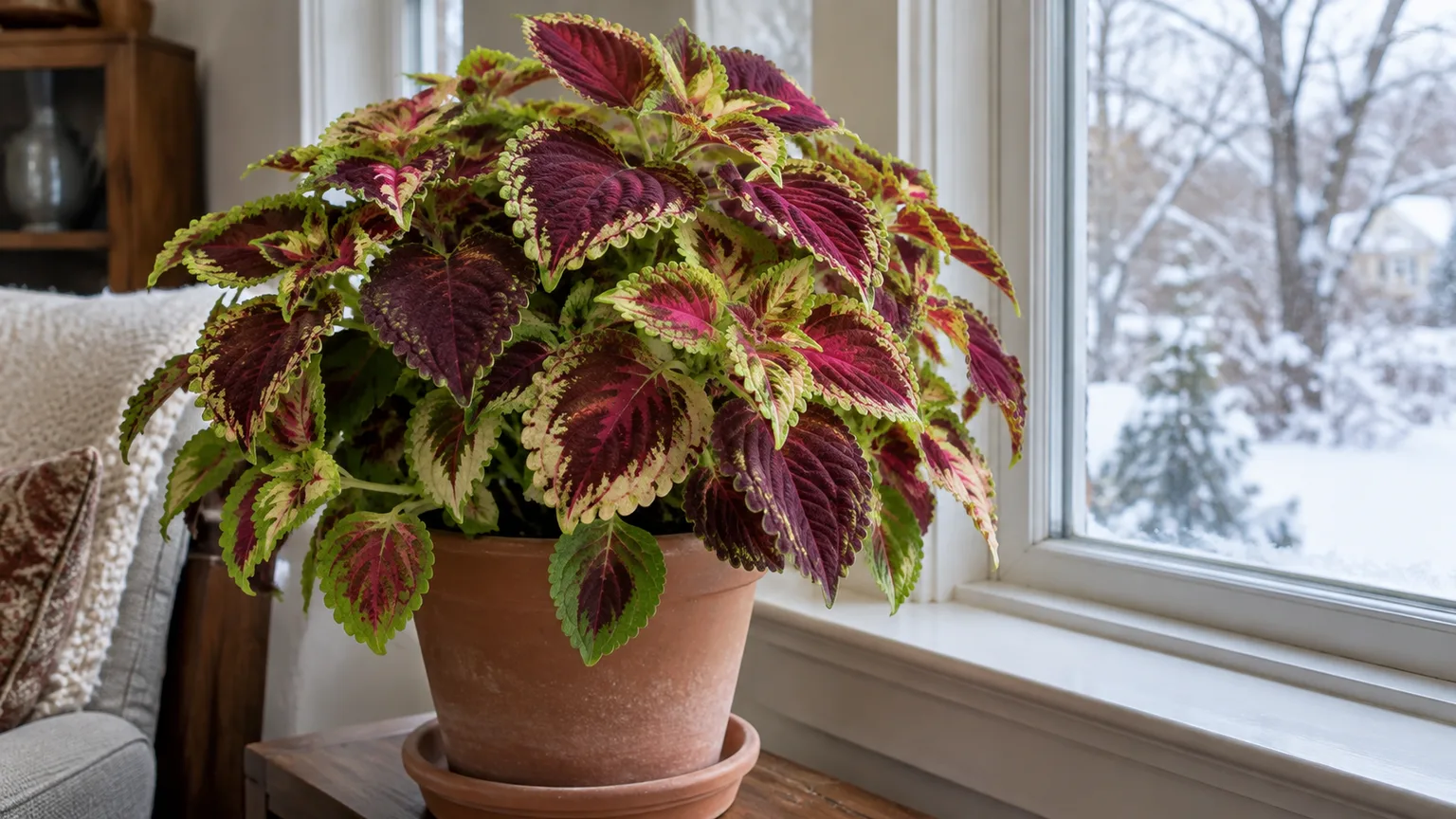
How to move a garden-grown coleus into a pot
If your coleus grows in a bed, you can try lifting it before cold arrives, but transplanting a large, established plant is more work than bringing a container indoors. Choose a healthy specimen with no signs of pests or disease, water it beforehand if the soil is dry, and dig a root ball wide enough to preserve as many roots as practical. Pot it at the same soil level in a container with drainage holes and fresh, loose potting mix.
Expect a little transplant stress because the plant loses some roots during digging and then faces a sudden change in light and airflow. Trim only badly damaged or very long stems if they make the plant difficult to handle; do not automatically cut it to the ground. Keep it out of harsh direct sun for a few days while it settles, then place it in bright light and watch the soil closely.
For an older, very large plant, taking a few cuttings may be lower-risk than digging up its entire root system. You can also pot a smaller, healthy side shoot if it has its own roots. If the garden plant has visible insects, mildew, or soft stems, do not bring it directly into contact with indoor plants; a clean cutting from healthy growth may be a better way to preserve the cultivar.
Take cuttings before cold weather
Coleus roots readily from stem cuttings, so you do not have to bring the entire outdoor plant indoors. Cuttings are especially useful when the parent plant is too large, a mixed container will not fit inside, or you want a younger plant that is easier to maintain over winter. The New York Botanical Garden specifically recommends propagation because young rooted plants often overwinter better than older plants. (New York Botanical Garden Mertz Library, North Carolina State Extension)
Take cuttings while the parent still looks healthy, before cold nights or frost damage it. Choose firm, nonflowering stems without spots, insects, or limp new growth. The cutting does not need to be large: a few inches with at least one or two nodes is usually enough, and you can take several from different parts of the plant rather than stripping a single stem bare.
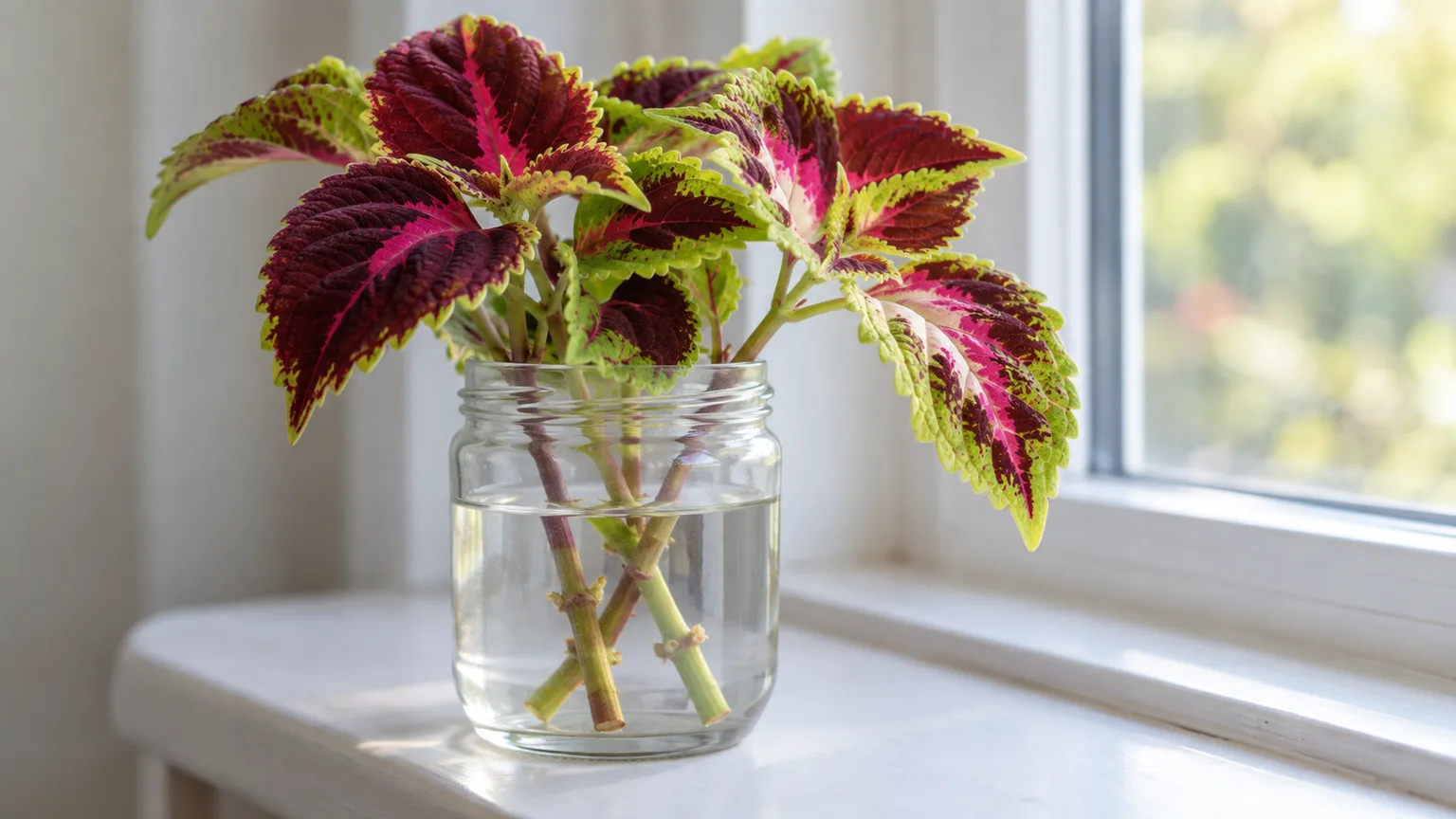
Root coleus cuttings step by step
Use clean, sharp scissors or pruners. Cut just below a leaf node, remove the leaves on the lower part of the stem so none sit in the rooting medium, and leave several leaves at the tip. Nodes are the points where leaves join the stem; roots commonly form from these points when they stay in water or moist potting mix.
You can root the cutting in a clean glass of water or directly in a small pot of clean, lightly moist potting mix. Water makes it easy to see whether roots are forming, but the rooted cutting must later adapt to soil. Starting in mix skips that transition but requires you to keep the medium evenly moist without letting it become waterlogged. NC State confirms coleus cuttings root easily in water or clean potting soil, and NYBG describes short tip cuttings rooting in a warm, bright place. (North Carolina State Extension, New York Botanical Garden Mertz Library)
Place the cutting somewhere warm with bright light but no harsh midday sun. If you use water, keep the node submerged and refresh the water when it becomes cloudy; pot the cutting once it has a small network of roots rather than waiting for a tangled mass. If you use mix, tug very gently after a couple of weeks to check for resistance, which suggests roots are anchoring the stem.
Once rooted, plant the cutting in a small container with drainage and a light potting mix. Keep it evenly moist while new roots settle, then water when the upper surface begins to dry. A small pot is easier to manage than a large one through winter and makes it simpler to avoid overwatering a plant that is growing slowly.
Winter care for the whole plant or new cuttings
Indoor coleus uses less water when low light and cool-season days slow its growth. Check the pot with your finger rather than keeping it constantly wet; if the top inch or two has dried, water thoroughly and let excess drain. A limp plant can be thirsty, but in a cold room or saturated soil, extra water can make the problem worse.
Keep the plant in the brightest available spot and rotate the pot occasionally if growth leans toward the window. Avoid placing foliage against cold glass or near a heater that blows dry air. Do not fertilize heavily in winter; a plant that is barely growing cannot use a summer feeding schedule and soft new growth will not compensate for inadequate light.
Inspect leaves weekly for insects, especially after bringing an outdoor plant inside. Look for fine webbing, stippling, sticky residue, clusters of small insects, or cottony material at leaf joints. If pests appear, isolate the plant and address the specific insect before returning it to the main collection; avoid broad, unnecessary treatments that can damage foliage.
Spring transition: move coleus back outside safely
Wait until frost danger has passed and nights stay reliably warm before moving coleus outdoors. Proven Winners recommends consistent temperatures above 60°F for planting, while overwintering guidance from Epic Gardening advises hardening plants off when outdoor temperatures are above 50°F. These temperatures serve different purposes: 50°F is a gradual-acclimation threshold, while warmer stable conditions are safer for permanent planting. (Proven Winners, Epic Gardening)
Acclimate the plant over about a week. Start with a few hours in a sheltered, shaded place during the day, then bring it indoors at night; gradually lengthen outdoor time and introduce the light level it will receive in the garden. A coleus that spent months in a bright indoor window can scorch if moved directly into strong midday sun, even if that cultivar tolerates sun once established.
After the plant adjusts, pinch lanky stems to encourage branching and choose a bed or container that matches its mature size. If you rooted cuttings, pot them up once roots are established and treat them like young transplants. Keep an eye on the forecast during the first weeks outside, because a late cold night can undo an otherwise successful winter.
Winter problems and what they usually mean
Leaf drop after the move indoors can follow a sudden change in temperature or light. Remove dead foliage, keep the plant warm and bright, and check soil moisture before watering; if stems remain firm, it may push new growth after adjusting. If stems are mushy or the roots smell sour, inspect for root rot and remove damaged parts rather than continuing to water on a fixed schedule.
Pale, faded, or stretched leaves often point to inadequate light. Move the plant closer to a bright window or add a grow light, but avoid a sudden switch from low light to intense direct sun. Brown, crispy edges can indicate a dry root ball, hot air from a vent, or very low humidity; inspect the soil and room conditions before assuming the plant needs a misting routine.
Yellowing and soft growth can also follow overwatering, especially when winter light is weak and the mix stays wet for days. Confirm that the pot drains and that no water remains in its saucer. If the issue starts after bringing the plant in, check for pests as well as environmental stress; the indoor transition can reveal both problems at once.
Should you overwinter coleus or start fresh?
Save the whole plant when it is healthy, compact enough to move, and valuable to you as a particular cultivar or mature specimen. A container-grown coleus is the easiest to move because you avoid digging and root disruption. Still, it needs space, light, and regular pest checks, so keeping it is not automatically better than replacing it in spring.
Choose cuttings when the outdoor plant is large, the room is limited, or you want younger growth that is easier to manage. Several cuttings can preserve a favorite leaf pattern while taking up much less space than a mature plant. If the parent is declining or infested, start only with clean, vigorous stems; otherwise, buy a fresh plant next season and avoid carrying a problem indoors.
Treating coleus as an annual is a reasonable choice, not wasted gardening. In regions with cold winters, a summer of foliage may be exactly what the plant is meant to provide, and the energy and space needed to overwinter it may not be worth the result. Save the plant when its cultivar or sentimental value matters to you; start fresh when that is simpler.
Conclusion
Coleus is a tender perennial that is usually grown as an annual wherever frost can kill it. In warm, frost-free climates it may continue outdoors, but gardeners in colder regions should bring a healthy plant inside or take cuttings before cold nights arrive. Treat Zones 10–11 as a general hardiness guide, not a promise for every cultivar or exposed site.
For the simplest winter plan, move a potted coleus indoors as nights approach 50–55°F, inspect it for pests, and give it bright light, warmth, and careful watering. If you cannot keep the entire plant, root a few clean cuttings; if you do not have space or the plant is already declining, enjoy it as a seasonal annual and start fresh in spring.