Japanese Blood Grass Care: Light, Soil, Water & Pruning
Learn Japanese blood grass care for ‘Rubra’ and ‘Red Baron,’ including invasive-risk checks, sunlight, drainage, watering, pruning, and container growing.
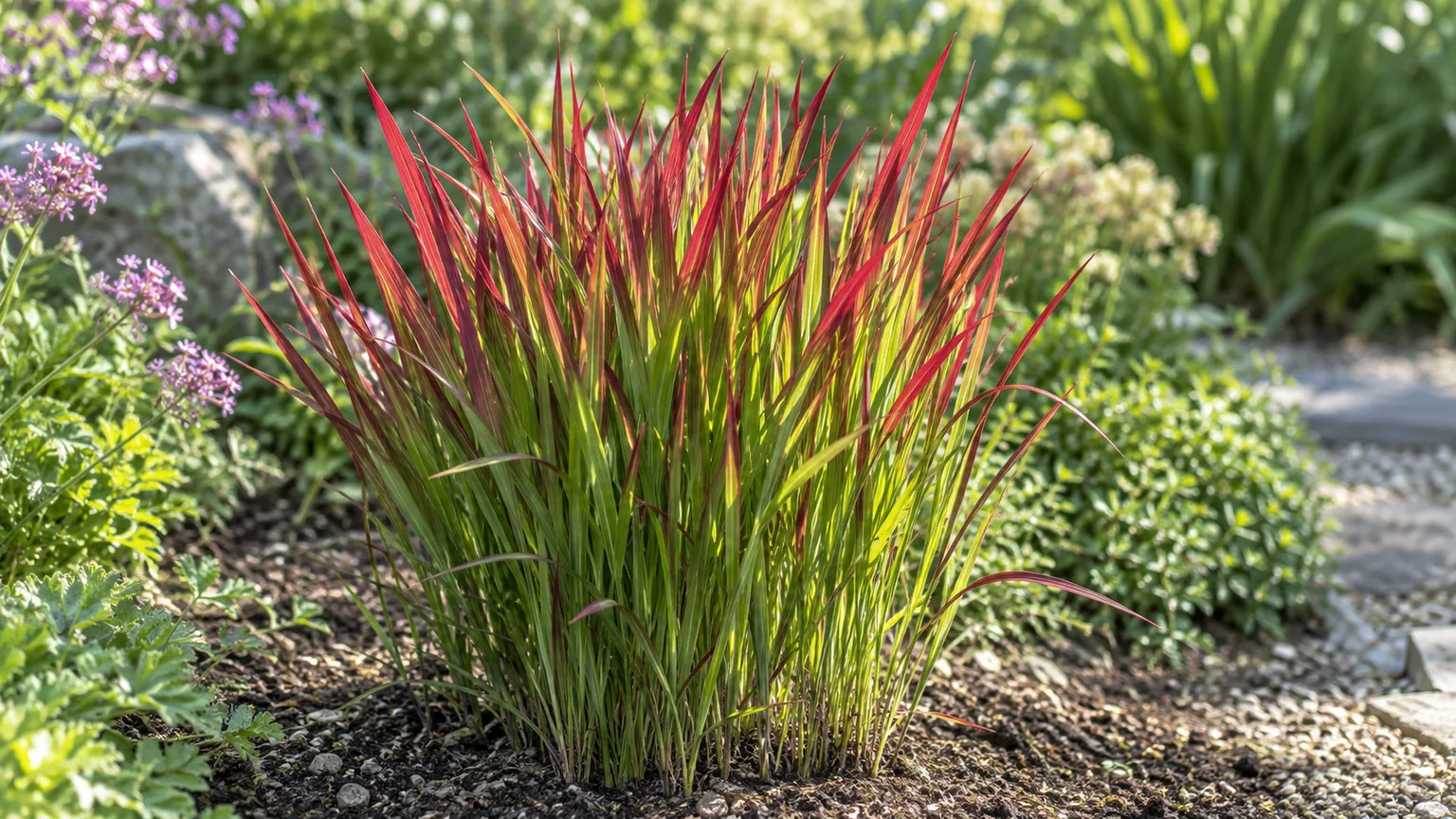
Japanese blood grass can be a striking red accent, but its care starts with a question that ordinary plant profiles often skip: which Imperata are you buying, and is it appropriate to grow where you live? The red ornamental forms are sold as ‘Rubra’ or ‘Red Baron’; the closely related straight species is cogongrass, an aggressive weed regulated in some places. Even a correctly labeled red selection deserves more caution than a typical small ornamental grass because research and extension sources document possible reversion to a green form.
If local rules allow the plant and the nursery can identify the cultivar, care is straightforward: give it bright sun, soil that holds some moisture but drains freely, and a spring cleanup. Use a pot on a hard surface when you need to limit rhizome spread, but do not treat a container as a legal workaround or a guarantee against seed or reversion risk.
Confirm the cultivar name before you buy
The plant usually meant by “Japanese blood grass” is the red-leaved ornamental selection of Imperata cylindrica, a warm-season perennial grass in the Poaceae family. Nurseries commonly label it Imperata cylindrica ‘Rubra’ or ‘Red Baron’; the Royal Horticultural Society lists ‘Red Baron’ among the synonyms for ‘Rubra’. Some horticultural references also use I. cylindrica var. koenigii. Because plant names are not used consistently across catalogs, keep the full label from the seller and ask what cultivar is being propagated rather than relying on the common name alone. (RHS profile for ‘Rubra’; North Carolina State Extension profile)
The red cultivar is not interchangeable with an unlabeled Imperata cylindrica plant. Wild-type cogongrass grows taller and more aggressively, spreads by tough rhizomes, and makes wind-carried seed; it can overwhelm other plants and alter natural areas. A small nursery pot with green blades and a vague “blood grass” label is not enough to confirm a safe ornamental selection. If the seller cannot verify the cultivar, or if your local authority advises against the species, choose a different grass with a similar color effect.
Check invasive risk and local rules first
Before you order, check state or regional invasive-plant guidance and any local sale or planting restrictions. The straight species is listed as a federal noxious weed in North Carolina State Extension’s profile, and Florida’s agriculture department describes cogongrass as a serious invasive plant that spreads through rhizomes and wind-dispersed seed. Its Florida guidance also notes that red ornamental forms are cultivated but can revert to the invasive green form. Rules and enforcement can differ by jurisdiction, so a listing in a general care article does not establish that the plant is legal in your county or suitable near natural land. (North Carolina State Extension; Florida Department of Agriculture and Consumer Services)
The evidence does not support a blanket statement that every ‘Rubra’ plant is invasive, nor does it justify calling every red plant sterile and harmless. A peer-reviewed study used DNA markers to confirm that ornamental Japanese blood grass had reverted to a green cogongrass-like form in sampled plants from several U.S. locations; the authors said the extent of the problem was not well understood. That finding establishes a real risk, not a percentage for every nursery plant. Another plant profile warns that red forms can produce viable seed, so remove any flowering stems before seed matures and never distribute seed or suspect divisions. (Peer-reviewed study of Japanese blood grass reversion; Gardenia profile for ‘Red Baron’)
Horticultural references are not perfectly aligned: some describe the red cultivar as a slow clump, while Fine Gardening warns against treating the species and cultivars as low-risk in the United States. That disagreement is a reason to check local guidance and nursery provenance, not a reason to dismiss the warning. When the plant is prohibited, the source stock is uncertain, or the garden borders a conservation area, skip it and select a non-invasive alternative recommended for your region. (Fine Gardening plant profile)
When a container is the more responsible choice
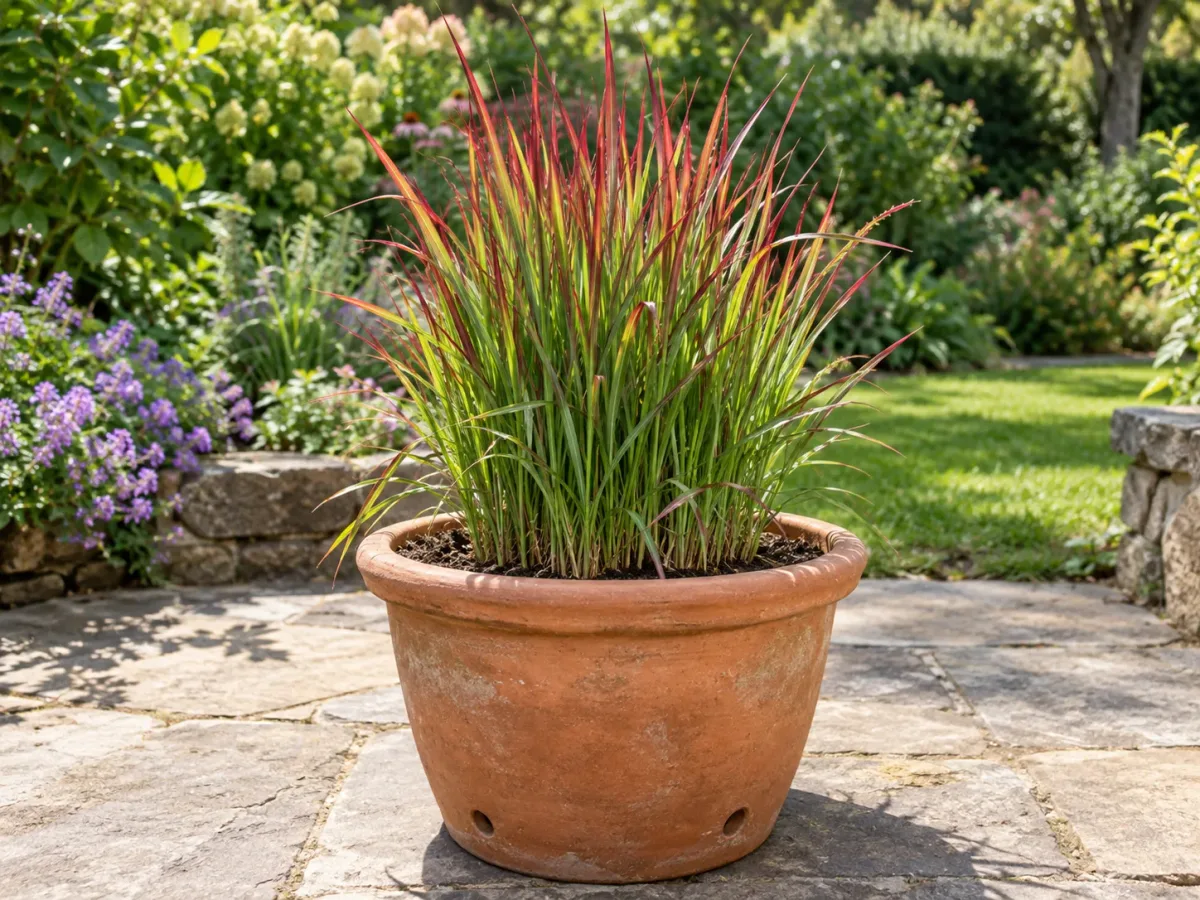
A container can keep an allowed ornamental clump from creeping through a bed, especially in a small garden where you can inspect it regularly. It does not make a restricted plant legal, prove the cultivar is true, or prevent a seedhead from dispersing seed. If you grow it in a pot, place the container on paving or another hard surface, keep it away from soil where roots can reach through drainage openings, and remove flower spikes before they mature.
What the grass looks like through the seasons
A healthy red selection forms a compact, upright clump of narrow blades, often around 12 to 18 inches tall in garden references. The leaves are usually green near the base and flush red from the tips down; color often deepens as the growing season advances. Height and spread vary with cultivar, climate, and growing conditions, and some references give a wider mature footprint than others. Follow the mature dimensions on the plant tag, leave space around the clump, and do not assume it will stay the exact size of its nursery pot. (Gardenia profile for ‘Red Baron’; RHS profile for ‘Rubra’)
This is mainly a foliage plant, not a flower display. Narrow silvery or tan flower spikes may appear in late summer, but flowering is uncommon in some garden conditions; in a mild climate the plant may not look dormant at the same time it does in a cold garden. The RHS describes ‘Rubra’ as deciduous, so expect old foliage to fade or collapse after cold weather even if a few blades persist in a mild winter. Do not mistake a dormant winter clump for a dead one before new shoots emerge in spring. (RHS profile for ‘Rubra’; Gardenia profile for ‘Red Baron’)
Choose light for the strongest red color
Plant it in full sun if you want the clearest red effect. About six hours of direct sun is a practical starting point; the Royal Horticultural Society and Gardenia both list full sun, while partial shade is tolerated. In shade the blades may stay greener and the red can be less vivid, so a sheltered bright position is a better compromise than a dark corner. (RHS profile for ‘Rubra’; Gardenia profile for ‘Red Baron’)
In hot, exposed sites, morning sun with light afternoon shade can protect foliage from heat and reflected glare while preserving enough brightness for color. This is a site adjustment, not an indoor-care plant: Japanese blood grass needs outdoor light and a seasonal cycle. If the blades are mostly green, assess the amount of direct sun, but also confirm the label and compare new shoots with the rest of the clump before deciding the plant is simply in the wrong light.
Give it moist but well-drained soil
The useful target is soil that stays lightly moist after watering but does not remain saturated. RHS recommends moist but well-drained conditions; Gardenia similarly lists medium moisture and good drainage. Ordinary garden loam is usually suitable if it sheds excess water. Dense clay that stays sticky after rain is a warning sign, especially in a low spot or where roof runoff collects. (RHS profile for ‘Rubra’; Gardenia profile for ‘Red Baron’)
Do not try to fix a waterlogged planting hole by filling its bottom with gravel; that does not create reliable drainage and can leave roots sitting in a wet pocket. Choose a raised bed, improve the whole planting area with organic matter where appropriate, or use a container with open drainage holes. If your soil remains wet for days, choose a different plant rather than asking this grass to tolerate standing water. A little compost mixed through poor soil is reasonable, but the plant does not need rich or heavily amended ground to make attractive foliage.
Plant outdoors only where it is permitted
For a permitted, correctly identified cultivar, plant in spring after the ground is workable and severe freezes have passed. Spring gives the roots time to establish before the first winter; in a mild climate, fall planting may also work if the plant can settle before cold weather. Buy from a nursery that labels the cultivar clearly, and do not move wild-looking Imperata from a roadside or unmanaged site into your garden. Cultivar identity cannot be reliably inferred from the common name alone.
Before planting, check the mature spread on the label and decide whether you can monitor the clump. Keep it out of naturalized areas, drainage corridors, or places where soil movement can carry plant fragments into neighboring land. Water the nursery pot, slide out the root ball, loosen only roots circling tightly around the outside, and set the clump in soil at the same depth it grew in the container. Backfill, firm the soil gently, and water slowly until the root zone is evenly moist. (Gardening Know How growing guide)
Set the root ball at the right depth
Keep the crown—the point where the leaves emerge from the roots—at the soil surface. Burying the crown under several inches of soil can trap moisture against the center and make it harder for new shoots to emerge; planting it high can expose the roots and let them dry. After watering, check that the plant has not sunk, then add a thin mulch layer around the clump while leaving the crown uncovered. (RHS profile for ‘Rubra’)
Grow it in a container with drainage
A wide, stable pot is useful when you want to keep the rhizomes away from neighboring beds or when your garden soil drains poorly. Choose a container with several unobstructed drainage holes and enough room for the root ball plus a little growth; a pot roughly 12 to 16 inches across is a practical starting point for a small nursery plant, not a promise that the clump will never need dividing. Use a free-draining outdoor potting mix and do not leave the pot standing in a full saucer. (Gardenia profile for ‘Red Baron’; RHS profile for ‘Rubra’)
Set the container on concrete, stone, or another surface where escaping roots can be seen and removed. Inspect the drainage openings at least once a year, and check the rim for shoots if a rhizome reaches the edge. A container gives you a clearer boundary, but only if you actually monitor it; potting a suspect or legally restricted plant is not a substitute for following local rules. In a cold winter, the roots in a pot are more exposed than roots insulated by surrounding ground, so use a large frost-resistant container and move it to a sheltered position if your climate calls for it.
Water by soil condition, not a calendar
Water a newly planted clump thoroughly, then keep the root zone from drying out completely while it establishes. In a garden bed, rainfall and soil texture determine how often you need to irrigate: check the soil a finger-depth below the surface and water when it has started to dry, then let excess drain away. A light sprinkle that wets only the leaf tips is less useful than a slow soak that reaches the roots. (Gardening Know How growing guide)
Once established, Japanese blood grass can tolerate a short dry spell, but prolonged drought may brown the tips and reduce the fresh appearance of the foliage. Container plants dry faster in sun and wind, so check them more frequently in hot weather; do not use the same interval for a cool, rainy week and a heat wave. In winter, reduce watering as growth slows, especially for a container, but do not let the root ball become bone-dry for long periods. Yellowing at the base with soft, wet roots points more toward poor drainage than a need for extra water.
Skip routine fertilizer
A healthy clump in ordinary garden soil generally does not need a fertilizer schedule. The RHS describes this grass as easy in fertile, well-drained soils, and the ornamental appeal comes from the foliage rather than heavy flowering. Adding high-nitrogen fertilizer without a reason can encourage lush growth that needs more water and makes the clump harder to keep in its intended footprint. (RHS profile for ‘Rubra’)
If a plant remains weak after you have checked sun, moisture, drainage, and the original cultivar label, use a soil test for an in-ground bed instead of guessing. For a container, refresh some of the potting mix or use a balanced, slow-release fertilizer at the label rate during active spring growth only when the plant has a clear nutrient need. Do not feed a dormant winter clump, and do not use fertilizer as a remedy for waterlogged roots or deep shade.
Match winter care to your climate
Japanese blood grass is commonly listed for roughly USDA Zones 5 through 9, but published ranges differ and a zone number describes average winter lows—not summer heat, wet winter soil, wind exposure, or the insulation around a container. The RHS assigns ‘Rubra’ a UK hardiness rating and recommends winter protection in colder areas; North Carolina State Extension lists a broad zone range for the red form. Treat those ratings as starting points, then check how the cultivar performs in your local area. (North Carolina State Extension; RHS profile for ‘Rubra’)
In a cold region, leave the foliage standing through winter and mulch lightly around the root zone after the soil cools, without burying the crown. A container may need to be moved against a protected wall or into an unheated sheltered place because its roots experience colder temperatures than in-ground roots. In a warm region, heat and afternoon sun can be tougher on leaves, and invasive-species rules deserve particular attention; a plant that survives winter well is not automatically a responsible choice for every landscape. New growth can emerge later than expected in spring, so wait for signs of live crowns before discarding a dormant clump.
Cut back old foliage in early spring
Leave the old blades in place through winter for seasonal structure and some protection around the crown. In late winter or early spring, before fresh leaves lengthen, gather the dry foliage and cut it back close to the clump without slicing into the crown. Wear gloves and long sleeves: narrow grass leaves can have sharp edges, and the bundle can be scratchy to handle. The RHS recommends dividing in mid-spring and removing dead growth as part of seasonal care, while Gardenia also places foliage cleanup in spring. (RHS profile for ‘Rubra’; Gardenia profile for ‘Red Baron’)
Use clean shears, collect the clippings, and dispose of any seedheads according to local guidance rather than tossing them into a compost pile. If the plant is in an area where cogongrass is regulated, avoid carrying suspect plant material or soil elsewhere; ask the relevant extension or invasive-species office how to dispose of it. Do not shear a green, actively growing clump in autumn just to make it tidy—the foliage is better left in place until the spring cleanup.
Propagate by division, not seed
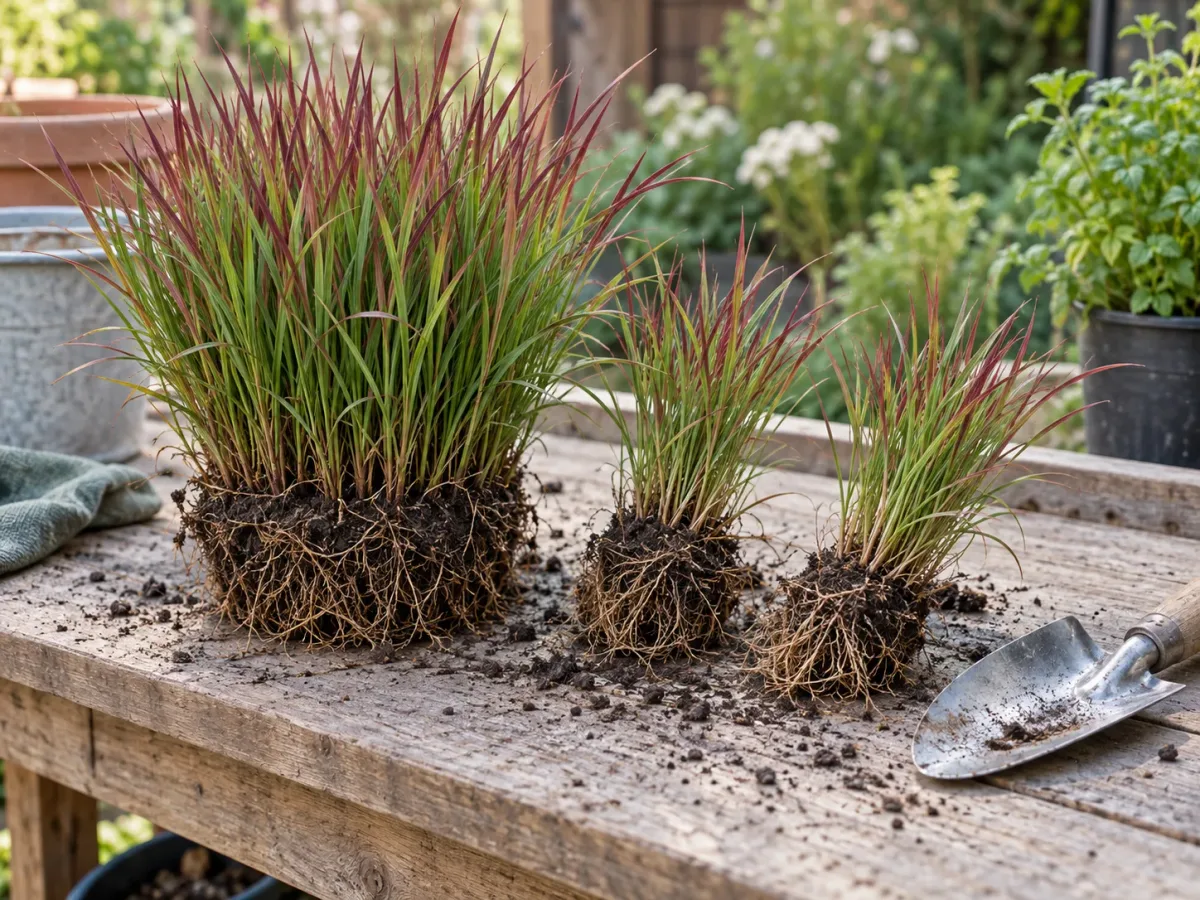
Division is the practical way to multiply a healthy, correctly labeled red cultivar while preserving its foliage traits. Do it in mid-spring as new growth begins, when the clump is easier to handle and has the rest of the growing season to re-root. The RHS recommends spring division, and the red cultivar is generally distributed as a vegetative plant rather than grown true from seed. (RHS profile for ‘Rubra’; Gardening Know How growing guide)
Water the plant the day before if the soil is dry. Lift the whole clump with a sharp spade, shake or rinse enough soil from the roots to see the crown, and cut it into sections with a healthy fan of shoots and a substantial set of roots on each piece. Discard dead centers and replant divisions at the original depth, watering them in well. Keep each new division labeled. Do not sow seed collected from a plant sold as ‘Rubra’ or ‘Red Baron’: seedlings may not match the parent, and seed from this species raises a spread risk that division avoids. Never give away a division from a clump with unexplained green shoots or uncertain identity.
Troubleshoot weak color, rot, and winter damage
If the foliage stays mostly green, first check the plant’s identity and light exposure. Red color is strongest with good sun, but a little shade can be useful in an especially hot site; it should not leave the plant in deep shade. Older leaves may fade or brown as the plant prepares for dormancy, while new spring growth can start slowly. Give a dormant clump time to show live shoots before you decide it has failed. (Gardenia profile for ‘Red Baron’; North Carolina State Extension)
Brown tips during active growth often follow dry soil, wind, or heat, particularly in a pot; check the root zone before adding water. If the soil is constantly wet, leaves yellow from the base, or roots smell sour and feel soft, improve drainage and reduce watering. Move a container under shelter if winter damage is likely, but do not keep it in a heated living room where light and seasonal conditions are wrong. Gardening Know How also notes that slugs and snails may chew leaves and that rust can blemish foliage; inspect for visible pests or orange-brown pustules before treating anything, and avoid spraying a symptom you have not identified. (Gardening Know How growing guide)
A compact clump that has stopped expanding may simply be establishing or may need division if its center is crowded. If several divisions fail after planting, revisit the site before feeding: prolonged wetness, deep shade, and an exposed container in severe cold are more actionable causes than a lack of fertilizer. Change one condition at a time so you can tell whether the repair worked.
Respond carefully to an all-green shoot
A single green blade among red growth is not proof by itself that the plant has reverted; young foliage can look less colorful before it matures. Watch the shoot as it grows and compare its leaf length, width, color, and vigor with the rest of the clump. Reversion is more concerning when an entire shoot stays green, grows taller or faster than the red clump, or sends out noticeably different foliage. The peer-reviewed study of Japanese blood grass showed that red ornamental plants can revert and that some reverted plants look much like wild cogongrass, so visual checks are useful but cannot settle every identification question. (Peer-reviewed study of Japanese blood grass reversion; Florida Department of Agriculture and Consumer Services)
If you suspect reversion, stop dividing, selling, or moving the plant. In a jurisdiction where cogongrass is regulated, contact the state extension service or invasive-plant authority for identification and disposal instructions before digging; fragments of invasive rhizomes can regrow, and moving soil can carry them. If local officials confirm that removal is appropriate, follow their method and disposal direction rather than adding roots, seedheads, or contaminated soil to home compost.
Conclusion
The right care for Japanese blood grass depends first on whether you have a correctly labeled red cultivar and whether your local rules allow it. Where it is appropriate to grow, ‘Rubra’ or ‘Red Baron’ performs best with strong light, evenly moist but freely draining soil, modest watering, and a spring cutback; division is the sensible propagation method.
Choose a container on a hard surface when you need a clearer boundary, and inspect it rather than assuming it contains every risk. If the seller cannot verify the cultivar, cogongrass is restricted nearby, or a shoot becomes vigorously green, pause propagation and ask local experts for guidance. That decision protects the rest of the garden and the landscape beyond it.