How to Grow and Care for Ghost Plant
Keep Graptopetalum paraguayense healthy with a practical light, soil, water, and winter routine, plus clear fixes for leaf drop and leggy growth.
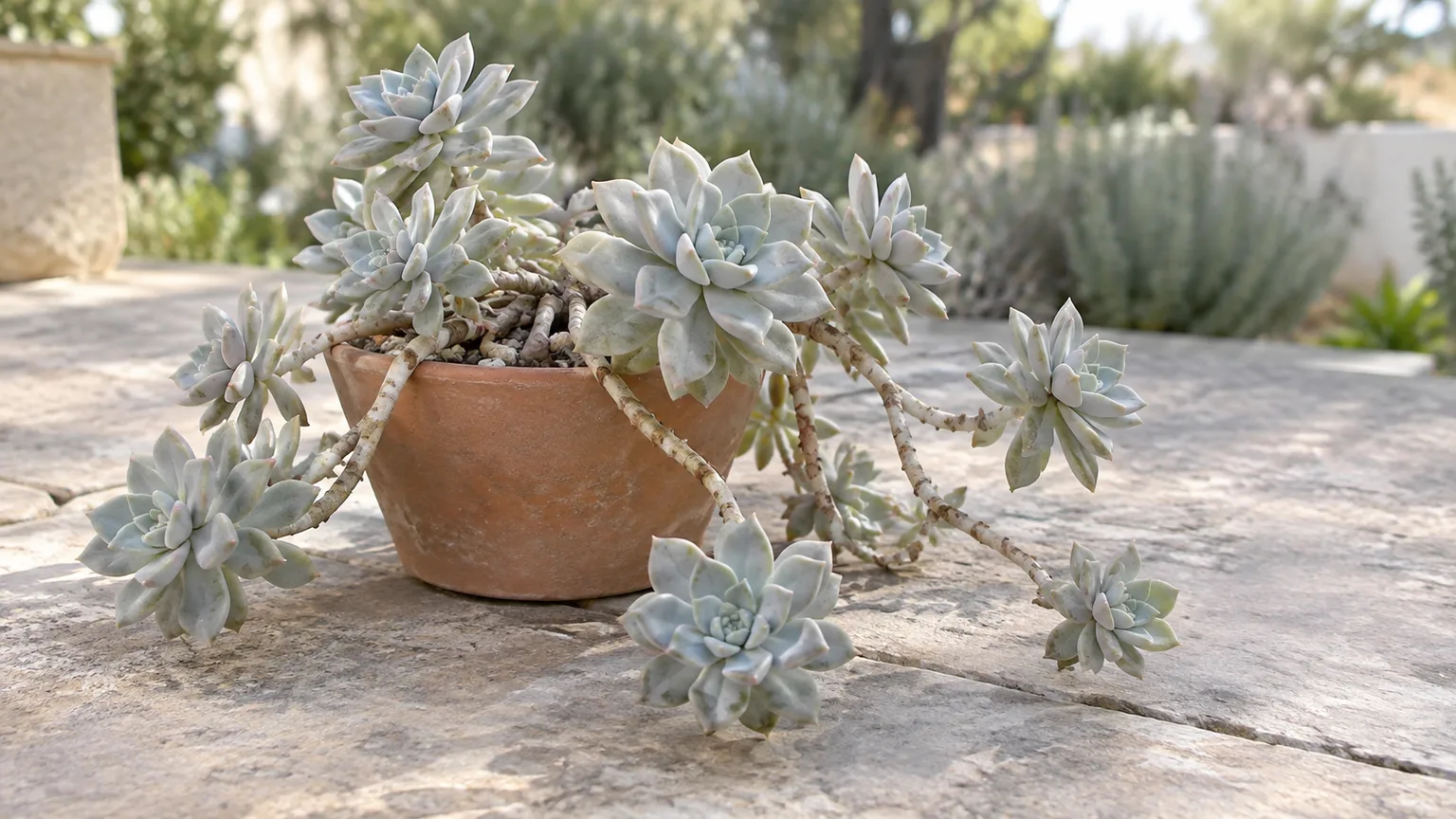
Ghost plant (Graptopetalum paraguayense) stores water in thick leaves and makes new rosettes along stems that eventually trail over a pot’s edge. Give it strong light, a container that drains freely, and a thorough drink only after its growing mix dries; those three choices prevent most problems. The details that need judgment are how quickly to introduce direct sun, when a fallen leaf signals trouble, and whether your winter conditions are mild enough for an outdoor plant.
Meet the Ghost Plant
Ghost plant, also called mother-of-pearl plant, is a Mexican succulent in the Crassulaceae family. It forms pointed leaves in compact rosettes, often about four inches across, on stems that can spread or hang. The leaves look pale because a fine, powdery coating called a pruinose bloom covers their surface. The Royal Horticultural Society’s plant profile describes gray-green leaves that can take on a pink tint and star-shaped summer flowers; UF/IFAS Gardening Solutions likewise notes the plant’s sprawling habit and easily disturbed coating.
The coating is not dust or a sign of disease. It is a natural waxy layer, and rubbing it off leaves shiny fingerprints that do not simply disappear after wiping. Handle the plant by its pot or stem base when you can, and accept that a few leaf marks are cosmetic rather than a sign the plant is dying.
Ghost plant can be grown in a warm garden, but it is also a useful container succulent that can move between a patio and a protected indoor spot. It grows relatively slowly, so a plant that seems unchanged for a few weeks may be healthy. Look instead for firm leaves, new growth at rosette centers, and stems that are not rapidly stretching toward a window.
Light: Give It Bright Light and Acclimate Slowly
Set ghost plant where it receives several hours of bright light each day. Outdoors, a sunny patio or bright garden position usually gives the tightest rosettes; indoors, place it at a bright window and rotate the pot occasionally if one side leans. UF/IFAS reports that plants in bright shade can remain blue-gray while stronger sun and heat may bring yellow or pink tones. Color is a response to conditions, not a target that requires pushing the plant into harsh midday exposure.
A plant raised indoors or in shade should not go straight into all-day sun. Move it outdoors for a short period in gentle morning light, then increase exposure over a week or two while watching for pale, dry patches. If leaves scorch, return it to bright shade until it recovers; sunburned tissue will not turn green again, though healthy new leaves can replace it over time.
Indoors, the issue is often too little usable light rather than too much. A bright south- or east-facing window can work, but the window’s direction is only a starting point: trees, buildings, curtains, and the season change how much light reaches the leaves. If rosettes flatten, stems lengthen, and the plant visibly leans toward the glass, move it to a brighter location or supplement with a grow light positioned according to the fixture’s instructions.
Don’t try to “fix” a leggy plant by immediately giving it intense sun. Increase light gradually, then prune and propagate the stretched stems if you want a fuller shape. The old stem will not shorten, but new growth in better light should stay more compact.
Soil and Containers: Make Drainage the Priority
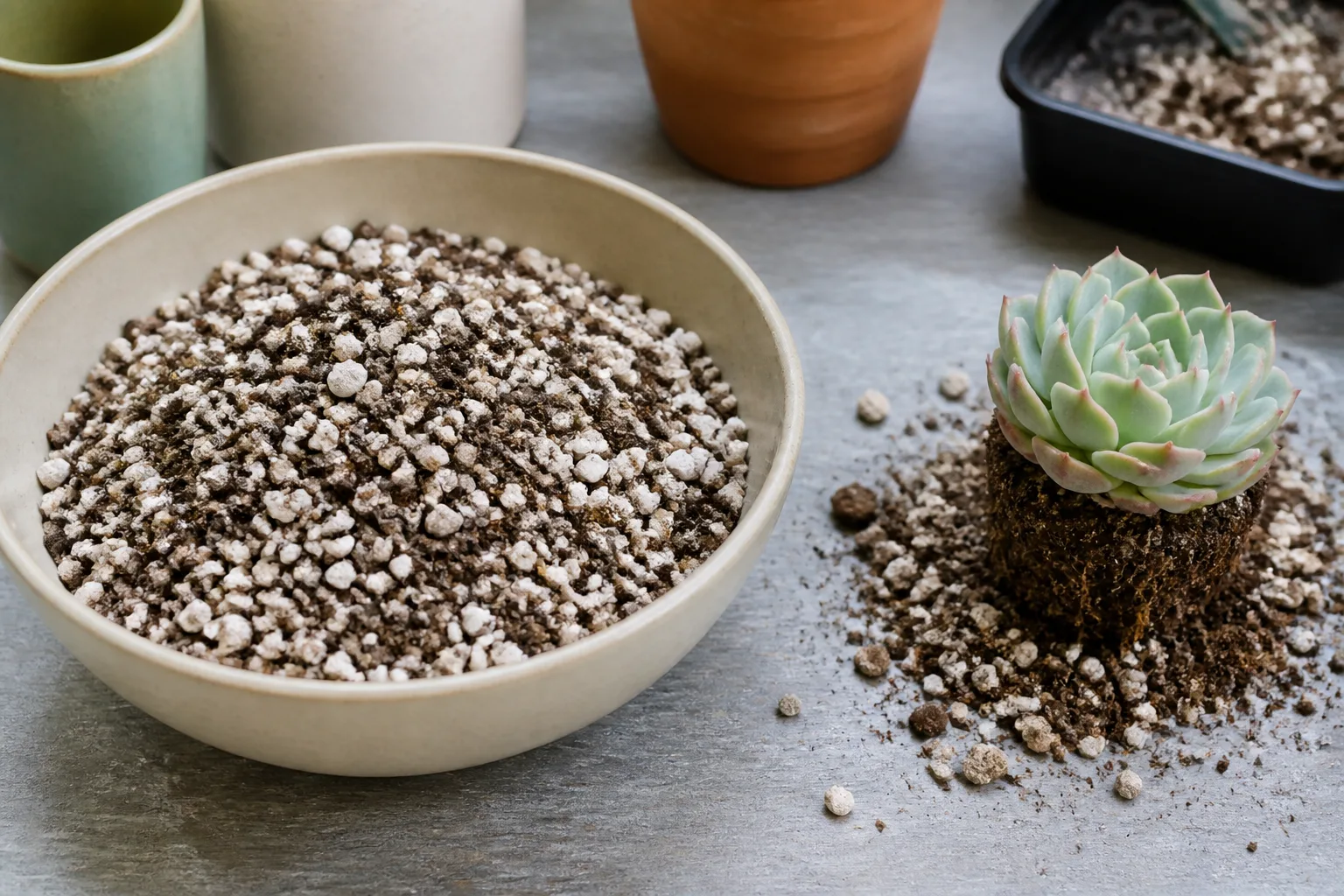
Use a loose, fast-draining medium sold for cacti and succulents, or improve a standard potting mix with coarse mineral material such as pumice or perlite. The goal is not to create a pot full of stones; it is to leave enough air space that water can pass through and the root zone can dry between drinks. The RHS profile recommends well-drained growing conditions, while Succulents and Sunshine’s species guide also emphasizes a well-draining mix.
In a garden, soil that stays wet after rain is a bigger problem than soil that is not especially rich. A raised bed, rock garden, or slope can move water away from the crown; if your native soil is heavy clay or the site is humid and rainy, use a container instead of amending only the planting hole. A pocket of fluffy potting mix inside dense clay can act like a basin, so the surrounding bed must drain too.
Choose a Pot That Dries at a Useful Pace
Every pot needs an open drainage hole. A shallow terracotta pot can suit ghost plant’s relatively compact roots and dries faster than a large glazed container, but the material is not mandatory. The size and drainage matter more: choose a pot only a little wider than the root ball, so unused wet mix does not sit around a small root system for days.
Avoid adding a layer of gravel to the bottom of a pot as a substitute for a hole or a free-draining mix. Water still has to leave the container, and a gravel layer can leave the finer mix above it saturated longer. If you want a decorative cachepot without drainage, grow the plant in a separate nursery pot with holes and remove it to water; let it finish draining before returning it to the outer pot.
Watering: Soak the Mix, Then Let It Dry
Water the root zone thoroughly, then allow the mix to dry before watering again. For a container, pour slowly until water exits the drainage hole and empty any saucer; for an outdoor bed, wet the soil around the roots without leaving the rosette sitting in a puddle. This soak-and-dry approach gives roots access to water while avoiding the permanently damp conditions that encourage rot. Both UF/IFAS and Succulents and Sunshine advise letting the soil dry between waterings.
Do not use a fixed “every Sunday” schedule. A small clay pot in a hot, breezy spot dries much faster than a large glazed pot in a cool room. Check below the surface with a finger or wooden skewer, and lift the pot to learn how light it feels when dry. If the top looks dusty but deeper mix is still cool and damp, wait.
Water needs change with light, temperature, airflow, pot material, and active growth. A plant in a warm bright spot may use water faster during active spring growth; cool weather, low light, or a dormant period slows drying and water use. In those conditions, reduce how often you check and wait longer between drinks rather than adding a smaller amount every few days.
Water at the soil line when possible. Pouring over the rosette can leave moisture trapped between leaves, especially in humid weather or indoors with still air. If rain wets the plant, that is not automatically harmful, but good airflow and quick-draining soil help the crown dry. Never water simply because a leaf detached: first check whether the soil is wet, dry, or somewhere in between.
Grow Ghost Plant Indoors or Outdoors
Choose the location that gives the plant bright light and lets its soil dry predictably. Indoors, a sunny window is convenient in climates with frost, and the pot can be moved away from cold glass during a freeze. Outdoors, ghost plant can spill attractively from a rock garden, raised bed, or container, but it needs a site with strong light and reliable drainage rather than a low spot that collects runoff.
A sheltered outdoor position can reduce exposure to prolonged rain and cold wind, but shelter should not mean deep shade. If the plant sits under a roof overhang, confirm that it still gets enough direct or very bright indirect light and remember that it will receive little rain. Conversely, a pot left in an exposed position may get drenched repeatedly; move it under cover during extended wet spells if the medium is not drying.
Protect It From Frost and Damp Winters
Treat ghost plant as tender unless your local conditions and a proven outdoor planting location say otherwise. Plant references do not give one universal cold limit: the RHS assigns a tender H2 rating, while UF/IFAS notes that established plants in its Florida setting can tolerate temperatures around 10°F. That regional observation is not a guarantee for a newly planted specimen, a wet root zone, or a pot exposed to wind and freezing rain. Succulents and Sunshine lists it as not cold-hardy and gives Zone 9a as a lower limit, underscoring why it is safer to plan around your local winter than a single number.
If frost is forecast and you are unsure, move a container into a bright, cool, frost-free place before the temperature drops. For an in-ground plant, temporary protection can lessen brief cold exposure, but it cannot make persistently cold, wet soil safe. Keep the plant on the dry side during a cool spell: damp roots lose oxygen, and cold damage plus rot can be harder to diagnose than either stress alone.
Planting and Repotting Without Damaging the Leaves
Plant at the same depth the rosette was growing before; burying the stem or crown invites prolonged moisture around tissues that should dry freely. Loosen only roots that are tightly circling, settle the plant into the mix, and avoid packing the surface so firmly that water cannot pass through. If the roots are healthy and the old pot still drains well, there is no reason to repot on a calendar.
Repot when the plant has outgrown the container, the mix has broken down and stays wet, or roots are emerging from the drainage hole. Work with dry soil so it releases from the pot more easily, and lift the plant by its root ball or stem base rather than pinching the rosettes. The powdery bloom is easy to rub away, and the brittle stems can snap; a broken healthy stem is not wasted, because it can become a cutting.
After repotting, give the plant a few days before watering if roots were disturbed or damaged. That pause lets small breaks dry instead of sitting in wet soil. Then water thoroughly and return it to bright light, avoiding a sudden move from shade into strong afternoon sun.
Fertilizer and Routine Maintenance
Ghost plant does not need rich soil or frequent feeding. If it is growing in fresh succulent mix and makes healthy new leaves, you may not need to fertilize at all. For a plant that has been in the same mix for a long time, use a dilute, balanced fertilizer or a product labeled for succulents at the start of active spring growth, following the label rather than guessing a stronger dose. Succulents and Sunshine recommends feeding early in the growing season; more fertilizer is not a shortcut to a larger or healthier rosette.
Too much fertilizer can cause weak, stretched growth or damage roots and leaves, especially when the plant is not actively growing. Do not feed a stressed plant with soft leaves, rotting roots, or fresh sunburn; correct the growing conditions first. Remove dried leaves from the base if they trap moisture or debris, but avoid unnecessary pruning of healthy rosettes.
Propagating Ghost Plant
Ghost plant readily produces starts from stem pieces, rosettes, and individual leaves. The reliable principle is the same across methods: make a clean break, let the wound callus, and start the piece in airy mix rather than keeping it constantly wet. Epic Gardening’s ghost-plant guide and Succulents and Sunshine’s propagation notes describe leaf and cutting propagation, with the latter noting that the whole leaf base needs to come away for leaf propagation to succeed.
Root Stem Cuttings and Rosettes
A stem cutting is often the most predictable way to get a new plant that already has a rosette. Use a clean, sharp blade or pruners to remove a healthy tip or side rosette with a short piece of stem attached. Set it in a dry, shaded, airy place for several days until the cut end feels dry and sealed; a thick cutting in humid conditions may need longer than a thin one.
Place the callused end on or just into dry succulent mix in a small pot. Keep it in bright indirect light while roots form, then begin a cautious watering routine once you feel resistance from gentle tugging or see new growth. Do not keep the cutting wet to “encourage” roots; moisture around an unrooted stem can rot it before it has a chance to establish.
If the parent plant is lanky, cutting off the terminal rosette can also refresh its shape. Leave some healthy stem and leaves on the parent so it can produce side shoots. The cut stem may branch, and the rosette you removed can root separately, giving you two chances at a fuller-looking plant.
Start New Plants From Leaves
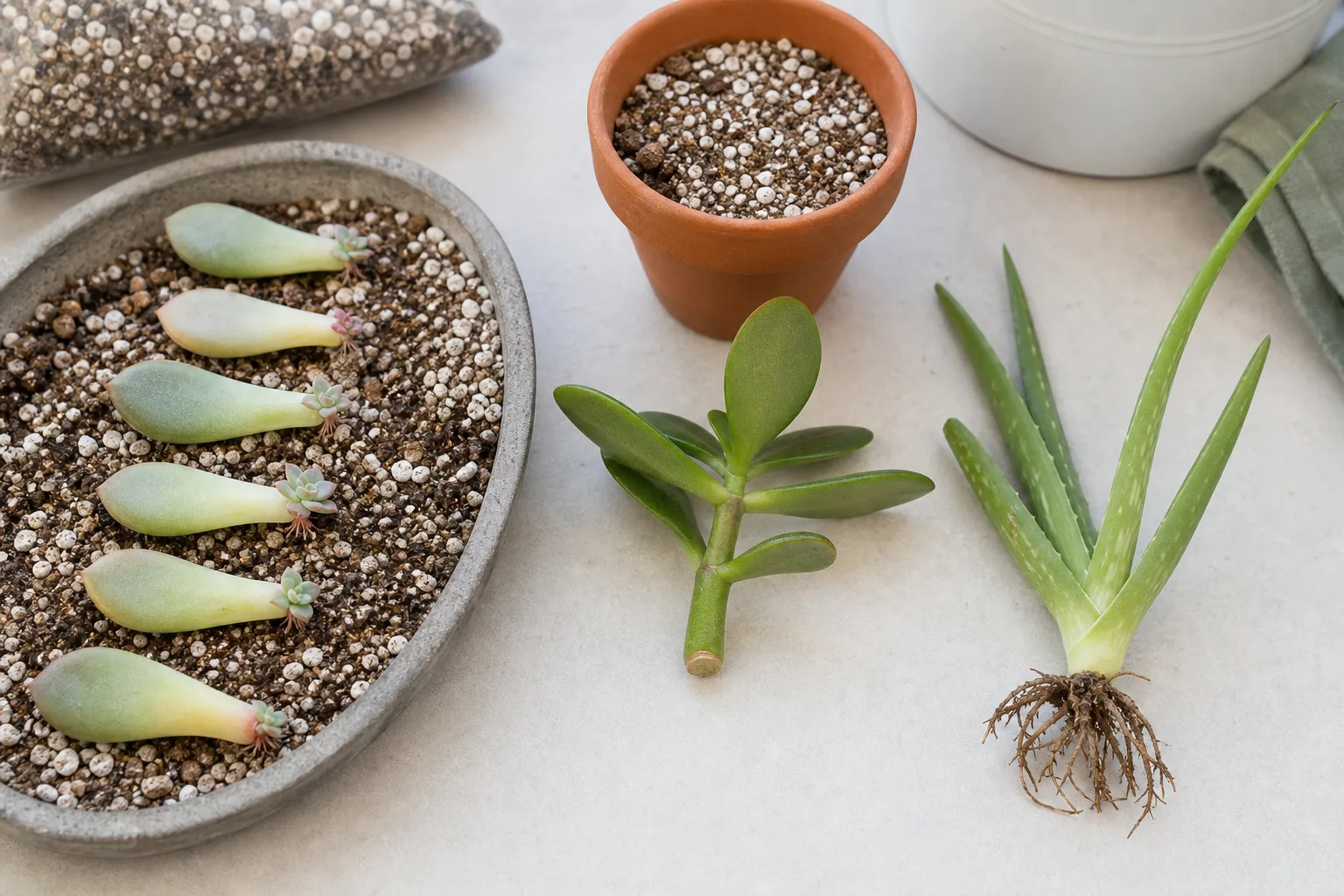
For leaf propagation, choose a firm, healthy lower leaf and gently twist it sideways until it releases cleanly from the stem. The base must remain intact; if a piece stays attached to the parent stem, that leaf is less likely to form a new rosette. A fallen leaf can sometimes root on its own, but deliberate selection lets you avoid leaves that are bruised, shriveled, or already deteriorating.
Leave the detached leaf in a bright spot out of harsh direct sun until the broken end dries and calluses. Lay it on top of dry, gritty mix instead of burying it, then wait for tiny roots or a new rosette to appear. Once roots form, lightly cover them with mix and provide a small amount of water only when the mix has dried; the original leaf supplies moisture while the plantlet develops.
Some leaves do not root, and some plantlets grow slowly. That is normal variation, not proof that you need to mist the tray every day. Remove any leaf that turns mushy or moldy, keep the remaining leaves airy, and pot a young rosette separately once it has several roots and is large enough to handle without crushing it.
Separate Offsets and Try Seed
Small offsets or side rosettes are the quickest route when the plant has formed them. Wait until an offset is large enough to handle, then separate it with a clean cut and a short section of stem if possible. Let the cut dry before planting in succulent mix. Unlike leaf propagation, an offset begins with a complete miniature growing point, so it often establishes sooner.
Seed is possible but slower and less convenient for a home grower. Flowers may set seed after pollination, but the seedlings take time to reach a recognizable size, and seed-raised plants may not match a named cultivar. For one or two new plants, a cutting or offset is more straightforward; use seed when you want to grow many specimens and are prepared to keep the small seedlings evenly but lightly moist during establishment.
Troubleshooting: Read the Whole Plant
One symptom can have several causes, so check the plant and its growing conditions together. Look at whether leaves are firm or soft, whether the soil is dry or wet several inches down, how much light reaches the rosette, and whether the problem is limited to a few old leaves or spreading through the plant. Make one correction at a time, then watch new growth; damaged leaves rarely repair themselves, so recovery shows up at the center and along healthy stems.
Leaf Drop, Wrinkles, and Soft Leaves
A few lower leaves may dry and fall as the plant grows, and a detached healthy leaf can become a new start. The pattern changes the diagnosis: repeated leaf drop throughout the plant, especially with wet soil, soft translucent leaves, or a sour smell from the pot, points toward overwatering or poor drainage. UF/IFAS flags excessive leaf drop as a possible overwatering symptom, while Epic Gardening recommends checking for soft, squishy leaves and waterlogged soil when assessing a plant.
If the soil is wet and leaves are turning soft, stop watering and inspect the roots. Healthy roots should be firm; dark, mushy roots and a collapsing stem indicate rot. Trim rotted sections with a clean blade, let any healthy stem dry and callus, then restart it in fresh, dry, fast-draining mix. If the entire crown has softened, save any firm healthy rosettes as cuttings rather than trying to rescue rotten tissue.
Wrinkled leaves with dry soil can mean the plant is ready for water, especially after a hot, bright spell. Water the pot fully and check for plumper leaves over the next several days. If leaves stay wrinkled despite repeated watering, examine the roots: severe root loss can prevent a succulent from taking up water, and adding more water to a rootless plant can worsen the problem.
Leggy Growth, Sun Stress, Pests, and Rot
Long, widely spaced stems and smaller leaves usually mean the plant is reaching for light. Move it to a brighter position in stages, then prune the stretched section if you want a compact display. Do not expect the old stem to shorten after the move; judge the change by the shape of the new growth.
Pale tan patches on the side exposed to strong sun can be scorch, especially after an abrupt move outdoors. White powder across the leaves is usually the natural pruinose coating, but cottony clusters in leaf joints may be mealybugs. Look closely at stem crevices and the undersides of leaves, isolate an infested pot, and confirm the pest before choosing a treatment. Aphids can gather on tender new growth or flower stalks; a small, early infestation is easier to manage than one that has spread to nearby plants.
Rot is more likely when soft leaves, dark stems, and persistently damp mix appear together. The fix is not simply to move a rotting plant into sun: remove affected tissue, replace compacted or wet mix, use a draining pot, and let the surviving cutting callus before planting. When a plant is already stressed, bright light is helpful only if you introduce it gradually and keep the root zone from remaining saturated.
Pet Safety and the Powdery Leaf Coating
The ASPCA’s toxic and non-toxic plant list identifies “Ghost Plant” and “Mother of Pearl” under the scientific name Sedum weinbergii as non-toxic to cats, dogs, and horses. That listing is specific to the plant name and animals covered; it is not a substitute for identifying the plant correctly or for veterinary advice after a pet eats an unknown plant. Keep any plant out of reach if an animal tends to chew leaves, and contact a veterinarian or animal poison service if you are unsure what was eaten.
The pale surface coating is a natural feature rather than a pesticide residue. Handle the plant by the pot or stem, and keep it away from spots where frequent brushing will rub the coating off. If the leaves become shiny where touched, focus care on healthy new growth instead of trying to restore the powder.
Conclusion
Ghost plant is easiest to grow when you let the soil, light, and season guide care. Give it bright light with a gradual transition, a draining mix in a pot with a hole, and a deep drink only after the root zone dries. Protect it from uncertain winter conditions, handle its powdery leaves gently, and use a clean cutting or intact leaf to make new plants. When a problem appears, check moisture and light together before changing several things at once.