How to Grow and Care for Coral Cactus Indoors
Coral cactus is a grafted Euphorbia, not a true cactus. Learn where to place it, when to water, how to protect the graft, and how to handle its irritating sap.
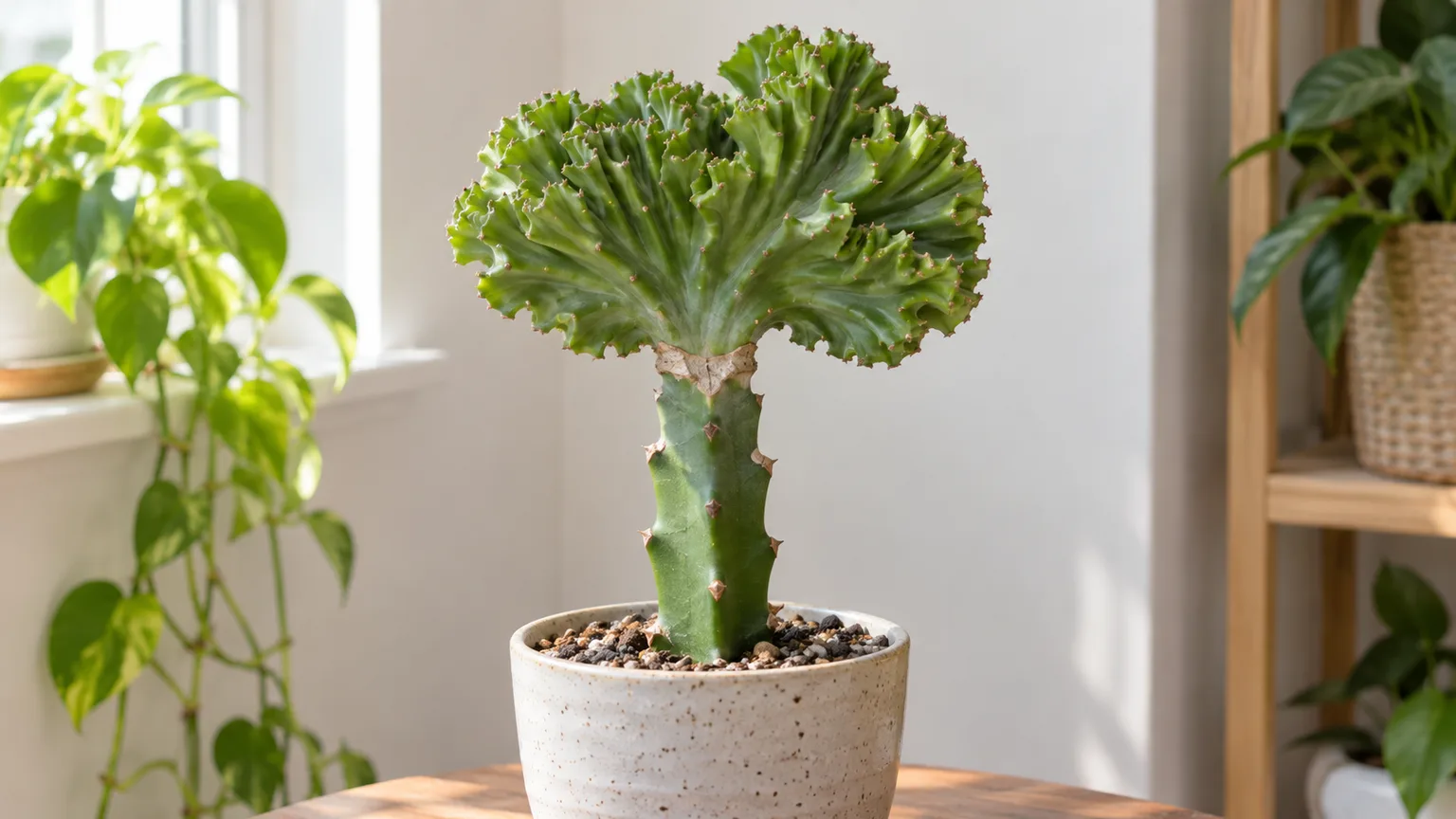
Coral cactus is a sculptural succulent with a ruffled crest that looks more like brain coral than a typical houseplant. Despite the name, it is not a cactus: most plants sold as coral cactus are a crested form of Euphorbia lactea joined by grafting to a sturdier Euphorbia rootstock. That two-part construction explains why the plant needs bright light and a gritty potting mix, yet can still suffer when kept bone-dry for long stretches.
The care routine is simple once you watch the right things. Give the plant strong light without a sudden jump into harsh sun, water thoroughly after the mix has dried substantially, and keep water moving out through a drainage hole. Check the graft union and rootstock when something changes; a healthy straight shoot from below the crest is a different issue from a soft, dark patch. The plant’s milky sap also deserves respect during pruning and repotting.
What Coral Cactus Is
The botanical name is commonly written Euphorbia lactea ‘Cristata’. “Cristata” describes the crest: instead of growing in a typical upright stem, the growing point expands into a fan-shaped ridge with folds and waves. The Royal Horticultural Society’s plant profile describes the crested form as a frost-tender succulent shrub and notes that it is usually grafted onto another Euphorbia. Its top is a stem mutation, not a flower or a cluster of leaves.
In a grafted specimen, the crested top is the scion, while the rooted lower stem is the rootstock. A common rootstock is Euphorbia neriifolia, though labels may not identify the exact partner. Epic Gardening’s reviewed guide to Euphorbia lactea describes the same grafting practice for crested forms. The rootstock supplies roots and support; the crest supplies the unusual shape. They function as one plant, but they can show different growth patterns, so inspect both when diagnosing a problem.
This plant’s cactus-like silhouette can tempt owners to place it in a very hot window and ignore it for months. It is better treated as a warm-climate Euphorbia with succulent water storage: drought tolerant for short dry periods, but not a plant that should be left shriveled and thirsty indefinitely. It rarely flowers indoors, and its slow expansion means a stable, attractive plant may look much the same for months.
Coral Cactus Care at a Glance
The best setup is a bright, warm place, a pot with a drainage hole, and a gritty medium that dries between waterings. Water the whole root ball, let excess drain away, and wait until the mix is dry well below the surface before watering again. In cool or dim winter conditions, the interval usually lengthens because the plant uses water more slowly.
Rotate a windowsill plant periodically for even exposure, but do not use rotation as a substitute for adequate light. Keep it away from cold drafts and from places where a child or pet might brush against or chew it. If it needs trimming or repotting, prepare gloves and eye protection before you handle the plant.
Choose Bright Light Without Scorching the Crest
Coral cactus needs bright light to stay compact and maintain steady growth. A bright east- or west-facing window is a useful starting point; a sunny south-facing window may work if the plant is not pressed against hot glass and receives a gradual introduction to direct sun. The RHS lists full sun to partial shade, while Euphorbia lactea care guidance from Epic Gardening cautions that pale or variegated forms can burn more readily. That variation matters because crests are sold in green, gray-green, and cream-marked forms.
If the crest came from a dim shop or a shaded corner, increase light over a week or two rather than moving it straight into several hours of intense afternoon sun. Begin with bright indirect light, then add gentle morning sun or a little more exposure every few days. Bleached patches, crisp tan areas on the side facing the window, or a sudden color change after a move suggest that the transition was too abrupt. Scorched tissue will not turn green again, so hold the new position and let healthy growth replace it.
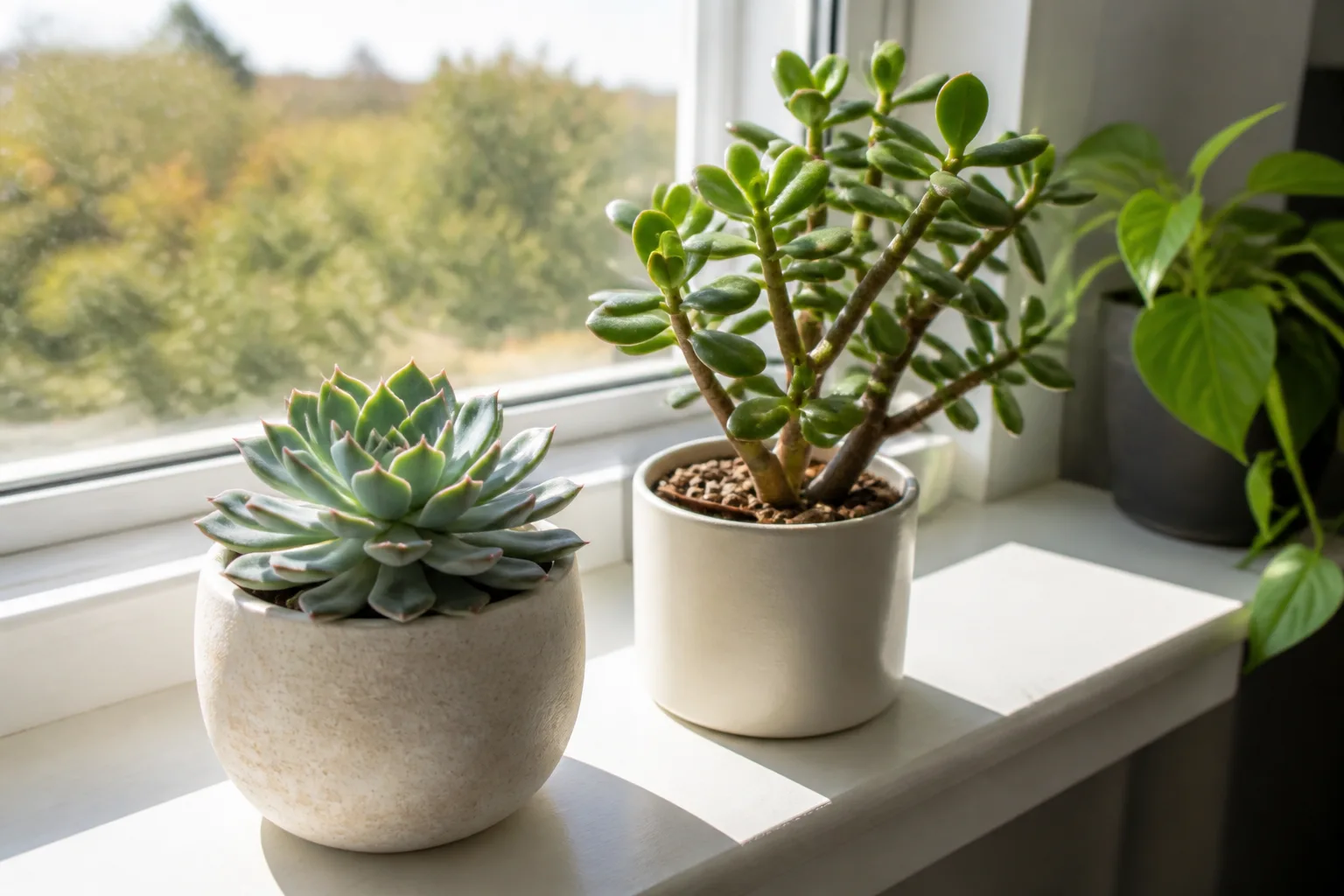
Indoors, weak light often causes more trouble than a short period of direct sun. A plant that leans toward the window or produces narrow, weak growth needs brighter placement; rotating the pot can correct an uneven lean but cannot correct a dark room. If no window provides enough light, a grow light placed according to its manufacturer’s distance guidance is a more predictable option than repeated moves around the house.
Water Deeply, Then Let the Mix Dry
Do not water coral cactus by weekday or by the number of days printed on a care card. Pot size, soil texture, temperature, light, and season all change how fast the root ball dries. Push a wooden skewer several inches into the pot or check the mix at depth with a finger; when the lower mix still feels cool or damp, wait. When the root zone is dry and the pot feels light, water slowly across the surface until water exits the drainage hole.
Empty the saucer after the pot drains. A short, thorough watering cycle wets the root ball evenly and then restores air to the soil as it dries. Small sips are less useful: they can leave the center dry while keeping only the top damp, which makes it hard to judge when the plant actually needs another drink. Advice from succulent specialists such as Sublime Succulents and Cactus Outlet likewise centers on checking dryness and avoiding standing water rather than following a rigid weekly schedule.
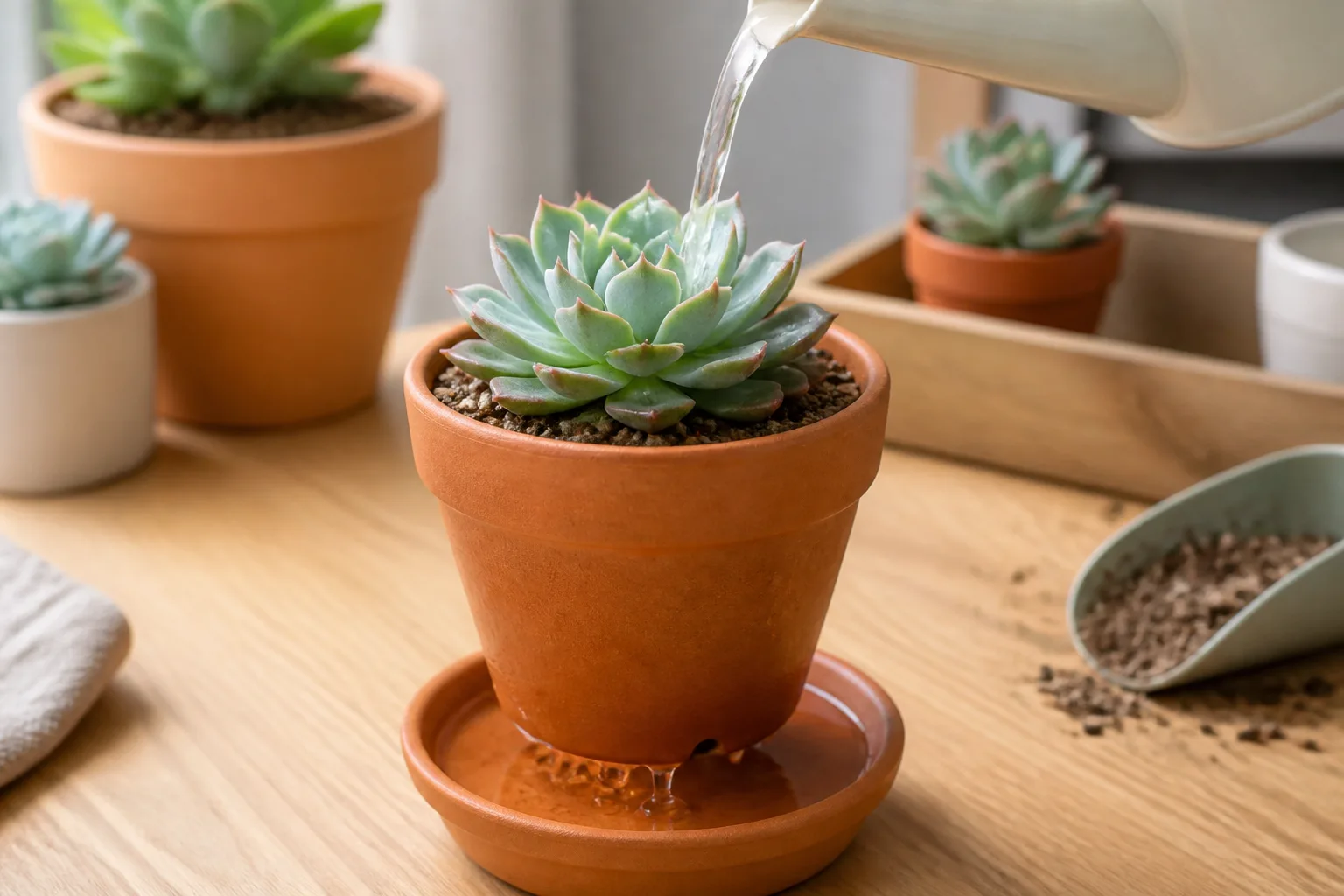
Spring and summer growth, a warm room, and brighter light usually shorten the dry-down interval. In winter, especially in a cool room, the plant may need much less frequent watering; still check the soil rather than withholding water automatically for an entire season. Do not let the plant remain bone-dry for so long that the crest wrinkles and the rootstock softens. If the plant looks thirsty while the mix is wet, suspect damaged roots before adding water.
Use a Fast-Draining Mix and a Stable Pot
Use a commercial cactus and succulent mix only if it drains quickly in your home. Some bagged blends contain enough fine peat or compost to stay wet for too long, particularly in a cool room or a pot without much airflow. A practical starting blend is roughly equal parts commercial cactus mix and coarse mineral amendment such as pumice or perlite; adjust the texture so water passes through readily but the root ball does not collapse into dust. Epic Gardening’s Euphorbia lactea guide and the RHS plant profile both emphasize well-drained growing media.
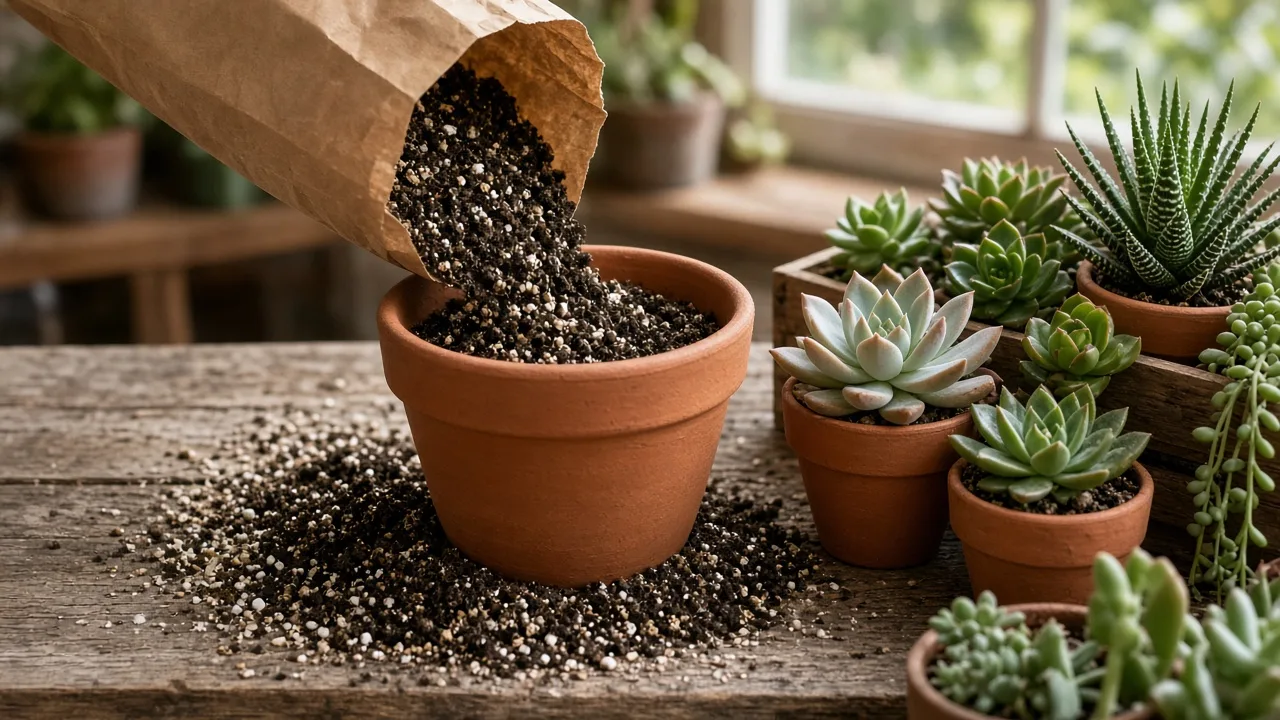
The container needs an open drainage hole. A decorative cachepot is fine if the growing pot can be lifted out for watering and fully drained before it goes back. Choose a pot only modestly wider than the root ball, with enough weight to steady the crest. A very oversized pot holds more wet mix than the roots can use, while a tall, light container can tip when the crest broadens.
Do not add gravel to the bottom in an attempt to improve drainage. Water leaves a uniformly textured potting mix more reliably than it crosses an abrupt layer of coarse stones, so the root zone still needs a porous mix and a working hole. If the surface is topped with decorative stones, keep the layer thin enough that you can still test soil moisture and see where the stem meets the mix.
Keep It Warm, With Ordinary Home Humidity
Coral cactus is frost tender. The RHS profile recommends sheltered, sunny conditions and flags potential irritation to skin and eyes; Epic Gardening likewise treats Euphorbia lactea as cold-sensitive. Published minimum temperatures vary across plant-care references, so do not use a single low number as permission to expose a potted plant to a cold snap. For a container plant, bring it inside before nights routinely fall into the 50s°F (about 10–15°C), and keep it away from cold window glass and drafts.
Normal indoor humidity is generally adequate. The plant’s main environmental need is a warm root zone and good drainage, not a humidifier or misting routine. Moisture trapped in the crest’s folds can linger, especially in a cool room with little air movement, so avoid spraying the top and give the plant space around it. If summer heat is intense, bright shade during the hottest hours can protect pale tissue while maintaining good light.
Feed Sparingly During Active Growth
Fertilizer is optional when the plant is growing slowly in fresh mix, but a light feed can support active spring and summer growth. Use a balanced liquid fertilizer diluted to about one-quarter or one-half the label strength and apply it to already moist soil, not to a dry root ball. A light application every four to six weeks during visible growth is enough for most indoor plants.
Do not feed during winter dormancy or try to force a crest to grow quickly with extra nitrogen. Overfeeding can leave mineral salts in the root zone and may produce weak growth that is disproportionate to the plant’s small root system. If the plant was recently repotted into fresh commercial mix, wait before fertilizing because many blends already contain a starter charge.
Read the Graft and Manage Rootstock Shoots
The graft union is where the fan-shaped crest meets the rooted stem. A firm, dry-looking join is normal; the two plants do not need to look seamless. The crest may slowly widen at its edges, while the rootstock can produce ordinary shoots or small leaves. Those straight shoots are not the crest “reverting” in place; they are growth from the lower partner.
If a rootstock shoot appears and you want to preserve the sculptural silhouette, remove it while it is small. A vigorous lower shoot can shade the crest and take a share of the plant’s resources, but some owners prefer the fuller, branched look and leave it in place. Either choice is aesthetic as long as the plant remains firm and the graft is stable. Avoid tugging, bending, or trying to peel apart a healthy union.
Watch for a different pattern if the joint becomes wet-looking, black, deeply cracked, or soft, or if the crest suddenly slumps while the rootstock stays firm. Those signs can indicate damage or graft failure, not ordinary growth. Keep the plant dry enough for wounds to seal and ask a specialist nursery for advice if a large part of the union is breaking down; graft repair is difficult to improvise on an established specimen.
Prune With Sap Protection
Prune only for a clear reason: remove a dead or rotting piece, or cut away an unwanted shoot from the rootstock. Before starting, move other plants and pets away, cover the work surface, wear disposable or washable gloves, and use eye protection. The milky latex sap in Euphorbia stems can irritate skin and eyes, so keep your hands away from your face and never cut the plant casually while holding it over a sink or child’s workspace.
Use a sharp blade cleaned before the cut, support the part you are removing, and make one clean cut rather than crushing the tissue. Keep absorbent paper nearby to catch sap without touching it, then let the cut surface dry in a warm, airy place. Put trimmings in a sealed bag and clean tools and the work area. Do not compost accessible cut pieces where a child or animal could contact them.
Repot Only When the Potting Setup Needs It
Coral cactus grows slowly, so it does not need annual repotting. Repot when roots crowd the drainage hole, the mix has compacted and stays wet, the plant has become unstable, or you need to correct poor nursery soil. Spring or early summer is a convenient time because warmth and active growth help recovery, but a plant with rotting roots should be addressed promptly rather than left in saturated soil until spring.
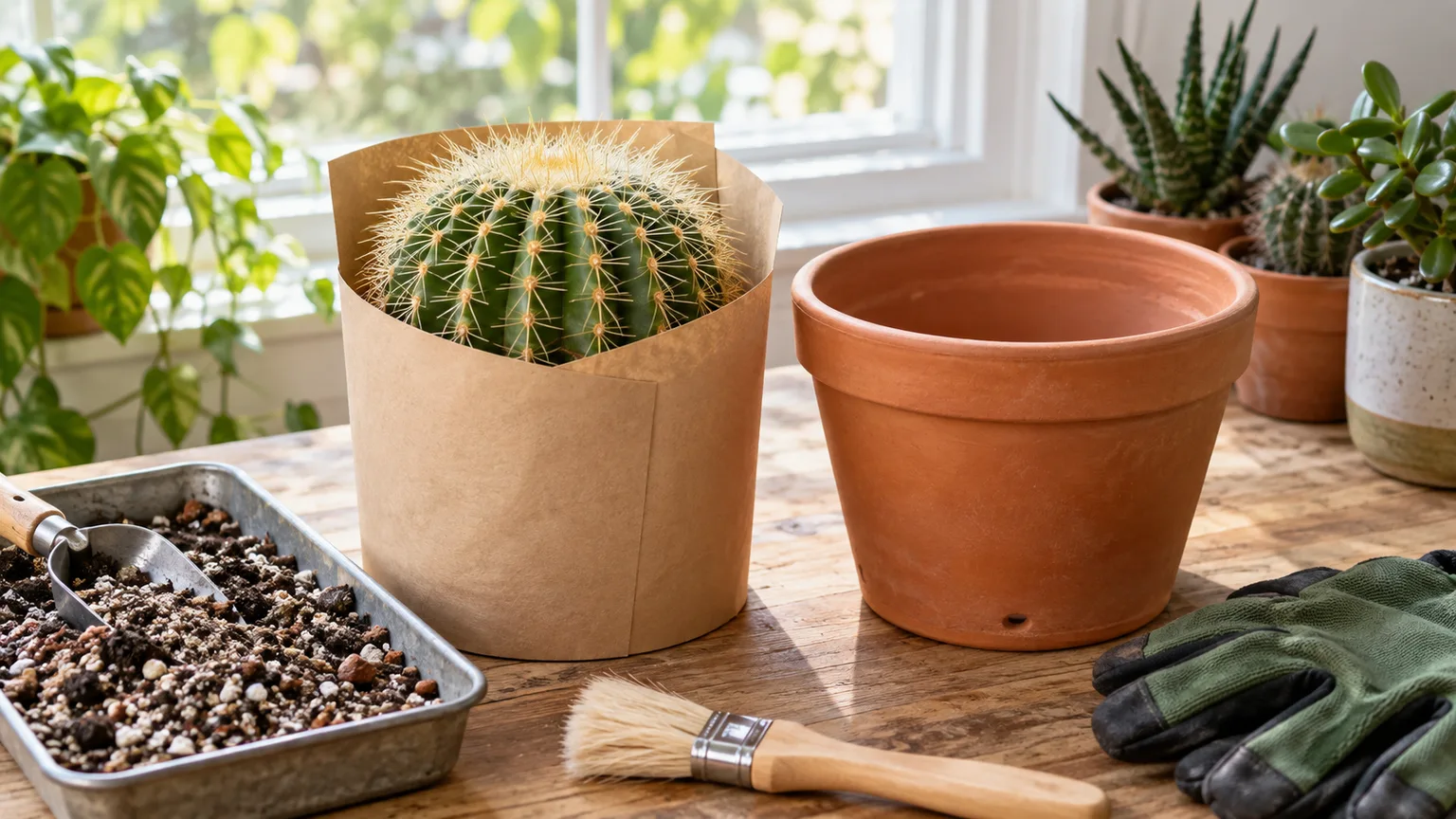
Choose a heavy pot one size larger, not a container with a large unused ring of wet soil. Wear gloves and eye protection, then stabilize the rootstock and support the crest so its weight does not twist the graft. Set the plant at the same depth as before; burying the graft union or the base of the crest can keep tissue wet and invite decay. Fill around the roots with dry, fast-draining mix and do not press so hard that you compact it.
If roots were disturbed, wait several days before watering so small breaks can dry; if you removed rotted roots, allow a longer dry interval and use a clean pot and fresh mix. Resume the normal soil-check routine instead of immediately soaking the new planting. After repotting, keep the plant in bright indirect light for a few days, then return it gradually to its usual exposure.
Propagation: Preserve the Crest With Grafting
A cutting from the green rootstock may root, but it will usually grow as the rootstock plant, not as a new coral-like crest. The fan shape is a mutation of the growing point and is commonly maintained by grafting crested tissue onto a vigorous compatible Euphorbia. Epic Gardening’s guide describes grafting as the usual route for crested forms that do not root reliably on their own.
Home grafting is possible for an experienced grower, but it is a poor first propagation project. The two stems must be compatible, cleanly cut, aligned so their growing tissues can join, and kept stable while they heal; every cut also exposes irritating sap. If the goal is simply to own another coral cactus, buying a healthy grafted plant from a reputable nursery is usually safer and more predictable than sacrificing a healthy crest. If you do experiment, use a spare plant, protective equipment, and guidance from an experienced Euphorbia grower rather than assuming any crest cutting will root.
Diagnose Yellowing, Brown Spots, and Wrinkles
Use three clues together: the texture of the affected tissue, the moisture in the pot, and whether the change is on the crest or the rootstock. Color alone is not enough to diagnose a problem. A pale patch that is firm after a move to brighter light is different from a soft dark area in persistently damp mix.
Yellow and Soft Tissue
Yellowing accompanied by softness, a sour smell, or a mix that remains wet points toward overwatering or root and stem rot. Stop watering, remove the plant from its cachepot, and inspect the roots if the decline continues. Healthy roots should be firm; mushy dark roots and a collapsing base justify trimming damaged roots with a clean blade and repotting in dry, airy mix. If rot has reached the graft union, recovery is uncertain.
Yellowing without softness can also follow a sudden light or temperature change, or a long period in poor light. Correct one condition at a time: move the plant away from cold glass, improve light gradually, and let the soil guide watering. Do not add fertilizer as a quick fix until the roots and drainage are sound.
Hard Brown Marks vs. Mushy Spots
Hard, dry tan marks can be old scars or corking as tissue ages. They stay firm and do not expand rapidly. A crisp bleached or brown patch on the window-facing side after an abrupt move often indicates sunburn; damaged tissue will remain marked, but new growth can be healthy after you reduce the intensity and acclimate the plant more gradually.
Soft, wet, dark-brown or black spots are more urgent. They can signal rot after overwatering, cold damage, or an injury that stayed damp. Isolate the plant from other succulents, keep water off the affected area, and check the base and roots. If the spot is growing or the tissue is collapsing, remove only clearly dead material with protective equipment and sterile tools; widespread decay at the graft is often not salvageable.
Wrinkled Crest or Drooping Rootstock
Wrinkles can mean the plant is short of water, but they can also appear when damaged roots cannot take up water. Check the soil before responding. If it is dry throughout and the roots and lower stem are firm, water thoroughly and let the excess drain. If the mix is still wet or the rootstock is soft, another watering can worsen the problem; inspect drainage and roots instead.
A pink or reddish edge may be normal coloration in some cultivars and can intensify with brighter conditions. If it appears suddenly along with bleaching, crisping, or a sharp change in temperature, treat it as a cue to review recent changes rather than proof of a specific disease. Take a photo and compare over several days; stable color on firm tissue is less concerning than spreading, soft discoloration.
Inspect Pests in the Folds
The ridged crest gives mealybugs and scale insects sheltered places to hide. Check creases, the underside of the crest, the graft junction, and the rootstock rather than looking only at the most visible surface. Cottony clusters, sticky residue, or hard brown bumps warrant isolation from other plants and a closer inspection with a bright light.
Remove a small infestation manually with a cotton swab lightly moistened with rubbing alcohol, testing a small area first because tender or pale tissue may react. Avoid flooding the folds with water or spraying the plant in direct sun. For persistent pests, choose a product labeled for the pest and ornamental succulent, follow that label exactly, and test a small area before treating the whole plant. Recheck weekly because eggs and hidden insects may survive the first pass.
Handle the Sap as an Irritant
All Euphorbia stems contain milky latex sap. The RHS profile lists Euphorbia lactea ‘Cristata’ as potentially harmful to people and pets, and Poison Control explains that spurge sap can irritate skin, mouth, and eyes. A clinical report indexed by the National Library of Medicine describes serious eye injuries from Euphorbia sap exposure, which is why eye protection matters even for a small pruning cut.
Keep the plant where it cannot be chewed or brushed against, especially in a home with curious children or animals. For routine care, do not cut it without gloves and eye protection. If sap gets on skin, remove contaminated clothing and wash the area with soap and water. If it reaches an eye, rinse continuously with clean lukewarm water for 15 to 20 minutes and seek medical advice, particularly for pain or vision changes. For ingestion or symptoms in a person or pet, contact Poison Control or a veterinarian promptly; do not wait for the plant to look worse.
Move Outdoors Only in Warm Weather
In a frost-free climate, a coral cactus can grow on a sheltered patio or in a container outdoors, but a summer move is optional. Start in bright shade, then increase morning sun over one to two weeks. Keep the plant out of prolonged hot afternoon sun until you know how its crest responds, and set the pot where heavy rain cannot keep the mix saturated.
Check for insects before bringing it back indoors in late summer or early fall. Bring it in before cold nights, and inspect the roots and soil moisture after the move because indoor light and airflow differ from the patio. USDA Zone labels are broad outdoor guides, not a guarantee against a cold snap or a cold, wet container. If your winters include frost or extended chill, grow this plant in a pot and move it inside.
Conclusion
Coral cactus stays manageable when you remember that it is a grafted Euphorbia, not an invulnerable desert cactus. Give it strong but acclimated light, water only after the root zone has dried substantially, use gritty mix in a draining and stable pot, and inspect the crest and rootstock separately. A firm straight shoot from below the graft is usually a pruning choice; soft tissue in damp soil calls for a rot check.
The two habits that prevent most avoidable trouble are checking moisture below the surface and protecting yourself from the sap before making a cut. Start with those, adjust for the light and temperature in your home, and let the plant’s condition—not a calendar—set the pace.