How to Grow and Care for Japanese Maple Trees
Learn how to grow Japanese maple trees, choose a cultivar for your space, prevent leaf scorch, water well, prune lightly, and protect container roots in winter.
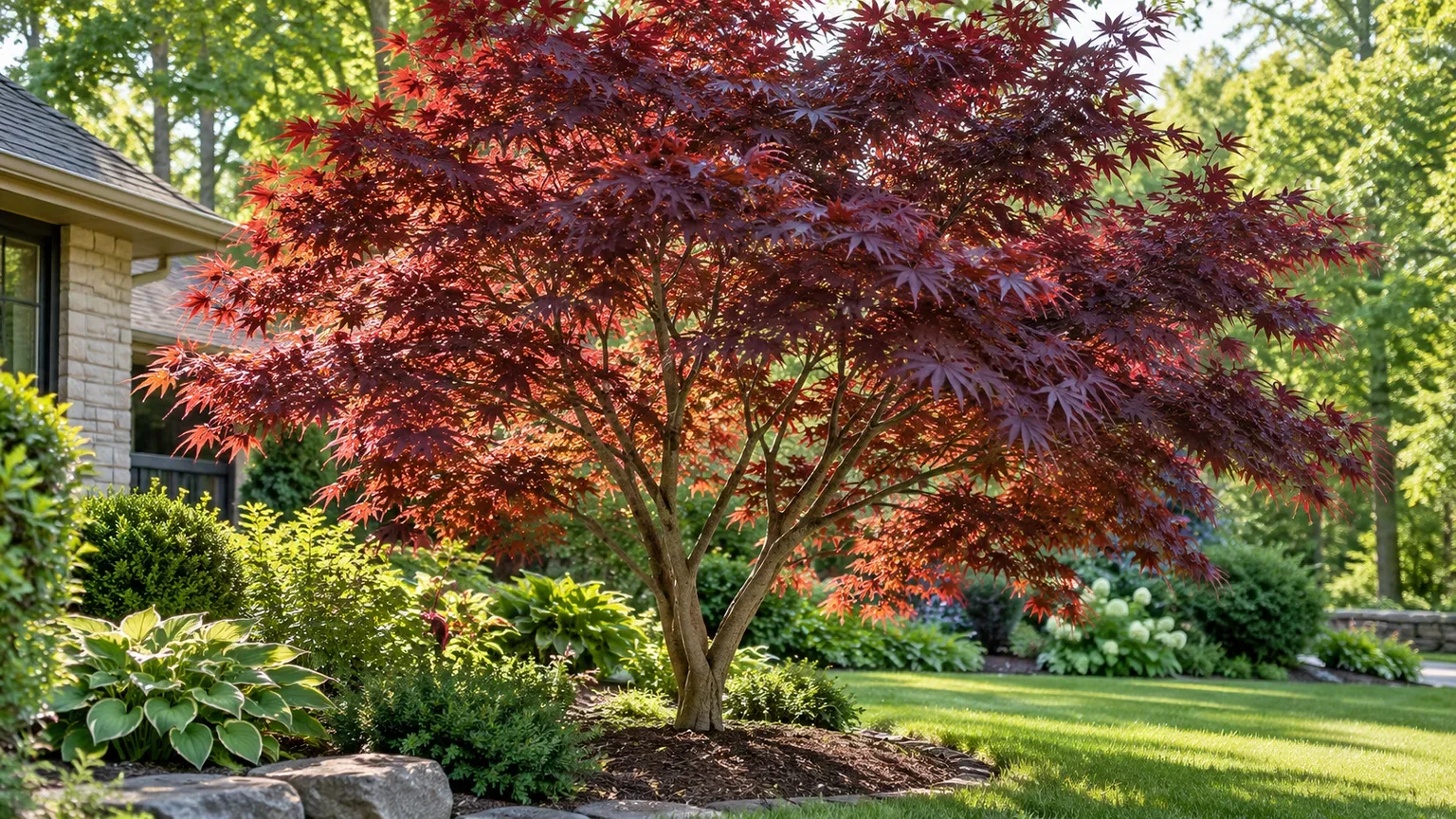
Japanese maples are small ornamental trees with a wide range of leaf shapes, colors, and mature sizes. The easiest way to grow one successfully is to choose a cultivar for the site you actually have, then protect its shallow root zone from drying out, waterlogging, and temperature swings. Acer palmatum can thrive with modest care, but a hot, exposed planting spot or a variety that outgrows its space can turn a graceful focal point into a recurring problem.
Before buying, check the plant label for the cultivar’s mature height and spread, then compare that with your site’s afternoon sun, wind, soil drainage, and winter exposure. This guide covers the decisions that matter most—from selecting a form to pruning and troubleshooting—so you can spend less time correcting avoidable stress.
Choose the Japanese maple that fits your space
“Japanese maple” describes a diverse group of trees and cultivars, not one standard-size plant. Depending on the selection, a mature maple may be a few feet tall, a broad multi-stem shrub, or a tree around 20 feet or more; Virginia Cooperative Extension lists many at 12 to 25 feet, while North Carolina Extension describes the species as a small tree that can reach about 25 feet. Treat any size printed on a nursery tag as a planning range, not a promise: cultivar, climate, rootstock, and growing conditions all influence the final form.
Choose for the tree’s shape and spread as carefully as for leaf color. A Japanese maple planted beneath a low eave, squeezed between a fence and walkway, or directly beside a driveway may need repeated pruning that ruins the very silhouette you bought it for. Give the canopy room to develop naturally and keep it clear of overhead lines and paths where low branches would become a hazard.
Upright, laceleaf, dwarf, and bark forms
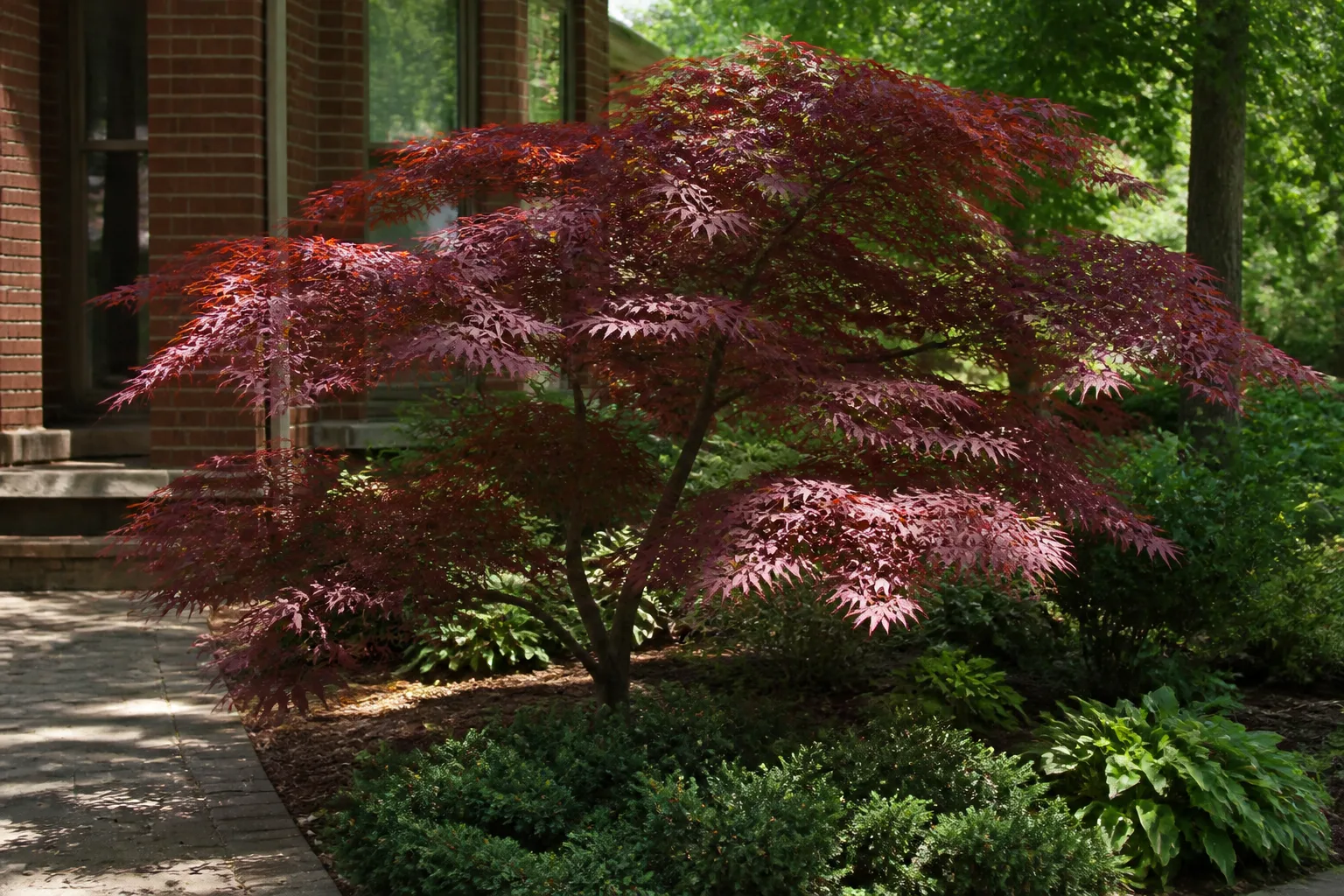
Upright cultivars generally develop a vase-shaped, rounded, or layered crown and work well as a small focal tree. Dissected or “laceleaf” maples have finer, deeply cut leaves and often form a low, cascading mound; their branches are part of the display, so they need enough lateral room to spread. Dwarf selections suit small courtyards and containers, while coral-bark forms such as ‘Sango-kaku’ add winter interest through colored young stems.
Use a plant’s mature dimensions—not the size of the pot—as your starting point. ‘Bloodgood’ is a familiar upright red-leaf option, while ‘Crimson Queen’ is a compact weeping laceleaf example; each has a different footprint and pruning needs. Ask the nursery to confirm the exact cultivar and its expected size in your region, especially when a label uses a broad trade name or omits a cultivar name.
Match the cultivar to your climate and exposure
Most Japanese maples appreciate bright, filtered light or morning sun followed by afternoon shade, particularly where summers are hot and dry. Some green-leaved cultivars tolerate more sun than delicate variegated or dissected forms, but “sun tolerant” does not mean immune to reflected heat from a south-facing wall, paving, or a wind tunnel. University of Washington’s Elisabeth C. Miller Library cautions that even cultivars listed for sun can scorch under severe reflected heat; its practical guidance is to consider cultivar, afternoon shade, and irrigation together.
Hardiness-zone labels also need context. Virginia Cooperative Extension places Japanese maples broadly in Zones 5 to 8 and notes that cultivar suitability and exposure vary by location; University of New Hampshire Extension warns that trees in colder areas can suffer dieback in severe winters and late spring frosts. A protected spot out of drying wind may matter as much as the zone number. For a warm region, prioritize a locally proven cultivar and shade during the hottest afternoon hours; for a cold region, seek a later-leafing selection and avoid frost pockets.
| Site condition | A useful starting choice | Main trade-off |
|---|---|---|
| Small courtyard or patio | Dwarf or compact cultivar; container only if you can water and overwinter it | Pots dry and freeze faster than garden soil |
| Large, sheltered garden bed | Upright cultivar such as ‘Bloodgood’ | Confirm mature spread before planting |
| Low focal point beside a path | Weeping laceleaf cultivar | Allow the skirt to spread without blocking access |
| Hot summer site | Locally proven cultivar with morning sun and afternoon shade | Full shade may soften the color of some red-leaf selections |
| Winter interest | Coral-bark type such as ‘Sango-kaku’ | Protect young stems from wind and mechanical damage |
Choose a protected planting location
Look for a site with dappled light or morning sun, shelter from strong drying winds, and room for the mature canopy. In a hot climate, afternoon shade helps reduce leaf scorch; in a cooler climate, more sun may be tolerated if soil moisture stays even. A spot under the loose canopy of a taller tree can provide the understory conditions Japanese maples often prefer, but avoid dense shade that leaves a red-leaf cultivar persistently green if its color is a priority.
Think about what sits around the tree as well as what sits above it. Japanese maples have many fine, shallow roots near the soil surface; a lawn that needs frequent mowing right up to the trunk, a narrow hardscape strip, or constant competition from thirsty plants makes care harder. Leave a broad mulched root zone, keep the tree clear of building foundations and utilities, and avoid planting in a low area where water collects after rain.
Avoid moving a newly planted tree from shade into full sun abruptly. If an established maple has to be relocated, choose a cooler planting season and expect a recovery period; moving a tree with a large root system is a substantial job, and a mature specimen is best handled by an experienced tree professional. Fix an exposure problem gradually when possible by adding temporary shade or adjusting nearby reflected-heat sources rather than stripping the canopy to “open it up.”
Prepare soil for shallow, moisture-sensitive roots
Japanese maples grow best in soil that drains freely yet holds enough moisture to keep roots from drying between rains. A slightly acidic, humus-rich loam is a good starting point, but drainage and root-zone moisture matter more than chasing a precise pH number. The RHS recommends slightly acidic, humus-rich, well-drained soil; Virginia Cooperative Extension lists sandy, loamy, or clay-loam soils and a broad pH range, which is a useful reminder that the tree can adapt when the site is not waterlogged or chronically dry.
Check drainage before planting by observing the area after a heavy rain. If water stands for hours, choose a raised or better-drained site instead of digging a small hole and filling it with loose amended soil; the hole can act like a basin and trap water around the root ball. In compacted ground, improve a broad planting area with organic matter rather than creating a rich pocket only under the tree.
Do not routinely acidify soil or add fertilizer just because the leaves look pale. High soil pH can contribute to nutrient unavailability, but yellowing has other causes, including waterlogging, drought injury, and root damage. A soil test can show whether pH or a nutrient imbalance is actually present and can prevent unnecessary amendments from creating a second problem.
Plant a Japanese maple at the correct depth
In many climates, planting in spring or fall gives roots time to establish before summer heat or winter cold. Choose a cool, cloudy day if possible, water the tree in its nursery container beforehand, and have the planting hole ready so roots are not left exposed. Container-grown stock can be planted during a wider window if you can maintain even moisture, but avoid the hottest weeks and frozen or saturated soil.
Dig a hole two to three times wider than the root ball and no deeper than its actual root depth. Roughen glazed or compacted sides so roots can grow outward, then inspect the root ball for circling roots. If roots wrap tightly around the outside, tease a few outward or make shallow vertical cuts through the mat; do not tear apart a healthy root system just to make it look loose.
Keep the root flare at the surface
Find where the trunk widens and the first structural roots leave the stem. Set that root flare at or slightly above the surrounding grade, then backfill with the soil you removed and water slowly to settle it. The RHS notes that Japanese maples have shallow main roots and should not be planted with a deep layer of soil covering them; burying the flare can keep bark wet and restrict oxygen around the crown roots.
Once the tree is upright, press soil lightly to remove large air pockets, but do not compact it by stamping hard around the trunk. Water thoroughly, then spread a 2- to 3-inch layer of organic mulch across a broad circle, keeping the mulch several inches away from the bark. Do not create a volcano around the trunk: mulch belongs over the root zone, not against the stem.
Water for establishment without keeping soil soggy
During the first growing season, check the root ball and the soil just beyond it every few days in hot, dry weather. Water when the upper few inches begin to dry, applying a slow soak over the root ball and surrounding soil so moisture reaches the developing roots. Frequency depends on rainfall, soil texture, wind, temperature, and whether the tree is in a pot; a fixed daily schedule can overwater clay soil and underwater a container during a heat wave.
University extension guidance recommends deep watering during dry periods rather than frequent shallow splashes. Virginia Cooperative Extension suggests watering the upper 12 inches of soil slowly within the drip line during dry weather, while the RHS advises watering as needed during the first year and notes that container-grown maples can need daily attention in hot weather. As the tree establishes, widen the watered area toward the canopy edge and reduce supplemental watering when regular rain keeps the soil evenly moist.
Established trees are not drought-proof. A long hot spell, drying wind, or unusually dry autumn can stress roots even after the tree has been in the ground for years, especially if lawn irrigation does not reach beneath its canopy. Water deeply during prolonged dry conditions, then let the soil begin to dry rather than keeping it saturated. Avoid routine shallow watering that encourages roots to stay near the surface where heat and evaporation are strongest.
Triage brown edges before changing your watering
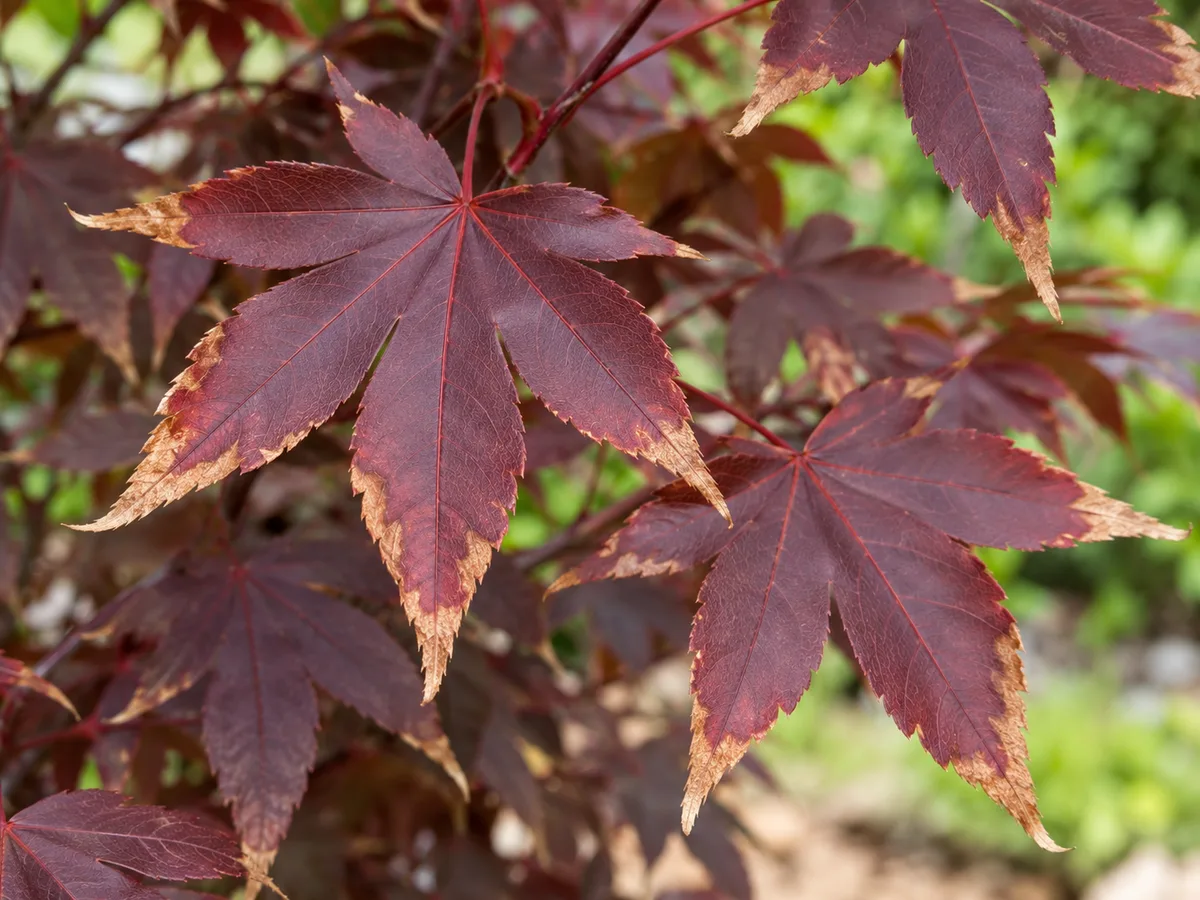
Brown, crisp margins are consistent with leaf scorch, but they do not prove the tree simply needs more water. Excess sun, hot wind, reflected heat, drought, root injury, and poor drainage can all interfere with the water reaching leaves; North Carolina Extension lists sun, wind, and drought as common scorch triggers. If soil is already wet, adding more water can worsen root stress.
Use a quick check before you act: feel the soil several inches down in two places, check whether damage is strongest on the sun- or wind-exposed side, and review recent watering and rain. If soil is dry, soak it slowly and add mulch; if it is wet and sticky, pause irrigation and improve drainage. Protect a container from afternoon reflected heat or move it to bright shade. Scorched tissue will not turn green again, so judge recovery by healthy new growth rather than the damaged leaves.
Mulch the root zone and fertilize only when needed
Mulch moderates soil temperature, slows evaporation, and reduces competition from lawn and weeds. Apply about 2 to 3 inches of shredded bark, leaf mold, or compost over the root zone, extending outward as the canopy grows. Keep the trunk collar open and check the layer each year; replenish only what has decomposed or washed away rather than piling new material on top indefinitely.
Most in-ground Japanese maples do not need automatic annual fertilizer when they grow in suitable soil and produce healthy leaves and shoots. The RHS advises that trees in the ground generally do not need feeding, and University of New Hampshire Extension recommends fertilizing only when growth is unusually slow or a soil test indicates a deficiency. A newly planted tree especially benefits more from correct planting and regular water than from fertilizer it cannot yet use.
If a soil test identifies a deficiency, use a product and rate suited to that finding and apply it at the recommended time. Avoid high-nitrogen lawn fertilizer spreading into the root zone; it can push tender growth that is more vulnerable to drought, cold, and pruning. Do not fertilize in late summer or fall to force color—fall foliage depends on cultivar, weather, and seasonal conditions, not a last-minute feeding trick.
Grow a Japanese maple in a container
A container is useful when you want a compact cultivar on a patio, need to move the tree away from hot afternoon sun, or lack an appropriate planting bed. Choose a naturally small, slow-growing selection rather than assuming any maple can be kept miniature by restricting its roots. A larger cultivar may outgrow a pot, become difficult to water evenly, or lose vigor as roots fill the container.
Use a sturdy pot with several drainage holes and enough weight to resist wind. A pot that is only a little wider than the current root ball is usually easier to manage than an oversized vessel full of soil that stays wet for too long. Use a free-draining container mix, set the root flare near the surface, and raise the pot slightly on feet so water can escape from the base.
Choose a stable pot and plan for root care
Container soil warms and dries faster than ground soil, so check moisture more often in summer and water until excess drains from the holes. Never leave the pot standing in a saucer full of water. In winter, the roots have less insulation than they would in the ground; cluster pots in a sheltered place, wrap the container, or move it against a protected wall before severe cold arrives.
Repot when roots circle densely, emerge from drainage holes, or the mix dries unusually fast despite thorough watering. The RHS recommends moving the tree into a slightly larger pot every couple of years and describes periodic root pruning for long-term container specimens. Root pruning is a skilled maintenance task, not a yearly haircut: if you are unsure how much to remove, ask a bonsai nursery or experienced grower rather than cutting a large portion of roots at once.
A pot also does not make the tree an indoor houseplant. Japanese maples need outdoor seasonal cues and winter dormancy; bringing one into a heated room for the entire winter is not a substitute for protecting the root ball outdoors. Move it temporarily only for an exceptional severe cold snap, then return it outside when conditions are safe.
Prune for structure while preserving natural form
Pruning should solve a specific problem: remove dead or damaged wood, reduce rubbing, correct a structural issue while branches are small, or keep a walkway clear. Japanese maples are valued for their natural layered form, and shearing the canopy into a ball or repeatedly topping it produces a dense outline that hides the tree’s branching. Healthy trees in the right place may need only occasional cleanup.
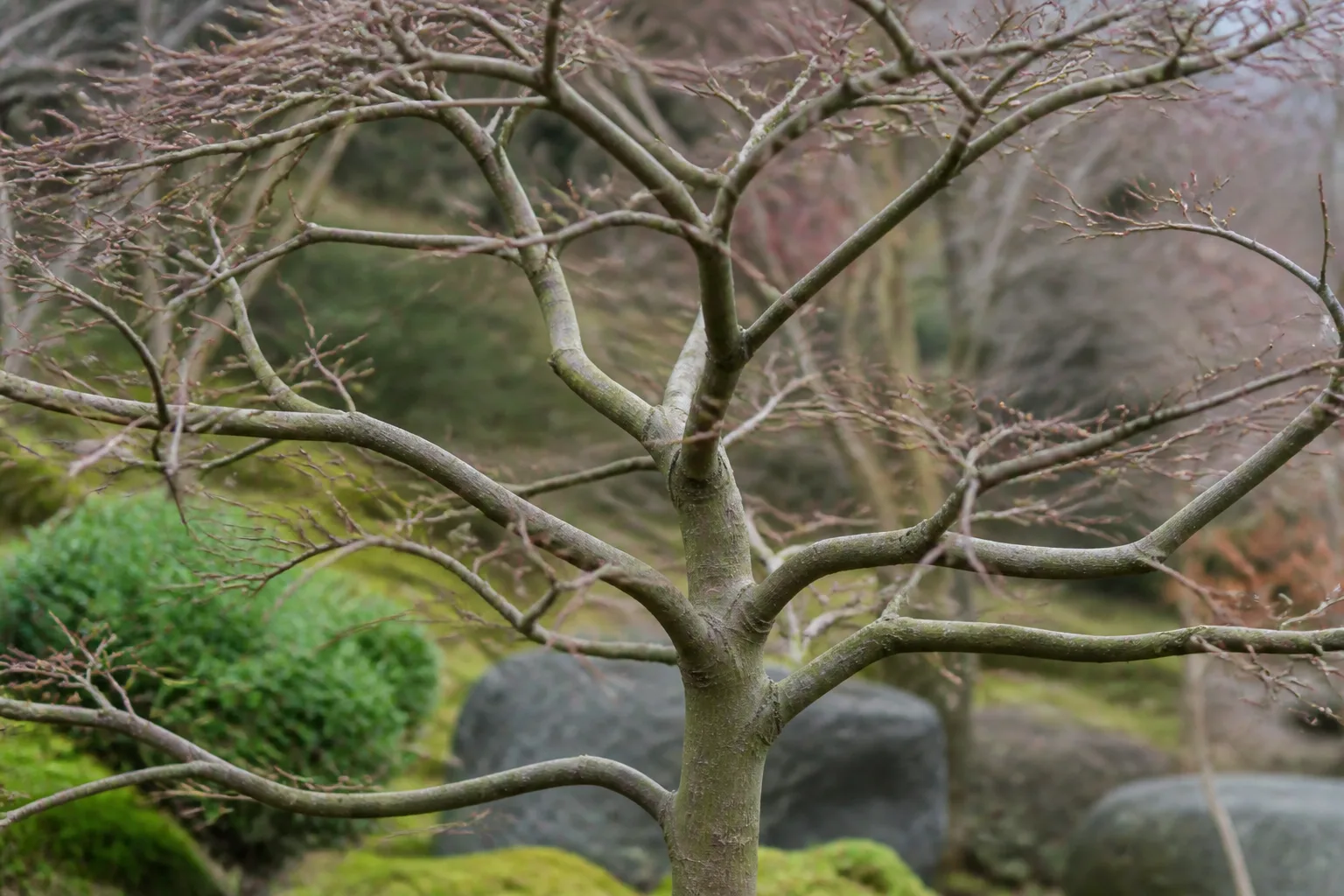
Start by viewing the tree from several sides, then identify the one or two branches that genuinely need attention. On an upright form, preserve well-spaced lateral branches and avoid creating two competing trunks with a narrow, weak union. On a weeping laceleaf, keep the cascading outline and avoid lifting the skirt until it becomes a bare stem with a small tuft of foliage.
Time cuts and protect the branch collar
Pruning windows vary among references and climates. The RHS recommends July through January to avoid the period when maples may bleed sap, while Fine Gardening describes selective pruning in winter or summer and cautions against working in high heat. Follow local guidance and the tree’s condition: make major structural cuts during a suitable cool period when you can see the branch framework, avoid heat stress, and stop if sap is actively flowing.
Use sharp bypass pruners for small twigs and a clean saw for larger branches. Cut just beyond the branch collar—the slight swelling where a branch joins a larger stem—without leaving a stub or cutting flush to the trunk. Fine Gardening notes that cuts too close can damage the trunk’s protective tissue and cuts too far away leave an unsightly stub; a clean collar cut is more important than an angled “water-shedding” cut.
Do not remove a large share of live canopy in one session to make an overgrown maple fit a tight space. If the tree needs substantial size reduction, spread corrective pruning over several seasons or consult an arborist who understands Japanese maple structure. Remove dead, broken, or hazardous branches promptly, but use a professional for limbs near wires, buildings, or people.
Protect young trees and pots through winter
Young in-ground trees need protection from drying winter winds and abrupt freeze-thaw cycles more than elaborate wrapping in every climate. Keep the root zone mulched, water during dry autumn weather before the ground freezes, and use a temporary wind screen if the site is exposed. Remove or loosen any protective material in spring so it does not rub bark or trap moisture.
Late spring frost can damage tender new leaves after a warm spell prompts early leaf-out. A small tree can be covered overnight with breathable frost cloth when a hard frost is forecast, but remove the cover after temperatures rise. This is a short-term response; do not leave a sealed plastic tarp on foliage, where it can trap heat and moisture.
Container roots require extra insulation because the sides of the pot are exposed to cold air. Place the pot on feet, move it to a sheltered outdoor location, and wrap the container with burlap or another breathable insulating layer. The RHS advises grouping pots and wrapping them in winter; do not move a dormant tree into a warm interior for the season.
Troubleshoot dieback, pests, and sudden decline
Look for a pattern before reaching for a treatment. Brown margins concentrated on the hottest side suggest exposure or water stress; sudden leaf drop after a dry spell can reflect drought, while yellowing in persistently wet soil can point to root oxygen problems. Early spring leaves damaged after a frost may recover only partly, but new growth later in the season can show whether branches remain alive.
Occasional aphids, scale, leafrollers, or other chewing insects can occur, but a few insects rarely explain severe whole-tree decline. Inspect the undersides of leaves and tender shoot tips, identify the pest, and check whether natural predators are already keeping it in balance before applying a pesticide. Do not spray based only on a general list of possible pests; the wrong treatment can harm beneficial insects without correcting heat or root stress.
If one branch dies back, scratch a tiny area of bark on that twig with a clean fingernail: green tissue beneath suggests it is alive; dry brown tissue may indicate dieback. Follow the branch toward the trunk to find where live tissue begins, but do not remove a large limb until you understand whether the cause is frost, drought, a canker, root damage, or normal branch shading. Repeated dieback, trunk lesions, a sudden canopy collapse, or symptoms spreading from one branch to another deserve a closer diagnosis.
Know when a soil test or arborist is needed
Use a soil test when leaves stay yellow, growth remains weak despite reasonable watering, or you are considering adding lime, sulfur, iron, or manganese. Color patterns alone cannot reliably diagnose a nutrient deficiency, and excess amendment can shift soil chemistry further from what the roots need. A local extension office can help interpret a result in the context of your soil and region.
Call an ISA Certified Arborist for a mature tree with large dead limbs, extensive trunk damage, a split crotch, major root injury, or a decline that continues despite correcting obvious water and exposure issues. An arborist can inspect the canopy and root flare in person; photos and internet advice cannot establish whether a structural defect is safe. Avoid digging or cutting large surface roots yourself, since those roots support and supply the tree.
Japanese maples may also produce seedlings. North Carolina Extension notes that Acer palmatum can self-seed and that some regional authorities flag it as weedy or invasive in parts of the Mid-Atlantic. That does not make every Japanese maple invasive everywhere; check your state or local invasive-plant list, and pull unwanted seedlings while they are small.
Propagate from seed or preserve a named cultivar
Seeds are an inexpensive way to grow a Japanese maple if you are curious about variation and do not need a copy of a particular tree. Collect ripe samaras in fall, remove the wings, and sow them according to local horticultural guidance; germination can be uneven, and seedlings may take years to show their mature form. The result may be an attractive maple, but it will not reliably reproduce the named cultivar that produced the seed.
If you want another tree that matches ‘Bloodgood’, ‘Crimson Queen’, or another named selection, buy a correctly labeled nursery plant or ask a specialist about propagation. The Maple Society explains that named Japanese maple cultivars are usually maintained through cloning methods such as grafting, while seed-grown plants are genetically variable. Softwood cuttings can work for some maples, but success varies by cultivar and growing conditions, so a cutting should not be presented as a dependable shortcut for every selection.
Check the base of a grafted tree occasionally for shoots emerging below the graft union. Those shoots belong to the rootstock and can grow more vigorously than the selected canopy; remove them at their point of origin when small. Do not confuse a rootstock sucker with a new branch above the graft—the nursery label or a knowledgeable grower can help locate the union if it is not obvious.
Conclusion
A healthy Japanese maple begins with the right match: a cultivar whose mature size and light tolerance fit your yard, and a site with drainage, shelter, and enough room for shallow roots. Plant the root flare at the surface, water according to soil and weather rather than a calendar, mulch without covering the trunk, and prune only to address a clear structural need.
Before you buy, confirm the cultivar, its mature spread, local hardiness, and whether the spot receives harsh afternoon sun or drying wind. If the site is exposed, waterlogged, or too small for the tree’s mature form, choose a better location or a more suitable cultivar. Those decisions prevent more problems than any fertilizer or pruning routine can fix.



